Infinity Table Design for Indian Homes: Ideas, Materials and Buying Guide
By Usha Balasubramanyan- July 08, 2026
AI Summary
3 key insights · 1 expert tip
An infinity table design uses mirrors and LEDs to create an illusion of depth, acting as a functional and visually striking living room focal point.
Key Insights:
What You'll Read Here:
Choose tempered glass for durability and safety in everyday use.
MDF or metal frames offer essential structural stability for the table.
Plan electrical wiring carefully to maintain a clean, uncluttered aesthetic.
HOMELANE EXPERT TIPBy our design team
Always prioritise the table's functionality and how it fits into your movement space before considering its aesthetic impact.
An infinity table design turns a simple living room into a striking, modern focal point.
When you’re doing up your living room, you could well be looking for a statement piece to anchor your space and give it that ‘wow’ factor. An infinity table adds depth and a dramatic focal point to a living room, but like any statement piece, it needs to be practical for daily use.
In Indian living rooms where space is often limited and furniture needs to be practical, a bulky or fragile centre table can quickly become inconvenient. This is where choosing the right infinity table design matters.
A well-built infinity table, with tempered glass and a sturdy base, can act as a statement piece without getting in the way. When planned properly, it becomes a functional coffee table that also adds depth and visual interest to the room.
What Is an Infinity Table Design and How Does It Work?
The infinity mirror table design uses layered reflections to create a true tunnel illusion.
An infinity table design uses mirrors and LED lights to create an illusion of endless depth.
The structure is simple. A mirror is placed at the bottom, LED strips are fitted along the inner edges, and a semi-reflective glass sits on top. When the lights are turned on, the reflections bounce back and forth, creating the illusion of a tunnel.
This is why an infinity mirror table design appears deeper than it actually is. The effect works best in dim lighting, where reflections are more visible.
Why Is Infinity Table Design Becoming a Statement Piece?
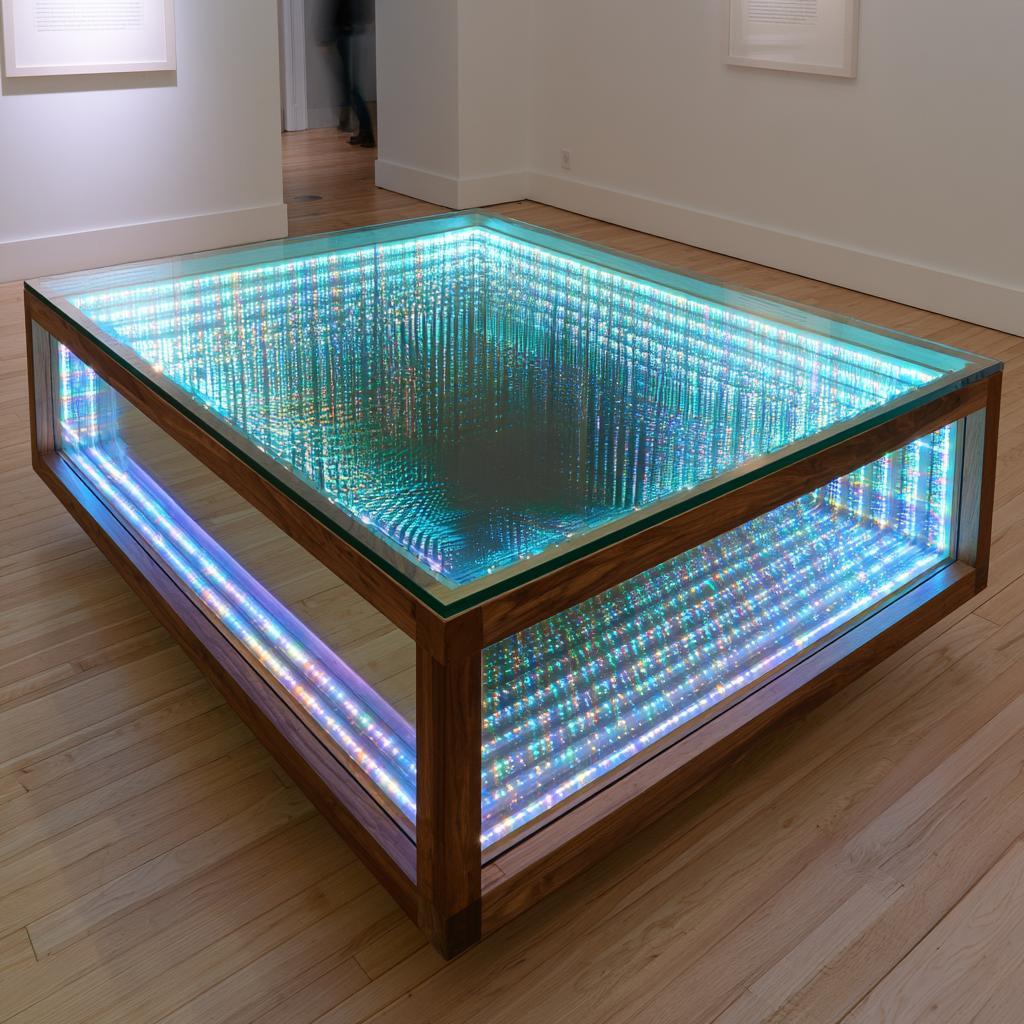
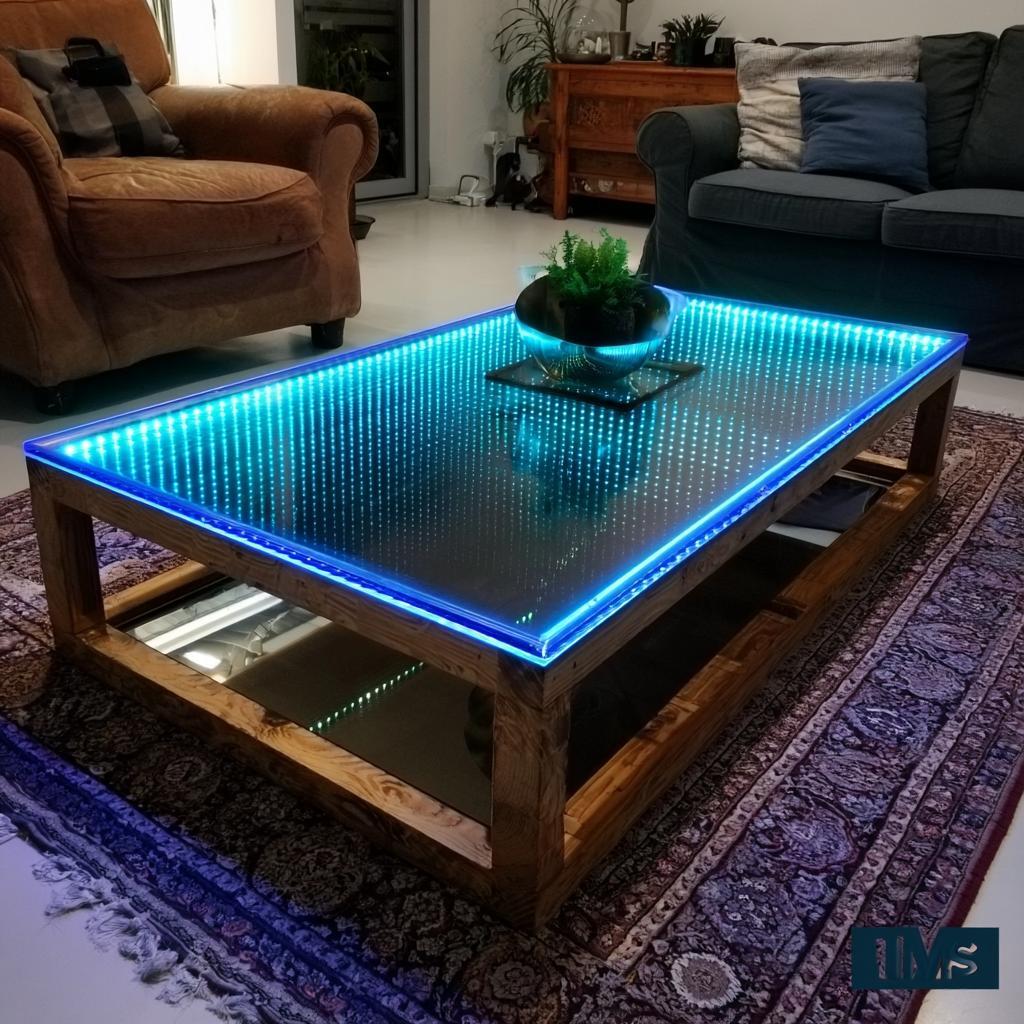
A close-up view shows how LED lighting deepens the infinity table design effect.
An infinity table design for the living room stands out because it adds visual depth without adding bulk.
The mirror-and-light effect draws attention immediately, making it the natural centre of the room. Instead of layering décor on a standard coffee table, one infinity table can carry the entire visual weight.
It works best in modern setups where furniture is kept minimal. The table becomes the highlight while still serving a practical purpose.
Choosing the Right Infinity Table Design for Your Space
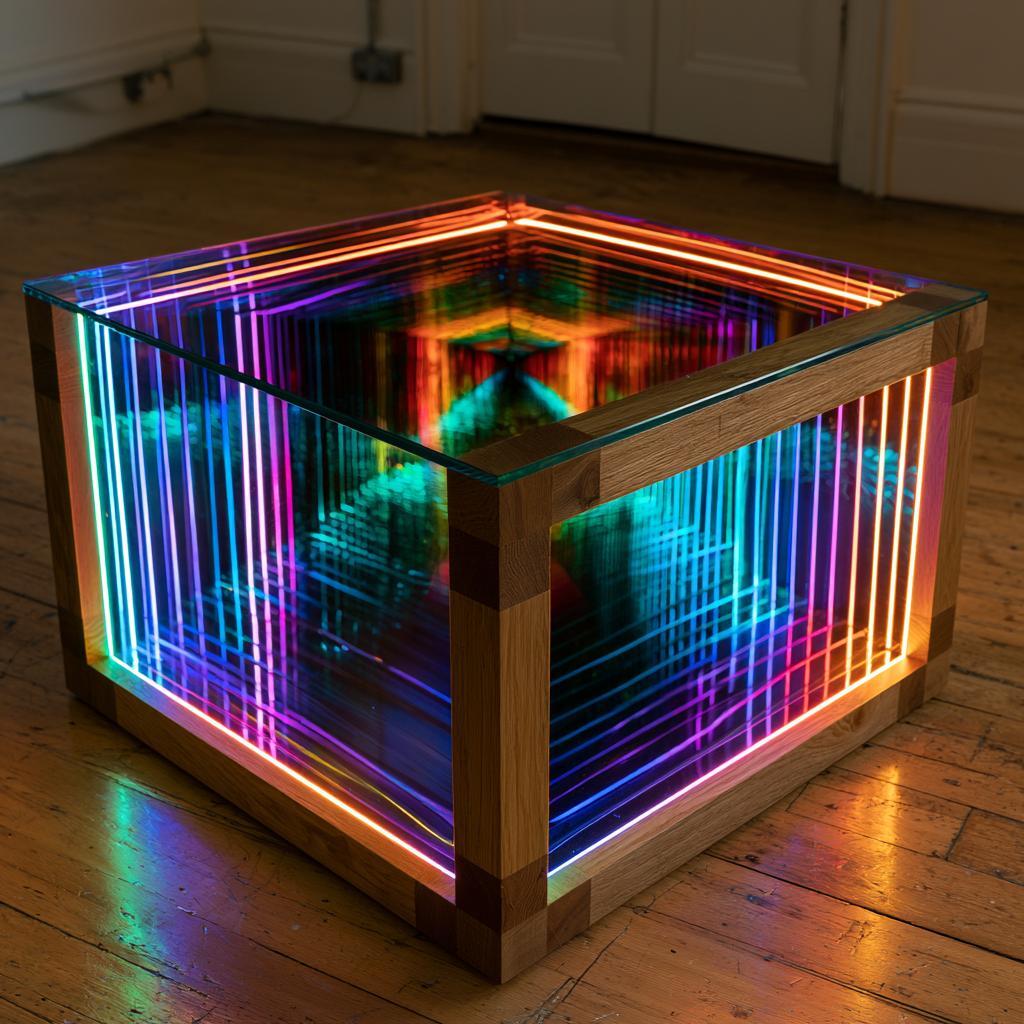
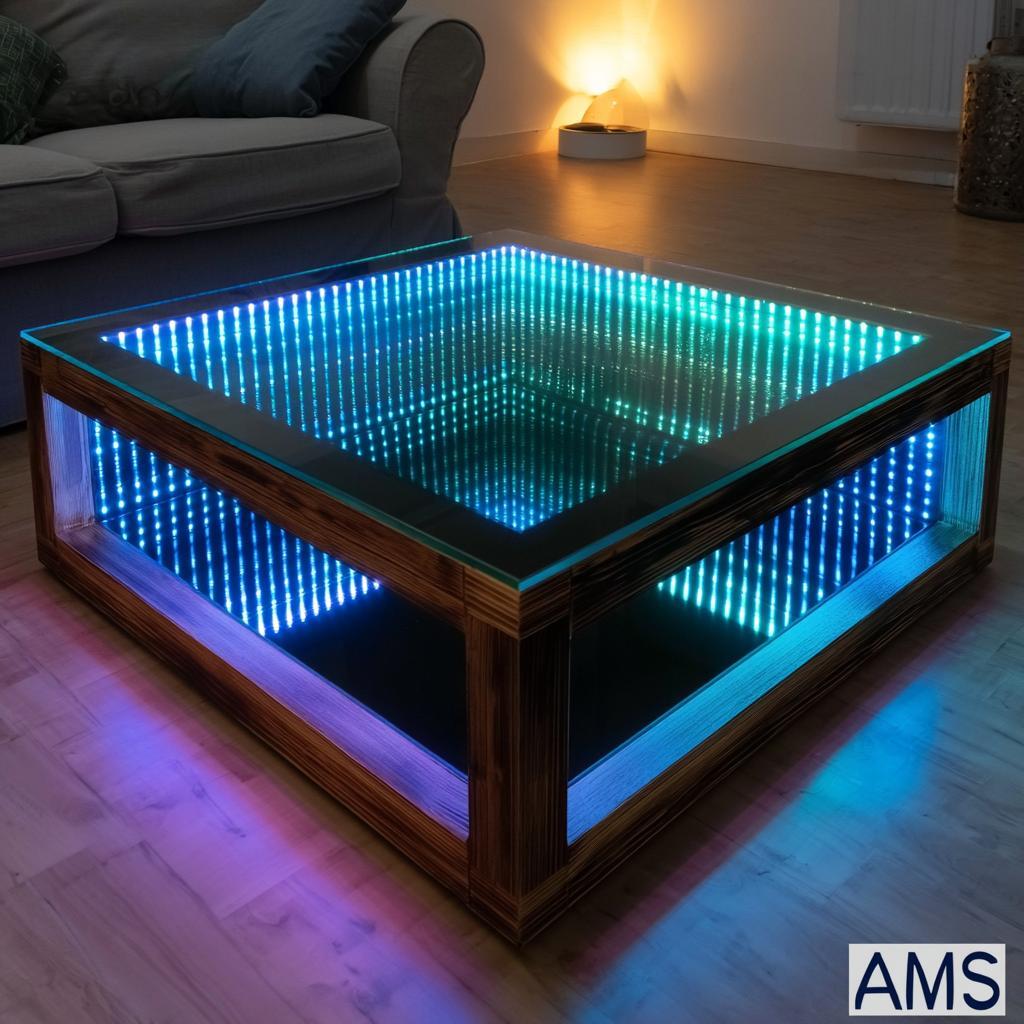
Multicoloured LED strips make this infinity table design a bold statement piece.
Choosing the right infinity table design idea depends on how comfortably it fits into your layout.
In smaller living rooms, a compact table or even a side-table version works better, as it leaves enough space to move around. In medium-sized spaces, a standard coffee table height with a moderate width keeps the table usable without crowding the seating area.
In larger rooms, you can go wider or slightly more dramatic with the lighting effect, but only if the walking space around the table remains clear. The goal is to ensure the table feels like part of the room, not an obstacle in it.
Which Materials Work Best for Infinity Table Design?
This infinity coffee table design blends function and depth in a modern living room.
Material choice directly affects durability and safety.
Component
Recommended Material
Why It Matters
Top Surface
Tempered Glass
Stronger and safer than regular glass
Frame
MDF / Metal
Provides structural stability
Base Mirror
Acrylic Mirror
Lighter and less prone to breakage
Lighting
LED Strip
Energy-efficient and long-lasting
Tempered glass is especially important. Regular glass can crack under pressure, while tempered glass is designed to handle weight and impact better.
Note: For Indian homes, laminates or powder-coated metal frames are easier to maintain than painted surfaces.
A Real HomeLane Insight: What Works in Indian Living Rooms
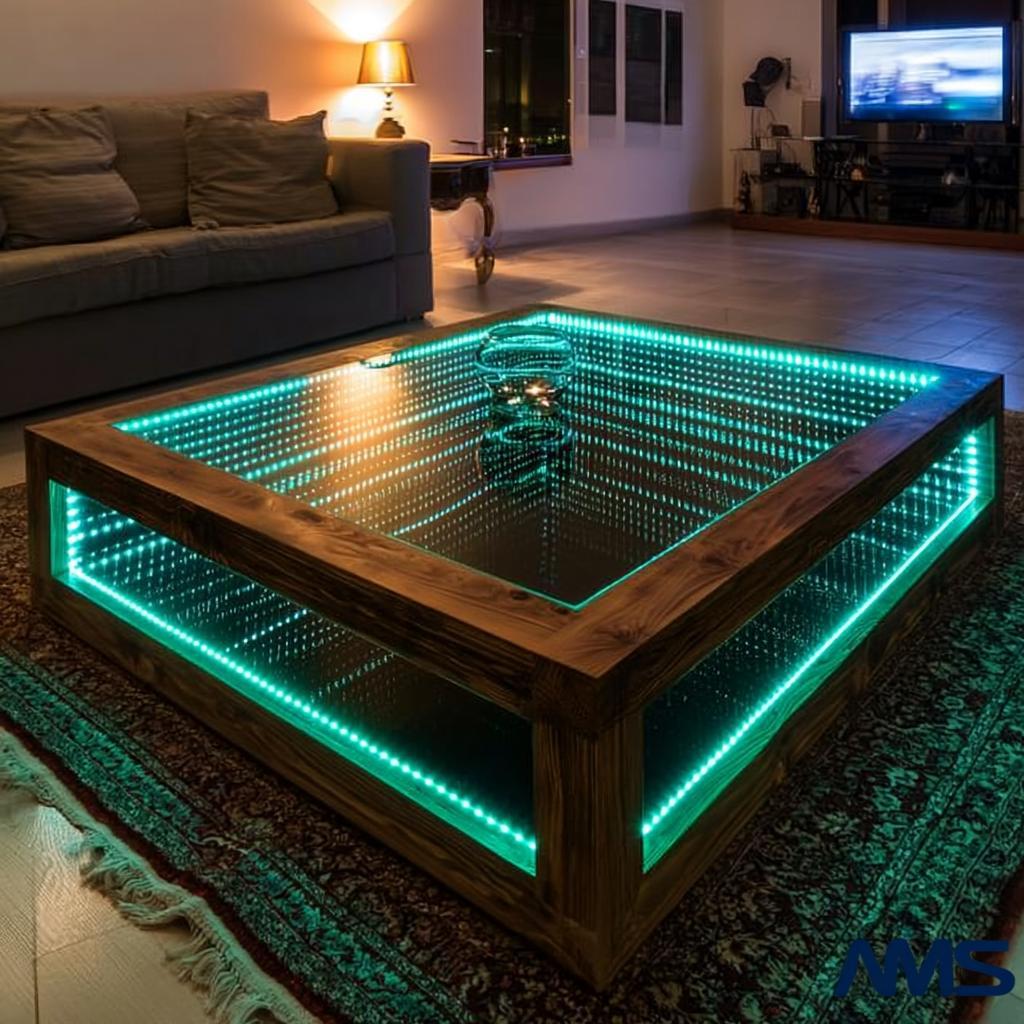
An infinity table design adds ambient depth to a cosy, minimal living room setup.
In a recent HomeLane project in Bangalore, a client wanted a large infinity table for their living room.
The design team suggested scaling it down to a medium-sized table with a matte black frame and tempered glass top. The reason was simple. The room already had a sectional sofa, and a larger table would have reduced movement space.
The final setup created a strong focal point without affecting usability. This is often the difference between a design that looks good in isolation and one that works in a real home.
Common Mistakes to Avoid
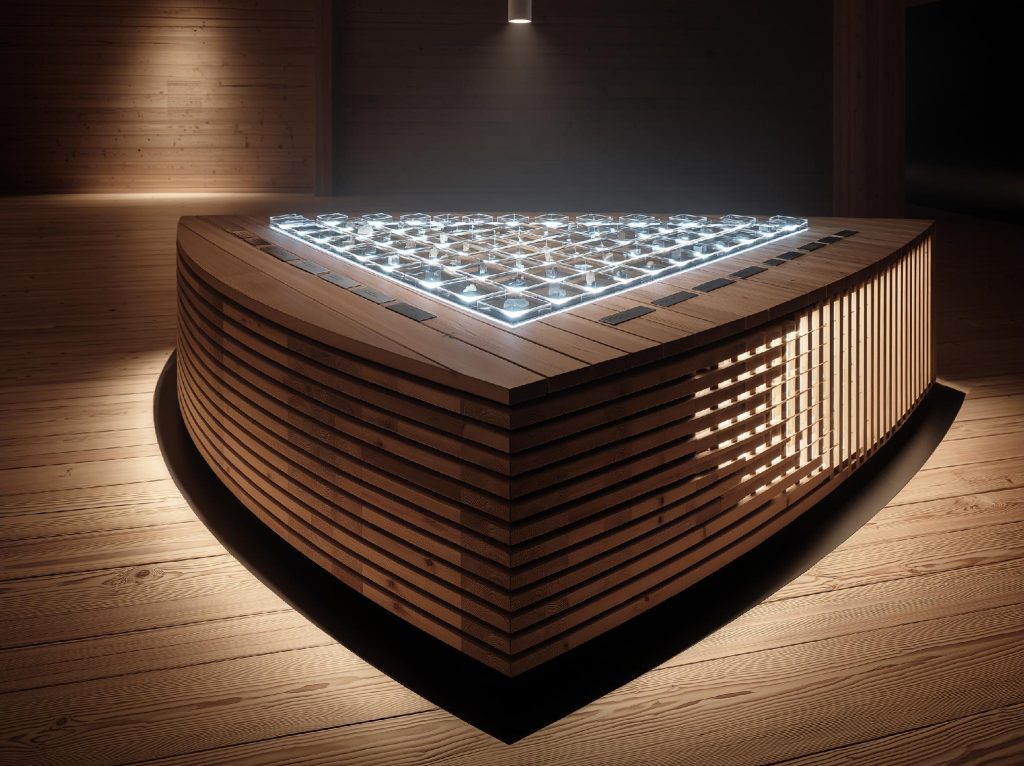
Unconventional shapes show how flexible infinity table design ideas can truly be.
A common mistake is choosing an infinity table design purely for the visual effect.
Oversized tables can block movement in smaller living rooms. Another issue is skipping tempered glass to reduce cost, which affects safety.
Again, many people forget that this table needs to be plugged to a power point, and bulky wiring can be an eyesore. Plan the electrical wiring ahead and keep things concealed.
The better approach is to balance design with function. Choose a size and material that fits your space and daily use.
How Infinity Tables Perform in Daily Use
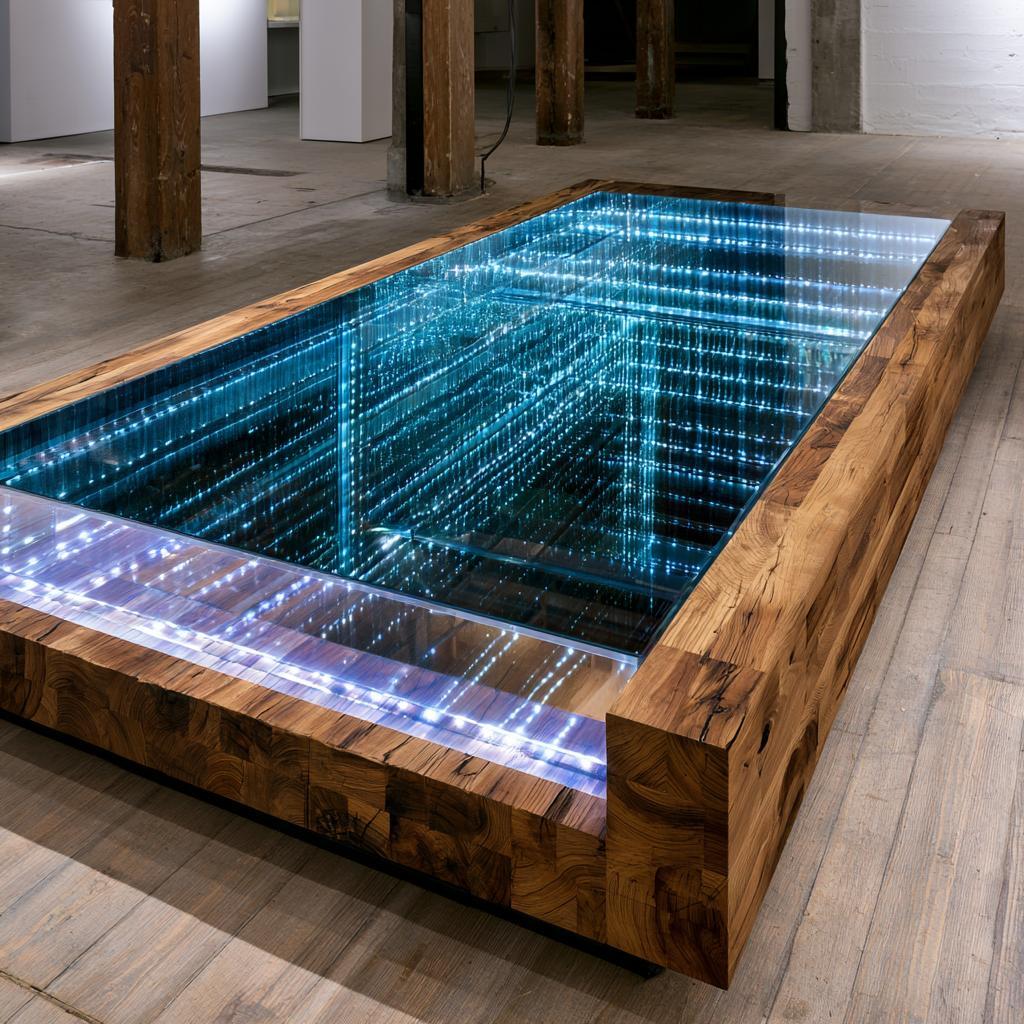
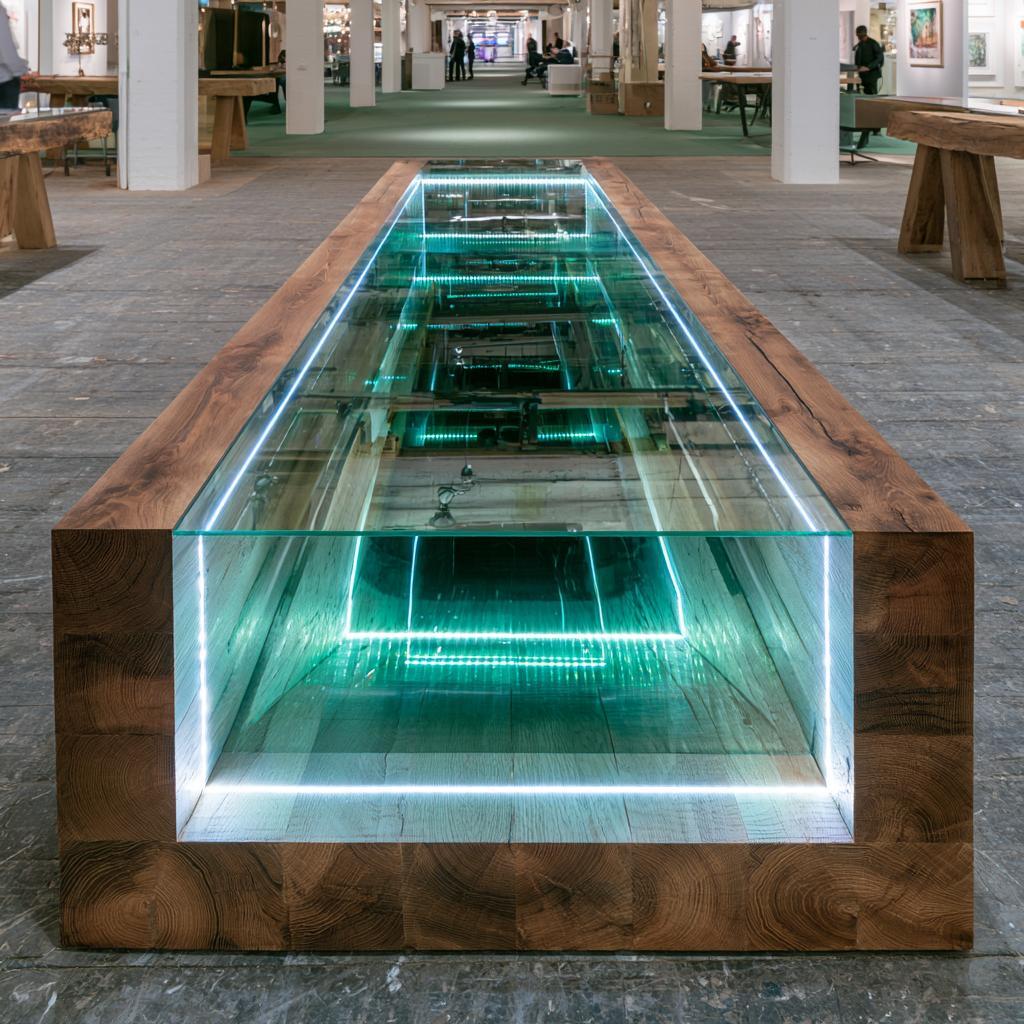
A sturdy wooden frame anchors this infinity table design in an open industrial space.
Infinity tables look striking, but they do need a bit more attention than regular tables.
Reflective surfaces tend to show dust faster than matte finishes, especially in Indian homes where windows are often kept open. Glass tops can pick up fingerprints easily, so regular wiping is needed to keep the effect clear.
LED strips need occasional checking. Dust buildup along the inner edges can slightly dull the lighting effect over time. Choosing a sealed design helps reduce this issue.
Since an infinity mirror table design relies on LED lighting, it needs a power source. If the wiring is left exposed, it can take away from the clean look of the table and make the setup feel unfinished.
The best approach is to plan for a nearby socket or use concealed wiring along the table leg or wall edge.
If low maintenance is a priority, go for a darker base with a matte outer frame. This keeps the table looking clean even with daily use.
What to Check Before You Finalise Your Infinity Table
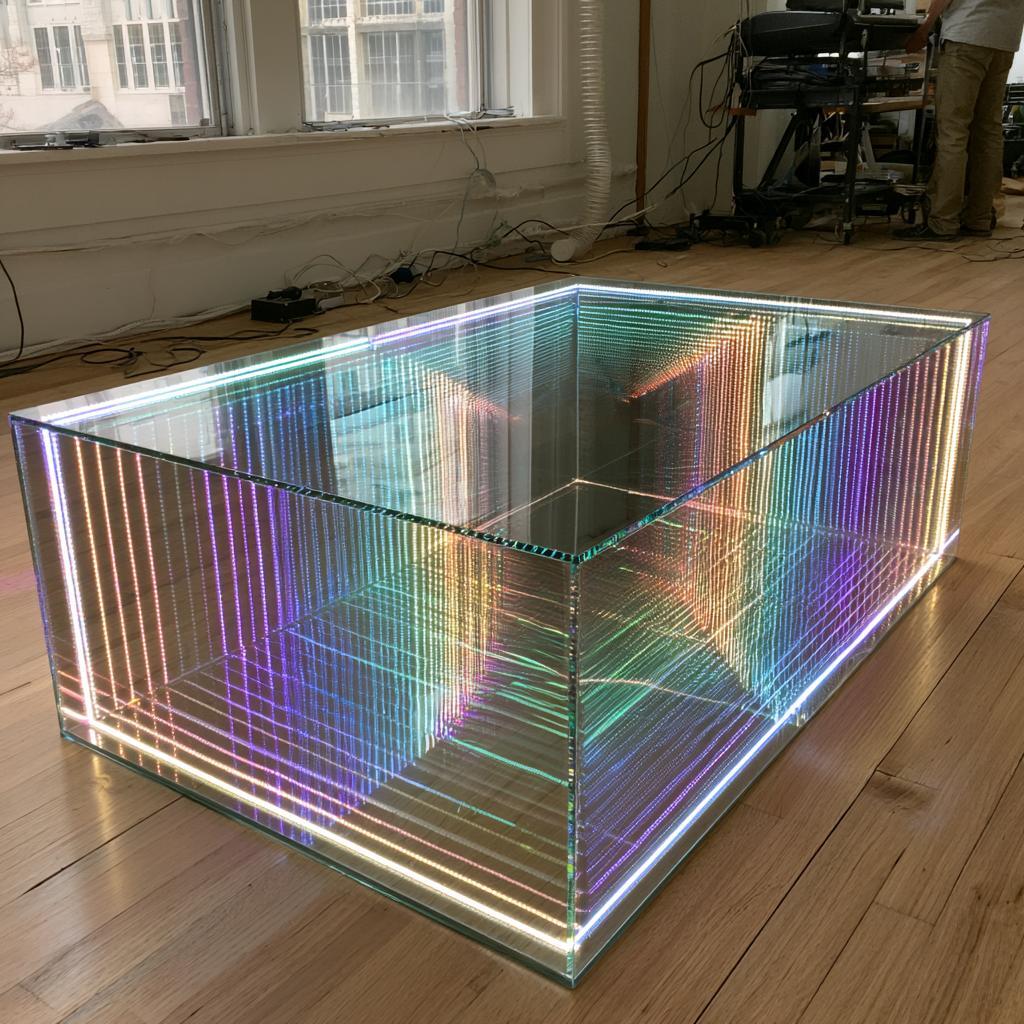
This elongated infinity table design highlights strong build and material quality.
Before finalising your infinity table design, check these three things.
First, measure your movement space. You should be able to walk around the table comfortably.
Second, confirm material quality. Tempered glass and stable framing are essential for long-term use.
Third, check lighting conditions. The infinity effect depends on ambient lighting, so placement matters.
If you want to explore designs that balance function and visual impact, book a free consultation with HomeLane and see how it fits into your living room layout.
FAQs
1. What is an infinity table design?
An infinity table uses mirrors and LED lights to create the illusion of depth. The design reflects light repeatedly to give a tunnel-like effect. It works best in controlled lighting conditions.
2. Is an infinity table suitable for a living room?
Yes, it works well as a centre table in modern living rooms. It adds visual interest without needing additional décor. The size should match the room layout for comfort.
3. Is tempered glass necessary for an infinity table?
Yes, tempered glass is recommended for safety and durability. It can handle weight and impact better than regular glass. This is especially important for daily-use tables.
4. What size infinity table should I choose for my living room?
Choose a size that allows easy movement around it. In smaller rooms, compact tables work better. In larger spaces, wider tables can be used without blocking flow.
5. Are infinity tables safe for homes with children?
They can be safe if built with rounded edges and tempered glass. Avoid sharp corners and unstable designs. Proper construction reduces risk significantly.
6. How do I clean an infinity mirror table without damaging it?
Use a soft cloth and mild cleaner to wipe the surface. Avoid harsh chemicals that can damage the reflective layer. Regular cleaning keeps the effect clear and visible.













 EXPLORE MORE