Bedroom Design Ideas to Make Your Space Feel Beautiful and Functional
By Usha Balasubramanyan- January 10, 2026
AI Summary
3 key insights · 1 expert tip
Transform your spare room into a functional and stylish space with creative design ideas, incorporating versatile furniture and personalised decor.
Key Insights:
What You'll Read Here:
Maximise utility by allowing your spare bedroom to serve multiple purposes, such as a guest room, home office, or hobby area.
Incorporate smart storage solutions with compact wardrobes, chest of drawers, and wall shelves to keep the room tidy and organised.
Personalise the space with unique wall treatments, comfortable seating, and cherished accessories to create a warm and inviting atmosphere.
HOMELANE EXPERT TIPBy our design team
When designing a spare room, prioritise adaptable furniture like sofa beds or fold-down beds to easily accommodate guests while maintaining everyday functionality.
A bedroom can have the perfect headboard, beautiful lighting and a very photogenic rug. But if you have to shuffle sideways to reach the wardrobe every morning, something has gone rather wrong!
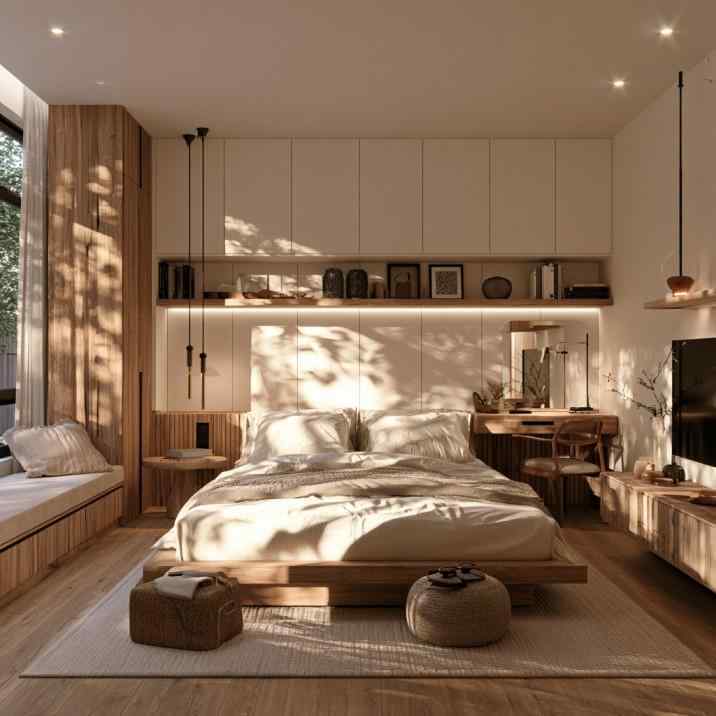
Overhead cabinets, a window seat and a compact desk make every wall work in this warm bedroom.
The most successful bedroom design ideas balance looks with the less glamorous details: circulation, storage, plug points, lighting and where you actually put tomorrow’s clothes. Get those right, and the decorating becomes considerably more fun.
What Makes a Good Bedroom Design Work for Comfort and Style?
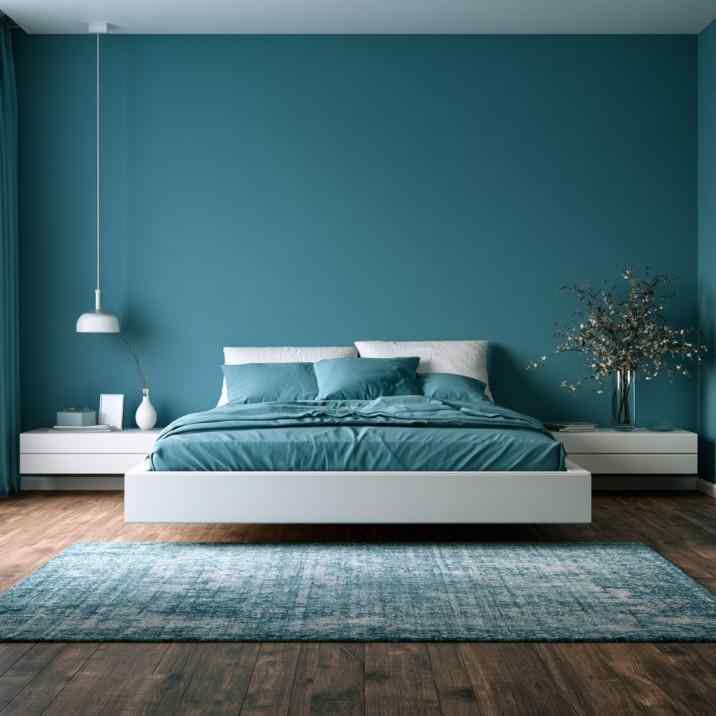
A teal wall and white floating bed show how one strong colour can anchor a modern bedroom.
Begin with the big three: bed, wardrobe and movement.
The bed usually establishes the room’s focal point, so position it where there’s comfortable access and enough room for the other essentials. Then look at wardrobe clearance. Hinged shutters need room to open, while sliding wardrobes are useful when space between the bed and wardrobe is limited.
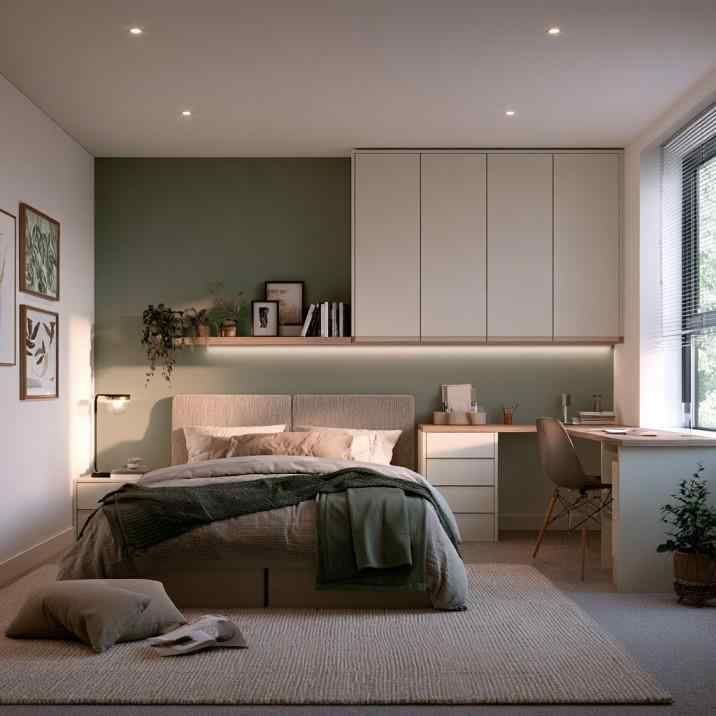
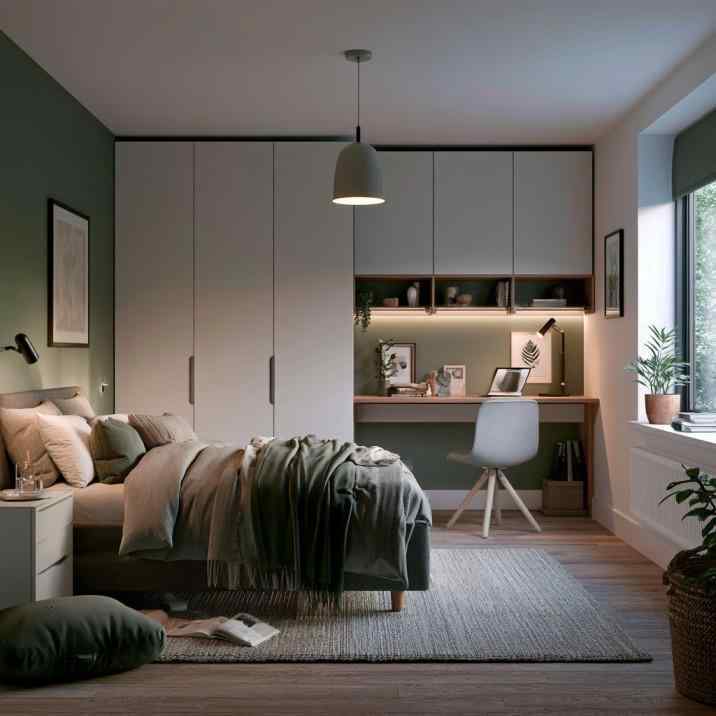
Sage walls, overhead cabinets and a corner desk balance comfort and function in a compact bedroom.
Next comes storage. Plan it around what you own rather than automatically filling a wardrobe the way others do.
Comfort also comes from what isn’t immediately visible. Convenient bedside switches, charging points, blackout curtains where needed and a reading light in the right place can make all the difference to everyday life!
What Are the Best Bedroom Design Ideas for Different Styles and Spaces?
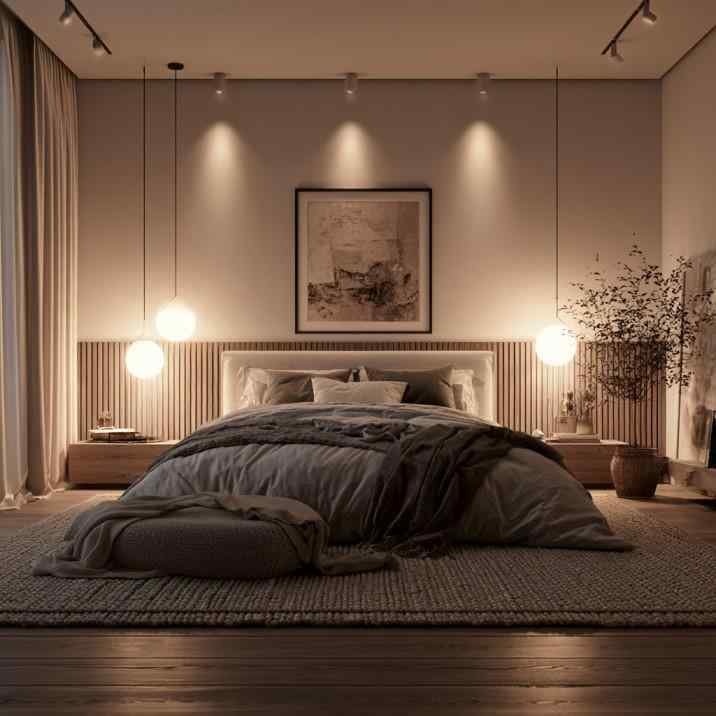
Pendants, spotlights and bedside glow show how layered lighting sets a softer bedroom mood.
There is no single winner among the best bedroom design ideas. The right approach depends on how you want it to feel.
Contemporary bedrooms can mix streamlined furniture with warm wood, textured fabrics and restrained colour. Modern bedroom design ideas can include floating bedside units, simple wardrobes, upholstered beds and layered lighting.
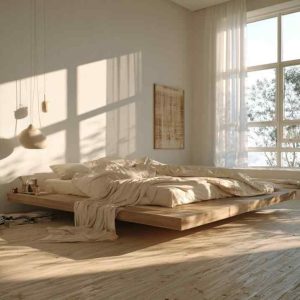
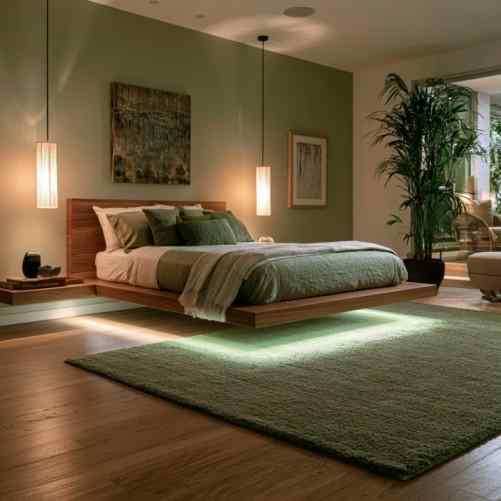
A floating wooden bed with soft under-glow pairs beautifully with an earthy olive green wall.
Prefer something softer? Think timber, cane, linen-look fabrics and warm earthy shades. Traditional Indian bedrooms can take richer woods, handcrafted textiles and deeper colours beautifully, while minimalist rooms benefit from tonal finishes and concealed storage.
For master bedroom design ideas, give yourself permission to add more comfort. A generous headboard, reading chair, dresser or layered window treatment can make the room feel complete, provided space permits.
What Bedroom Design Ideas Work Best for Small and Large Rooms?
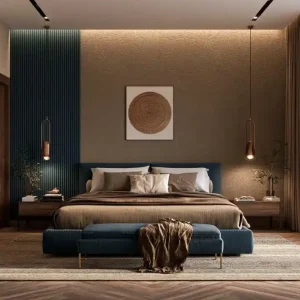
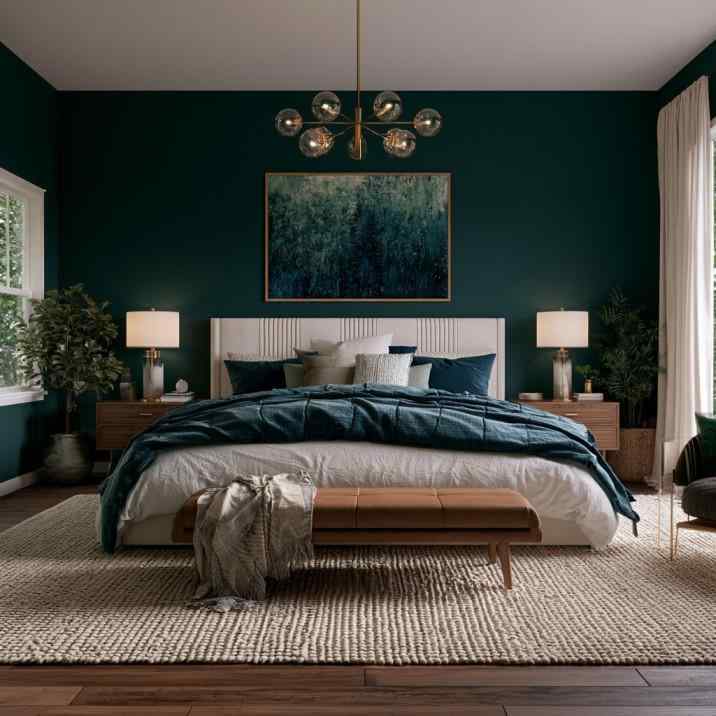
Deep green walls, a generous headboard and an end bench give this master bedroom a finished feel.
Among the most useful bedroom design ideas for small rooms are sliding wardrobes, storage beds, wall-mounted bedside tables and wardrobes that use vertical space efficiently. Keep the floor visible where possible and avoid squeezing a chest, bench and extra chair into the room simply because they’re standard.
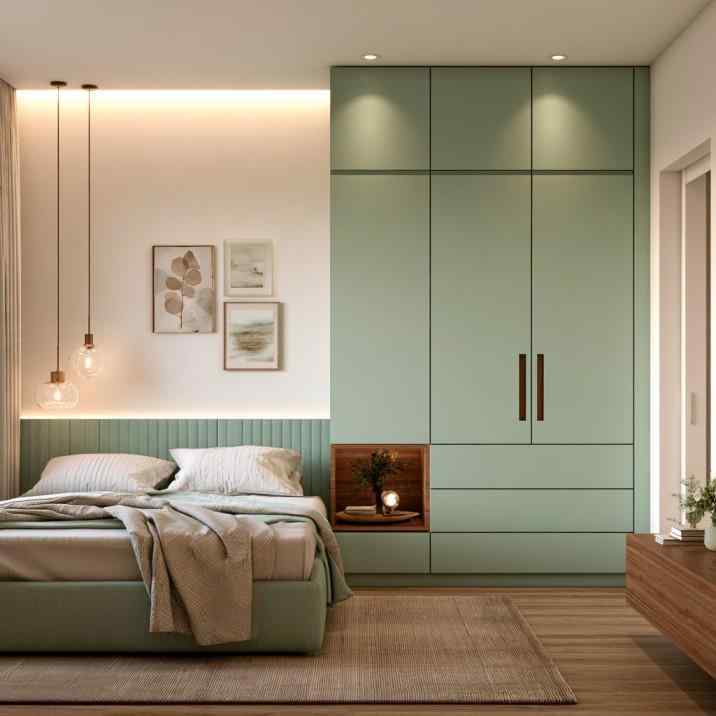
A sage wardrobe and matching headboard panel keep surfaces calm and the room visually cohesive.
Thoughtful small bedroom design ideas also reduce visual interruptions. Similar wall and wardrobe colours, simple window treatments and one continuous flooring material can help the eye travel smoothly around the room.
Large bedrooms have the opposite problem. Furniture floating randomly around a big room can make it feel strangely unfinished. Use rugs, lighting and furniture groupings to establish zones for sleeping, dressing or reading.
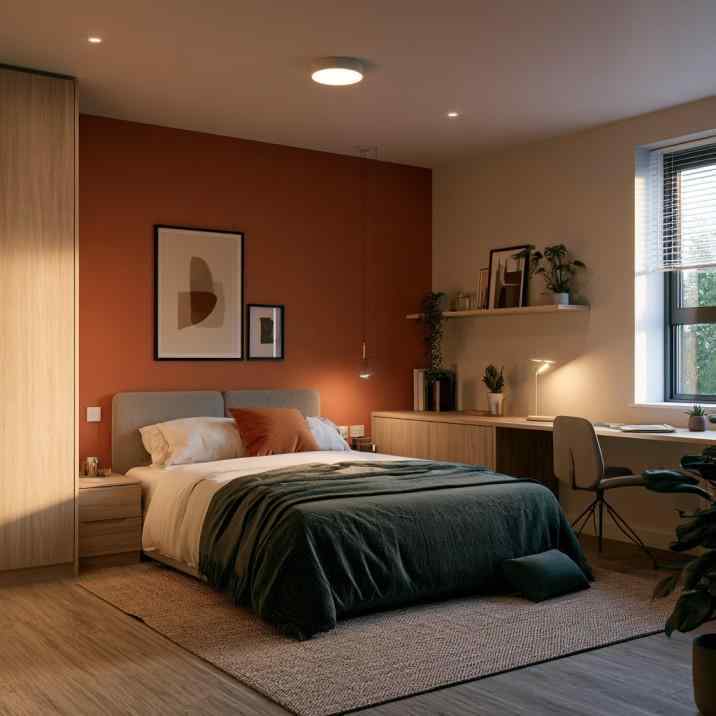
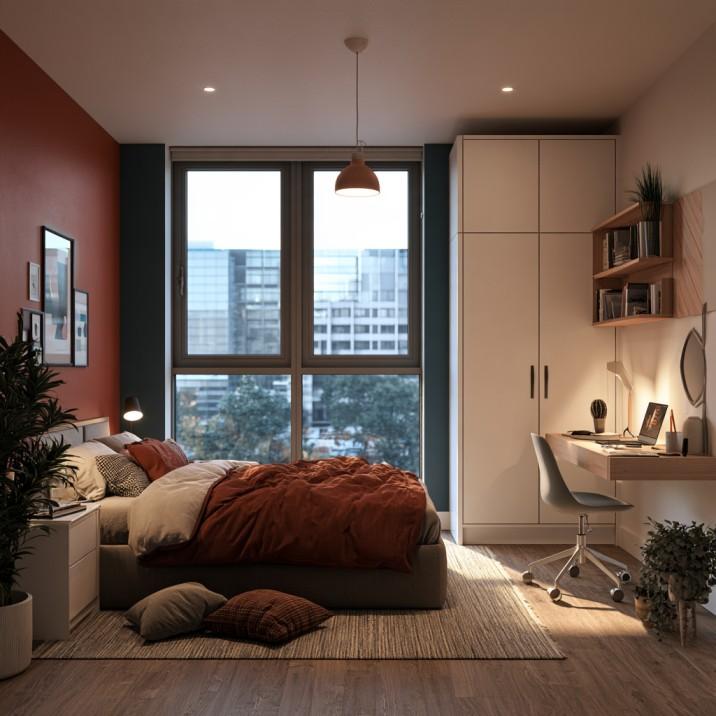
A terracotta wall adds earthy warmth, while the window desk turns spare space into a work zone.
Bedroom Challenge
Design Move
Why It Helps
Limited floor space
Wall-mounted furniture
Frees visible floor area
Not enough storage
Full-height wardrobe
Uses vertical space
Narrow bed clearance
Sliding wardrobe
Removes door swing
Large empty room
Create separate zones
Gives space structure
Low natural light
Light-to-mid-tone palette
Keeps the room visually open
Which Furniture, Colours, Lighting and Décor Should You Choose?
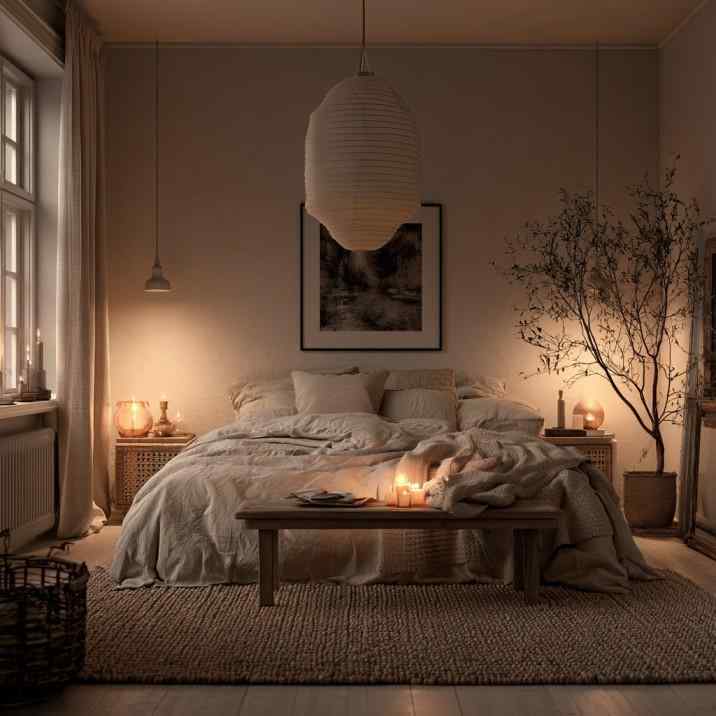
Linen bedding, rattan and warm candlelight show how tactile textures make a bedroom feel restful.
Here’s a useful rule: don’t let every element compete for the starring role!
If your bed has a dramatic upholstered headboard, keep the wall behind it relatively restrained. If you’ve chosen colourful wallpaper, simpler furniture may allow it to shine. These simple bedroom design ideas often create more polished rooms than trying to make every surface decorative.
For colour, warm whites, mushroom, sage, olive, dusty blue, clay and deeper browns are versatile options. Wood finishes can add warmth without requiring additional colour.
Linen bedding, rattan and warm candlelight show how tactile textures make a bedroom feel restful.
Lighting deserves layers rather than one bright ceiling fixture. Combine general illumination with bedside or reading lights, wardrobe lighting where useful and subtle ambient lighting for evenings. Place switches where they’re convenient from the bed.
Décor should finish the room rather than fill it. Artwork, a rug, cushions, curtains and a few personal objects are often enough.
Which Latest Bedroom Design Ideas Are Worth Trying in 2026?
A full-height wardrobe and wall-mounted desk keep floor space clear in this small city bedroom.
The latest bedroom design ideas for 2026 are less about one must-have piece and more about making bedrooms feel warmer, more tactile and personal.
Layered textures, warmer woods, earthy colours and softly upholstered surfaces can take the edge off very sleek interiors. Integrated headboard walls that combine upholstery, bedside lighting and compact tables can also give the room a beautifully finished look.
What Are the Most Important Things to Consider Before Finalising Your Bedroom Design?
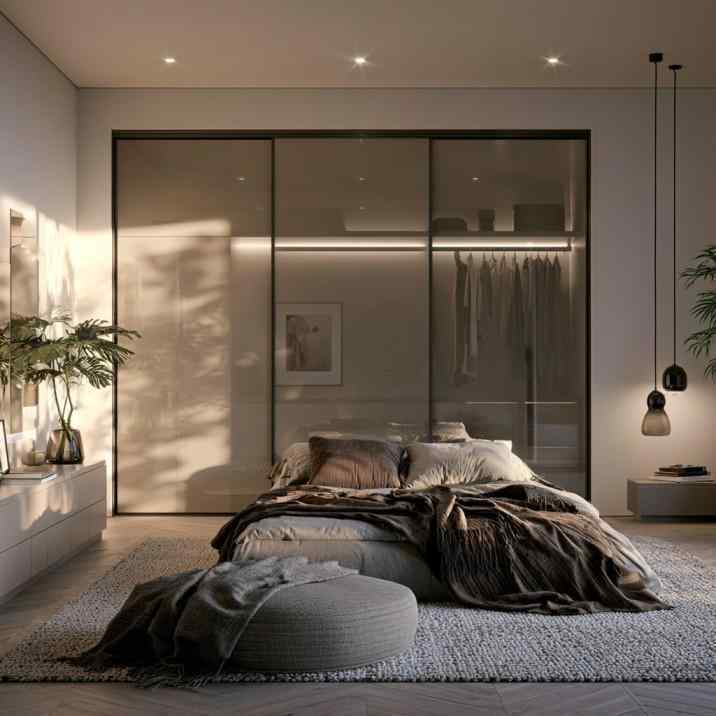
Sliding glass wardrobe doors remove door swing, making them ideal where bed clearance is tight.
Before approving anything, mentally walk through a normal day in the room.
Can you open the wardrobe while someone else walks past? Is there somewhere to charge your phone without stretching a cable across the floor? Can you reach a light switch from bed? Where does the laundry basket go? Can drawers open fully?
Also think ahead. Storage requirements change, technology changes and you may eventually want to move furniture around. Wherever possible, build some flexibility into the design instead of making every element permanently dependent on one arrangement.
Create a Bedroom That Works After the Photos Are Taken
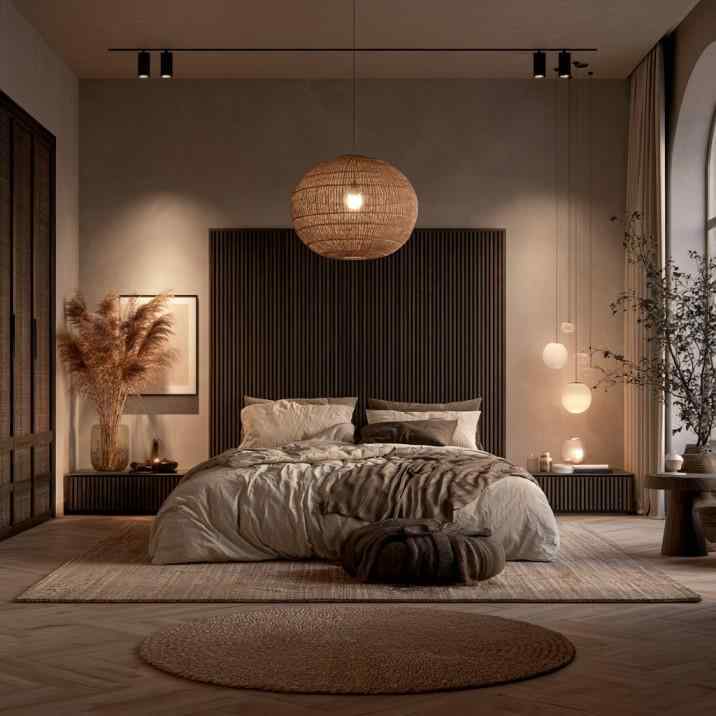
A dark fluted headboard wall, rattan pendant and earthy tones capture the warmer 2026 bedroom mood.
Beautiful bedrooms are lovely. Beautiful bedrooms that make Monday mornings easier are even better. Use our bedroom design ideas as inspiration rather than a shopping list.
HomeLane can help you bring furniture, wardrobes, lighting, colours and storage together in one cohesive bedroom plan. Book a free consultation and create a bedroom that’s every bit as good to live in as it is to look at!
FAQs
1. Which style is best for a bedroom?
There is no single best style. Contemporary, minimalist, traditional and nature-inspired interiors can all work beautifully. Choose one that suits your taste, existing home and preferred level of maintenance.
2. What are the 2026 bedroom trends?
Warmer woods, earthy colours, tactile fabrics, layered lighting and integrated headboard designs are among the directions influencing bedrooms in 2026. Personal, comfortable interiors are taking precedence over overly coordinated spaces.
3. How can I make a small bedroom look bigger?
Keep furniture proportionate, use vertical storage and maintain visual continuity across large surfaces. Wall-mounted furniture, mirrors and lighter or mid-tone colour schemes can also make the room feel less crowded.
4. What colours are best for a bedroom?
Warm neutrals, muted greens, soft blues and earthy shades work particularly well. Deeper brown, blue or green can create a cosier mood in rooms that can comfortably carry stronger colour.
5. What type of lighting is best for a bedroom?
Use layered lighting. Combine general ceiling illumination with bedside reading lights and softer ambient lighting. Wardrobe or dressing-area lighting can be added where it improves functionality.
6. How can I maximise storage in a small bedroom?
Take wardrobes upwards, use internal organisers and consider a storage bed where appropriate. Wall-mounted shelves and bedside units can add useful storage without occupying much floor space.
7. How can I make my bedroom feel more comfortable and relaxing?
Reduce clutter, choose comfortable bedding, control unwanted light and layer your lighting. Soft textures, a cohesive colour palette and furniture arranged for easy movement can also make the room feel more restful.










 EXPLORE MORE