Wardrobe longevity depends on internal hardware quality, not door style; opt for high-cycle rated systems for a lasting investment.
Key Insights:
What You'll Read Here:
- Quality hinges or tracks can cost between Rs. 2,000-Rs. 5,000, with premium options reaching higher.
- Durable materials like solid wood or metal are essential for long-term hardware performance.
- Hardware cycle ratings, like 100,000 cycles, ensure wardrobes last 25+ years with proper maintenance.
HOMELANE EXPERT TIP By our design team
Prioritise soft-close mechanisms and high-cycle rated hardware (Hettich, Blum, Häfele, Aristo) for optimal hinged or sliding wardrobe durability.
If you’re picking a new wardrobe, you’ve probably wondered which kind will hold up better in the long run. The sliding one or the classic hinged one. It’s a fair question, and most answers online dodge it with “it depends on your space and preference.” Helpful, but not really.
So here’s the straight answer based on what we see in HomeLane projects every day. Both kinds can last well over a decade, and neither door type wins on durability alone. What actually decides whether your wardrobe is still working smoothly fifteen years from now is the hardware behind the door (the hinges or the sliding system). That’s where the real difference lies.
Here’s how to think about it.
How Often Do You Actually Use Your Wardrobe?
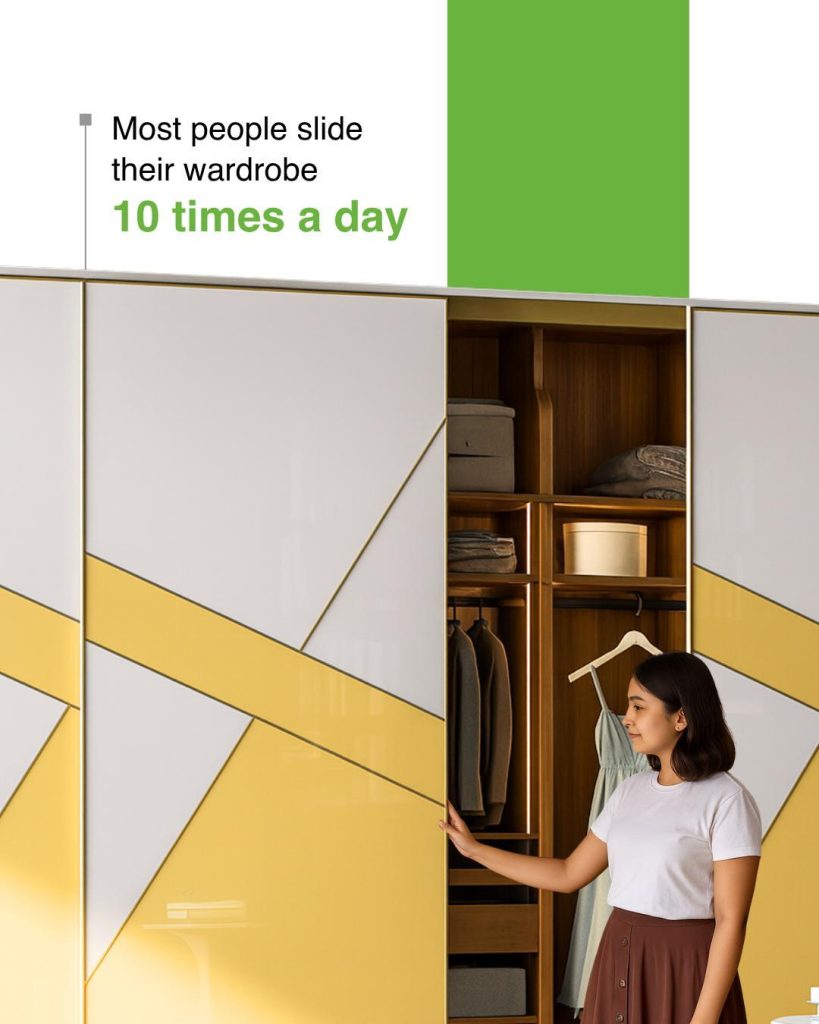
More than you think. The average home opens its wardrobe around 10 times a day. Once in the morning, a couple of times when you’re heading out, and again in the evening when you put things away. In a busy household with kids, the number doubles easily.
That works out to 3,600 openings a year, or over 50,000 cycles across the lifetime most people expect from a wardrobe. Which is a lot of work for a single set of hinges or a single sliding track. The honest question to ask before buying anything is this: has the hardware actually been tested for that kind of use?
Hinged Wardrobes: What to Expect
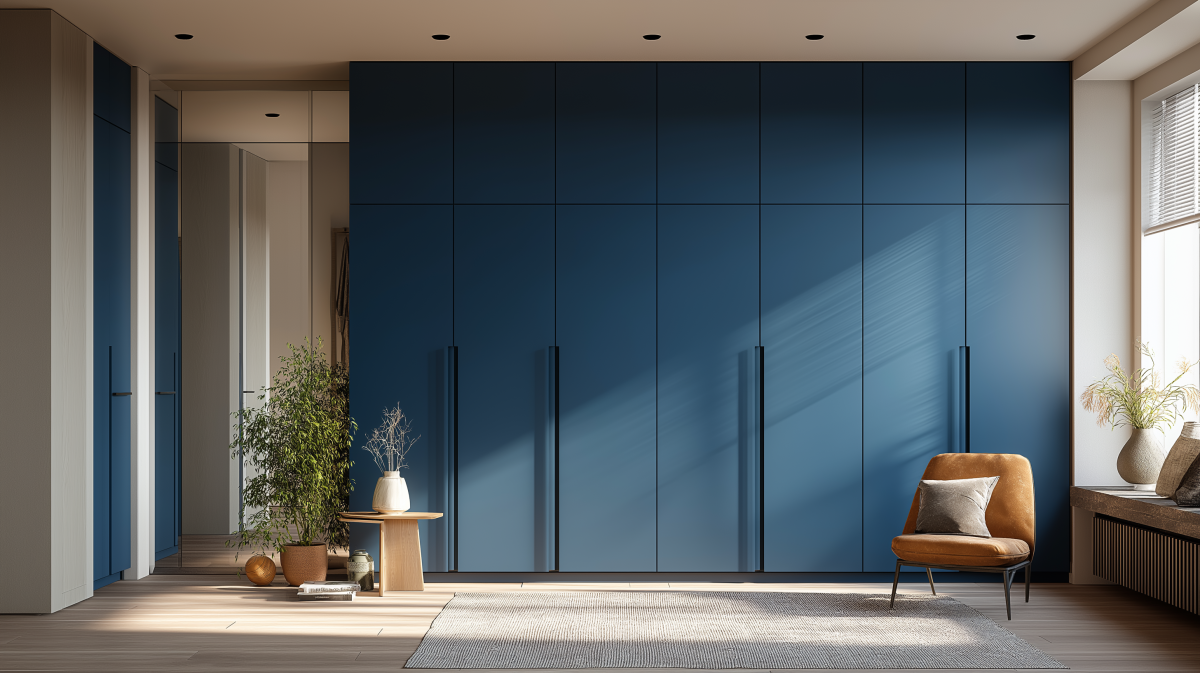
Hinged wardrobes are the familiar format, with doors that swing outward on hinges fixed to the frame. They’re great when you want full visibility (you can see your whole wardrobe at a glance), and they tend to be a bit cheaper upfront because hinges cost less than track systems. If a hinge does wear out, swapping it is a quick job.
Where they struggle is over time. The hinges carry the entire weight of the door at just two or three points, and after thousands of openings, the screws slowly work themselves loose. The wider or taller the door, the faster it happens. Doors above 600mm wide or 7 feet tall really push standard hinges to their limit. Heavy finishes like mirrored, lacquered, or thick laminate doors wear them out quicker, too. And of course, hinged doors need clearance space in front, which can be a problem in compact bedrooms.
In our experience, a hinged wardrobe with quality soft-close hinges (Hettich, Blum, Häfele) holds up nicely for 12 to 15 years before anything needs attention. Cheap hinges can start sagging in three to four. Big difference for a part most people never even think to ask about.
Sliding Wardrobes: What to Expect
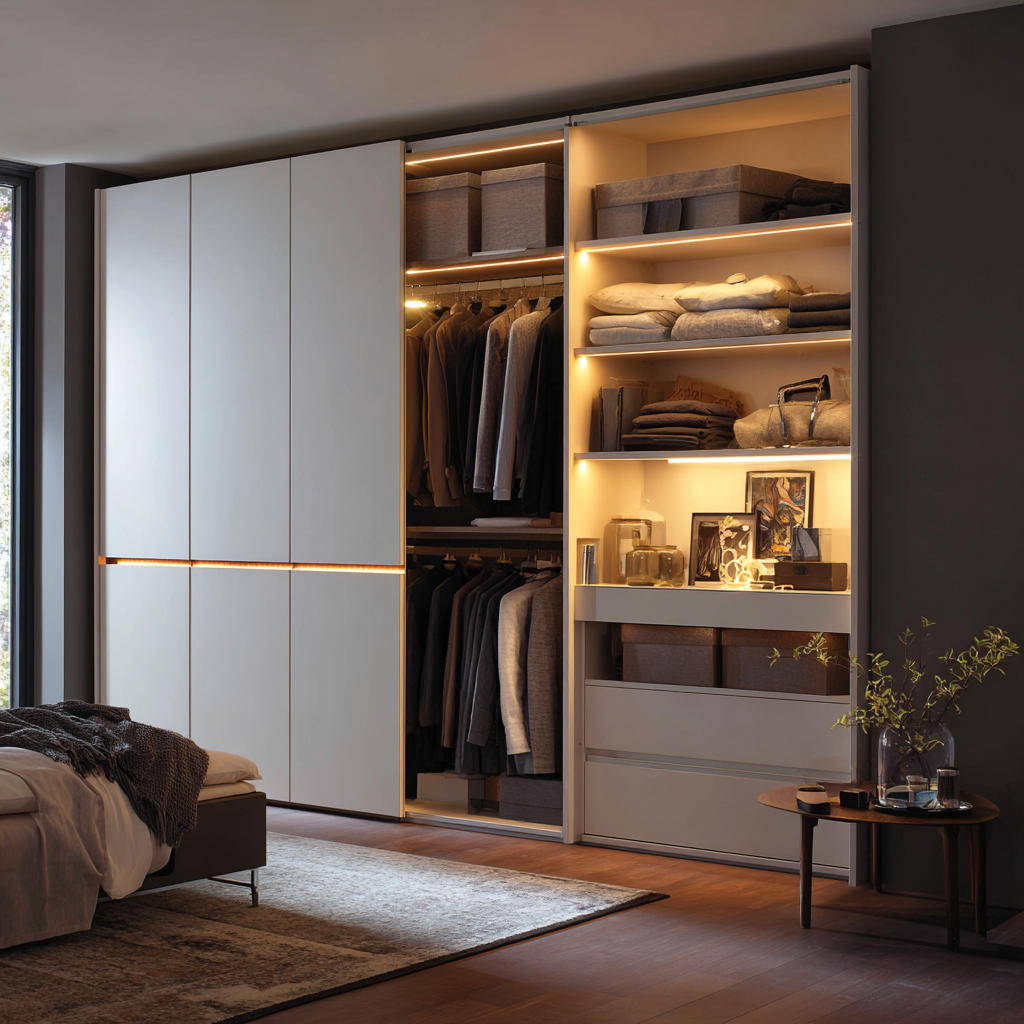
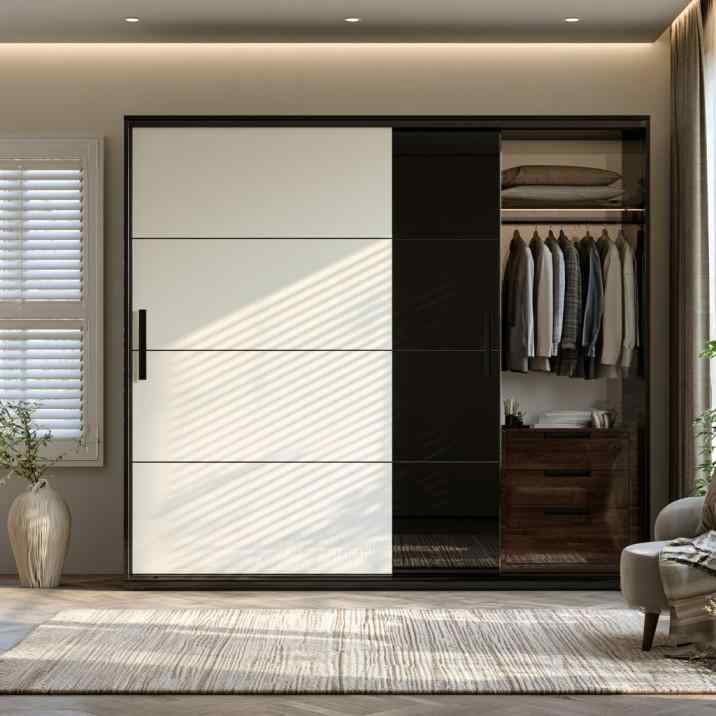
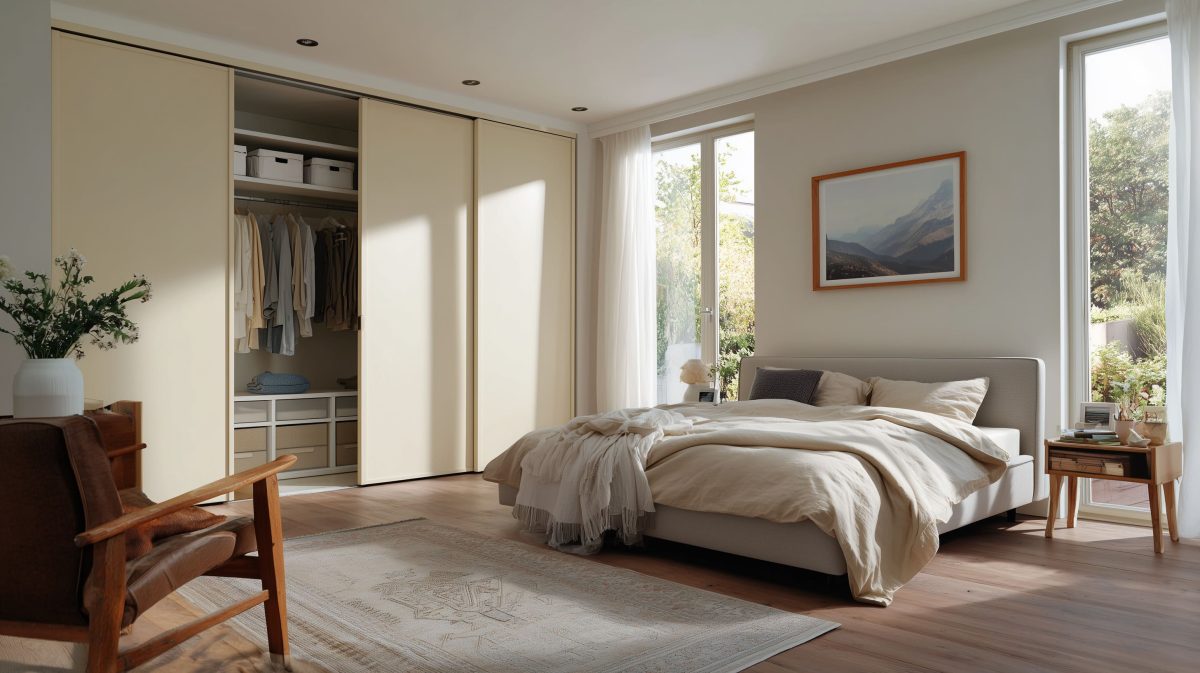
Sliding wardrobes have doors that move sideways on tracks, with rollers at the top, bottom, or both. The big advantage is space, since there’s no swing-out clearance needed and you reclaim all that floor area. They also handle tall, heavy doors much better than hinges, because the weight gets distributed across a track instead of hanging off two points. They look cleaner too, especially in floor-to-ceiling configurations, and a good soft-close system makes them quieter than hinged doors.
The trade-offs are real, though. You can only see half (or two-thirds) of your wardrobe at any time. The bottom track collects dust and lint, which means a quick clean every month or so. And if the track quality isn’t great, you can run into drag, jumps, or misalignment, all of which are harder to fix than a loose hinge.
Here’s the thing with sliding systems. The gap between good hardware and cheap hardware is bigger than most people realise. A premium track stays smooth for decades. An entry-level one can start jamming within two or three years, and once a track misaligns, the whole door usually has to come off to fix it.
So Which One Actually Lasts Longer?
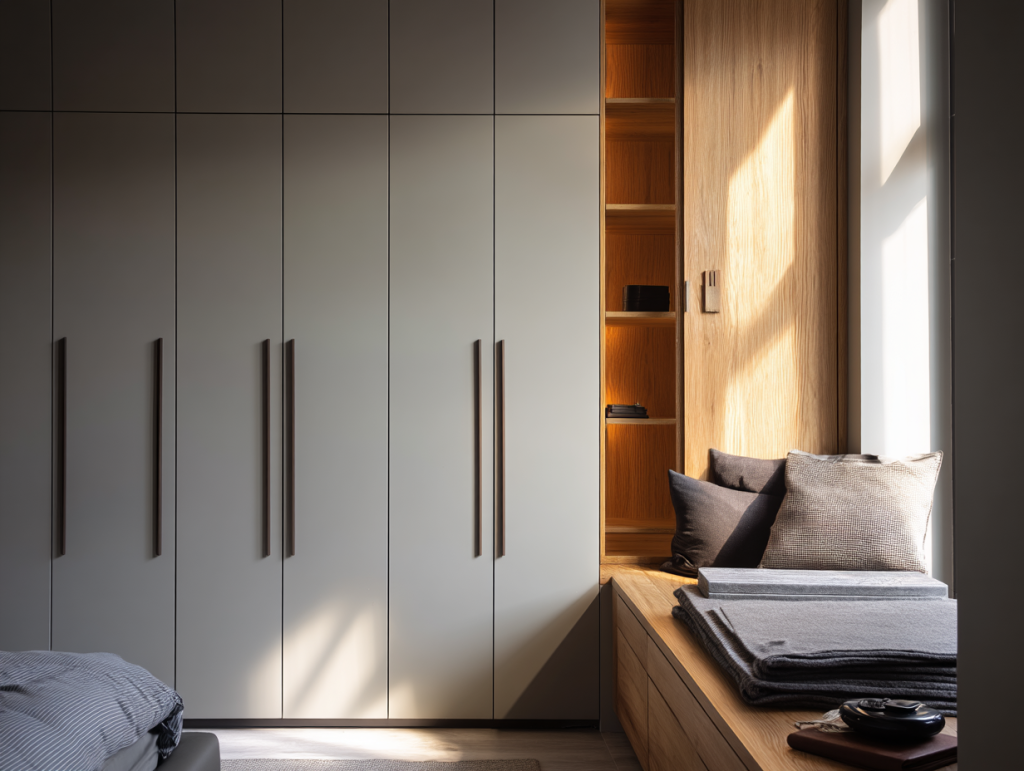
Honest answer? Neither door type wins on its own. A premium hinged wardrobe will outlast a cheap sliding one, and a well-made sliding wardrobe will outlast a budget hinged one. What you should really be comparing isn’t the door style. It’s the cycle rating of the hardware.
And here’s where it gets interesting. Most wardrobe brands won’t give you a cycle-test number. They’ll talk about “premium hardware” or “international quality,” but ask them how many opening cycles the system has been tested for, and you usually get a vague answer.
The brands worth taking seriously are the ones that publish the number.
For sliding systems, Aristo’s sliding hardware is tested for 1,00,000 cycles, which at 10 slides a day works out to roughly 28 years of everyday use. That’s an actual lab test, not a marketing number. Aristo’s range powers HomeLane’s curated Armadio sliding wardrobes, which is why we’re comfortable putting them in homes that need to last a long time.
For hinged wardrobes, look for soft-close hinges from Hettich, Blum, or Häfele, which publish similar cycle ratings, usually somewhere between 80,000 and 200,000 cycles depending on the model. Whichever way you go, the cycle number is the only honest way to compare durability.
How to Choose Between the Two
With the durability question out of the way, the choice really comes down to your room and your habits. Three things to think about:
1. How much clearance do you have in front of the wardrobe?
If it’s less than 75 cm, which is common in compact urban bedrooms, sliding makes life easier. You won’t be stepping around an open door every morning.
2. How tall is the wardrobe going to be?
Hinged doors taller than 7 feet put serious load on the hinges and can be tricky to keep aligned. If you’re going floor-to-ceiling (which a lot of HomeLane clients are doing now), sliding is generally the safer engineering call.
3. How much do you care about full visibility?
Some people find it mildly annoying that you can never see the whole sliding wardrobe at once. If you like to scan everything before getting dressed, hinged wins on this one.
Budget is usually a smaller factor than people expect. The price gap between a quality hinged setup and a quality sliding setup isn’t huge. Most of the wardrobe cost sits in the carcass, the finish, and the internals, not the doors.
A Quick Word on Maintenance
Both door types need a tiny bit of attention to last the full distance, and we mean tiny.
For hinged wardrobes: Tighten the hinge screws once a year, and they’ll stay aligned. A drop of light machine oil sorts out any squeak. Replace any hinge that develops play right away, because letting it run damages the wood around it.
For sliding wardrobes: Run a dry cloth or a vacuum nozzle along the bottom track once a month to keep dust out. No water near the rollers. If a door starts feeling heavier, the rollers might just need a small adjustment, since most sliding systems have a screw to fine-tune the height.
Neither routine takes more than ten minutes a year. That small bit of upkeep is genuinely the difference between a wardrobe that lasts 8 years and one that lasts 25.
What We See on HomeLane Projects
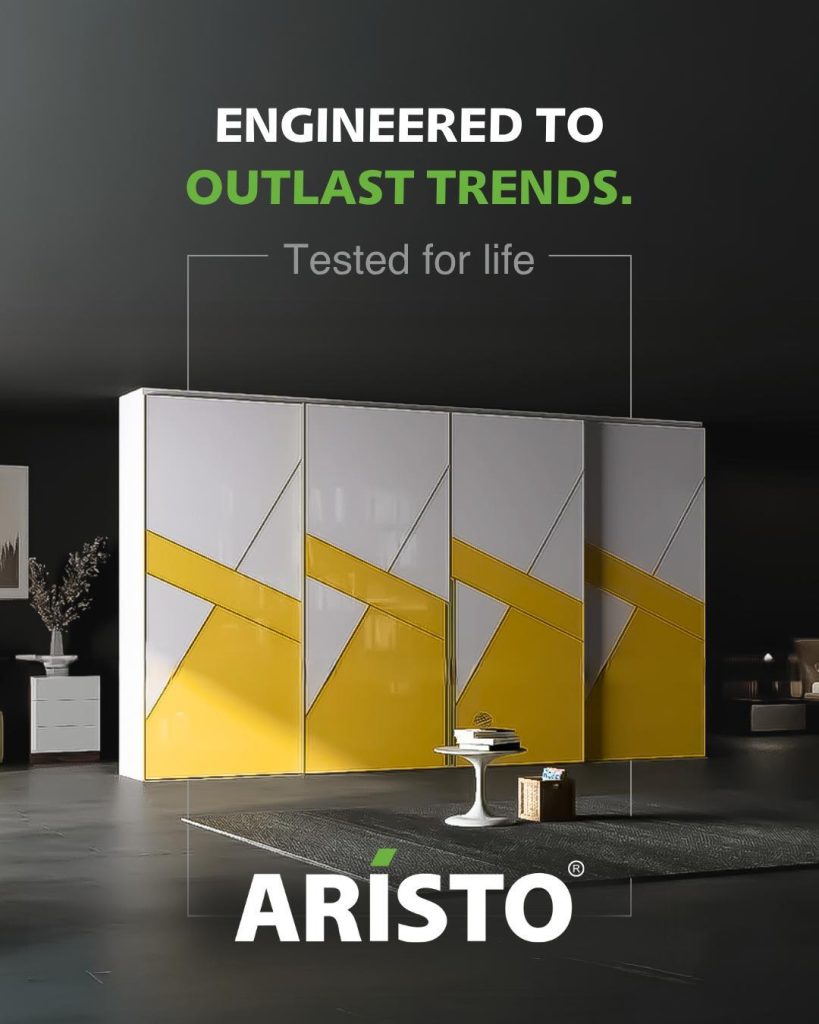
Most HomeLane bedrooms now end up with sliding wardrobes, mostly because urban Indian bedrooms are getting smaller and floor-to-ceiling layouts are increasingly the norm. But hinged is still the right call in plenty of homes, especially larger master bedrooms, where clearance isn’t an issue and the client wants full visibility.
What’s changed is the conversation. It used to be “sliding or hinged?” Now it’s closer to “what’s behind the door?”, meaning what brand of hardware, what cycle rating, what soft-close mechanism. The door style is mostly a function of the room. The hardware is what decides whether the wardrobe is still working smoothly when your kids move out.
If we had to put it in one line: a cheap wardrobe with the wrong hardware will fail no matter which door style you pick, and a well-engineered one will last regardless. The decision worth obsessing over isn’t sliding versus hinged. It’s everything underneath.
Planning a Wardrobe That Actually Lasts?
If you’re trying to figure out the right wardrobe for your bedroom (sliding, hinged, or something in between), HomeLane designers can walk you through the options based on your space, your storage needs, and the kind of hardware that’ll hold up over time. Drop into one of our Experience Centres or book a consultation online to get started.










 EXPLORE MORE