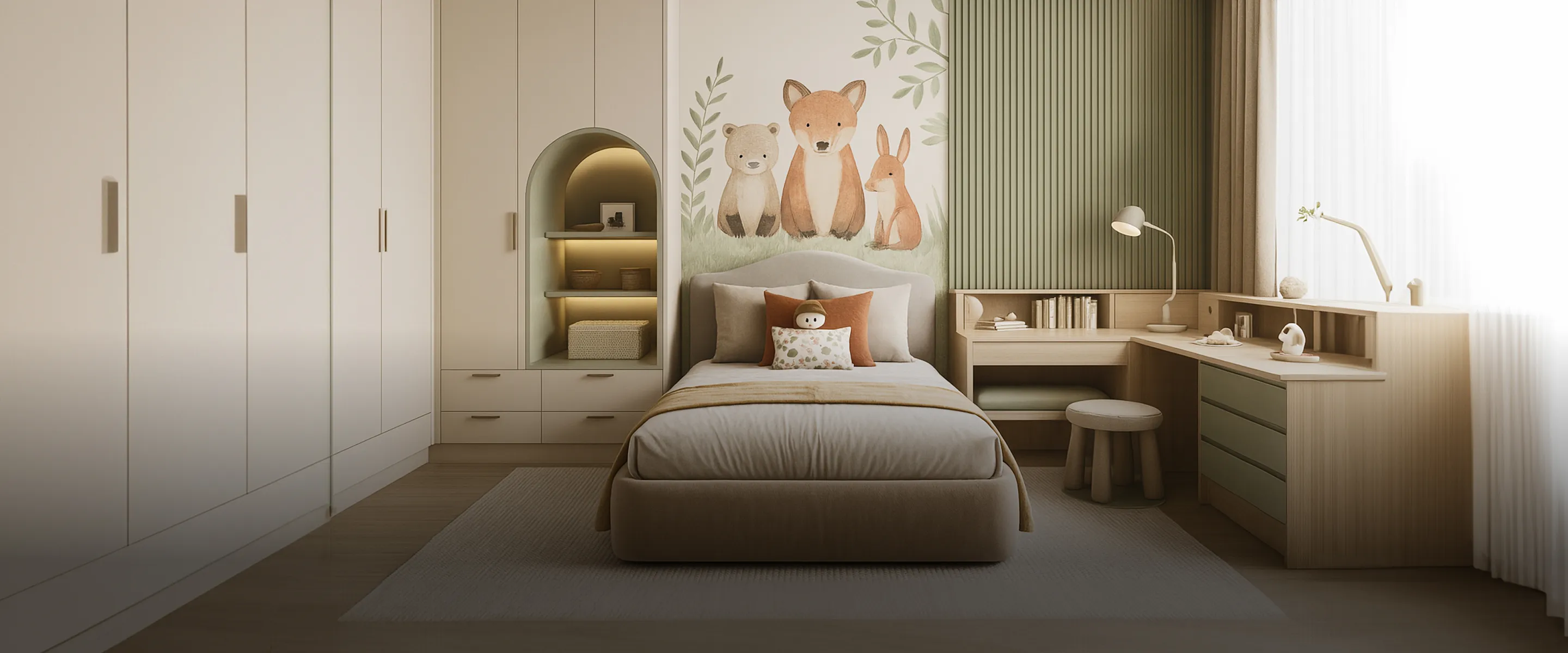
Trending Kids Bedroom Designs
Why Choose HomeLane? Here’s Why!
Delivery in 45 days*
No hidden costs
Flat 10-year warranty
Easy EMIs
Meet Our Expert Designers:
The Minds Behind the Magic
55000+ Homes Designed with Love
Take a closer look at the homes we've designed for our happy customers. Hear their experiences, see the before-and-after magic, and find out how HomeLane brought their visions to life.
From Design to Move-In
Stories Behind the Designs
Each HomeLane home is more than just walls and furniture—it’s a journey. Walk with real families as sketches become spaces, and spaces become the heart of their everyday. Read their stories, feel their trust, and imagine what we can build for you.
Find Us in Your City
Explore our presence across India—click on your city to get started with your dream home.
FAQs on Kids Bedroom Design
What are the essentials of a kid's bedroom design?
Think of a kid's bedroom like their little world—it’s where they sleep, study, play, and daydream. So, it needs to be practical, safe, and still full of personality. Here’s what most Indian parents usually look for in kids' bedroom designs:
A proper bed: For younger kids, low beds with guardrails work well. If there are two children, bunk beds are a popular choice.
Good storage: Toys, books, clothes—kids come with a lot of stuff. Modular wardrobes, wall shelves, and under-bed drawers help keep things organised.
Study setup: A small desk and chair, placed near natural light, make homework a little easier.
Soft flooring: Mats or rugs give them a safe place to sit and play.
Lighting that feels warm: Not too bright, not too dim—just enough to make the room feel calm and cosy.
If you're planning for the long term, look for kids' room interiors that can grow with your child. At HomeLane, we help you plan exactly that—something cute today, and cool enough even five years down the line.
How can I design a multifunctional kids' bedroom–study, play & sleep?
In many Indian households, a kids’ bedroom has to do it all—it's the nap zone, homework corner, play area, and sometimes even the hide-and-seek headquarters! So, a smart layout is everything when it comes to kids' room designs.
Here’s what works well:
Sleep: Use a single bed with storage below or a bunk bed for siblings.
Study: A small desk by the window and wall shelves make a neat, focused setup.
Play: Leave enough floor space for movement, and use soft flooring or rugs for safety.
Modular furniture makes a big difference—you can add, shift, or upgrade pieces as your child grows. We’ve done just that in the kids’ bedroom from one of our HomeLane homes, where a single room handles it all without feeling cluttered.
Which furniture is best for small kids’ rooms—bunk beds or loft beds?
If space is tight (and let’s face it, most of our flats don’t have giant bedrooms), bunk beds and loft beds are both solid options. It really depends on your child’s age and how the room is being used.
Bunk beds work best if two kids are sharing a room. They save floor space and make bedtime fun—most kids love climbing up!
Loft beds are great if your child is solo and you want to fit a study desk or cupboard underneath. It’s like giving them a mini room within a room.
Just make sure the bed has proper railings, especially if your child is under 6. We’ve used these smart setups in many kids' bedroom interior designs across India—watch how our HomeLane Juniors range brings it all together in this video.
How to choose ergonomic and safe furniture for kids?
When it comes to kids, comfort and safety go hand in hand. You don’t want a chair that’s too high, or a wardrobe they can’t open without climbing on something!
Here’s what we usually recommend in Indian homes:
Pick the right size: Tables, chairs, and beds should match your child’s height so they don’t strain while sitting or reaching.
Look for rounded edges: No sharp corners on beds or storage units—especially for toddlers who zoom around the room!
Go for sturdy pieces: Wobbly furniture is a no-go. Stick to solid, stable options—even better if they’re fixed to the wall.
Use non-toxic finishes: Paints, polishes, and laminates should be safe, especially if your kid has the habit of licking everything (you know the type!).
All our kids' room interior designs keep these basics in mind—and with HomeLane Juniors, we’ve made it easier for parents to choose furniture that grows with their child while staying safe and practical.
What are smart storage ideas for kids’ bedrooms?
Kids come with a lot of stuff—books, toys, puzzles, tiny shoes, half-used crayons, and school projects you’re not allowed to throw away. So, smart storage is a must in any kids' room design.
Here’s what works well in Indian homes:
Under-bed drawers: Great for everyday clothes or school uniforms—easy to pull out, even for small kids.
Wall-mounted shelves: Keeps books and trophies off the floor and within reach.
Toy baskets or open bins: Easy to toss toys into at the end of the day. No need for folding or stacking.
Low-height wardrobes: Modular wardrobes designed at your child’s height help them pick out their own clothes. Builds independence too!
Fold-out desks with storage: Saves space and hides clutter in one shot.
Smart doesn’t mean complicated—it just means using the space well. In our kids' bedroom interior designs, we usually plan storage based on your child’s habits. That way, it actually gets used and doesn’t just look pretty.
Want to see how we design wardrobes that kids can actually use on their own? Watch this quick video here.
Which colour schemes work best for kids’ room interiors?
Colours make a huge difference in how a kid feels in their space. Some colours calm them down, while others spark energy and creativity. In our experience designing kids' room interiors, here’s what usually works well:
Soft pastels like mint green, sky blue, or peach keep the room light and cheerful.
Two-tone combos like yellow-grey or blue-white add contrast without being too loud.
Accent walls with wallpaper or chalkboard paint give kids a creative spot they can scribble on guilt-free.
Neutral base + favourite theme is the smart way to go—think dinosaurs, space, unicorns, or cars layered over a simple background. Easy to update as they grow!
Check out our HomeLane Juniors range here—and just so you know, you’re not limited to what’s in the catalogue. From DC comics to princess castles, dinosaurs to space rockets, we can pull off just about any theme your child dreams up.
How to use wall colours to support creativity and focus?
Wall colours aren’t just for looks—they can actually shape how your child thinks, feels, and focuses. In kids' room interior designs, we usually recommend a mix that helps balance energy and calm:
Soft greens and blues are great for focus—perfect behind a study desk or reading corner.
Warm yellows or corals can boost energy and imagination. Ideal near the play area.
Chalkboard paint is a fun option—kids can draw on it, and it’s easy to wipe clean.
Themed walls with murals or decals (like forests, stars, or favourite characters) also help kids feel more connected to their space.
Instead of painting everything one bright colour, it’s smarter to zone the room with thoughtful accents. With HomeLane, you can even match the wall colours to your child’s interests—we’ve done rooms based on everything from Peppa Pig to planets!
Should I choose themed vs neutral kids' room designs?
This one depends on your child’s age—and how often you’re okay with updating the room. Themed kids' room designs (like cartoons, superheroes, or fairytales) are a hit with younger kids. They get excited about their favourite characters showing up on the walls, bedsheets, or even wardrobe handles.
But here’s the thing: kids grow fast—and so do their interests. Today it’s Spiderman, tomorrow it’s science experiments. That’s why many parents go for a neutral base (like white, grey, pastel blue) and then layer it with themed elements—bedding, wall stickers, or soft boards that are easy to change.
Of course, if your child has their heart set on a full-blown jungle room or a Barbie house vibe, we can do that too. With HomeLane Juniors, we give you both options—and yes, we can update the look later when their tastes change.
How to design a kids' bedroom that can grow with them?
Let’s be honest—kids don’t stay tiny for long. That toddler bed? Too small in two years. The cartoon-themed study chair? Out the window by the time they hit 10. So if you're thinking long-term, the key is to plan a kid's bedroom design that adapts as your child grows.
Here’s what helps:
Modular, space-saving furniture: A single bed with pull-out drawers now can easily become a teen’s go-to crash spot later. Loft beds with study desks underneath also work well as they grow.
Adjustable storage: Wardrobes with movable shelves, toy bins that turn into book storage later—these make life easier.
Neutral foundation: Instead of cartoon wallpaper, go for simple paint and switch out bedsheets, rugs, and wall stickers as their interests change.
Multi-use zones: A play area today can turn into a reading nook or a keyboard corner later, with just a few tweaks.
We do this kind of future-proof planning all the time at HomeLane—especially in smaller flats where space is precious.
What kind of lighting should a kids’ bedroom have?
Lighting in a kids’ room isn’t just about switching on a tube light and calling it a day. A well-lit room helps kids feel safe, stay focused, and even wind down better at night. In most of our kids' bedroom designs, we suggest a mix of three types of lighting—each serving a purpose:
General lighting: This is your main ceiling light. A warm white LED works best—it’s bright but not harsh on the eyes.
Task lighting: A small table lamp or study light is a must for homework or drawing. Adjustable lamps work well as your child grows.
Ambient or night lighting: A soft night lamp near the bed helps little ones feel safe if they wake up at night. You can even go for fun shaped lights—stars, clouds, animals—kids love those!
Bonus tip: Avoid fancy hanging lights or floor lamps—kids can bump into them. Stick to wall-mounted or concealed lighting wherever possible.
How do I create a cosy play nook or activity zone in their room?
You don’t need a big room to give your child a special play space. A small corner is enough if you plan it well. Here’s what works:
Soft flooring: A rug or foam mat makes it safe and comfy.
Low storage: Use baskets or open shelves kids can access on their own.
Creative wall: Try chalkboard paint, decals, or a felt board.
Seating: Add a bean bag or floor cushion for reading or quiet time.
Personal touches: Fairy lights, name signs, or their favourite toys bring it to life.
We’ve used these ideas in many HomeLane homes—and they work just as well for toddlers as they do for tweens.
How to ensure safety in kids’ bedroom interiors?
Safety is one of the first things we think about while planning kids' bedroom designs—especially for younger children who love climbing, jumping, and exploring every corner.
Here’s what helps keep things safe:
Rounded edges on beds, tables, and storage units to avoid injuries.
Soft-close drawers and shutters that won’t catch little fingers.
Sturdy furniture—no wobbly chairs or shelves that can tip over.
Non-toxic laminates and paints, since kids often put things in their mouths.
Covered plug points and wire management to avoid accidents.
In our kids' room interior designs, we also make sure shelves, wardrobes, and study tables are fixed properly—so nothing topples over during playtime. A well-designed kids’ room isn’t just cute—it’s built for daily chaos.
What materials are easy to clean & maintain in kids’ rooms?
Let’s face it—kids can turn a spotless room into a mess in minutes. That’s why choosing easy-to-clean materials is key in any kids' bedroom design.
Here’s what we recommend in Indian homes:
Laminates: Especially matte or textured—they hide smudges and wipe clean with a cloth.
PVC or acrylic shutters: Ideal for wardrobes and study tables—they’re water-resistant and don’t chip easily.
Washable wall paints: Semi-gloss or eggshell finishes are best for handling stains and doodles.
Vinyl or wood-look tiles: Durable, low-maintenance, and spill-proof—great for active little ones.
These are the same smart choices we used in the Joshis’ Bangalore home—watch how their kids’ bedroom was designed to handle daily wear and tear while still looking bright and cheerful.
How much does designing a kid's bedroom cost in India?
Designing a practical and attractive kids' bedroom design in India varies based on your room size, furniture, finish, and customisation needs. Based on real HomeLane data and projects, here’s what most families spend:
Starter-level setup (basic bed, storage, study desk, and simple finishes) typically begins around Rs. 1.5 lakhs.
For a fully modular room with custom storage, themed decor, or loft beds, the cost usually ranges between Rs. 3 lakhs to Rs. 5 Lakhs.
If you're aiming for something very elaborate—like a superhero-themed loft with slides or built-in play zones—the project can exceed Rs. 5 Lakhs, depending on scale and materials.
These figures reflect real HomeLane projects in cities like Bengaluru and Mumbai. And yes, we help you plan everything according to your budget and vision, whether you want something simple or totally one-of-a-kind.
How long does a typical kids' room interior project take?
If you’re doing up the entire home, the kids’ bedroom interiors are usually completed as part of the overall project timeline. At HomeLane, we follow a streamlined process—so all rooms, including the kids’ space, are planned and executed in parallel.
From design to installation, the full home interior process—including your child’s room—typically takes around 45 days after design finalisation. That includes furniture, false ceiling (if any), wallpaper, painting, and all fittings.
If you're only doing the kids’ room separately, timelines are usually shorter and depend on the scope of work. A basic modular setup might take 3–4 weeks, while a fully customised themed room can take longer. Either way, we make sure your child’s space is ready on time—and built to last.
Do HomeLane kids' room designs include furniture and décor?
Yes, absolutely. When you choose HomeLane for your kids' room interiors, we help you plan everything—not just the modular fittings, but also the loose furniture and decor.
That means we can include:
Beds (including bunk beds or trundle beds, if needed).
Study tables and chairs.
Kids’ wardrobes with smart storage.
Soft furnishings like curtains, rugs, and cushions.
Lighting, wallpaper, and decor accents that match the overall theme.
You can also bring in your own furniture pieces if you already have something in mind—we’ll design around them. Our goal is to make sure the room is functional, fun, and completely in sync with your child’s age and interests. So whether you're starting from scratch or adding to what you have, we've got you covered.
How can I personalise a kids’ bedroom design to reflect their passion?
Every child has something they’re obsessed with—be it dinosaurs, space, dancing, football, or a favourite cartoon. A good kids' bedroom design should reflect that energy, while still being practical. Here’s how we usually personalise it:
Themes and colours: Walls, wallpaper, and soft furnishings can all tie back to what your child loves.
Custom furniture: We’ve done everything from superhero-themed beds to ballet-inspired wardrobes.
Display corners: Shelves or soft boards where they can show off their drawings, medals, or collections.
Interactive zones: Reading corners, craft tables, or chalkboard walls that match their interests.
At HomeLane, you’re not limited to standard catalogue themes. We’ve designed rooms around K-pop, science labs, cricket fields—you name it. If your child can imagine it, we can make it happen.
Can two kids share a room comfortably – and how?
Yes, absolutely. In fact, most Indian homes plan for kids' room designs where siblings share the same space. With the right layout and smart furniture, the room can feel comfortable and organised for both kids.
Here’s what works:
Bunk beds or L-shaped beds to save floor space.
Separate storage zones—so each child has their own shelves, drawers, or wardrobe section.
Dual-purpose furniture like a study table with two chairs or a loft bed with a desk below.
Neutral base with personalised corners—this lets each child add their own touch without clashing.
We do this a lot in compact homes—especially in cities where space is limited. The key is to plan for both shared and personal zones, so there’s room to grow (and fewer fights!).
What modular solutions work best in kids’ bedroom interiors?
Modular furniture is a lifesaver in kids' bedroom interior designs—especially when you want something that’s space-saving, easy to maintain, and grows with your child.
Here are some smart modular ideas that work well:
Wardrobes with adjustable shelves so you can change the layout as your child grows.
Beds with built-in drawers for toys, books, or extra clothes.
Loft beds with study desks or storage underneath—perfect for smaller rooms.
Modular bookshelves or wall units that double as display space for toys or school projects.
Foldable study tables that can be tucked away when not in use.
The best part? Everything is built to fit your space perfectly and can be updated over the years—so you don’t have to redo the whole room every few years.
Why choose HomeLane for your kids’ bedroom design?
At HomeLane, we create kids' bedroom designs that are fun, functional, and future-ready. Here's why parents trust us:
Modular furniture with smart storage and child-safe finishes.
Custom themes or ready options from our HomeLane Juniors range.
10-year warranty on all modular products.
Dedicated designer and project manager to guide you from start to finish.
Factory-made precision, ensuring clean installation and long-lasting quality.
Delivered in just 45 days, without delays or last-minute surprises.
Want to see where it all comes together? Take a peek at our factory tour—and see why HomeLane is the go-to for thousands of happy families.