Microcement Flooring in India: What It Is, How It Works and Is It Worth It
By Usha Balasubramanyan- June 11, 2026
AI Summary
3 key insights · 1 expert tip
Microcement flooring offers a sleek, seamless finish for Indian homes, applicable over existing surfaces for easier renovations, with costs ranging from Rs. 250 to Rs. 500 per sq ft.
Key Insights:
What You'll Read Here:
Microcement flooring costs INR 250-500 per sq ft, varying with finish complexity.
Offers a refined, joint-free aesthetic with matte, satin, or textured finishes.
Skillful installation is crucial for durability, with maintenance being simple.
HOMELANE EXPERT TIPBy our design team
Always inspect physical samples before finalising your microcement floor choice; online images rarely capture the true texture and tone accurately.
A seamless microcement floor flows across this modern interior, eliminating grout lines entirely.
You might have seen those smooth, seamless floors in trendy magazines or modern home tours. No grout lines, no breaks, just one continuous surface flowing from one room to another. It looks clean, minimal, and a little bit luxurious without trying too hard.
That’s microcement. And naturally, the next question is, can this actually work in an Indian home? It’s all-too-easy to get drawn in by how good it looks, and how upmarket it feels! But flooring is not just about appearance. It has to handle daily use, cleaning, spills, and in many cases, the vagaries of Indian weather. So before you decide, it helps to understand how microcement works and what to expect.
What Is Microcement Flooring and How Is It Different from Regular Cement?
The smooth, continuous texture of microcement flooring shows why it suits minimal Indian interiors.
It’s a thin coating made using cement mixed with polymers and additives. This mix is applied in layers over an existing surface to create a smooth, continuous finish. That’s what gives it that seamless look you see everywhere. One of the biggest differences is thickness. The microcement floor thickness is just about 2 to 3 mm. That means it can be applied over tiles, concrete, or stone without breaking everything up. Regular cement flooring is thicker, rougher, and needs joints. Microcement feels more refined and controlled. Same base idea, completely different outcome.
Microcement Flooring Cost in India: Per Sq Ft Breakdown
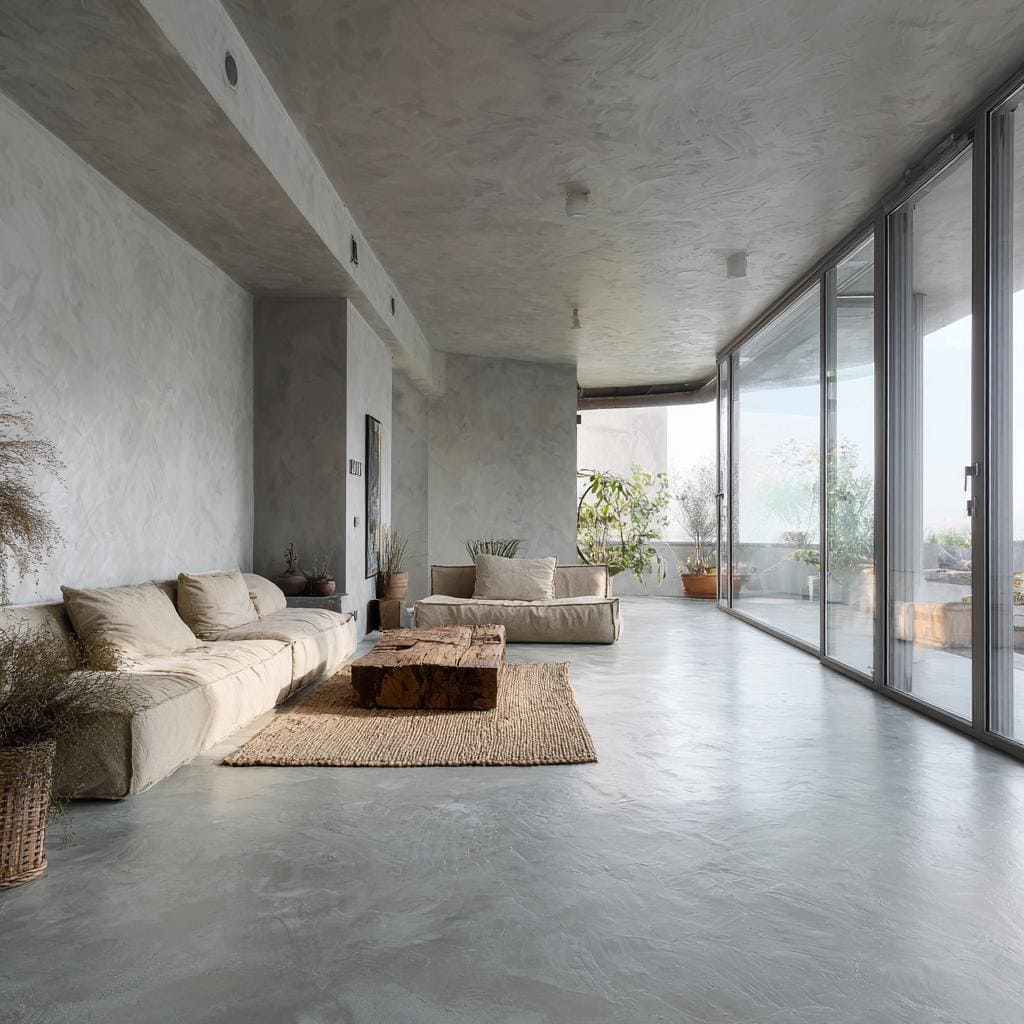
A grey microcement floor in a living room creates a seamless, low-maintenance look for Indian homes.
Now let’s talk numbers, because this is where quite a few decisions get made!
The microcement flooring price in India usually falls between INR 250 and INR 500 per sq ft. The range depends on the finish, colour, detailing, and how complex the application is. If you go for a basic matte finish in a simple space, you’ll stay on the lower side. If you want custom textures or multiple tones, the price goes up.
At first glance, it may seem more expensive than tiles. But when you factor in the seamless finish and the fact that it can go over existing flooring, the overall value starts to make more sense. For anyone exploring affordable microcement flooring in India, keeping the design simple helps control costs.
Types, Finishes and Where to Use Microcement in Indian Homes
A neutral microcement floor and wall finish give this bedroom a refined, clutter-free feel.
This is where microcement gets interesting. It’s not just one look.
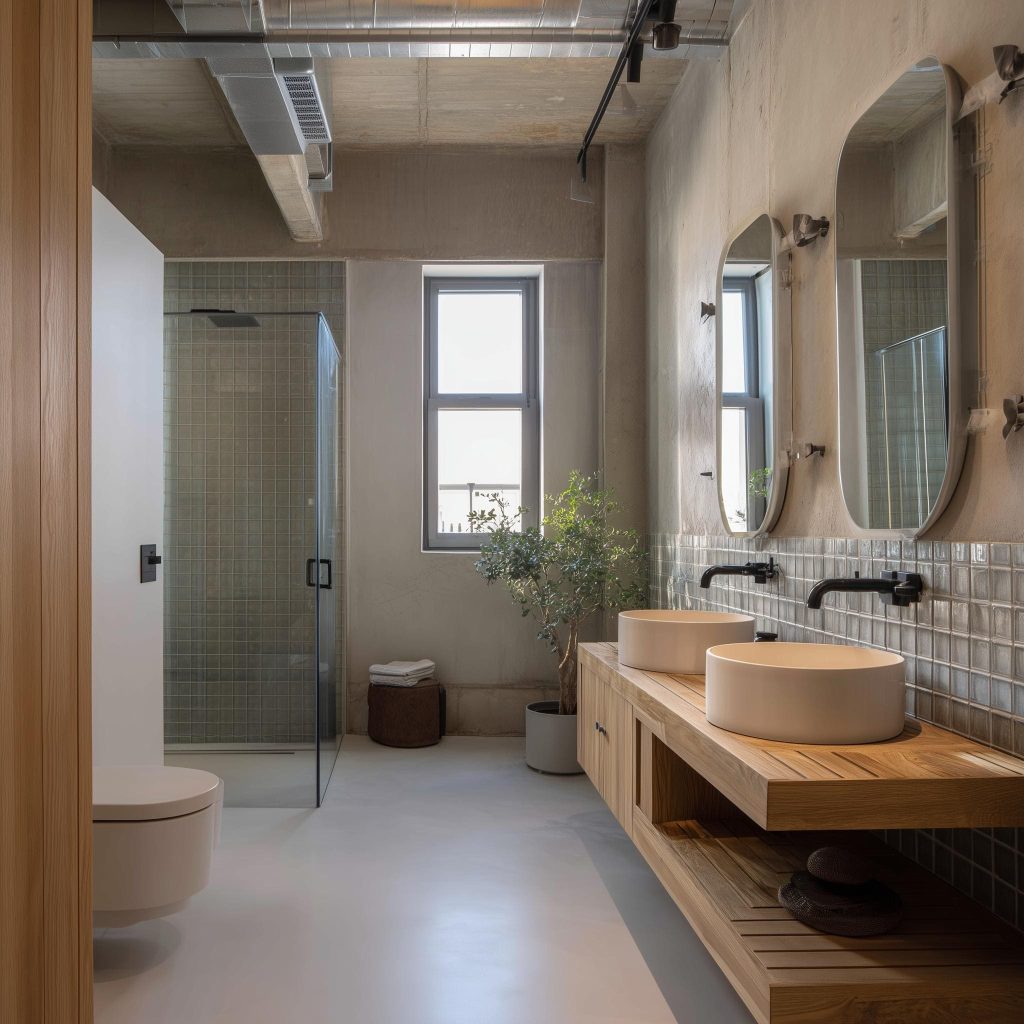
You can choose from matte, satin, or slightly textured finishes depending on the feel you want. Most colours stay in neutral tones like grey, beige, or earthy shades, which work well in Indian homes. Where can you use it? Pretty much anywhere. Living rooms, bedrooms, kitchens, and even bathrooms. In fact, microcement flooring for bathrooms in India is becoming popular because it removes grout lines completely. That means fewer places for water or dirt to settle.
You can also use microcement on walls, countertops, and even furniture. It’s one of those materials that gives a consistent look across spaces.
Microcement Flooring vs Tiles, Hardwood and Polished Concrete
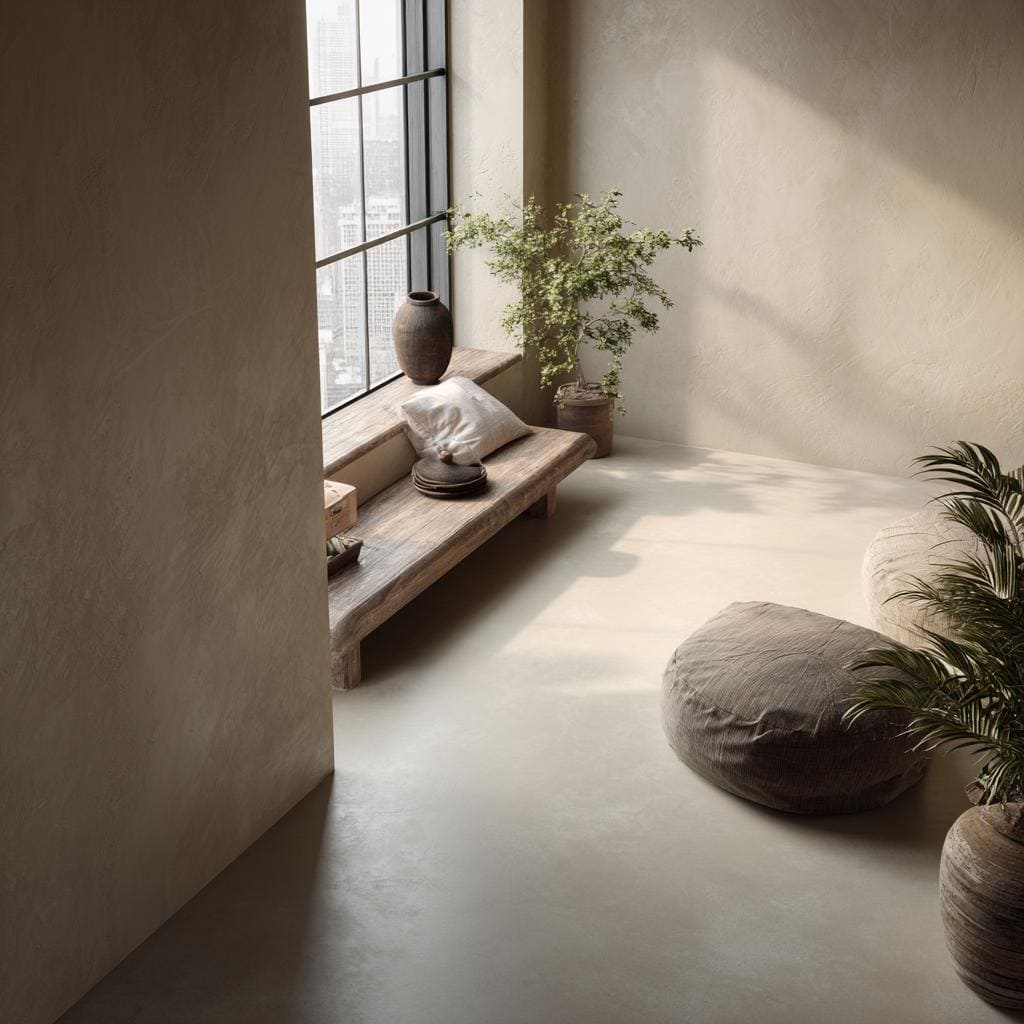
A beige matte microcement floor with earthy tones works beautifully in modern Indian interiors.
Now let’s compare it with what most homes already use.
Tiles are practical and easy to maintain, but they come with visible joints.
Hardwood looks beautiful but needs more care and doesn’t always handle moisture well.
Polished concrete gives a similar industrial look, but it needs a thicker base and more structural work.
Microcement sits somewhere in the middle. It gives you that seamless look without heavy construction. It feels more modern than tiles and easier to live with than wood. So the choice really comes down to what matters more to you. Do you want low maintenance, a seamless look, or something more traditional?
Installation, Maintenance and Common Problems to Avoid
A grey microcement floor in a bright living room shows the clean, minimal finish it delivers.
This is where you need to pay attention. Microcement is not a DIY-friendly material.
It needs skilled application. The layers have to be applied evenly, and the sealing has to be done properly. If this step is rushed or done poorly, you may see cracks or uneven finishes later. Once installed, maintenance is quite simple. Regular cleaning with a mild solution is enough. Avoid harsh chemicals or anything too abrasive. Waterproofing is especially important in kitchens and bathrooms. A good seal keeps moisture out and protects the surface.
Most problems people talk about, like cracks or patchy finishes, usually come down to poor installation. So choosing the right team matters more than anything else here.
So, Is Microcement Worth It for Indian Homes?
Microcement flooring in a bathroom removes grout lines and works well when properly sealed and waterproofed.
This is the part where you decide. Microcement works really well if you like clean, minimal spaces. It’s great if you want something different from tiles and don’t want to break existing flooring during renovation. But it’s not a casual choice. It needs proper planning and good execution.
If you get that right, the result is a smooth, modern finish that stands out without being loud. And if you’re unsure where to use it or how to get it right, working with experts helps. At HomeLane, designers help you figure out where microcement fits best and how to make it work for your home.
FAQs
1. What is microcement flooring?
Microcement is an ultra-thin, cement-based floor finish with a joint-free appearance. It is used to achieve a modern industrial-style look.
2. How much does microcement flooring cost in India per sq ft?
The microcement flooring cost falls in the range of INR 250 and INR 500 per sq ft.
3. Is microcement flooring suitable for Indian climates?
Yes, it works well when properly sealed and installed. It can handle typical Indian weather conditions, including heat and moderate humidity.
4. Can microcement flooring be used in bathrooms and kitchens?
Microcement flooring for bathrooms in India works well in wet areas when waterproofing and sealing are done correctly. In kitchens, too, this floor can be used just as well. Do ensure that the surface is sealed well and there are no cracks after the cement sets.
5. How long does microcement flooring last in India?
With proper installation and maintenance, microcement flooring can last for decades without any issues. Durability depends heavily on workmanship.
6. Is microcement flooring slippery?
You can request that it is finished with anti-slip textures, especially for bathrooms and kitchens. This makes it safe for everyday use.
7. Can microcement be applied over existing tiles in India?
Yes, one of its biggest advantages is that it can be applied directly over existing tiles without removal. This makes renovation faster and less messy.
8. How do you clean and maintain microcement flooring?
Regular cleaning with a soft mop and mild solution is enough. Avoid harsh chemicals to keep the surface looking fresh and well-maintained.




























 EXPLORE MORE