Wooden Bathroom Design Ideas That Make Everyday Spaces Feel Warmer
By Usha Balasubramanyan- September 24, 2026
Summary
Wood brings warmth, character, and timeless elegance to modern bathrooms when used thoughtfully. By combining moisture-resistant materials, smart layouts, and carefully balanced colours, you can create a bathroom that’s both beautiful and practical for everyday living. The best wooden bathrooms don’t imitate nature—they invite it indoors through thoughtful textures, calming colours, and enduring materials.
Expert Tip
If you love the appearance of natural timber but worry about maintenance, combine wood-look porcelain tiles in wet zones with real wood or premium laminates on vanity units and storage. You’ll achieve the same warm aesthetic with far less upkeep.
Best For
Spa-inspired wooden bathroom designs and biophilic home interiors
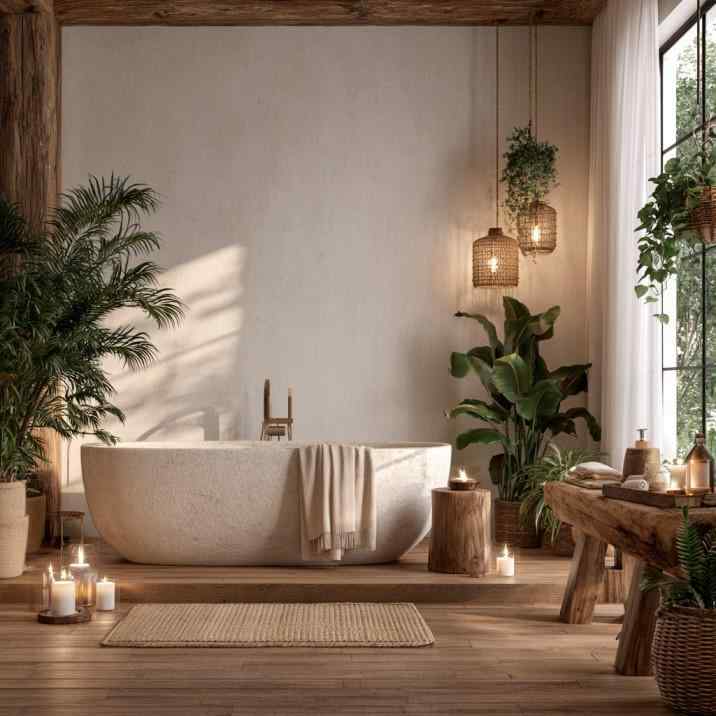
A stone tub and warm timber floor create a spa-inspired wooden bathroom.
There’s something undeniably calming about wood. It softens hard bathroom surfaces, adds warmth to cool tiles, and creates a spa-like atmosphere that’s difficult to achieve with stone or ceramic alone. A thoughtfully planned wooden bathroom design combines natural textures with moisture-resistant materials to create a space that’s both beautiful and practical.
Today’s bathrooms use wood in smarter ways than ever before; from vanity units and wall panelling to wood-look tiles and slatted ceilings. Whether you’re planning a compact ensuite or a luxurious master bathroom, the right balance of timber, lighting, and finishes can completely transform the space.
What Makes a Wooden Bathroom Design Work in a Modern Home?
A wood-panelled feature wall adds warmth to this modern bathroom design.
Modern wooden bathrooms aren’t built entirely from timber…they use wood strategically where it delivers warmth without compromising durability.
Wood is commonly introduced through vanity cabinets, floating shelves, mirror frames, ceiling details, or feature walls, while moisture-prone areas continue to use porcelain tiles, quartz, or stone. This balance gives the bathroom an inviting, natural character without increasing maintenance.
Light oak, teak-inspired laminates, walnut veneers, and engineered wood finishes are among the most popular choices because they pair beautifully with contemporary fixtures and withstand daily use when properly protected.
For more stylish bathroom ideas, explore our blog on bathroom design trends!
Which Wooden Bathroom Designs Work Best for Small and Large Spaces?
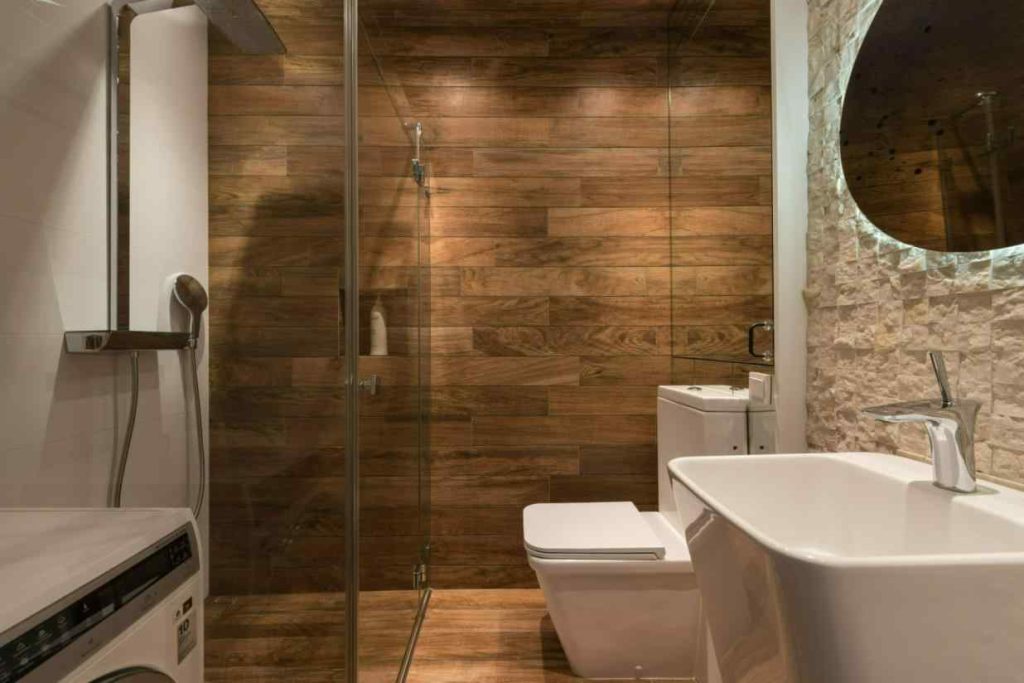
Wood-look porcelain tiles bring timber warmth to a moisture-safe shower.
A small wooden bathroom design benefits from restraint. Instead of covering every surface in timber, introduce wood through a floating vanity, open shelving, or a single accent wall. Keeping the remaining surfaces light helps the room feel brighter and more spacious.
Larger bathrooms offer greater flexibility. You can combine timber cabinetry with wood-look flooring, slatted feature walls, ceiling panelling, and matching storage units to create a luxurious spa-inspired retreat.
Natural light enhances wood beautifully, but layered lighting can produce the same effect even in windowless bathrooms.
How Can Black, White and Wood Create a Modern Wooden Bathroom Design?
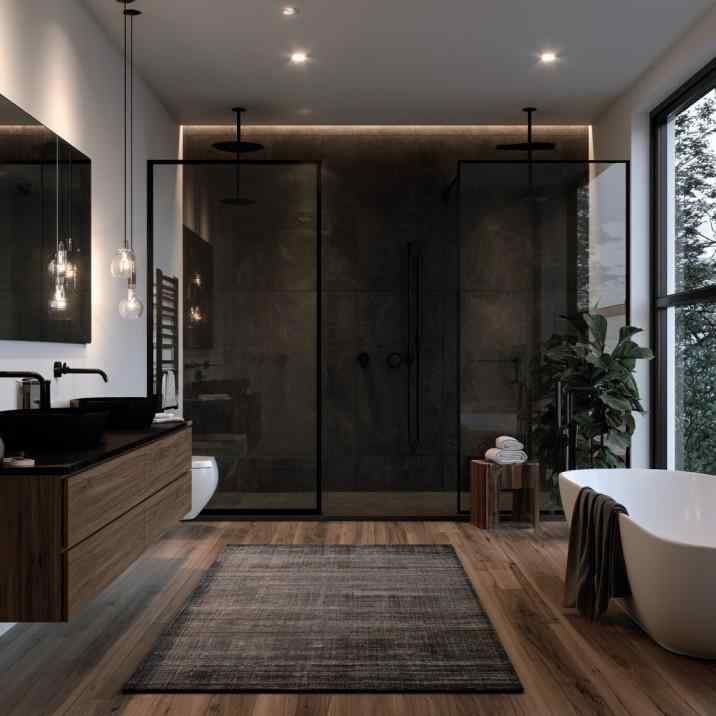
Black fixtures and timber cabinetry balance this black white and wood bathroom.
The black, white and wood bathroom remains one of the most timeless design combinations.
White walls and sanitaryware keep the room bright and spacious, while warm timber prevents the space from feeling cold or clinical. Black taps, shower frames, mirror borders, and lighting introduce contrast and give the bathroom a crisp contemporary edge.
The secret lies in maintaining balance. Too much black can overpower a smaller bathroom, while too much wood may make the room feel visually heavy. Using wood as the “warming element” between black and white creates a sophisticated, hotel-inspired aesthetic.
What Materials Go Best with Wood in a Bathroom?
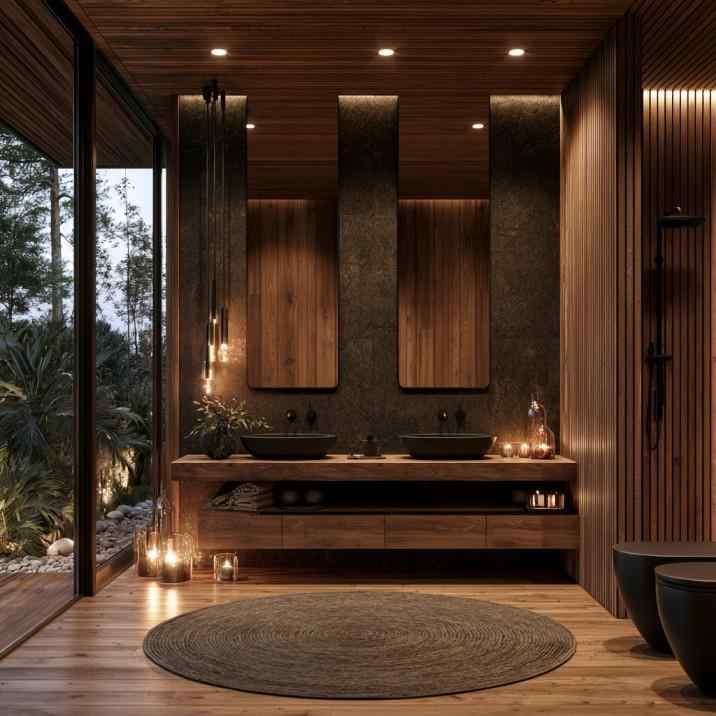
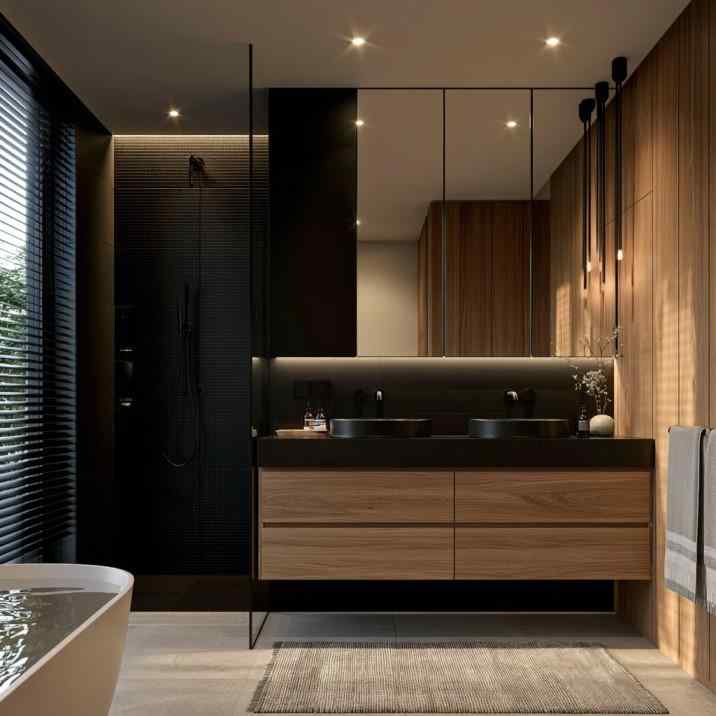
Slatted timber walls and dual vanities define this luxury wooden bathroom design.
Wood works beautifully alongside several materials.
Large-format porcelain tiles mimic natural stone while remaining easy to maintain. White quartz countertops complement timber vanities without competing for attention.
Matte black hardware creates striking contrast, whereas brushed brass fittings add warmth and elegance.
Matte black fixtures pair with warm timber in this modern wooden bathroom.
Concrete-look tiles lend an industrial touch, while fluted glass shower partitions soften the overall look and provide privacy.
Indoor plants, woven baskets, linen accessories, and warm LED lighting further reinforce the natural aesthetic without requiring major renovations.
What Should Be Avoided When Using Wood in a Bathroom?
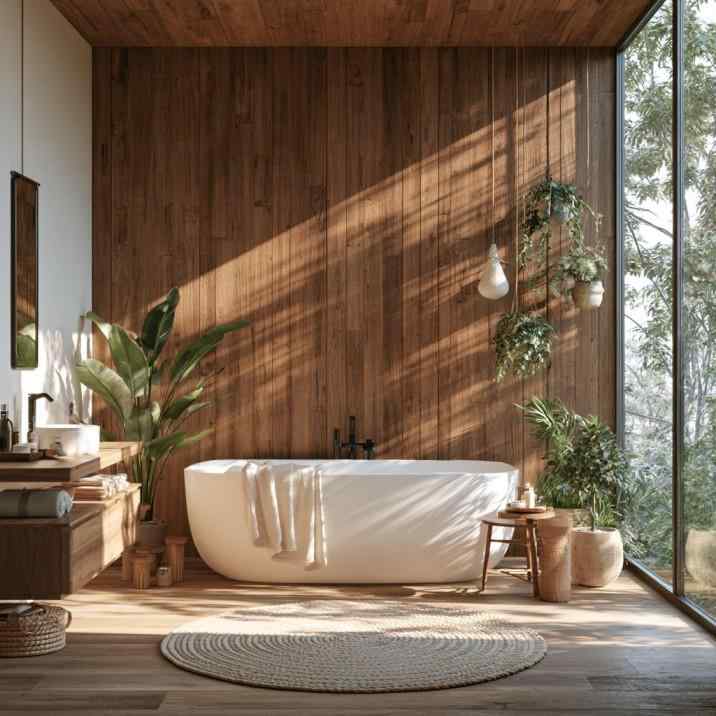
A wood feature wall highlights the white tub in this wooden bathroom design.
The biggest mistake is using untreated solid timber where it receives direct, continuous water exposure. Wood around showers, bath surrounds, or constantly wet floors should either be specially treated or replaced with high-quality wood-look porcelain tiles.
Poor ventilation is another common problem. Even moisture-resistant timber can deteriorate if humidity remains trapped inside the room.
Avoid combining too many different wood tones, as they can make the bathroom feel visually cluttered. Two complementary timber finishes are usually sufficient for a cohesive design.
Finally, remember that beautiful wooden bathrooms rely just as much on careful detailing and maintenance as they do on material selection.
Bring Natural Warmth into Your Bathroom!
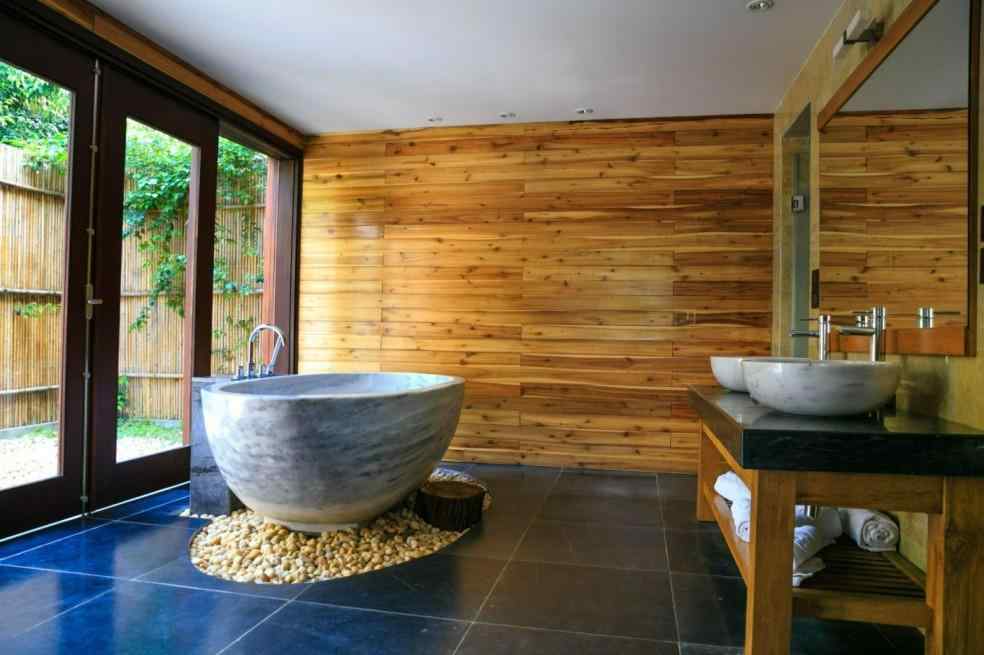
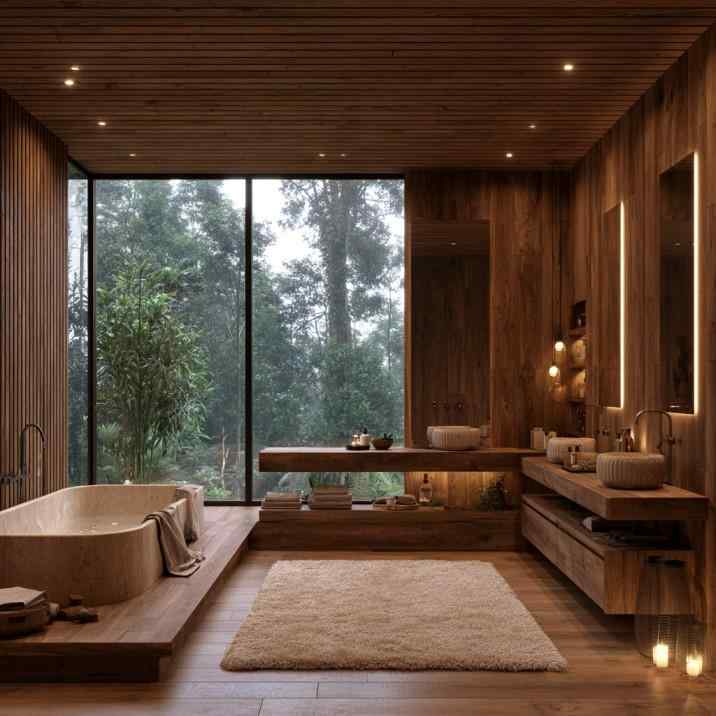
Floor-to-ceiling timber and forest views define this spa-inspired wooden bathroom.
A thoughtfully planned wooden bathroom design combines warmth, texture, and practicality to create a bathroom that’s both timeless and comfortable. Whether you prefer a simple wooden bathroom design, a luxurious spa-inspired retreat, or a striking black white and wood bathroom, choosing moisture-resistant materials and balanced finishes ensures lasting beauty.
At HomeLane, our designers create bathrooms that blend elegant aesthetics with practical solutions tailored to Indian homes. Book a free HomeLane consultation and discover how natural materials can transform your everyday spaces!
FAQs
1. Which wood is best for a bathroom?
Naturally durable woods such as teak and cedar perform well, while engineered wood with waterproof laminates or veneers offers a practical alternative for vanity units and cabinetry. If you’re working within a budget, wood-look laminates and vitrified tile finishes can offer a similar appearance with much less maintenance.
2. Is wood a good choice for a bathroom?
Yes. When used in appropriate locations and properly sealed, wood adds warmth and character while remaining durable in everyday bathroom conditions. The key is using the right type of wood in dry areas and moisture-resistant alternatives where direct water exposure is expected.
3. Can a small bathroom have a wooden design?
Absolutely. A floating wooden vanity, open shelves, or a single timber feature wall can add warmth without making a compact bathroom feel cramped. Pairing wood with light-coloured walls and large mirrors helps keep the space feeling bright and open.
4. What colours go well with wood in a bathroom?
White, soft grey, beige, charcoal, black, sage green, and earthy neutrals all complement timber beautifully. The right combination depends on whether you prefer a light Scandinavian look or a richer, spa-inspired atmosphere. Natural stone textures and matte finishes also enhance the warmth of wood without overpowering it.
5. How do I maintain a wooden bathroom?
Wipe away standing water promptly, keep the room well ventilated, clean with mild products, and periodically inspect protective finishes to ensure long-lasting performance. A little routine care goes a long way in preserving both the appearance and durability of wooden surfaces.
6. How do I protect wood from water and moisture in a bathroom?
Choose moisture-resistant finishes, seal exposed timber properly, maintain good ventilation, repair damaged sealants promptly, and avoid prolonged water exposure wherever possible. Installing an effective exhaust fan and allowing good air circulation after every shower will significantly reduce moisture-related problems.









 EXPLORE MORE