A relaxing bedroom comes from calming colours, layered lighting, natural materials, comfortable bedding and clutter-free storage, adapted to the room's style, size and budget.
Key Insights:
What You'll Read Here:
Soft neutrals, sage greens and muted blues, along with layered ambient, task and accent lighting, create a restful atmosphere in place of harsh ceiling lights.
Scandinavian, Japandi, modern minimalist, contemporary natural and classic luxury styles each create calm through simplicity, natural textures and restrained palettes.
Bright colours, visible clutter, poor lighting, ignored window treatments and furniture chosen for looks over comfort are the most common mistakes.
HOMELANE EXPERT TIPBy our design team
Line bedroom curtains with a blackout layer and extend the rod 15 to 20 cm beyond each side of the window frame, because light leaking around the edges can still wake you early.
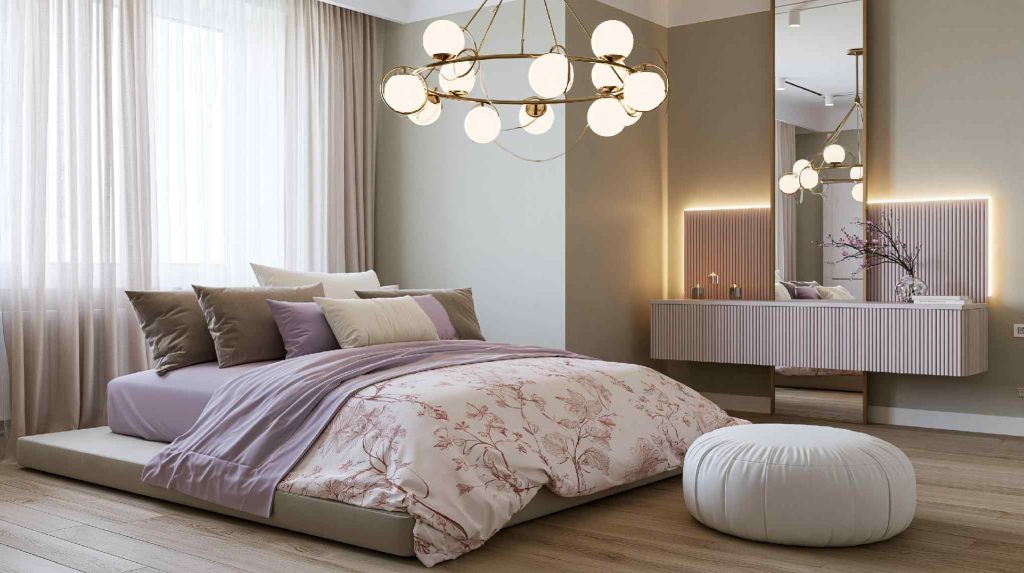
A calming bedroom with soft lilac tones and layered lighting sets a peaceful mood.
Your bedroom should be the one place in your home where you can truly switch off from the outside world. More than just a place to sleep, it’s where you begin your mornings, unwind after long days, and recharge both physically and mentally. A relaxing bedroom isn’t necessarily large or luxurious; it’s thoughtfully designed to reduce visual clutter, encourage comfort, and create a sense of calm.
The most relaxing bedroom ideas combine soothing colours, comfortable furniture, layered lighting, soft textures, and smart organisation. Whether you’re planning a complete makeover or making a few simple updates, creating a peaceful retreat is possible at almost any budget.
A well-designed bedroom also supports better sleep, lowers stress, and makes everyday routines feel more enjoyable. Small design choices often have the biggest impact on how restful your space feels.
What Makes a Bedroom Feel Relaxing?
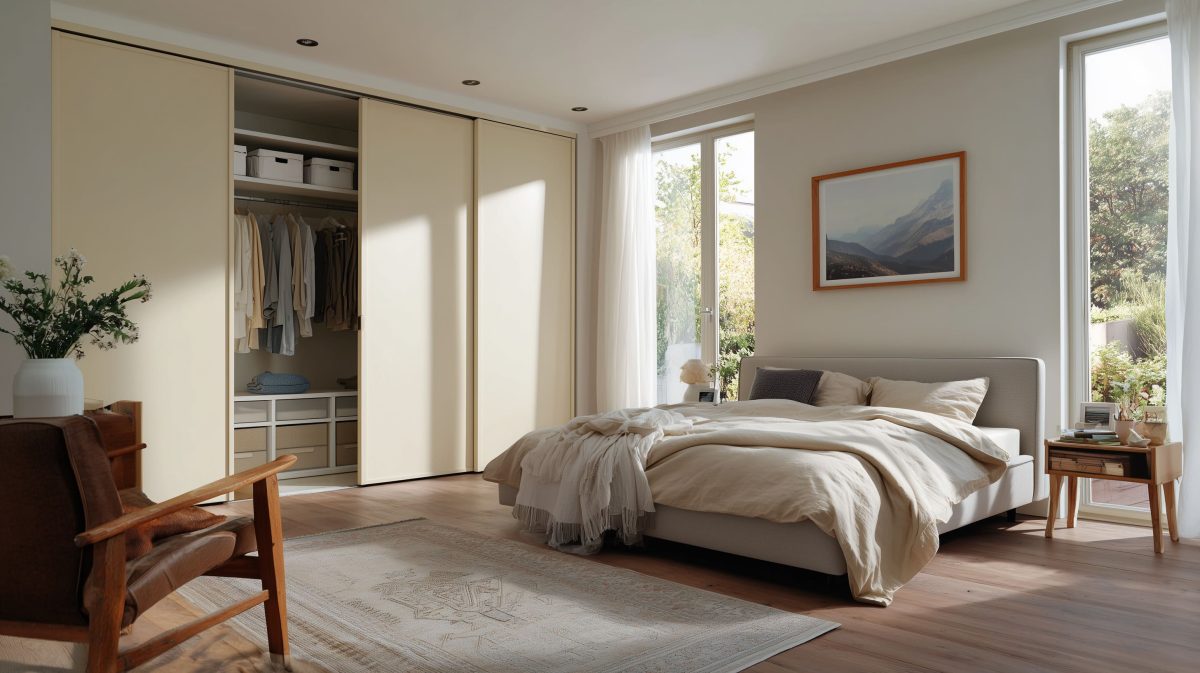
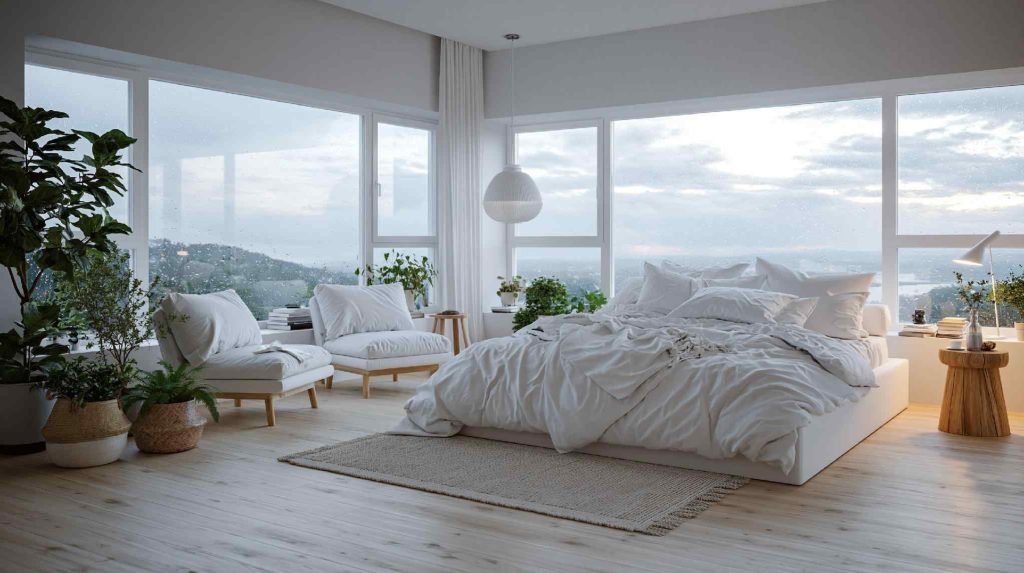
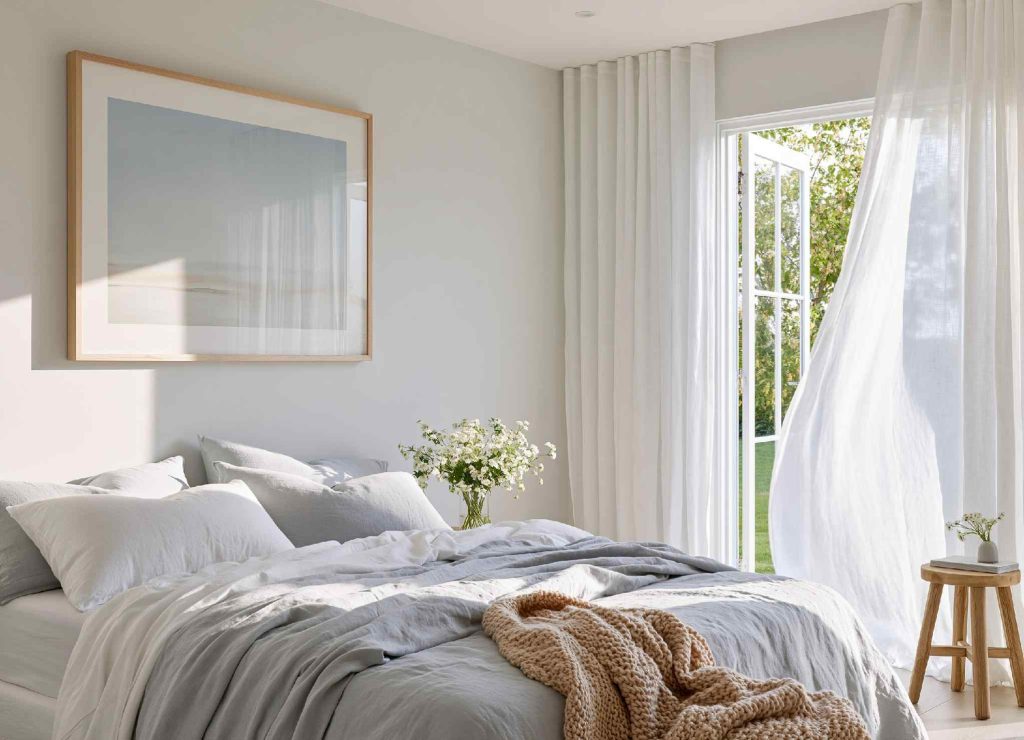
Natural light and indoor plants create a bright, relaxing bedroom retreat.
Creating a peaceful bedroom starts with designing for comfort rather than simply decoration.
Choose Soft, Calming Colours
Neutral shades like warm whites, soft greys, sage greens, muted blues, taupe, and earthy beige instantly create a restful atmosphere.
Keep Clutter to a Minimum
Visible clutter creates visual stress. Well-planned wardrobes, bedside storage, and concealed organisers help maintain a calm environment.
Layer Different Types of Lighting
Instead of relying only on bright ceiling lights, combine ambient, task, and accent lighting to create a softer atmosphere during the evening.
Introduce Natural Materials
Wood, linen, cotton, cane, jute, wool, and stone add warmth and texture while making the room feel grounded.
Invest in Comfortable Bedding
High-quality mattresses, breathable bedding, soft pillows, and layered throws contribute as much to relaxation as the décor itself.
Bring Nature Indoors
Indoor plants, natural light, and outdoor views help create a stronger connection with nature and improve the room’s ambience.
Which Relaxing Bedroom Style Works Best for Your Space?
Different design styles create relaxation in different ways.
Scandinavian
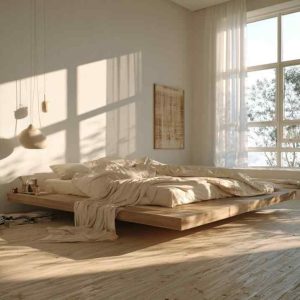
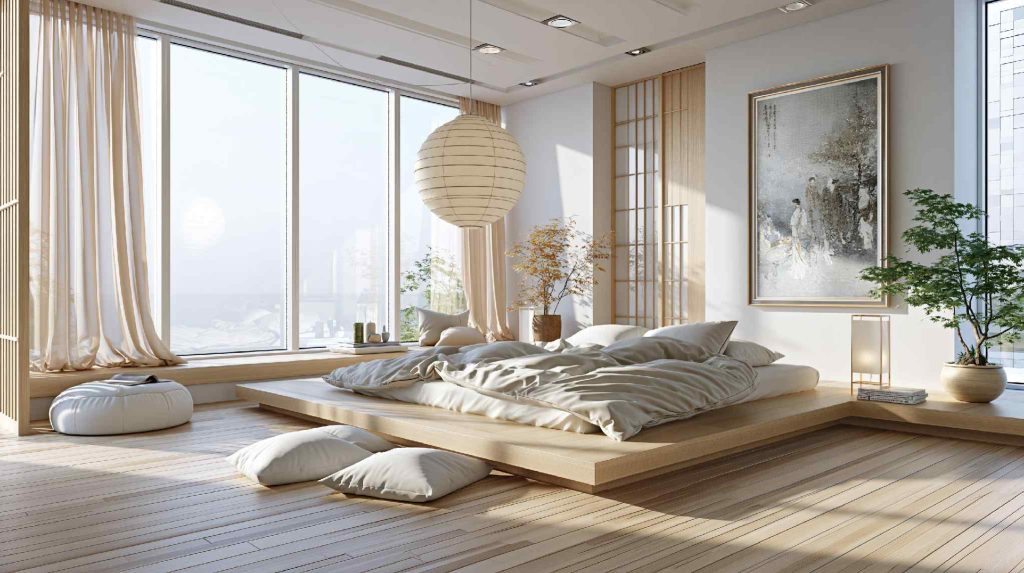
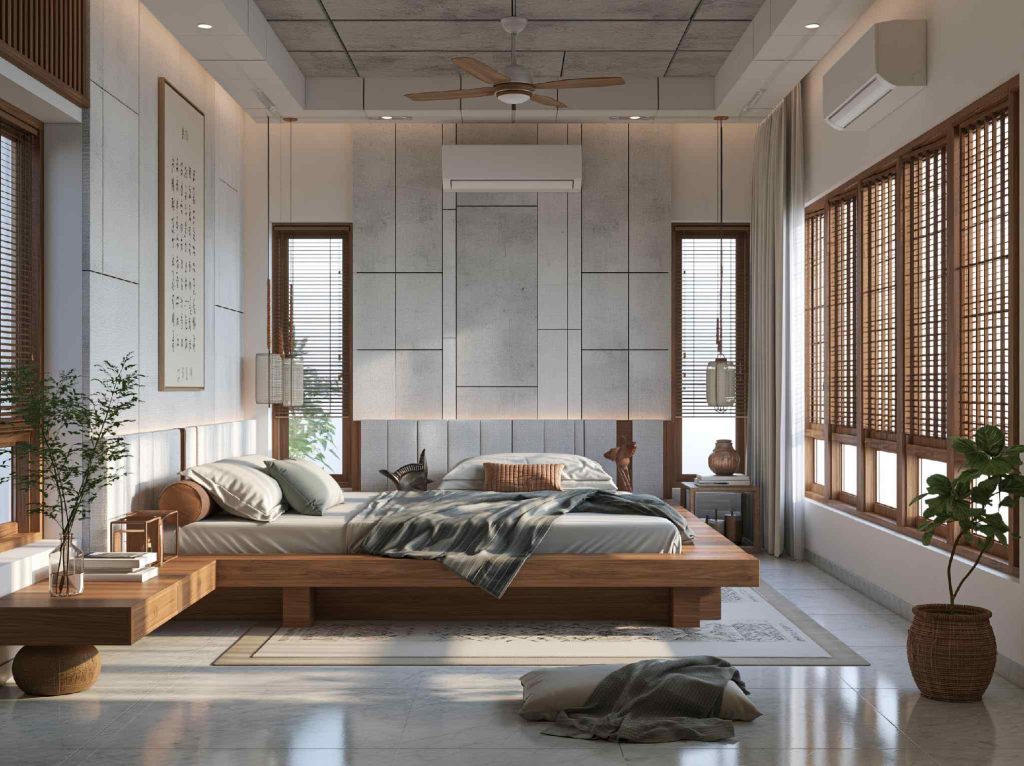
Japandi style blends natural materials and muted tones for a calming bedroom.
Simple furniture, light wood, white walls, and minimal accessories make Scandinavian bedrooms feel bright and peaceful.
Japandi
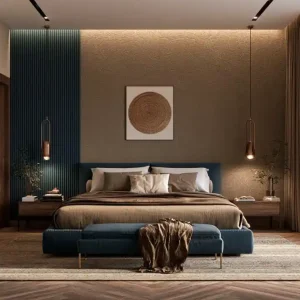
A modern minimalist bedroom uses clean lines and calm tones to relax.
Combining Japanese simplicity with Scandinavian warmth, Japandi focuses on natural materials, muted colours, and functional design.
Modern Minimalist
Earthy textures and soft greys give this bedroom a contemporary natural calm.
Clean lines, uncluttered furniture, and restrained colour palettes create a calming visual environment.
Contemporary Natural
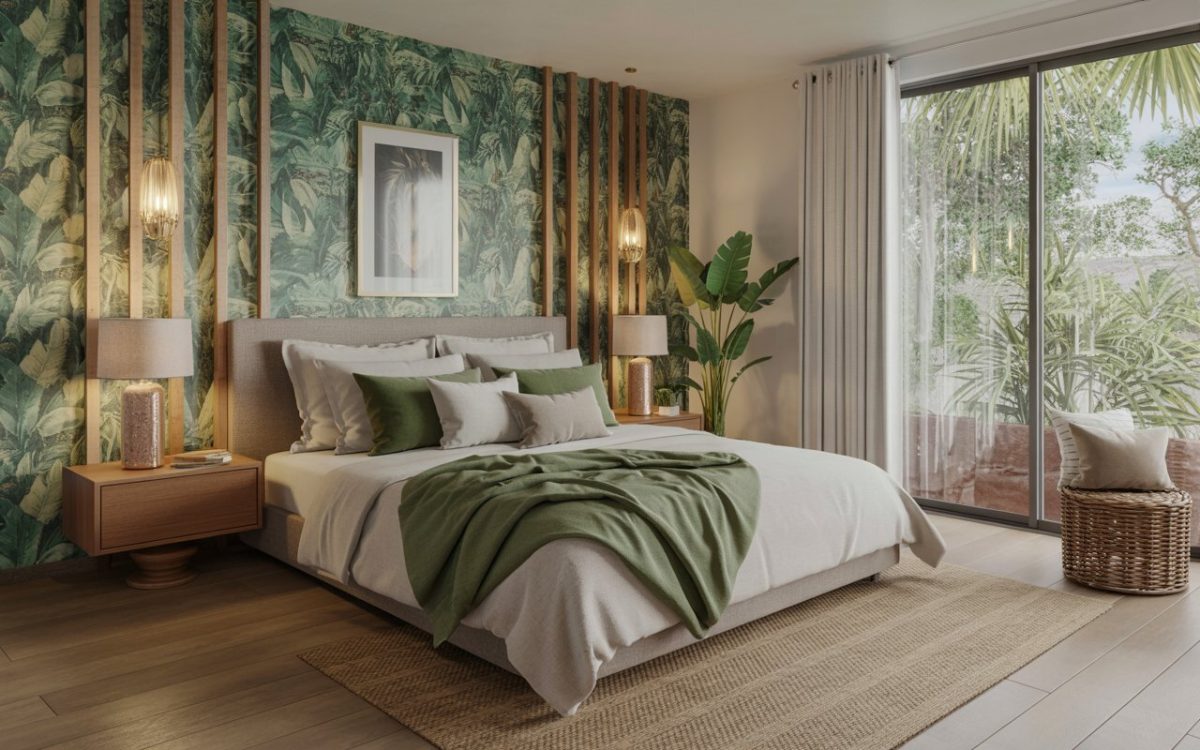
Warm wood tones and soft textiles create a classic luxury relaxing bedroom.
Earthy colours, organic textures, and abundant greenery create a warm yet sophisticated atmosphere.
Classic Luxury
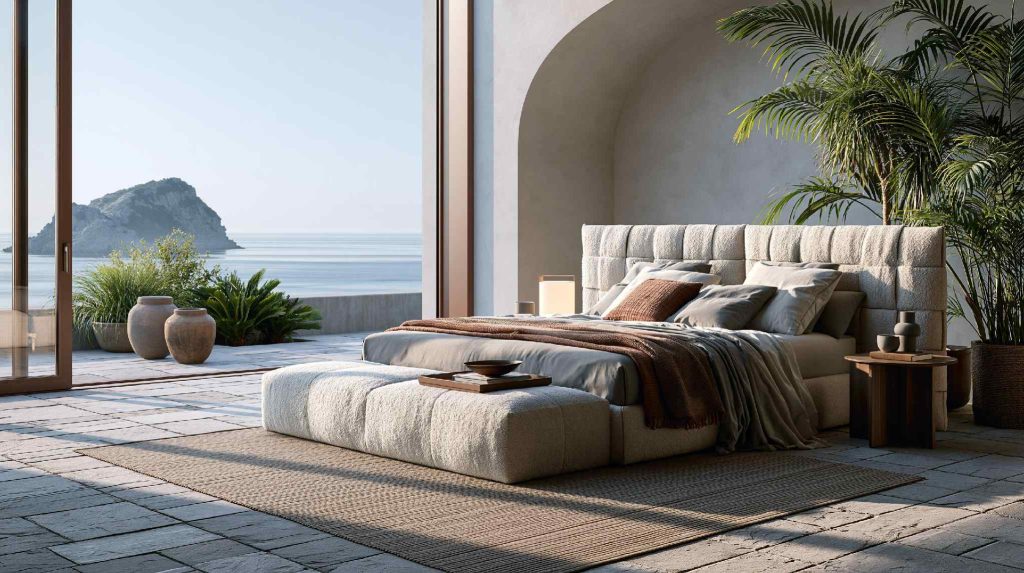
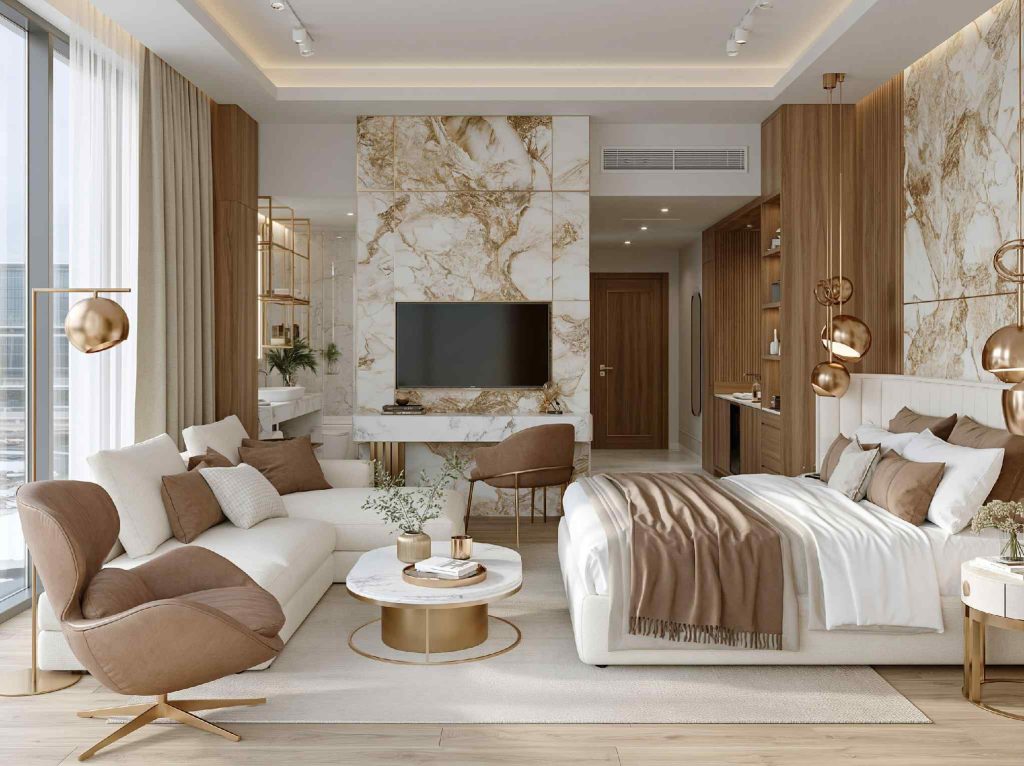
A luxurious retreat with ocean views embodies classic relaxing bedroom style.
Soft upholstery, elegant lighting, layered textiles, and timeless furniture create a luxurious retreat without feeling overwhelming.
The most peaceful relaxing bedroom ideas are those that reflect your personality while avoiding unnecessary visual distractions.
How Can You Create a Relaxing Bedroom on Any Budget?
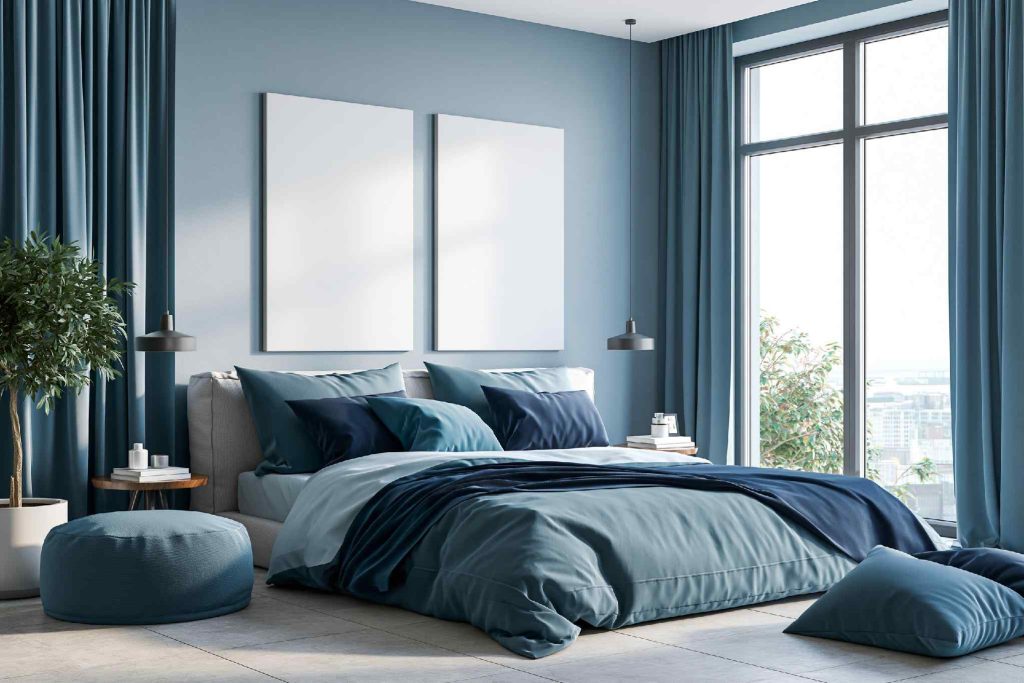
Calming blue tones show how to create a relaxing bedroom on any budget.
Creating a peaceful bedroom doesn’t always require expensive renovations.
Begin by decluttering and organising visible surfaces.
Replace harsh white lighting with warm LED bulbs.
Add textured cushions, cosy throws, and breathable bedding.
Introduce indoor plants for freshness.
Rearrange furniture to improve circulation and create a more open feel.
Paint remains one of the most affordable ways to transform a bedroom, especially when using calming neutral colours.
Updating curtains, rugs, and bedside lamps can also dramatically change the room without replacing major furniture.
Many cosy relaxing bedroom ideas rely more on thoughtful styling than on expensive purchases.
Relaxing Master Bedroom Ideas for Different Room Sizes
Thoughtful design turns this spacious layout into a relaxing master bedroom.
Every bedroom can feel relaxing when designed thoughtfully.
Small Master Bedrooms
Use multifunctional furniture, wall-mounted lighting, mirrors, and concealed storage to maximise space while maintaining a clutter-free appearance.
Medium-Sized Bedrooms
Create a cosy reading corner, layer rugs, introduce artwork, and use a combination of wardrobes and bedside storage for better organisation.
Large Master Bedrooms
Define separate zones for sleeping, reading, and dressing without overcrowding the room. Large upholstered headboards, statement lighting, and oversized rugs help make spacious bedrooms feel warm rather than empty.
The most relaxing master bedroom ideas balance openness with intimacy, ensuring the room feels welcoming regardless of its size.
Common Bedroom Decorating Mistakes That Prevent Relaxation
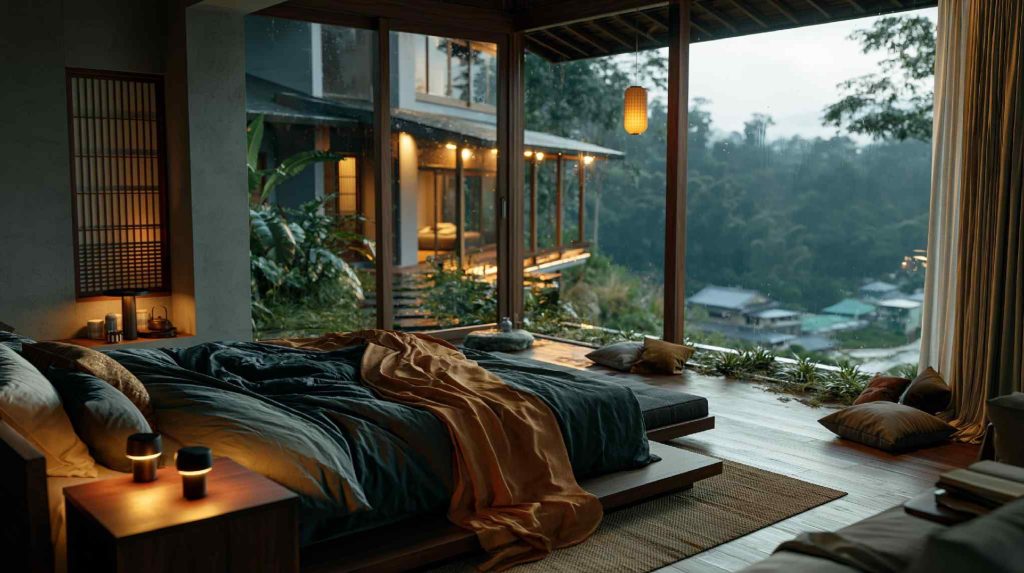
Warm ambient lighting and nature views create a cosy, relaxing bedroom feel.
One of the biggest mistakes is choosing colours that are too bright or visually stimulating. Poor lighting, excessive furniture, visible clutter, and overcrowded shelves also make bedrooms feel busier than they need to be.
Ignoring window treatments can reduce sleep quality, especially if outside light enters early in the morning. Another common mistake is mixing too many colours, materials, or decorating styles within one room.
Finally, avoid sacrificing comfort for appearance. Beautiful furniture means very little if the mattress, pillows, or seating aren’t comfortable enough for everyday use. Designing with simplicity and comfort in mind creates a bedroom that truly supports relaxation.
Create Your Own Peaceful Retreat
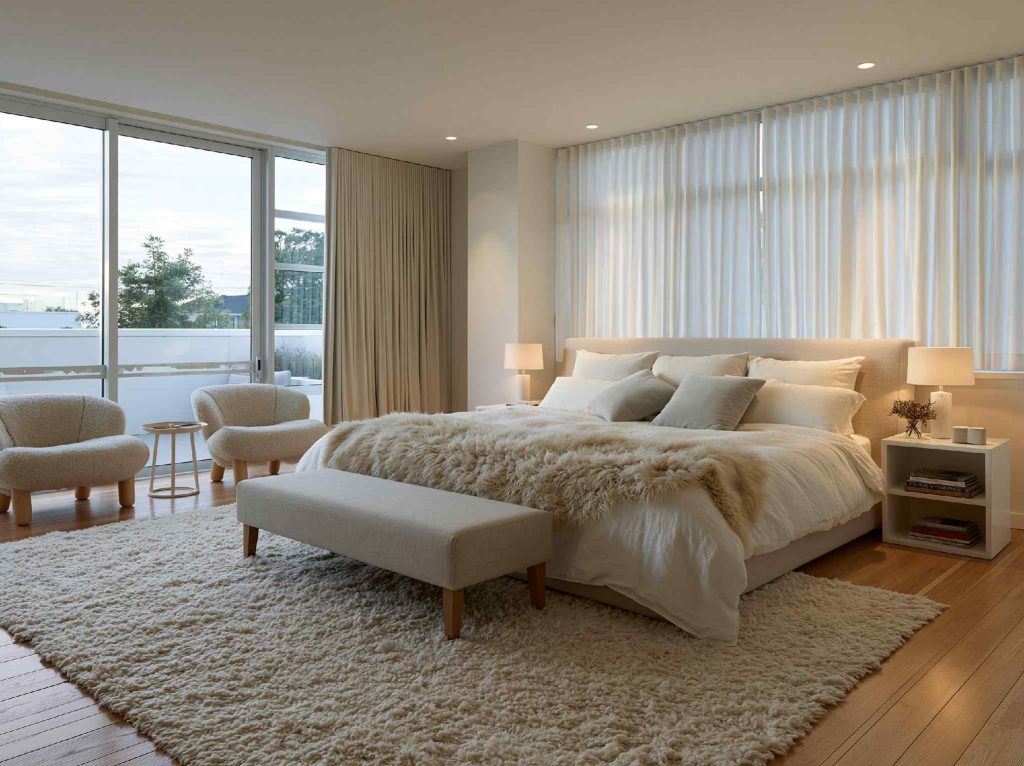
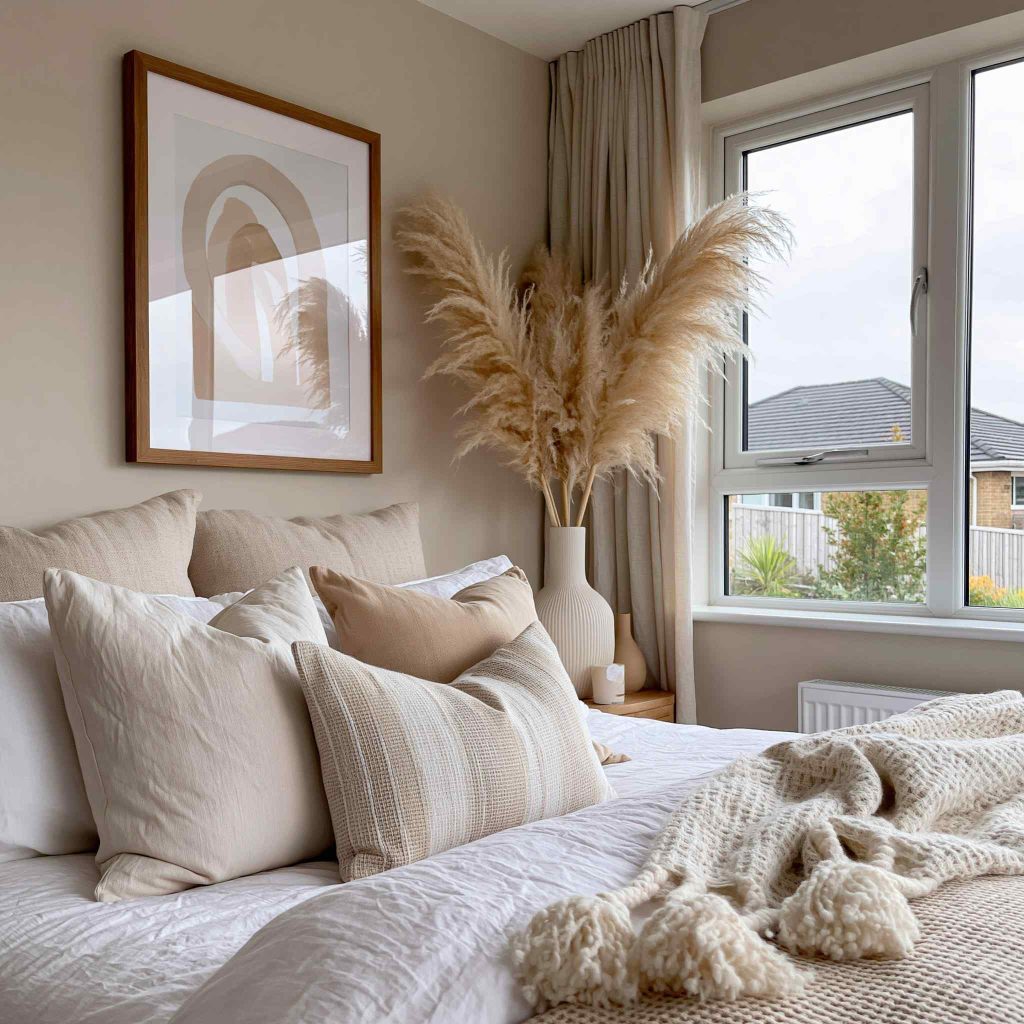
Layered cushions and neutral tones keep this relaxing bedroom cosy and inviting.
The most relaxing bedroom decorating ideas focus on creating a space that feels comfortable, organised, and deeply personal. At HomeLane, we create customised bedroom interiors that combine intelligent storage, timeless aesthetics, and everyday comfort. Book a free HomeLane consultation and design a bedroom that helps you relax, recharge, and wake up refreshed.
Remember, a truly relaxing bedroom isn’t defined by expensive furniture or elaborate décor. It’s the thoughtful balance of comfort, functionality, and simplicity that makes the biggest difference.
FAQs
1. What colours make a bedroom feel more relaxing?
Soft neutrals, warm whites, muted greens, gentle blues, taupe, beige, and earthy tones are widely considered the most calming colours for bedrooms. These shades create a soothing backdrop that promotes relaxation and restful sleep.
2. What is the best lighting for a relaxing bedroom?
Warm ambient lighting combined with bedside lamps, dimmers, and soft accent lighting creates a comfortable atmosphere. Layered lighting allows you to adjust brightness throughout the day to suit different activities and moods.
3. Which bedroom style is considered the most calming?
Scandinavian, Japandi, minimalist, and nature-inspired interiors are among the most relaxing bedroom styles because they emphasise simplicity, natural materials, and uncluttered spaces. Their restrained colour palettes also help create a peaceful environment.
4. How can I make a small bedroom feel cosy and relaxing?
Choose multifunctional furniture, maximise storage, use soft lighting, introduce layered textiles, and keep the décor simple. Light colours and thoughtful organisation help even compact bedrooms feel spacious, comfortable, and inviting.
5. What are some ideas for a relaxing room?
Use calming colours, comfortable furniture, indoor plants, layered lighting, natural textures, soft furnishings, pleasant fragrances, and clutter-free storage to create a relaxing room. Personal touches like artwork or meaningful décor can make your space feel even more comforting.










 EXPLORE MORE