Kitchen Sliding Door Designs: Glass, Wooden and Space-Saving Ideas for Indian Homes
By Usha Balasubramanyan- January 30, 2026
AI Summary
3 key insights · 1 expert tip
Kitchen sliding doors maximise space and offer flexible layouts, enhancing modern Indian homes by eliminating door swing clearance for improved movement and style.
Key Insights:
What You'll Read Here:
Sliding doors are ideal for small kitchens, eliminating swing space for furniture placement near doorways.
Toughened glass and engineered wood are durable, easy-to-clean materials suitable for humid kitchen environments.
Pocket doors require 100-150mm wall cavity space, while surface-mounted doors need wall space equal to the door’s width.
HOMELANE EXPERT TIPBy our design team
When selecting kitchen sliding doors, consider whether you prioritise natural light and open connection, or enhanced sound and smell insulation for your space.
Open kitchens are lovely when you’re sipping coffee at a spotless island. Add a sizzling tadka, the mixer running at full speed and yesterday’s pressure cooker still waiting at the sink, and a little separation suddenly sounds rather appealing!
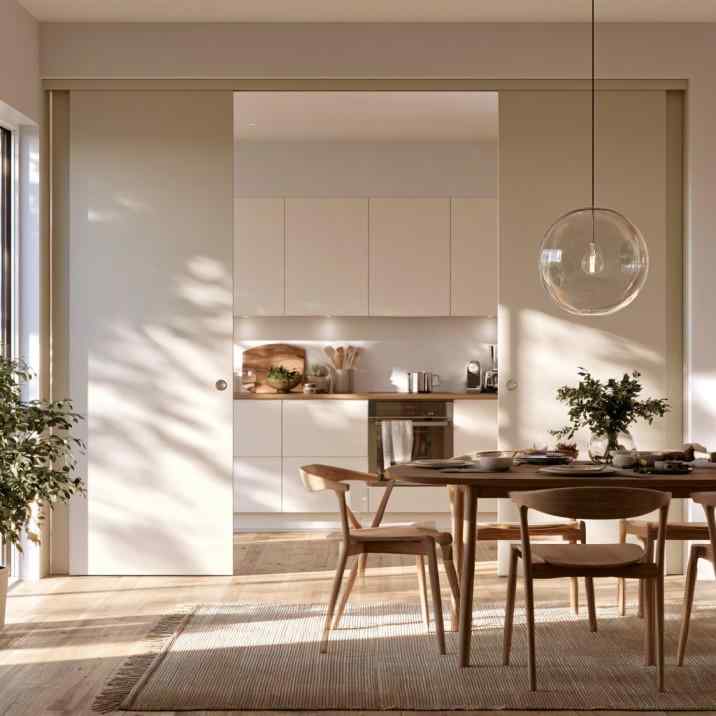
Twin white sliding panels open wide to connect this kitchen with the sunny dining area.
That’s where kitchen sliding door designs come into their own. They let you change the relationship between kitchen and living space in seconds, without sacrificing floor area to a swinging door. The trick is choosing the right configuration, glass and hardware for the way your kitchen actually works.
Kitchen Sliding Door Designs: Types and Where Each One Works
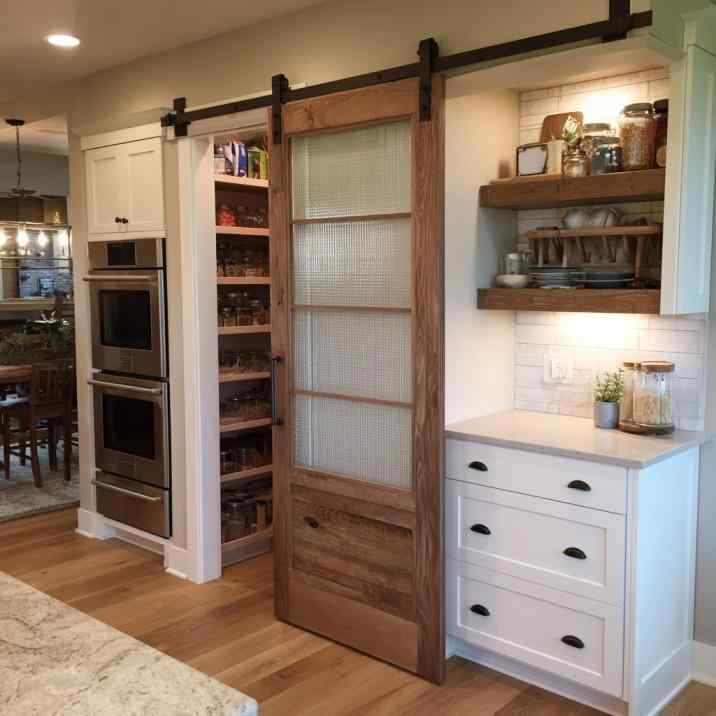
A barn-style wooden sliding door with textured glass adds rustic charm to this kitchen.
A single sliding shutter is the simplest option. The door travels along the wall beside the opening, making it useful for entrances where sufficient clear wall space is available.
For wider openings between the kitchen and dining or living room, two sliding panels can be used. Depending on the system, these may slide past one another or towards opposite sides.
Pocket doors disappear into a wall cavity when opened, producing an exceptionally clean result. They require more planning, however, and are easiest to incorporate before the wall construction and services are finalised.
Barn-style surface sliders can add character, but the exposed track becomes part of the design. They tend to suit more rustic or industrial interiors.
Many modern kitchen sliding door designs combine slim aluminium or metal frames with glass. The result feels lighter than a solid partition while still giving you the option of closing the kitchen.
Our guide to kitchen door designs offers more ways to think about the entrance as part of the overall kitchen!
Glass Sliding Doors for the Kitchen: Frosted vs Fluted vs Clear
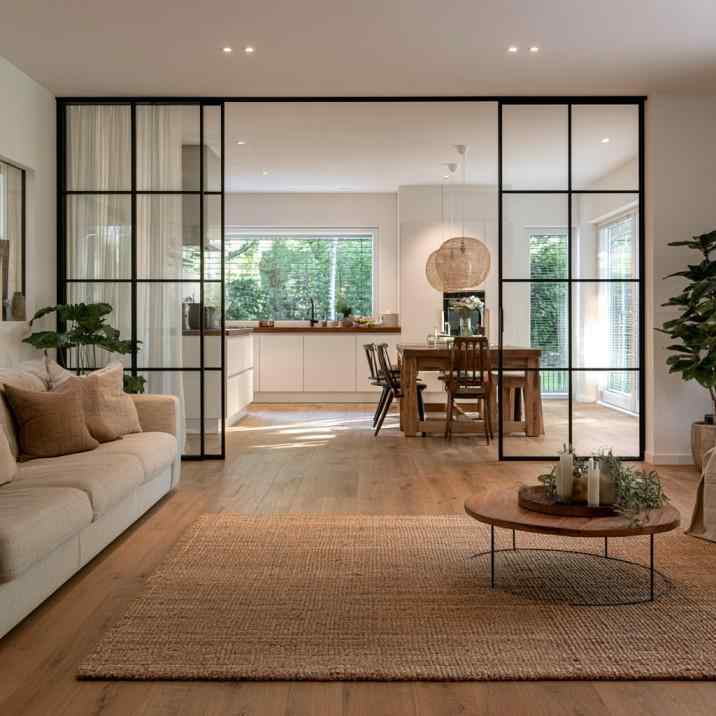
Black-framed clear glass sliding doors let daylight flow from the kitchen into the living room.
A glass sliding door for kitchen spaces is particularly useful when you want physical separation without visually shrinking the room.
Clear glass gives you maximum visual continuity and allows light to travel between spaces. It’s an excellent option for a darker kitchen borrowing daylight from an adjoining room.
A frosted glass sliding door for kitchen entrances provides more privacy. It still transmits light, but obscures the view, making it useful if you like an open feeling without putting every unwashed coffee mug on display.
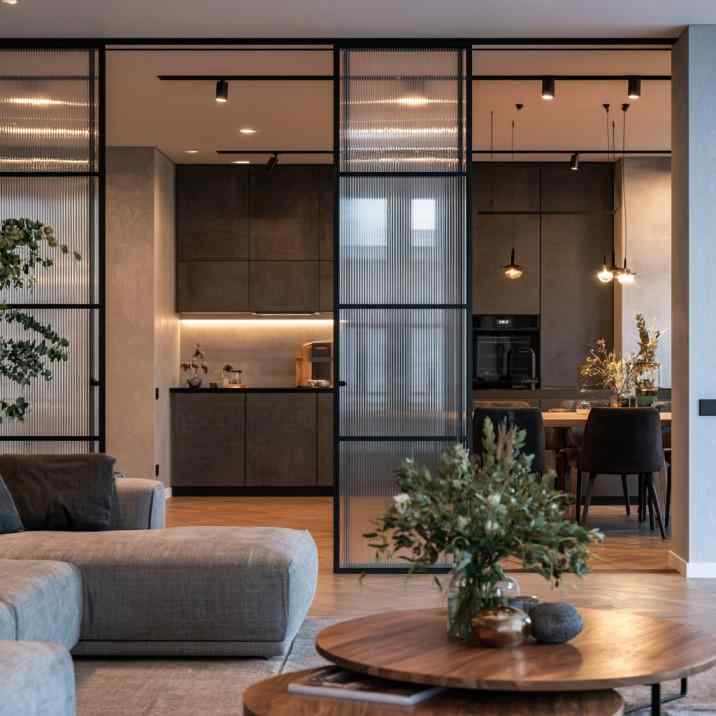
Fluted glass sliding doors softly screen this modern kitchen while adding elegant texture.
A fluted glass sliding door kitchen design sits somewhere between the two. Its ribbed texture distorts the view rather than completely concealing it, while adding an attractive decorative detail. Fluted glass works particularly well with black, bronze or slim aluminium frames.
Glass Type
Best For
Keep in Mind
Clear
Maximum light and openness
Shows kitchen clutter
Frosted
Privacy with light transmission
Less visual connection
Fluted
Soft screening and texture
Ribbed surface may need more cleaning
Tinted
Contemporary interiors
Can reduce brightness
Sliding Door Ideas for Small Kitchens and Open Layouts
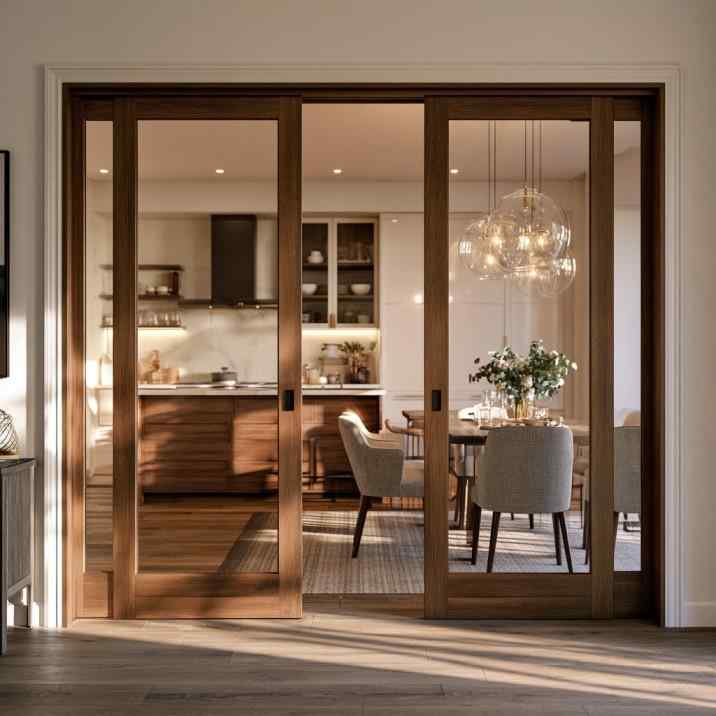
Wood-framed glass sliding doors bring warmth while keeping the kitchen and dining area connected.
Among the most useful small kitchen sliding door ideas are single-panel glass sliders and compact framed doors that move parallel to the wall. Unlike hinged shutters, they don’t need an arc of clear floor space to open.
For an open-plan kitchen, consider a wide glass partition that can remain open most of the day and close during heavy cooking. You retain the sociable layout while gaining control over cooking smells, sound and visual clutter!
A sliding partition can also work between a kitchen and utility area or pantry. Our modern pantry door ideas show how door design can become part of the cabinetry rather than an interruption.
For broader openings, these kitchen partition ideas offer further ways to create separation without building a solid wall.
How to Choose: Material, Glass Type and Track Hardware That Lasts
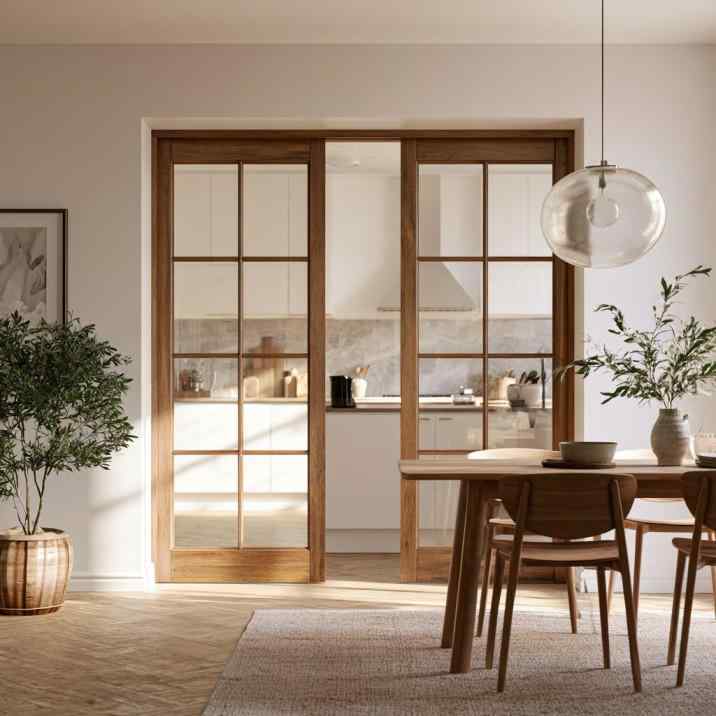
Wooden grid-pane sliding doors frame the kitchen beautifully from this cosy dining space.
Aluminium-framed glass is a practical choice for contemporary kitchens because the profiles can be slim and the material doesn’t have the moisture concerns of untreated timber.
A wooden kitchen sliding door design brings considerably more warmth. Solid wood, engineered construction or wood-finish panels can work, but kitchens demand finishes that tolerate regular cleaning, humidity and everyday handling.
The track and rollers must suit the door’s dimensions and weight. Good hardware should allow smooth movement and minimise wobbling. Soft-close systems are worth considering, especially with large doors.
Also decide between top-hung and systems that use floor guides or tracks. Each has different structural and installation requirements, so the decision should be made together with the fabricator.
What Most People Get Wrong with Kitchen Sliding Doors
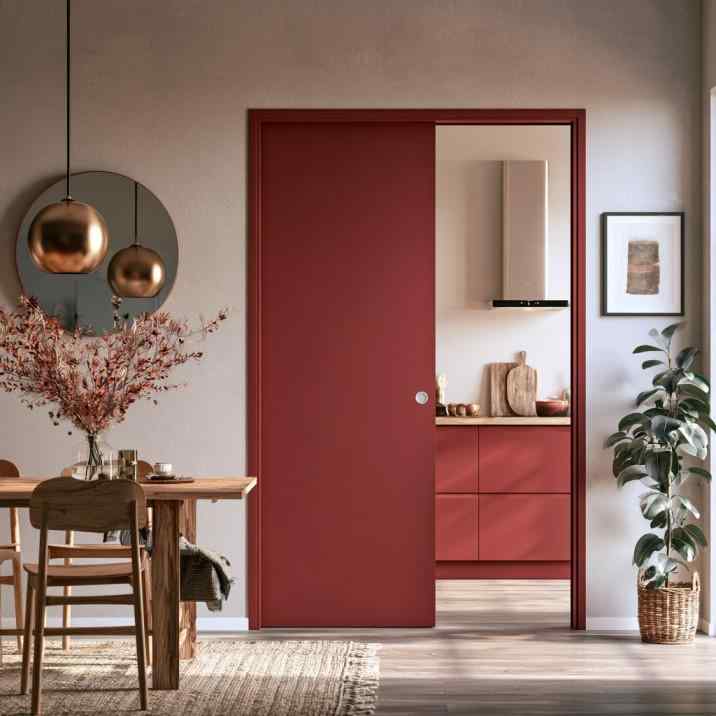
A bold maroon single sliding shutter adds colour and saves swing space at the kitchen entrance.
First, they assume “sliding” automatically means “space-saving”. It saves swing space, but a surface-mounted door still needs somewhere to travel. For a single panel, you’ll generally need clear adjacent wall space corresponding to the width of the opening and shutter.
Second, people expect a sliding door to seal exactly like a conventional hinged door. Many sliding systems have small perimeter gaps, so their ability to contain smells and sound depends on the system.
Then there’s cleaning! Kitchen grease has an uncanny talent for finding grooves you didn’t know existed. Complex frames and difficult-to-reach tracks may require more attention than simple profiles.
Close the Kitchen Without Closing It Off!
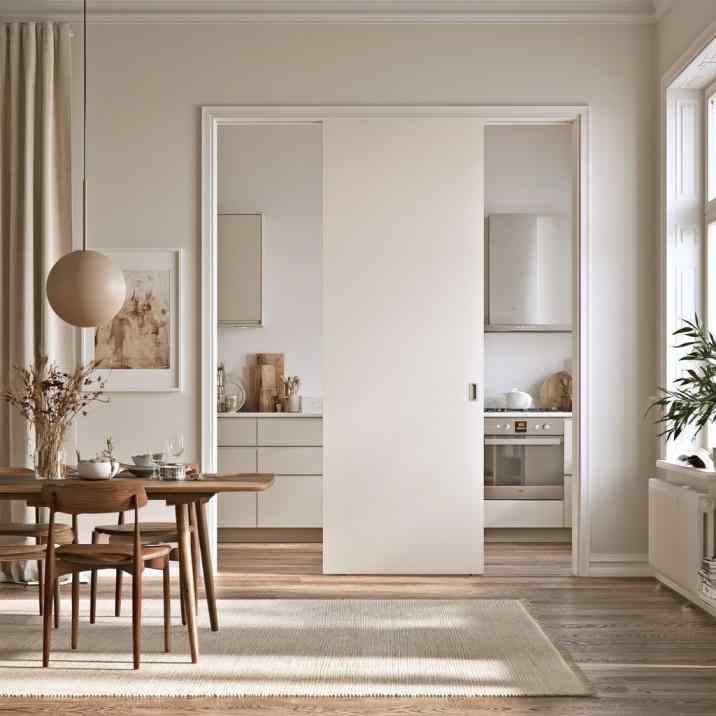
A simple white sliding door neatly closes off this compact kitchen when cooking gets messy.
The real appeal of kitchen sliding door designs is flexibility. Your kitchen can be open while you’re chatting over breakfast, partially screened when you want some privacy and closed when dinner involves a particularly enthusiastic frying session.
HomeLane can help you coordinate kitchen doors, partitions and cabinetry as part of the complete layout. Book a free consultation and find a sliding-door solution that lets your kitchen open up or disappear from view exactly when you want it to!
FAQs
1. Are sliding doors good for kitchens?
Yes. They’re particularly useful where you want flexible separation without the swing space of a hinged door. Glass sliding doors can also maintain light and visual connection between the kitchen and adjoining room.
2. Which type of sliding door is best for a kitchen?
It depends on the opening and interior style. Aluminium-framed glass is practical for many modern kitchens, while wooden or wood-finish doors suit warmer interiors. Good-quality track hardware is essential in either case.
3. Is glass a good choice for a kitchen sliding door?
Yes. Glass allows light to pass between rooms and is easy to coordinate with contemporary interiors. Use appropriately specified safety glass for large panels and choose clear, frosted or fluted finishes according to the privacy required.
4. How much does a kitchen sliding door cost?
A relatively simple customised door may start around INR 15,000 to INR 25,000, while larger framed-glass systems may cost INR 25,000 to INR 60,000 or more. Glass, dimensions, hardware and installation influence pricing.
5. Which sliding door is best for a small kitchen?
A single-panel glass or slim framed sliding door can work particularly well. It saves door-swing space while allowing light to travel through, helping a compact kitchen feel less enclosed.
6. Is frosted or fluted glass better for a kitchen door?
Frosted glass offers greater visual privacy, while fluted glass partially obscures the kitchen and adds texture. Choose according to how much you want to conceal and the style of the adjoining room.
7. How much space is needed for a kitchen sliding door?
A surface-mounted single slider generally needs clear wall space beside the opening to accommodate the shutter when open. Exact requirements depend on door width, overlap, track and handle system.












 EXPLORE MORE