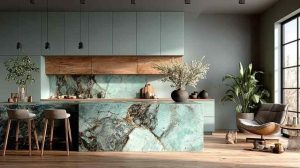
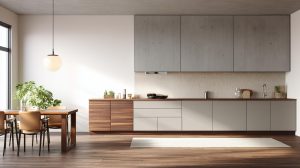
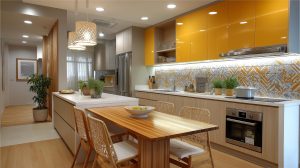
Explore 15 creative kitchen door designs that move beyond the ordinary, offering style, functionality, and fresh aesthetic inspiration for your home.
Key Insights:
What You'll Read Here:
- Consider shaker-style doors for a budget-friendly, simple, and popular modular kitchen option.
- Solid wood doors offer durability and a quality finish, with oak, birch, cherry, and walnut being excellent choices.
- Standard kitchen door widths range from 30 cm to 100 cm, with 60 cm units typically having one door.
HOMELANE EXPERT TIP By our design team
When selecting kitchen doors, prioritise designs that integrate seamlessly with your cabinetry and enhance natural light flow for a more open feel.
The humble kitchen door has a surprisingly long job description. It may need to contain the aroma of tonight’s fish fry, hide a sink full of dishes when guests arrive, allow ventilation and still make the kitchen feel connected to the rest of the home.
That’s why choosing between different kitchen door designs shouldn’t be an afterthought. The right door depends on your available space, cooking style, need for privacy and the amount of natural light reaching the kitchen.
Types of Kitchen Door Designs and How to Choose Between Them
A conventional hinged door is still one of the simplest options. It closes firmly, offers good privacy and can work with almost any interior style. The drawback is the swing space it requires.
A kitchen sliding door design is particularly useful when the entrance is wide or there isn’t enough clearance for a hinged shutter. Sliding doors can disappear behind a wall, move along an exposed track or use two panels across a larger opening. Our guide to kitchen sliding door designs offers more ideas for incorporating them into contemporary layouts.
Glass doors keep visual connections open while providing physical separation. A clear kitchen door glass design maximises light, while fluted, frosted or textured glass provides greater privacy. Browse these kitchen glass door design ideas if you want something lighter than a solid shutter.
An open kitchen door design may simply be a wide, doorless opening. It suits households comfortable with an open-plan arrangement but provides little control over cooking smells or noise.
Kitchen Door Materials Compared: Wood, PVC, Aluminium and Acrylic
Kitchen doors experience more moisture, grease and frequent cleaning than many interior doors, so material selection matters.
| Material | Advantages | Considerations |
| Wood/engineered wood | Warm, substantial appearance | Needs suitable finishing and moisture protection |
| Aluminium | Durable, slim and low-maintenance | Can look utilitarian if poorly detailed |
| PVC/uPVC | Moisture-resistant and economical | Quality and appearance vary |
| Glass | Brings in light and looks contemporary | Requires safety glass and frequent cleaning |
| Acrylic-faced panels | Smooth, modern appearance | Scratches and fingerprints may be noticeable |
A wood kitchen door design works beautifully in traditional and contemporary interiors. Instead of an elaborate carved shutter, modern homes can use cleaner wood or wood-finish panels with simple detailing.
Aluminium kitchen door designs are especially effective when combined with glass. Slim frames give the door a contemporary appearance while keeping maintenance relatively straightforward.
Acrylic is more commonly associated with kitchen cabinetry than full-size entrance doors. If used on a door, it generally works as a decorative facing over an appropriate structural substrate rather than functioning as the door structure itself.
Kitchen Door Sizes: Standard Dimensions and How to Get Them Right
There isn’t one mandatory kitchen-door dimension that works for every Indian home. A typical single-leaf internal door may be around 750 to 900 mm wide and roughly 2,000 to 2,100 mm high, but the correct size depends on the building, layout and local requirements.
An 800 to 900 mm clear opening generally makes everyday movement more comfortable, particularly when carrying groceries, large vessels or small appliances. Wider openings may also improve accessibility.
When it comes to sliding systems, you should make sure there is enough adjacent wall area for the shutter to slide fully open.
What Kitchen Door Design Is Best for Privacy, Light and Ventilation?
For privacy and cooking smells, a solid hinged door generally provides better separation than an open doorway. If you want separation without losing daylight, glass is an excellent compromise.
A kitchen jali door design can encourage airflow and add decorative character. Timber, metal or CNC-cut panels can create the effect, but jali openings will not contain smells, smoke or air-conditioned air as effectively as a solid door.
Fluted glass is especially useful because it obscures direct views while allowing light to pass through. Frosted glass offers greater visual privacy, while clear glass makes adjoining rooms feel more connected.
For kitchens where ventilation is already well managed through windows and a chimney, you have greater freedom to prioritise appearance. This straight modular kitchen design also shows how streamlined planning can keep compact kitchen spaces visually organised.
Kitchen Door Design Mistakes That Cost You Later
The first mistake is deciding on the door after the cabinetry has been finalised. A hinged shutter may then collide with a refrigerator or cabinet, while a sliding door may discover there is nowhere to slide.
Another is choosing ordinary glass where safety glazing is required. Full-height glazed doors should use appropriately specified safety glass and suitable hardware.
Don’t ignore cleaning either. Kitchens are tough on surfaces. Deep grooves, intricate mouldings and elaborate patterns near heavy cooking zones can collect grease and dust surprisingly quickly.
Ventilation is equally important. A door can help contain smells, but it cannot compensate for poor kitchen ventilation. Plan windows, exhaust systems or chimneys as part of the overall kitchen design.
Finally, check the floor transition. Sliding tracks, thresholds and level differences should not create awkward trip points or make cleaning unnecessarily difficult.
Open, Closed or Somewhere in Between?
The best kitchen door designs respond to how the kitchen is actually used. A solid door makes sense when privacy and cooking-smell control are priorities. Glass offers separation while preserving light, and sliding doors solve valuable space problems. Start with function, then choose the material and style. You’ll end up with a door that does far more than simply fill an opening.
HomeLane can help you plan your kitchen layout, cabinetry, finishes and connecting spaces as one cohesive design. Book a free consultation and create a kitchen that’s practical when you’re cooking and beautiful when the door is open.
FAQs
1. What is the best door design for a kitchen?
It depends on the layout. Hinged doors offer good separation, sliding doors save swing space, and glass doors are ideal when you want to maintain natural light and visual connection.
2. What door material is best for kitchens?
Wood, aluminium and safety glass are all good options when correctly specified. The best material depends on moisture exposure, maintenance, budget and the overall interior style.
3. How to choose a kitchen door?
Consider available space, door swing, ventilation, cooking habits, privacy, natural light and maintenance. Also check how the door interacts with nearby cabinets and appliances.
4. Which is better: sliding or hinged kitchen doors?
Hinged doors generally provide better closure, while sliding doors save space and work well across wider openings. Your kitchen layout should determine the choice.
5. What is the best material for a kitchen door?
There is no single best material. Aluminium and glass are practical for contemporary kitchens, while properly finished wood offers greater warmth and a more traditional appearance.
6. How wide should a kitchen door be?
Around 750 to 900 mm is common for a single internal door, with 800 to 900 mm generally providing more comfortable movement. Actual requirements depend on the home and applicable building standards.
7. Are fluted glass doors good for kitchens?
Yes. Fluted glass lets light through while partially obscuring the view into the kitchen, making it useful when you want both visual separation and brightness. Use appropriately specified safety glass for door applications.












 EXPLORE MORE