Kitchen Wall Tiles: Designs, Types, Sizes, Colours and Buying Guide
By Bivin Peter- January 15, 2026
AI Summary
3 key insights · 1 expert tip
Explore 10 kitchen wall tile designs, from mosaic to minimalist, to enhance your Indian home's style and functionality.
Key Insights:
What You'll Read Here:
Mosaic tiles offer vibrant colours and intricate layouts for a unique statement piece.
Large-format tiles create a seamless, spacious, and easy-to-clean modern kitchen surface.
Consider budget, kitchen size, maintenance, and overall theme when selecting wall tiles.
HOMELANE EXPERT TIPBy our design team
To maximise space in smaller kitchens, opt for larger, light-coloured tiles that reflect light and reduce grout lines.
Your kitchen walls work harder than almost any other surface in your home. Every day they face heat, steam, oil splashes, spices and constant cleaning. That’s why choosing the right kitchen wall tile designs isn’t just about finding something beautiful…it’s about selecting a finish that stays beautiful for years!
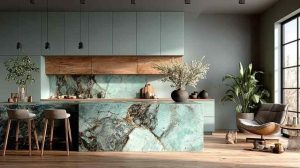
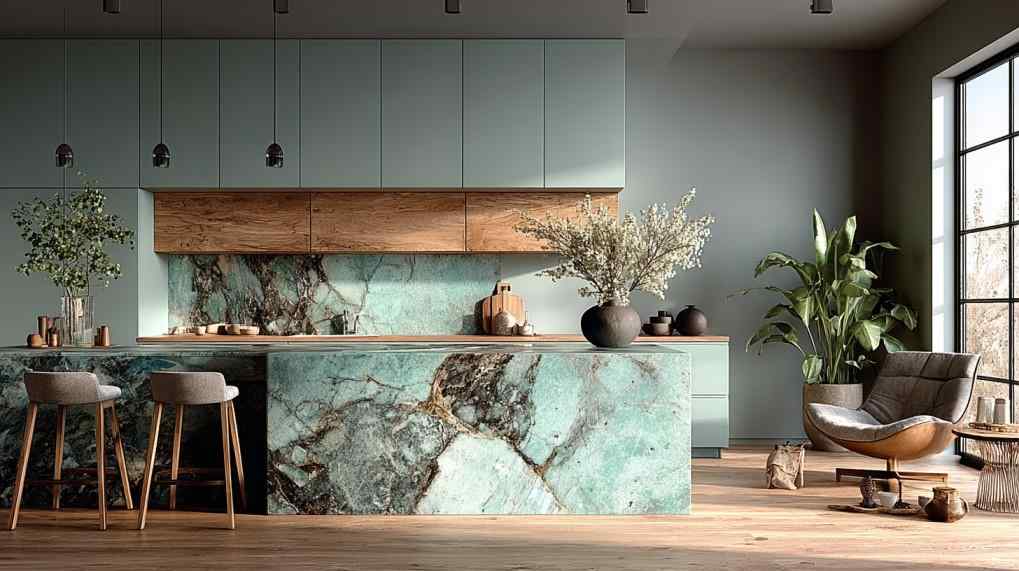
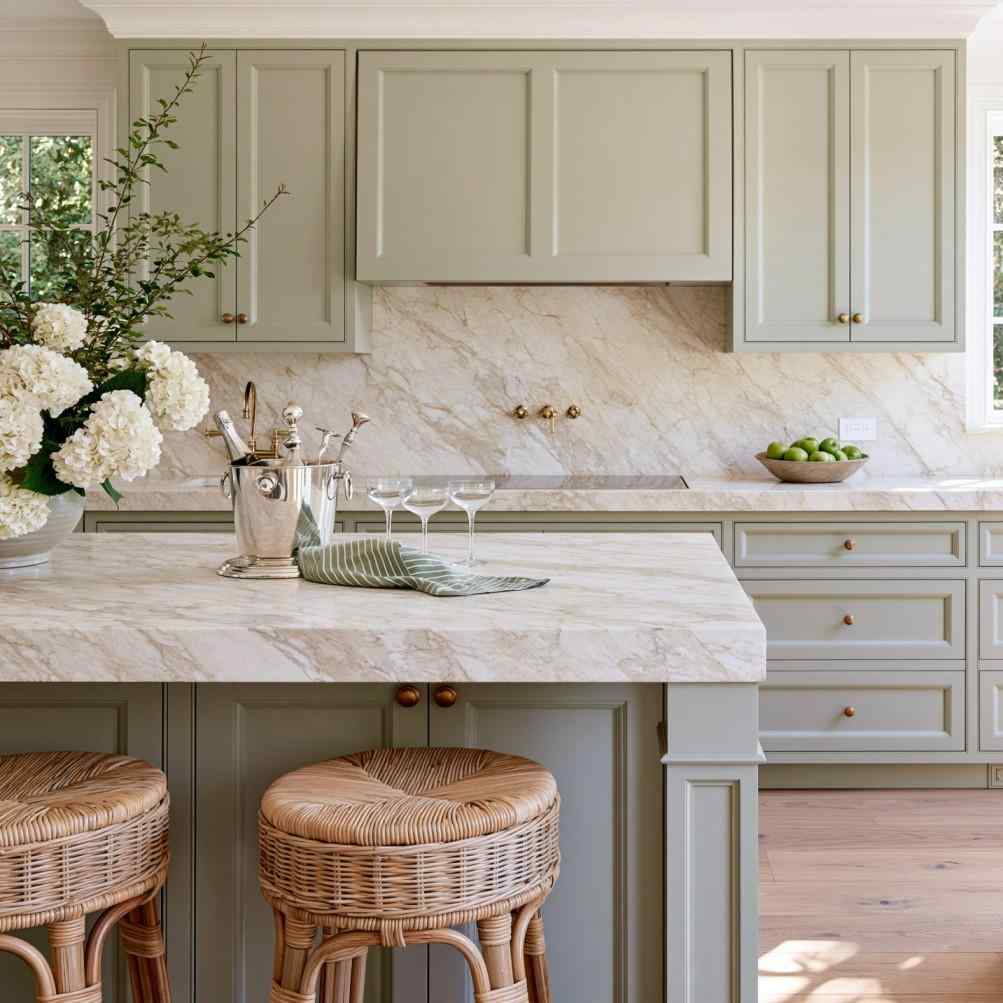
Marble-look backsplash pairs elegantly with soft sage cabinetry for a luxury kitchen.
Today’s modern kitchen wall tiles design options go far beyond plain white ceramic. From handmade-look subway tiles and terrazzo to marble-effect porcelain and textured finishes, there’s something to suit every kitchen style and budget. Here’s everything you need to know before making your choice.
What Are the Best Kitchen Wall Tiles?
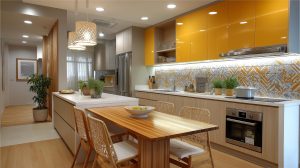
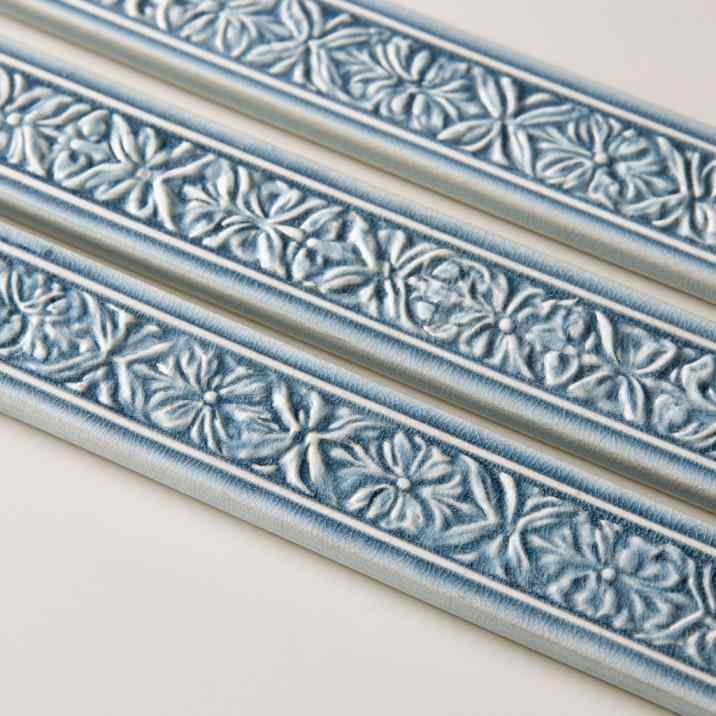
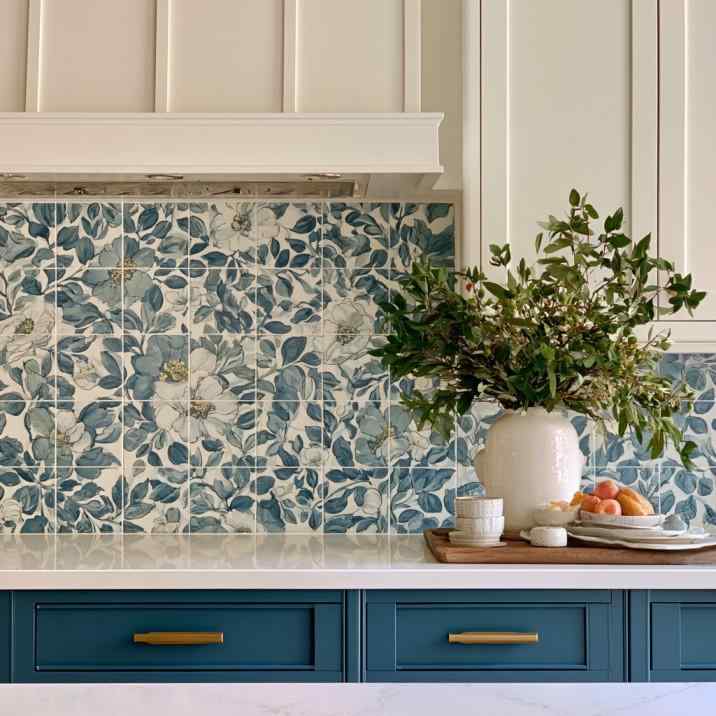
Blue floral patterned wall tiles bring traditional charm to a bold blue kitchen.
There’s no single “best” tile…only the best one for your kitchen, cooking habits and budget! Here’s the lowdown:
Material
Best For
Pros
Cons
Ceramic
Most Indian homes
Affordable, easy to clean
Less durable than porcelain
Porcelain
Premium kitchens
Extremely durable, stain resistant
More expensive
Vitrified
Busy family kitchens
Low water absorption, strong
Limited design range
Glass
Backsplashes
Reflects light beautifully
Shows fingerprints
Natural stone
Luxury kitchens
Rich natural texture
Needs sealing and maintenance
If you cook frequently, glazed ceramic or porcelain tiles usually offer the best balance between durability and maintenance. Natural stone looks stunning, of course, but demands more care.
Before choosing your wall tiles, it’s worth planning your backsplash (or dado) at the same time, since both work together visually. A well-designed kitchen dado tiles design can become the focal point of the kitchen while protecting walls from daily splashes.
Which Kitchen Wall Tile Designs Work Best for Modern Indian Kitchens?
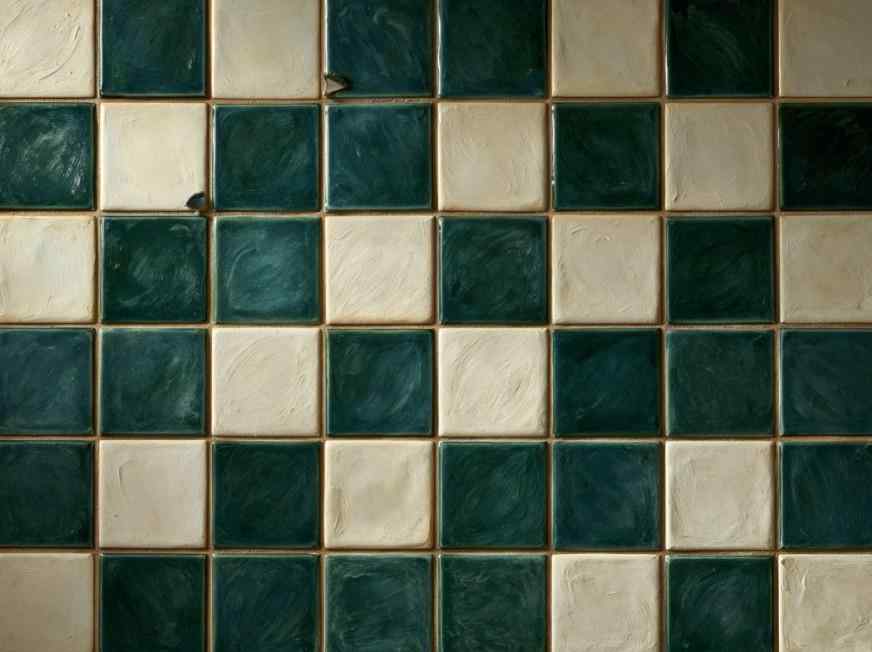
A checkerboard tile pattern in green and cream adds character to kitchen walls.
Current trends focus on texture, warmth and timeless appeal rather than overly decorative patterns.
Subway tiles remain a favourite thanks to their clean, versatile appearance. Lay them horizontally for a classic look or vertically to create the illusion of height.
Marble-look tiles bring luxurious veining without the maintenance of real marble, making them ideal for contemporary kitchens.
Terrazzo-inspired tiles add subtle colour and character while pairing beautifully with wood, white or grey cabinets.
Textured stone-look tiles suit earthy, organic kitchens and create visual depth without overwhelming the room.
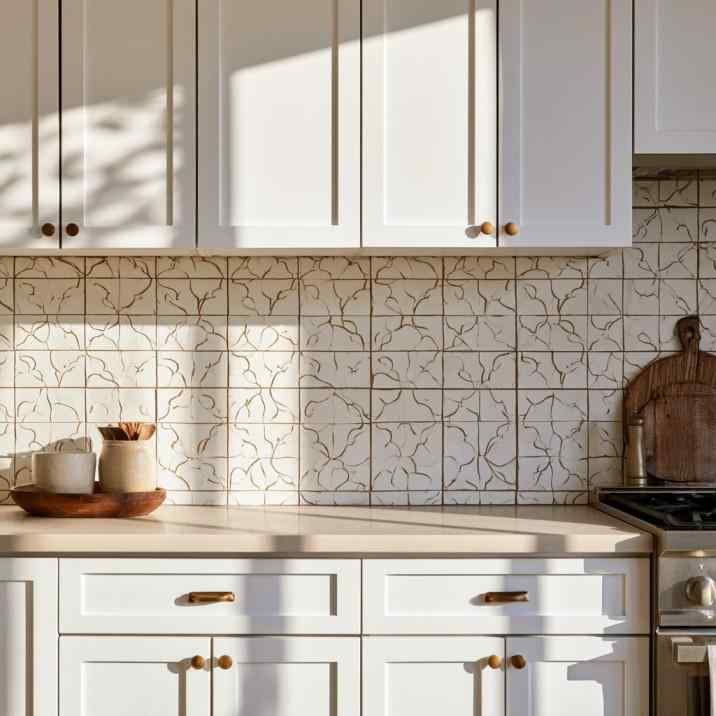
If you love traditional touches, flower design patterns for kitchen wall tiles work best as a backsplash or feature strip instead of covering every wall.
If you’re designing a modular kitchen from scratch, your kitchen backsplash should complement the cabinet finish, countertop and backsplash. Planning all three together creates a cleaner, more cohesive kitchen.
Which Material Is Best for Kitchen Wall Tiles?
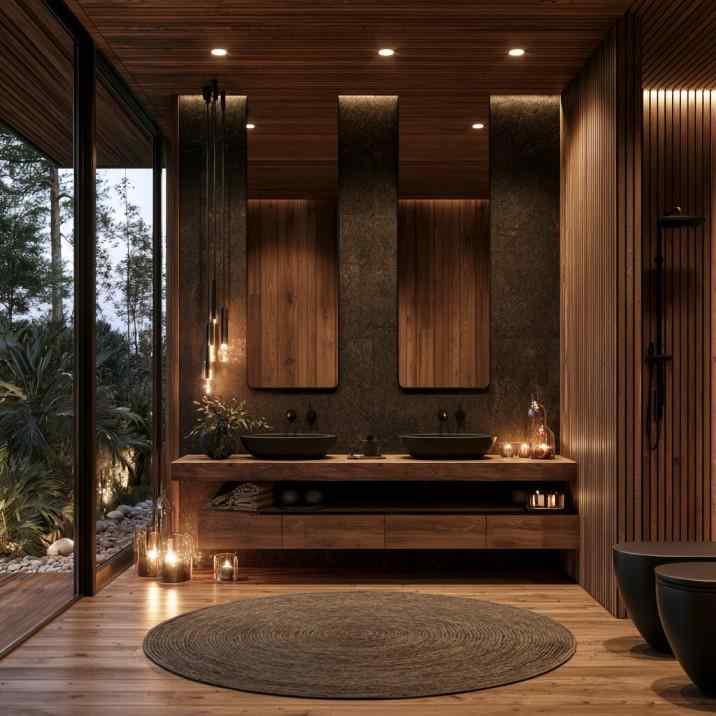
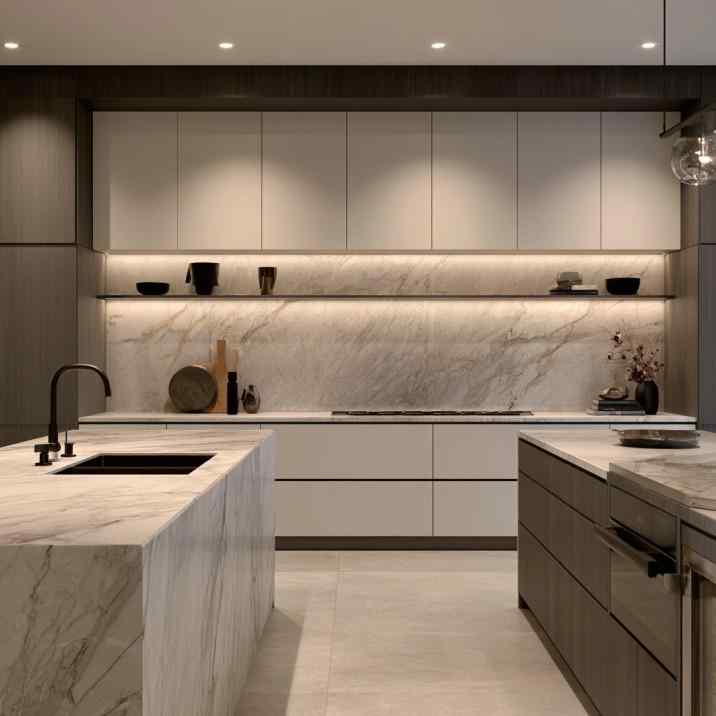
Marble-effect wall tiles create a sleek backsplash in a modern dark wood kitchen.
Material determines how your tiles look, feel and perform over time. Ceramic tiles remain the most popular choice because they’re economical, lightweight and available in countless colours and patterns.
Porcelain tiles are denser and more resistant to stains, moisture and heat, making them perfect for busy kitchens. Glass tiles reflect light beautifully and brighten compact spaces, although they’re best used in smaller sections.
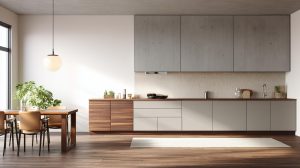
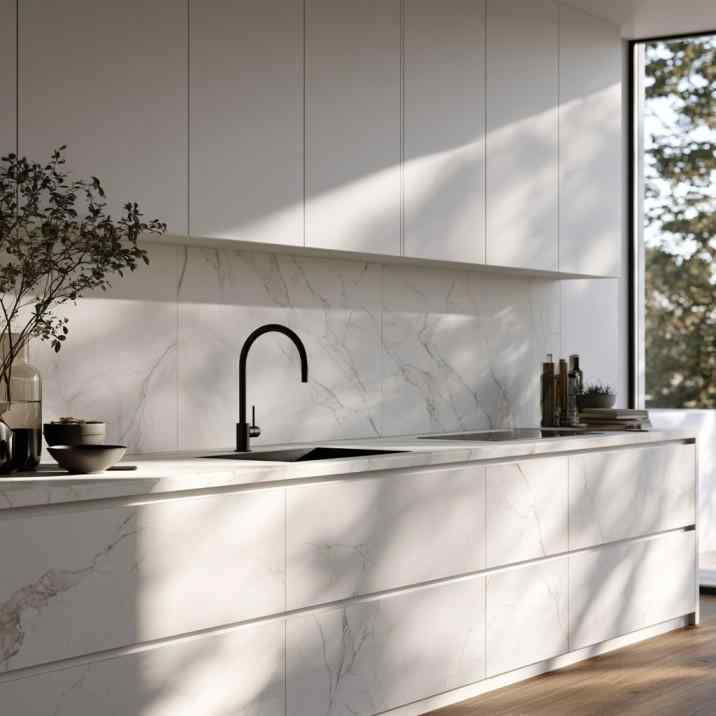
White marble-look tiles keep this minimalist kitchen backsplash bright and elegant.
Natural stone creates a premium appearance but needs regular sealing to prevent stains from oil and food spills.
If your kitchen sees heavy daily cooking, prioritise durability and easy cleaning over appearance alone!
What Size and Finish Should You Choose for Kitchen Wall Tiles?
Smaller kitchens generally look more spacious with 300 × 600 mm wall tiles, while medium and larger kitchens can comfortably use 600 × 600 mm or larger formats. Bigger tiles create fewer grout joints, making walls easier to clean.
When choosing a finish:
Glossy tiles reflect light and make small kitchens appear brighter.
Matte finishes offer a softer, contemporary appearance.
Satin finishes strike a balance between the two.
Textured tiles work best on feature walls rather than behind the hob, where grease collects.
Expert tip: Don’t overlook grout colour. Mid-grey grout hides stains better than white and requires less maintenance around cooking zones!
How Much Do Kitchen Wall Tiles Cost in India?
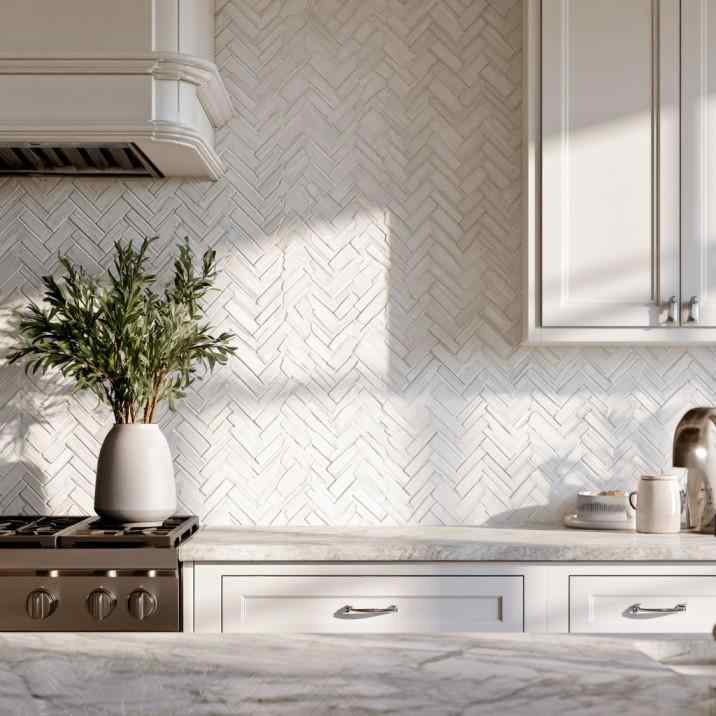
Herringbone-laid subway tiles give this kitchen wall a classic, textured finish.
Kitchen wall tile prices vary depending on material, brand and finish.
Ceramic: INR 35–INR 120/sq ft
Vitrified: INR 70–INR 220/sq ft
Porcelain: INR 80–INR 250/sq ft
Glass mosaic: INR 180–INR 600/sq ft
Natural stone: INR 200–INR 700/sq ft (and upwards)
Designer imported tiles: INR 250–INR 900+/sq ft
Installation typically costs INR40–INR 90 per sq ft, depending on tile size, layout and cutting requirements.
If you’re renovating on a budget, choosing standard ceramic wall tiles and using feature tiles only around the hob can reduce costs without sacrificing style. This works especially well in budget-friendly modular kitchens.
Which Tile Colour Works Best with Different Kitchen Cabinet Colours?
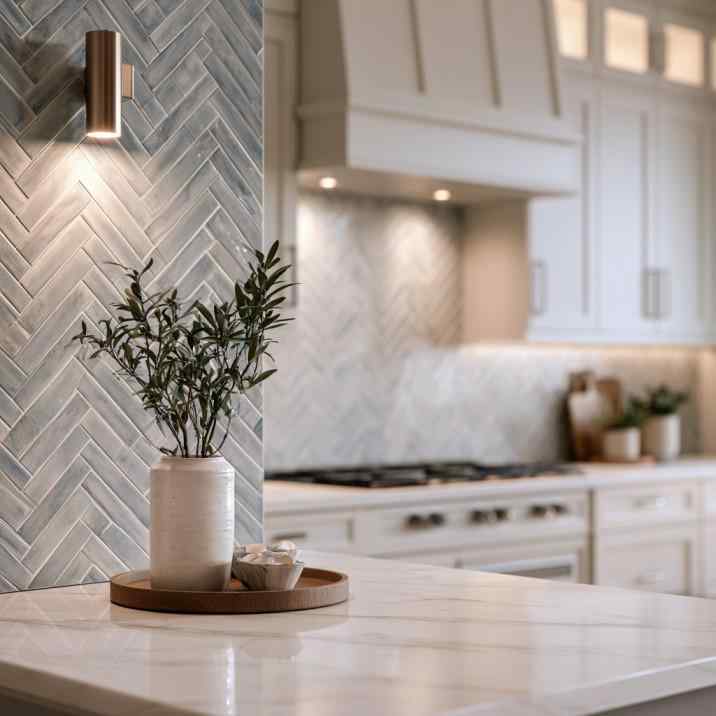
Grey herringbone tiles combine with white subway tiles for contrasting kitchen walls.
The easiest way to create a cohesive kitchen is to pair your wall tiles with the cabinet colour. Here are tried-and-true combinations that work well in Indian homes:
White cabinets: Grey, marble-look or soft sage tiles create a fresh, timeless kitchen without looking clinical.
Blue cabinets: White subway tiles or white textured tiles keep the space bright while letting the cabinetry stand out.
Wood-finish cabinets: White, terrazzo or light stone-look tiles balance the warmth of wood while adding visual interest.
Grey cabinets: White, concrete-look or light marble tiles create a clean, contemporary palette with subtle contrast.
Black cabinets: Marble-effect, warm white or off-white tiles brighten the kitchen and prevent it from feeling too dark.
Common Mistakes to Avoid When Choosing Kitchen Wall Tiles
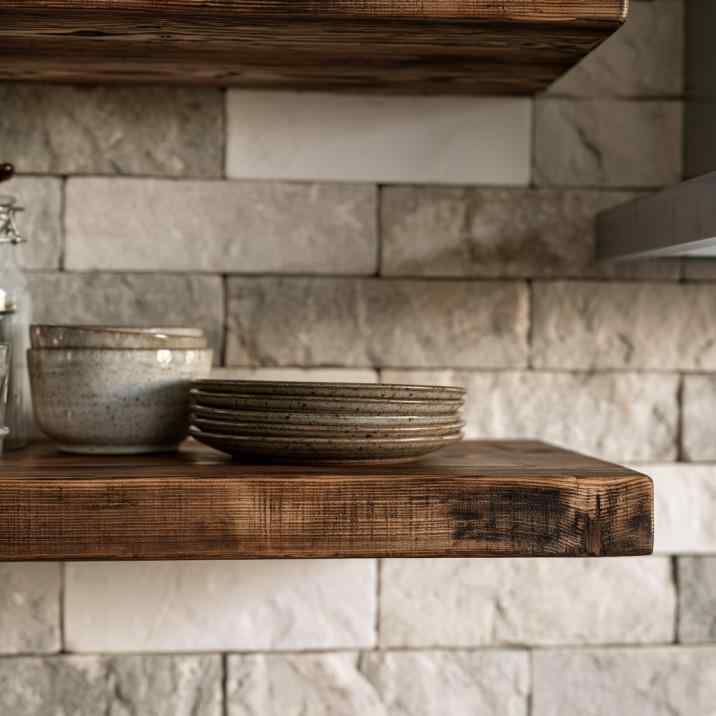
Textured natural stone wall tiles bring an earthy, organic feel to the kitchen.
Many kitchens look dated, or become difficult to maintain, because of a few avoidable mistakes. Here’s what to watch out for:
Using too many patterns creates visual clutter.
Choosing heavily textured tiles behind the hob makes grease harder to remove.
Tiny mosaics throughout the kitchen mean far more grout joints to clean.
Dark glossy tiles can make compact kitchens feel smaller, while bright white grout quickly discolours in busy cooking areas.
Build a Kitchen That’s Beautiful to Cook In!
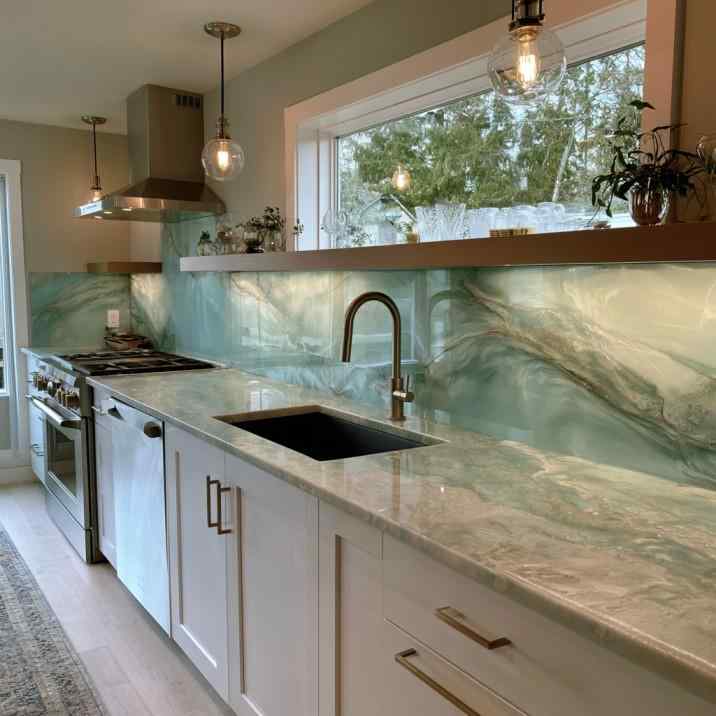
A glossy green glass backsplash reflects light and adds colour to the kitchen.
The right kitchen wall tile designs protect your walls while bringing personality to the heart of your home. By choosing durable materials, practical finishes, sensible tile sizes and colours that complement your cabinetry, you’ll create a kitchen that’s easier to maintain and more enjoyable to use every day.
The best choice is one that suits your cooking habits as much as your design style, and HomeLane can help you get it right! Book your free consultation today.
FAQs
1. Which tile is best for a kitchen wall?
Glazed ceramic and porcelain tiles are the best choices because they’re heat-resistant, easy to clean and available in a wide variety of designs.
2. What are the latest kitchen wall tile designs for 2026?
Large-format tiles, handmade-look ceramics, terrazzo patterns, marble-effect porcelain and vertically stacked subway tiles are among the biggest trends.
3. What is the best material for kitchen wall tiles?
For most homes, ceramic offers the best value, while porcelain provides greater durability and stain resistance for premium kitchens.
4. What size of tiles is best for a kitchen wall?
Tiles measuring 300 × 600 mm suit most kitchens, while larger formats create a more seamless look with fewer grout lines.
5. Which colour tile is best for kitchen walls?
White, warm beige, soft grey and marble-look tiles are timeless choices that work well with most cabinet colours and keep kitchens feeling bright.
6. Which is better, ceramic or vitrified tiles?
Ceramic tiles are more affordable and versatile for walls, while vitrified tiles are denser and better suited if you want extra durability and lower water absorption.












 EXPLORE MORE