Wardrobe Laminate Design Ideas That Look Good and Last in Indian Homes
By Usha Balasubramanyan- January 05, 2026
AI Summary
3 key insights · 1 expert tip
Explore diverse wardrobe laminate designs, from natural wood to vibrant patterns, offering easy updates for your interiors with various finishes.
Key Insights:
What You'll Read Here:
Matte finishes offer durability, while gloss finishes enhance room brightness and visual appeal.
PVC and acrylic laminates provide moisture resistance and scratch durability, ideal for high-usage areas.
Textured, metallic, and jali embellishments add depth and luxurious sophistication to wardrobe designs.
HOMELANE EXPERT TIPBy our design team
Consider anti-bacterial laminates for hygiene-sensitive areas or homes with children, offering a healthier wardrobe surface.
Wardrobes take up a lot of visual space. Which means a laminate you loved on a tiny sample can become a very big design decision once it covers an entire bedroom wall!
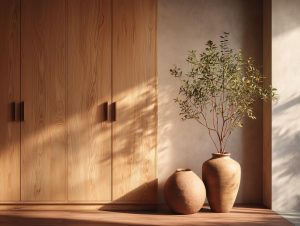
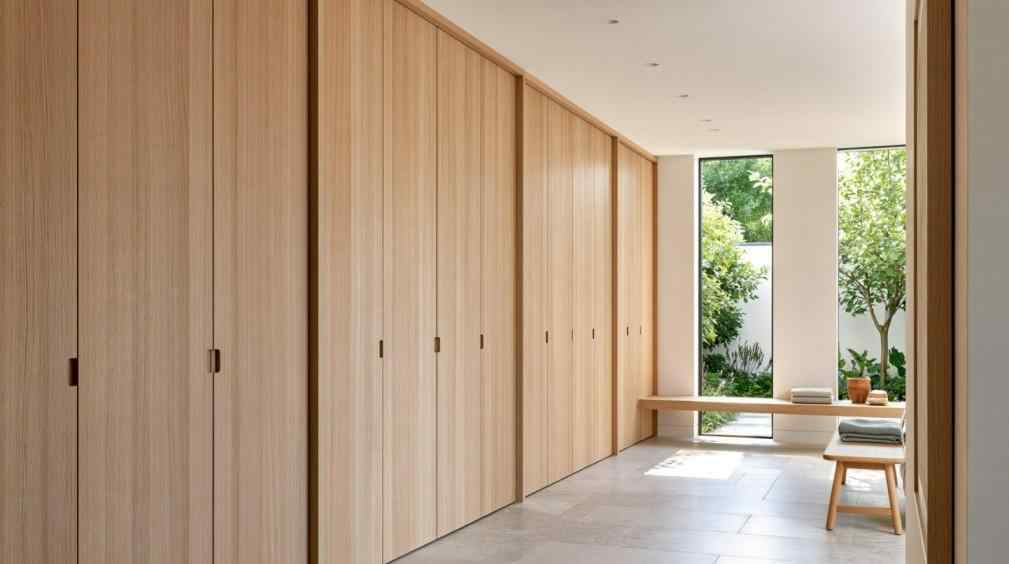
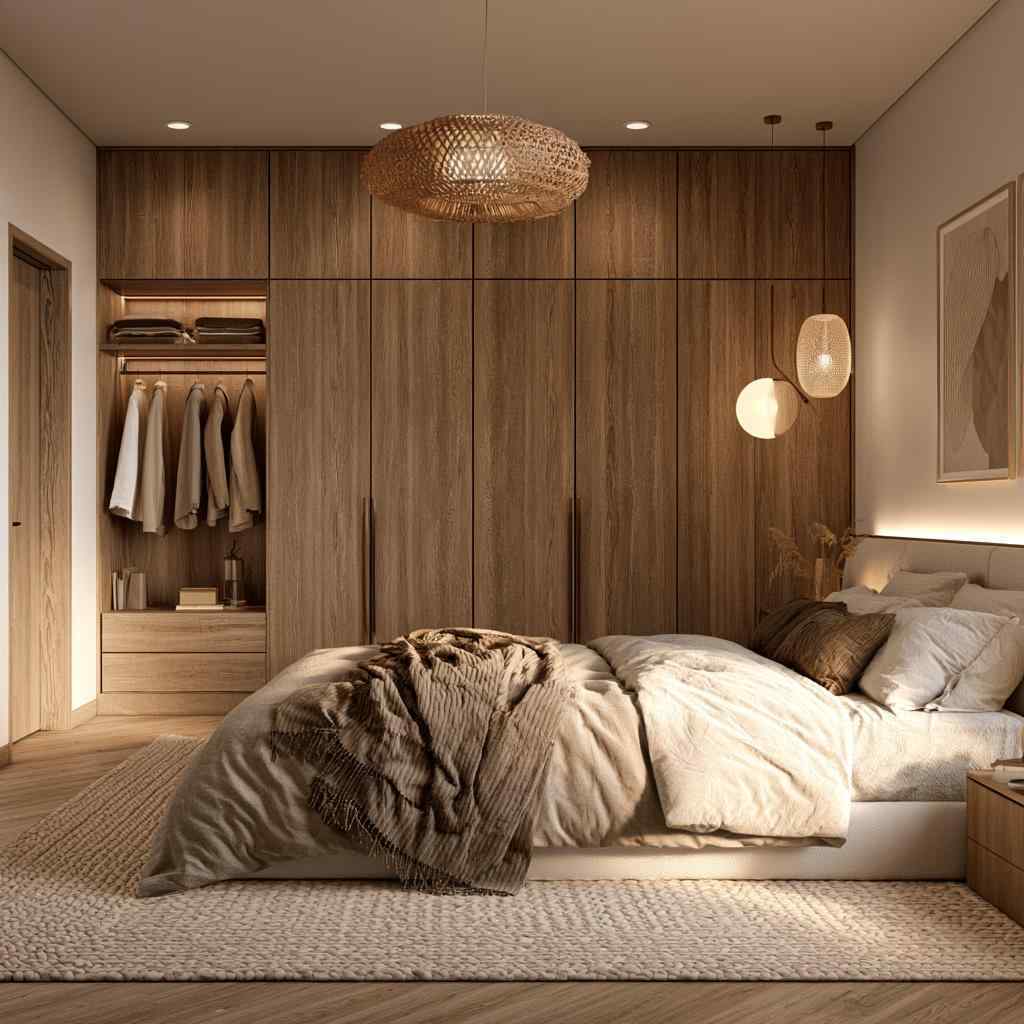
Light oak woodgrain laminate keeps this floor-to-ceiling wardrobe wall warm and understated.
The right wardrobe laminate design should complement the room without overwhelming it, stand up to daily handling and remain easy to maintain. Fortunately, today’s laminates offer everything from convincing woodgrains to super-sleek solid colours, so practical doesn’t have to mean predictable.
Which Laminate Finish Actually Suits Your Wardrobe and Room?
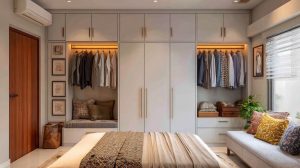
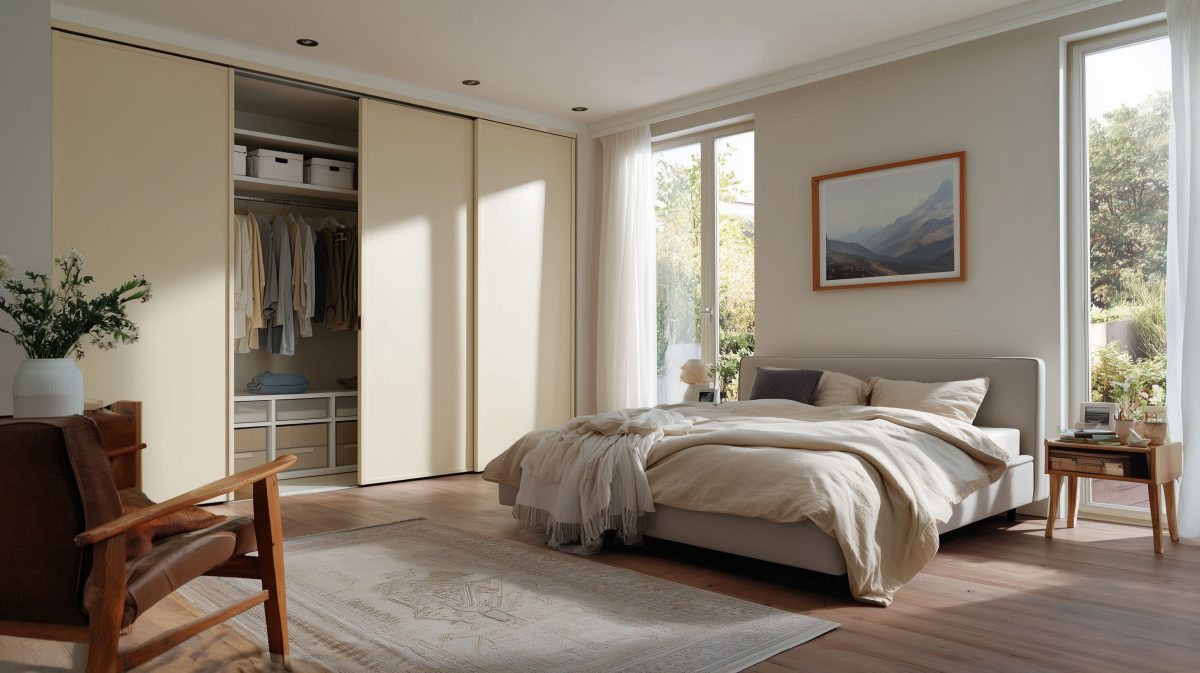
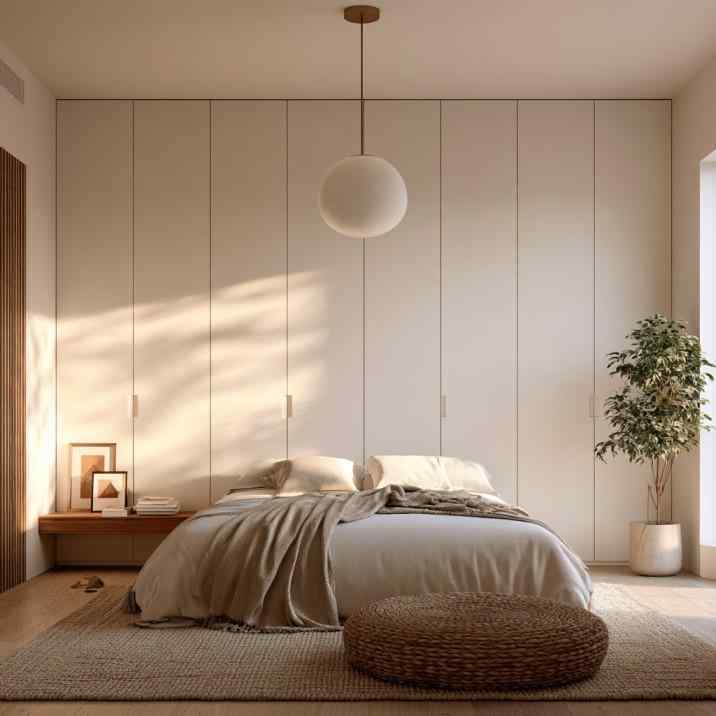
A warm white matte laminate lets this full-wall wardrobe blend quietly into the bedroom.
Start with the room rather than the laminate catalogue. A compact bedroom with limited daylight needs a different approach from a large master bedroom with generous windows and dark furniture.
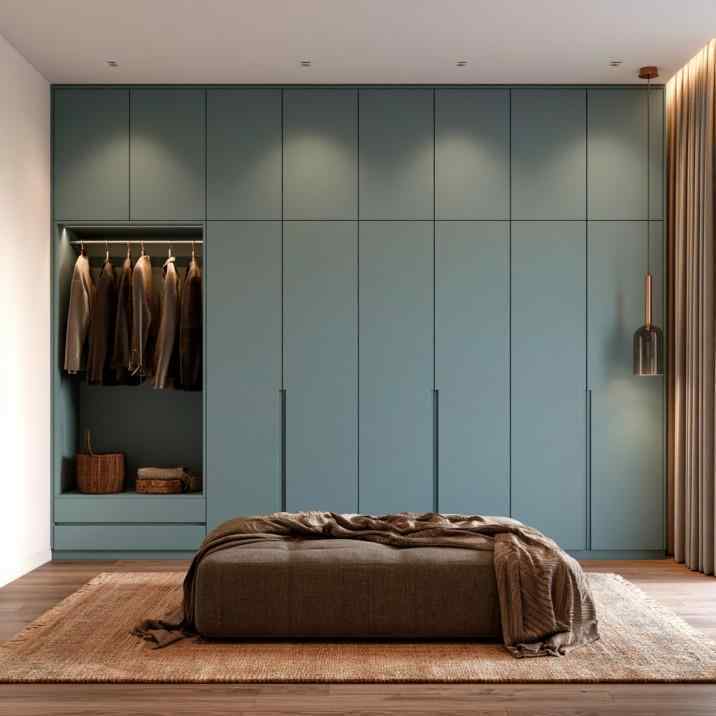
Sage green matte laminate gives this wardrobe colour and calm without overwhelming the room.
For small rooms, warm white, beige, pale grey, light woodgrain and other softer finishes can keep the wardrobe visually light. Larger bedrooms can accommodate walnut, charcoal, deep green or stronger combinations without the cabinetry dominating the space.
The style of your existing furniture matters too. A wooden laminate wardrobe can complement timber beds and bedside tables, but avoid trying to match every wood finish exactly. Using complementary tones often looks more natural.
Which Laminate Finish Should You Choose: Matte, Glossy, Textured or Woodgrain?
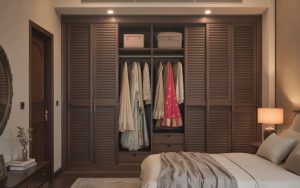
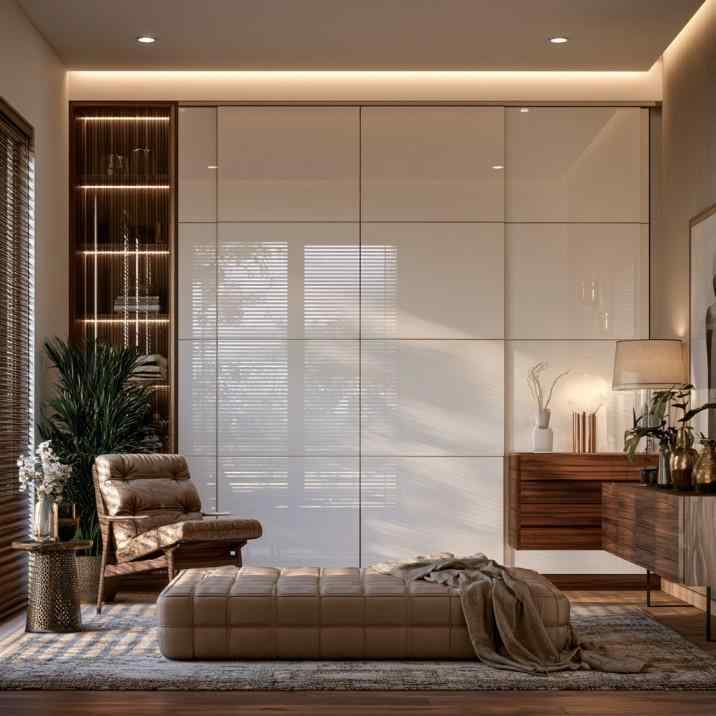
Glossy sliding shutters reflect daylight while walnut accents add warmth to this bedroom.
There isn’t one finish that automatically qualifies among the best wardrobe laminate designs. Each creates a different look and comes with its own maintenance considerations.
Laminate Finish
Works Well For
Keep in Mind
Matte
Most bedroom styles
Subtle, versatile and relatively forgiving
Glossy
Contemporary rooms
Reflects light but shows fingerprints more easily
Textured
Feature wardrobes
Adds depth but needs slightly more cleaning
Woodgrain
Warm, timeless bedrooms
Grain scale and colour should suit the room
Matte finishes are easy to live with and work particularly well across large wardrobe surfaces. They don’t bounce much light around, which gives them a restrained, contemporary appearance.
Glossy laminates can brighten a room by reflecting light, but that same reflective surface can reveal fingerprints and smudges. If you’re using gloss, you don’t necessarily need it across every shutter.
Textured laminates bring tactile interest, while woodgrains are useful when you want the warmth of timber without using natural veneer. Today’s laminate designs for wardrobe doors can also combine two finishes, such as woodgrain with a plain neutral.
Matching Laminate Color and Texture to Room Size, Light, and Existing Decor
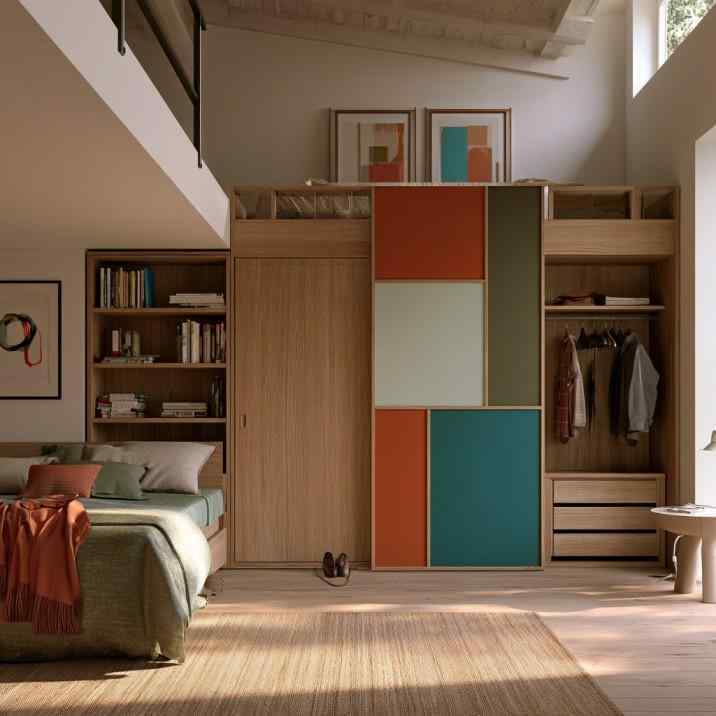
Terracotta, teal and olive panels bring playful colour to this woodgrain laminate wardrobe.
The wardrobe doesn’t need to be the star of every bedroom. Sometimes the smartest design move is to let it quietly blend into the background.
In a compact bedroom, a modern wardrobe laminate design in warm white, cream, pale greige or light timber can reduce visual bulk. Keeping handles and profiles simple strengthens the effect.
In larger bedrooms, contrast becomes easier to use. Walnut with beige, charcoal with pale wood, olive with warm white or terracotta with cream can create more distinctive cabinetry.
For master bedrooms, look at the entire palette before choosing the wardrobe. Our master bedroom wardrobe designs offer useful examples of how wardrobes can become part of the overall room composition.
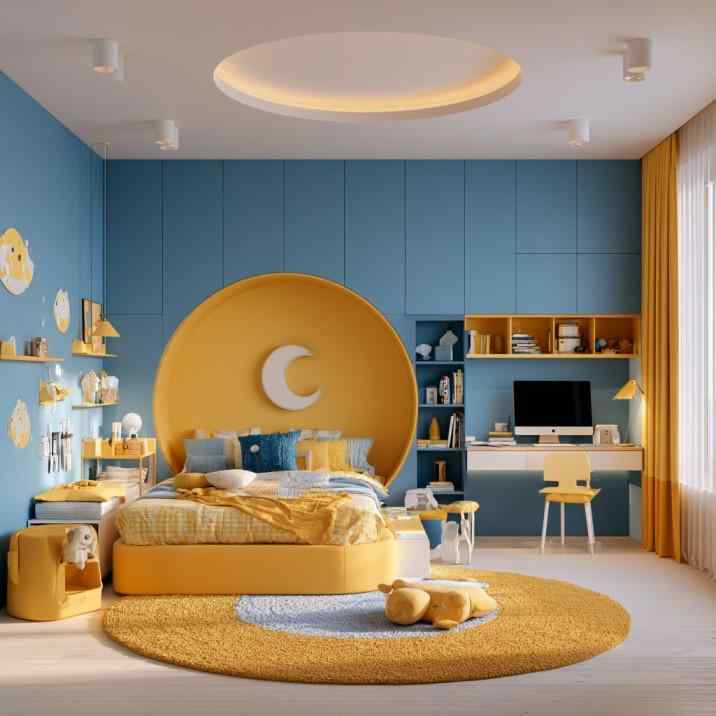
A blue matte wardrobe laminate pairs with sunny yellow accents in this cheerful kids’ room.
Two-tone designs are especially useful for breaking up a broad bank of shutters. Try woodgrain on selected panels with a solid neutral on the remaining doors, or use a darker tone on the lower portion and a lighter shade above.
Our blog on dual-tone hinged wardrobe designs show how contrasting finishes can add interest without making the wardrobe look too busy.
Lighting also changes laminate colours. Warm artificial lighting can make beige and woodgrain appear richer, while cool lighting may exaggerate grey undertones. Check samples during the day and after switching on your bedroom lights.
What Works Best on Sliding Wardrobe Doors?
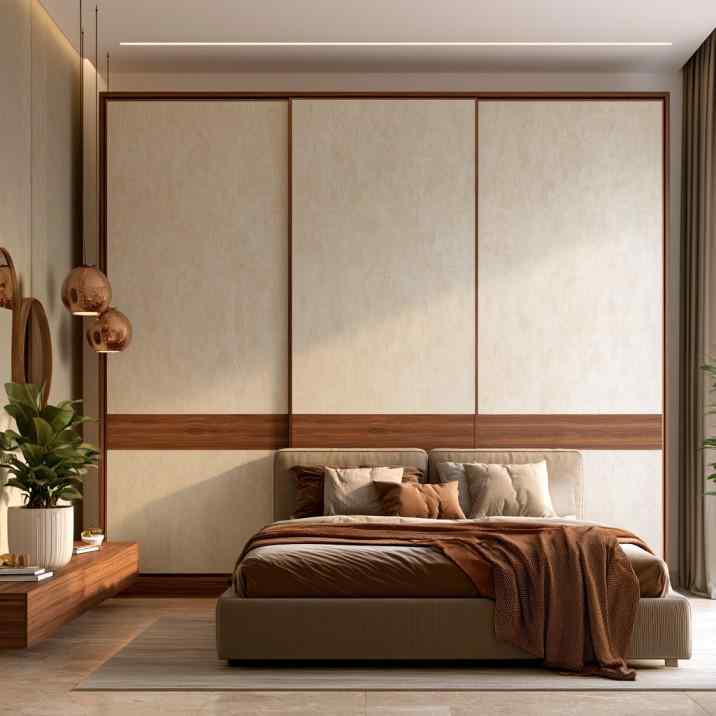
Textured beige panels framed in walnut create a balanced two-tone wardrobe laminate design.
Sliding doors create large uninterrupted surfaces, so restraint usually works better than multiple colours and patterns.
Light matte laminates, subtle woodgrains and simple two-tone combinations are reliable options. You can also introduce a narrow mirror panel or contrasting strip to break up the width.
A simple woodgrain paired with beige or warm white can create a particularly effective contemporary look without dating quickly.
How Much Does a Wardrobe Laminate Design Cost and How Do You Choose One?
Mid-tone woodgrain shutters and a lit open section give this modern wardrobe warmth and function.
Laminate itself is usually an economical decorative finish, but the price of a completed wardrobe includes much more than the outer surface. Carcass material, shutter construction, hardware, internal accessories, handles, mirrors and installation all influence the final cost.
As a broad guide in India, decorative laminates can range from roughly INR 800 to INR 3,000 or more per sheet, depending on brand, thickness, texture and finish. Premium speciality laminates can cost considerably more.
A complete customised laminate-finished wardrobe may broadly cost around INR 1,500 to INR 2,500 per sq ft or higher, depending on specifications. Sliding systems, premium hardware, drawers and internal accessories can increase the price further. These figures are indicative, and actual quotations vary by city, materials, dimensions and customisation.
Don’t choose the cheapest laminate purely because the colour looks similar. Compare surface durability, scratch resistance, ease of cleaning, finish quality and the manufacturer’s specifications.
And remember that the core matters. Even a premium laminate won’t compensate for poorly constructed shutters, inadequate edge finishing or low-quality hardware.
Give Your Wardrobe a Finish You Won’t Tire Of!
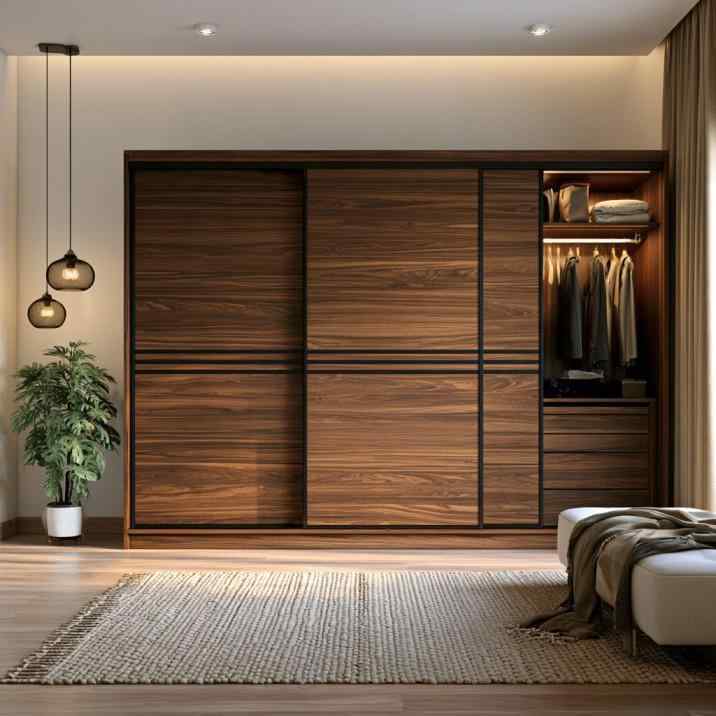
Walnut woodgrain laminate and slim black strips add rich detail to these sliding wardrobe doors.
A successful wardrobe laminate design doesn’t have to rely on dramatic colours or elaborate patterns. The wardrobe already occupies enough visual territory!
HomeLane can help you coordinate wardrobe finishes, internal storage and bedroom furniture before you commit to the final design. Book a free consultation and find a wardrobe laminate that looks good on day one and still feels right years later!
FAQs
1. Which laminate is best for a wardrobe?
Matte laminates are among the most versatile options because they’re easy to coordinate and relatively forgiving in everyday use. Woodgrain, textured and glossy laminates can also work well depending on the room and maintenance preference.
2. Is matte or glossy laminate better for wardrobes?
Matte is easier to live with if you prefer a subtle finish that doesn’t highlight every fingerprint. Glossy laminate reflects more light and creates a sleeker look but generally needs more frequent wiping.
3. Are woodgrain laminates good for wardrobes?
Yes. Woodgrain laminates provide the visual warmth of timber while generally being easier to maintain than natural veneer. Choose the grain pattern and colour carefully, particularly on large wardrobe shutters.
4. How do I choose the right laminate colour for my wardrobe?
Consider bedroom size, natural light, flooring, wall colour and existing furniture. Light or mid-toned finishes are versatile, while darker laminates can create attractive contrast in larger, brighter rooms.
5. Which laminate design is best for a small bedroom?
Light matte colours, pale woodgrains and low-contrast two-tone combinations work particularly well. Keeping the wardrobe visually simple can make a compact bedroom feel less crowded.
6. Can I use two different laminate designs on one wardrobe?
Yes. Pair a woodgrain with a solid neutral or combine two related shades. Limit the palette and use the finishes deliberately so the wardrobe doesn’t look unnecessarily busy.
7. Which laminate is best for sliding wardrobe doors?
Matte, subtle woodgrain and restrained two-tone laminates work well on sliding shutters because the doors create large visual surfaces. Shutter construction and good-quality sliding hardware are equally important.









 EXPLORE MORE