Wall-Mounted Crockery Unit Designs: Smart Storage Guide
By Usha Balasubramanyan- July 03, 2026
AI Summary
3 key insights · 1 expert tip
Wall-mounted crockery units offer smart storage, display, and visual interest for Indian homes, maximising space and accessibility.
Key Insights:
What You'll Read Here:
Costs range from INR 1,500 to over INR 4,000 per sq ft, depending on materials and complexity.
Durable BWP plywood and easy-to-maintain matte laminates are recommended for Indian conditions.
Plan for a height of 4 to 4.5 feet from the floor for optimal accessibility and visual balance.
HOMELANE EXPERT TIPBy our design team
Balance closed cabinets for everyday items with open shelves or glass fronts for curated display to achieve both organisation and aesthetic appeal.
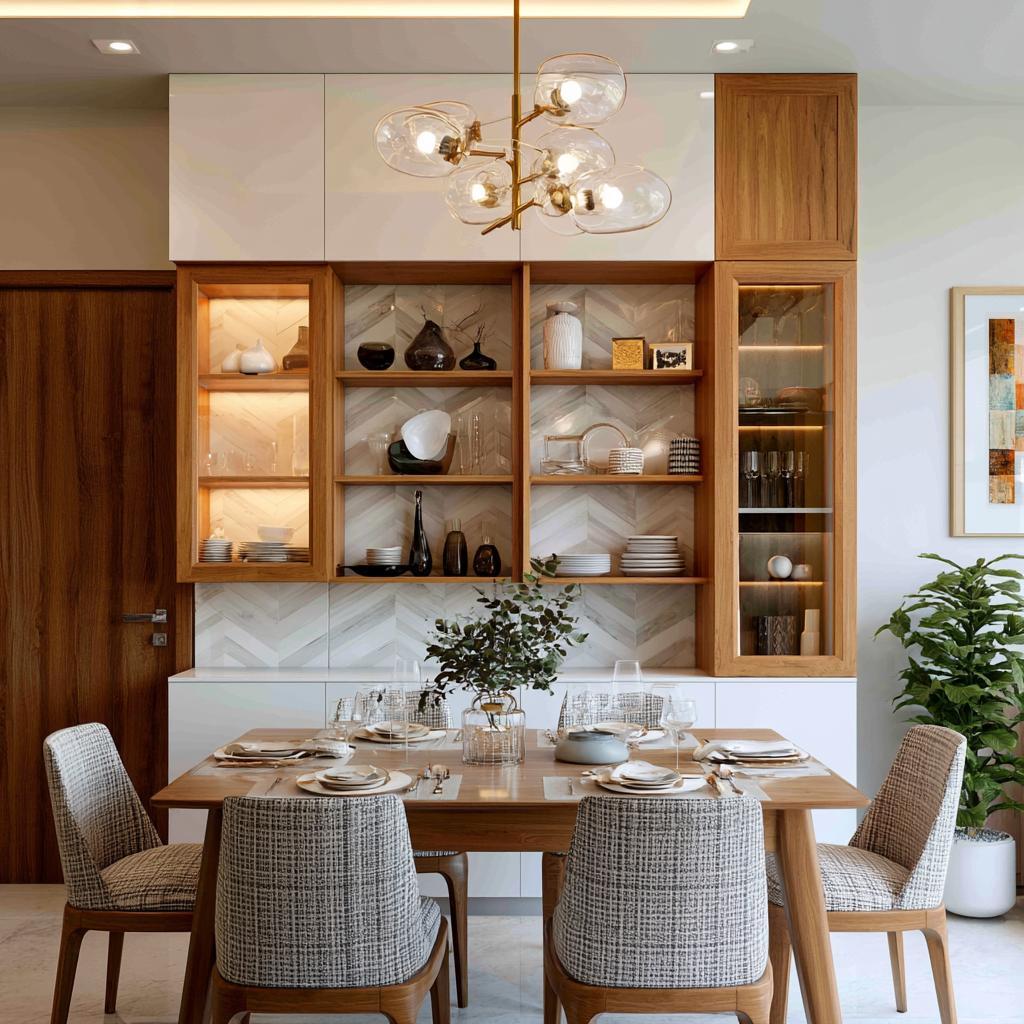
A wood and glass wall mounted crockery unit design anchors this dining space.
Dining spaces often run out of storage all too soon. Plates stack up, glassware gets pushed into kitchen cabinets, and the dining area starts feeling cluttered. This is where a well-planned wall mounted crockery unit makes a real difference.
Instead of taking up floor space, it uses your wall to organise everything neatly. A clean wall mounted crockery unit design can display your best pieces while keeping everyday items within easy reach, without making the room feel crowded.
Why Wall Mounted Crockery Units Work So Well
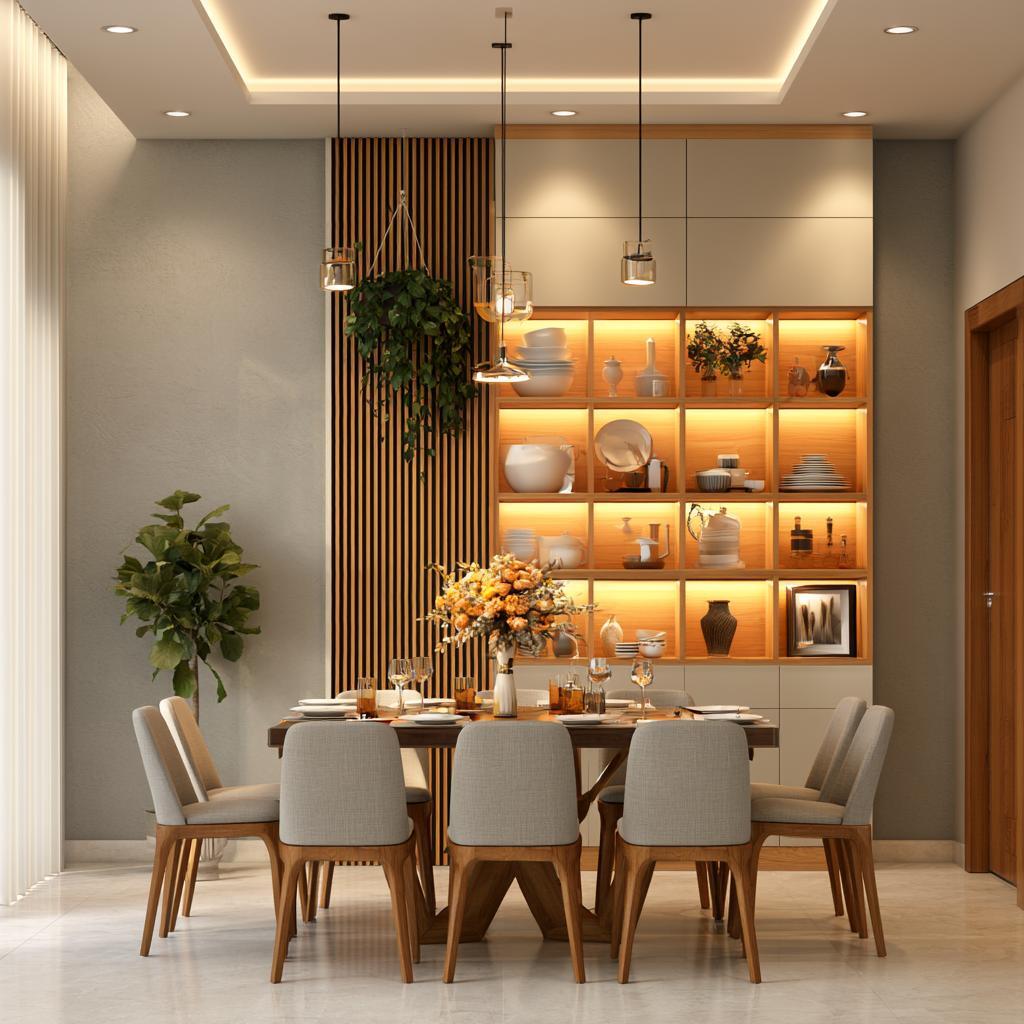
Backlit open shelves in this crockery cabinet design highlight curated dinnerware.
A wall mounted crockery unit cabinet design solves two problems at once: storage and space.
In compact homes, it frees up the floor completely, making the dining area feel more open. In larger homes, it helps organise and display crockery without adding bulky furniture.
Unlike traditional cabinets, wall-mounted units keep everything at eye level. This makes daily use easier and avoids bending or reaching into deep storage.
They also help define the dining space visually, especially in open-plan layouts.
Different Types of Wall Mounted Crockery Unit Designs
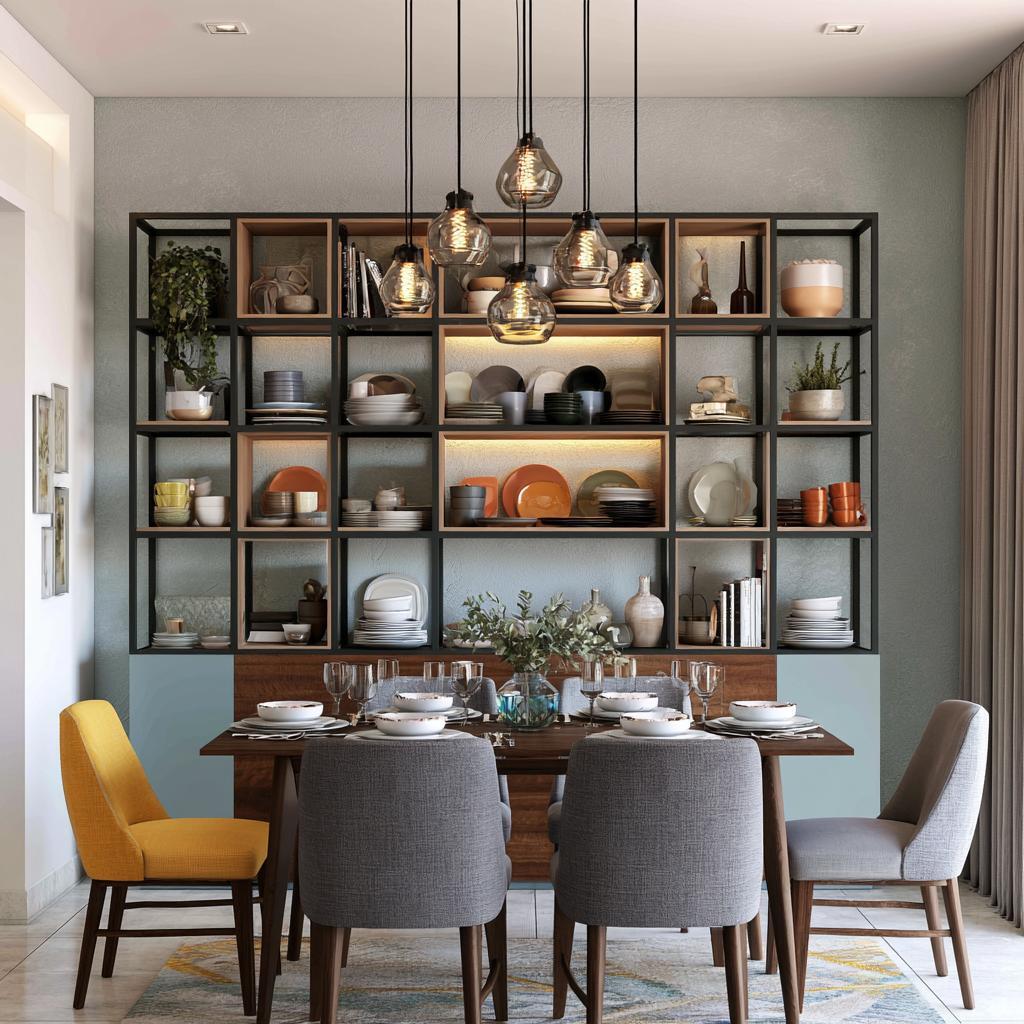
This wall mounted crockery unit design uses box shelving for layered display.
Not all units need to look the same. The design depends on how you use the space.
A wall mounted crockery unit for the dining roomoften combines open shelves and closed cabinets. Open sections are used for display, while closed shutters hide everyday clutter.
For kitchens, a compact wall mounted crockery cabinet designworks better. It keeps essentials accessible without taking over the wall.
Glass-front units are useful if you want a slightly premium look.
Open shelving works well for a lighter, more casual setup.
Pro Tip: For glass-front units and open shelving, ensure your display items are kept to a curated selection of 3–5 pieces to avoid visual noise.
The key is to balance display and storage so the unit doesn’t feel too busy.
How Do You Choose the Right Wall Mounted Crockery Unit Design?
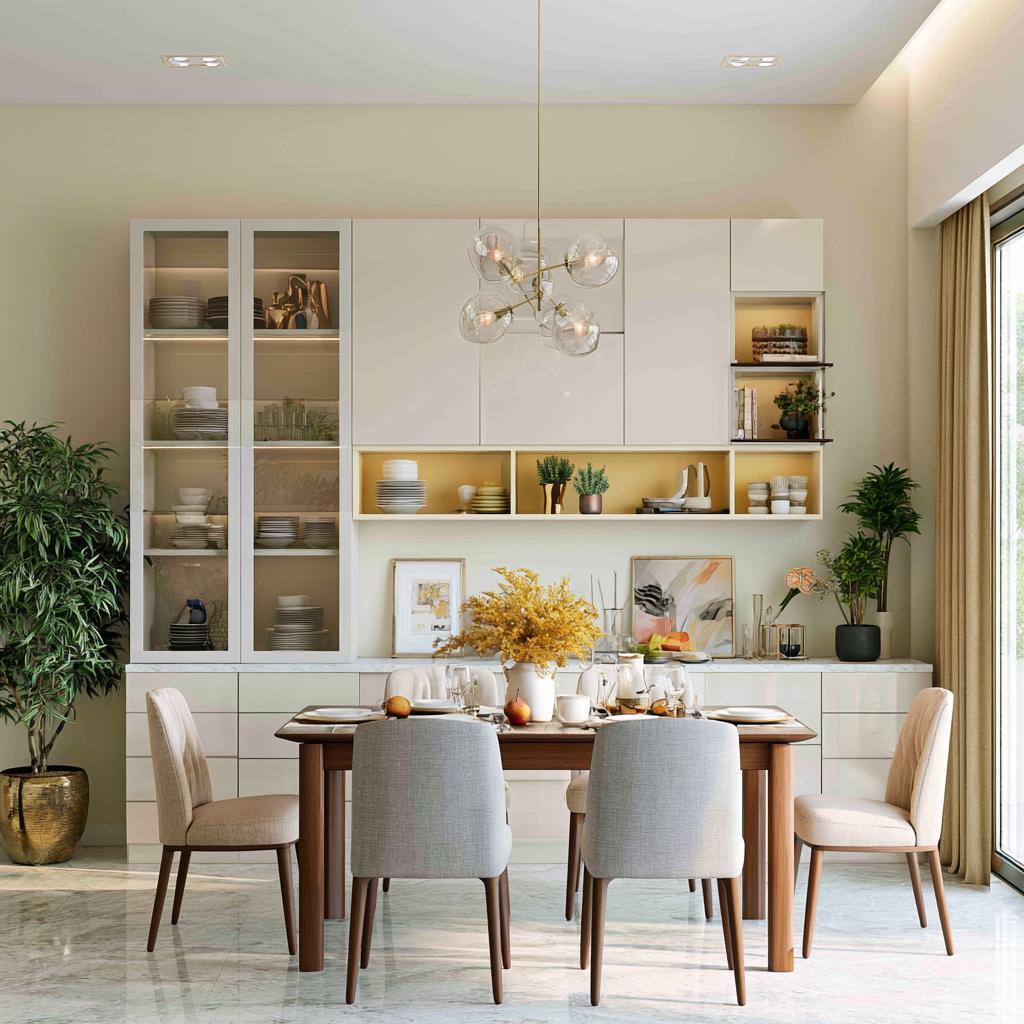
A white wall mounted crockery unit cabinet design balances storage and display.
Start with your wall size and usage. If the wall is small, go for a compact unit with a mix of shelves and cabinets. For larger walls, you can extend the unit horizontally without making it feel heavy.
Follow this simple approach:
Daily-use items → Closed cabinets
Display pieces → Open shelves or glass shutters
Limited space → Compact, vertical units
Larger walls → Wider, layered designs
Also consider height.
As a rule of thumb, the bottom of the unit should be at least 4 to 4.5 feet above the floor, so it stays accessible without blocking movement around the dining area. This keeps it aligned with the natural eye level when you’re seated at the dining table, so the unit feels visually balanced.
Best Materials, Finishes and Features
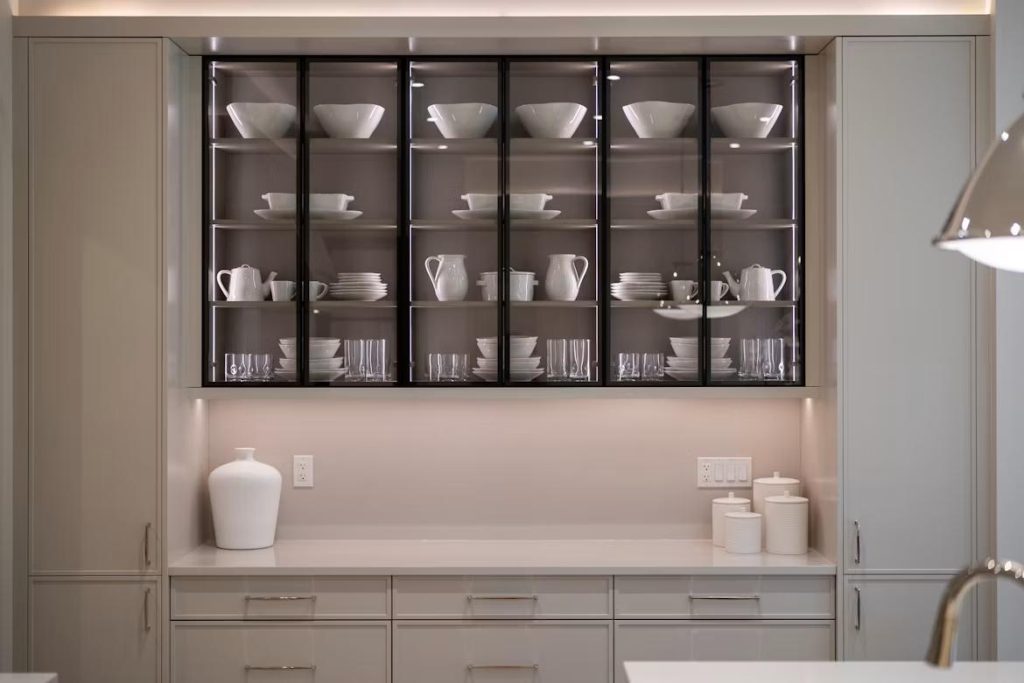
Glass-front shutters in this crockery cabinet design keep dinnerware visible and dust-free.
Element
What to Use
Why It Works
Core Material
BWP plywood / MDF
Handles humidity and daily use
Finish
Laminate / Veneer
Easy to maintain
Shutters
Glass + wood combo
Balances display and storage
Hardware
Soft-close hinges
Reduces wear over time
In Indian homes, moisture and dust are constant factors. BWP plywood is a better choice for durability, especially if the unit is near the kitchen.
Matte laminates are easier to maintain than glossy finishes, which tend to show fingerprints.
What It Costs and What Affects It
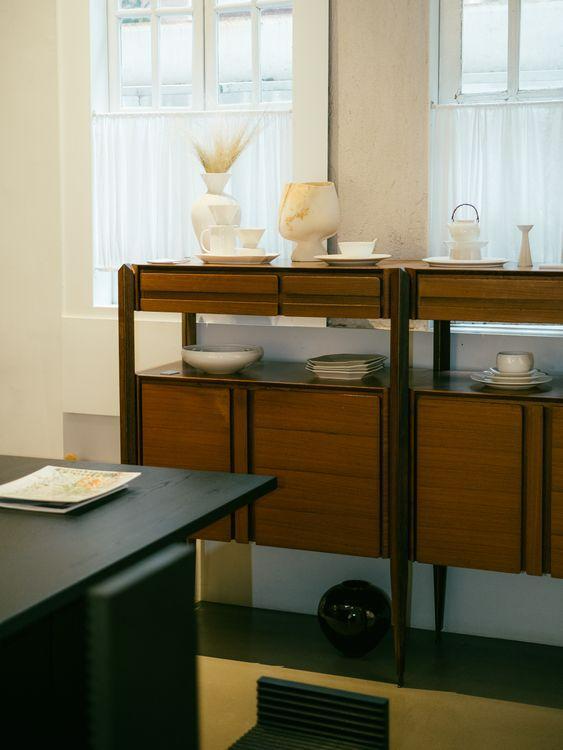
A vintage wood sideboard offers a classic take on crockery unit design.
A wall mounted crockery unit design can vary based on size and detailing.
Basic laminate units → INR1,500–INR3,000 per sq ft
Glass + laminate combination → INR2,500–INR5,000 per sq ft
Custom designer units → INR4,000+ per sq ft
The cost depends on material, finish, and hardware quality.
Simple designs are more budget-friendly and easier to maintain. Heavily detailed units increase cost and cleaning effort.
A Real HomeLane Project: What Worked and Why
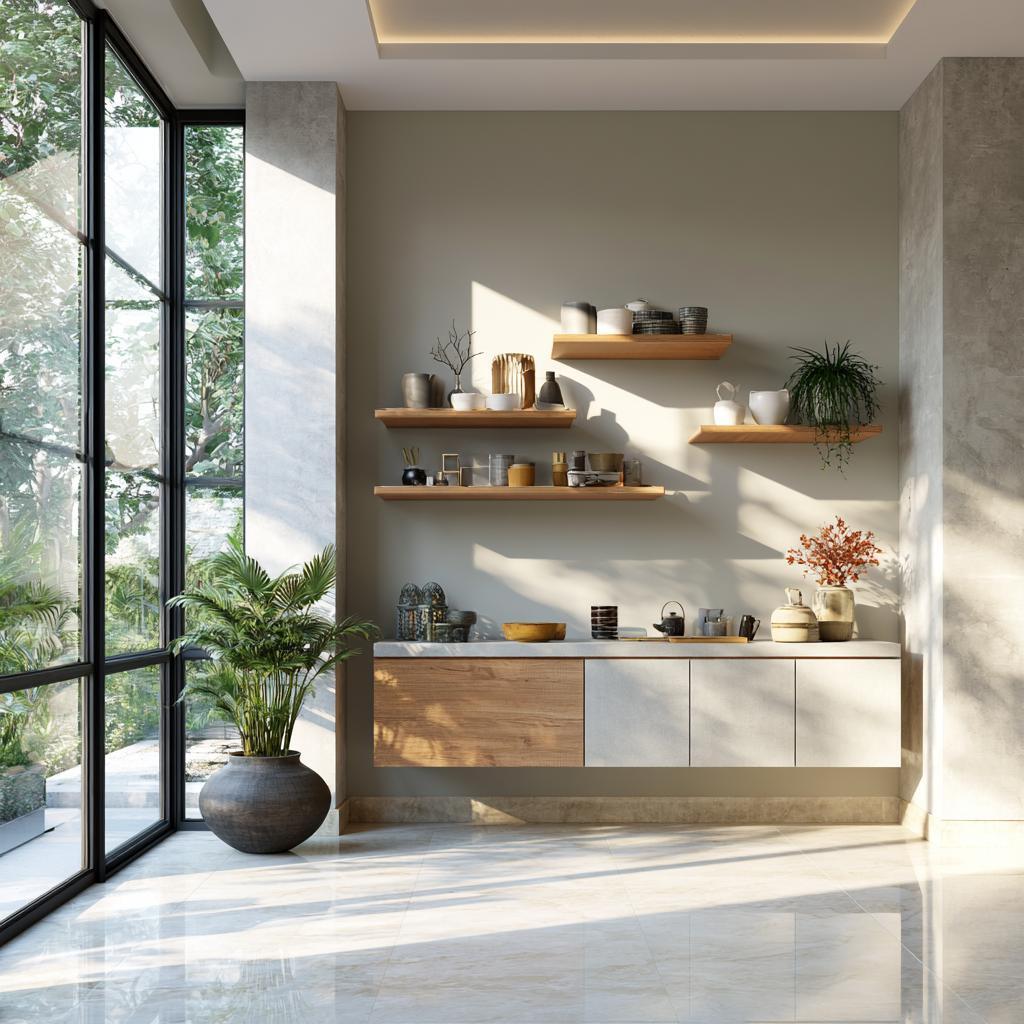
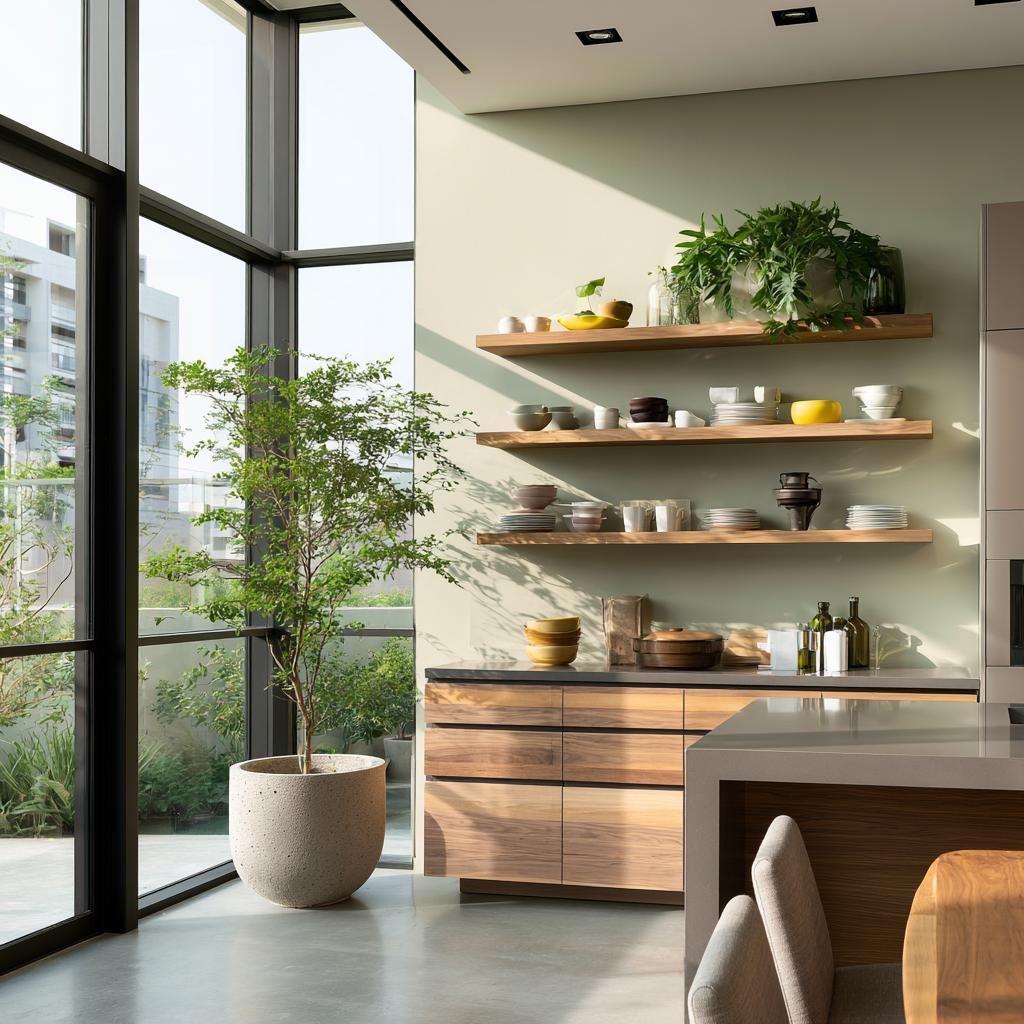
Floating wood shelves give this crockery unit design a light, airy feel.
In a recent 2BHK in Bangalore, the dining area had limited floor space but an empty wall.
Instead of adding a floor cabinet, the design team created a wall mounted crockery unit design with a mix of closed shutters and open shelves. The closed sections stored daily-use items, while the open shelves displayed glassware.
This kept the area organised without making it feel cramped. The space felt lighter, but more functional at the same time.
Common Mistakes to Avoid
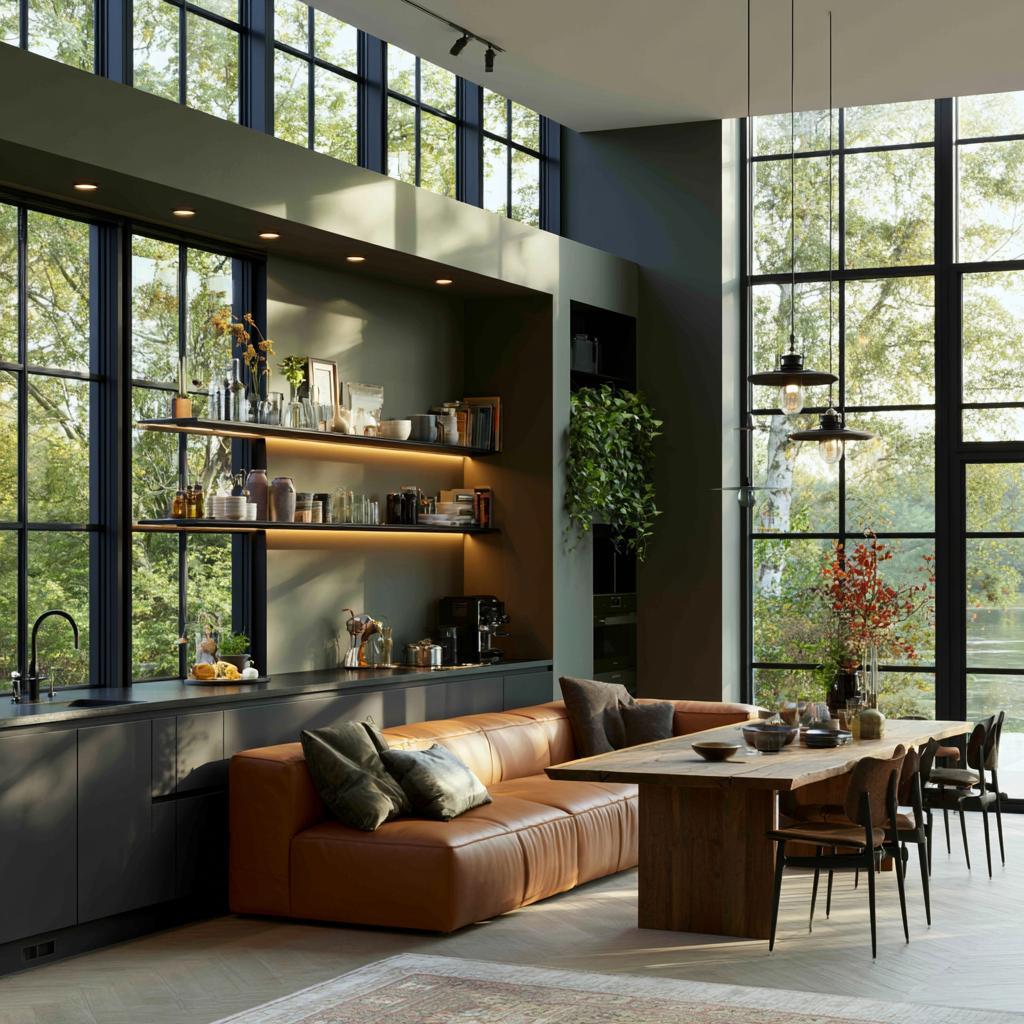
Backlit shelving turns this crockery unit design into a dining room feature.
A common mistake is overloading the unit. Too many open shelves can make the wall look cluttered. Another issue is installing the unit too low, which can interfere with movement or seating. The better approach is to keep the design balanced and leave enough breathing space around it.
Installing a heavy wall mounted crockery unit on a weak wall without proper anchoring can lead to loosening over time or even safety risks. Brick or concrete walls can handle heavier loads with proper anchors. Thinner walls or gypsum partitions, on the other hand, need additional reinforcement like internal supports or specialised fasteners.
Maintenance Tips to Keep Your Wall Mounted Crockery Unit Looking New
Minimal wood shelves keep this crockery unit design light and functional.
A wall mounted crockery unit is easy to maintain with a few simple habits.
Dust open shelves regularly, as they tend to collect particles quickly. Use a mild cleaner for laminate or veneer finishes, and wipe glass panels with a soft cloth to avoid streaks.
Also check hinges and fittings occasionally to ensure everything stays secure.
With minimal upkeep, your unit will continue to look neat and function smoothly.
What to Check Before You Finalise Your Crockery Unit
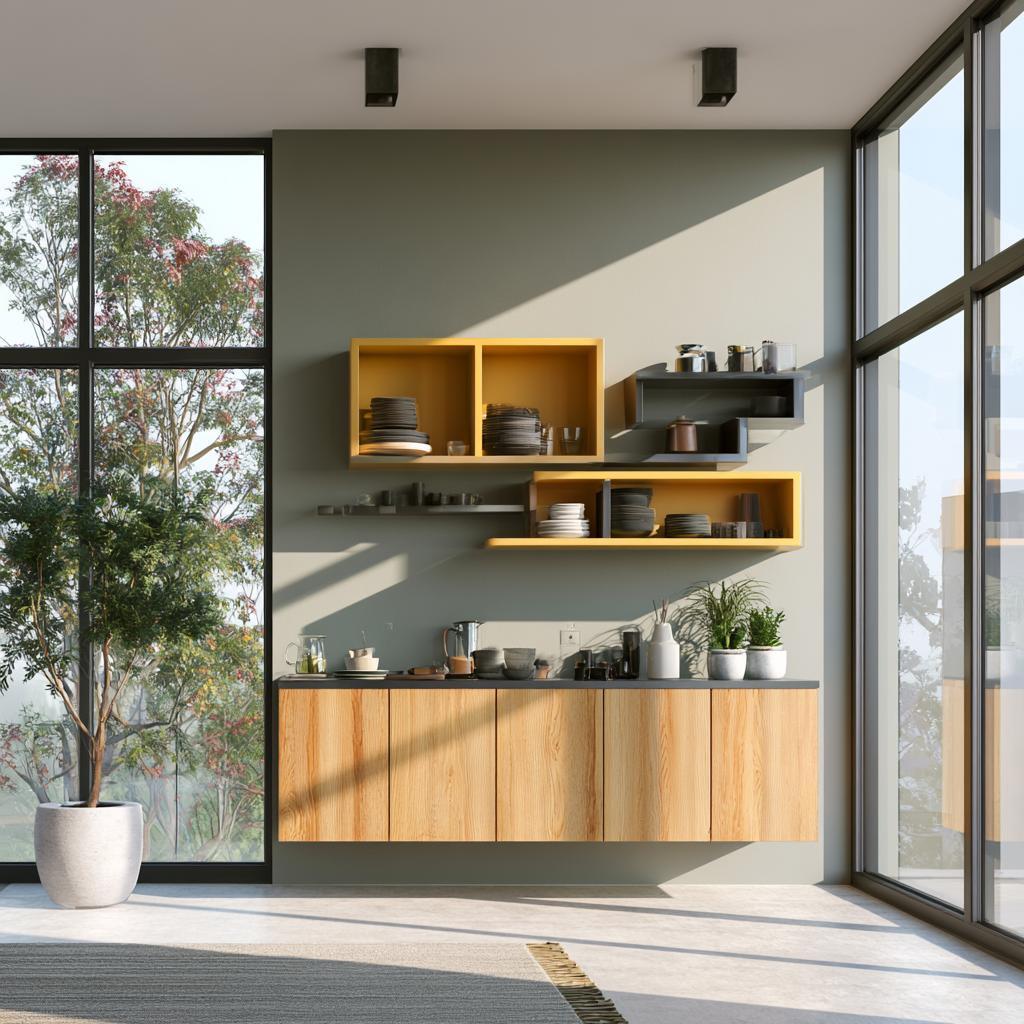
Mustard yellow shelving adds a bold accent to this crockery unit design.
Before finalising your wall mounted crockery unit, check three things.
First, ensure the wall can support the weight. Proper fixing is important for safety.
Second, plan storage based on usage. Don’t over-design with too many open shelves.
Third, choose materials that are easy to maintain, especially if the unit is close to the kitchen.
If you want a crockery unit that fits your space and daily needs, book a free consultation with HomeLane and get a design tailored to your home.
FAQs
1. What is the best material for a wall mounted crockery unit?
BWP plywood or MDF with laminate finish works best. These materials handle daily use and humidity better. They also last longer with minimal maintenance.
2. Which crockery unit design is best for small homes?
Compact wall-mounted units with closed cabinets work best. They save space and reduce visual clutter. Open shelves can be added in small sections.
3. Are wall mounted crockery units durable?
Yes, if installed properly with strong wall support. Material and hardware quality also matter. Good construction ensures long-term durability.
4. Which finish is best for modern crockery cabinet designs?
Matte laminates and veneers are the most practical choices. They are easy to maintain and suit most interiors. Glossy finishes need more upkeep.
5. What is the ideal height for a wall mounted crockery unit?
Around 4 to 4.5 feet from the floor for the base works well. This keeps the unit accessible without blocking movement. Adjust slightly based on usage.
6. What are the advantages of a wall mounted crockery unit?
It saves floor space and keeps items within reach. It also adds visual structure to the dining area. This makes the space more organised.
7. How do I choose the right wall mounted crockery unit for my dining area?
Consider wall size, storage needs, and layout. The unit should not feel heavy or overcrowded. Balance display and closed storage for best results.










 EXPLORE MORE