Hidden Door Design Ideas to Create Stylish, Seamless Spaces at Home
By Usha Balasubramanyan- September 24, 2026
Summary
Hidden door designs are no longer just novelty features…they’ve become practical design solutions for modern homes. With the right materials, precision hardware and thoughtful detailing, they can conceal rooms while creating elegant, clutter-free interiors. When a door disappears into the design instead of interrupting it, the entire home feels more refined, spacious and beautifully considered.
Expert Tip
A hidden door succeeds because people don’t notice it, not because it’s complicated. Matching the wall finish, maintaining perfect panel alignment and investing in premium concealed hardware usually matter far more than adding elaborate mechanisms.
Best For
Modern apartments, luxury homes and home offices
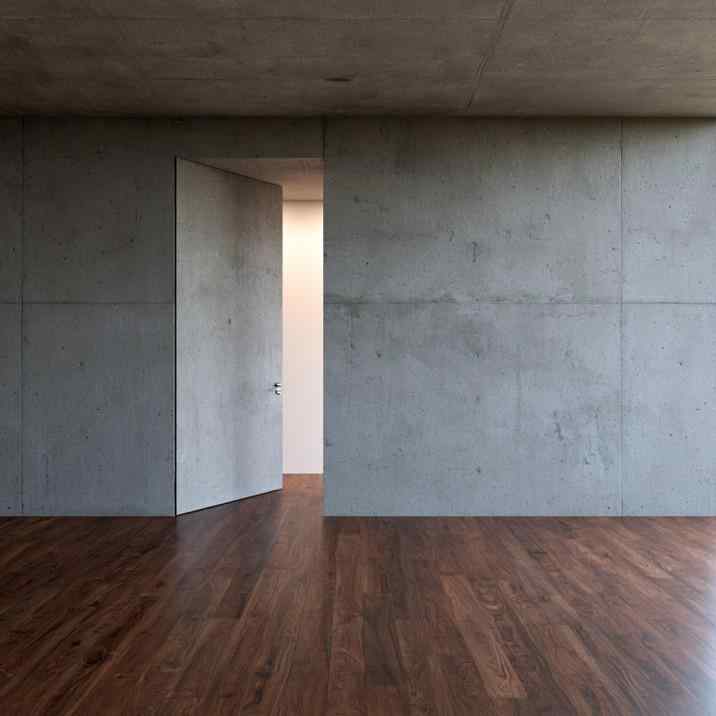
A concealed door swings open from a seamless concrete wall for a clean architectural look.
Imagine walking into a room where the wall appears completely uninterrupted…until a hidden doorway quietly swings open! A beautifully concealed hidden door design creates exactly this effect, blending functionality with a touch of mystery. Once reserved for luxury homes and libraries, concealed doors are now becoming a popular feature in modern Indian interiors, thanks to cleaner aesthetics and smarter hardware.
Whether you’re concealing a pantry, home office, wardrobe, powder room or private study, a hidden door can make your home feel more spacious while maintaining uninterrupted wall lines. The secret lies in careful planning, precise detailing, and choosing the right materials and mechanisms.
Hidden Door Design: How It Actually Works
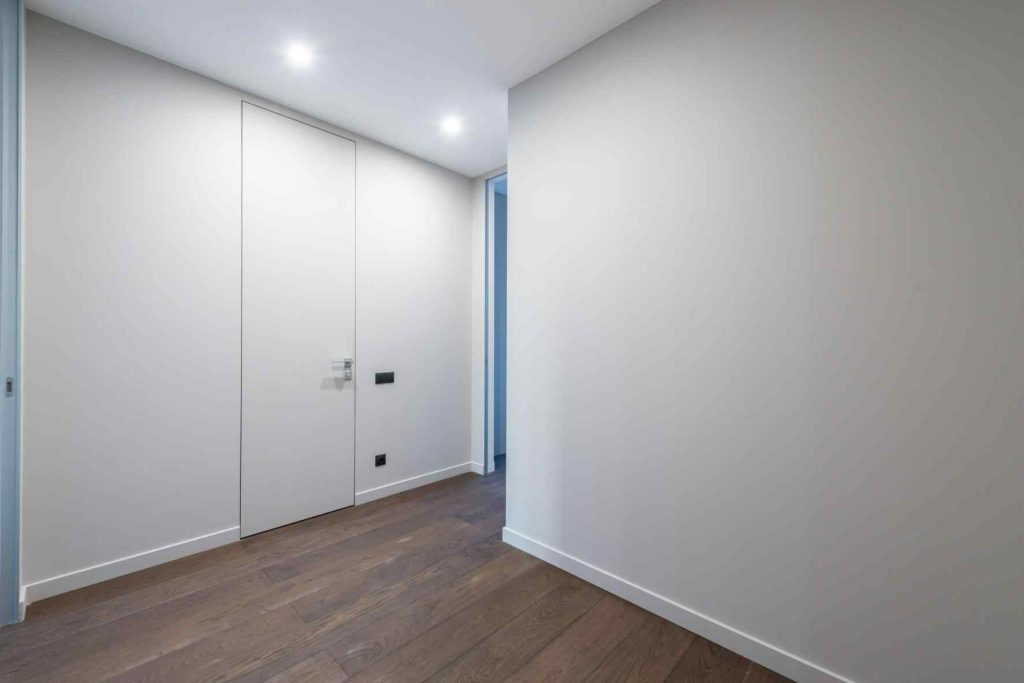
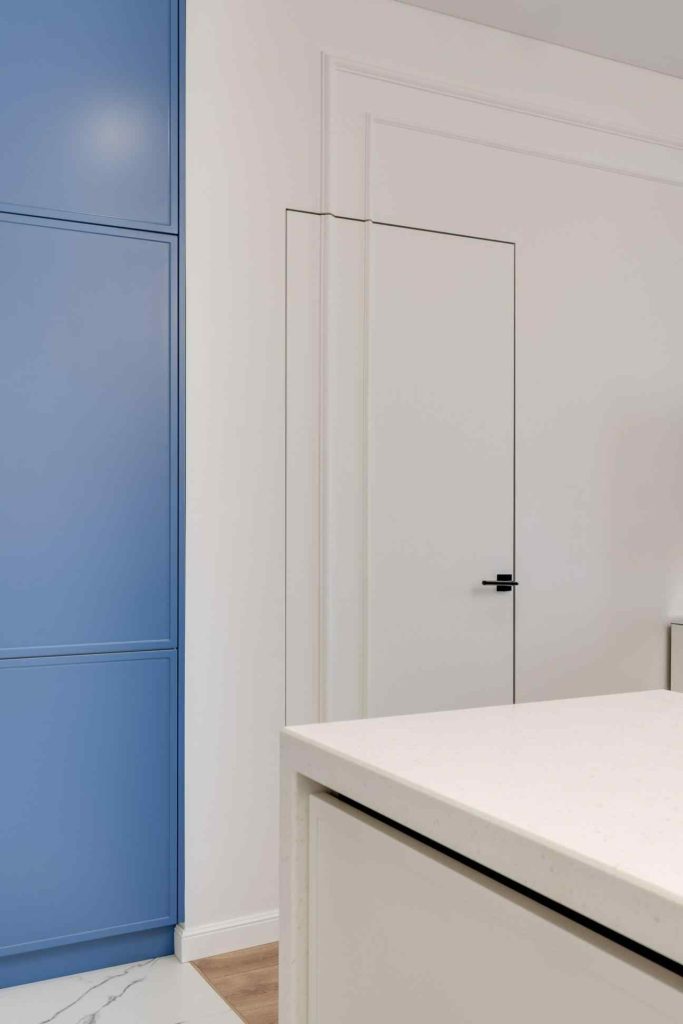
A flush hidden door painted to match the wall keeps this hallway uninterrupted and calm.
A hidden door is designed to disappear into its surroundings rather than stand out like a conventional door. Instead of visible frames, trims and handles, it uses concealed hardware and finishes that match the adjacent wall, cabinetry or panelling.
Some hidden doors are finished with the same paint colour as the wall, while others are integrated into bookshelves, wardrobes, fluted panels or decorative wall cladding. When closed, the eye reads the entire surface as one continuous plane.
Floor-to-ceiling concealed doors are especially popular in contemporary homes because they create a clean architectural appearance with minimal visual clutter.
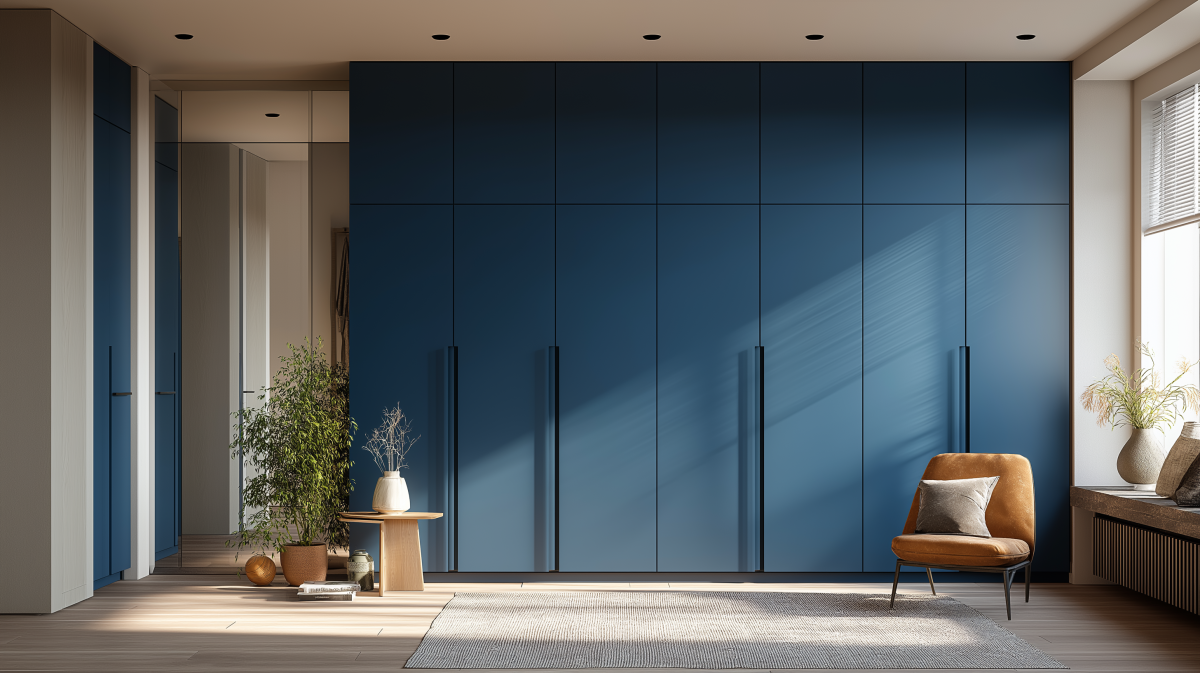
If you’re considering integrated wardrobes or concealed storage, our ideas on wall wardrobe designs offer plenty of inspiration!
Which Materials and Mechanisms Are Best for a Modern Hidden Door?
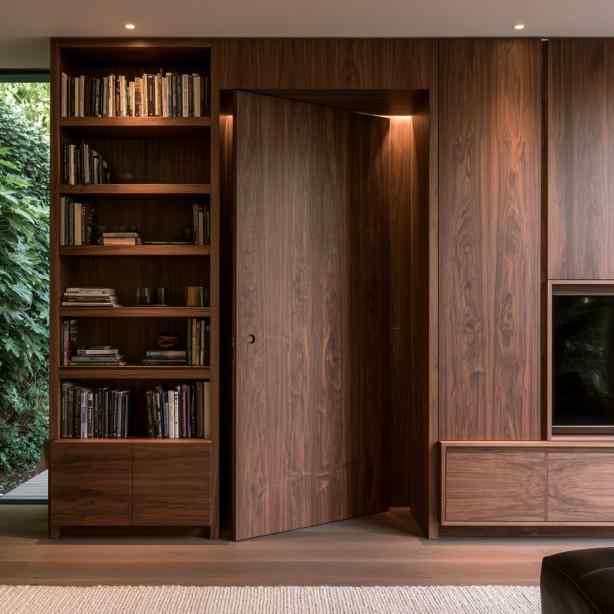
A wooden panel door tucked beside a bookshelf conceals a doorway within the cabinetry.
Modern hidden door design combines quality materials with precision hardware.
Flush plywood or engineered wood doors finished with laminate, veneer, PU paint or textured panels remain the most common choice. These finishes can blend seamlessly with surrounding walls or cabinetry.
When it comes to mechanisms, concealed hinges work well for standard room entrances, while pivot hinges are ideal for tall feature doors because they distribute weight more evenly and create smoother movement.
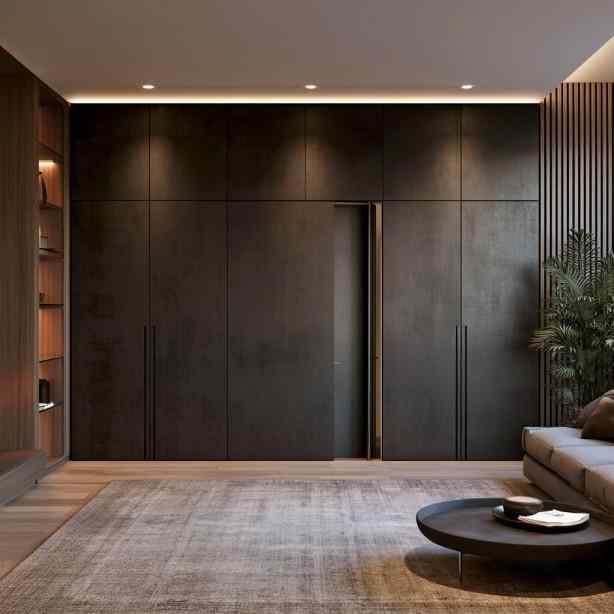
A hidden sliding door blends into dark floor-to-ceiling panelling to save floor space.
A hidden sliding door design is an excellent solution where floor space is limited. Instead of swinging open, the door disappears into a cavity or behind an adjacent wall, making it particularly useful in compact apartments.
Soft-close hardware, premium tracks and precision alignment make a significant difference to both performance and longevity.
How Do You Plan a Hidden Door So It Actually Looks Invisible?
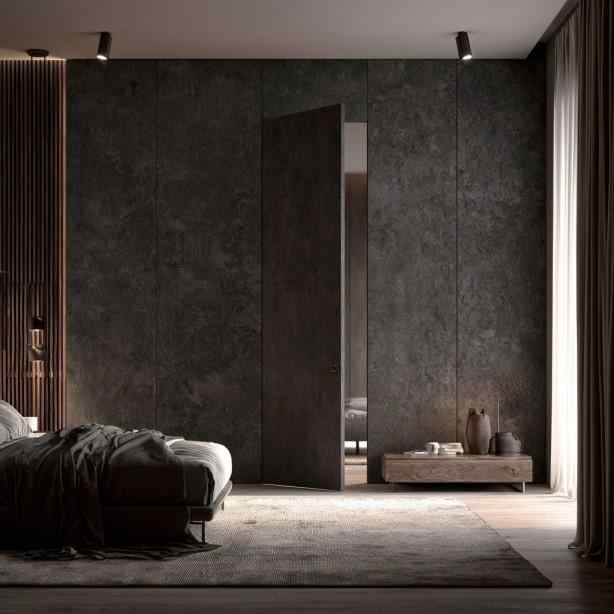
A concealed door disappears into a textured feature wall for a seamless bedroom finish.
The illusion depends on continuity.
Wall finishes should extend uninterrupted across the hidden door. Skirting profiles, grooves, panelling, wallpaper or fluted finishes must align perfectly with adjacent surfaces.
Door handles are often replaced with push-to-open systems or discreet finger pulls to eliminate visual interruptions.
Lighting also plays an important role. Uneven shadows can reveal the outline of an otherwise concealed door, so careful placement of wall lights helps maintain the illusion.
Planning hidden doors during the design stage always produces better results than attempting to retrofit them later.
Our expert-written blog on modern living room cabinet ideas demonstrates how concealed storage can blend beautifully into surrounding interiors!
Hidden Door Lock Design: Keeping It Both Secret and Secure!
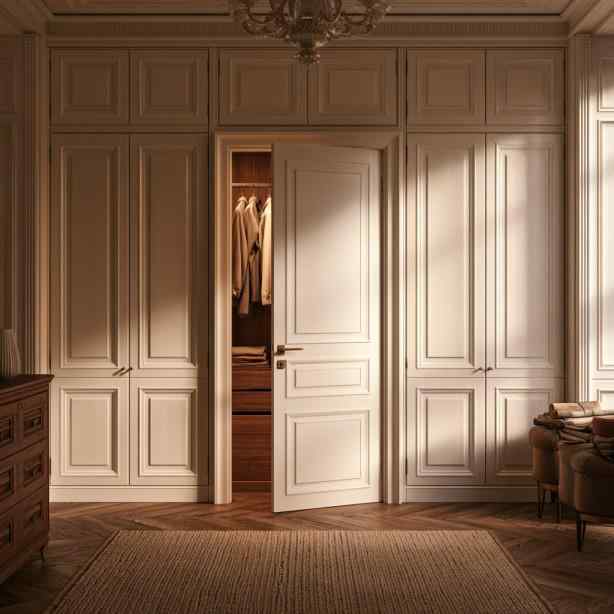
A hidden door integrated into panelled wardrobes conceals a walk-in behind matching doors.
A concealed entrance shouldn’t compromise security. Modern hidden door lock design options include magnetic catches, concealed mechanical locks, electronic smart locks and biometric access systems depending on the room’s purpose.
For private home offices, document storage or safe rooms, hidden electronic locking systems offer additional security while remaining invisible from the outside.
For children’s playrooms or internal storage spaces, simple magnetic latches may be all that’s required. The locking mechanism should always suit the intended function rather than simply prioritising concealment.
Common Mistakes: What Goes Wrong with Hidden Door Design
A discreet flush door with a finger pull blends into the fluted wall panelling seamlessly.
The most common mistake is poor alignment. Even small differences in panel spacing, grooves or paint finish can immediately reveal the hidden door. Using low-quality hinges often results in sagging over time, making the door difficult to operate.
Another mistake is ignoring wall thickness. Sliding concealed doors require sufficient cavity depth, while pivot doors need adequate clearance to swing smoothly.
Finally, don’t underestimate maintenance access. Hidden hardware should remain serviceable without requiring major dismantling if adjustments become necessary.
For more ideas on integrating concealed elements into modern interiors, explore how HomeLane transforms contemporary homes with modern interior design!
Design Spaces That Feel Calm, Clean and Seamless!
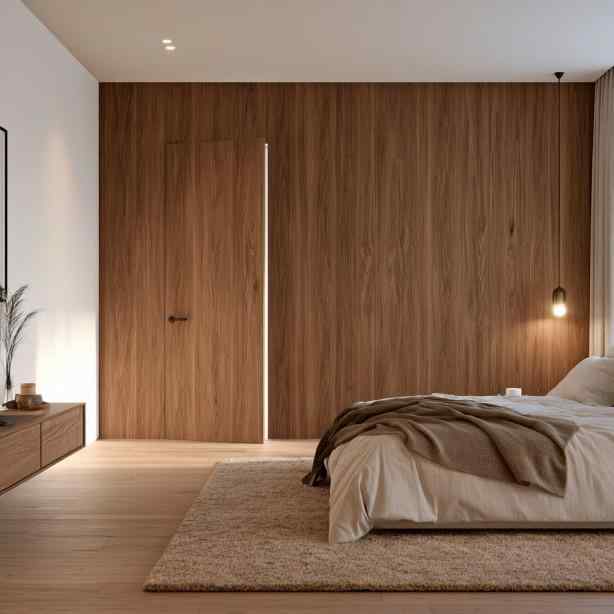
A hidden door merges into warm wooden panelling for a calm, seamless bedroom wall.
A thoughtfully designed hidden door design in homes combines aesthetics with practicality, creating uninterrupted interiors that feel larger, calmer and more sophisticated. Whether you choose a concealed pantry entrance, a wardrobe-integrated doorway or a sleek hidden sliding door design, careful planning ensures the door disappears beautifully into its surroundings.
At HomeLane, our designers create customised interiors where every detail, from concealed storage to hidden doors, is carefully integrated into the overall design. Book a free HomeLane consultation and discover how seamless design can transform your home!
FAQs
1. What is a hidden door design and how does it actually work?
A hidden door is designed to blend seamlessly into the surrounding wall, cabinetry or panelling using concealed frames, hinges and hardware. When closed, it appears to be part of the wall rather than a separate doorway.
2. Can any wall be converted into a hidden door, or does it need special planning?
Many walls can accommodate hidden doors, but the structural layout, wall thickness and surrounding finishes determine what’s possible. Planning the concealed door early in the design process almost always delivers better results than retrofitting it later.
3. Is a hidden door design more expensive than a regular door?
Generally, yes. Premium hardware, concealed frames, precision installation and custom finishes increase the overall cost. However, many homeowners feel the clean aesthetic and space-enhancing effect justify the additional investment.
4. What is a hidden door and why do people use one at home?
A hidden door conceals access to another room while maintaining uninterrupted wall surfaces. They’re commonly used for pantries, home offices, wardrobes, libraries, powder rooms and private storage spaces.
5. Are hidden doors a good idea for Indian homes?
Yes, especially in modern apartments where seamless design and efficient use of space are priorities. They also work beautifully in larger homes that feature wall panelling, custom cabinetry or minimalist interiors.
6. Which material is best for a hidden door?
Engineered wood, plywood, MDF and flush doors finished with laminate, veneer or PU paint are commonly used because they’re stable and easy to customise. The ideal choice depends on the surrounding wall finish and the door’s size and frequency of use.
7. Can I make a hidden door inside a wardrobe or bookshelf?
Absolutely. Wardrobes, bookshelves and wall panelling are among the most popular ways to disguise concealed doors. When designed carefully, the doorway becomes virtually impossible to distinguish from the surrounding cabinetry.
8. What is better for a hidden door: concealed hinges, pivot or sliding mechanism?
Each has advantages depending on the application. Concealed hinges suit standard doors, pivot systems work beautifully for tall feature doors, while sliding mechanisms are ideal when floor space is limited.










 EXPLORE MORE