Wooden Partition Designs for Indian Homes: Ideas, Materials and Smart Space Solutions
By Usha Balasubramanyan- July 03, 2026
Summary
A wooden partition design helps define spaces without building walls. It improves layout, adds visual interest, and keeps your home feeling open. Choosing the right material, pattern, and placement ensures it remains practical. With the right design, partitions can make a home feel more organised without reducing space.
Expert Tip
Think of a partition as a filter, not a wall. It should guide how space is used without cutting it off completely.
Best For
Open-plan homes, compact apartments, and spaces that need separation without permanent construction.
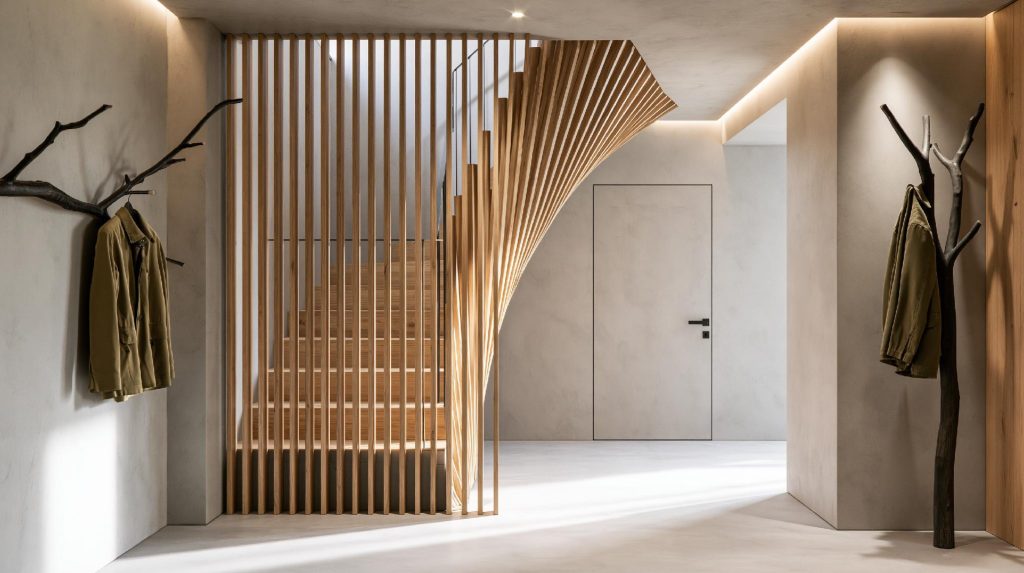
A dramatic curved slatted wooden partition frames a staircase, blending structure with open-plan elegance.
In many Indian homes, open-plan layouts often lack focus. Spaces flow into each other, but without clear boundaries, the home can start to feel undefined. The living room flows into the dining area, the kitchen feels too exposed, or a bedroom needs a bit more privacy. This is where a well-planned wooden partition design can fix the problem.
Done right, it doesn’t block the space. It defines it. A simple slatted divider between your living and dining area, or a light partition near the entry, can make your home feel more organised without making it feel smaller.
Why Wooden Partition Designs Work So Well in Modern Homes
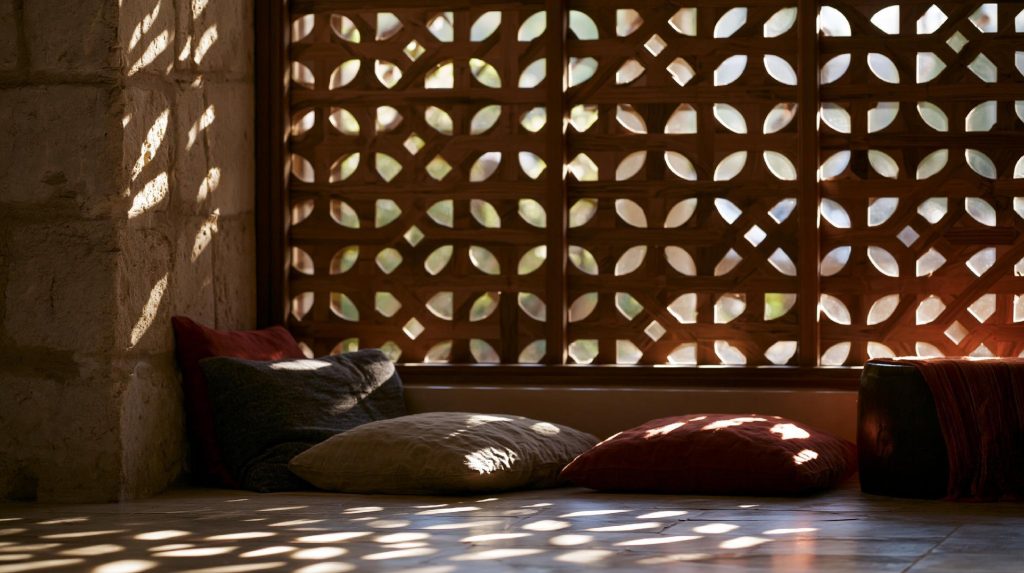
A traditional jaali wooden partition filters natural light beautifully, ideal for Indian home interiors.
A wooden partition design for homes is not just about dividing space. It helps control how the space is used. For instance, it carves out a focused work-from-home corner or hides the clutter of a prep-heavy kitchen.
In compact apartments, partitions create zones without adding permanent walls. In larger homes, they help structure open layouts so each area feels intentional.
Unlike solid walls, wooden partitions allow light and air to pass through. This is especially useful in Indian homes where natural light is important.
The biggest advantage is flexibility. Unlike heavy masonry, a wooden partition can be adjusted or even relocated if you decide to reconfigure your furniture layout later. A modern wood partition design can be open, semi-open, or fully closed depending on how much privacy you need.
Different Types of Wooden Partition Designs and Where They Work Best
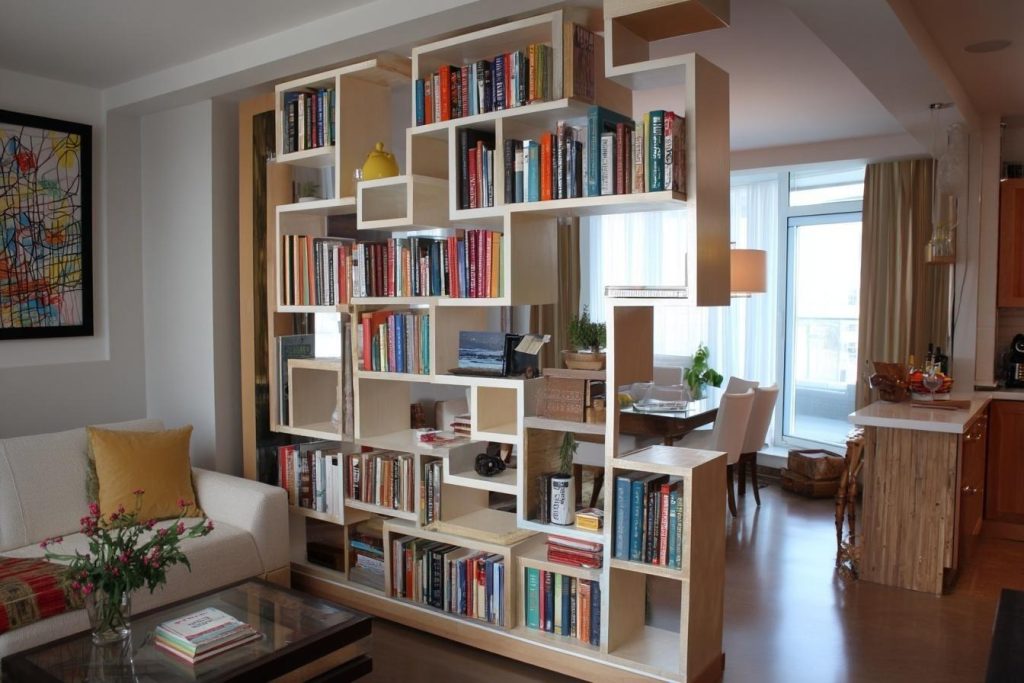
A floor-to-ceiling open bookshelf partition defines the living and dining zones without blocking light.
Not every partition needs to look the same. The design depends on where you’re placing it.
A wooden partition design for living rooms often uses vertical slats or open shelves. This keeps the space connected while still defining zones.
A wooden partition for kitchensworks well as a semi-open divider. It can block direct visibility without cutting off light completely.
In bedrooms, partitions are often used to separate dressing areas or work corners. A wooden partition design for bedrooms can be slightly more closed to provide privacy.
If you want something minimal, a simple wooden partition designwith clean lines works best. It doesn’t draw too much attention but still does its job.
Best Materials, Finishes and Patterns for Wooden Partition Design
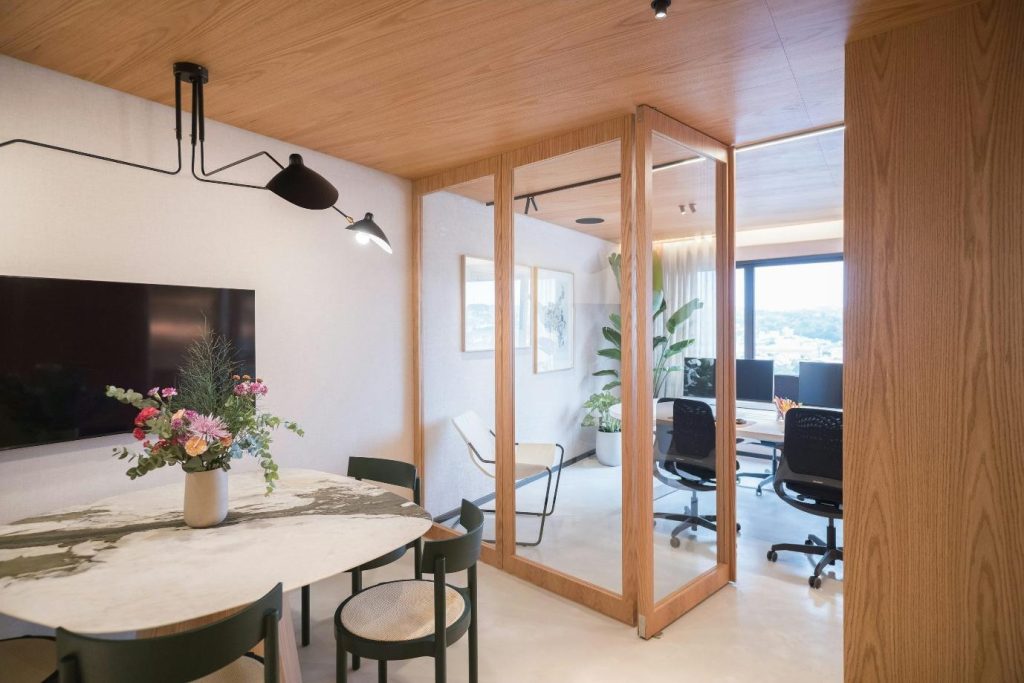
A sleek glass and wood folding partition separates a workspace while keeping the interior bright and airy.
Element
What to Use
Why It Works
Core Material
MDF / Plywood
Stable and cost-effective
Finish
Laminate / Veneer
Easy to maintain in daily use
Pattern
Slatted / CNC cut
Allows light and airflow
Frame
Wood or metal
Adds strength and structure
Solid wood looks premium but requires more maintenance. For most homes, laminates or veneers offer a better balance between durability and upkeep.
Slatted designs are the most popular because they create separation without making the space feel closed.
How Do You Choose the Right Wooden Partition Design?
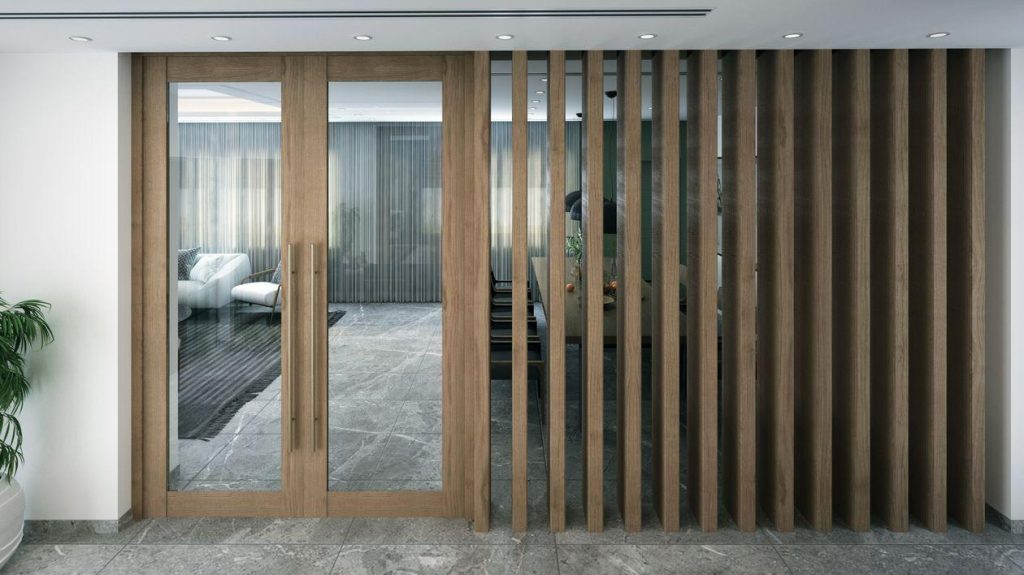
Bold vertical wooden slats paired with glass doors create a structured yet open partition for modern interiors.
Start with your primary goal: do you need visual privacy, or just a psychological break between zones?
If you need visual separation, go for open or slatted designs. If privacy is more important, choose denser patterns or layered panels.
Also consider movement. A bulky partition in a small room can make the space feel tighter. Always leave enough clearance around it so the layout still feels easy to move through.
Here’s a simple way to decide:
Open layouts → Slatted or semi-open partitions
Compact homes → Light, minimal designs
Privacy zones → Denser or layered partitions
A good wooden partition interior design should feel like part of the room, not something added later.
What It Costs and What Affects It
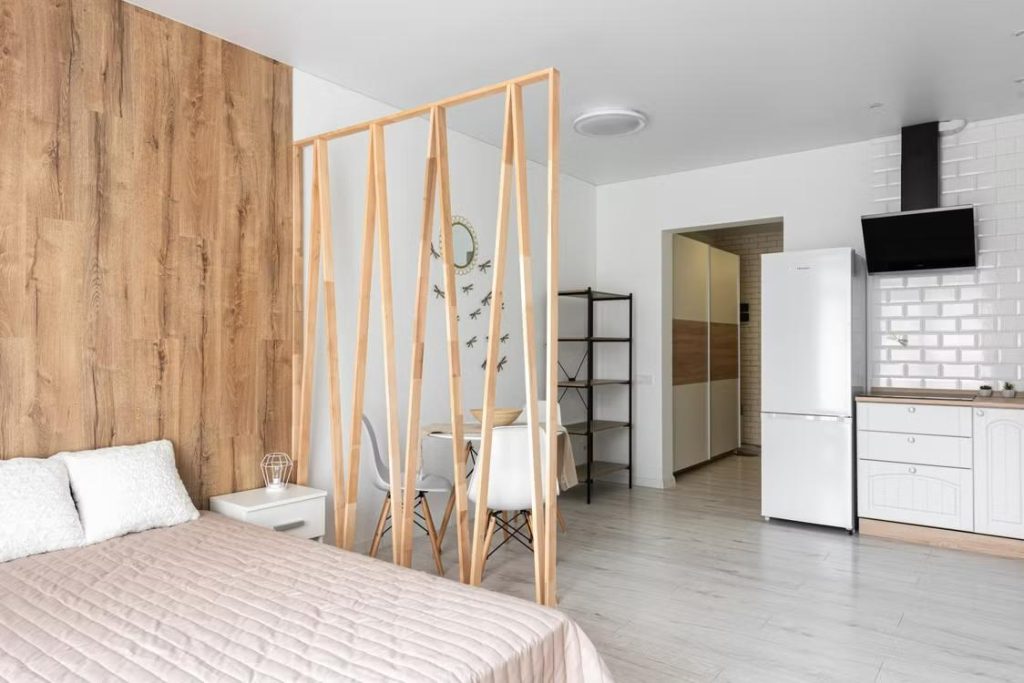
A light angular wooden partition subtly divides the sleeping and dining zones in a compact studio apartment.
A wooden partition design can vary quite a bit in cost depending on material and detailing.
Basic laminate partitions → INR1,200–INR2,500 per sq ft
Veneer or designer finishes → INR2,500–INR5,000 per sq ft
CNC-cut or customised designs → INR4,000+ per sq ft
The cost usually depends on design complexity, finish, and installation.
Simple designs are more budget-friendly and easier to maintain. Heavily detailed partitions may look striking but take more effort to clean and maintain.
A Real HomeLane Project: What Worked and Why
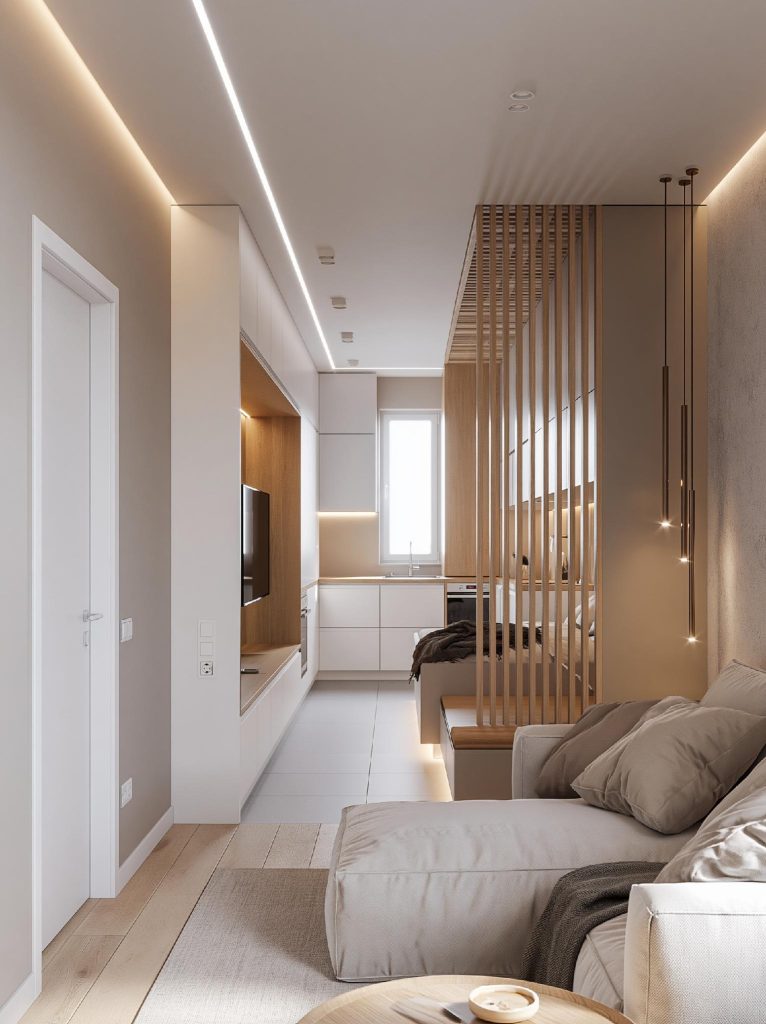
Slim wooden slats create a semi-open partition between the bedroom and living area in a modern apartment.
In a recent 3BHK in Hyderabad, the homeowners wanted to separate the living and dining areas without closing off the space.
Instead of building a wall, the design team introduced a slatted wooden partition design for living rooms with a light wood finish. The spacing between slats allowed light to pass through while still defining the two zones clearly.
The result felt more structured, but the openness of the home was preserved. This is often the difference between dividing a space and designing it.
Common Partition Mistakes to Avoid
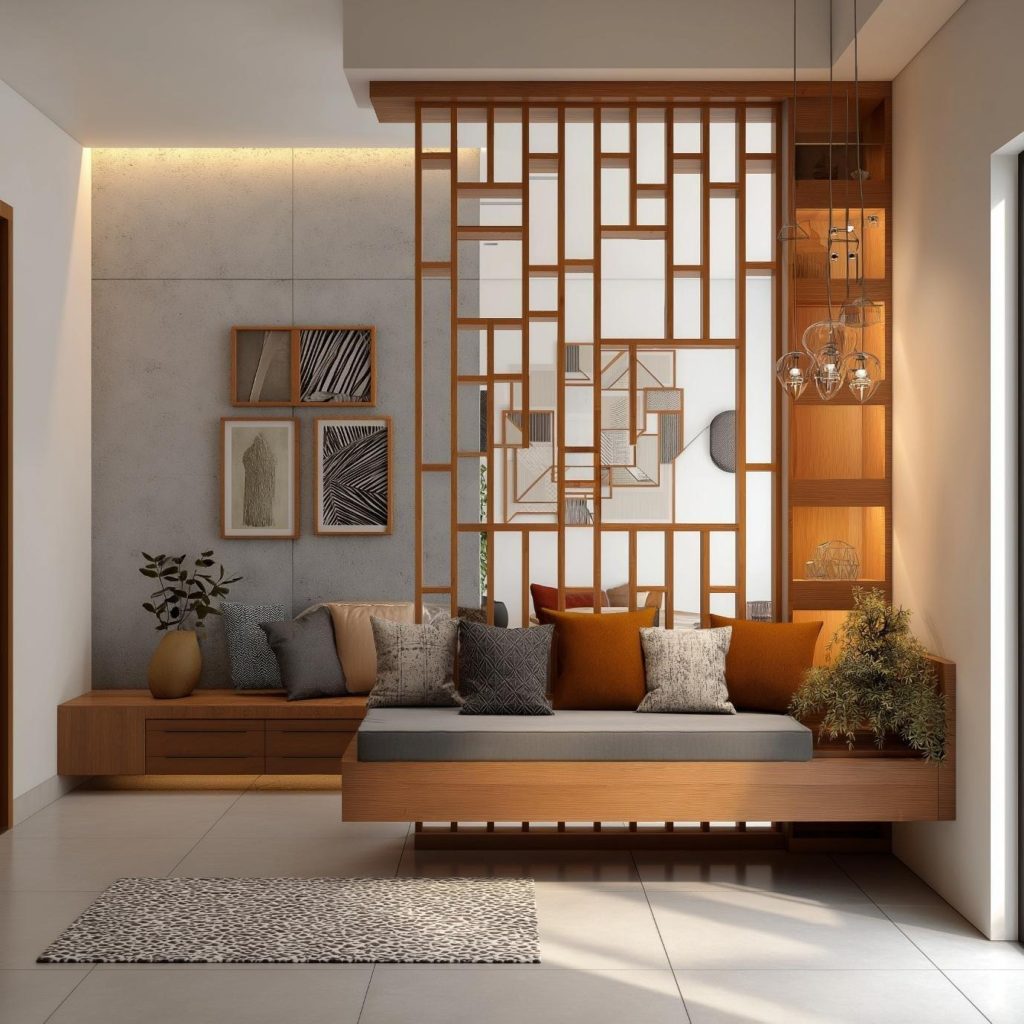
A geometric jali wooden partition adds warmth and visual interest to this contemporary Indian living room.
A common mistake is going too heavy. Thick, solid partitions can block light and make rooms feel smaller, especially in apartments.
Another issue is over-designing with too many patterns, which can make the space feel busy. Slatted partitions look lovely to begin with, but will end up gathering dust. Choose these designs only if you can take care of the ongoing maintenance.
The better approach is to keep the structure light and let the material do the work.
What to Check Before You Finalise Your Partition
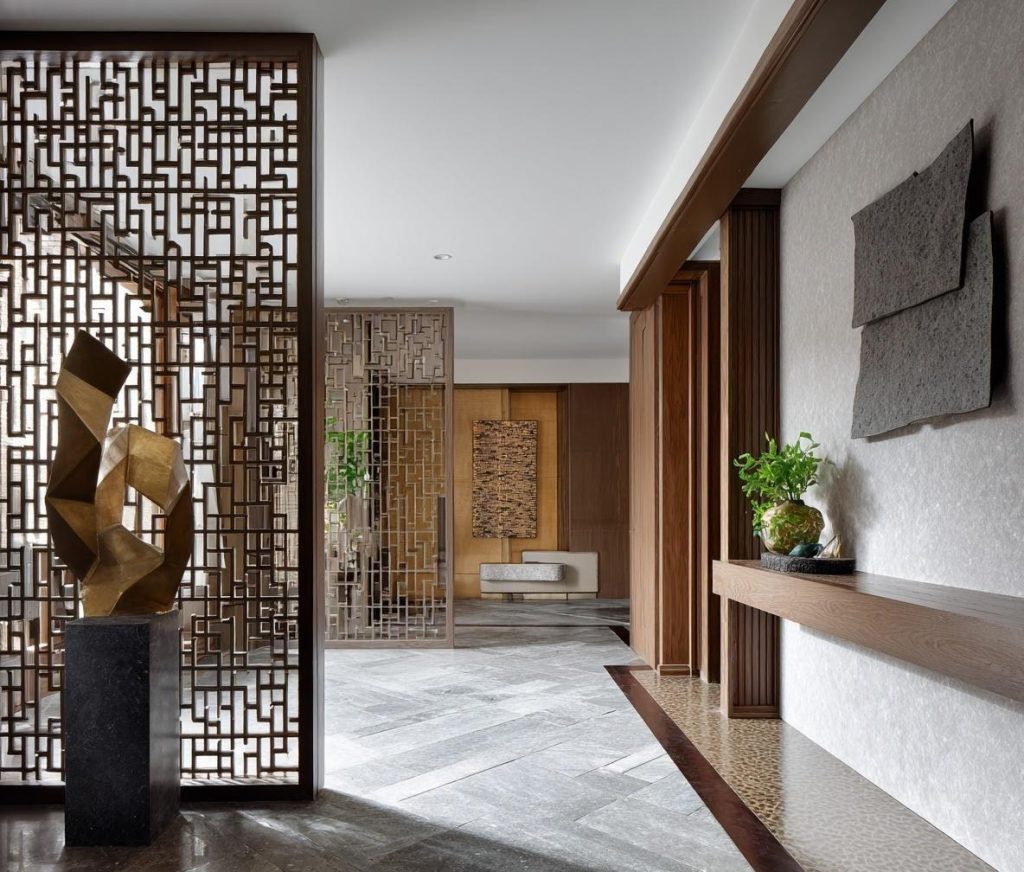
An ornate CNC-cut wooden partition serves as a bold design statement in this upscale lobby interior.
Before finalising your wooden partition design, check three things.
First, look at how it affects light flow. You don’t want to block natural light.
Second, check movement space. The partition should not interrupt how you walk through the room.
Third, think about maintenance. Simpler designs are easier to clean and maintain over time.
If you want to explore partition ideas that work with your layout, book a free consultation with HomeLane and get a design that fits your home and lifestyle.
FAQs
1. What is the best wooden partition design for modern homes?
Slatted and semi-open designs work best in modern homes. They allow light and airflow while still defining spaces. This keeps the layout open but organised.
2. Which wood is best for wooden partition designs?
Engineered wood like MDF or plywood is commonly used. It is stable and more cost-effective than solid wood. Finishes like laminate or veneer improve durability.
3. How do I divide a living room using wooden partitions?
Use slatted or open-shelf partitions to separate areas without blocking light. Position them where natural division already exists. This keeps the layout functional.
4. What are the best wooden partition ideas for kitchens?
Semi-open partitions work well for kitchens. They reduce direct visibility while maintaining airflow. This is useful in open-plan homes.
5. Are wooden partitions expensive?
Costs vary based on material and design. Simple partitions are budget-friendly, while customised designs cost more. Choosing the right finish helps control cost.
6. How do I choose the right wooden partition design for my home?
Consider layout, purpose, and space availability. The design should support movement and light flow. It should feel like part of the room.
7. What finishes work best for wooden partition interior design?
Laminate and veneer finishes are the most practical. They are easier to maintain and suit most interiors. Matte finishes work better for daily use.










 EXPLORE MORE