False Ceiling Installation Guide: Step-by-Step Ideas for Modern Homes
By Bivin Peter- March 31, 2026
AI Summary
3 key insights · 1 expert tip
False ceiling installation transforms interiors with lighting and insulation, requiring careful planning and material selection for a durable, aesthetic finish.
Key Insights:
What You'll Read Here:
Installation costs range from Rs. 90 to Rs. 150 per square foot for basic Gypsum or POP designs.
Gypsum boards are preferred for modern, sleek finishes due to their lightweight, fire-resistant properties.
A standard false ceiling installation for one room typically takes 5 to 7 days.
HOMELANE EXPERT TIPBy our design team
Always anchor fan hooks directly to the original slab, never to the false ceiling frame, to prevent structural instability and ensure safety.
Have you ever walked into a luxury hotel lobby and felt an immediate sense of grandeur, only to realise the magic was happening right above your head? That seamless glow, the hidden air conditioning, and the perfectly recessed lights are all the work of a well-executed false ceiling. In the world of Indian interior design, the ceiling is often called the fifth wall, yet it remains the most underutilised canvas in the home.
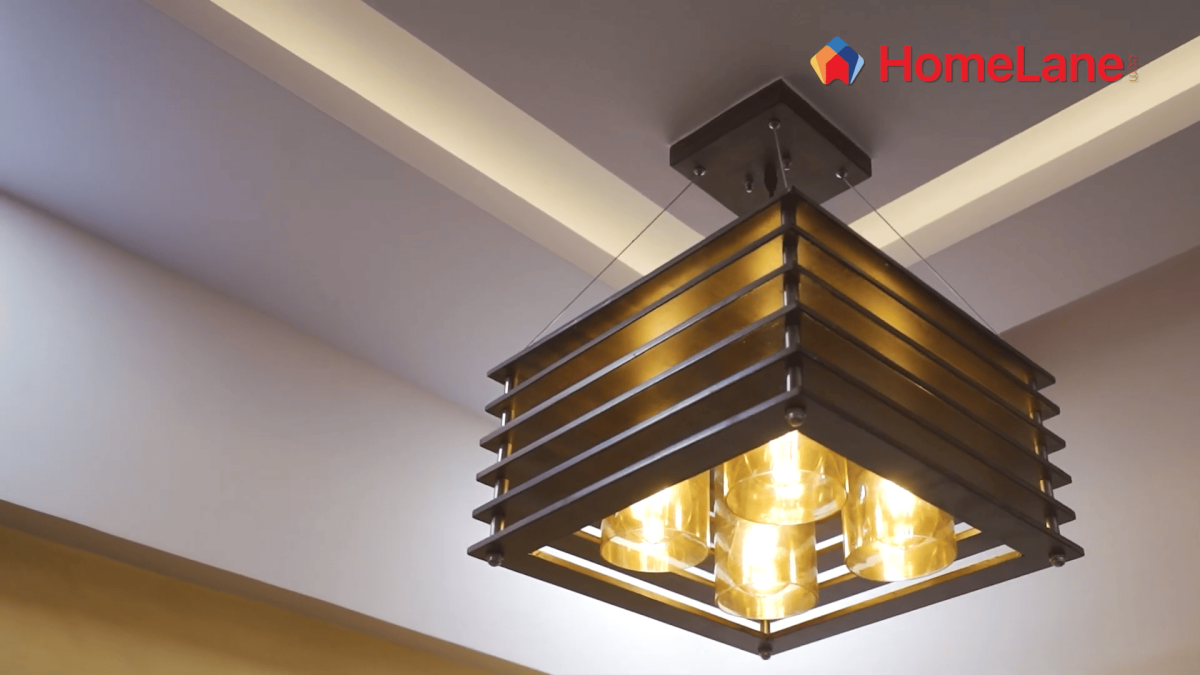
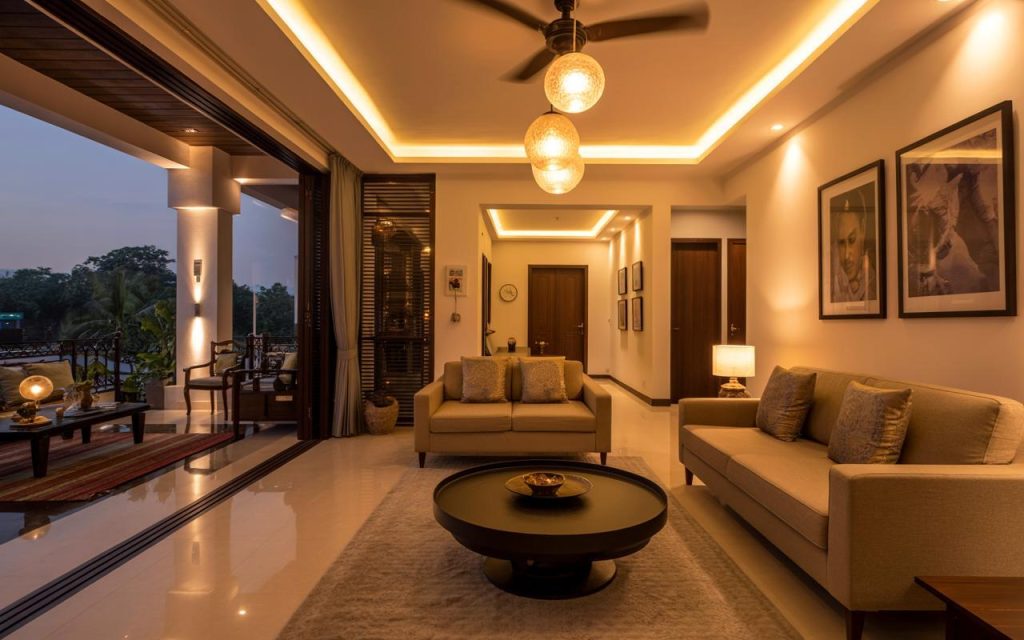
Elegant false ceiling design with integrated chandelier lighting
For a homeowner in India, a false ceiling is far more than just a decorative layer. It is a functional shield that provides thermal insulation against the sweltering summer heat, hides unsightly electrical conduits, and creates an acoustic buffer in noisy urban environments. However, the difference between a ceiling that sags within a year and one that lasts for decades lies entirely in the false ceiling installation procedure.
Whether you are looking to elevate your living room with a sophisticated false ceiling design or simply want to understand the technicalities before hiring a contractor, this guide will walk you through the journey of transforming your overhead space.
Understanding the Purpose and Beauty of a False Ceiling
Modern bedroom false ceiling design with gypsum light installation
Before diving into the tools and grit of the installation, one must understand what a false ceiling actually is. It is essentially a suspended ceiling that hangs below the original RCC (Reinforced Concrete Cement) slab. This secondary layer allows for creative lighting solutions like cove lights and spotlights that are impossible to achieve on a flat, primary ceiling.
Choosing the right false ceiling design depends heavily on the room’s purpose. A bedroom might require a simple perimeter tray for soft, ambient lighting, while a double-height living room could demand a more intricate, multi-layered aesthetic. The versatility of this feature makes it a staple in modern Indian homes, but the success of the project begins with selecting the right foundation.
In the next section, we will look at the essential gear required to turn this design vision into a structural reality.
Essential Tools and Materials for a Perfect Finish
False ceiling installation steps using gypsum board and materials
The longevity of your ceiling depends on the quality of the false ceiling material used. In India, the two most common choices are Gypsum boards and Plaster of Paris (POP). While POP offers great flexibility for ornate designs, Gypsum is widely considered the best false ceiling material for modern, sleek finishes because it is factory-made, lightweight, and fire-resistant.
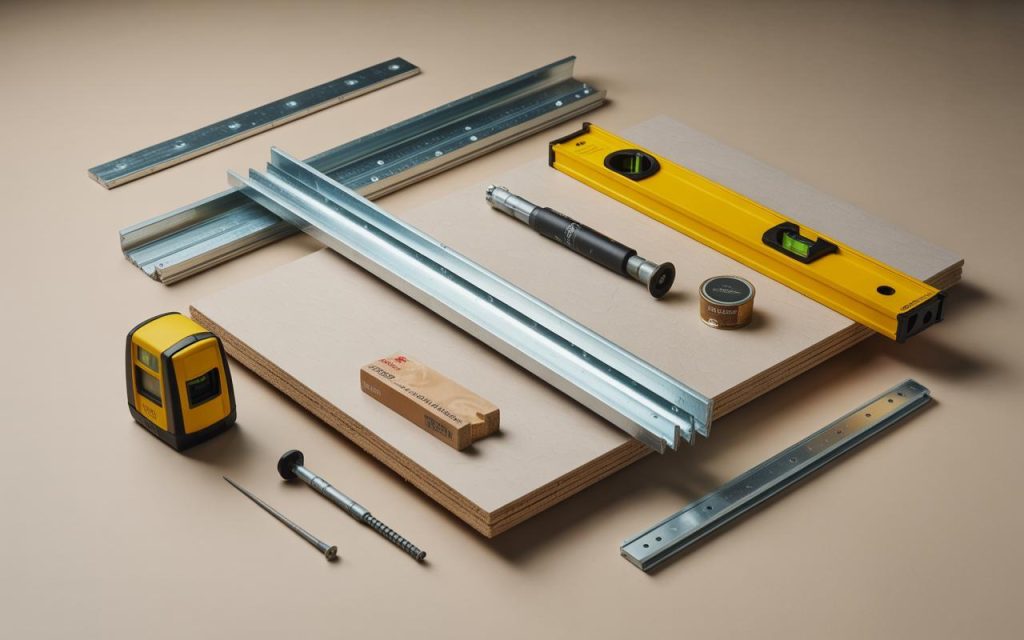
To get started, a professional team will typically require:
Measurement Tools: Laser levels, spirit levels, and measuring tapes.
Framing Components: Galvanised iron (GI) channels, perimeter channels, and wall angles.
Fixing Hardware: Drywall screws, anchor bolts, and soffit cleats.
Finishing Supplies: Jointing compound, paper tapes, and high-quality sandpaper.
Once the materials are gathered, the most critical phase begins: ensuring that the site is safe and the plan is foolproof.
Planning and Safety Precautions Before You Begin
Gypsum false ceiling installation procedure before light installation stage
Never rush into a false ceiling installation. The very first step is to check for any signs of water seepage or dampness on the primary slab. If you install a false ceiling over a leaking roof, the moisture will eventually cause the boards to swell, mould, and eventually collapse.
Safety is paramount, especially when dealing with overhead structures. Ensure that the electrical wiring for fans and heavy chandeliers is planned well in advance. A common error is deciding on the fan position after the framing is done, which leads to structural instability. Always ensure that the fan hook is anchored directly to the original ceiling slab and not to the false ceiling itself.
With the safety checks in place, it is time to look at the step-by-step false ceiling installation procedure that professionals follow.
The Step-by-Step False Ceiling Installation Procedure
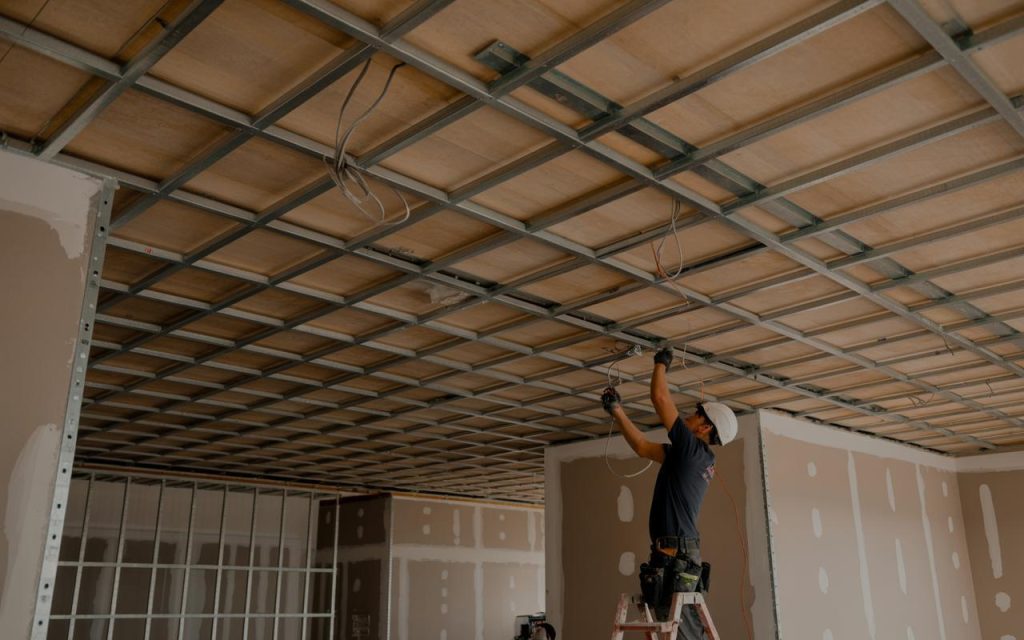
Gypsum board false ceiling installation steps with light wiring
The actual process of false ceiling installation is a blend of precision engineering and artisanal finishing. Here is how the magic happens:
1. Marking the Levels: Using a water level or a laser level, the desired height of the new ceiling is marked across all walls of the room.
2. Fixing Perimeter Channels: GI perimeter channels are screwed into the walls along the marked lines. This forms the outer boundary of your false ceiling.
3. Installing the Suspension System: Soffit cleats are fixed to the original ceiling slab using anchor bolts. These cleats hold the ceiling angles that will support the entire weight of the structure.
4. Creating the Framework: Main C-channels and cross-channels are interlocked to create a metal grid. This is the skeleton of your false ceiling design.
5. Electrical Wiring: Before the boards go up, all electrical conduits and light points are laid out within the grid.
6. While the process seems straightforward, even the most experienced teams can run into hurdles if they overlook small details.
Common Mistakes to Avoid During Installation
Modern false ceiling design with integrated false ceiling light installation
One of the biggest pitfalls in false ceiling installation is ignoring the room’s height. In urban Indian apartments where ceiling heights are often limited to 9 or 10 feet, a heavy, multi-layered false ceiling can make the room feel claustrophobic. Instead, opt for a minimal border design that preserves the central height.
Another mistake is using low-quality metal channels. Cheap, thin channels can lead to “sagging” over time, which is nearly impossible to fix without tearing down the entire structure. Always insist on branded, galvanised steel to ensure the frame remains rust-free and sturdy for decades.
Once your ceiling is flawlessly installed, the next priority is ensuring it stays that way through proper care.
Maintenance Tips for a Long-Lasting Ceiling
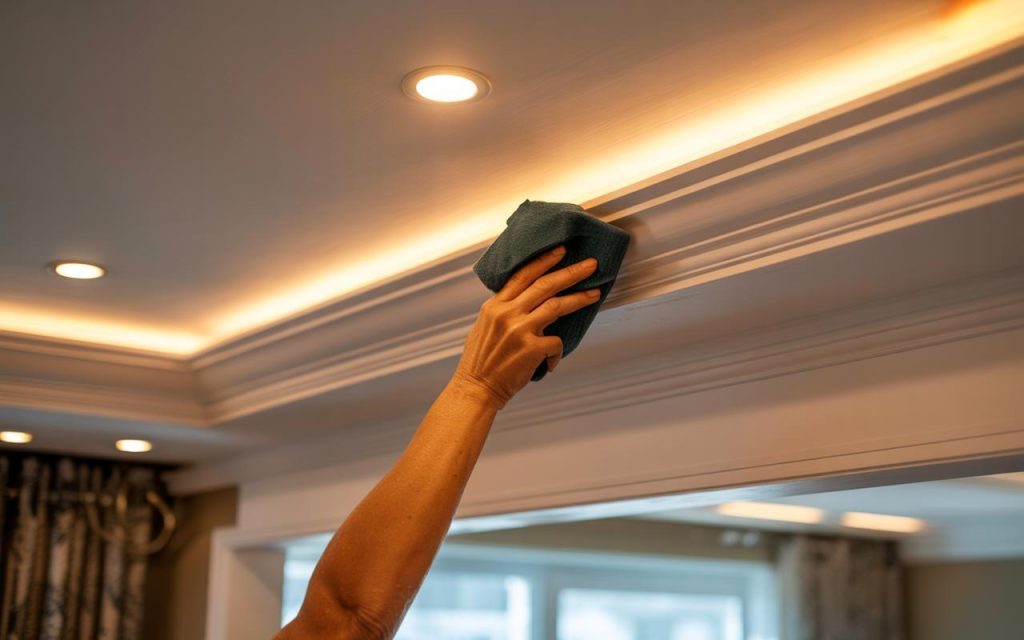
False ceiling material maintenance after gypsum board false ceiling installation
A well-installed false ceiling is surprisingly low-maintenance. Unlike walls, ceilings don’t suffer from constant touch or scuff marks. However, dust accumulation in the coves is a common issue in India.
Dry Dusting: Use a soft feather duster or a vacuum cleaner with a brush attachment once a month to keep the covers clean.
Moisture Watch: Keep an eye out for any yellowish stains, which usually indicate a hidden leak from the floor above.
Pest Control: Ensure that the edges are perfectly sealed during the false ceiling installation procedure to prevent lizards or insects from nesting in the cavity.
By following these simple steps, your ceiling will remain as pristine as the day it was finished.
Ready to Start?
Modern false ceiling design with false ceiling light installation
A breathtaking interior requires a plan built on expertise and care. Whether it is a sleek false ceiling or a complete home makeover, beauty is possible when design reflects your soul. At HomeLane, we help you craft elegance from the essentials. Our experts deliver high-quality interiors that are stunning and flawless.
FAQs On False Ceiling
1. How much does false ceiling installation typically cost in India?
The cost of false ceiling installation in India usually ranges from ₹90 to ₹150 per square foot for basic Gypsum or POP designs. This price can increase based on the complexity of the false ceiling design, the city, and additional electrical work.
2. What materials are commonly used for false ceilings?
The most common false ceiling material options include Gypsum boards, Plaster of Paris (POP), PVC, and wood. Gypsum is preferred for its smooth finish, while PVC is often used in moisture-prone areas like bathrooms.
3. Is gypsum board better than POP for false ceiling designs?
Yes, Gypsum boards are generally considered superior for modern false ceiling projects. It is cleaner to install, offers a more seamless finish, and is factory-made for consistent quality, whereas POP is mixed on-site and is more prone to human error.
4. How long does it take to install a false ceiling in a bedroom or living room?
A standard false ceiling installation for a single room typically takes 5 to 7 days. This includes the framing, boarding, jointing, and the necessary drying time for the compound before the final painting begins.

































 EXPLORE MORE