Japandi Kitchen Design Ideas for Calm, Modern and Functional Homes
By Usha Balasubramanyan- August 10, 2026
Summary
Japandi kitchens combine Japanese minimalism with Scandinavian warmth to create spaces that feel peaceful, practical, and timeless. Neutral colours, natural materials, clutter-free layouts, and smart storage work together to create kitchens that are both beautiful and highly functional. With thoughtful planning and customised cabinetry, Japandi kitchen design can be successfully adapted to both spacious homes and compact Indian apartments.
Expert Tip
Resist the temptation to decorate every surface. Japandi kitchens feel luxurious because they celebrate open space, natural textures, and purposeful design rather than excessive accessories.
Best For
Modern apartments with open-plan kitchens, and compact homes needing clutter-free storage
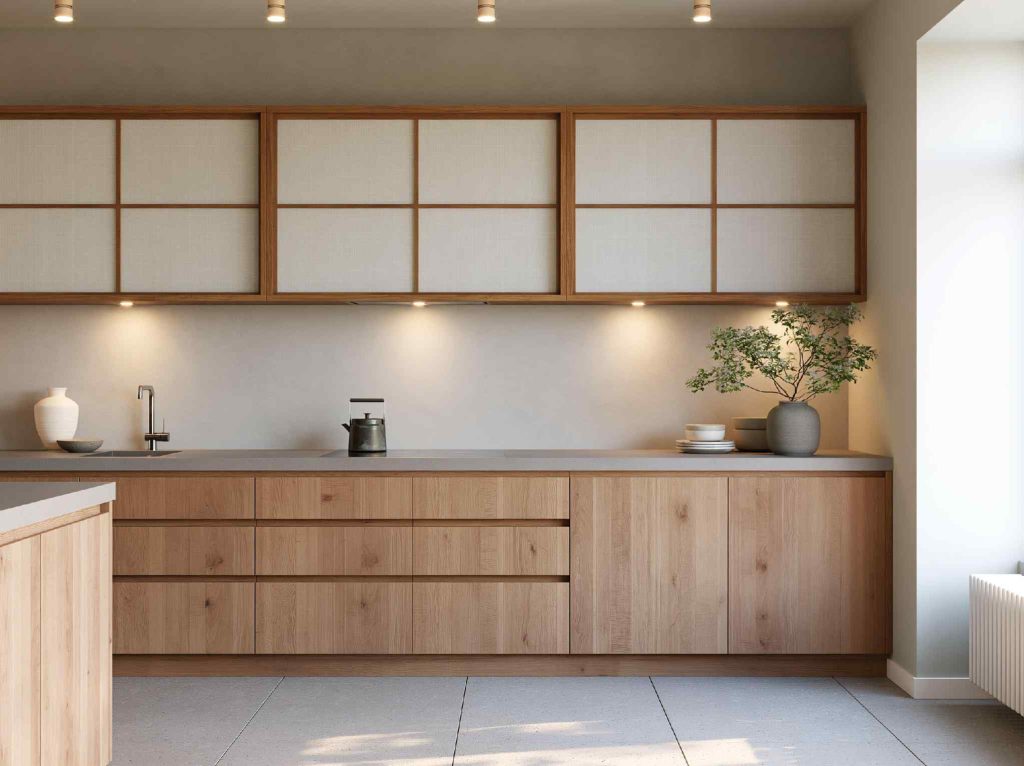
Warm wood cabinetry and shoji-style panels create a calm Japandi kitchen design.
Kitchen trends come and go, but some design styles feel timeless from the moment you see them. Japandi is one of them. By blending the warmth of Scandinavian interiors with the simplicity of Japanese design, Japandi kitchens create spaces that feel organised, peaceful, and effortless to live in. Instead of relying on decorative elements, they focus on natural materials, clean lines, and thoughtful functionality.
A well-planned Japandi kitchen combines minimalist aesthetics with practical storage and durable finishes that work beautifully in everyday life. Whether you’re designing a spacious family kitchen or a small Japandi kitchen, this style creates an environment that’s both elegant and highly functional.
Unlike trend-driven kitchens that can quickly feel dated, Japandi focuses on timeless materials and thoughtful craftsmanship that continue to look relevant for years. It also encourages a slower, more intentional way of living, where every cabinet, shelf, and countertop is designed with a clear purpose rather than unnecessary decoration. The secret is keeping every element purposeful while allowing natural materials and craftsmanship to take centre stage.
Why Are Japandi Kitchens Becoming the Most Loved Modern Kitchen Style?
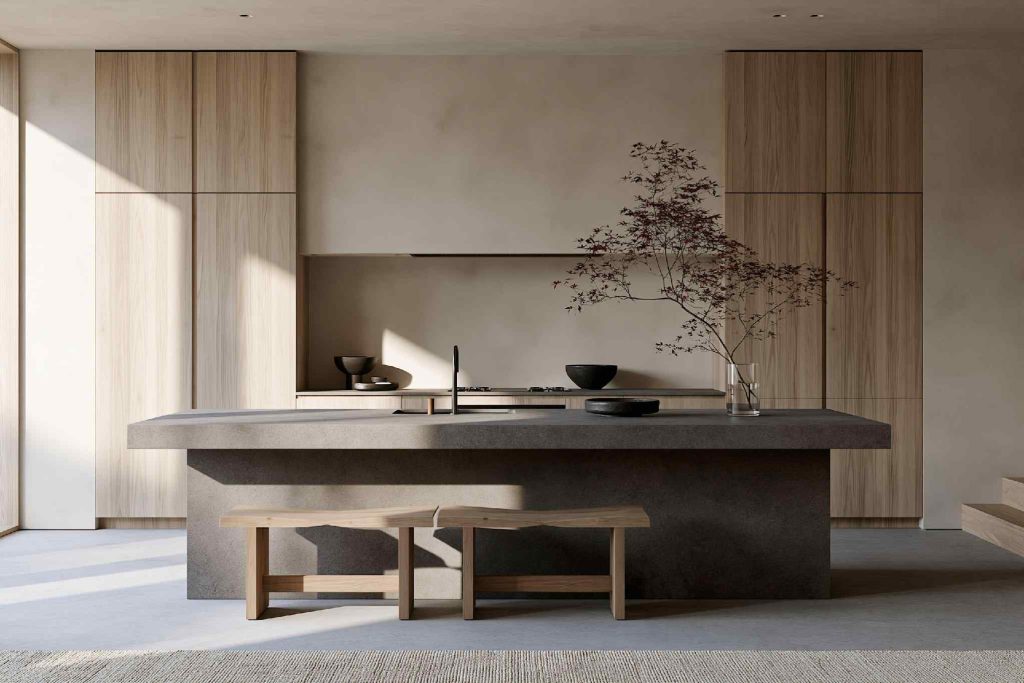
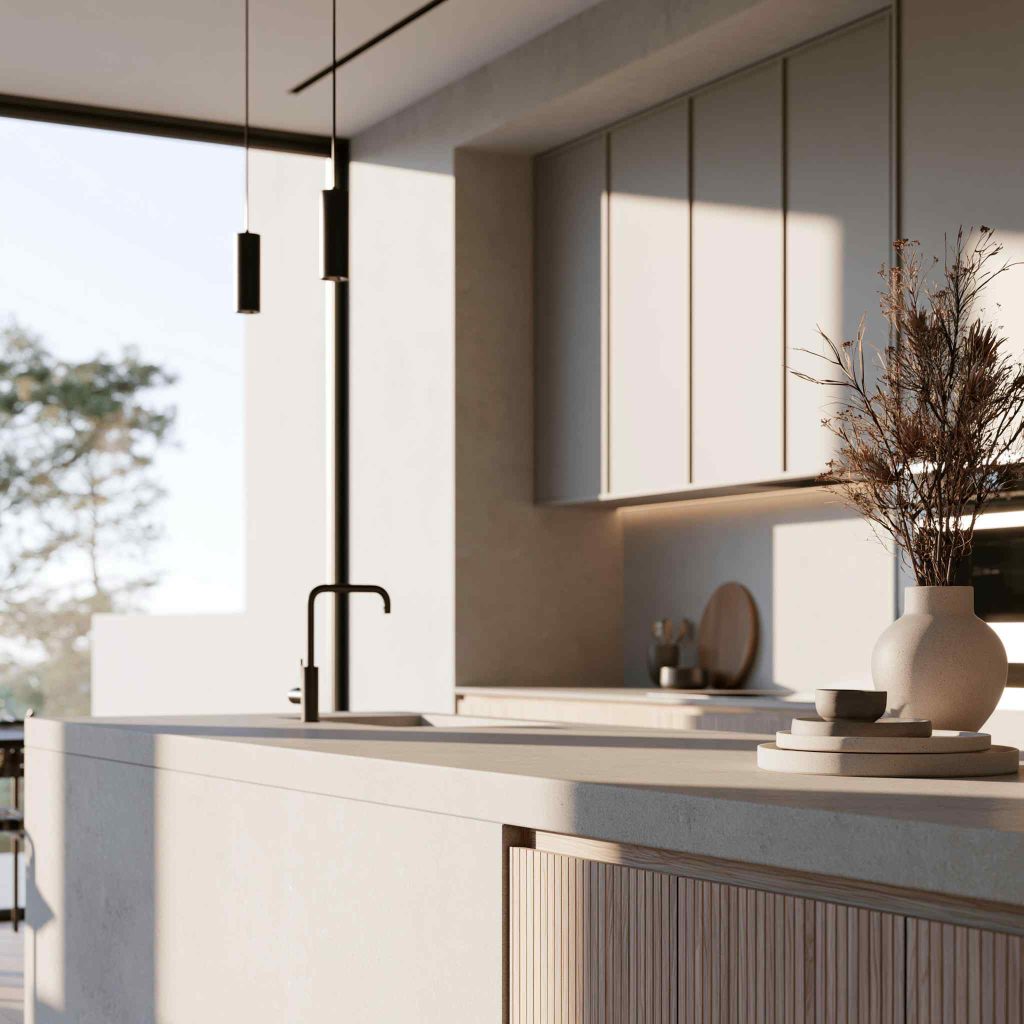
A sculptural concrete island anchors this minimalist modern Japandi kitchen.
The popularity of the Japandi style kitchen lies in its ability to balance beauty with practicality. Unlike highly decorative kitchens, Japandi interiors embrace simplicity without feeling stark. Clean cabinetry, clutter-free worktops, warm wood finishes, and soft neutral colours create an atmosphere that’s calming while remaining highly functional.
A modern Japandi kitchen also prioritises quality over quantity. Instead of adding decorative accessories, the focus is on well-crafted cabinetry, seamless storage, and carefully selected materials that age gracefully over time.
The result is a kitchen that looks contemporary today and continues to feel relevant for years.
Which Japandi Kitchen Ideas Instantly Create the Signature Look?
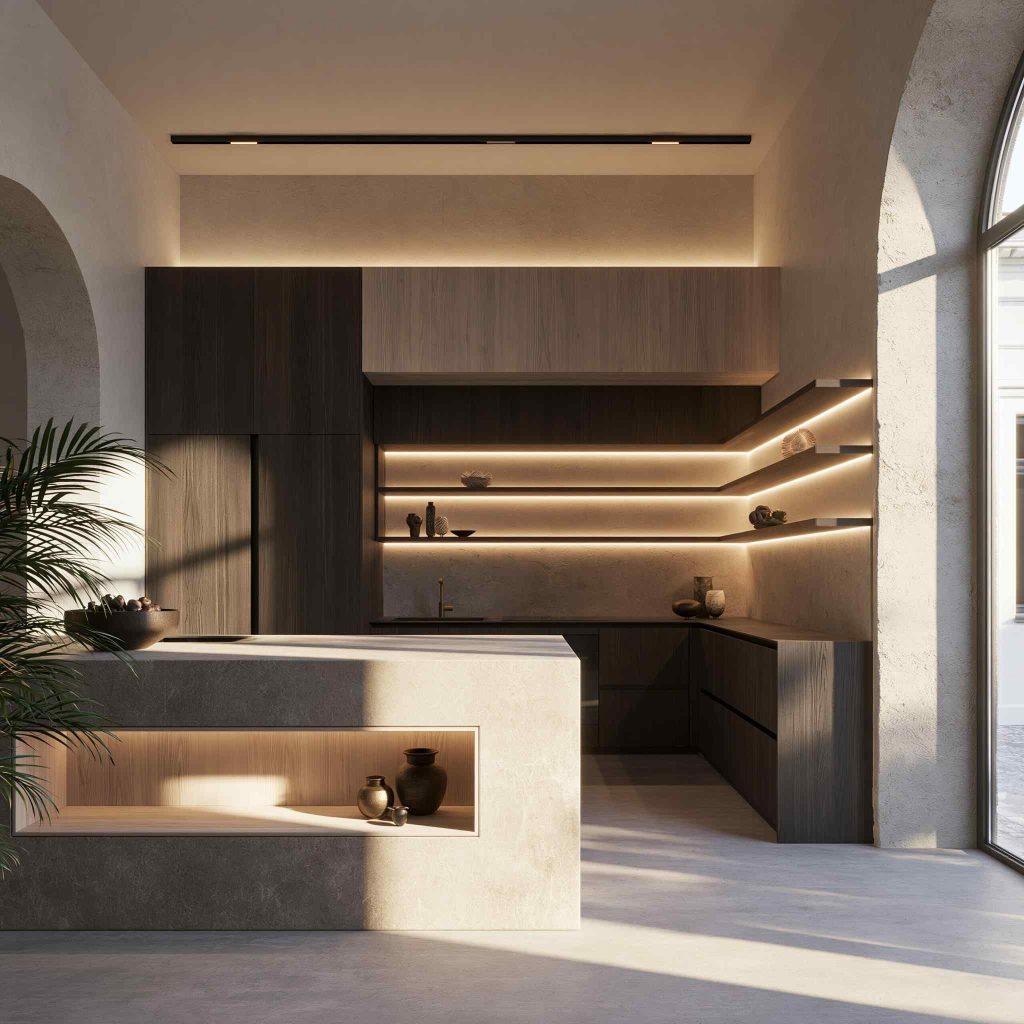
Dark wood cabinetry with backlit shelving adds warmth to this Japandi kitchen design.
The most successful Japandi kitchen ideas rely on subtle details rather than dramatic design features. Everything is pared down, calm, fuss-free.
Flat-panel cabinetry with integrated handles creates uninterrupted surfaces that reinforce the minimalist aesthetic. Open shelving is used sparingly to display a few carefully selected ceramics, wooden utensils, or indoor plants instead of overcrowding the walls.
Concrete ceilings and wood cabinetry balance texture in this Japandi kitchen design.
Natural wood plays a central role. Oak, ash, walnut, or wood-look laminates introduce warmth while balancing the clean architectural lines.
Stone-inspired countertops, textured splashbacks, and matte finishes further enhance the understated elegance of the space.
Soft, layered lighting is equally important. Pendant lights above an island, under-cabinet LEDs, and warm ambient lighting create a welcoming atmosphere throughout the day.
Every detail contributes to the feeling of calm that defines Japandi kitchen design.
Can Small Kitchens Successfully Follow Japandi Design?
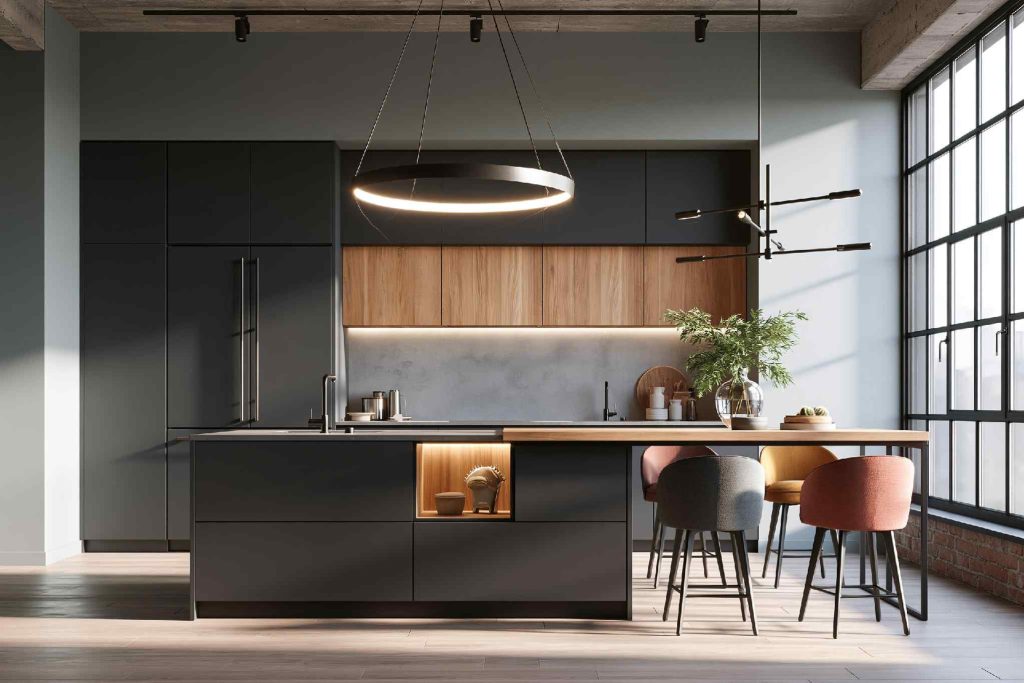
Charcoal cabinetry with wood accents proves a small Japandi kitchen can feel spacious.
Absolutely. In fact, Japandi principles work exceptionally well in compact homes.
A small Japandi kitchen benefits from handleless cabinets, integrated appliances, and floor-to-ceiling storage that maximises every available inch while maintaining a clean appearance.
Light colours such as warm white, soft beige, greige, and pale wood finishes reflect more light, helping compact kitchens feel larger and brighter.
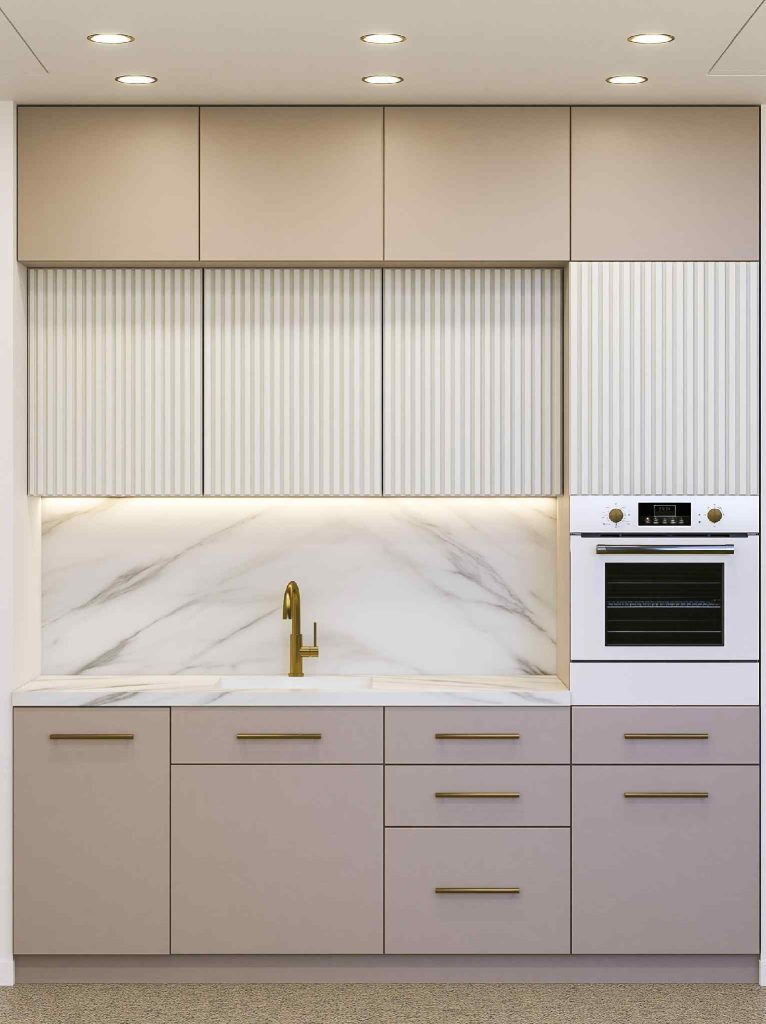
Fluted beige cabinetry and brass fittings define these elegant Japandi kitchen cabinets.
Open shelving should be limited to a few carefully styled pieces to avoid visual clutter. Hidden storage is preferred because it keeps worktops clear and organised.
Choosing multifunctional furniture, pull-out pantry units, and corner storage solutions allows even small kitchens to remain highly efficient without sacrificing the minimalist aesthetic.
What Makes Japandi Kitchen Cabinets Look Clean Yet Premium?
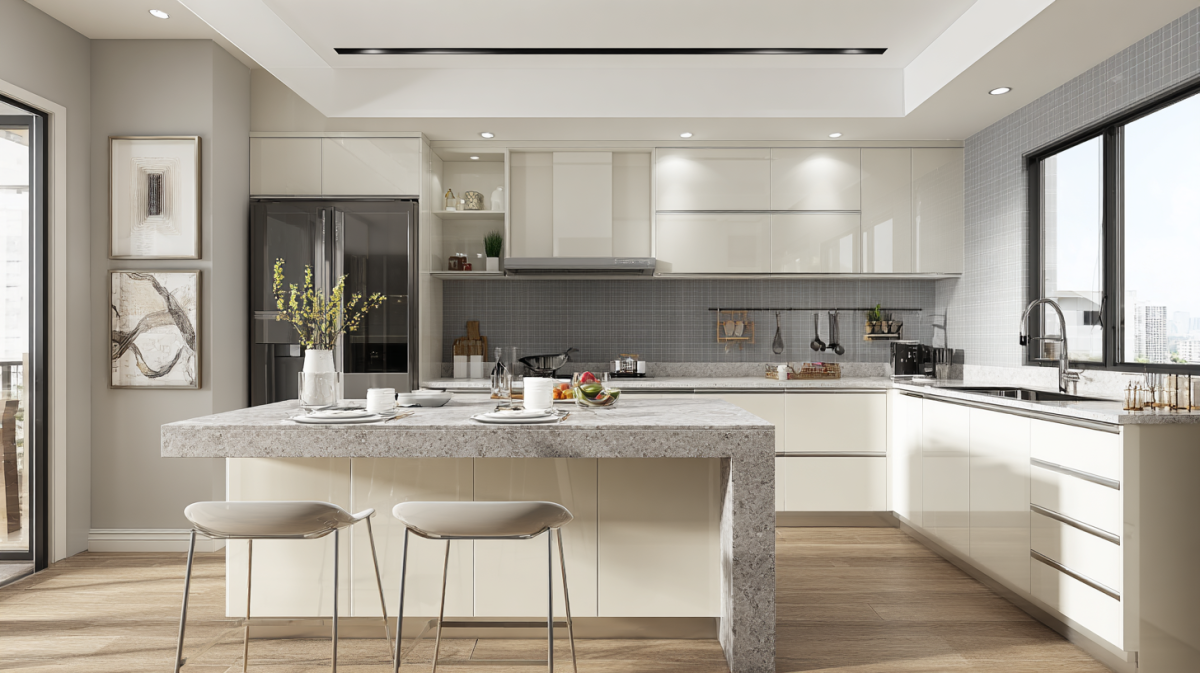
Clean-lined white cabinetry and soft styling define this minimalist Japandi kitchen design.
One of the defining features of Japandi kitchen cabinets is their simplicity.
Cabinet shutters are typically flat and free from ornate detailing, allowing the natural beauty of the material to stand out. Integrated finger pulls or concealed handles maintain uninterrupted lines that make the kitchen feel more spacious.
Matte laminates, wood veneers, and textured finishes are used (and never glossy surfaces) because they create a softer, more natural appearance.
Storage is equally important. Deep drawers, internal organisers, pull-out pantry systems, and concealed bins ensure everything has a designated place, keeping countertops clutter-free.
A successful Japandi interior design for the kitchen feels premium not because it is elaborate, but because every detail has been carefully considered.
Bring Calm into the Heart of Your Home
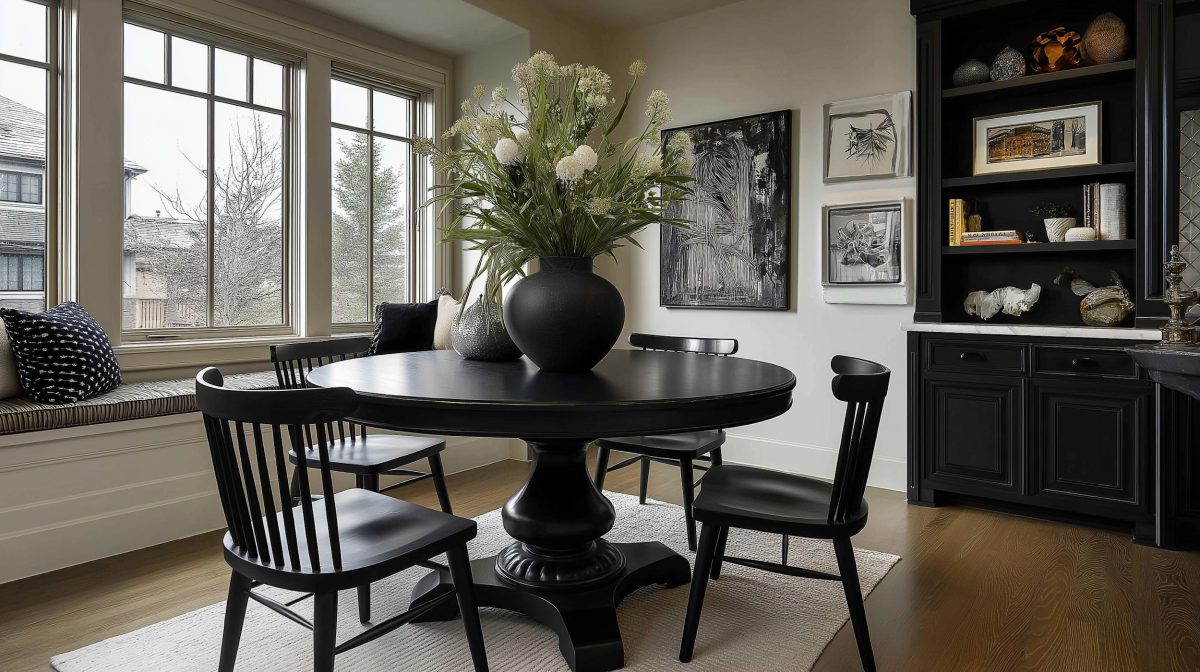
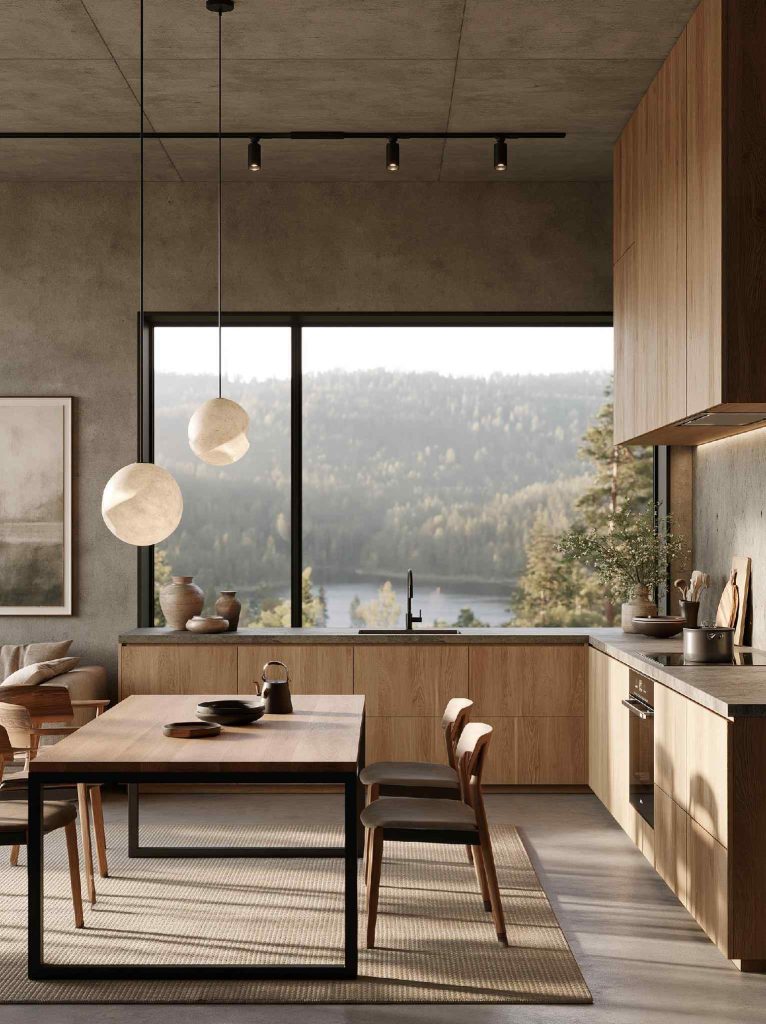
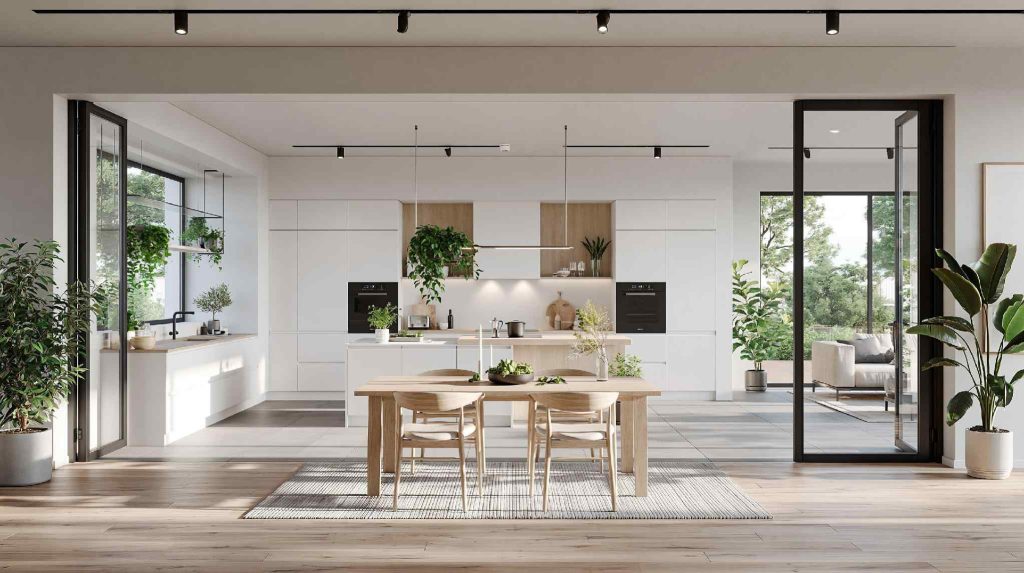
An open-plan layout with wood dining table completes this calming Japandi kitchen design.
A thoughtfully designed Japandi kitchen creates a space that’s calm, organised, and effortlessly elegant. Whether you’re inspired by a modern Japandi kitchen, looking for Japandi kitchen ideas for a compact apartment, or planning customised Japandi kitchen cabinets, focusing on simplicity and functionality ensures a timeless result.
Its timeless palette and clutter-free approach also make future updates easy, allowing you to refresh the space with small styling changes instead of major renovations. Whether your kitchen is compact or spacious, Japandi principles help create an environment that’s comfortable to cook in, easy to maintain, and enjoyable to spend time in every day.
At HomeLane, we design customised kitchens that blend beautiful aesthetics with practical storage and everyday comfort. Book a free HomeLane consultation and create a Japandi-inspired kitchen tailored to your lifestyle.
FAQs
1. What does a Japandi kitchen actually look like?
A Japandi kitchen features clean-lined cabinetry, natural wood finishes, neutral colour palettes, stone-inspired surfaces, and minimal décor. The emphasis is on functionality, simplicity, and carefully chosen materials rather than decorative details.
2. Is a Japandi style kitchen suitable for Indian homes?
Yes. A Japandi style kitchen adapts beautifully to Indian homes when combined with moisture-resistant materials, customised storage, and layouts designed around Indian cooking habits. High-quality laminates and engineered surfaces also make maintenance easy.
3. Which colours work best in a Japandi kitchen?
Warm white, ivory, greige, beige, taupe, soft grey, sage green, charcoal accents, and natural wood tones create the calm, layered palette that defines Japandi kitchen design.
4. Is Japandi better than Scandinavian kitchen design?
Both styles emphasise simplicity and functionality, but Japandi introduces stronger Japanese influences through darker wood tones, more restrained styling, and a greater focus on balance and craftsmanship. The best choice depends on the atmosphere you want to create. If you prefer warmer, calmer interiors with a greater emphasis on natural textures and mindful living, Japandi is often the better fit for modern homes.
5. Why does my Japandi kitchen feel cold?
This usually happens when there are too many white surfaces and not enough natural texture. Adding wood finishes, warm lighting, woven accessories, indoor plants, and soft neutral tones helps create the warmth that makes Japandi interiors feel welcoming rather than stark.









 EXPLORE MORE