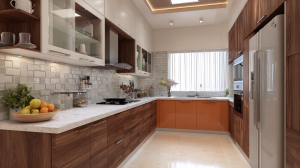
Select waterproof cabinet materials like BWP plywood, HDHMR, or PVC to prevent moisture damage and ensure lasting kitchen durability.
Key Insights:
What You'll Read Here:
BWP plywood, HDHMR, and PVC are top waterproof options for kitchen cabinets, offering durability against humidity and spills.
Prioritise moisture resistance over appearance for cabinets, as performance is key to longevity in kitchens.
Budget, usage zones, and long-term maintenance should guide your material choice for the best kitchen cabinet investment.
HOMELANE EXPERT TIPBy our design team
For Indian kitchens prone to humidity, opt for BWP plywood or HDHMR boards for their superior moisture resistance and long-term performance.
Summary
Kitchens deal with moisture every single day, steam from cooking, spills near the sink, and humidity that builds up over time. Choosing the right waterproof materials for kitchen cabinets helps prevent swelling, warping, and long-term damage. It also keeps your kitchen looking and functioning well for years.
Best for
Indian kitchens where exposure to water, oil, and humidity is common. Especially useful if you want cabinets that last with minimal maintenance.
Expert tip
Focus on moisture resistance, not just appearance. The right material may not always look different, but it performs much better over time.
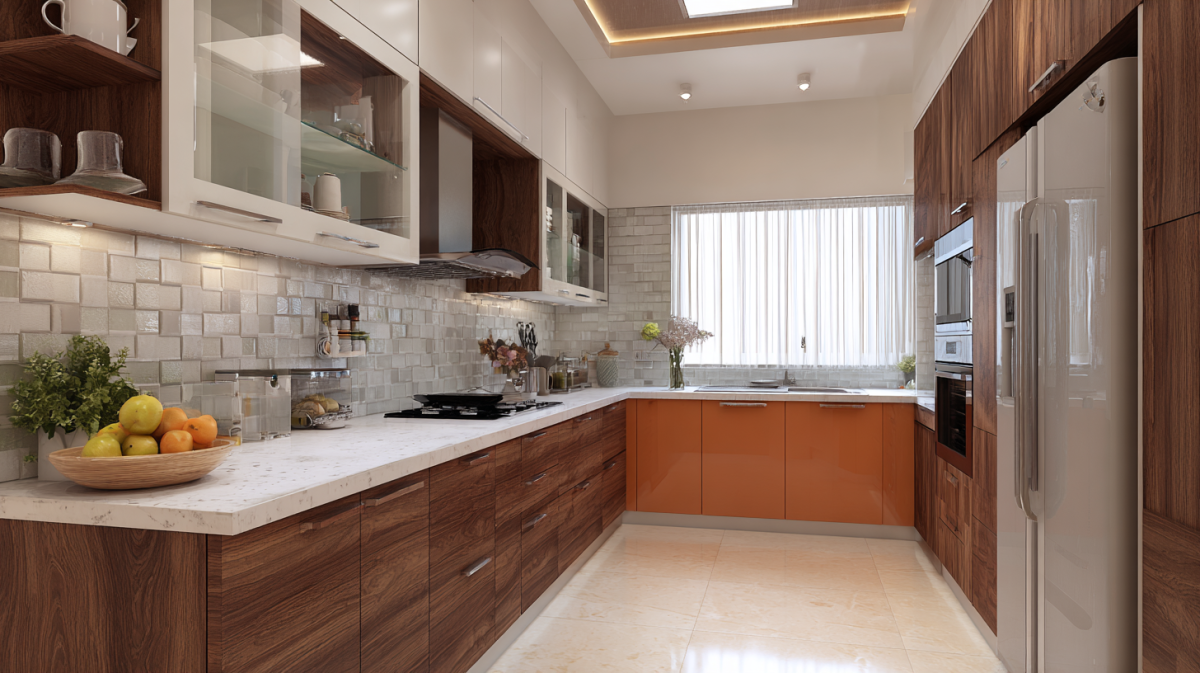
Wooden kitchen cabinets that need moisture-resistant materials to stay durable long-term.
Water is a constant in every single kitchen! Even if you are careful, water exposure is unavoidable. From daily cooking to quick clean-ups, it is always present in some form or the other. And while you may not notice it right away, that exposure adds up over time. Cabinets that are not built for moisture start showing signs sooner than expected.
That is where choosing the right moisture resistant kitchen cabinets becomes important, not just for durability, but for peace of mind. Read on to know all about the best waterproof materials for kitchen cupboards, including usage, types and more.
Why Waterproof Materials Matter in Kitchen Cabinets
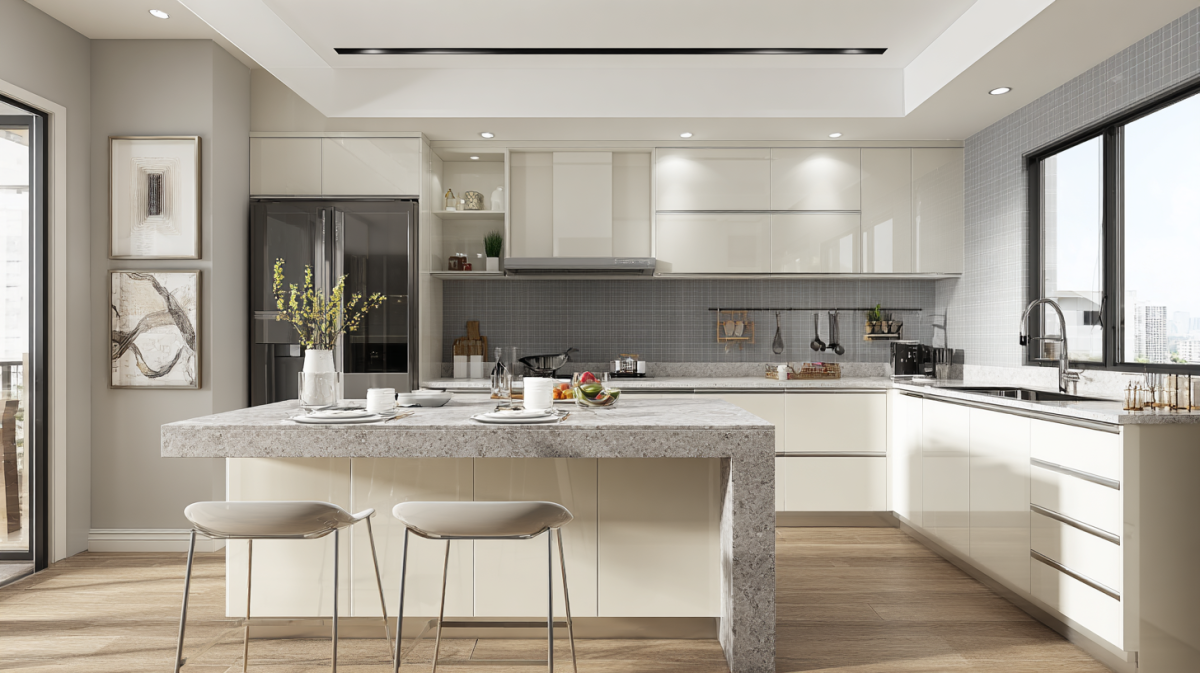
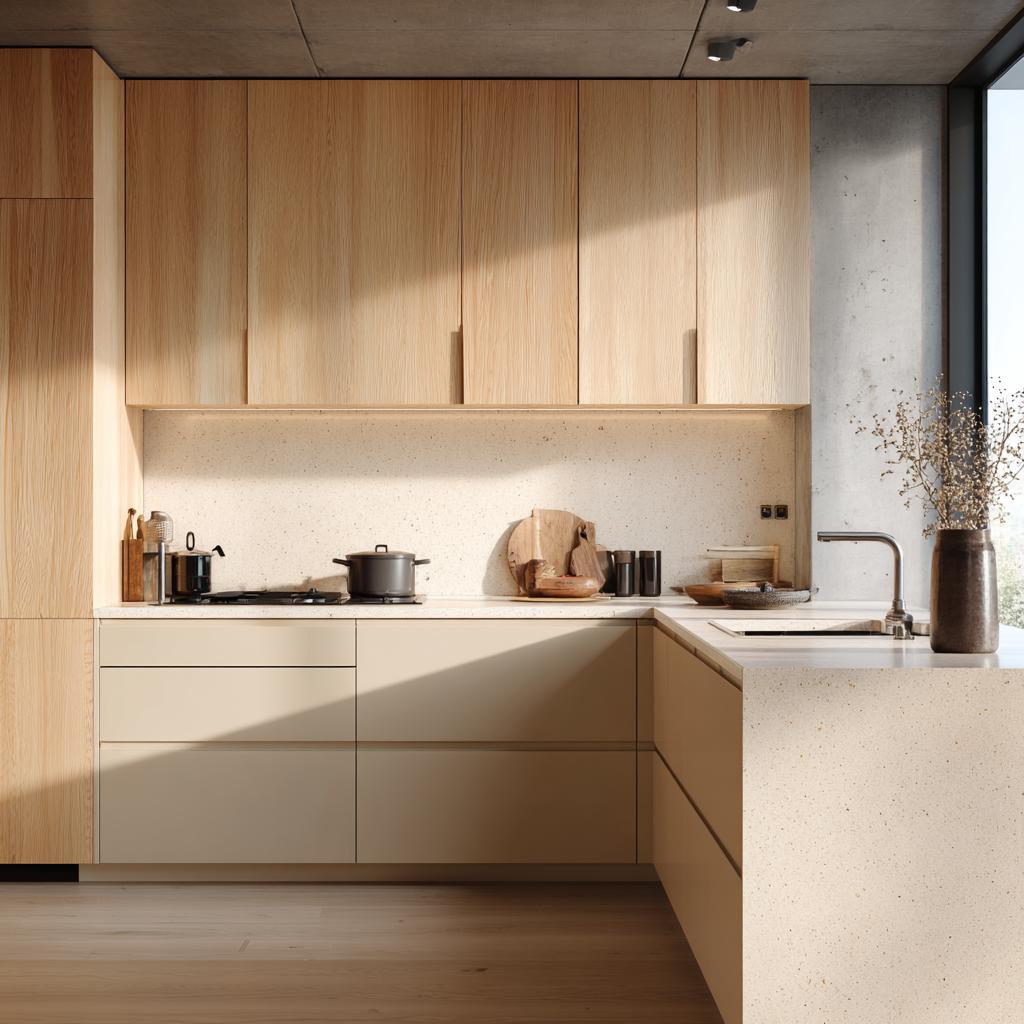
A modern kitchen showcasing flat-panel cabinets built with waterproof board materials.
Without proper materials, cabinets can absorb water and weaken over time. This affects both durability and appearance; something you certainly don’t want! This is why moisture resistant kitchen cabinets are essential. They prevent damage caused by spills, steam, and daily use.
Choosing the right material ensures your kitchen stays strong and easy to maintain. Your kitchen will also continue looking good over the years, as the original look and finishes are retained.
Top Waterproof Materials for Kitchen Cabinets
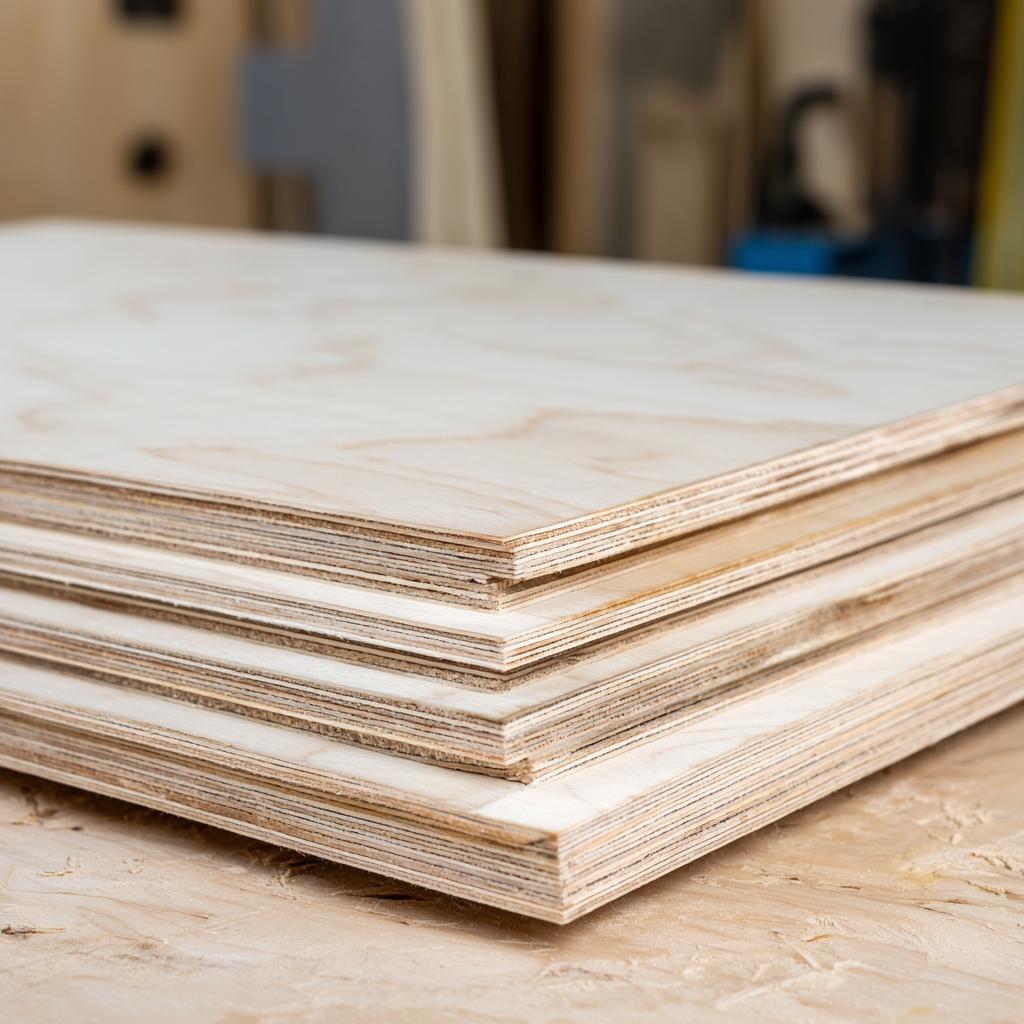
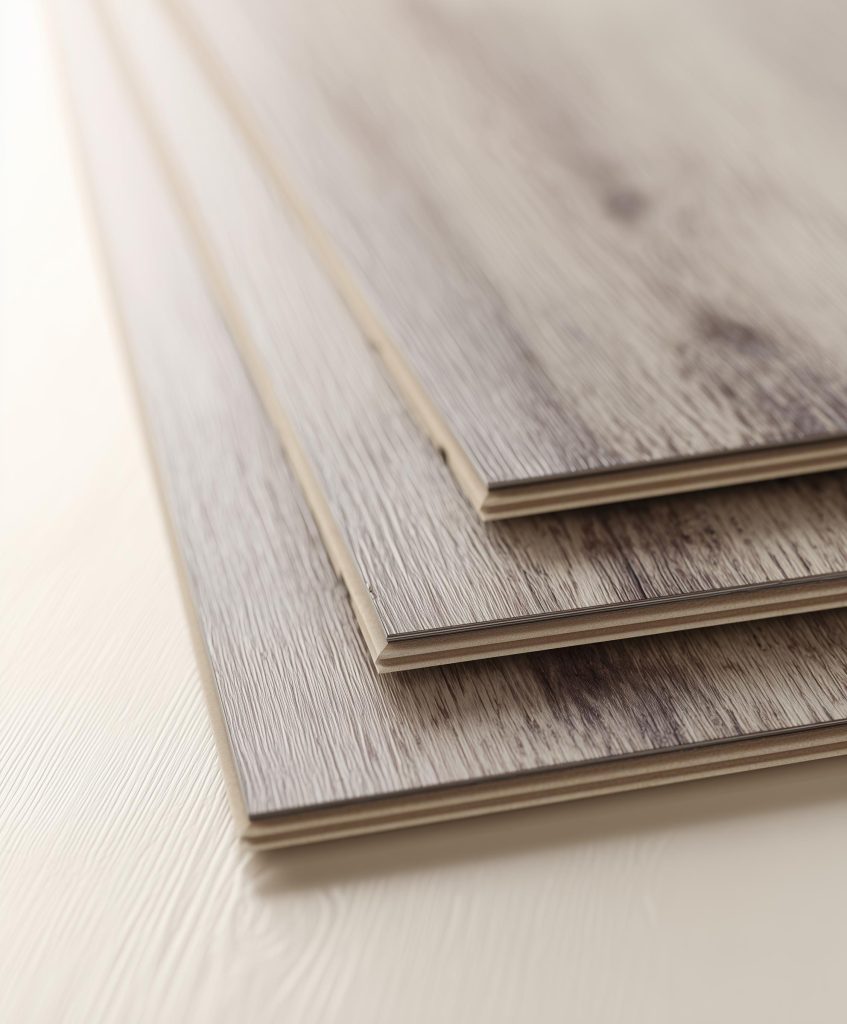
BWP plywood sheets — one of the most durable waterproof materials for kitchen cabinets.
Not all materials handle moisture equally. Here are some of the most reliable options:
BWP Plywood (Boiling Water Proof) Highly durable and one of the best choices for Indian kitchens. It handles water exposure well and lasts for years.
HDHMR (High-Density High Moisture Resistant Board) A modern alternative with good resistance to humidity and a smooth finish.
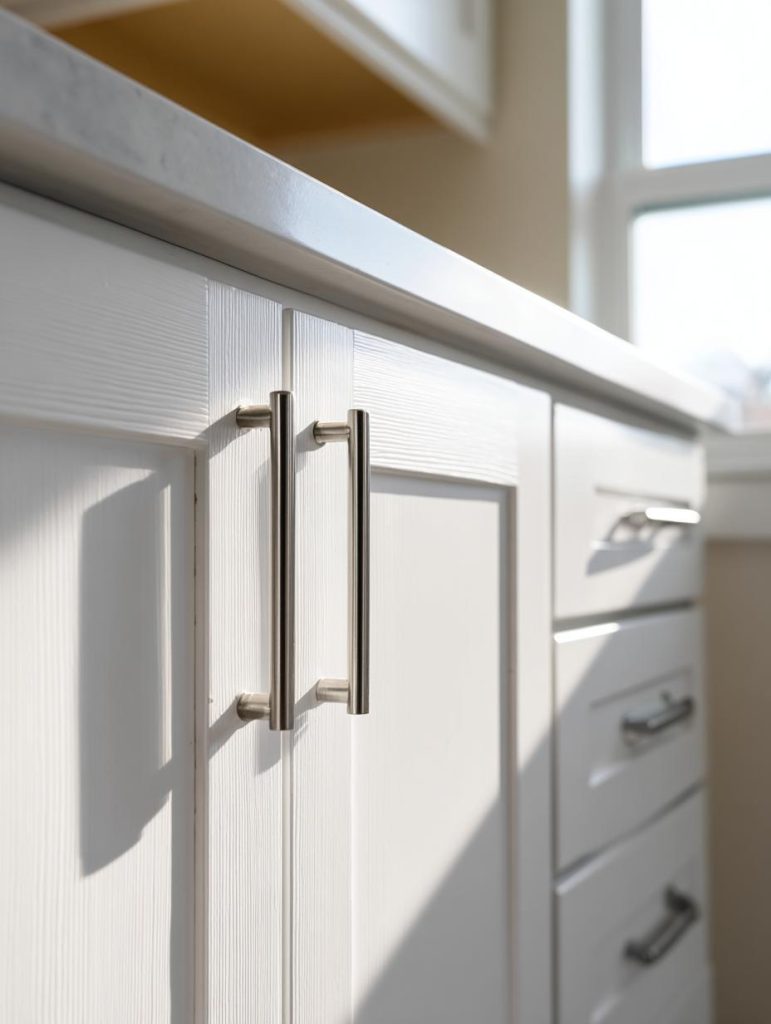
PVC Boards Lightweight and completely water-resistant. These are often used in areas with high moisture exposure.
Marine Ply Designed for extreme moisture conditions, though slightly more expensive.
Each of these materials works differently. The right choice depends on usage, budget, and exposure to water. You can also try mixing materials for different zones, and this will give you the best of both worlds: performance and costs!
Plywood vs MDF vs PVC: Which Is Best?
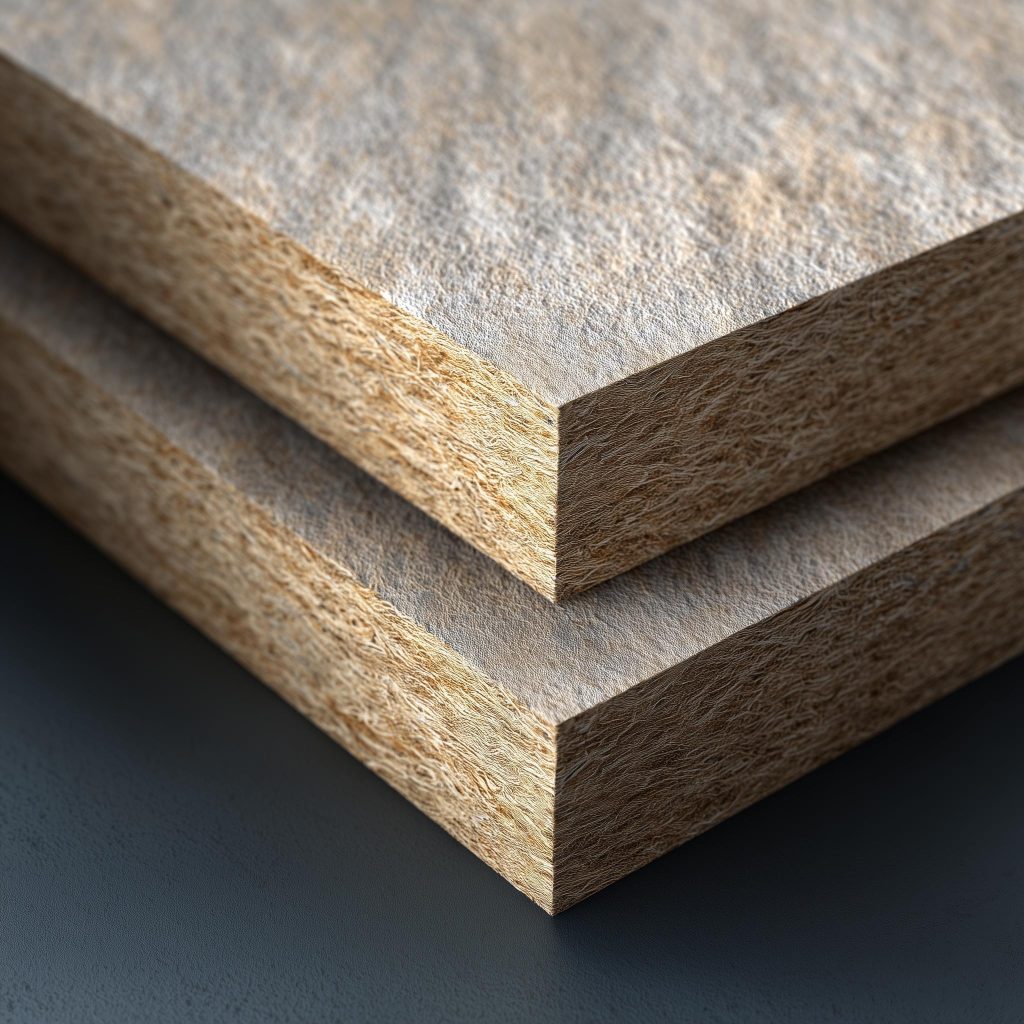
Comparing MDF and plywood boards to choose the best moisture-resistant kitchen cabinet material.
This is one of the most common comparisons in kitchen cabinet material comparison. Plywood is strong, durable, and moisture-resistant. It works well for most kitchens. MDF is smoother and more affordable but not as resistant to water. It is better suited for dry areas. PVC is fully waterproof and low-maintenance, but may not have the same strength as plywood.
When comparing plywood vs MDF for kitchen cabinets, plywood is usually the better long-term option for Indian kitchens. PVC works well in specific areas like under-sink cabinets. MDF can still be used for upper cabinets where moisture exposure is limited. Choosing materials based on usage always gives better results.
How to Choose the Right Waterproof Material for Your Kitchen
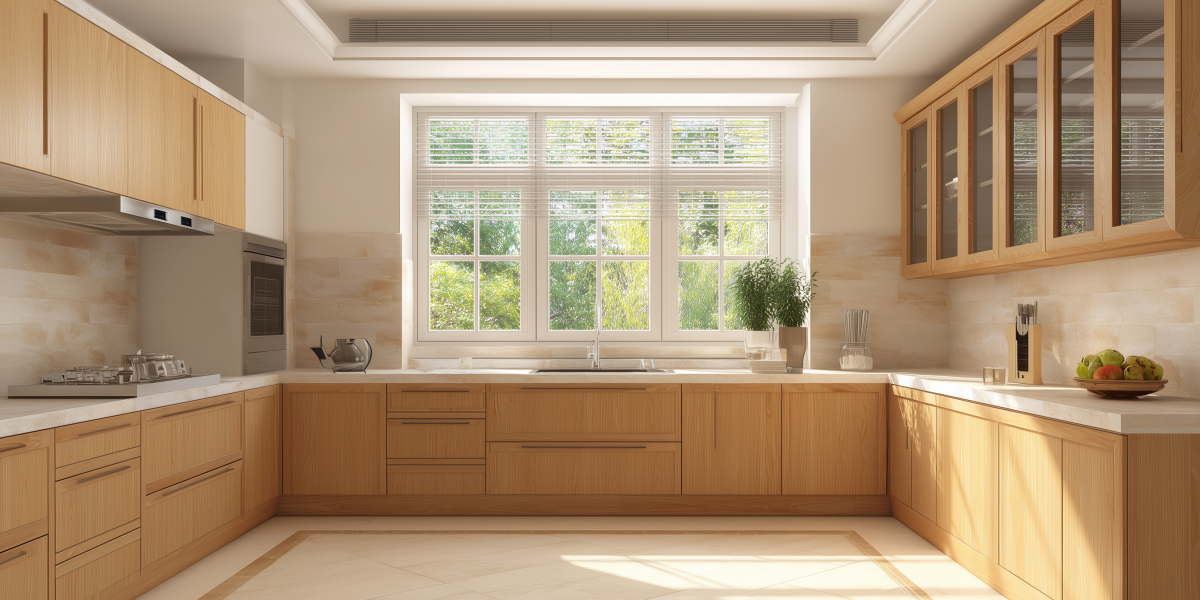
PVC kitchen cabinet doors offer full waterproofing and easy maintenance for humid kitchens.
Start with usage. Areas near the sink need higher water resistance. Areas near the cooktop also are prone to spills and steam, and need to be resilient to water exposure.
Next, consider durability. If your kitchen sees heavy use, go for stronger materials like plywood or HDHMR. And of course, the budget is also important. While premium materials cost more upfront, they reduce maintenance later. Choosing the right material for kitchen cabinets is about balancing cost, durability, and daily use. It is also important to think long term. A slightly higher investment now can save you from repairs later.
Common Mistakes to Avoid When Selecting Cabinet Materials
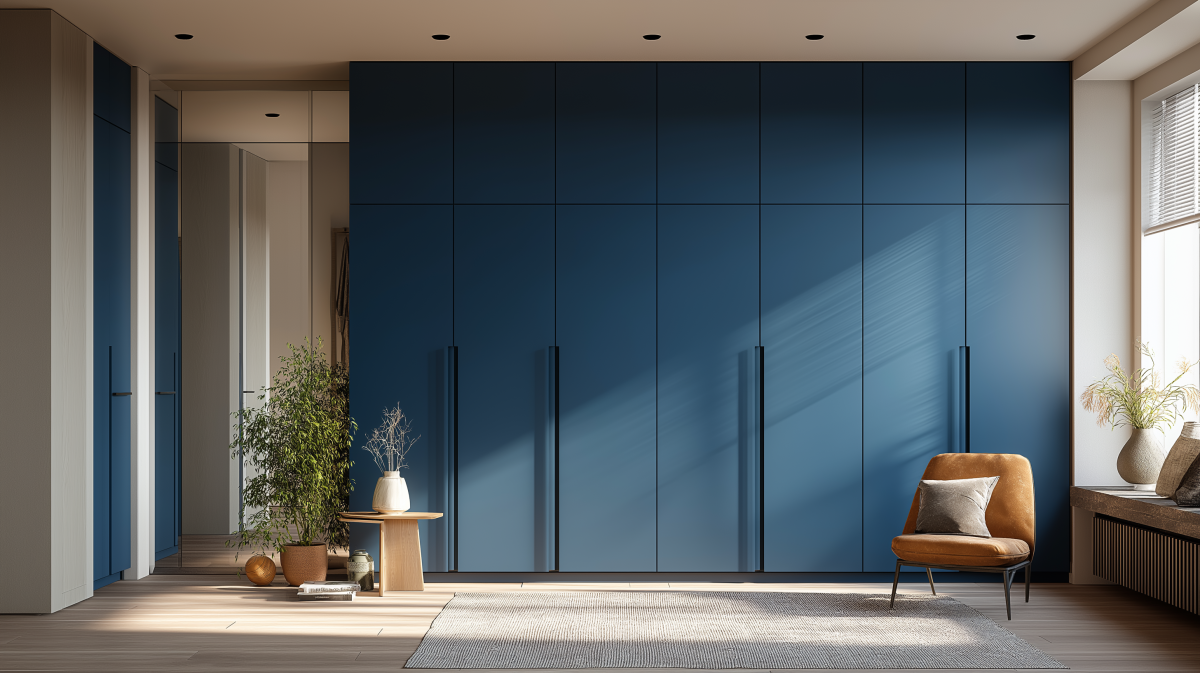
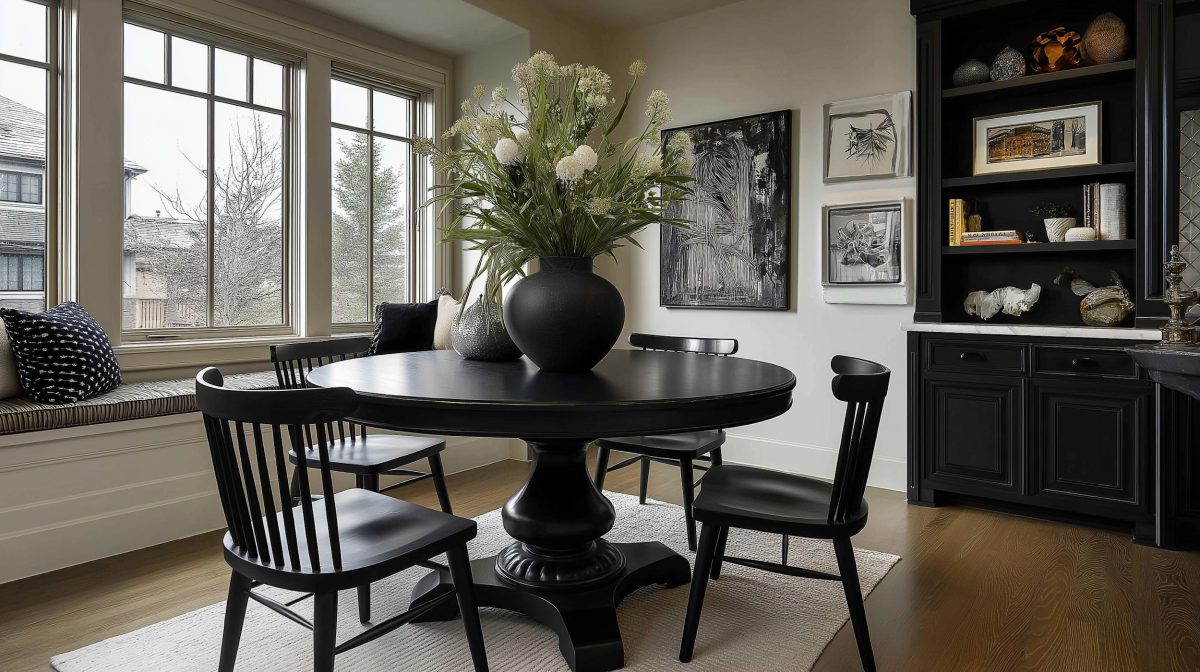
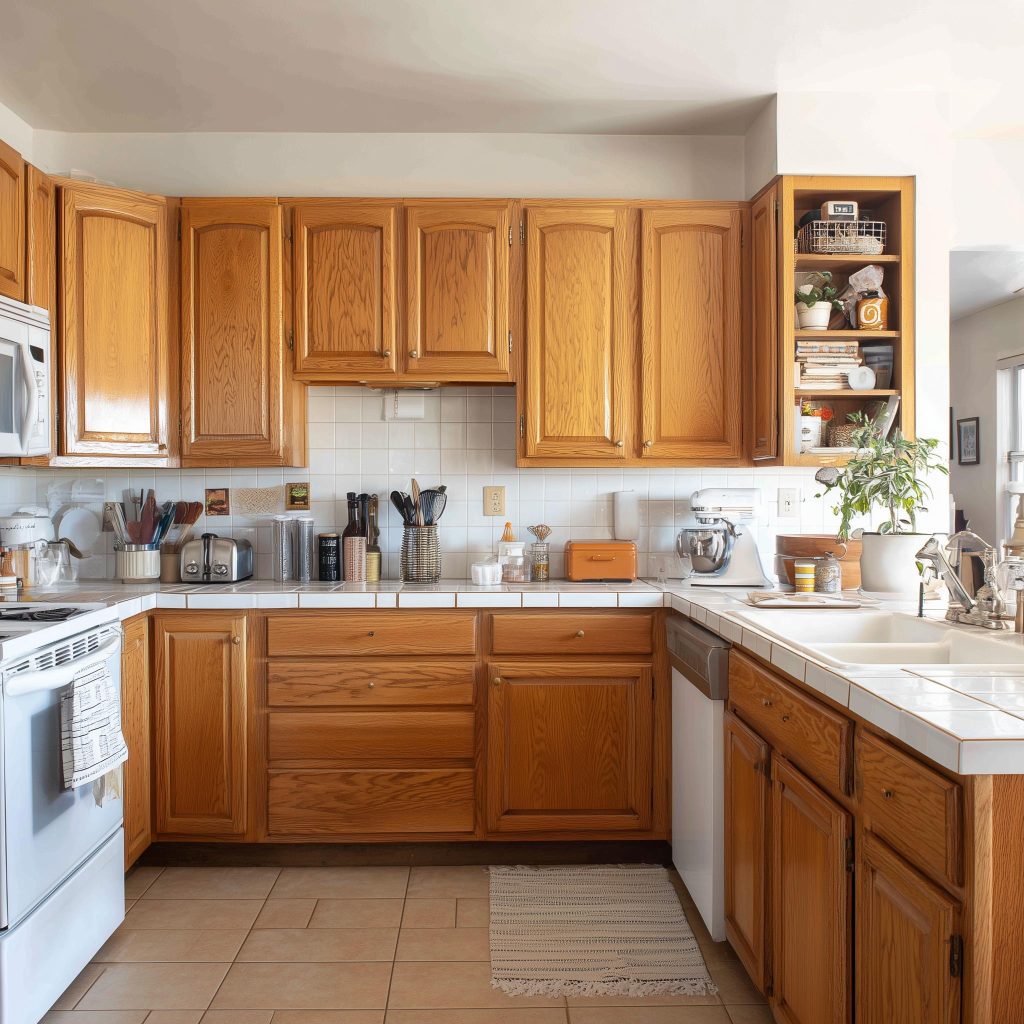
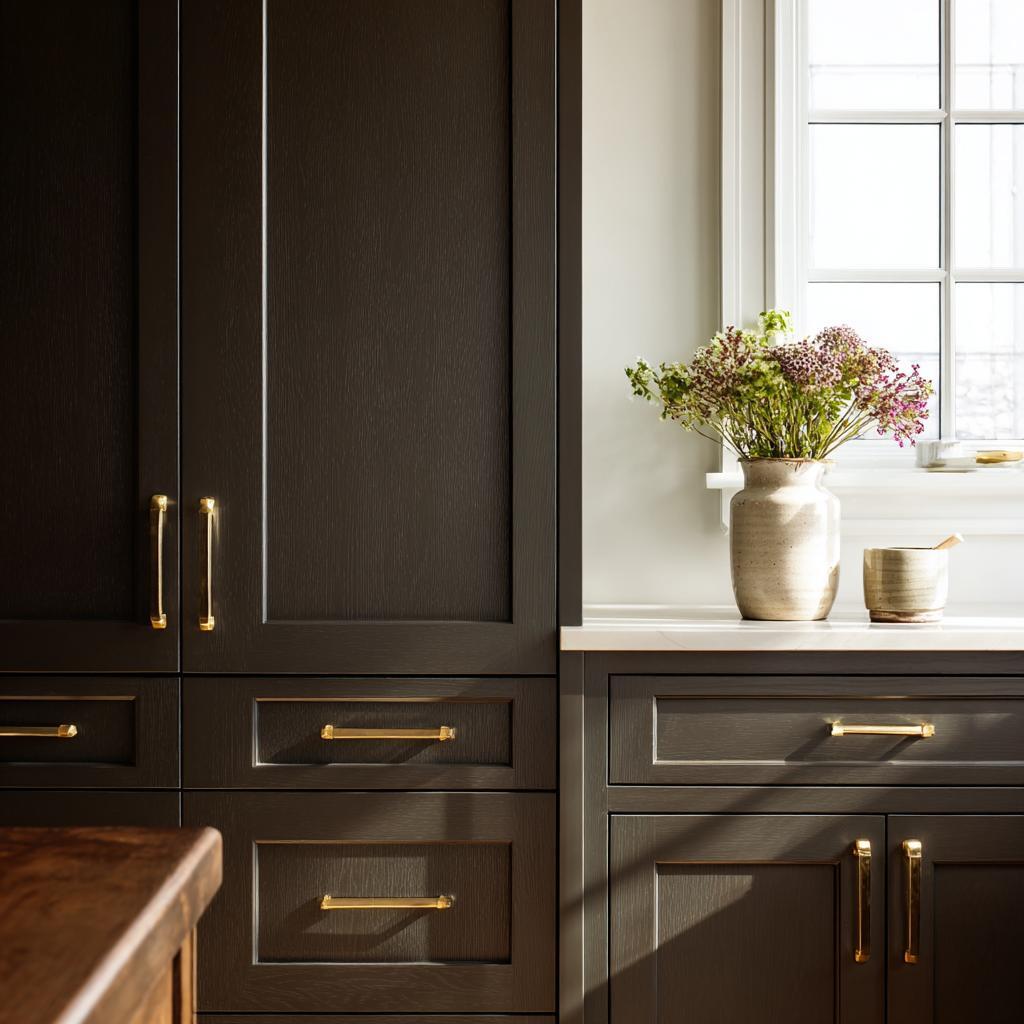
Dark-finish kitchen cabinets that highlight why choosing the right material impacts longevity.
One common mistake is choosing based only on price. Cheaper materials may not last in moisture-heavy environments. Another mistake is ignoring usage zones. Not all cabinets need the same level of protection. You can use waterproof boards near the sink and stove, and less premium materials in the lofts or for other cabinets.
Overlooking finishes is also an issue. Even good materials need proper finishing to perform well. All exposed edges of plywood, MDF and HDHMR must be well-sealed to prevent the entry of moisture. Always remember: small oversights here can lead to bigger problems later. Poor installation can also affect performance. It is important to ensure both material and workmanship are reliable.
A Kitchen That Stays Strong Over Time
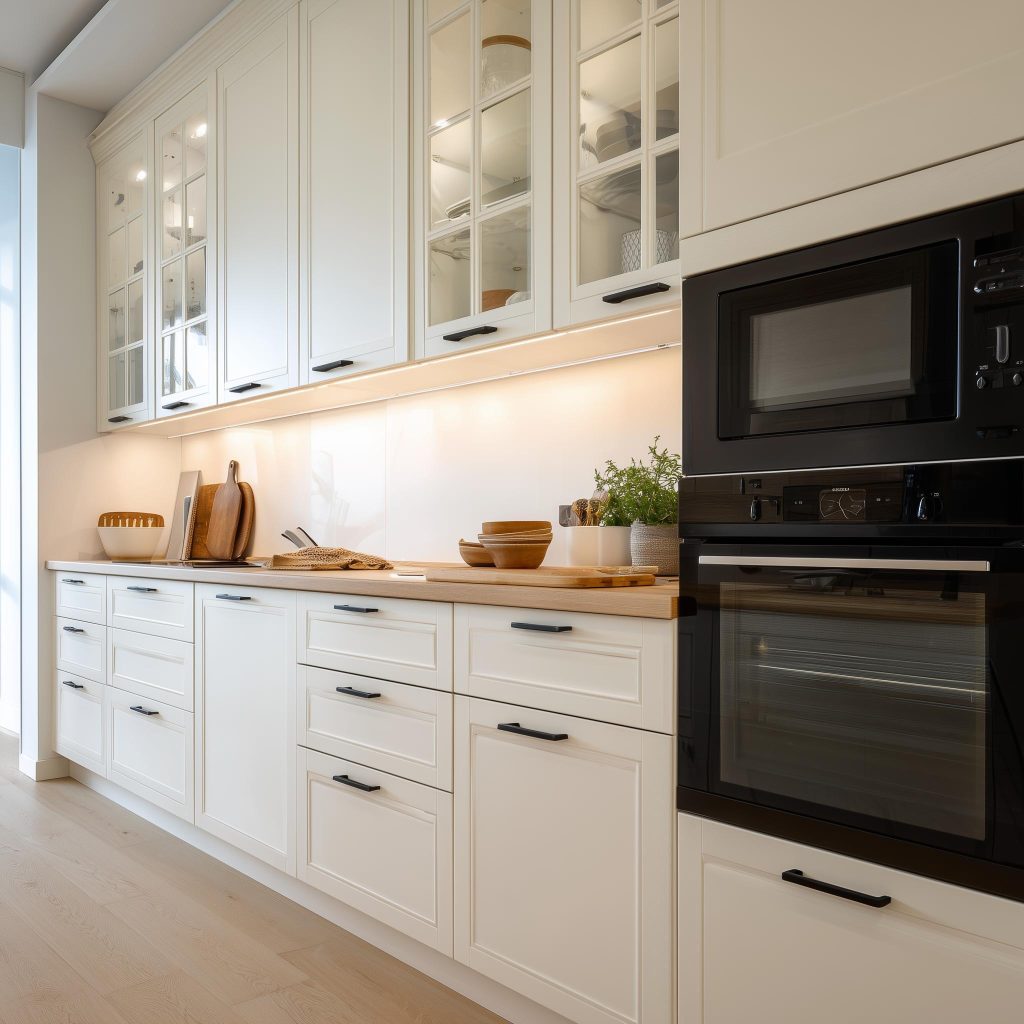
White shaker cabinets paired with waterproof materials for a durable, low-maintenance Indian kitchen.
Cabinet materials are not just about structure. They decide how your kitchen holds up over time.
Choosing the right waterproof materials for kitchen cabinets ensures durability, easier maintenance, and better performance. It also improves your everyday kitchen experience. You spend less time worrying about damage and more time using the space. And if you want help picking materials that truly work for your space, HomeLane designers can guide you through options that look good and last even longer.
FAQs
1. What is the best waterproof material for kitchen cabinets?
PVC is considered fully waterproof, making it a good pick for high-moisture areas. However, materials like BWP plywood also offer strong water resistance with better durability. The best choice depends on where the cabinet is used. A mix of materials often works best.
2. Is plywood better than MDF for kitchen cabinets?
Yes, plywood is considered to be better because it is stronger and more moisture-resistant. MDF is smoother and more affordable but does not handle water as well. For Indian kitchens, plywood is usually the safer long-term choice. It performs better in humid conditions.
3. Are PVC kitchen cabinets fully waterproof?
Yes, PVC cabinets are completely water-resistant and do not absorb moisture at all. They are a good choice for areas like under the sink. However, they may not be as strong as plywood, and they also don’t look as good! Choosing the right application is important.
4. Which material is best for Indian kitchen conditions?
BWP (boiling waterproof) plywood is often the best choice due to its durability and moisture resistance. It is also the costliest, with the exception of solid wood. HDHMR (high density high moisture-resistant) boards are also a strong alternative. These materials are able to handle humidity and daily wear and tear. They offer a good balance between cost and performance.
5. How can I protect kitchen cabinets from moisture?
Use well-sealed finishes, keep the kitchen well ventilated, and wipe spills right away without allowing them to settle in! Installing a chimney or exhaust helps reduce the humidity in the air. Regular maintenance also keeps your cabinets in good condition. Small habits can extend their lifespan significantly.













 EXPLORE MORE