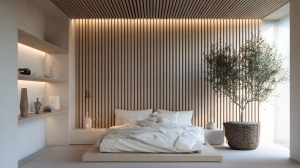
Bedroom curtain ideas span nine styles, from sheer and layered to geometric and smart, balancing light, privacy, and room aesthetics for diverse home designs.
Key Insights:
What You'll Read Here:
- Layered curtains offer dual benefits of light control and privacy, adaptable to various colour palettes.
- Floor-to-ceiling drapes visually enhance room height, providing excellent light and noise blockage.
- Patterned and geometric curtains add depth and personality to neutral spaces without overwhelming them.
HOMELANE EXPERT TIP By our design team
Consider layered curtains with a sheer base and a solid outer layer to achieve both diffused daylight and complete nighttime privacy.
Curtains may be one of the last things you choose for a bedroom, but they have an impressive amount of influence over how the finished room feels. Get them right, and the window looks taller, the colours come together and you can actually sleep past sunrise. Get them wrong, and even a beautifully designed bedroom can feel slightly unfinished.

The best bedroom curtain ideas therefore begin with function. Decide what you need for privacy, darkness and heat control before falling for a gorgeous fabric. Once those practical boxes are ticked, you can have much more fun with colour, texture and style.
What Are the Main Bedroom Curtain Styles, and Which One Fits Your Window?
Among the most versatile bedroom curtain styles are pinch pleat, pencil pleat, eyelet and wave curtains. Each creates a slightly different effect.

Wave curtains have soft, even folds and work well in contemporary bedrooms. Pinch pleats are more tailored and suit classic interiors, while eyelet curtains are straightforward and relatively informal.
Curtain length matters just as much. Curtains that stop awkwardly a few centimetres above the floor can look accidental. For most full-length bedroom windows, curtains that just touch or hover slightly above the floor create a neat finish. A slight puddle looks luxurious but is less convenient for everyday cleaning.
Among current bedroom curtain design ideas, full-height curtains are particularly effective because they emphasise the room’s vertical proportions. Explore our guide on bedroom interior design trends for 2026 for more ways to update your space.
Bedroom Curtain Colour Combinations That Actually Work with Your Wall and Furniture
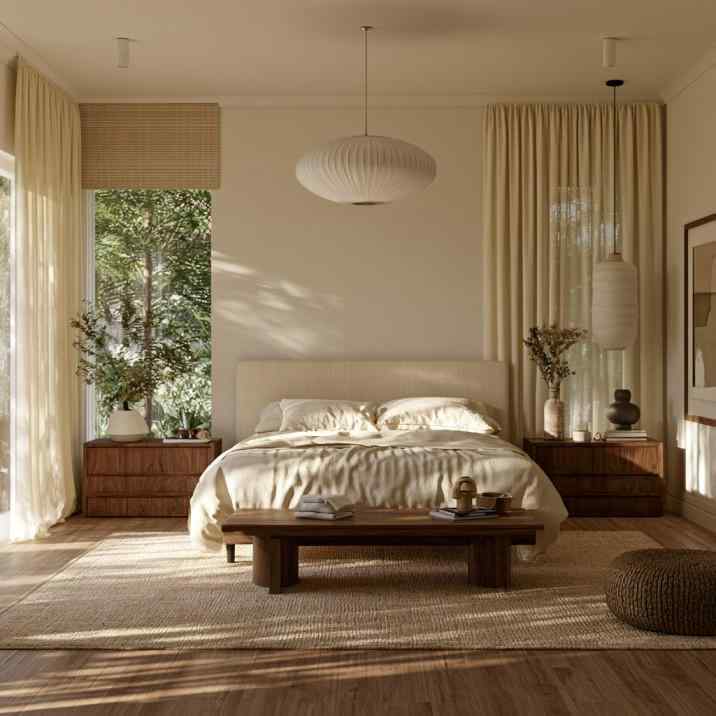
Your curtains don’t need to match the wall colour. In fact, a slight variation often creates a more layered interior.

For a quiet bedroom, choose curtains one or two tones darker or lighter than the walls. Beige walls with oatmeal curtains, for instance, create gentle contrast without breaking up the room visually.
Some dependable bedroom curtain colour combinations include:
| Wall Colour | Curtain Colour | Overall Effect |
| Warm white | Beige, sage or taupe | Soft and natural |
| Beige | Cream, olive or rust | Warm and layered |
| Pale grey | Charcoal, dusty blue or off-white | Contemporary |
| Sage green | Cream, beige or muted pink | Gentle and restful |
| Navy | Ivory, stone or warm grey | Dramatic but balanced |

Patterned curtains work best when the bedroom’s other large surfaces are relatively restrained. If you already have patterned wallpaper, decorative bedding and a strongly grained wardrobe, plain curtains may give the eye somewhere to rest.
Our guide to what makes a bedroom feel relaxing offers further ideas for creating a more restful overall scheme.
Curtains With Blinds: When to Combine Them and How to Layer Correctly

Some of the most practical bedroom curtain ideas with blinds use each layer for a different job. The blind handles privacy or light control close to the window, while curtains soften the room and provide additional darkness.
Roman blinds paired with floor-length curtains create a tailored appearance. Roller blinds are more discreet and work well behind simple contemporary curtains. Blackout blinds can also sit behind decorative curtains when sleep quality is the priority.
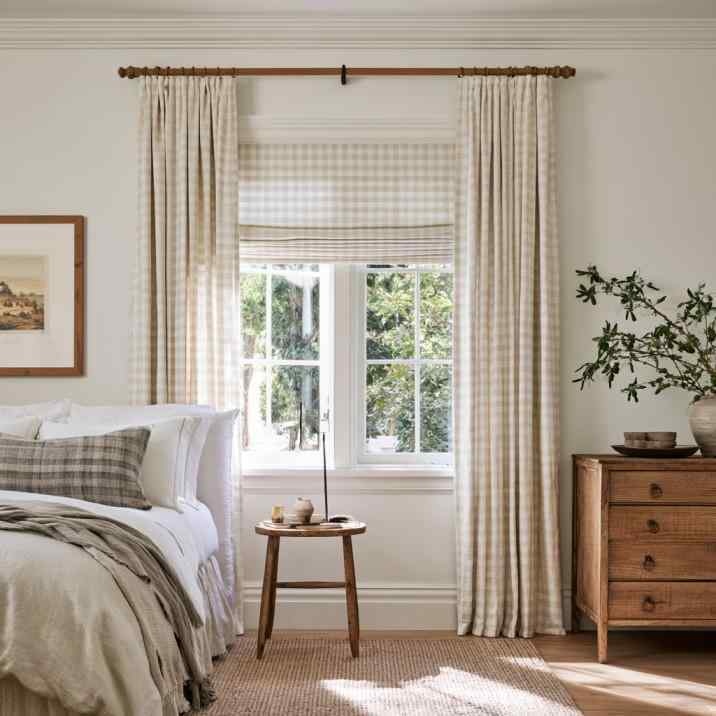
Make sure the two treatments don’t compete. If the blind has a strong print, keep the curtains relatively plain. If the curtains are the decorative feature, choose a visually quieter blind.
Layering can also work well when you prefer a darker bedroom scheme. Our blog on dark bedroom ideas show how deeper colours can be balanced without making the room feel gloomy.
Which Bedroom Curtain Ideas Work Best for Small Rooms?

The strongest bedroom curtain ideas for small rooms are usually the simplest. Mount curtains close to the ceiling and extend the rod beyond the sides of the window. This exposes more glass when the curtains are open and can make both the window and wall appear larger.
Light to mid-tone fabrics prevent the window treatment from becoming visually heavy. Warm white, beige, greige, soft sage and dusty blue are easy choices.
Avoid bulky pelmets, oversized patterns and large quantities of fabric in a very tight bedroom. If furniture sits close to the window, a Roman or roller blind may be more practical than voluminous drapes.
What Should You Check Before Buying Bedroom Curtains?
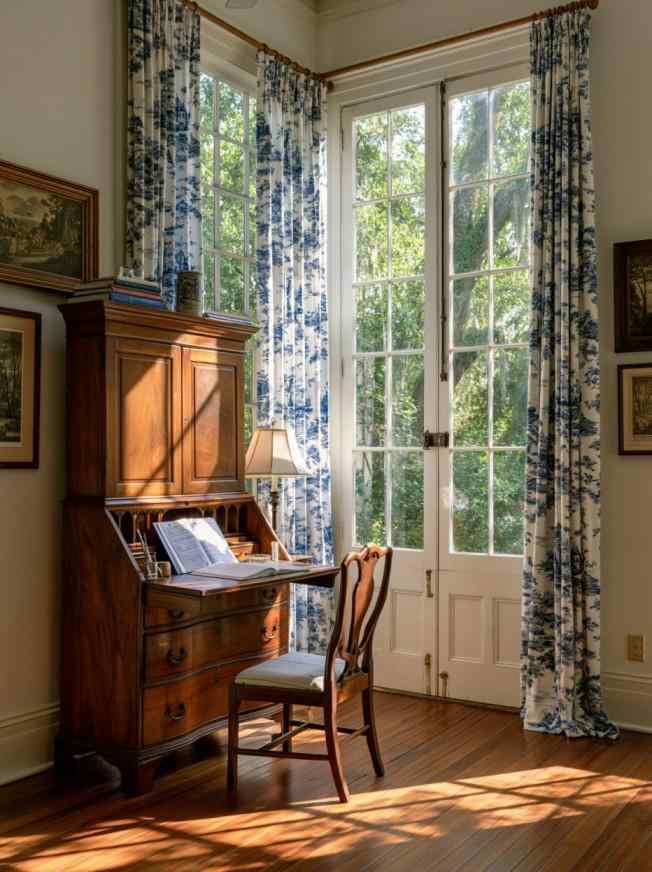
Measure carefully and don’t rely only on the dimensions of the window. Decide where the track or rod will sit and where you want the curtains to finish before calculating fabric.
Check how much sunlight reaches the window as well. Strong direct sunlight can fade certain fabrics over time, making lining particularly useful.
Think about maintenance before choosing delicate textiles. Washable fabrics may be more practical in dusty locations, while heavier curtains may require professional cleaning.
Finally, consider fullness. Curtains need enough fabric to create attractive folds when closed. Buying panels that only just equal the width of the window can leave them looking stretched and skimpy, not soft and generous.
Dress Your Windows, Finish Your Bedroom!

Good bedroom curtain ideas aren’t simply about finding a fabric that matches the bedspread. Curtains control privacy, daylight and darkness while influencing the apparent height, width and softness of the room.
HomeLane designers can help coordinate curtains with wardrobes, furniture, lighting and your overall bedroom palette. Book a free consultation and give your bedroom windows the finishing touch they deserve!
FAQs
1. What style of curtain is best for a bedroom?
Floor-length curtains with wave or pinch-pleat headings are versatile choices. The best style depends on whether your bedroom is contemporary, traditional or relaxed and informal.
2. What is the best curtain for a bedroom?
Lined or blackout curtains are practical when darkness and privacy matter. Layer them with sheers if you also want filtered daylight and daytime privacy.
3. What are some good ideas for bedroom curtains?
Try floor-to-ceiling curtains, layered sheers and blackout drapes, curtains paired with Roman blinds, or tonal curtains that are slightly lighter or darker than the walls.
4. What is the latest trend for curtains?
Full-height curtains, natural-looking textures, warm neutrals, earthy shades and softly structured wave curtains suit current interiors. Layered window treatments also remain practical and stylish.
5. Should bedroom curtains be blackout or sheer?
Ideally, combine both if the room allows. Sheers provide diffused daylight and daytime privacy, while blackout curtains help create a darker environment for sleeping.
6. How do I choose the right curtain fabric for my bedroom?
Consider light control, climate, maintenance and the desired look. Cotton blends are versatile, linen-look fabrics feel relaxed, while velvet and lined fabrics create a heavier, more luxurious effect.
7. Should bedroom curtains match the wall colour?
Not exactly. Choosing curtains slightly lighter or darker than the walls creates subtle depth, while a contrasting colour can turn the window into a stronger feature.
8. What curtains make a small bedroom look bigger?
Use light-coloured, full-length curtains mounted high and wider than the window. Simple fabrics and vertical folds help emphasise height without visually crowding the room.
9. Can I use curtains with blinds in a bedroom?
Yes. It’s an excellent combination for flexible light control and privacy. Keep one layer visually simple so the curtains and blinds complement rather than compete with each other.




















 EXPLORE MORE