Living Room Paint Ideas for a Stylish, Welcoming Space for Every Interior Style
By Usha Balasubramanyan- January 02, 2026
AI Summary
3 key insights · 1 expert tip
Explore harmonious living room paint ideas, from understanding colour psychology and schemes to choosing palettes that reflect light and create desired moods.
Key Insights:
What You'll Read Here:
Cool tones like blues and greens promote relaxation, while warm tones of yellows and oranges create an energetic atmosphere.
Neutral shades offer versatility, creating a sophisticated look and enhancing the feeling of spaciousness in any living room.
Consider nature-inspired palettes, complementary or analogous schemes, and layering textures for a balanced and visually appealing space.
HOMELANE EXPERT TIPBy our design team
Test paint swatches directly on your living room walls to observe their appearance in various lighting conditions before making a final decision.
The living room has a lot of personalities to please. It hosts lazy Sundays, unexpected visitors, family gatherings and perhaps the occasional work call. Its walls need to provide a backdrop for all of it.
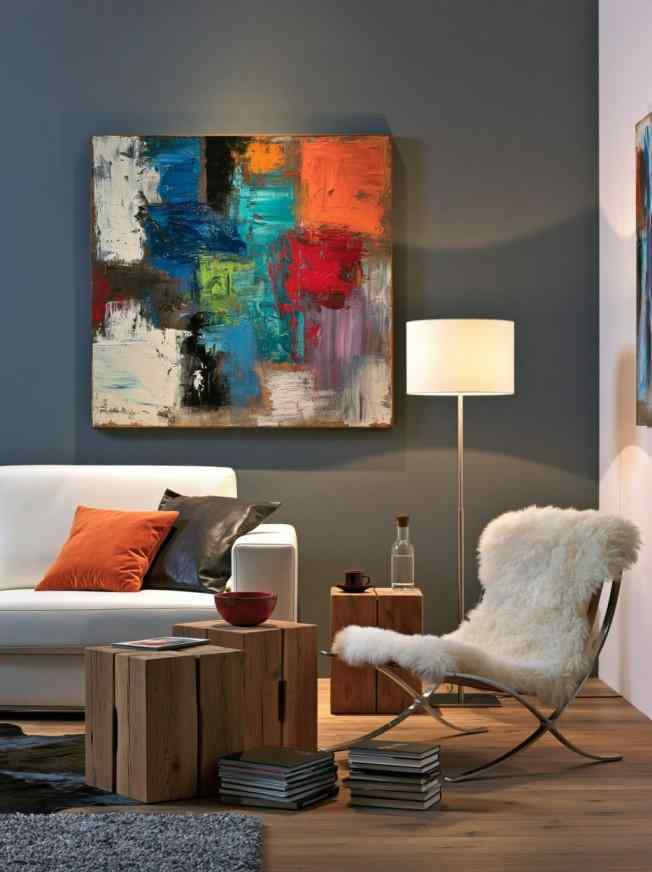
A slate grey wall lets bold abstract art and orange accents stand out in this living room.
Luckily, changing the paint is one of the easiest ways to give the room a completely different mood! The best living room paint ideas aren’t necessarily the boldest ones. They’re colours that flatter the light, work with your furniture and make the room feel inviting from morning to evening.
Which Living Room Paint Ideas Work Best for Different Spaces?
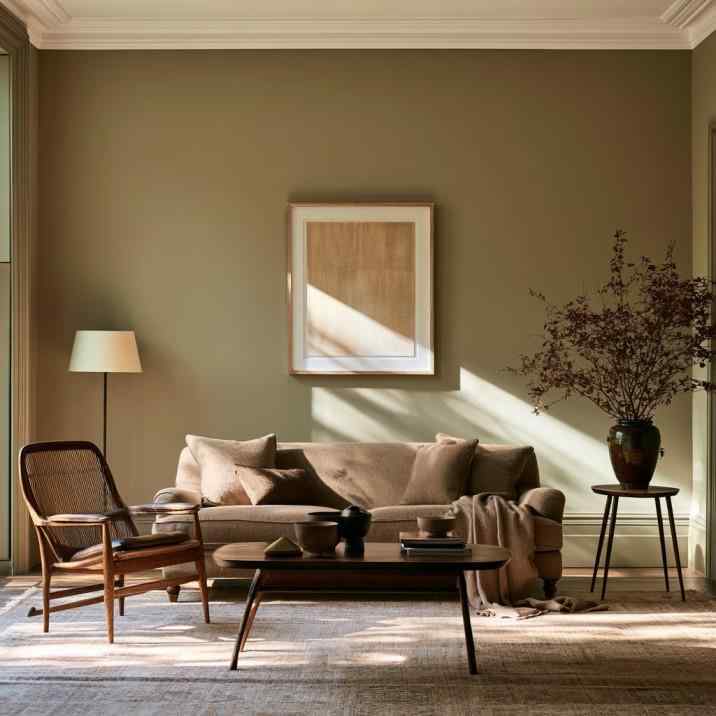
Olive green walls bring earthy warmth to timber furniture and a soft beige sofa.
Start with how you want the room to feel!
Warm white, oatmeal, beige and greige are easy-going choices for relaxed contemporary interiors. They also give artwork, colourful cushions and timber furniture plenty of room to shine.
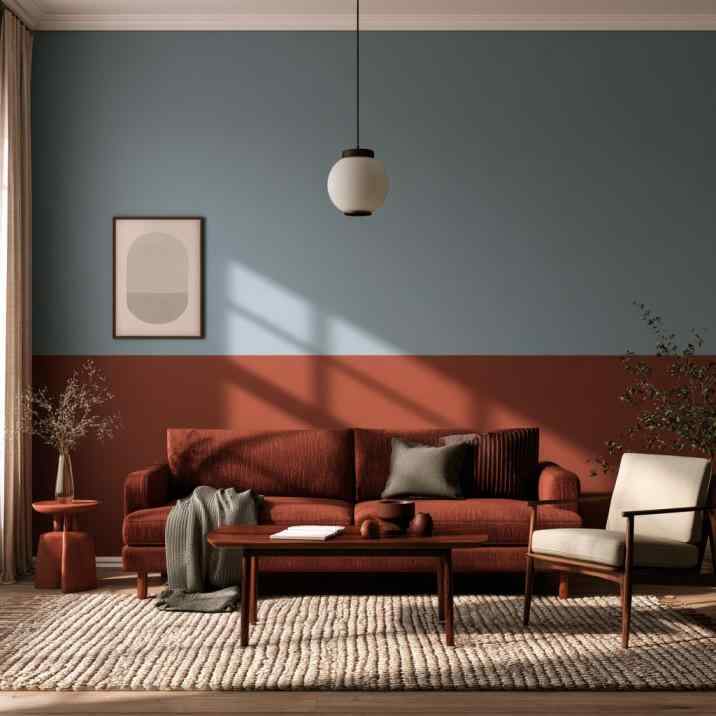
A dusty blue and terracotta split wall creates a warm, grounded two-colour living room.
If you’re after something with more personality, sage, olive, dusty blue and muted terracotta introduce colour without taking over the room. Deeper living room paint colours, such as forest green, burgundy, chocolate or navy, can create a wonderfully enveloping effect in larger spaces.
For a minimalist home, try warm white, mushroom or taupe. Modern Indian interiors can comfortably carry earthy greens, ochres and terracotta alongside timber, cane and patterned textiles. For a more luxurious setting, deep jewel-inspired colours paired with warm neutrals can add richness.
And if you’re still confused, our blog on living room colour combinations offers more inspiration across different interior styles!
How to Pick a Wall Colour Based on Your Room’s Light and Size
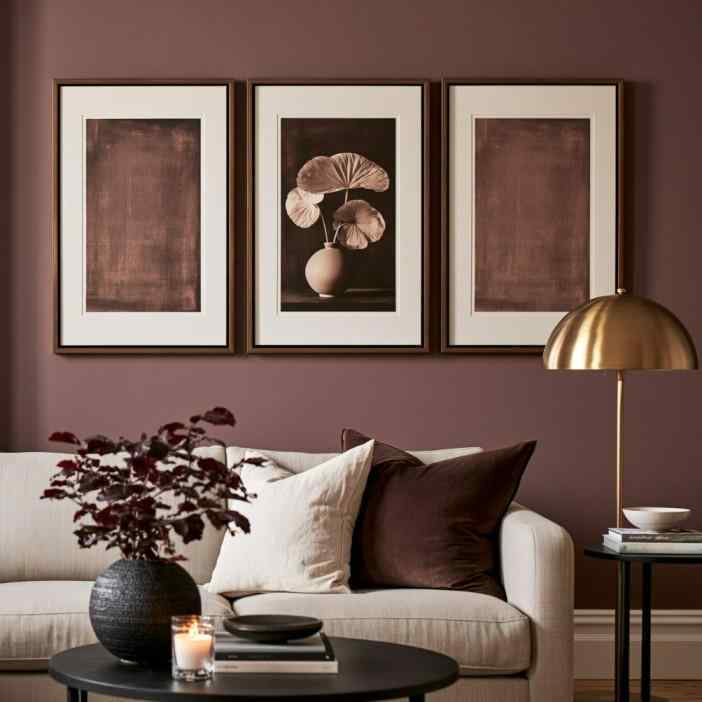
A muted mauve wall adds rich depth behind cream upholstery and a warm brass lamp.
Here’s where that gorgeous shade on your Pinterest screen has to face reality!
A colour can change dramatically depending on the light falling on it. Rooms with plenty of daylight can usually handle deeper or more saturated colours. In darker living rooms, warm whites, cream, sand, pale greige and gentle earthy shades can prevent the space from feeling gloomy.
For compact rooms, lighter living room wall paint colours can create an airier effect, but don’t assume everything has to be white. Pale sage, dusty blue and warm beige can work just as well.
In a large living room, deeper colours can help bring the walls visually closer and make the space feel more intimate.
Room Condition
Colours Worth Trying
Effect
Small living room
Warm white, pale sage, greige
Light and open
Low natural light
Cream, sand, warm beige
Adds warmth
Bright sunny room
Olive, blue, earthy neutrals
Balances strong light
Large living room
Forest green, burgundy, deep blue
Adds intimacy
Open-plan room
Tonal neutrals
Creates continuity
Living Room Paint Colour Combinations That Actually Work Together
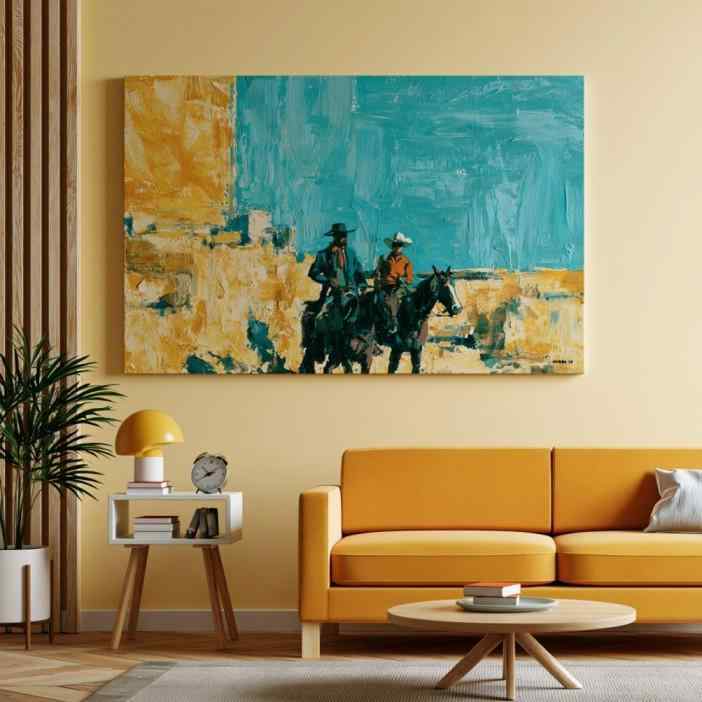
A pale butter-yellow wall gives this mustard sofa a sunny, cheerful backdrop.
Two-colour schemes can be far more sophisticated than one bright feature wall surrounded by three white ones.
Warm white and sage make a fresh, natural combination.
Beige and terracotta feel earthy and inviting.
Greige and dusty blue offer a cooler contemporary look.
Cream and olive work beautifully with timber, and
Warm beige can soften a dramatic deep blue.
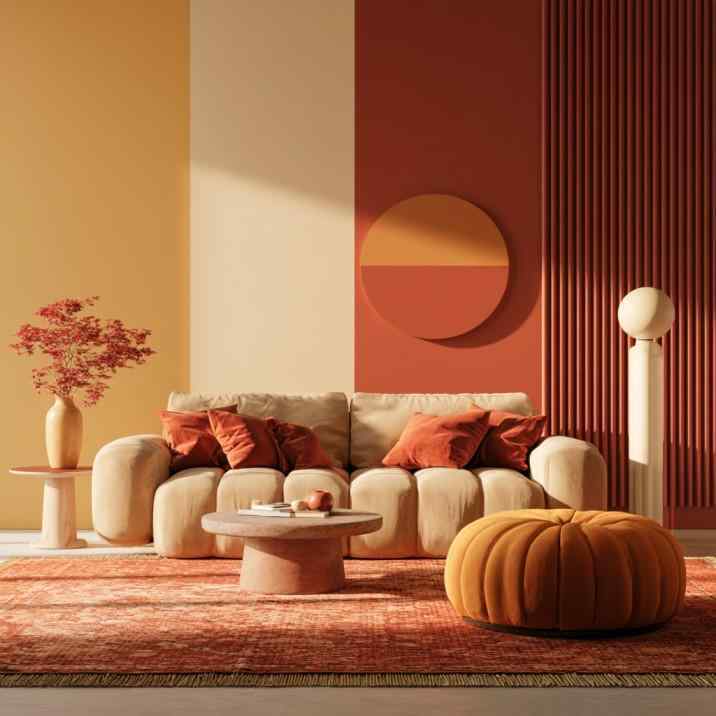
Ochre, cream and terracotta colour blocks give this living room a warm, modern edge.
If you’re exploring modern living room paint colours, tonal combinations are worth considering too. Instead of two obviously different colours, use a pale and deeper version of the same colour family for a softer, more cohesive effect.
How Do You Choose Living Room Wall Paint Colours That Match Your Furniture?
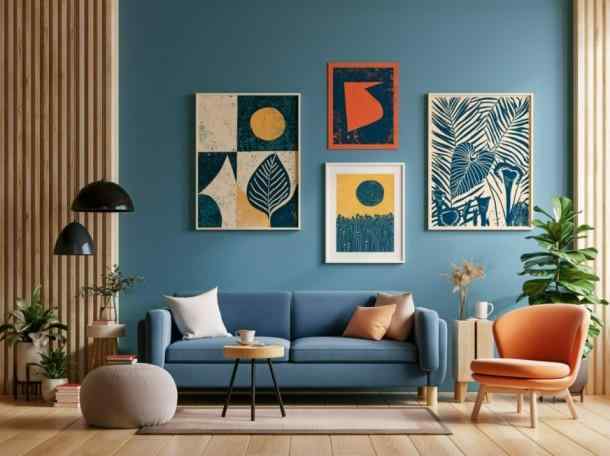
A denim blue wall and orange accent chair make a lively modern living room pairing.
Dark wooden furniture pairs beautifully with sage, cream, warm beige and muted blues. Pale oak or ash tones suit off-white, greige, soft green and earthy colours. If you have a beige sofa, don’t automatically reach for beige walls. Sage, clay or warm white can give it much-needed definition.
Grey sofas are especially sensitive to undertones. A cool grey sofa can work with blue, crisp neutral or cooler green walls, while warmer grey upholstery often looks better alongside taupe, mushroom or warm white.
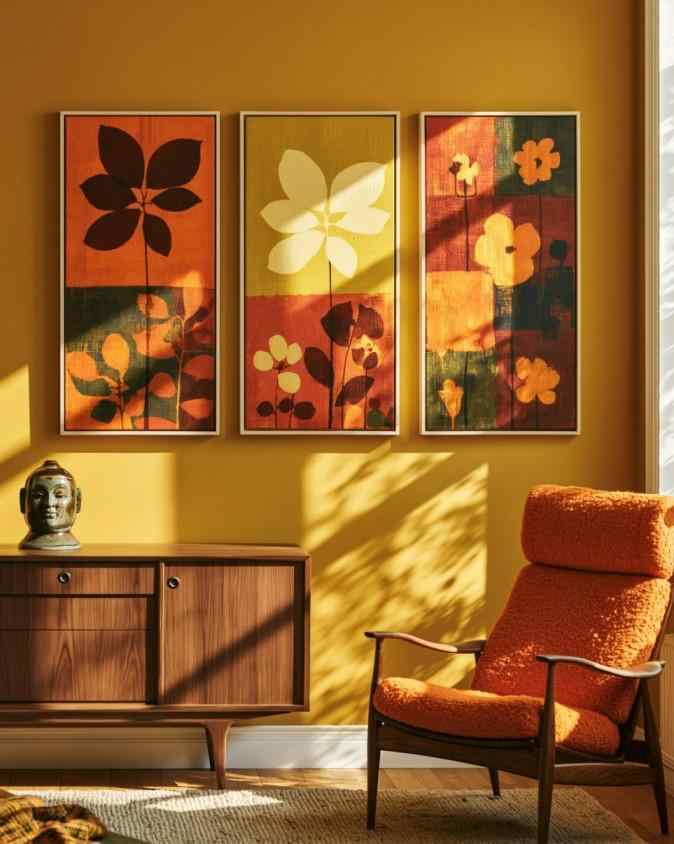
Sunlit ochre walls pair with orange art and timber for a warm, earthy living room.
Among the easiest interior living room paint ideas is to pick up a quieter colour already present in the rug, upholstery or artwork and use a softened version on the walls. Our guide to home interior colour combinations can help you look beyond individual walls and build a more cohesive home palette.
How Do You Choose the Right Paint Finish and Colour Combination?
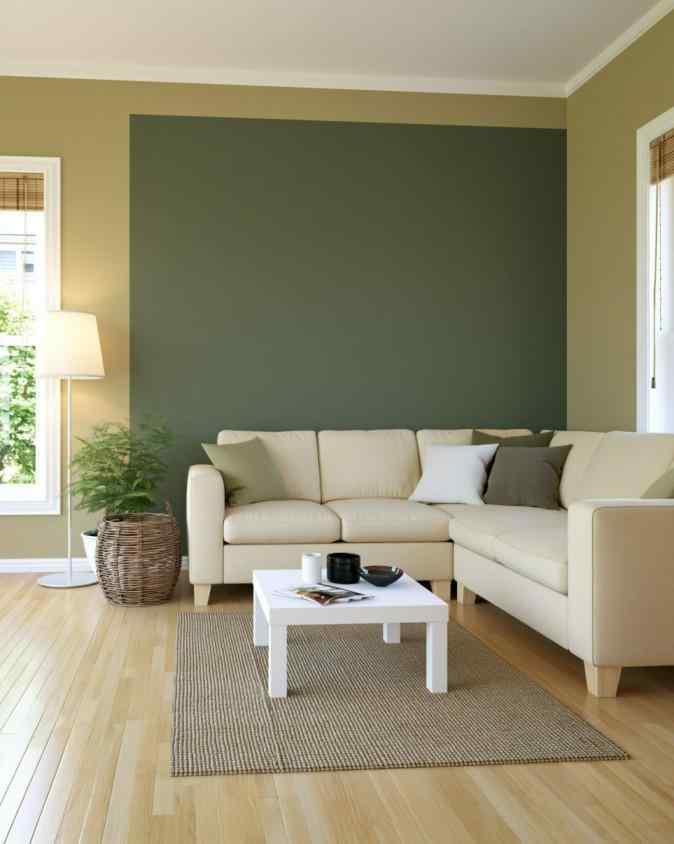
A deep sage feature wall with lighter side walls creates a calm, tonal living room.
Matt and low-sheen finishes give living room walls a soft, sophisticated appearance and are useful when you don’t want reflections drawing attention to minor surface imperfections. Finishes with more sheen are generally easier to wipe but can highlight uneven walls.
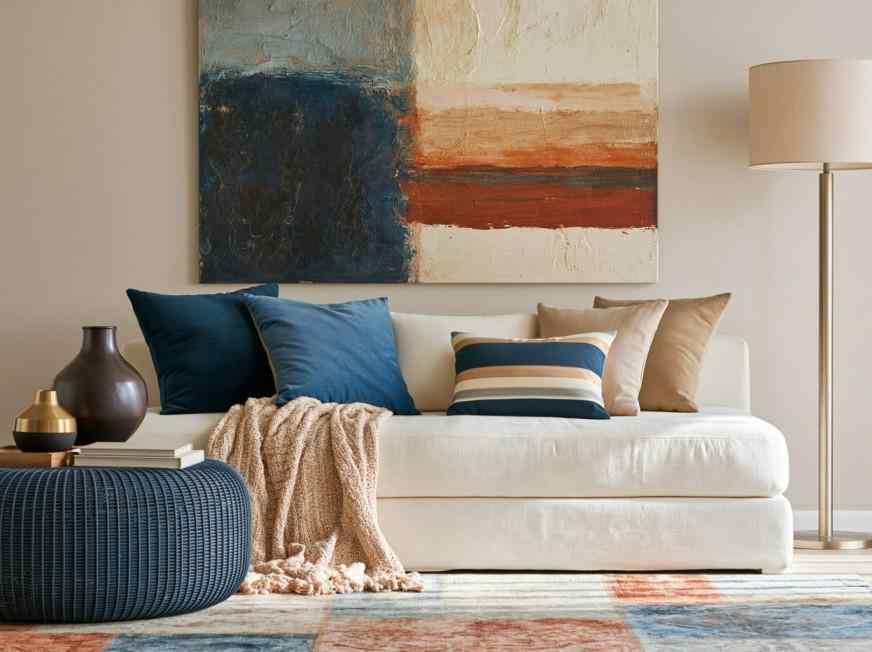
Warm beige walls soften navy and rust accents in this relaxed, layered living room.
You also don’t have to use several wall colours simply because the room is large. Painting all the walls the same colour can create a wonderfully cohesive effect. If you want variation, consider highlighting an architectural element, niche or TV wall rather than automatically creating an accent wall.
Give Your Living Room a Colour Personality!
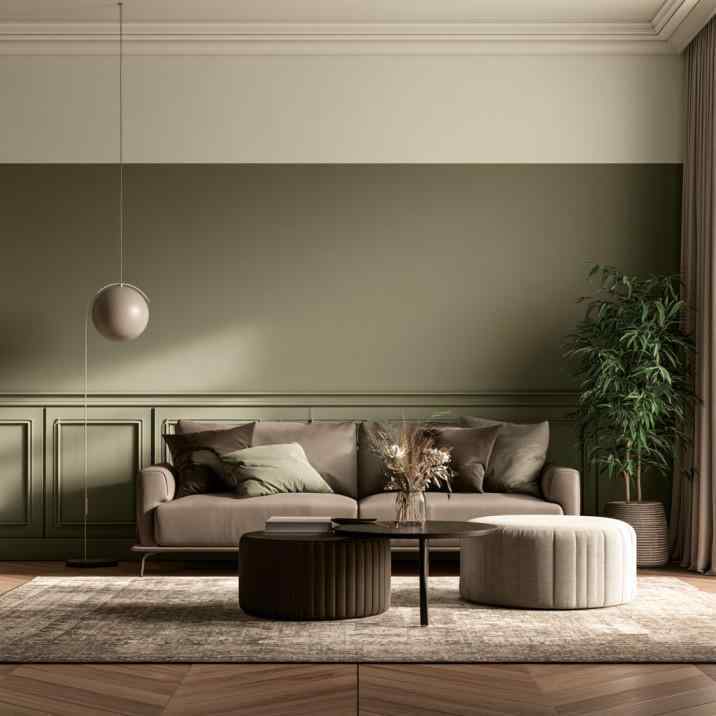
Olive green paint on panelled walls adds quiet elegance to this tonal living room.
Great living room paint ideas don’t need to shout for attention. A warm neutral can make colourful furniture look better, an earthy green can bring warmth to a modern room, and a deep blue can turn a large living area into a far more intimate setting.
HomeLane designers can help you coordinate wall colours with furniture, lighting, flooring and finishes for a living room that feels beautifully put together. Book a free consultation and give your living room a fresh colour story that feels unmistakably yours!
FAQs
1. Which colour is best for a living room?
There isn’t one universally best colour. Warm whites, beige, greige, sage and muted blue are versatile choices, while deeper greens, blues and earthy shades can add more character.
2. What are the best living room paint colours for a modern home?
Warm neutrals, mushroom, taupe, sage, olive, dusty blue and muted terracotta work particularly well in modern interiors. Choose shades that complement your flooring and furniture undertones.
3. Which paint colour makes a living room look bigger?
Warm white, pale greige, light beige, soft blue and muted sage can make a room feel more open. Keeping walls and large furniture relatively low-contrast can strengthen the effect.
4. How do I choose a paint colour for my living room?
Consider natural light, room size, flooring, sofa colour and fixed woodwork. Shortlist a few shades, paint large samples on the walls and observe them at different times of day.
5. What two colours go well together in a living room?
Warm white and sage, cream and olive, beige and terracotta, greige and dusty blue, and warm beige with deep blue are stylish combinations that work across several interior styles.
6. Should all the walls in a living room be the same colour?
They certainly can be. Using one colour throughout creates continuity and can make a room feel more cohesive. Introduce a second shade only when it adds something useful to the design.
7. Which colour is best for a living room with wooden furniture?
Warm white, cream, sage, olive, greige and muted blue complement many timber finishes. Check whether your wood has warm, reddish or cooler undertones before selecting the final wall colour.











 EXPLORE MORE