Balcony Flooring Design Guide: What Actually Holds Up in Indian Weather
By Usha Balasubramanyan- September 24, 2026
Summary
Balcony flooring should balance aesthetics with durability, slip resistance, weather performance, and easy maintenance. By choosing materials suited to Indian weather and installing them correctly, you can create an outdoor space that remains beautiful through every season. When the flooring is chosen wisely, your balcony becomes an extension of your home—not just another space exposed to the weather.
Expert Tip
Before choosing any balcony flooring design, pour a bucket of water onto the existing surface after rain. Observing where water naturally flows helps identify drainage issues that should be corrected before installing new flooring.
Best For
Apartment balconies and open terraces in villas
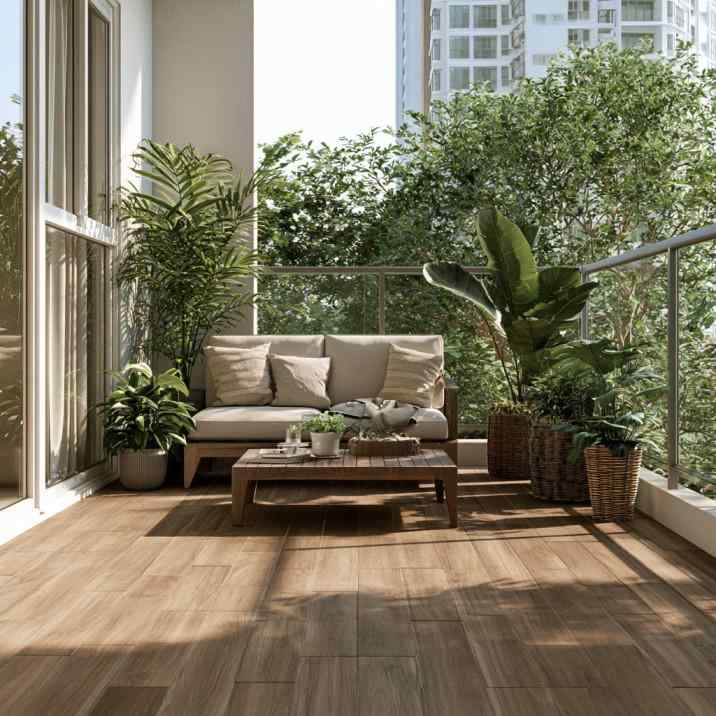
Warm wood-look flooring turns this plant-filled balcony into a cozy, inviting seating area.
A balcony may be one of the smallest spaces in your home, but it faces some of the toughest conditions. Harsh sunlight, heavy monsoons, dust, humidity, and constant foot traffic can quickly wear out the wrong flooring. That’s why choosing the right balcony flooring design is about much more than appearance…it’s about durability, safety, and long-term performance.
Today’s flooring options range from anti-skid porcelain tiles and natural stone to WPC decking and engineered timber finishes. Each has its own strengths depending on your climate, budget, and the way you use your balcony.
The best balcony floor is one that continues looking beautiful long after the rainy season has passed!
What Is the Best Balcony Flooring Design for Your Home?
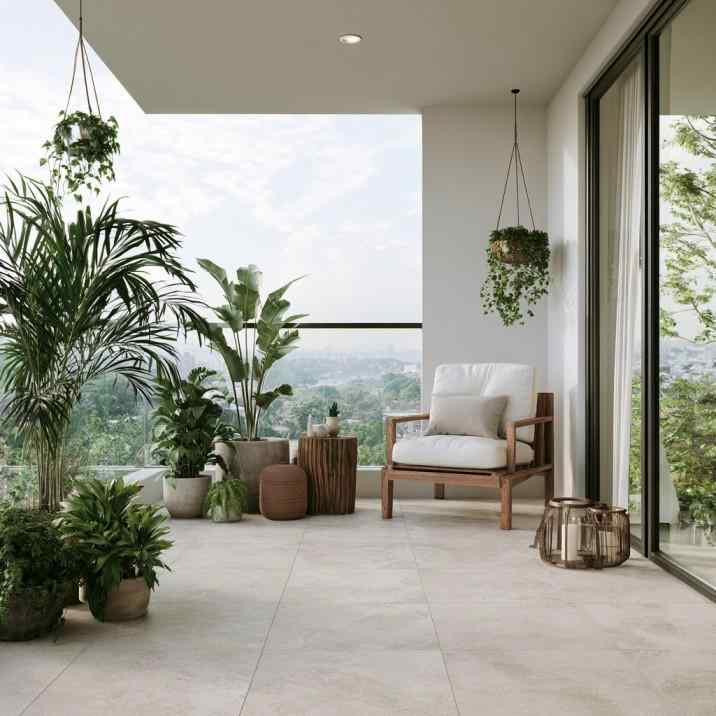
Light-toned tiles keep this compact balcony feeling bright, airy and larger than it is.
The right flooring depends on whether your balcony is open, semi-covered, or fully enclosed.
For open balconies exposed to rain, anti-skid porcelain tiles remain one of the most practical choices. They resist moisture, require very little maintenance, and are available in finishes that resemble stone, wood, or concrete.
Covered balconies offer greater flexibility, allowing homeowners to choose larger-format tiles, composite decking, or even premium outdoor laminates.
If you’re creating an outdoor seating area, natural textures such as stone-look porcelain or timber-effect tiles help create a warm, inviting atmosphere while remaining easy to maintain.
Which Balcony Flooring Materials Actually Work for Indian Weather?
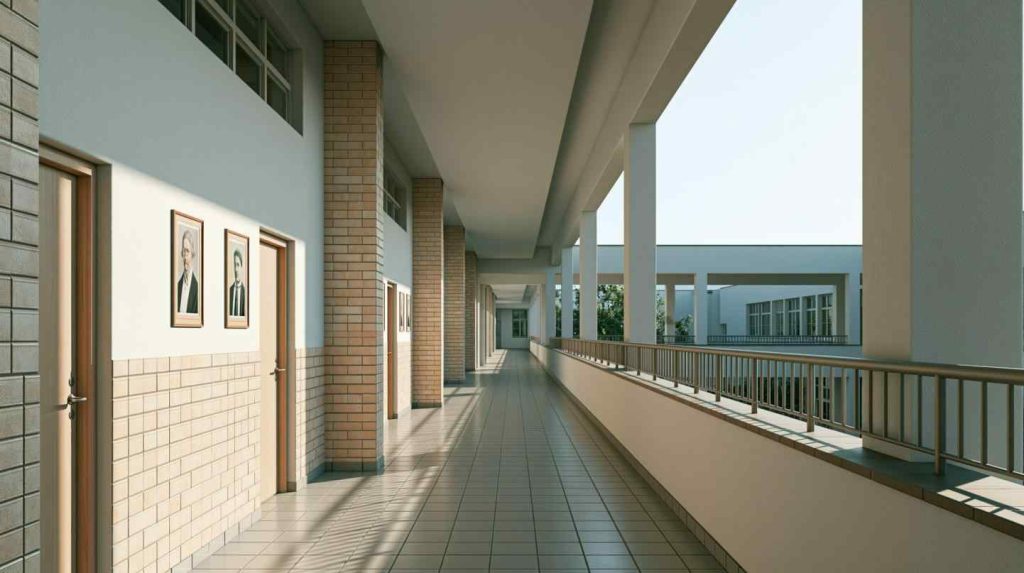
Durable tiled flooring holds up well on this covered balcony despite constant exposure.
India’s climate places a lot of demands on balcony and deck flooring, and resilient floors are non-negotiable.
Porcelain tiles perform exceptionally well because they’re dense, water-resistant, fade-resistant, and easy to clean. Natural stone offers timeless beauty but requires periodic sealing.
Outdoor vitrified tiles provide excellent durability while remaining affordable. Concrete finishes suit contemporary homes and withstand heavy use.
In coastal or humid regions, moisture-resistant materials such as porcelain and composite decking usually outperform untreated timber.
Expert Tip: Slip resistance should always be a priority, particularly during the monsoon!
Tile vs WPC vs Wooden Flooring for Balconies: Which One Should You Choose?
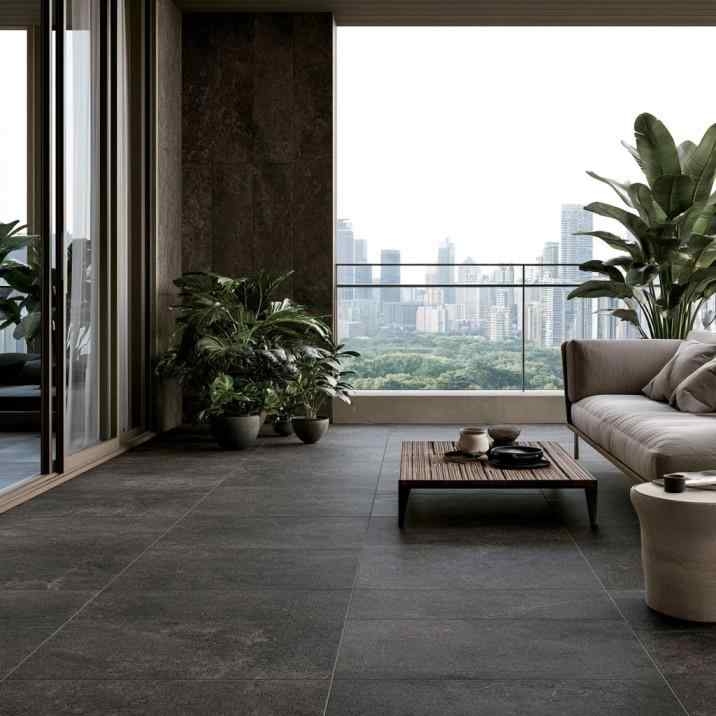
Dark stone-look porcelain tiles give this modern balcony a sleek, low-maintenance finish.
Each material offers different advantages.
Wooden flooring for balconies creates warmth and elegance but requires regular sealing, polishing, and maintenance. Natural timber can also expand, fade, or deteriorate if exposed continuously to rain.
WPC flooring tiles for balconies combine wood fibres with recycled plastic to create decking that’s resistant to moisture, termites, and fading. They’re an excellent low-maintenance option for Indian weather.
Porcelain or vitrified tiles remain the most versatile choice, offering realistic timber, stone, or concrete finishes without the upkeep associated with natural materials.
Your lifestyle often determines the best solution more than appearance alone.
How Much Does Balcony Flooring Cost and What Should You Check Before Buying?
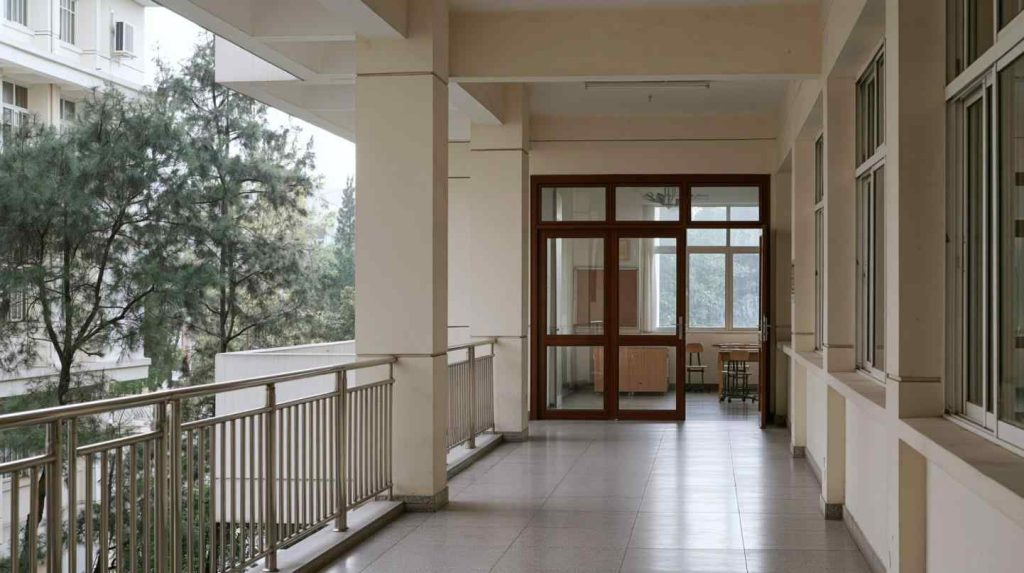
Anti-skid tiles keep this semi-covered balcony walkway safe and easy to maintain year-round.
Costs vary depending on the material and installation method. A slightly higher initial investment often results in significantly lower maintenance costs over time.
Typical installed prices are approximately:
Ceramic balcony tiles: INR 70–150 per sq ft
Vitrified or porcelain tiles: INR 120–300 per sq ft
Natural stone: INR 180–500 per sq ft
Wooden decking: INR 350–900 per sq ft
WPC flooring tiles: INR 250–600 per sq ft
Before purchasing, make sure to check slip resistance (very important for outdoor balconies!), UV resistance, water absorption, maintenance requirements, warranty, and installation compatibility with your existing balcony structure.
Our expert-written blog on Balcony Tile Designs showcases flooring ideas that balance aesthetics with long-term durability.
Small Balcony Flooring Ideas That Make the Space Look Bigger
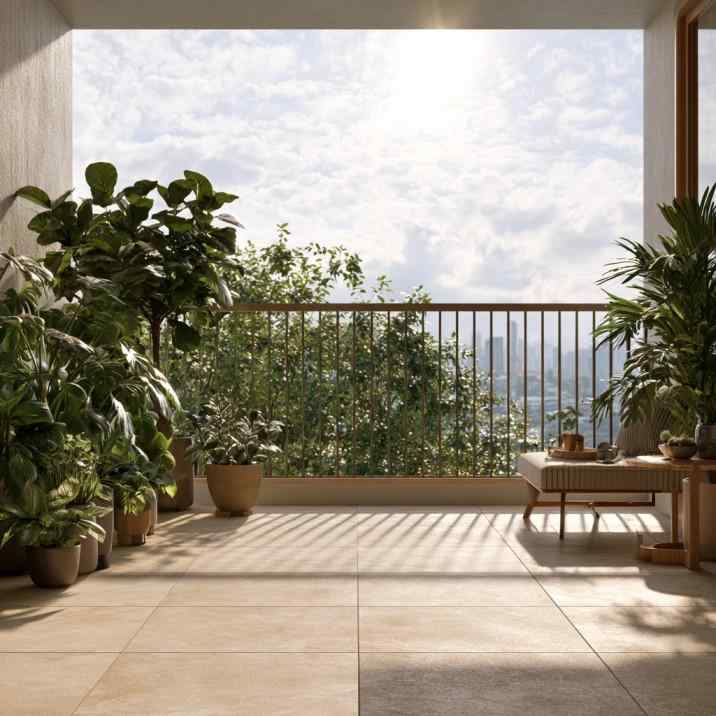
Warm stone-look tiles make this compact open balcony feel spacious and weather-ready.
Flooring has a surprisingly large impact on perceived space.
Large-format tiles reduce grout lines and create a cleaner appearance.
Light colours such as beige, soft grey, ivory, and warm stone shades reflect more natural light, making compact balconies appear larger.
Keeping the same flooring indoors and outdoors (where technically suitable) also creates visual continuity that makes the entire home feel more spacious.
Looking for more balcony flooring ideas? Our blog on Fresh Balcony Design Trends includes several clever ideas for creating beautiful outdoor spaces in compact apartments.
Balcony Flooring Mistakes That Cause Water Damage, Cracking and Early Wear
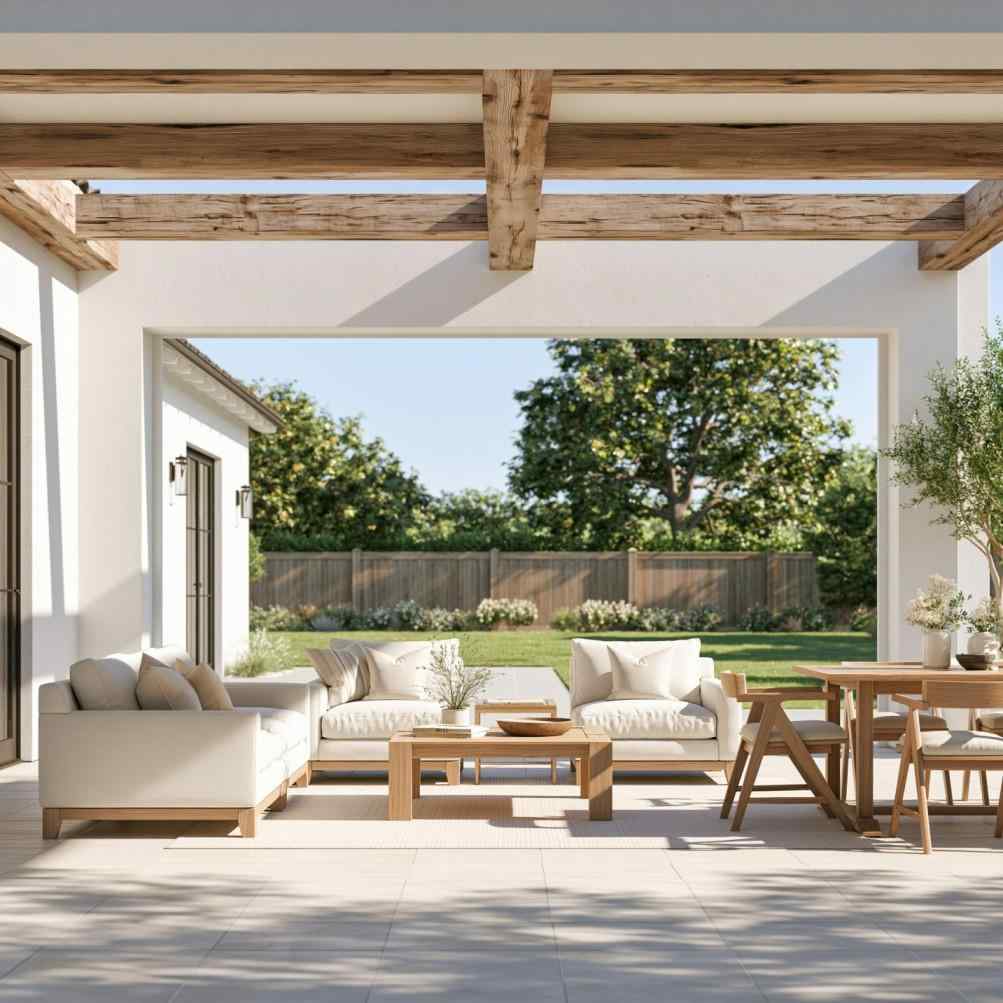
Large-format tiles create a clean, seamless surface for this open outdoor seating balcony.
One of the biggest mistakes is choosing indoor flooring for outdoor use. Another common problem is ignoring drainage slopes, allowing water to collect after rainfall. Glossy tiles become dangerously slippery when wet and should obviously be avoided outdoors.
Poor-quality grout, inadequate waterproofing, and incorrect expansion joints can all lead to cracked tiles and water seepage over time. Finally, selecting flooring based only on appearance often results in expensive repairs later.
The most beautiful balcony floors are usually the ones designed to withstand the climate first.
Build a Balcony That Looks Beautiful in Every Season!
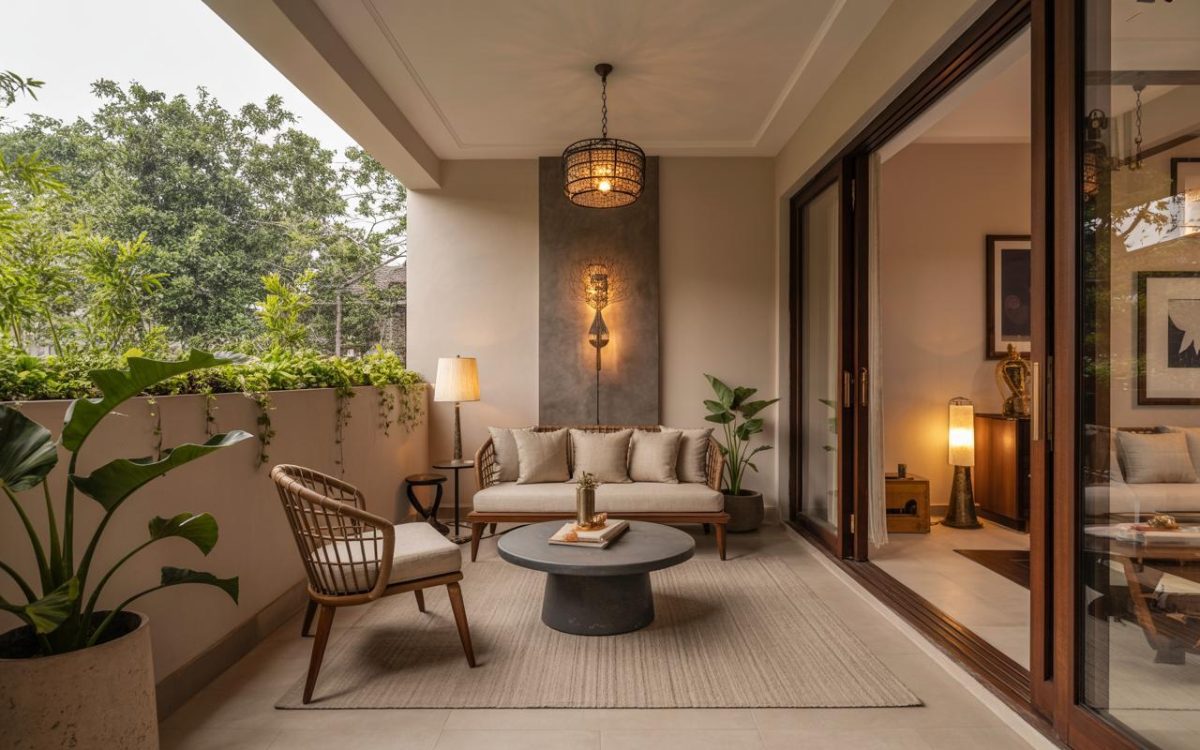
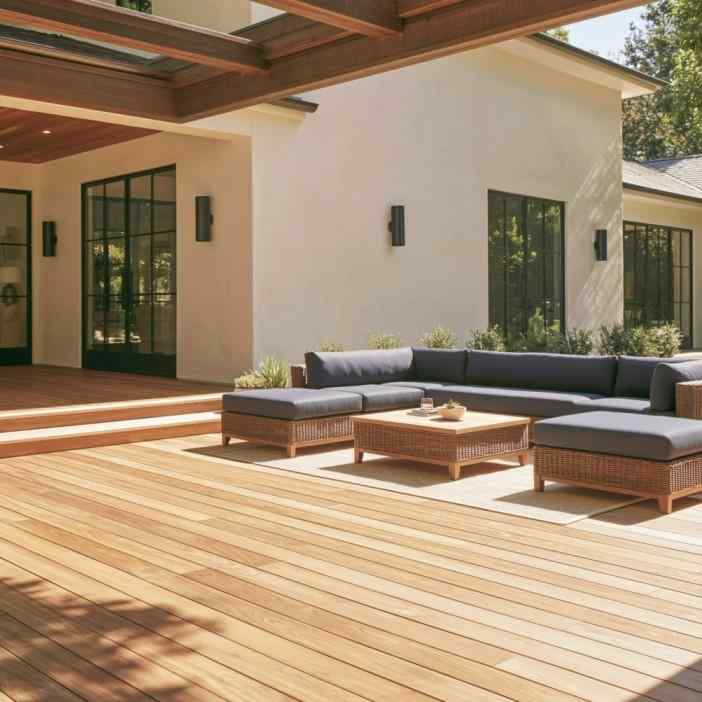
Timber-effect decking adds warmth to this covered terrace while standing up to the weather.
The right balcony flooring design creates an outdoor space that’s comfortable, durable, and easy to maintain throughout the year. Whether you choose porcelain tiles, natural stone, or WPC flooring tiles for balconies, selecting materials suited to your climate ensures your investment continues looking great for years.
At HomeLane, our designers create beautiful balconies that combine practical materials with personalised design solutions. Book a free HomeLane consultation and transform your balcony into a space you’ll enjoy every day.
A great balcony begins from the ground up!
FAQs
1. Which is the best flooring for a balcony?
Anti-skid porcelain tiles are widely considered the best all-round option because they’re durable, weather-resistant, easy to maintain, and available in a wide range of finishes. They perform particularly well in Indian weather.
2. What is the best flooring for an outdoor balcony?
Outdoor porcelain tiles, vitrified tiles, natural stone, and WPC decking are all excellent choices depending on your budget and maintenance preferences. Always prioritise slip resistance for safety.
3. Which material is good for outdoor flooring?
Porcelain, vitrified tiles, natural stone, concrete, and WPC decking all perform well outdoors. The ideal material depends on the climate, expected foot traffic, and desired appearance.
4. What is the best flooring for an open balcony in India?
Anti-skid porcelain or vitrified tiles usually offer the best balance of durability, water resistance, UV stability, and affordability. They’re well suited to India’s varied climate conditions.
5. Is wooden flooring safe to use for balconies?
Yes, provided it’s specially treated for outdoor use and maintained regularly. Untreated indoor timber should never be installed in exposed balconies.
6. What is WPC flooring and is it good for outdoor use?
WPC (Wood Plastic Composite) combines recycled plastic with wood fibres to create highly durable decking that’s resistant to moisture, termites, and fading. It’s an excellent low-maintenance alternative to natural timber.
7. How much does balcony floor tiling cost per square foot?
Balcony floor tiles design costs typically range from INR 120–300 per sq ft for good-quality porcelain tiles, while premium natural stone and composite decking cost more. Installation, waterproofing, and substrate preparation may increase the overall project cost.
8. What size tiles should I use for a small balcony?
Large-format tiles, such as 600 × 600 mm, usually make small balconies appear larger by reducing grout lines and creating a cleaner visual flow. Choosing light colours further enhances the sense of space.













 EXPLORE MORE