Bedroom Paint Ideas to Give Your Room a Fresh New Look
By HomeLane- January 26, 2026
AI Summary
3 key insights · 1 expert tip
Explore beautiful bedroom paint ideas for a clean, modern look, using colour palettes from soothing greens and blues to elegant neutrals for a relaxed atmosphere.
Key Insights:
What You'll Read Here:
Neutral palettes like white, brown, or beige offer a calming, relaxed, and homely bedroom feel.
Bold combinations like navy and grey or vibrant blues can create a dramatic and stylish bedroom statement.
Light colours such as white or cream make small bedrooms appear bigger and brighter.
HOMELANE EXPERT TIPBy our design team
To make small bedrooms feel larger, opt for light, neutral colours like white or beige, or use darker shades on walls opposite windows in very bright rooms.
There are few bedroom updates that deliver as much change for relatively little disruption as a new coat of paint. The same bed and furniture can suddenly look completely different against sage green, warm beige or a beautifully muted blue.
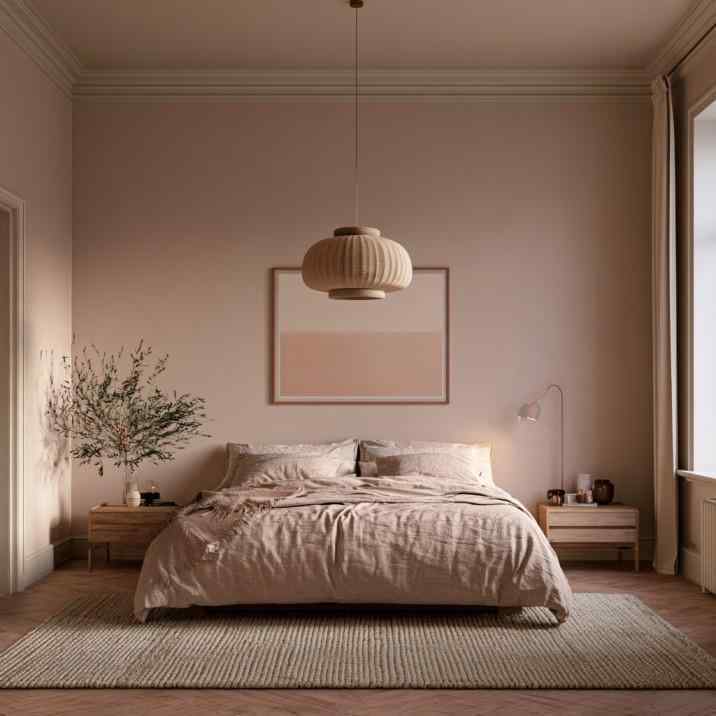
Soft blush walls and warm timber make simple bedroom paint ideas feel calm and cohesive.
But choosing successful bedroom paint ideas involves more than finding a colour you love on a shade card. Bedroom size, daylight, artificial lighting, flooring and furniture can all change how that colour appears once it covers four walls.
What Are the Best Modern Bedroom Paint Colours for 2026?
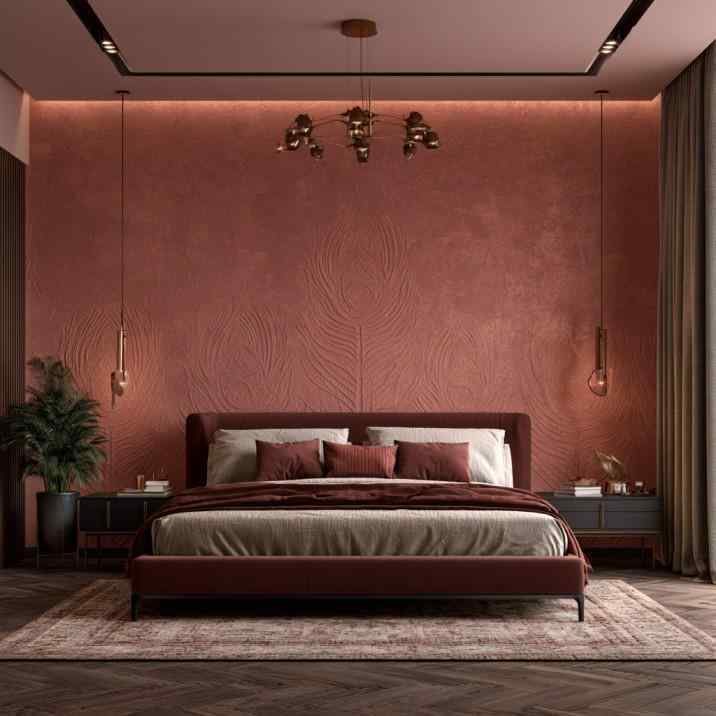
A textured clay-toned wall and burgundy bed give master bedroom paint ideas real depth.
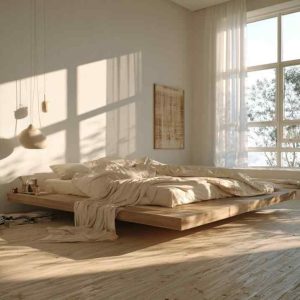
The shift towards warmer, nature-led interiors continues to make earthy and nuanced shades appealing choices. Think warm off-whites, sand, mushroom, olive, sage, clay, muted terracotta, dusty blue and deeper greens.
These modern bedroom paint colours work because they’re distinctive without necessarily becoming overpowering. Instead of a stark white room with one strongly contrasting feature wall, consider layering closely related tones for a softer effect.
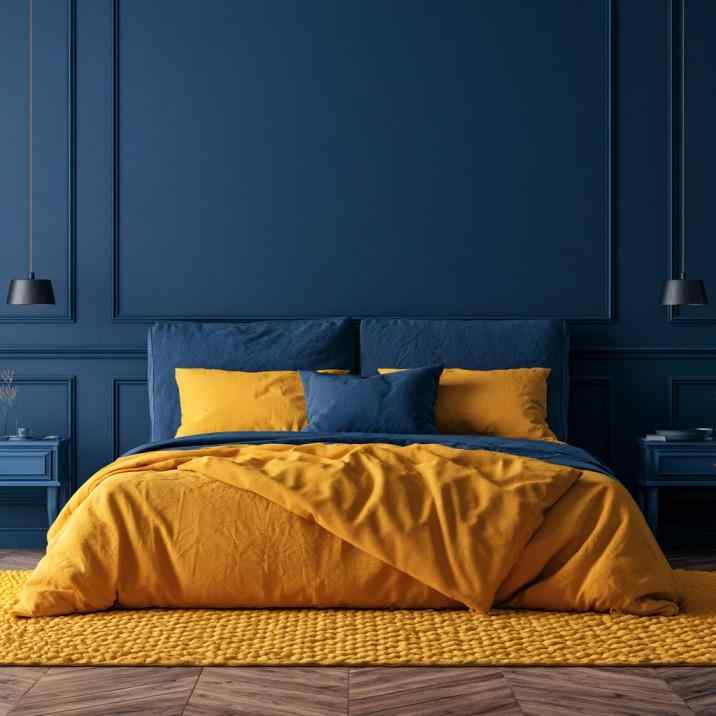
Deep navy walls with mustard bedding show how rich shades suit bolder bedroom paint ideas.
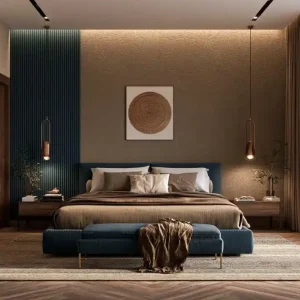
And deep colours aren’t disappearing either! Burgundy, forest green, chocolate brown and inky blue can add richness, especially when paired with timber, warm lighting and lighter textiles.
Which Bedroom Paint Colours Work Best for Small and Large Bedrooms?
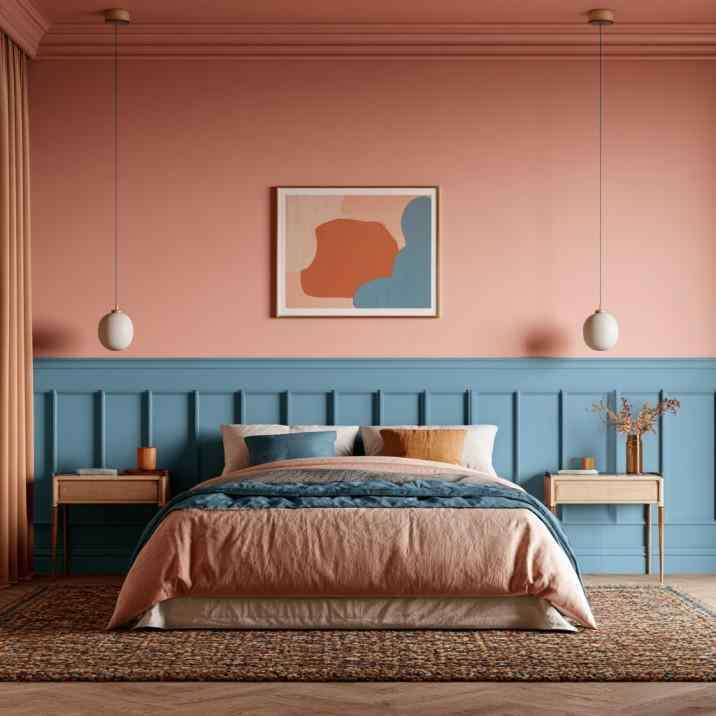
Peach above and dusty blue panelling below make an easy two-colour bedroom combination.
White isn’t the only colour allowed into a small bedroom! Pale sage, warm greige, dusty blue, soft beige and muted peach can all provide colour without making your walls feel too heavy.
Among the most useful simple bedroom paint ideas is reducing contrast between adjoining surfaces. Painting walls in similar light or mid-tones allows the eye to travel more smoothly around the room.
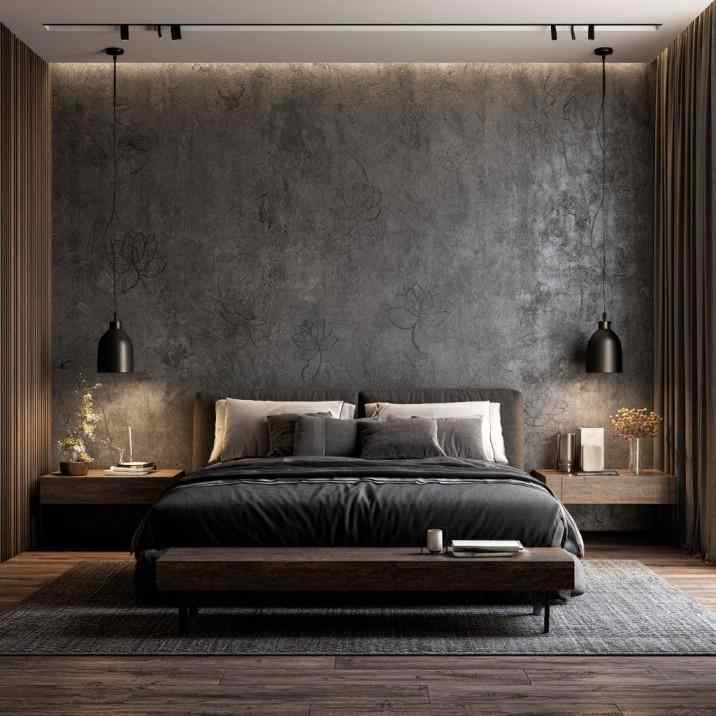
A charcoal textured wall with timber accents creates a moody, luxurious bedroom paint scheme.
For larger bedrooms, you have more freedom to experiment with depth. A darker headboard wall can visually anchor the bed, while enveloping the entire room in a muted deep shade can create an intimate effect.
Good master bedroom paint ideas also consider the scale of the furniture. A substantial upholstered bed, dark timber wardrobe or large headboard may need a wall colour with enough presence to balance it.
Room Situation
Colours to Consider
Why They Work
Small bedroom
Warm white, sage, pale blue
Keeps the palette light
Low-light bedroom
Cream, sand, warm beige
Adds visual warmth
Large bedroom
Olive, deep blue, terracotta
Handles stronger colour well
Wood-heavy room
Greige, sage, warm white
Complements timber
Minimal bedroom
Mushroom, taupe, off-white
Adds subtle depth
Which Bedroom Paint Colours Work Best with Different Interior Styles?
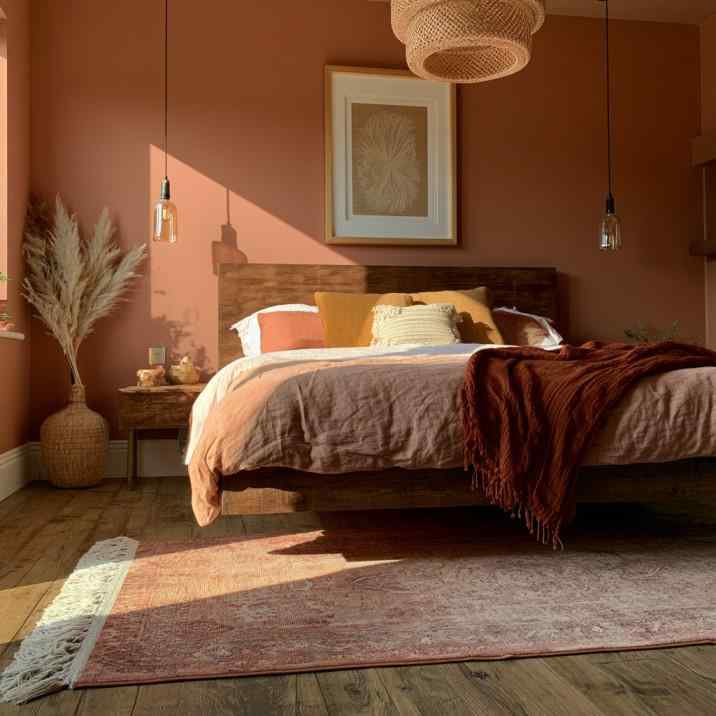
Warm terracotta walls pair beautifully with timber furniture and layered earthy textiles.
Contemporary rooms work beautifully with greige, muted green, warm white and earthy neutrals. These modern bedroom paint ideas create a clean backdrop without making the space feel cold.
Minimal bedrooms benefit from tonal palettes. Instead of pure white everywhere, try warm white walls with beige, taupe or pale timber furnishings.
Traditional Indian interiors can accommodate richer colours such as ochre, muted terracotta, deep green or warm cream, particularly alongside carved wood and patterned textiles.
For a luxurious bedroom, sophisticated neutrals, deep blue, burgundy or olive can create depth when combined with upholstered surfaces and metallic accents. Our curated list of master bedroom colour combinations offer even more ideas for coordinating wall colours.
How Do Bedroom Paint Colours Work with Furniture, Lighting and Décor?
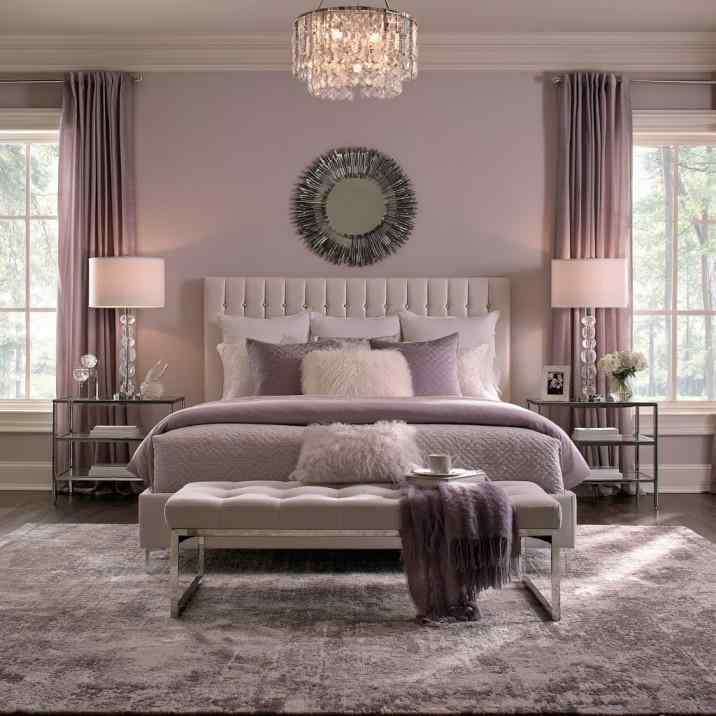
Soft lilac-grey walls create a restful, elegant backdrop for a tufted bed and metallic accents.
Treat paint as part of the entire palette rather than a stand-alone decision. Look at your flooring, wardrobe, headboard and curtains before settling on the wall colour.
Dark wood furniture often looks striking against warm neutrals, sage or muted blue. Pale wood pairs naturally with earthy greens, off-whites and soft clay shades. Grey furniture may need warmer wall colours to prevent the room from feeling overly cool.
When exploring bedroom paint colour ideas, also pay attention to undertones. Two shades described as beige may behave very differently, with one appearing pink and another yellow or grey once placed beside your flooring.
Artificial lighting changes colour too! Warm lighting can emphasise yellow and red undertones, while cooler lighting may make some blues and greys appear sharper.
How Should Bedroom Paint Colours Be Chosen Based on Natural Light and Room Orientation?
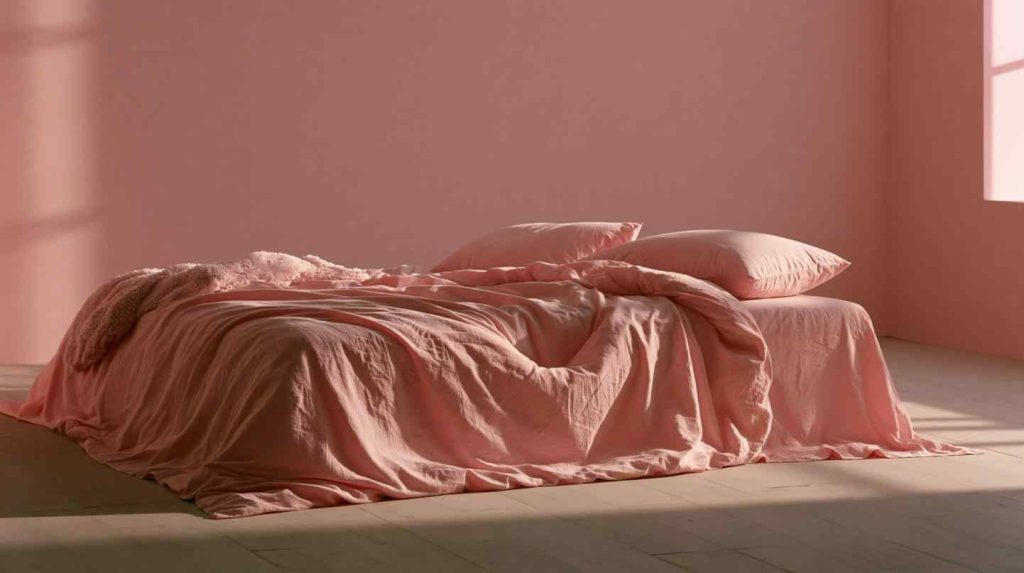
Matching pink walls and linen show how a tonal palette makes a bedroom feel softer.
Rooms receiving strong daylight can generally carry deeper or cooler colours without feeling gloomy. In spaces with less natural light, warmer neutrals and softer earthy shades can prevent the room from appearing flat.
Orientation also affects colour throughout the day. A bedroom receiving warm direct sunlight may make cream, beige and terracotta appear richer, while cooler indirect light can bring out grey or blue undertones.
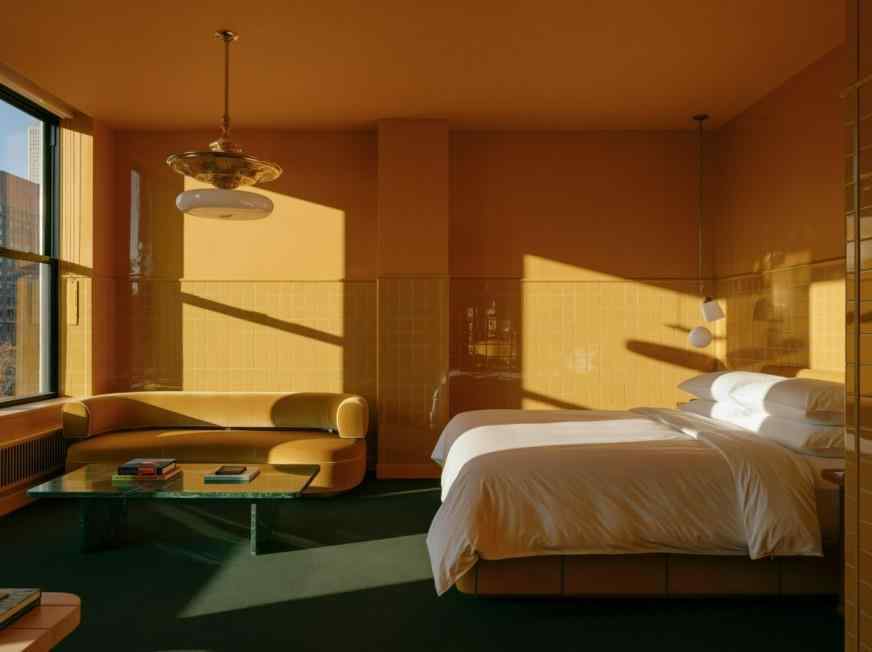
Ochre walls in golden light show how strong colour can warm a bedroom with plenty of daylight.
Rather than following a hard-and-fast rule about which colour belongs in which direction, observe the actual room. Buildings, balconies, trees and neighbouring structures can affect daylight just as much as orientation.
How to Test a Bedroom Paint Colour Before Painting the Entire Room?
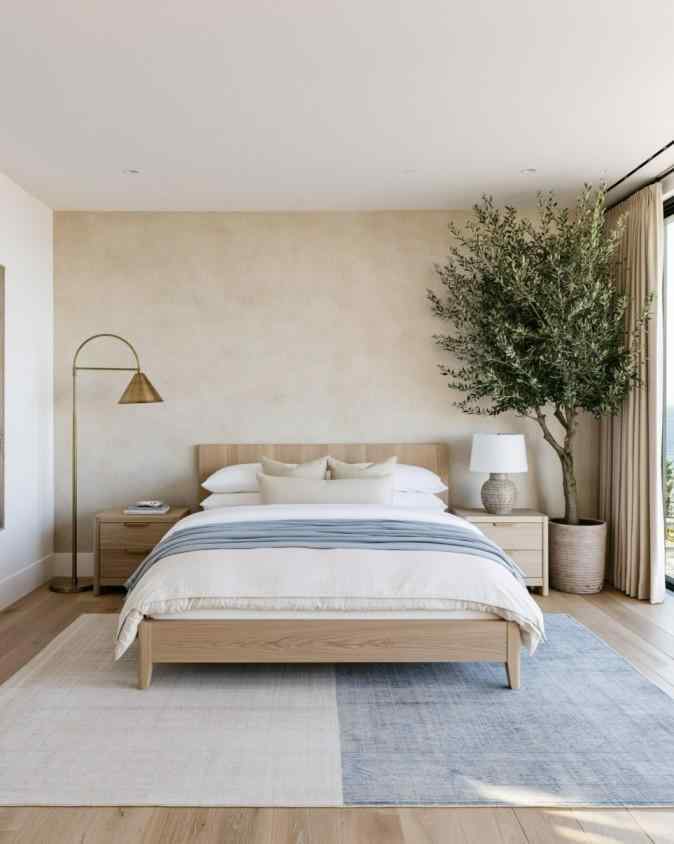
Warm beige walls and pale timber suit simple bedroom paint ideas with a natural feel.
Never make your final decision from a tiny printed swatch. Paint samples onto sizeable areas and check them beside the flooring, wardrobes, curtains and headboard.
Look at each sample in the morning, afternoon and evening. Then switch on the bedroom lights and check again. A colour you loved at noon may look surprisingly different at bedtime!
If you’re choosing a two-colour scheme, test the colours together rather than separately. The best bedroom paint ideas are those that work with the actual conditions in your room, not simply the colours that looked attractive online.
Give Your Bedroom a Colour Reset!
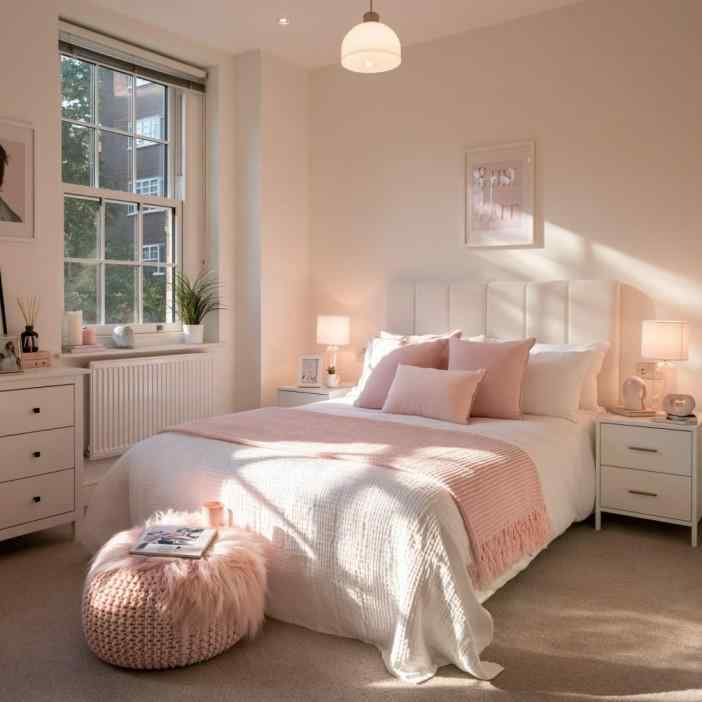
Soft blush walls and white furniture keep a small bedroom light, bright and welcoming.
The most successful bedroom paint ideas respond to the room rather than simply following a trend. Consider its size and daylight, work with the furniture you intend to keep and test every shortlisted shade before committing.
HomeLane can help you coordinate wall colours with furniture, wardrobes, lighting and finishes for a bedroom that feels considered from every angle. Book a free consultation and wake up to a bedroom palette you absolutely love, every single day!
FAQs
1. What are the best modern bedroom paint colours?
Warm neutrals, sage, olive, muted blue, mushroom, terracotta and deeper nature-inspired shades work well in contemporary bedrooms. The best choice will also depend on your room’s natural light and furniture.
2. Which colour is best for a bedroom according to Vastu?
Traditional Vastu recommendations often favour gentle shades such as light blue, green, cream or soft earthy tones for bedrooms. Recommendations can vary according to room direction, so treat them as cultural guidance rather than a design requirement.
3. Which colour makes a small bedroom look bigger?
Warm white, pale beige, light greige, soft blue and muted sage can help create an open appearance. Keeping walls, ceilings and large furniture relatively low-contrast can further enhance the sense of space.
4. Which two colour combinations are best for bedroom walls?
Warm white and sage, beige and terracotta, greige and dusty blue, or cream and olive are versatile combinations. Choose one shade as the dominant colour and use the second more selectively.
5. How do I choose the right bedroom paint colour?
Consider natural light, room size, flooring, wardrobes, furniture and artificial lighting. Shortlist a few colours and test large samples on the actual walls before making the final decision.
6. Which bedroom colour is best for a peaceful and relaxing feel?
Soft greens, muted blues, warm neutrals and gentle earthy shades can create a restful atmosphere. More important than any specific colour is choosing a shade you personally find comfortable and easy to live with.












 EXPLORE MORE