Upholstered Bed Designs That Add Comfort and Character to Bedrooms
By Usha Balasubramanyan- November 11, 2026
AI Summary
3 key insights · 1 expert tip
Upholstered beds add comfort, texture and a focal point to a bedroom, and the best designs balance headboard style, fabric, colour and proportion with room size and maintenance.
Key Insights:
What You'll Read Here:
Modern designs suit cleaner lines and muted shades, simple padded headboards work beside patterned or heavily grained surfaces, and traditional tufting looks best on a relatively plain frame.
Tightly woven cotton blends and performance fabrics are practical for daily use, while velvet and coarse weaves show marks or trap dust more easily.
Small bedrooms suit slim headboards, minimal side padding and light or mid-tone fabrics, and it pays to check the mattress height and the frame, foam and stitching quality before buying.
HOMELANE EXPERT TIPBy our design team
Ask for high-density foam of around 32 kg/m³ or more in the headboard padding, since lower-density foam tends to flatten within a year or two and leaves the headboard looking sunken.
Some beds are simply somewhere to sleep. Others practically invite you to climb in with a book and cancel the rest of the evening!
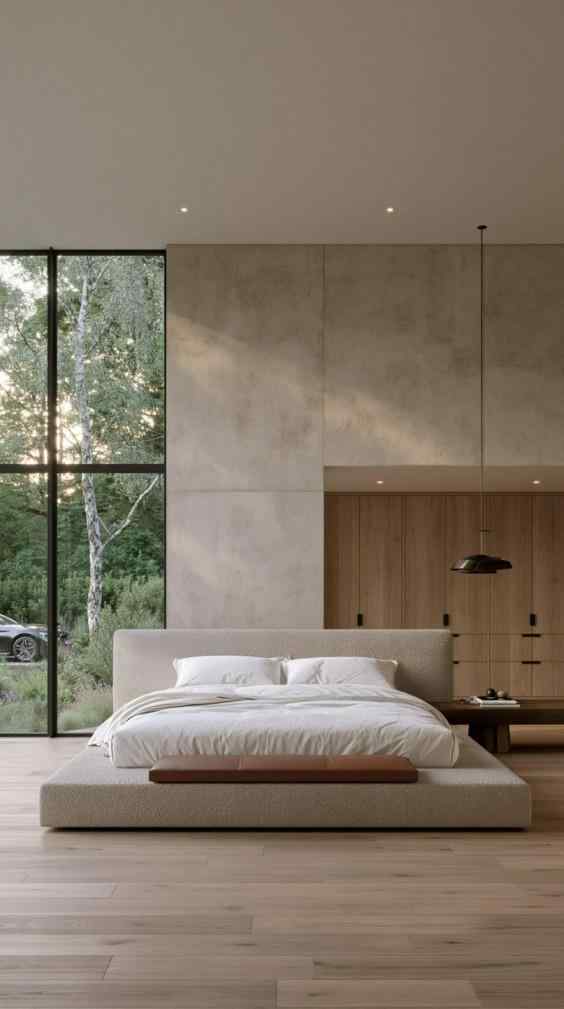
A low-profile boucle upholstered bed adds soft texture to this calm, wood-lined bedroom.
That’s the appeal of upholstered bed designs. By introducing fabric, cushioning and texture, they soften a bedroom both physically and visually. They can make a minimalist room feel warmer, give a luxurious bedroom its statement piece or add comfortable back support without piling six pillows against a hard headboard.
What Are Upholstered Bed Designs and Why Are They Popular?
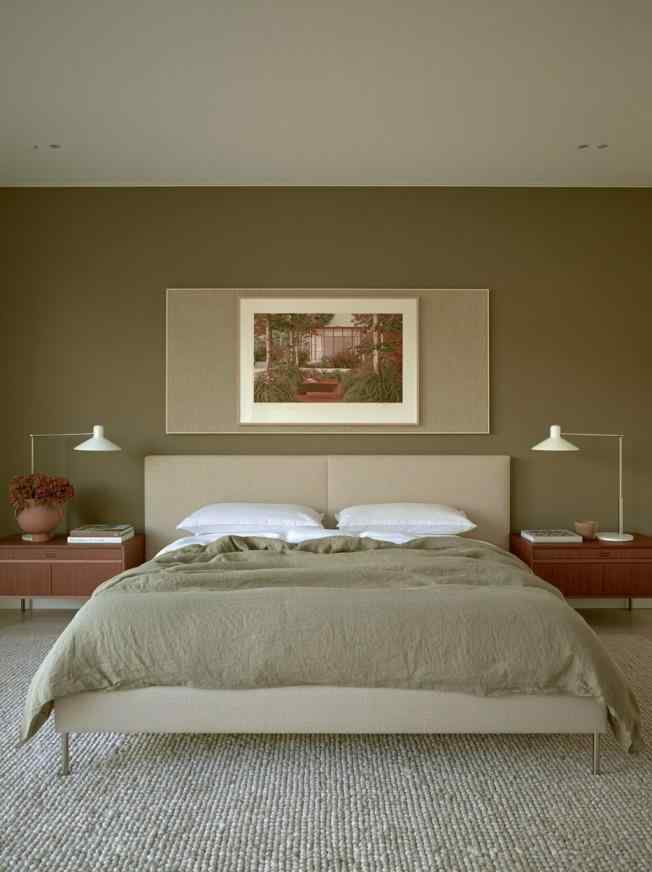
A plain beige padded headboard keeps this olive-toned bedroom quiet and sophisticated.
An upholstered bed has fabric-covered padding over part or all of its frame. The headboard is most commonly upholstered, although some designs continue the padding along the side rails and footboard.
Comfort is an obvious advantage. A padded headboard is pleasant to lean against, particularly if you read, work or watch television in bed. Upholstery also introduces texture, which can make bedrooms with large expanses of wood, laminate or painted surfaces feel more inviting.
There is enormous design flexibility too. Our collection of modern bed designs shows how varied bed silhouettes can be, and upholstery adds another layer of choice through fabric, colour, stitching and headboard shape.
What Are the Best Upholstered Bed Design Ideas for Different Bedroom Styles?
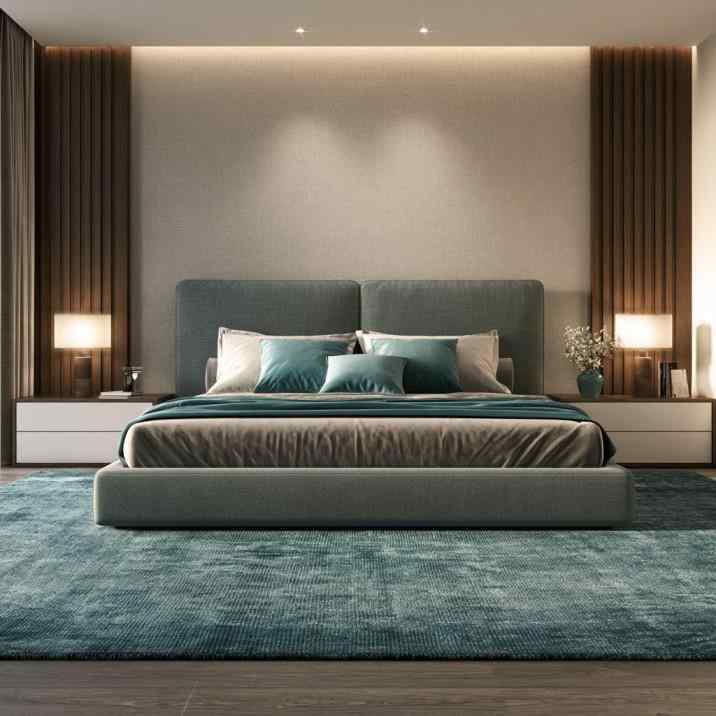
A twin-panel grey upholstered headboard pairs neatly with teal accents in this modern bedroom.
For contemporary bedrooms, modern upholstered bed designs tend to have cleaner lines, slimmer profiles and relatively restrained detailing. A wide rectangular headboard in beige, grey, taupe or muted green works beautifully with uncluttered wardrobes and modern bedside tables.
If you prefer something quieter, simple upholstered bed designs can feature a plain padded headboard with minimal stitching. This approach is especially useful when the bedroom already contains patterned curtains, decorative wallpaper or strongly grained timber.
A traditional upholstered bed can be more decorative. Curved headboards, button tufting, piping and richer fabrics work well with classic furniture and warm wood finishes. Avoid combining every traditional detail in one bed, though. A dramatic headboard usually needs a relatively simple frame.
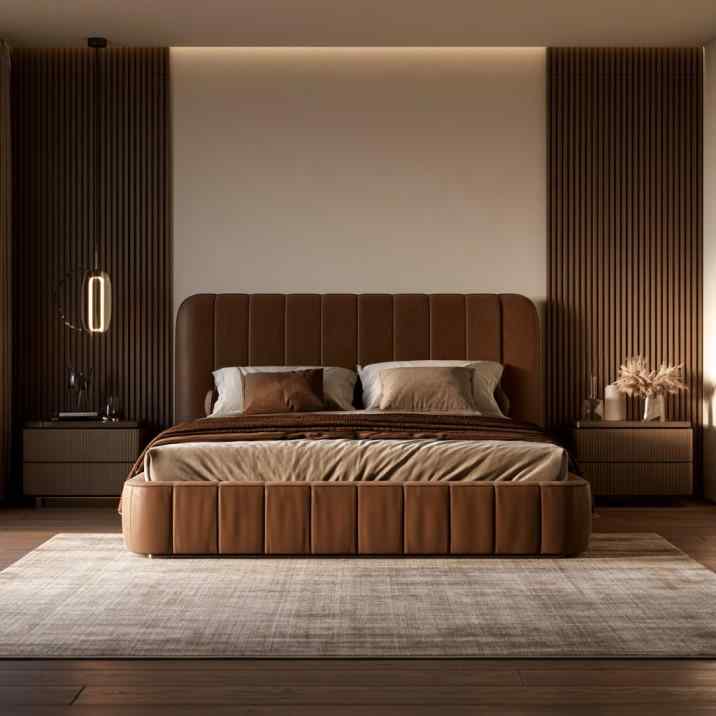
A channel-tufted brown upholstered bed creates a warm, grounded focal point against neutral walls.
A dark brown upholstered bed design can create a handsome, grounded focal point in a larger room. Pair it with cream, beige, warm white or muted green rather than surrounding it with equally dark furniture.
How Do You Choose the Right Upholstery Material, Colour and Texture for a Bed?
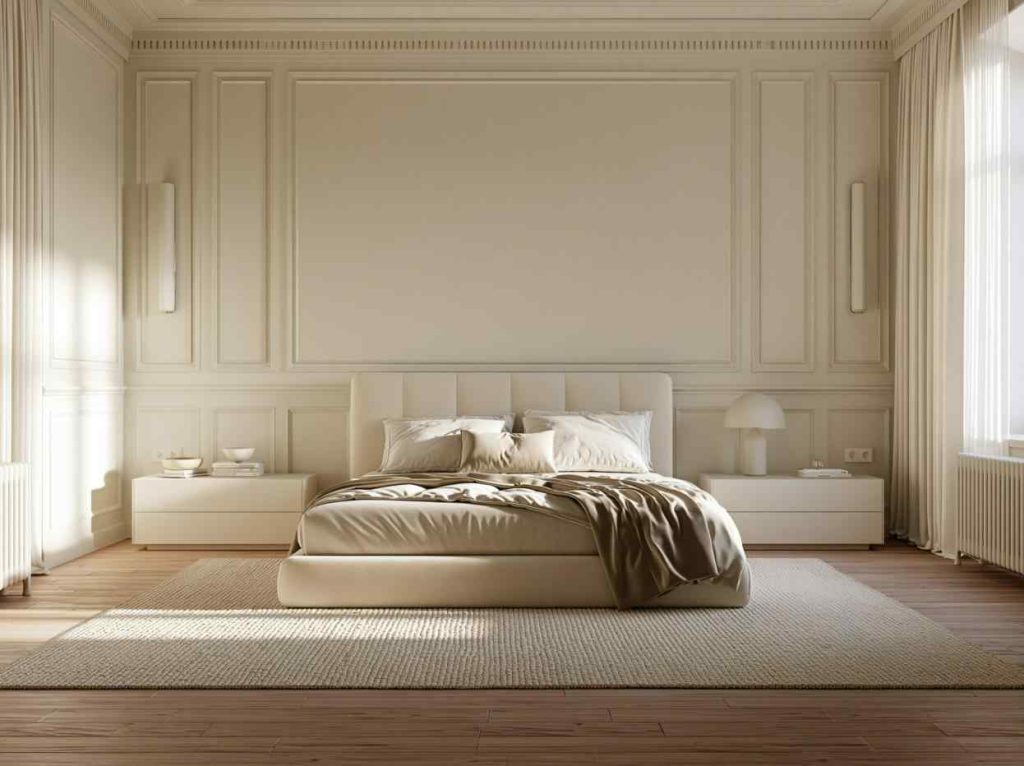
A cream upholstered bed blends softly with wall panelling for a bright, timeless bedroom.
Looks matter, but this is upholstery you may touch every day. Durability and cleaning should therefore influence the decision.
Upholstery
Why Choose It
Keep in Mind
Cotton blends
Comfortable and versatile
Choose tightly woven fabric
Performance fabrics
Durable and easier to maintain
Excellent for pale colours
Velvet
Rich colour and soft texture
Shows dust and marks more easily
Leatherette
Easy to wipe
Quality affects ageing and feel
Textured weaves
Adds visual depth
Coarse weaves may trap dust
Colour should respond to the whole room rather than the bed alone. Beige, greige, cream and muted grey are flexible, while olive, blue, rust and deep brown create a stronger focal point.
Texture deserves restraint. If the headboard is deeply channelled or tufted, a quieter fabric can keep it sophisticated. If the silhouette is simple, a textured weave can provide the interest.
What Types of Upholstered Beds Work Best for Different Bedroom Sizes and Layouts?
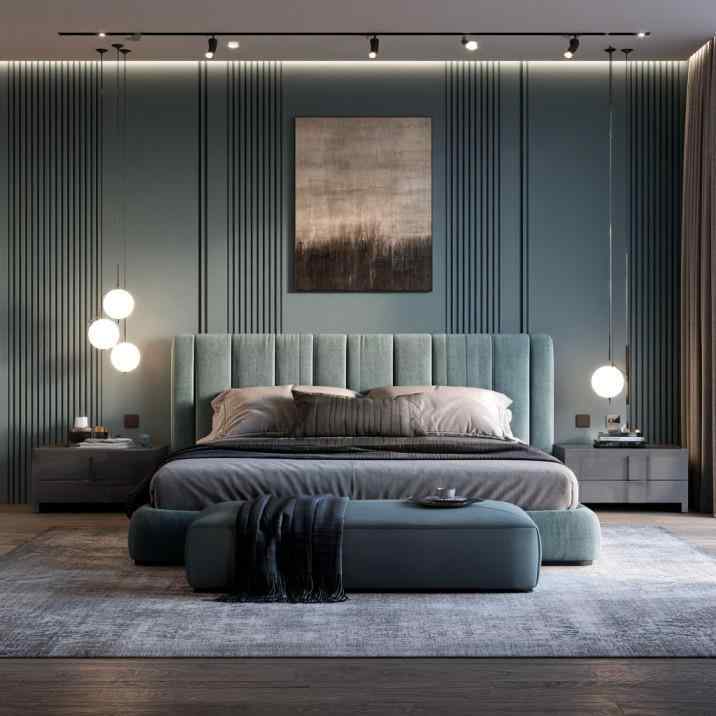
Teal channel tufting and a matching bench make this upholstered bed the bedroom’s statement piece.
In a compact bedroom, the bed already occupies a substantial amount of visual and physical space. A small bedroom therefore benefits from a slim upholstered headboard and minimal side padding. Light or mid-tone fabrics can also prevent the bed from dominating the room.
Low-profile designs can make a contemporary room feel more spacious, but check the mattress height before finalising the headboard proportions. Once a thick mattress is added, a headboard that looked generous in the showroom can suddenly appear rather short.
Larger bedrooms can handle winged headboards, wider frames, deeper padding or floor-to-ceiling upholstered panels. Just make sure the headboard doesn’t interfere with electrical points, bedside lighting or switches.
Storage can also be integrated beneath an upholstered frame. Hydraulic storage is particularly useful when you want a luxurious-looking bed without giving up valuable space for linen, luggage or seasonal items.
What Common Mistakes Can Affect an Upholstered Bed’s Style and Durability?
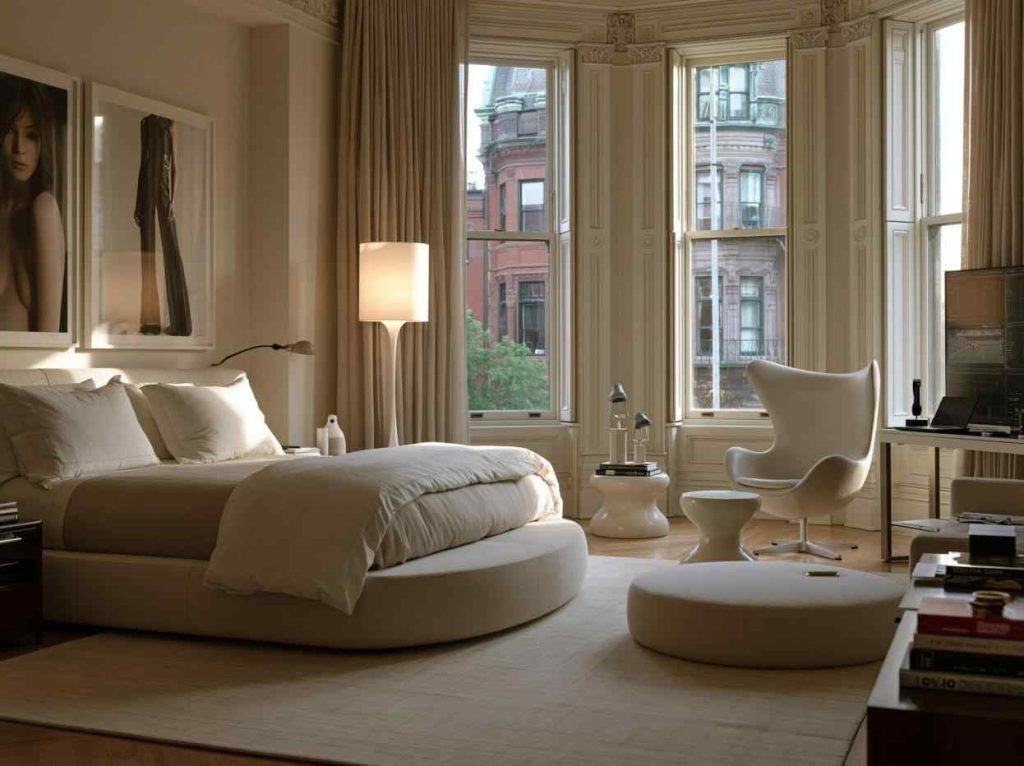
A rounded off-white upholstered frame adds softness to this sunlit contemporary bedroom.
Choosing fabric purely from a tiny swatch is risky. Ask to see a larger sample if possible, because colour and texture can look very different across an entire headboard.
Another mistake is ignoring maintenance. Deep tufting, elaborate folds and highly textured fabrics provide plenty of places for dust to settle. If you live in a dusty location or have allergies, simpler upholstery detailing may be more practical.
Proportion is equally important. An oversized headboard can overwhelm a compact bedroom, while a narrow headboard can look lost against a very wide wall.
Finally, check what’s underneath the fabric. Frame quality, foam density, stitching and workmanship determine how well the bed will age. Beautiful upholstery cannot compensate for a poorly constructed frame.
Make the Bed the Most Inviting Part of the Room!
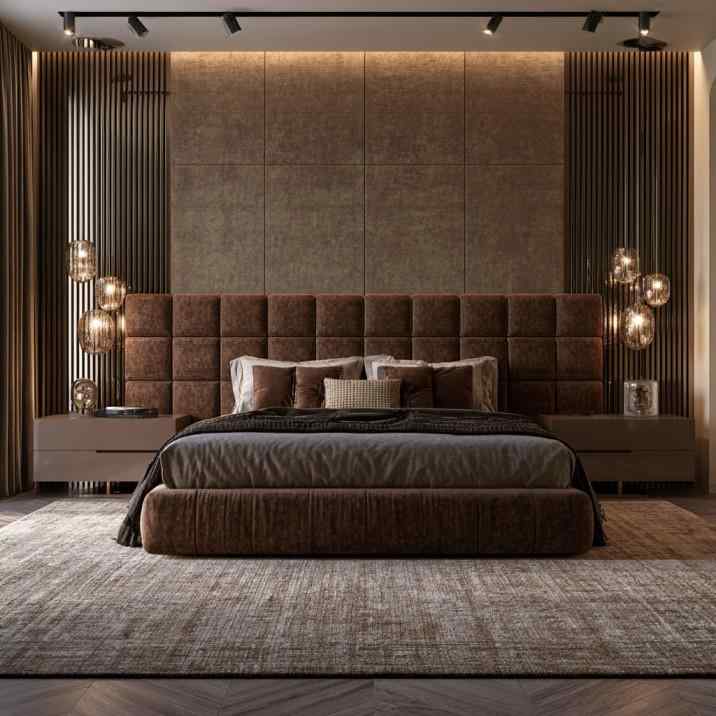
A grid-tufted suede headboard and amber pendants give this upholstered bed a luxurious finish.
The best upholstered bed designs don’t rely on extravagant tufting or expensive fabrics. They get the basics right: comfortable padding, good proportions, durable upholstery and a colour that belongs naturally in the room.
Choose a simple silhouette for flexibility, add texture when the room needs warmth, or go bolder with a custom headboard when you want the bed to become the star.
HomeLane can help you coordinate your bed, wardrobes, lighting and overall bedroom palette into one cohesive interior. Book a free consultation and create a bedroom that’s every bit as comfortable as it looks!
FAQs
1. Are upholstered beds good for bedrooms?
Yes. They add softness, texture and comfortable back support while giving the bedroom a warmer, more finished appearance. Choose durable upholstery if the bed will see heavy everyday use.
2. Which upholstered bed is best for a small bedroom?
Choose a slim frame with a relatively simple headboard. Avoid thick padded side rails, large wings and bulky footboards that take up unnecessary floor space.
3. What is the best fabric for an upholstered bed?
A durable, tightly woven fabric is a practical everyday choice. Performance upholstery is particularly useful if you want a light colour or easier stain maintenance.
4. Are upholstered beds difficult to maintain?
Not necessarily. Regular vacuuming with an upholstery attachment and prompt attention to spills will handle most everyday care. Deep tufting and delicate fabrics generally require more maintenance.
5. Which colour is best for an upholstered bed?
Neutral shades such as beige, taupe, cream and grey are versatile. For greater impact, consider muted green, blue, rust or brown while coordinating the shade with flooring and wardrobes.
6. What are the disadvantages of an upholstered bed?
Fabric can collect dust, absorb stains and require more cleaning than wood or metal. Upholstered frames can also appear bulky in small rooms if their proportions aren’t carefully chosen.



















 EXPLORE MORE