Summary
Bathroom sliding door designs maximise usable space while creating clean, contemporary interiors. Choosing the right material, track system, door style, and layout ensures smooth operation, excellent durability, and long-term functionality. Thoughtful planning helps transform even compact bathrooms into elegant, efficient spaces.
Expert Tip
Before selecting a sliding door, finalise your towel rails, mirrors, switches, and storage layout. This ensures the door can slide freely without obstructing essential fittings.
Best For
Small bathrooms and ensuite bathrooms
Bathroom doors have a bigger impact on your home’s functionality than most people realise. In compact homes especially, a swinging door can occupy valuable floor space, restrict furniture placement, and make the bathroom feel smaller than it really is. That’s why sliding doors have become an increasingly popular choice in modern Indian homes.
Today’s bathroom sliding door designs combine smart space planning with stylish materials that suit everything from contemporary apartments to luxury villas. Whether you’re considering frosted glass, aluminium frames, or a wooden sliding door for your bathroom, the right design can improve privacy, maximise usable space, and enhance your bathroom’s overall appearance.
When planned correctly, a sliding door becomes both a practical feature and an elegant design statement.
What Makes a Bathroom Sliding Door Different from a Regular Door?
Unlike hinged doors that swing open, sliding doors move sideways along a track, eliminating the clearance required for opening. This makes them ideal for compact bathrooms, powder rooms, ensuites, and apartments where every square foot matters.
Modern sliding doors also offer cleaner aesthetics, making bathrooms feel larger and more contemporary. Depending on the design, the door may slide along an exposed track, disappear into a wall pocket, or run behind a fixed panel.
Because they occupy less functional space, bathroom sliding door designs provide greater flexibility when planning vanities, toilets, and storage units. They’re particularly useful when the bathroom opens directly into a bedroom or dressing area.
Which Bathroom Sliding Door Designs Work Best for Privacy, Light and Space?
The ideal design depends on how much privacy, natural light, and visual openness you want.
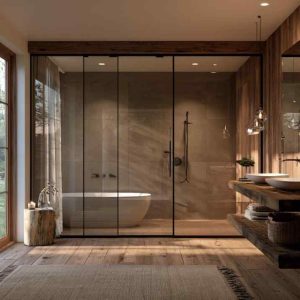
A modern bathroom sliding door design often features frosted or fluted glass framed in slim black aluminium, allowing light to filter through while maintaining privacy. These bathroom glass door designs are very popular in modern homes.
A wooden sliding door for bathroom creates warmth and pairs beautifully with natural stone, wood-look tiles, and earthy interiors. Engineered wood with moisture-resistant finishes performs better than untreated solid timber in humid conditions.
Mirror-finished sliding doors can visually enlarge compact bathrooms, while opaque laminate panels provide complete privacy.
For smaller homes, a small bathroom sliding door design with minimalist hardware and concealed tracks creates a clean, uncluttered appearance.
How Do Sliding Doors Work with Different Bathroom Layouts?
Sliding doors adapt well to a wide variety of bathroom layouts.
- Pocket doors disappear inside the wall, making them ideal where maximum floor space is required.
- Surface-mounted sliding doors are easier to install because they don’t require structural wall modifications.
- Barn-style sliding doors create a decorative focal point in rustic, industrial, or farmhouse-inspired homes.
- Compact ensuites often benefit from single-panel sliding doors, while wider openings may use double sliding panels.
Always ensure the sliding direction doesn’t interfere with switches, towel rails, mirrors, or storage units mounted on the adjoining wall. The right layout allows the door to operate smoothly without compromising functionality.
What Door Size, Track and Wall Space Are Required for Installation?
Accurate measurements are essential before ordering a sliding door. The wall beside the opening should generally provide sufficient clear space for the door panel to slide completely open.
Pocket doors require additional wall thickness to accommodate the concealed frame and track. High-quality aluminium or stainless-steel tracks provide smoother movement and greater durability than lower-quality hardware.
Soft-close mechanisms reduce noise while preventing accidental slamming. If using glass panels, always choose toughened safety glass that complies with relevant safety standards.
Proper planning at this stage avoids expensive modifications later!
Which Bathroom Sliding Door Features Matter Most for Long-Term Use?
Quality hardware often matters more than appearance alone.
- Look for corrosion-resistant tracks, stainless-steel rollers, soft-close systems, moisture-resistant finishes, and durable handles.
- If choosing timber, ensure it has been properly sealed against humidity.
- Frosted or textured glass provides privacy while remaining easy to clean.
- High-quality bottom guides help keep the door aligned without affecting smooth operation.
Selecting reliable hardware significantly extends the lifespan of the installation while reducing future maintenance.
What Are the Most Common Bathroom Sliding Door Mistakes?
One common mistake is choosing untreated timber that may warp in humid conditions. Another is selecting poor-quality tracks that become noisy or difficult to operate over time.
Many homeowners underestimate the wall space needed for surface-mounted sliding doors. Insufficient privacy is another issue, particularly when clear glass is used for bathroom entrances.
Finally, avoid choosing hardware based solely on price. Quality rollers, tracks, and soft-close systems make a noticeable difference in everyday use.
Create a Bathroom That’s Smarter and More Spacious!
The right bathroom sliding door designs combine functionality, durability, and elegant styling to make everyday living more comfortable. Whether you’re considering a small bathroom sliding door design, a warm wooden sliding door for the bathroom, or a sleek modern bathroom sliding door design, careful planning ensures the door performs beautifully for years.
At HomeLane, we design bathrooms where every detail, from layouts to finishes, works seamlessly together. Book a free HomeLane consultation and create a bathroom that’s stylish, practical, and perfectly suited to your home. Our designers can also craft unique bathroom door ideas based on the space available and your décor theme.
Sometimes, the simplest design change makes the biggest difference!
FAQs
1. Is a sliding door a good idea for a bathroom?
Yes. Sliding doors save floor space, improve movement, and create a modern appearance, making them particularly useful in compact homes. They’re an excellent choice when a traditional swinging door would restrict the room layout.
2. What is the best sliding door for a bathroom?
Frosted tempered glass, aluminium-framed glass, and moisture-resistant engineered wood are among the best options for most homes. The right choice depends on your privacy requirements, interior style, and maintenance preferences.
3. Which type of door is best for a bathroom?
Sliding, pocket, and high-quality hinged doors all work well depending on the available space and layout. Moisture-resistant materials and durable hardware are more important than the opening mechanism alone.
4. Is a glass sliding door safe for a bathroom?
Yes. Tempered safety glass is specifically designed to withstand impact and is widely used in modern bathrooms. Frosted or fluted finishes also provide privacy without sacrificing natural light.
5. How much space is required for a sliding bathroom door?
A surface-mounted sliding door generally requires clear wall space equal to the width of the door panel for it to open fully. Pocket doors require sufficient wall thickness to conceal the sliding mechanism.
6. What are the disadvantages of a sliding door in a bathroom?
Sliding doors usually provide a slightly less airtight seal than hinged doors and require quality tracks to operate smoothly over time. Choosing premium hardware and professional installation helps minimise these drawbacks.













 EXPLORE MORE