Illuminated Elegance: Creative Lighting Ideas for Your Modern TV Unit Design
By Bivin Peter- May 28, 2026
AI Summary
3 key insights · 1 expert tip
Strategic lighting transforms TV units into focal points, enhancing ambience and reducing eye strain for a sophisticated living space.
Key Insights:
What You'll Read Here:
Warm white lighting (2700K–3000K) creates a cosy, inviting atmosphere preferred in Indian homes.
Hidden LED strip lights offer a seamless, modern halo effect, ideal for contemporary TV units.
Avoid visible fixtures and incorrect placement to prevent glare and ensure a polished look.
HOMELANE EXPERT TIPBy our design team
Ensure light sources are diffused and hidden from direct view to create a soft glow that highlights textures, not a harsh glare on the TV.
Summary
The right lighting can completely transform the aesthetic of a living room, turning a functional entertainment area into a sophisticated focal point. A well-planned TV unit design balances functionality with ambience, using light to highlight textures, reduce eye strain, and add depth to the space. Whether through subtle strip light for TV unit placements, dramatic backlighting, or refined spot light for TV unit arrangements, lighting creates a layered look that enhances the overall decor. By strategically selecting the correct colour temperature and fixture types, homeowners can elevate their interiors effortlessly. This guide explores the most effective ways to integrate light into a modern setup, ensuring the space remains both visually stunning and highly practical for daily living.
Best For
Modern Indian homeowners and apartment dwellers looking to elevate their living room aesthetic with premium, functional, and stylish lighting solutions for their media consoles.
Expert Tip
When finalising your TV unit light design, ensure that the light source is hidden from direct view; the goal is to create a soft, diffused glow that highlights the textures of the cabinetry rather than a harsh glare that reflects off the television screen.
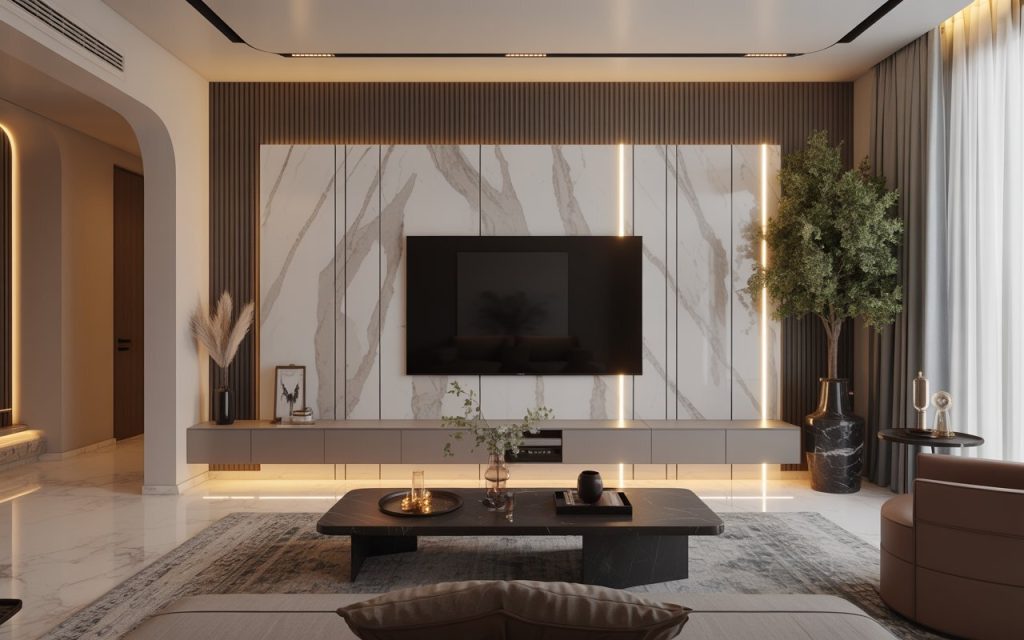
A marble TV unit design with hidden LED strip lights creates a sophisticated, glowing living room focal point.
The living room serves as the heart of the home, and more often than not, the entertainment console acts as its visual anchor. However, a beautiful piece of furniture can often feel flat or unremarkable without the right atmosphere. This is where lighting becomes an essential element of modern TV unit design. Lighting is not merely about visibility; it is about creating mood, highlighting architectural details, and providing comfort during long movie nights.
Warm accent lighting inside wooden shelves gives this TV unit design a cosy, gallery-like living room ambience.
Many modern Indian homes are embracing open-plan layouts where the living area is visible from the dining and kitchen spaces. Consequently, the TV unit with lights must look elegant even when the screen is turned off. Whether one prefers a minimalist aesthetic or a luxurious, layered look, integrating the right illumination can turn an ordinary wall into a gallery-worthy feature. This article explores how to use various lighting techniques to enhance any TV unit design, ensuring the living room remains both a functional entertainment hub and a stylish statement piece.
Why Lighting Matters for Your TV Unit
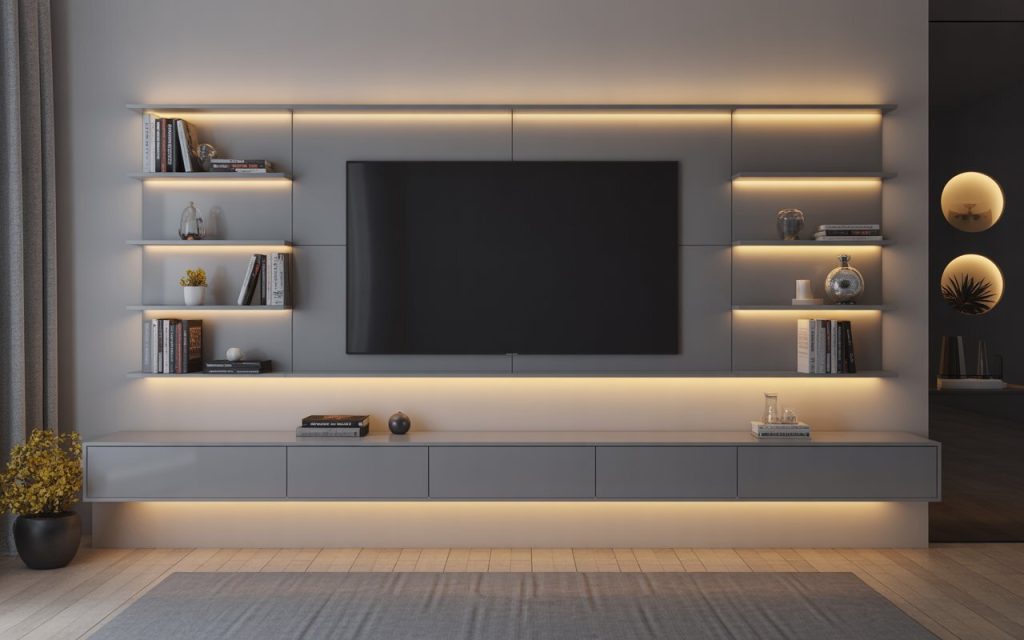
A backlit TV unit with LED lights under every shelf creates a dramatic, eye-catching entertainment wall.
A TV unit design is often the focal point of the room. Without proper lighting, the area can appear dull, especially during the evening. Lighting serves three primary purposes: functional utility, aesthetic enhancement, and eye comfort. Functional lighting makes it easier to access cabinets or storage units. Aesthetic lighting, such as a TV unit with led lights, draws the eye to decorative elements like books, sculptures, or photo frames. Finally, ambient lighting is crucial for comfort; watching television in a pitch-black room can strain the eyes. By adding a soft backlight or TV unit design with lights, homeowners can create a balanced contrast that makes the viewing experience far more enjoyable.
Best Lighting Ideas for Modern TV Units
To achieve a professional finish, consider these versatile lighting solutions:
Accent Lighting:
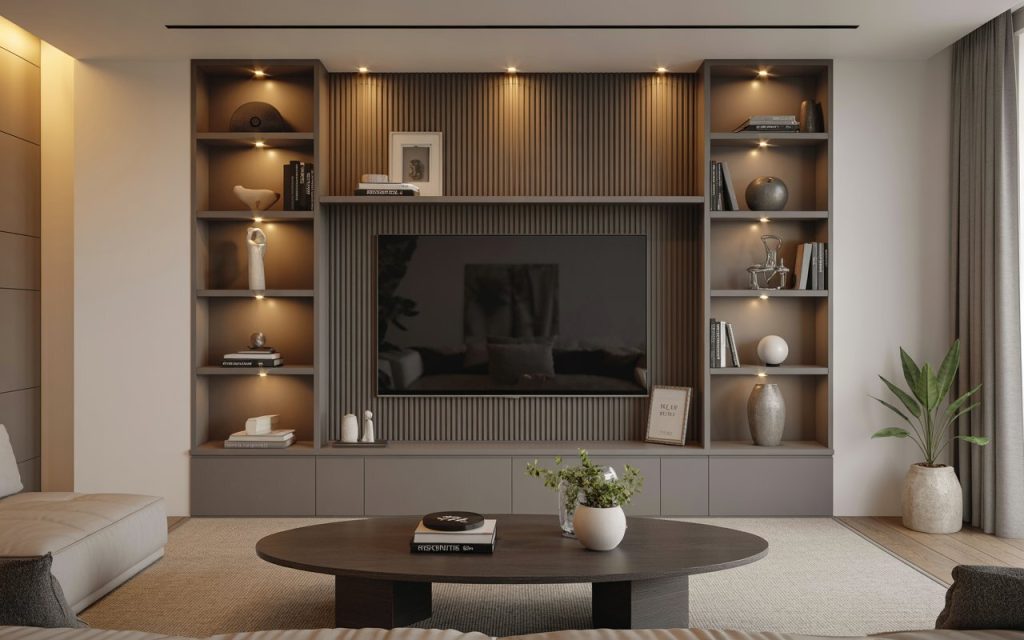
Recessed spotlights on a wooden TV unit highlight curated decor for a premium, gallery-style living room look.
This is perfect for highlighting specific architectural features or decorative items. Using a spot light for TV unit displays allows for a gallery-style effect, drawing attention to collectibles or art pieces placed on open shelves.
LED Strip Lighting:
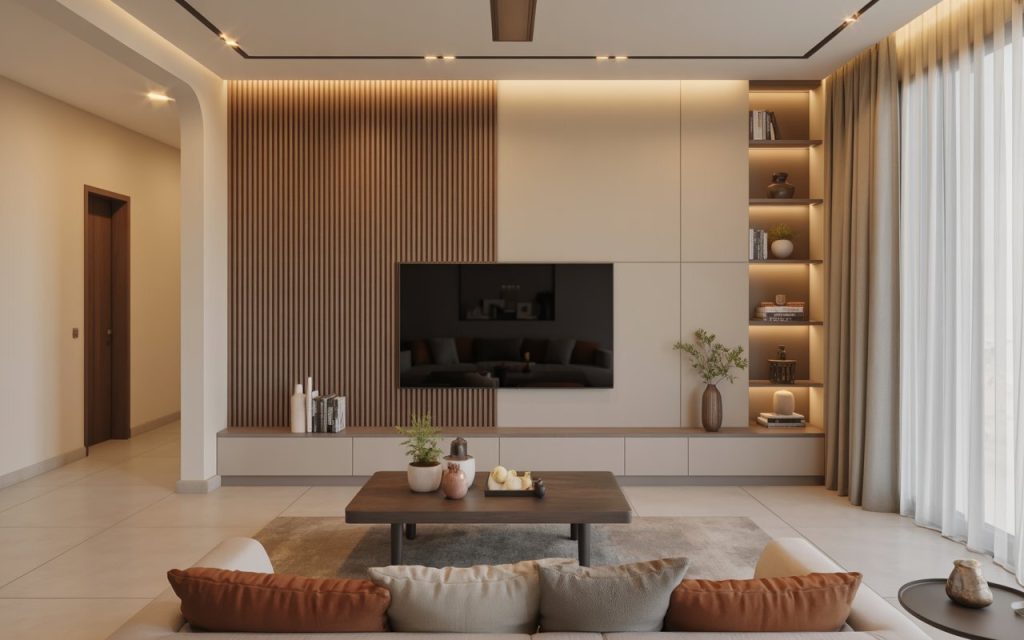
Hidden LED strip lights along a floating TV unit create a seamless, modern halo effect on the wall.
Perhaps the most popular choice for a contemporary TV unit design, strip lights are flexible and energy-efficient. They can be installed behind the main panel, under shelves, or along the edges of cabinetry to create a halo effect.
Pendant Lighting:
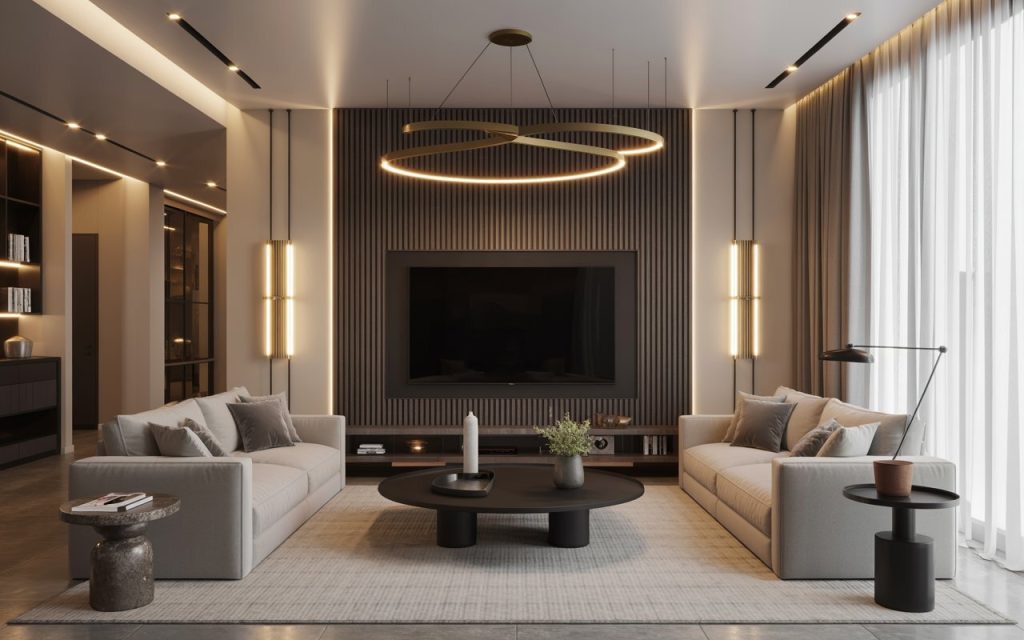
Dramatic pendant and pillar lights flank a dark TV unit design, adding vertical elegance to the living room.
For a more dramatic or sophisticated look, hanging pendant lights on either side of the unit can create vertical visual interest. This works exceptionally well in homes with higher ceilings or those featuring a grand, floor-to-ceiling TV unit design.
Backlighting:
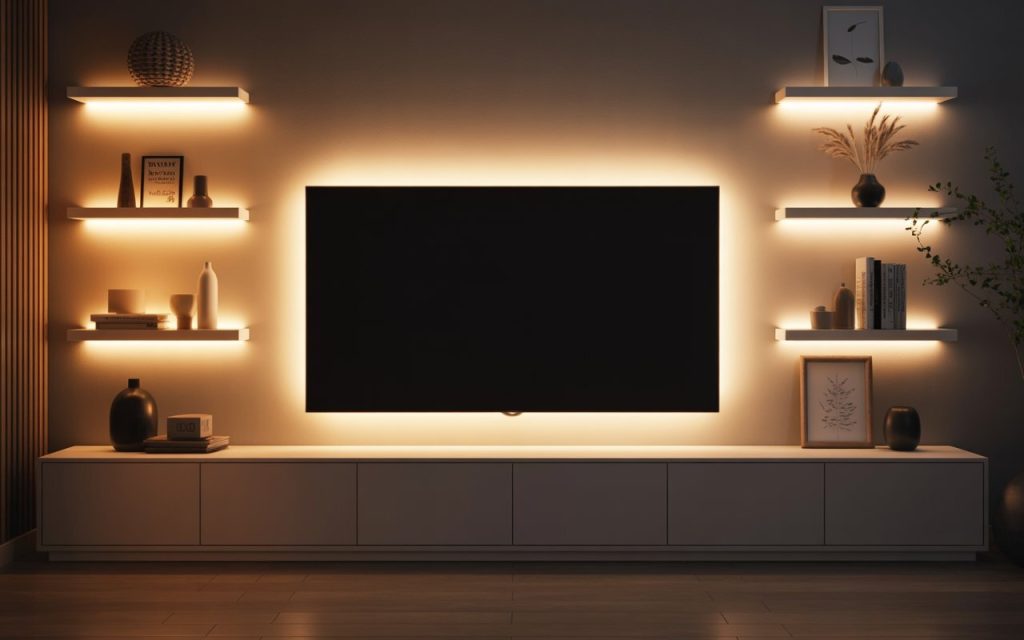
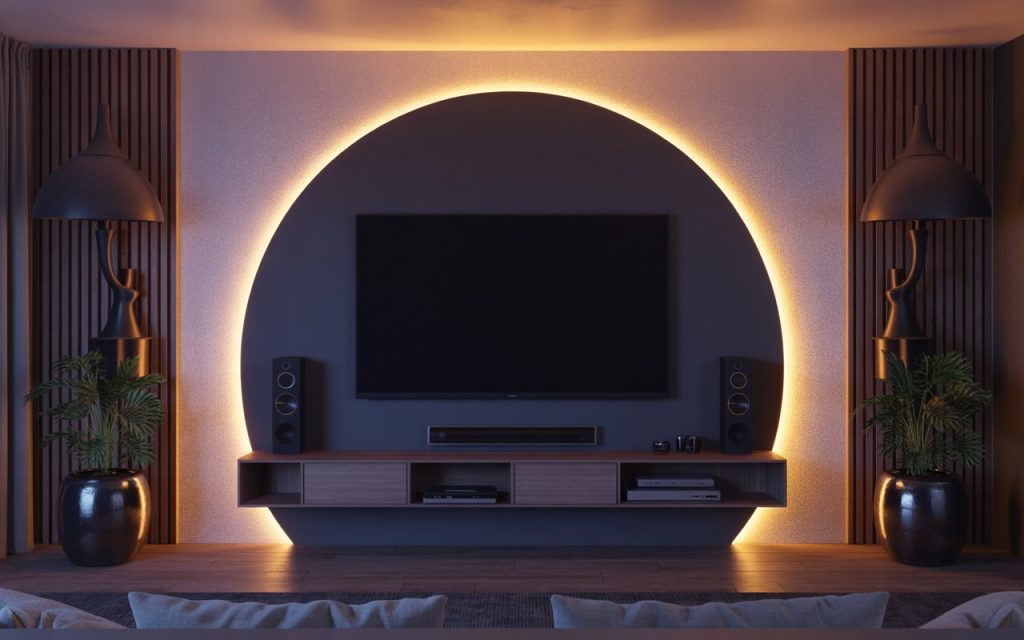
A warm LED backlit arch behind the TV unit creates a cinematic, immersive focal point in the living room.
This involves placing lights behind the television screen itself. It reduces contrast fatigue and adds a futuristic, cinematic feel to the room, especially when using a TV unit with led lights that can be dimmed.
Choosing the Right Lighting for Your TV Unit
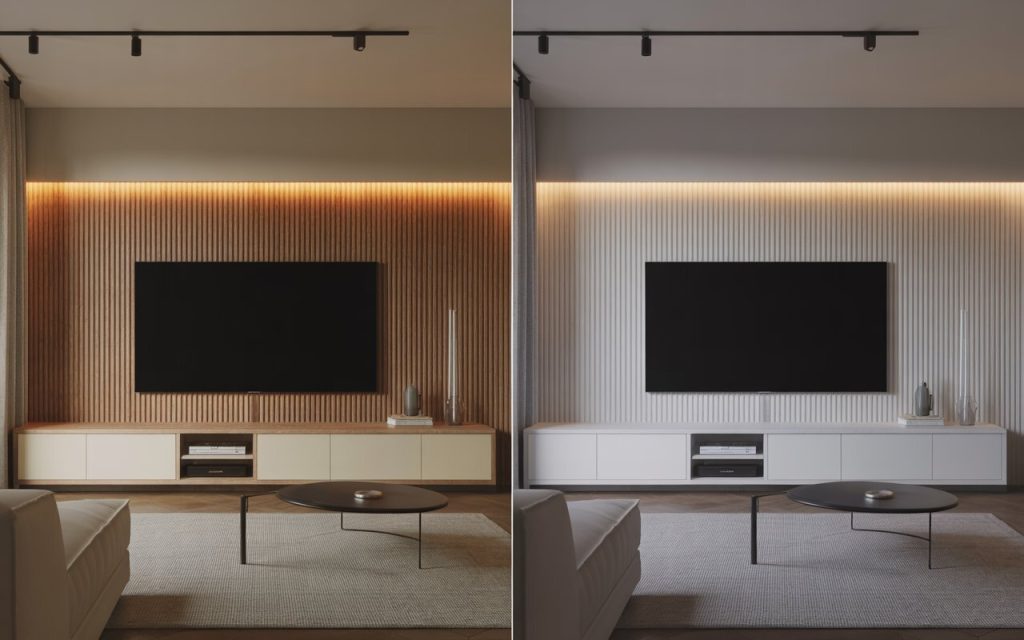
A warm versus cool TV unit light colour comparison shows how temperature dramatically shifts the room’s mood.
Selecting the correct TV unit light depends on the overall style of the room. Warm white lighting (2700K–3000K) is generally preferred in Indian homes as it creates a cosy, welcoming atmosphere. Cool white or daylight tones (4000K–5000K) might feel too sterile for a relaxation space but can work well in ultra-modern, minimalist apartments.
When selecting the TV unit light colour, consider the finish of the unit. If the unit features high-gloss laminates, avoid direct, powerful spotlights that may cause annoying reflections. Instead, opt for diffused TV unit light sources that bounce light off the wall, providing a gentle glow. For units with wood grains or matte finishes, accent lighting helps to accentuate the natural texture of the material, making the TV unit design feel rich and premium.
Smart Lighting Ideas
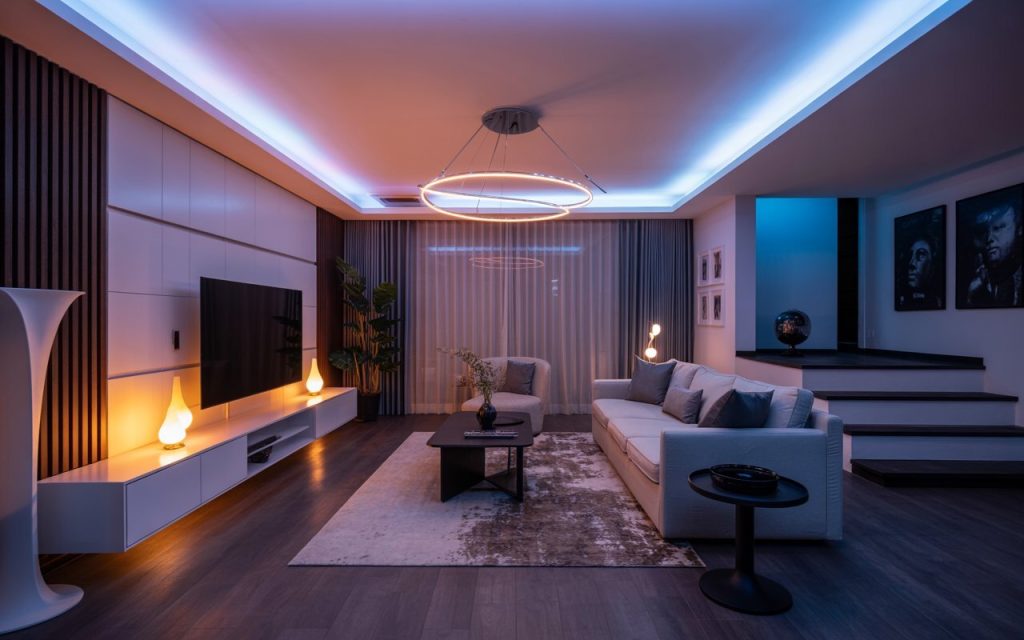
Smart LED lighting in cool blue tones transforms this TV unit design into a futuristic, cinematic living space.
Technology has revolutionised home interiors. Smart lighting allows homeowners to adjust the brightness and even the TV unit light colour using a smartphone or voice commands. One can set “scenes”—such as “Movie Mode,” where the lights dim automatically, or “Hosting Mode,” where the lights brighten to showcase the room’s design. Integrating a smart strip light for TV unit installation behind the panel can even sync with the TV’s display, extending the colours from the screen onto the surrounding wall. This creates an immersive, theatre-like environment right at home.
Mistakes to Avoid in TV Unit Lighting
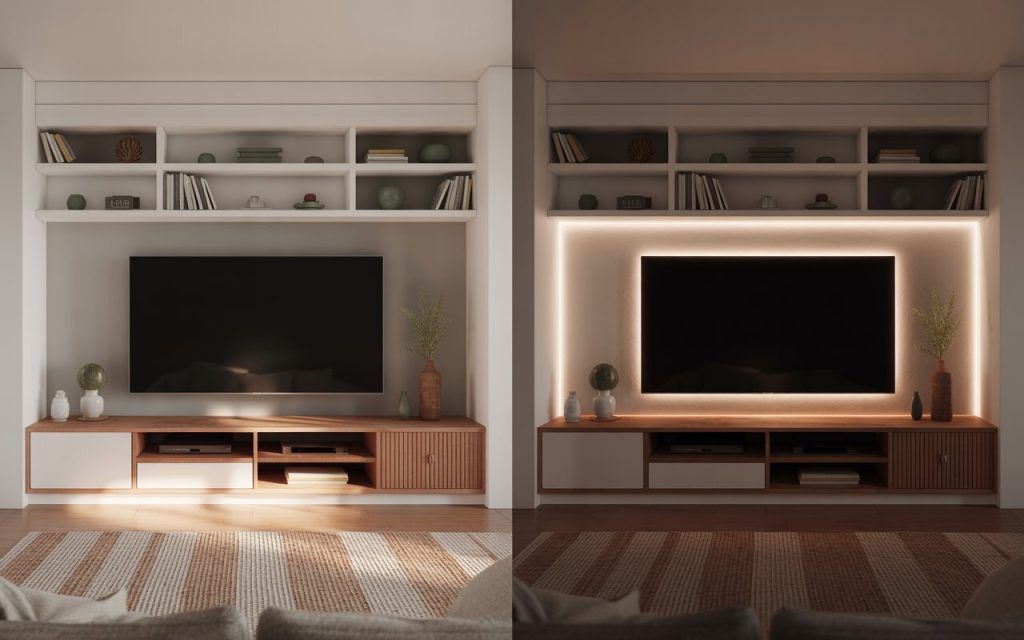
A before-and-after comparison reveals how LED backlighting completely elevates a TV unit’s visual impact.
Even the best TV unit design can be ruined by poor lighting choices. Avoid these common pitfalls:
Visible Fixtures: Unless the fixture itself is a design statement, ensure light sources are hidden behind panels or diffusers. Seeing the raw LED dots ruins the seamless look.
Overloading: Too many lights can make the area look cluttered. Keep the lighting purposeful.
Incorrect Placement: Positioning lights so they reflect directly into the television screen will create glare, making it difficult to watch. Always test the position of the TV unit light before permanent installation.
Inconsistent Temperatures: Ensure all lights around the unit have the same colour temperature. Mixing warm and cool lights can create an unappealing, disjointed appearance.
A Beautiful Living Room Without the Stress
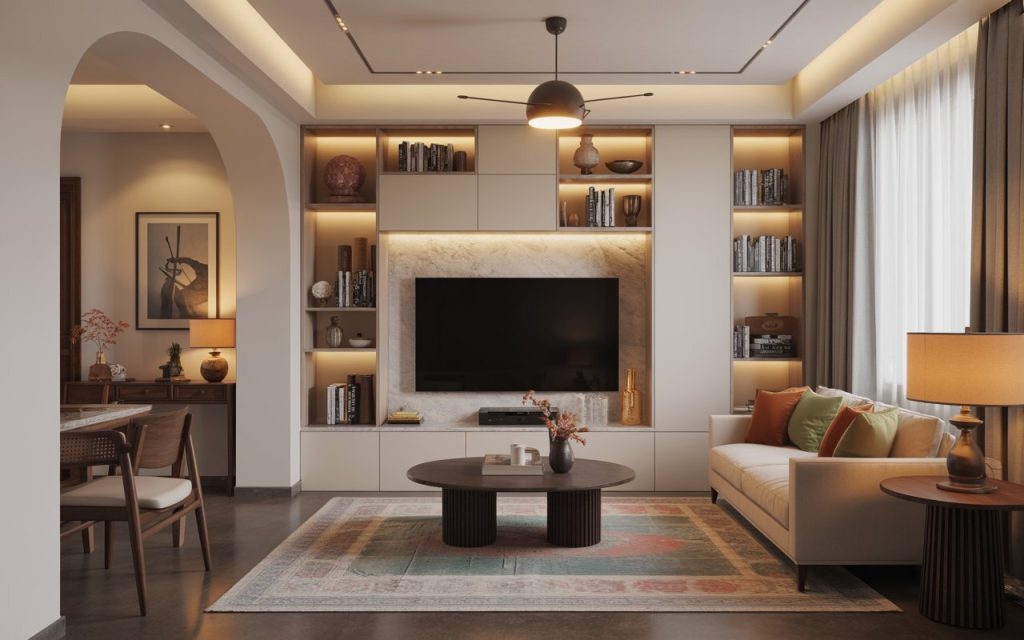
Soft accent lighting inside a built-in TV unit design with lights enhances the entire living room’s warmth and depth.
A well-lit entertainment area does more than just hold a screen; it transforms the living room into a sophisticated, comfortable retreat. Whether one prefers the understated elegance of hidden LED strips or the dramatic flair of accent spotlights, the possibilities to elevate a TV unit design are endless. By carefully selecting fixtures and layering light, homeowners can create a space that looks curated and professionally designed.
A stunning home needs clarity, care, and clever design. Even in the smallest spaces, with the tightest budgets, beauty is possible. At HomeLane, expert designers help transform ordinary homes into extraordinary spaces through thoughtful planning, intelligent storage, and timeless design.
FAQs
1. What are the best lighting options for a modern TV unit?
The most effective options include LED strip lights for soft backlighting, recessed spotlights to highlight decor, and sleek wall sconces for ambient glow. Choosing a TV unit light design that combines these layers creates the most visual impact.
2. How can I use LED lights to highlight my TV wall?
Install a strip light for the TV unit behind the rear panel to create a halo effect, or place them under open shelves to illuminate decor. This technique adds depth and makes the TV unit with led lights appear to float off the wall.
3. Should TV unit lighting be warm, cool, or neutral?
For residential living rooms, warm white light (2700K–3000K) is typically recommended. It promotes relaxation and warmth. Cool or neutral TV unit light colour options are better suited for clinical or task-heavy environments rather than entertainment spaces.
4. What type of lighting works best for a small living room TV unit?
In smaller spaces, avoid bulky fixtures. Use slim, recessed LED profiles or hidden strip lights to enhance the TV unit design with led lights without consuming visual or physical space. This creates an airy, uncluttered aesthetic.










 EXPLORE MORE