Master Bedroom Wardrobe Design for Small Spaces and Smart Storage
By HomeLane- January 10, 2026
AI Summary
3 key insights · 1 expert tip
Explore 7 master bedroom wardrobe designs, from integrated dressing tables to L-shaped layouts, to enhance both storage and room aesthetics.
Key Insights:
What You'll Read Here:
Wardrobes can range from a few hundred to several thousand dollars depending on complexity and customisation.
Consider neutral colours like white, cream, and grey for versatility, or bold jewel tones for a luxurious touch.
L-shaped and sliding wardrobes maximise space, ideal for efficient organisation in any master bedroom.
HOMELANE EXPERT TIPBy our design team
To personalise your wardrobe, incorporate unique hardware like decorative knobs and handles, or add artwork and photos to the doors.
A master bedroom wardrobe has a difficult balancing act. It needs to hold clothes, bags, accessories, linen and perhaps even those suitcases you haven’t touched since your last holiday. Yet you don’t want the biggest piece of furniture in the room to make the bedroom feel like a storage unit.
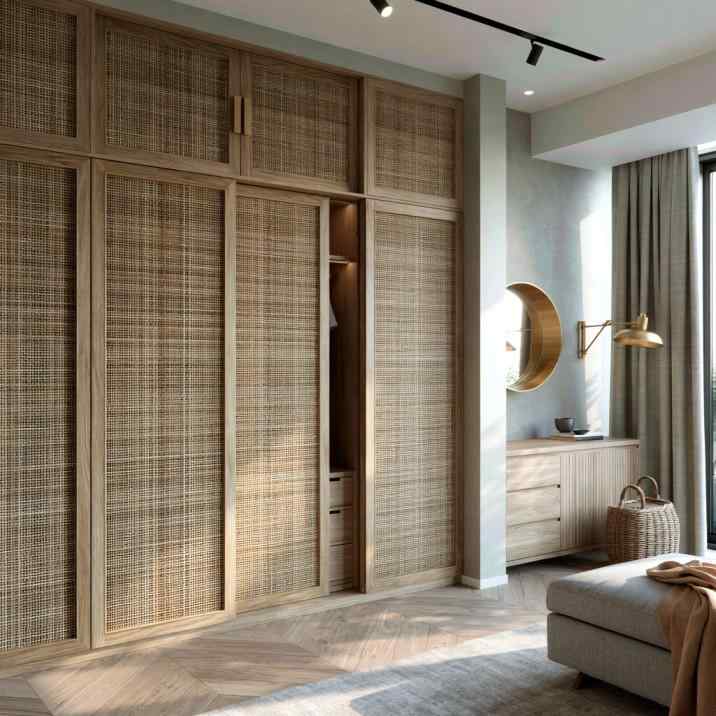
Cane-weave sliding shutters and ceiling-high lofts give this master bedroom wardrobe a warm, airy feel.
The smartest master bedroom wardrobe design ideas solve both problems. They use every available inch efficiently while keeping the room calm, comfortable and visually uncluttered. Here’s how to find the right balance.
Master Bedroom Wardrobe Design Ideas for Different Room Layouts
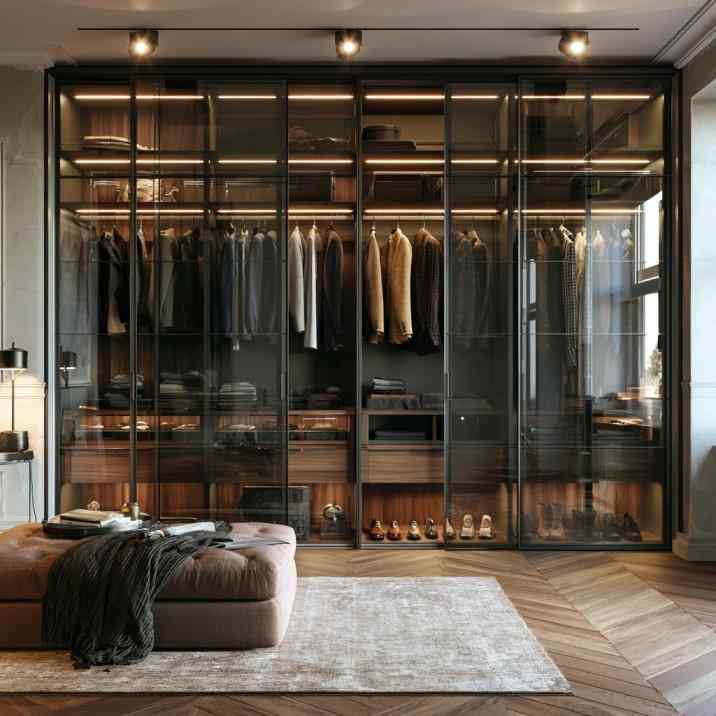
Tinted glass, walnut interiors and integrated lighting create a luxury wardrobe that displays every outfit.
Before choosing colours or finishes, decide where the wardrobe should go. A full-length wardrobe along an uninterrupted wall is usually the most efficient solution because it creates plenty of storage without breaking up the room visually.
If space is tight, use vertical rather than horizontal real estate. A floor-to-ceiling master bedroom cupboard design gives you extra loft storage for suitcases, blankets and occasionally used items without taking up another inch of floor area.
Awkward corners can also work harder. An L-shaped wardrobe can use two adjoining walls, while a wardrobe fitted around a niche can turn an otherwise redundant recess into useful storage.
For particularly compact rooms, these wardrobe ideas for small bedrooms offer more ways to squeeze in storage without squeezing out your walking space.
Modern, Minimalist or Luxury: Which Style Is Yours?
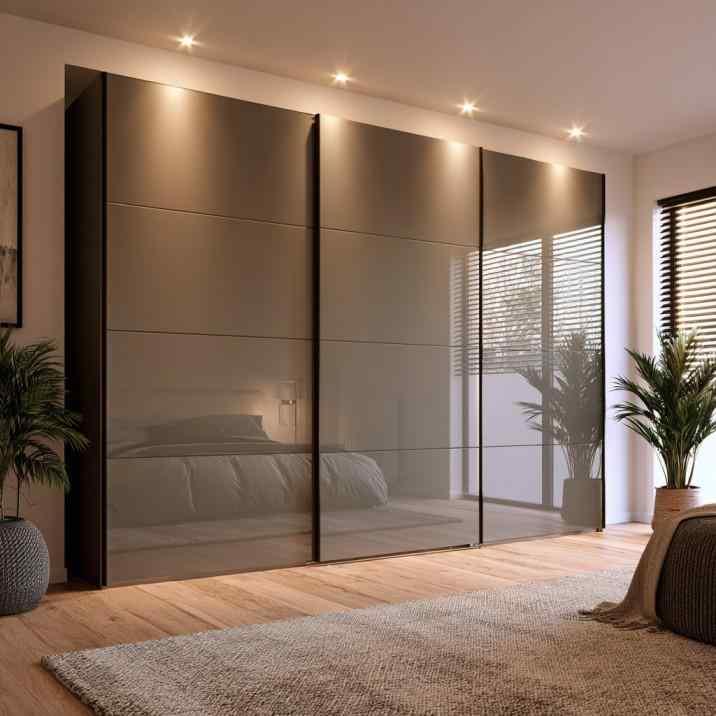
A glossy taupe sliding wardrobe saves floor space and reflects light around the master bedroom.
A modern master bedroom wardrobe design often relies on clean lines, handleless or profile shutters and a restrained colour palette. Matte neutrals, wood grains, glass and subtle two-tone combinations work especially well.
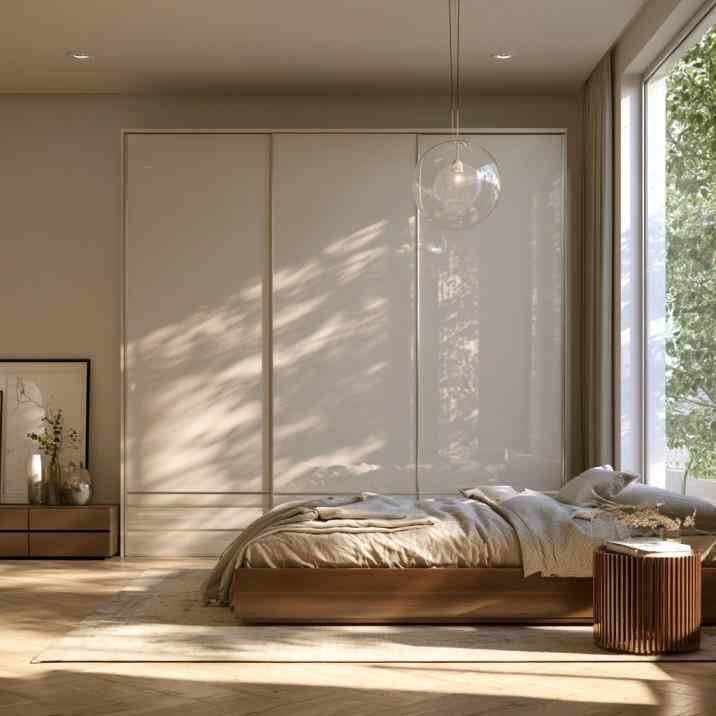
A minimalist wardrobe design for bedroom spaces takes this further. Choose plain shutters in the same or a similar colour as the walls, minimise visible handles and let the wardrobe recede into the background. This is particularly effective in smaller bedrooms.
Prefer something richer? A luxury master bedroom wardrobe design can combine wood veneer, tinted glass, metallic profiles, integrated lighting or glossy finishes. The key is restraint. One or two premium details usually look more sophisticated than using every finish at once.
Sliding, Hinged or Built-In: Which Wardrobe Works Best?
Ivory floor-to-ceiling shutters let this minimalist wardrobe recede quietly into the bedroom walls.
There is no universal winner. Your room layout should decide.
Wardrobe Type
Best For
Keep in Mind
Sliding
Small bedrooms
Only part of the wardrobe opens at once
Hinged
Medium to large rooms
Needs clearance in front
Built-in
Maximum use of space
Less flexible if layouts change
Floor-to-ceiling
Extra storage
Upper sections need easy access
Sliding shutters don’t project into the room, making them useful when the wardrobe sits close to the bed. Hinged doors, however, give you full access to the wardrobe at once and can include useful storage on the inside of the shutters.
Built-ins are particularly good for awkward walls and niches. And if you’re wondering whether extending right to the ceiling is worthwhile, this guide to floor-to-ceiling wardrobes explores the pros and cons.
What Materials and Finishes Are Best for a Master Bedroom Wardrobe?
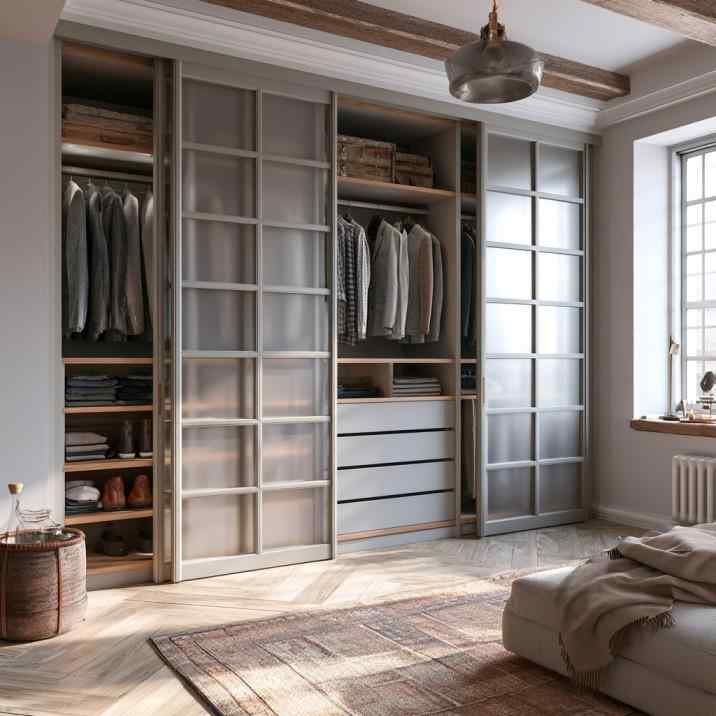
Frosted glass sliding doors reveal smart storage with hanging rails, drawers and shoe shelves.
For most modular wardrobes, engineered boards such as particle board, MDF or HDF are used for the carcass and shutters, with laminates, acrylic, PU, veneer or glass providing the visible finish.
Laminate is practical, versatile and relatively easy to maintain. A wooden wardrobe design for the master bedroom can use wood-finish laminate or veneer to introduce warmth without requiring solid timber throughout.
Mirrored shutters are another clever option in small bedrooms. They can eliminate the need for a separate full-length mirror and visually expand the room. Use them selectively, though. An entire wall of mirrors can feel overwhelming.
For a simple wardrobe design for master bedroom spaces, matte laminate in ivory, beige, greige or a light wood tone is difficult to go wrong with.
How Can You Design a Master Bedroom Wardrobe for Maximum Storage?
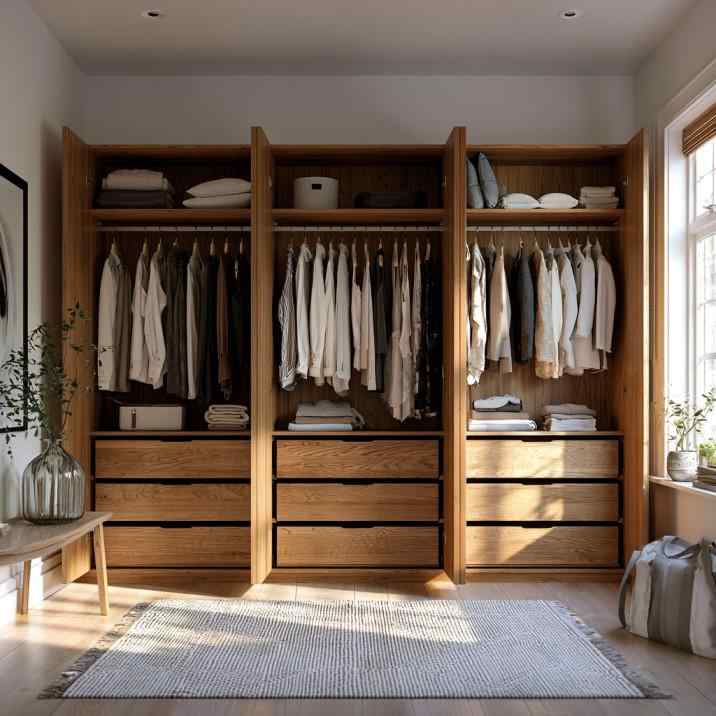
Hinged doors open up this wooden wardrobe for full access to hanging space, drawers and shelves.
This is where good wardrobe design really proves its worth. A beautiful shutter can’t rescue an interior that doesn’t work for your clothes!
Start by separating long hanging clothes, short hanging clothes and folded items. Shirts and trousers don’t need the same hanging height as dresses or long kurtas, so double hanging rails can significantly increase capacity.
Add drawers for innerwear and accessories, adjustable shelves for folded clothes and dedicated shoe storage near the bottom.
Pull-out trouser racks, jewellery organisers and internal mirrors are useful if you will genuinely use them.
High shelves are best reserved for luggage, quilts and seasonal items. Everyday clothing should stay between roughly waist and eye level, where it is quickest to reach.
The most functional wardrobes are designed around their owners rather than a standard template. This guide to building wardrobes for specific storage needs explains why customised internal planning makes such a difference.
Make Your Wardrobe Work Harder!
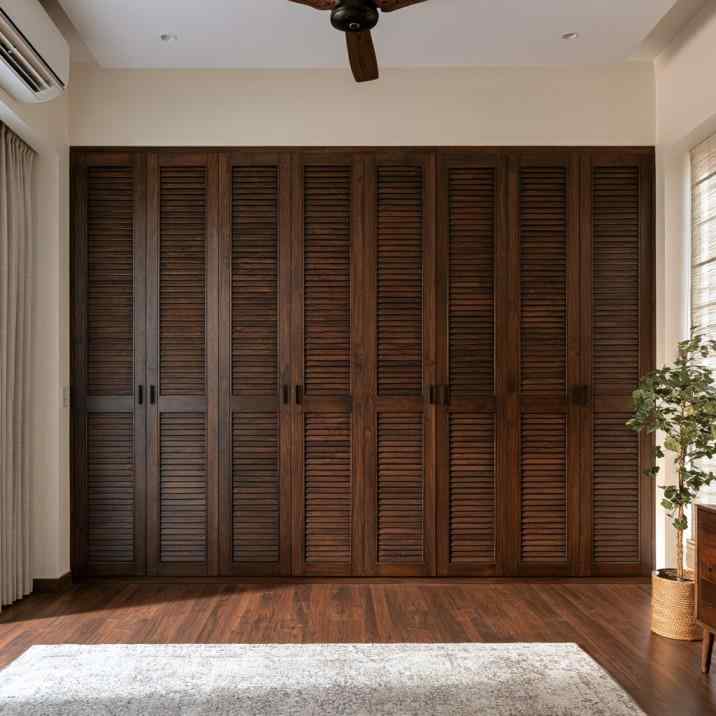
Dark louvred wood shutters turn a full-length master bedroom cupboard into a rich, ventilated feature.
The best master bedroom wardrobe design ideas are not about fitting in the maximum number of cupboards. They are about fitting in the right storage while keeping your bedroom comfortable and restful.
Choose your wardrobe type according to the available space, take storage right up to the ceiling where useful and plan the interiors around your clothes and habits. HomeLane‘s designers can help you bring layout, storage, materials and finishes together in a wardrobe designed specifically for your room. Book a free consultation and start creating a bedroom that feels beautifully organised, inside and out.
FAQs
1. What is the best wardrobe design for a master bedroom?
A built-in or floor-to-ceiling wardrobe usually provides excellent storage. Choose sliding shutters for tighter spaces and hinged shutters where there is sufficient clearance.
2. Are sliding wardrobes better than hinged wardrobes?
Sliding wardrobes save floor space because the shutters don’t open outwards. Hinged wardrobes, however, provide full access to the interiors at once. Your room layout should determine the better choice.
3. Which material is best for a master bedroom wardrobe?
Good-quality engineered boards with laminate are practical and easy to maintain. Veneer, acrylic, PU and glass can be used when you want a more premium finish.
4. How deep should a master bedroom wardrobe be?
A wardrobe is typically around 550 to 600 mm deep to accommodate hanging clothes comfortably. Exact dimensions can vary according to the internal fittings and shutter system.
5. How do I plan the inside of my master bedroom wardrobe?
Start by assessing how much hanging, folded, drawer and shoe storage you need. Keep frequently used clothes within easy reach and reserve upper shelves for luggage and seasonal items.
6. Is a built-in wardrobe better for a master bedroom?
Built-in wardrobes are excellent for maximising available space and creating a streamlined appearance. They are particularly useful when you want to utilise niches, corners or the full height of a wall.
7. Can I combine a wardrobe with a dressing table?
Yes. A dressing niche with a mirror, drawers and lighting can be incorporated into the wardrobe, saving valuable floor space and giving the bedroom a cleaner, more coordinated look.










 EXPLORE MORE