HDF Board Guide: Strong, Smooth and Stylish for Every Project
By Usha Balasubramanyan- May 25, 2026
Summary
Many homeowners struggle to choose between MDF, plywood, and other engineered boards. Each option looks the same on the outside, but behaves differently once installed. Lack of the right knowledge can lead to poor material choices and long-term issues. HDF board gives you better density than MDF and a smoother, more uniform finish than plywood. It’s a great pick for panels, furniture, and HDF laminate flooring. Do keep in mind that it is not really the best choice for anything that calls for heavy structural use or constant moisture exposure. With proper use, HDF delivers a clean look and long-lasting results without unnecessary complexity.
Best For
Those looking for smooth finishes, modern panels, wardrobes, and flooring solutions. It suits spaces where durability and clean detailing matter but heavy structural strength is not required.
Expert Tip
Use HDF board for visible surfaces and detailing, and combine it with plywood for structural support. This mix gives you both strength and finish without compromise.
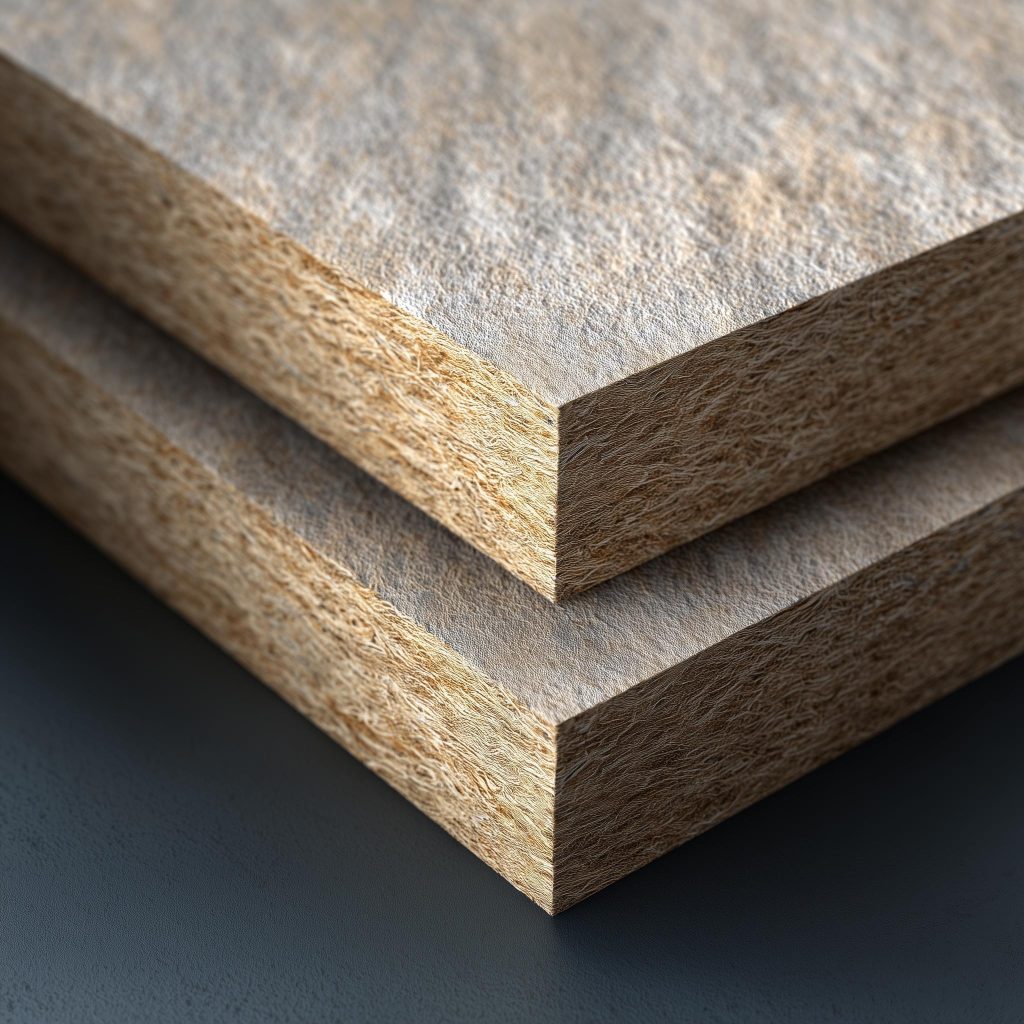
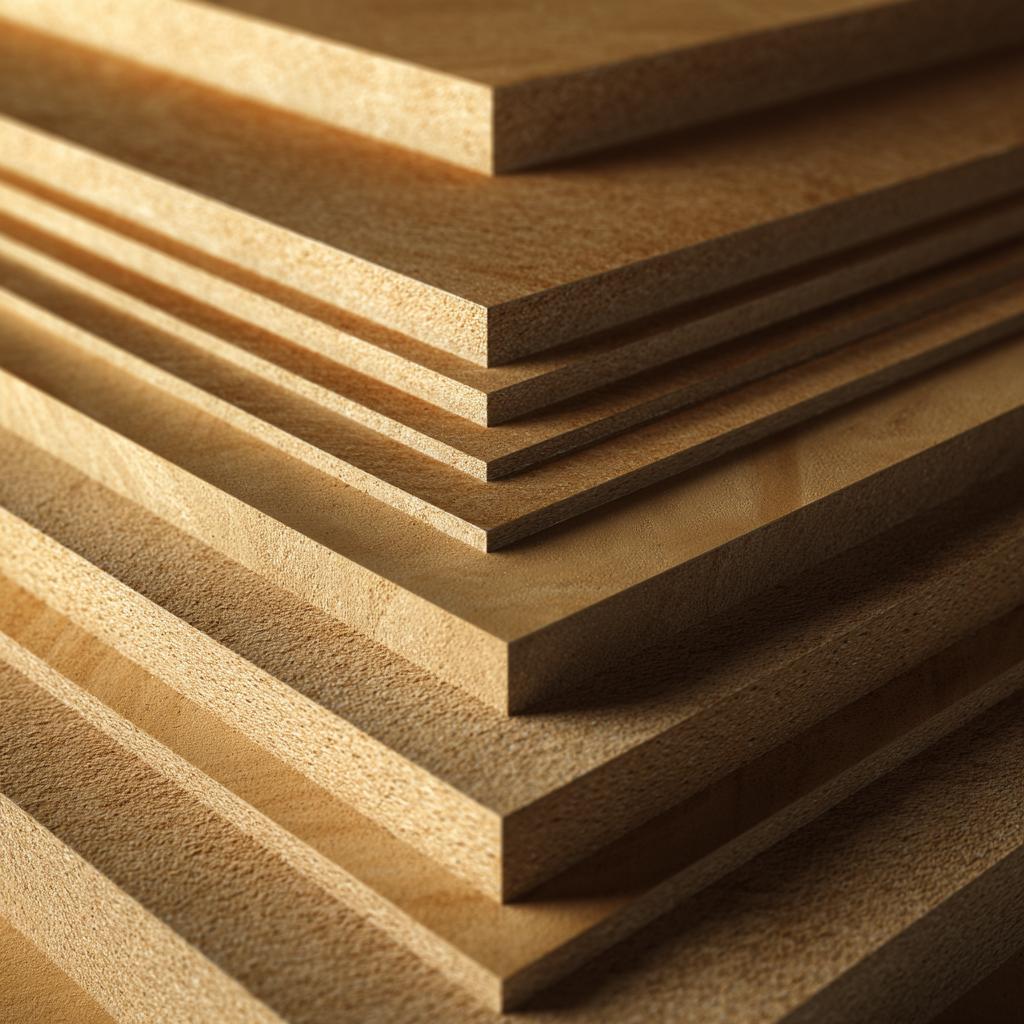
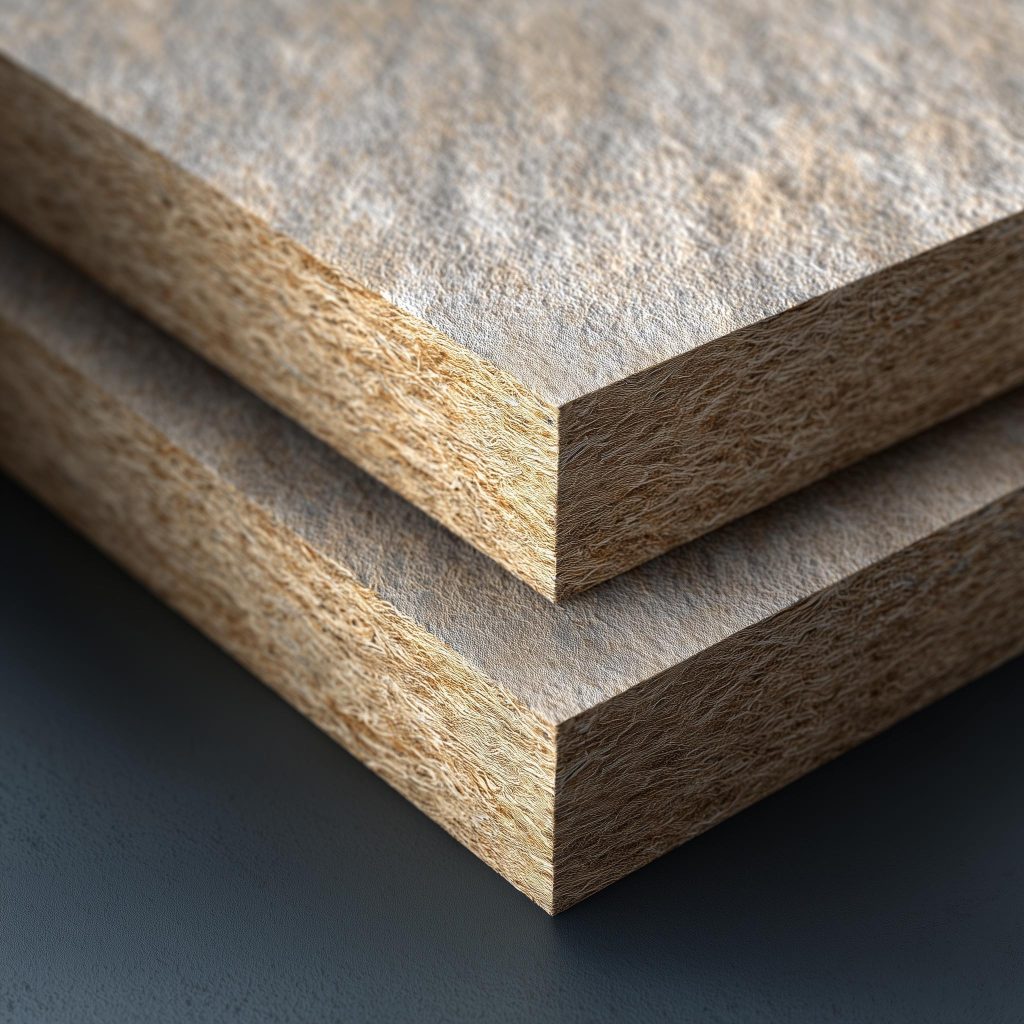
Stacked HDF boards showing the dense, uniform core that sets this material apart from MDF.
Choosing the right board material is always a difficult decision. Everything looks similar on the surface, but performance varies a lot once you start using it. If you want something stronger than MDF but still smooth enough for clean finishes, HDF board is worth a closer look. It sits right in that middle ground. Tough, refined, and versatile.
From furniture to panels and even HDF laminate flooring, this material shows up in more places than most people realise. Let’s break it down in a simple way so you know where it fits and where it doesn’t.
What is HDF Board?
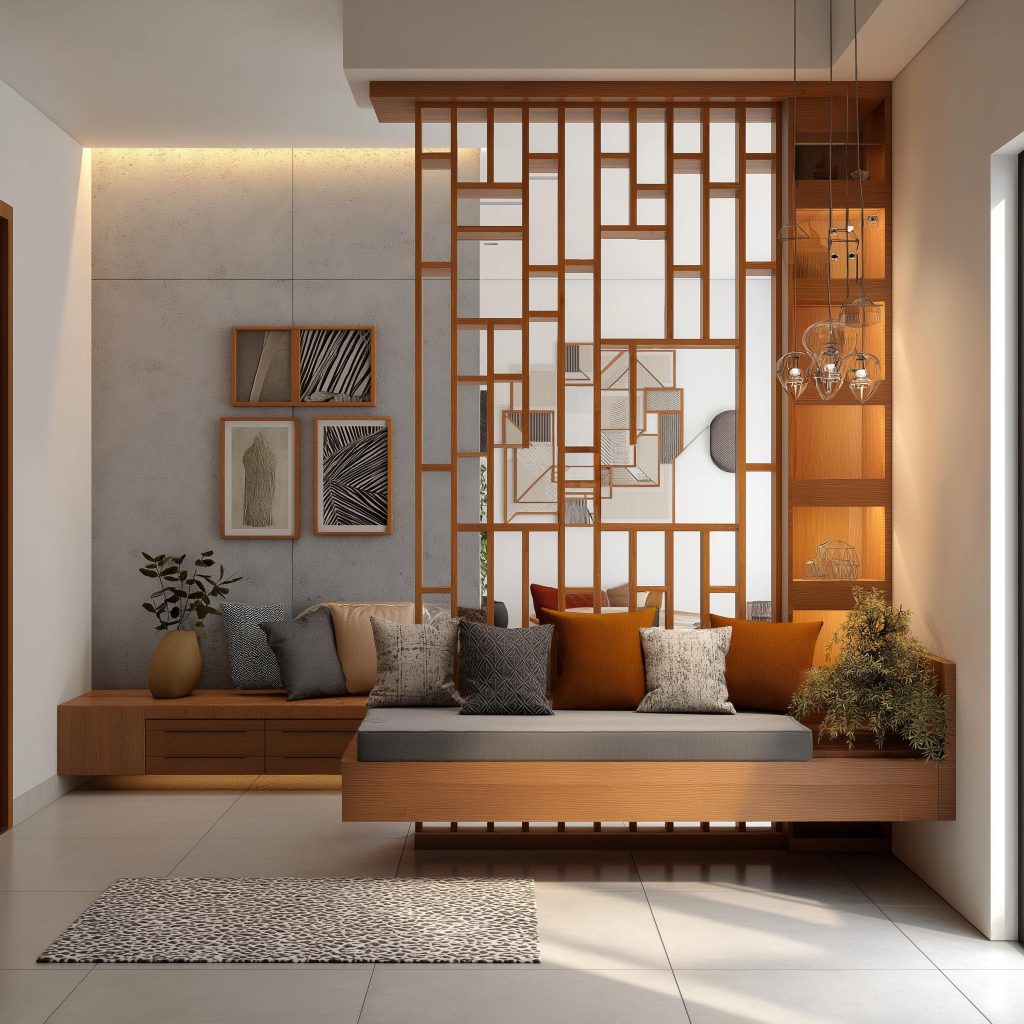
A detailed HDF wood panel partition adding structure and warmth to a modern living space.
HDF board stands for High-Density Fibreboard. It is made by compressing wood fibres under high pressure. The result is a dense, smooth sheet that holds shape well and offers a fine finish. You may also hear terms like HDF sheet, HDF material, or HDF wood, though technically it is an engineered product.
Compared to MDF, it is denser. Compared to plywood, it is more uniform. That combination is what makes it useful in interiors.
Key Properties of HDF
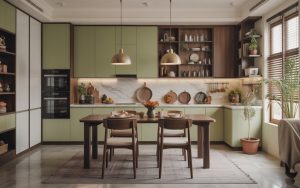
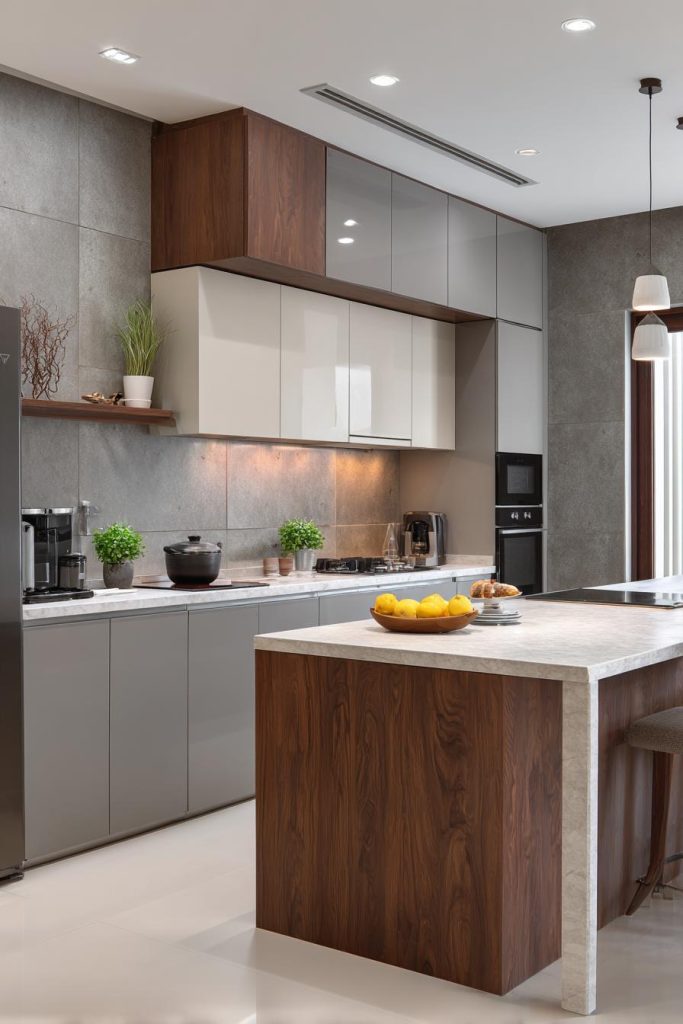
A sleek kitchen featuring HDF laminated shutters that showcase the material’s smooth, durable finish.
The biggest strength of HDF material is density. It is compact and sturdy, which means it does not bend easily. This makes it suitable for applications where a smoother and more stable surface is needed. The finish is another advantage. HDF sheet surfaces are smooth, making them ideal for laminates, paints, or veneers.
It also cuts cleanly, which helps in detailed designs and edges. Because of its density, it can handle more wear than MDF. That is why it is used in products like HDF laminate flooring.
Applications of HDF Board in Interior Design
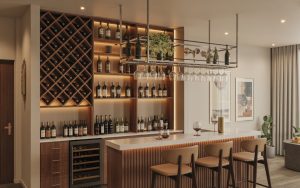
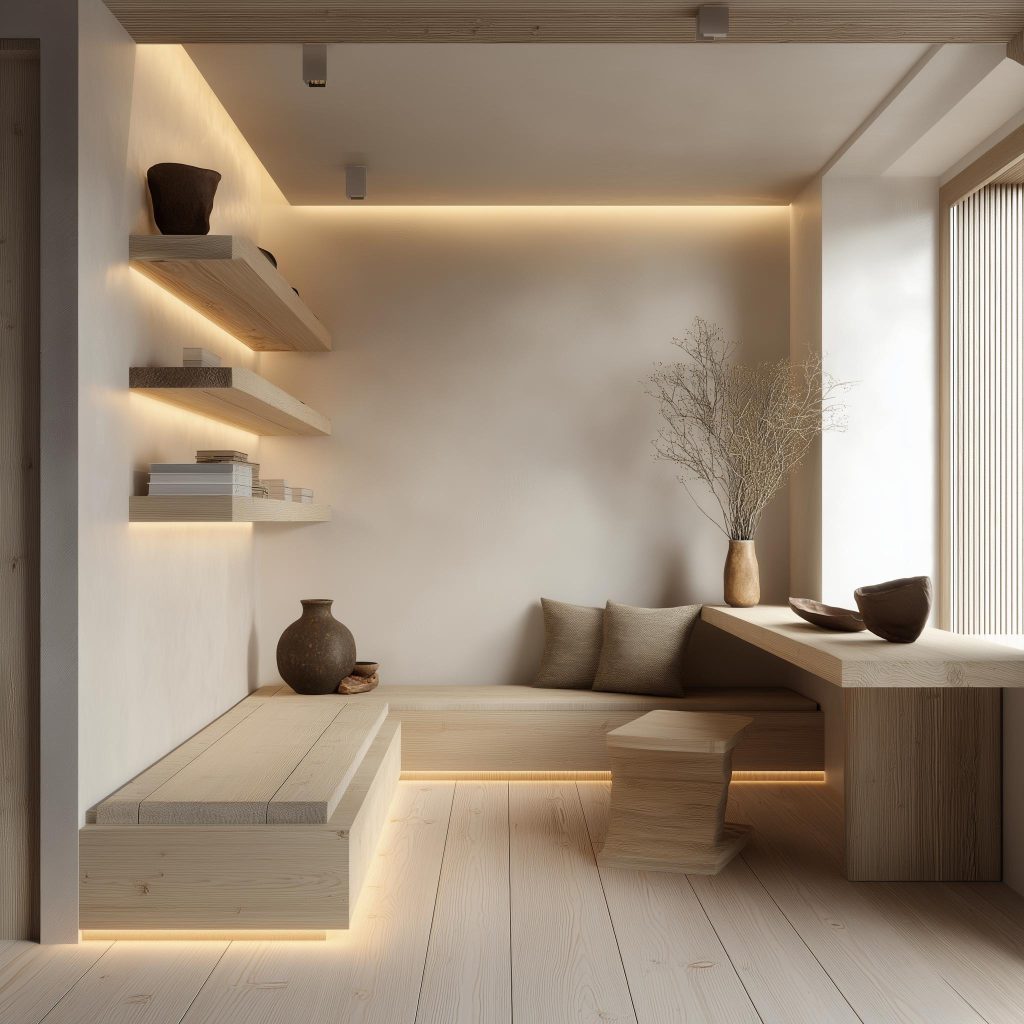
Floating HDF shelves with warm lighting illustrate how versatile this material is across interior spaces.
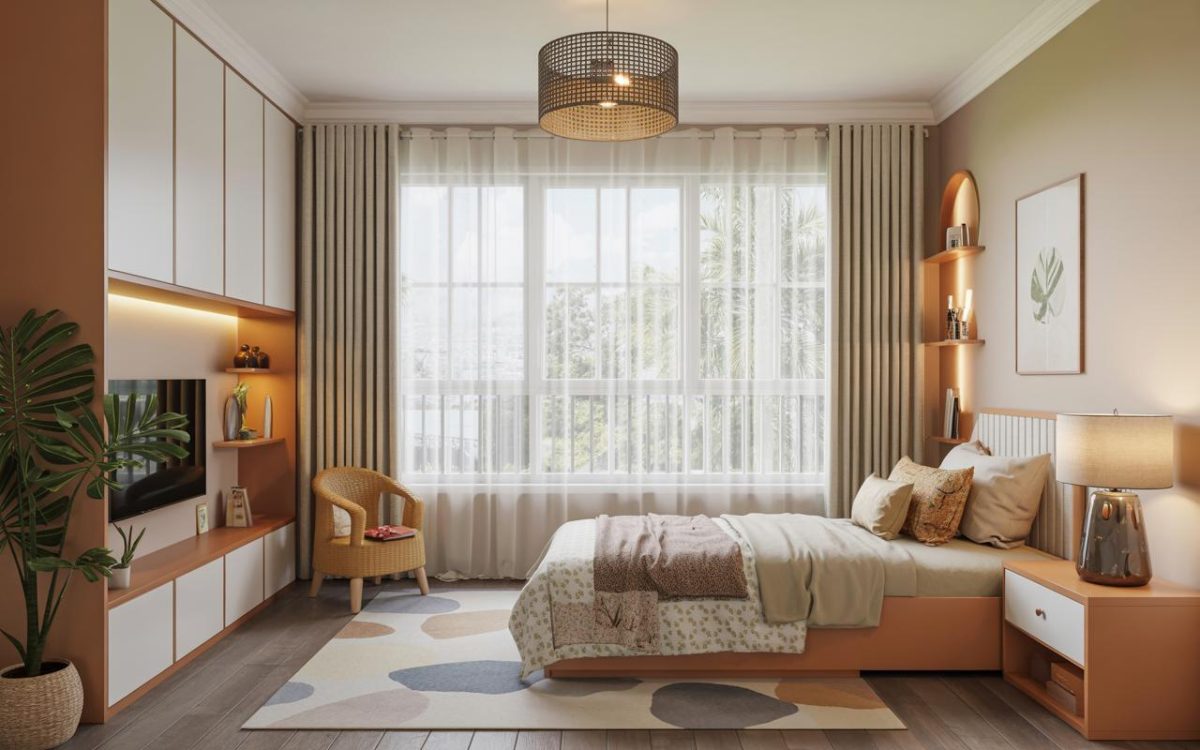
HDF uses cover a wide range of interior elements. In bedrooms, it is used in panels and shutters, and in certain HDF wardrobe designs. You will find it in furniture pieces like HDF wood bed frames where a smooth, finished look is needed.
It is also used for wall treatments like HDF wall panels, which create a neat and structured appearance. Flooring is another major area. HDF laminate flooring is popular because it offers strength along with a clean finish. In many cases, HDF laminated board works well for surfaces that need durability without heavy bulk.
Advantages of Using HDF in Interiors
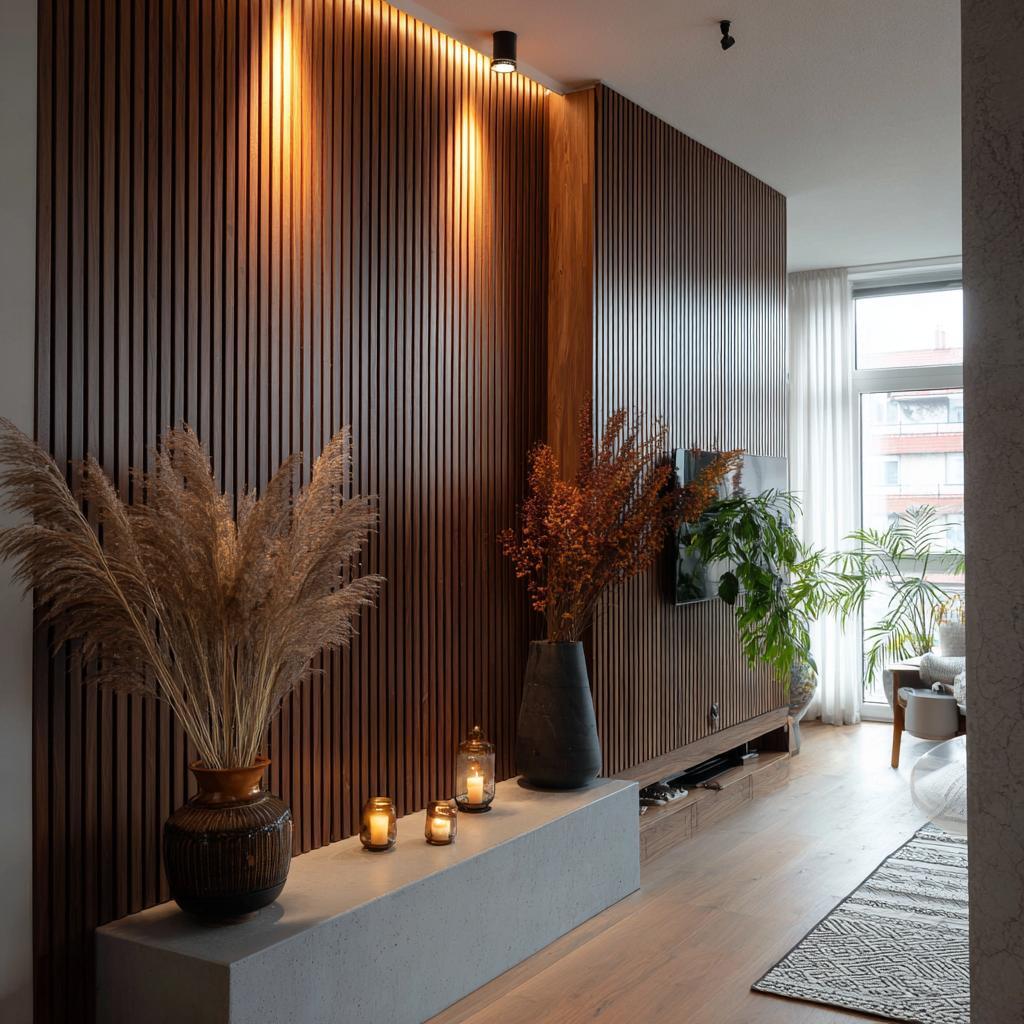
A rich dark HDF slatted wall panel demonstrating the material’s ability to hold detailed finishes cleanly.
There are a few clear reasons why HDF board is used widely.
It is strong. The density makes it more durable than MDF in many applications.
It offers a smooth finish. This makes it perfect for laminates and painted surfaces.
It is consistent. Unlike natural wood, there are no knots or irregular grains.
It works well for precision work. Detailed cuts and patterns are easier to achieve.
And in many cases, the HDF board price sits in a reasonable range compared to premium materials.
Limitations to Consider
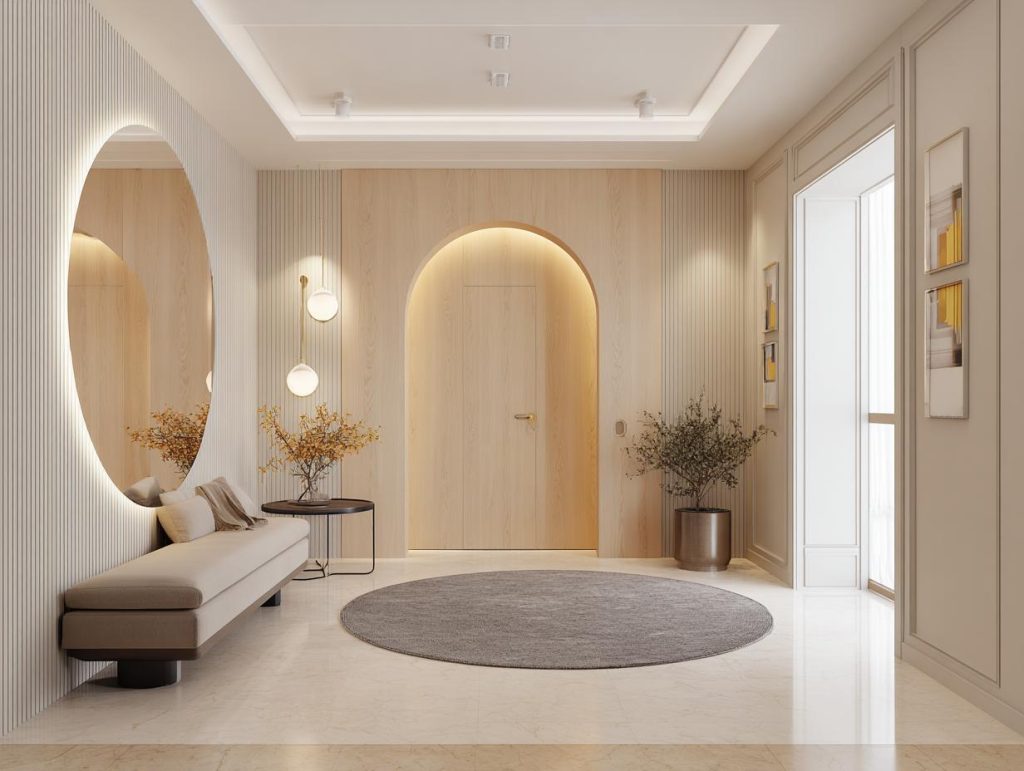
A light HDF fluted panel entryway showing where proper application keeps limitations in check.
Like any material, HDF board has its limits. It is not fully waterproof. Prolonged exposure to moisture can cause damage. It is heavier than MDF, which can make handling slightly more difficult. It is not ideal for load-bearing structures. While strong, it is better suited for panels and surfaces rather than core structural elements.
Repairs are also not as simple. Once damaged, it is harder to restore compared to solid wood. Understanding these points helps you use HDF plywood or boards in the right way.
Why We Use HDF in Our Interior Projects
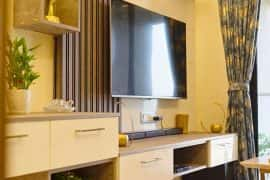
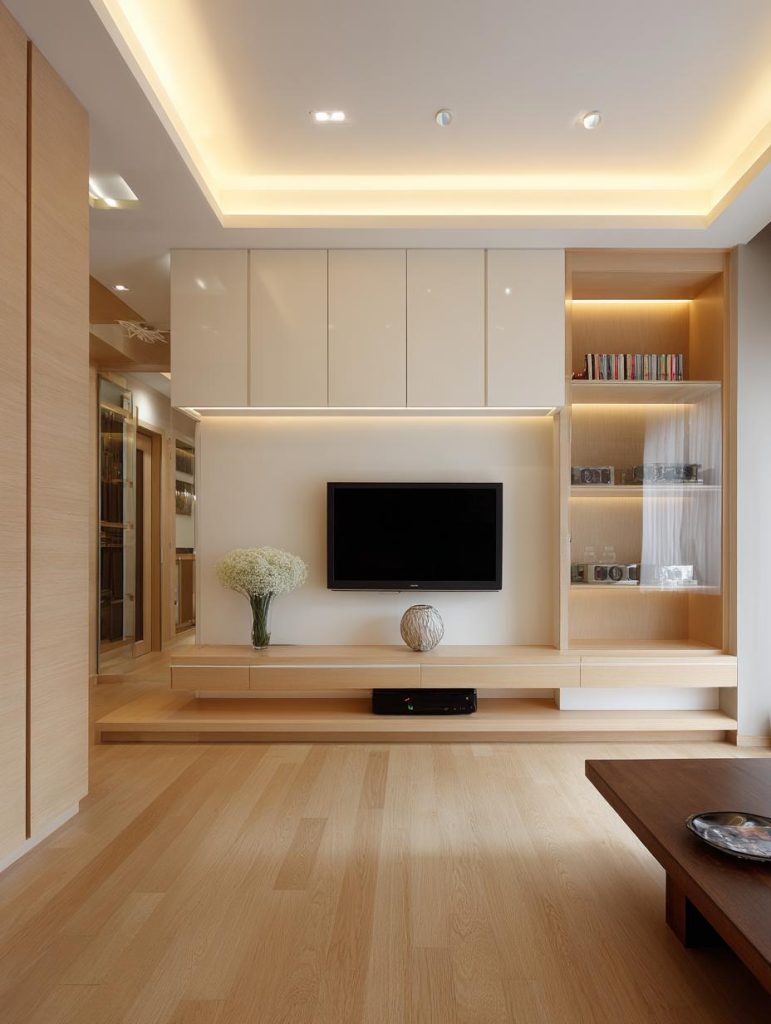
A cream HDF TV unit with cove lighting showing why designers choose this material for modern interiors.
In many projects, HDF offers the right balance. It gives a clean, refined finish that works well for modern interiors. It also holds laminates better, which helps maintain consistency across large surfaces. For elements like panels, shutters, and certain furniture pieces, it delivers both strength and visual neatness.
When used in the right areas, it reduces maintenance and improves the overall finish of the space. That is why designers often include it as part of their material mix.
Tips for Clients Choosing Between MDF, HDF, or Plywood
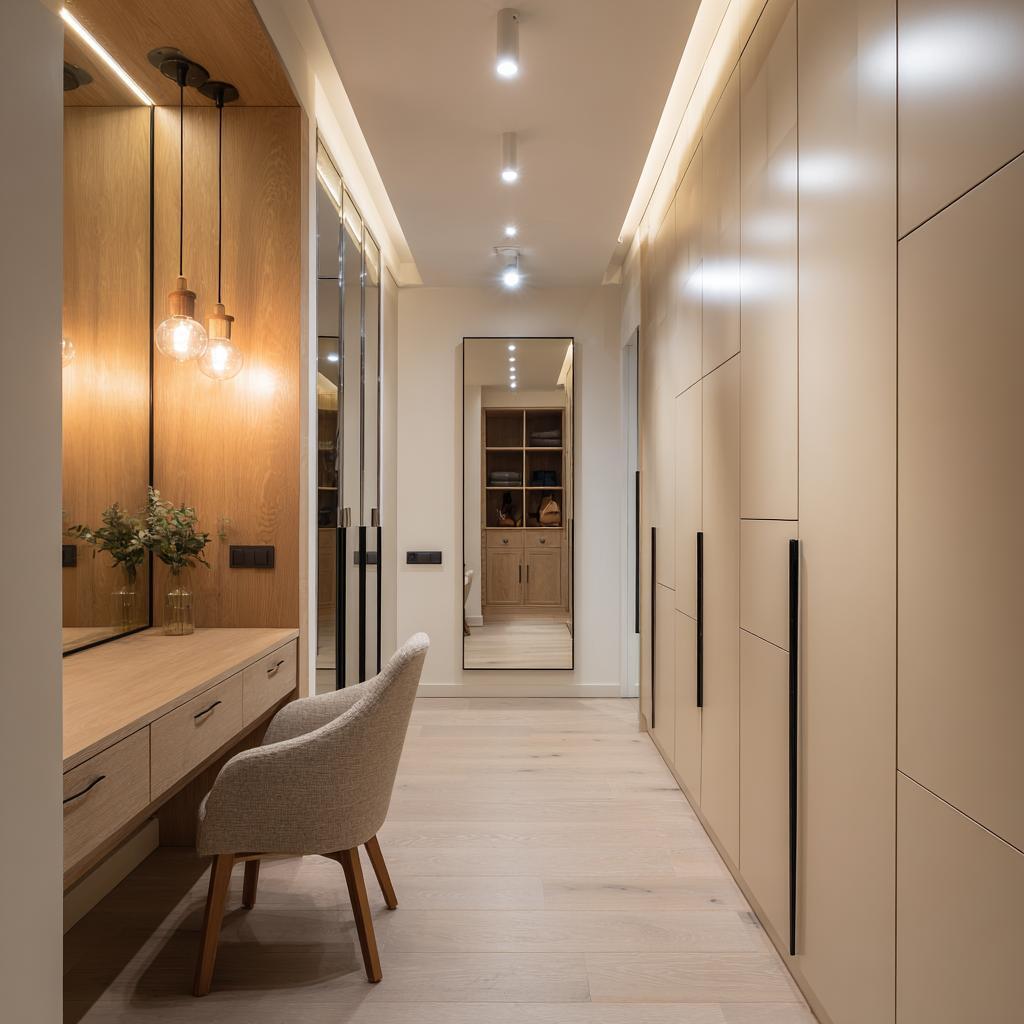
A walk-in wardrobe with HDF panels showing how the material compares favourably for fitted furniture.
Choosing between materials can feel overwhelming. If you want a smoother finish and slightly better strength than MDF, HDF vs MDF comparisons usually favour HDF. If strength and durability when loaded (like required for shelves) are your priority, HDF vs plywood will lean towards plywood.
For decorative panels and surfaces, HDF works well. For core structures and heavy-duty use, plywood is a safer choice. The right decision depends on where the material will be used, not just how it looks.
Creating Interiors That Work Long-Term
A close-up of HDF board edges revealing the compressed fibre density that supports long-term interior performance.
Materials are not just about appearance. They decide how your home performs over time. With HDF board, you get strength, smoothness, and a finish that stays consistent. It works best when used in the right applications, alongside other materials.
A well-planned mix gives you interiors that look good and hold up well in daily use. Material selection can make or break your interiors. At HomeLane, designers help you choose where HDF board works best and where other materials are better suited.
FAQs
1. Is HDF board waterproof?
No, HDF board is not fully waterproof. It can handle a little moisture, but should not be exposed to it for long periods.
2. Can HDF be painted or laminated?
Yes, HDF sheet surfaces are smooth and work very well with paint, laminates, and veneers. This makes them a flexible choice for different finishes.
3. How long does HDF furniture last?
With proper use and care, HDF wood furniture can last many years. Avoiding moisture and handling it carefully helps extend its life.
4. Is HDF eco-friendly?
HDF is made from compressed wood fibres, which helps utilise wood waste. However, its eco-friendliness depends on manufacturing standards and adhesives used.
5. Where can HDF boards or HDF laminate flooring be installed?
They can be used in bedrooms, living rooms, and other indoor areas. Avoid spaces with constant water exposure unless specially treated.
6. Is HDF board moisture-resistant or waterproof?
It is moisture-resistant to a limited extent but not waterproof. Proper sealing improves its performance in humid areas.
7. How does the cost of HDF compare to other engineered woods?
The HDF board price is usually higher than MDF but lower than high-quality plywood. It offers a good balance between cost and performance.









 EXPLORE MORE