Bedroom Wall Art Design: Creative Ideas to Add Personality and Style to Your Space
By Usha Balasubramanyan- July 08, 2026
AI Summary
3 key insights · 1 expert tip
Enhance bedroom aesthetics with strategic wall art by focusing on scale, placement, and cohesion, rather than simply filling space.
Key Insights:
What You'll Read Here:
Artwork above the bed should span 60–70% of its width for balanced proportion.
Limit small bedrooms to one or two pieces to prevent overcrowding and maintain space.
Gallery walls require planning, consistent spacing, and a unified style to avoid visual clutter.
HOMELANE EXPERT TIPBy our design team
To anchor your bedroom, select artwork that complements the bed's scale and room colours, avoiding the need for additional decor.
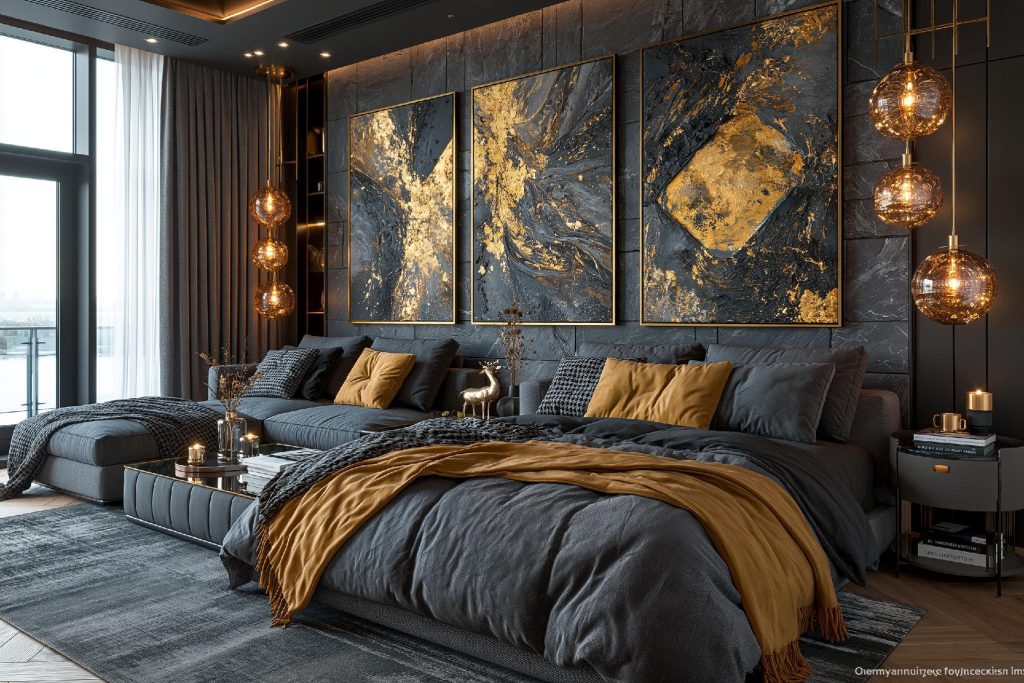
A dramatic triptych of gold and charcoal abstract art anchors this dark luxury bedroom with pendant lighting.
A blank wall behind your bed isn’t just a design gap: it’s a missed opportunity to anchor your entire bedroom.
A well-thought-out bedroom wall art design brings structure to the space. It defines the focal point, balances the furniture layout, and prevents the room from feeling unfinished. The key is not adding more pieces, but choosing the right size, placement, and style so the wall feels intentional.
Bedroom Wall Art Design Ideas That Actually Elevate the Space
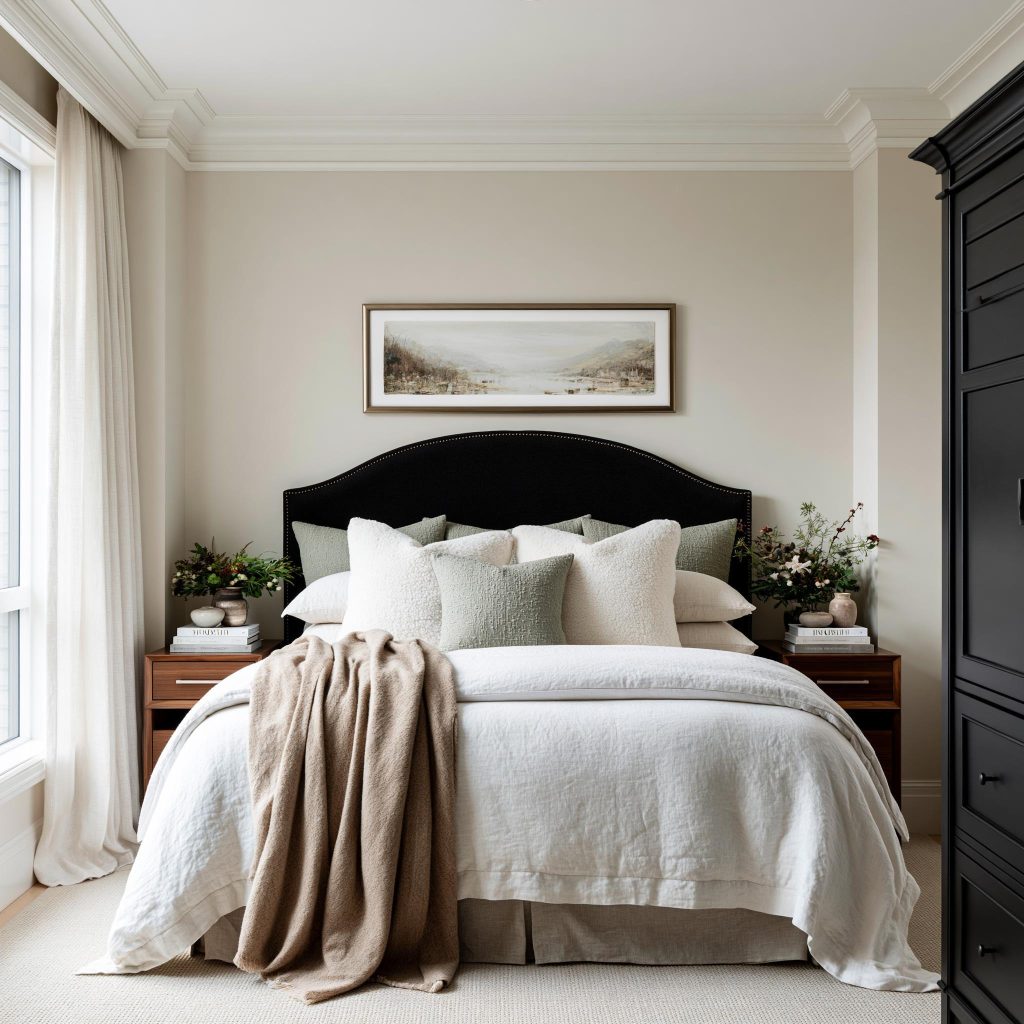
A wide horizontal landscape print above a black headboard creates a calm, proportional bedroom focal point.
A modern bedroom wall art design works when it is scaled correctly to the wall and furniture.
A single large artwork above the bed creates a stronger focal point than multiple small frames scattered across the wall. It reduces visual noise and makes the room feel more organised. In contrast, smaller artworks work better on side walls where they don’t compete with the bed.
Textured pieces like fabric panels or muted abstract art add depth without introducing too many colours. This helps maintain a restful environment, especially in bedrooms where visual clutter can feel distracting.
Choosing the Right Wall Art for Different Bedroom Styles and Sizes
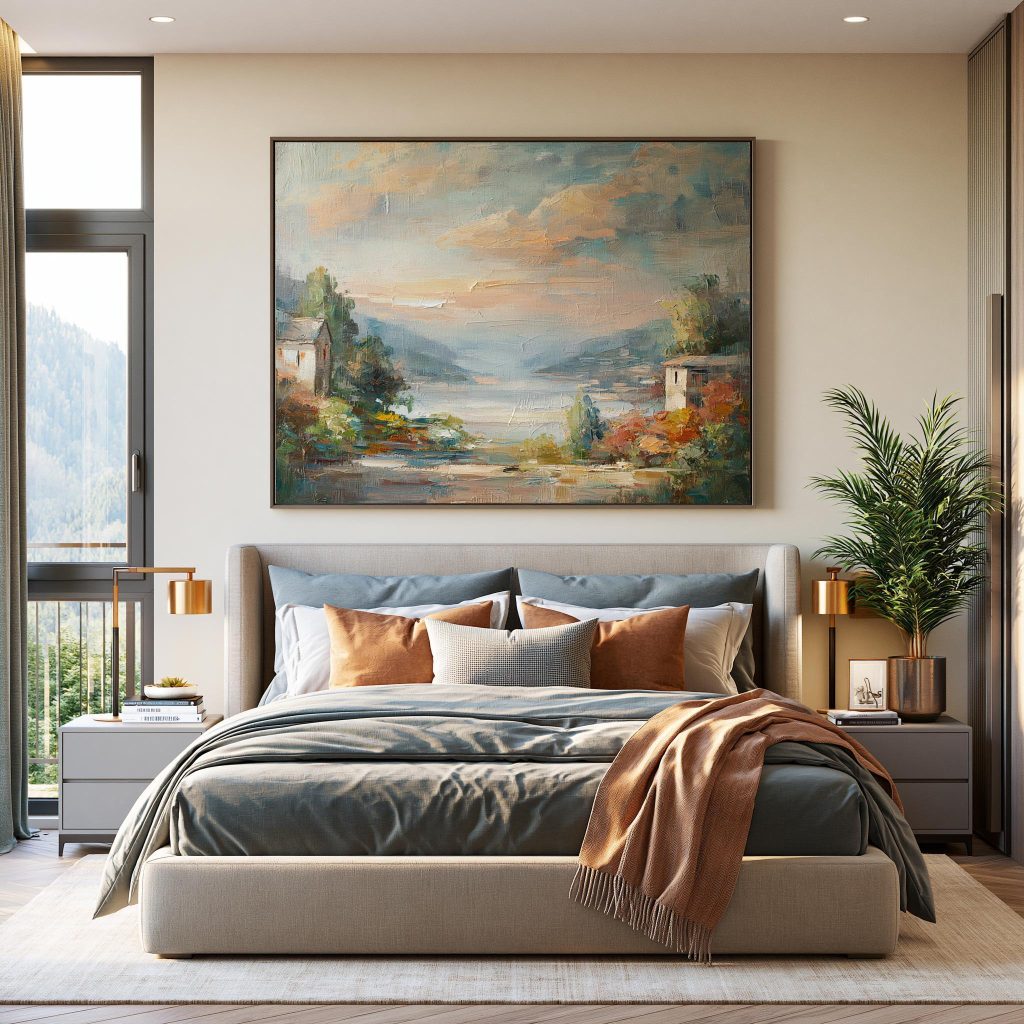
An oversized impressionist landscape spanning bed width makes a bold focal point in this modern bedroom.
The biggest mistake in small bedroom wall art design is overcrowding the wall.
In compact rooms, limit the design to one or two pieces. This keeps the wall clean and makes the room feel larger. In bigger rooms or a master bedroom wall art design, you can increase scale, either through a large artwork or a structured gallery arrangement.
Proportion matters more than style. Artwork above the bed should ideally cover 60–70% of the bed width. Anything smaller looks disconnected, and anything larger feels heavy.
Placement height also matters. Artwork should sit at eye level, not too high above the bed, or it breaks the visual connection with the furniture.
Creative Bedroom Gallery Wall and Art Placement Ideas
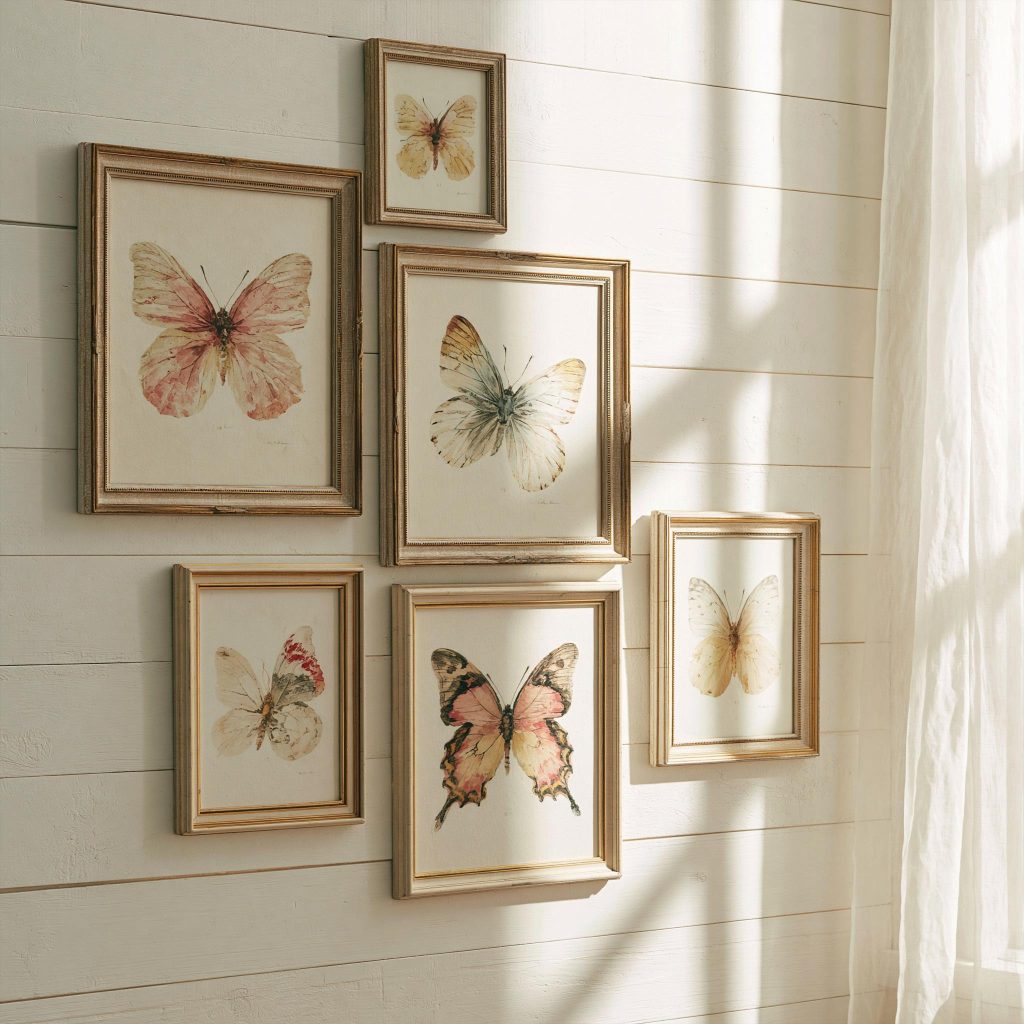
A cohesive butterfly print gallery wall in matching gold frames adds personality without visual clutter.
A gallery wall works only when it is planned, not improvised.
A gallery of bedroom wall art design follows alignment and spacing. Keep a consistent gap of 2 to 3 inches between frames to avoid a cluttered look. Start with a central anchor piece and build around it instead of placing frames randomly.
Mixing too many styles or colours is where most designs fail. Stick to a limited palette or theme so the wall feels cohesive.
If done right, a gallery wall adds personality. If done poorly, it becomes visual clutter.
Designer Tips for Making Bedroom Wall Art Design the Focal Point of the Room
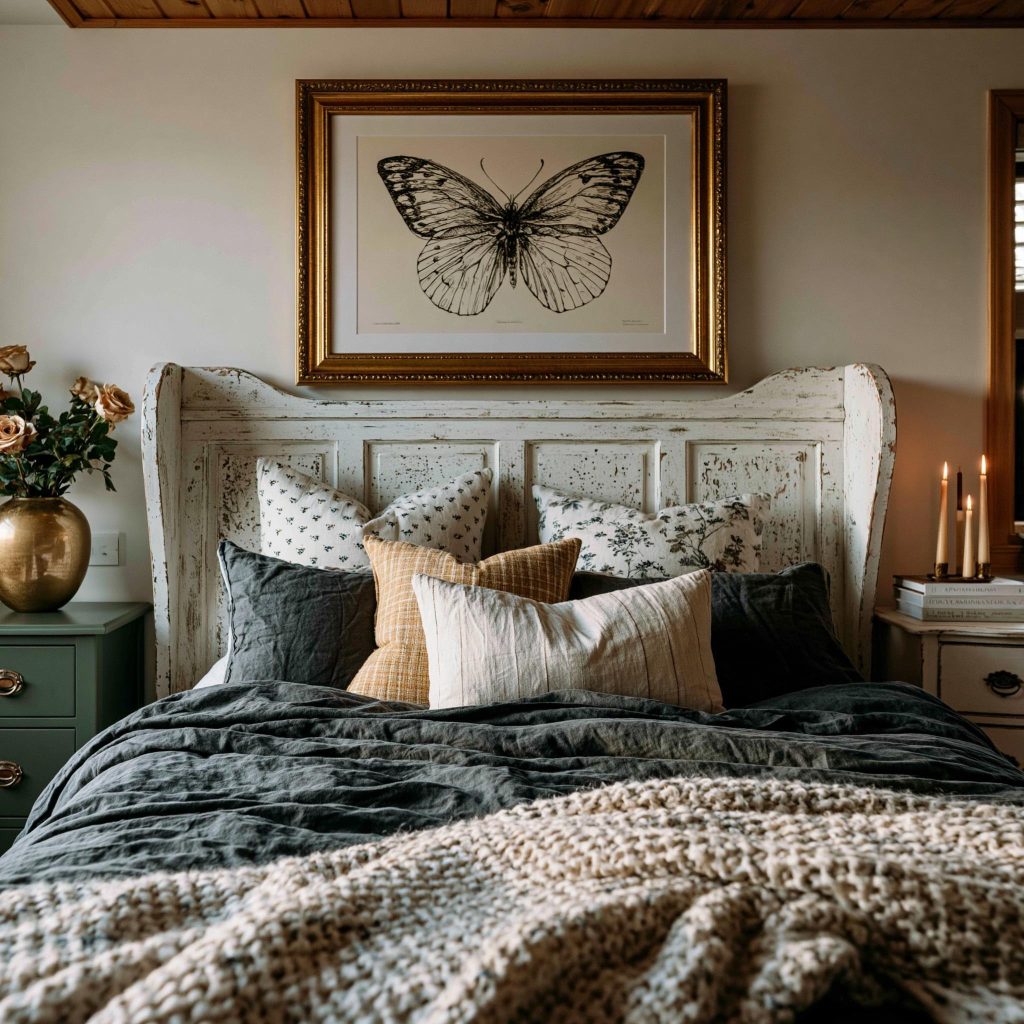
A single framed botanical butterfly print in a gold ornate frame anchors this rustic farmhouse bedroom perfectly.
Scale is everything. The artwork should cover about 60–70% of the bed width to feel balanced. Keep the wall simple so the art stands out. Avoid adding competing elements nearby.
Use soft lighting to highlight the piece, and choose colours that connect with the room. If it needs extra décor to “work,” the artwork or placement is likely off.
Budget-Friendly Bedroom Wall Art That Still Looks Premium
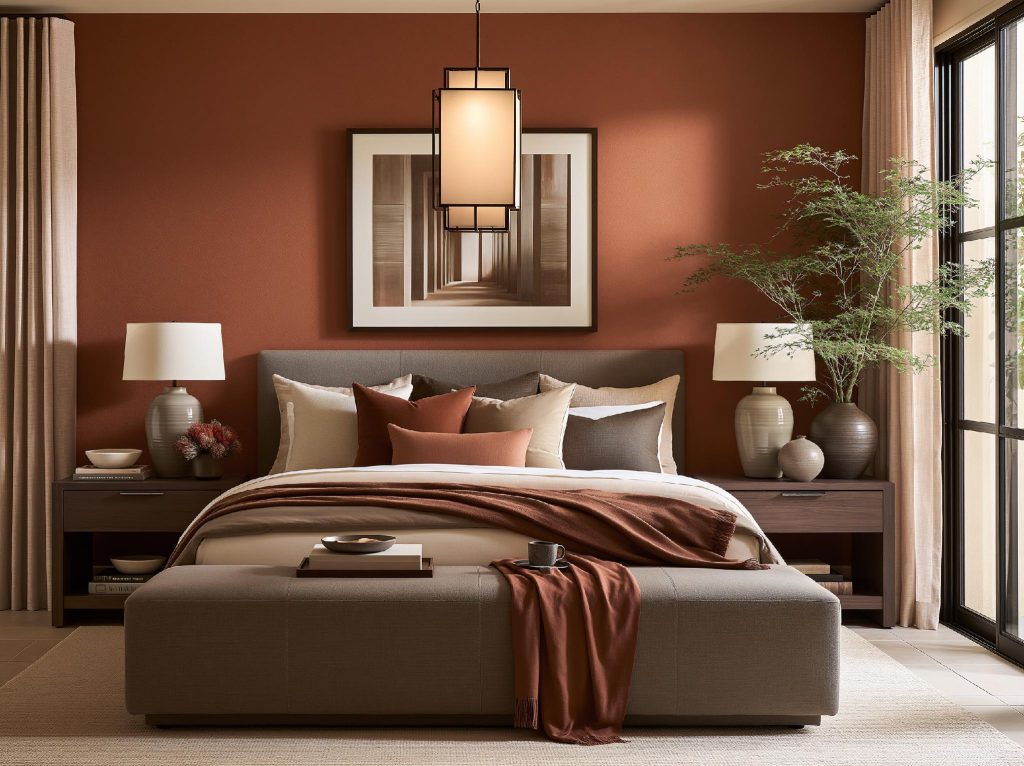
A neutral architectural photograph stands out beautifully against a deep terracotta accent wall in this warm bedroom.
You don’t need expensive art to get a finished look. A simple bedroom wall art design using prints, framed textiles, or even mirrors can work well if the sizing and placement are right. The mistake most people make is trying to fill the wall with too many budget pieces, which ends up looking disjointed.
It’s better to invest in fewer, larger elements than multiple small ones. Even a single well-framed print can look more premium than a crowded arrangement. Choose line art or neutral abstract prints over busy, colourful ones to maintain that “premium” feel on a budget.
A Real HomeLane Project: What Worked and Why
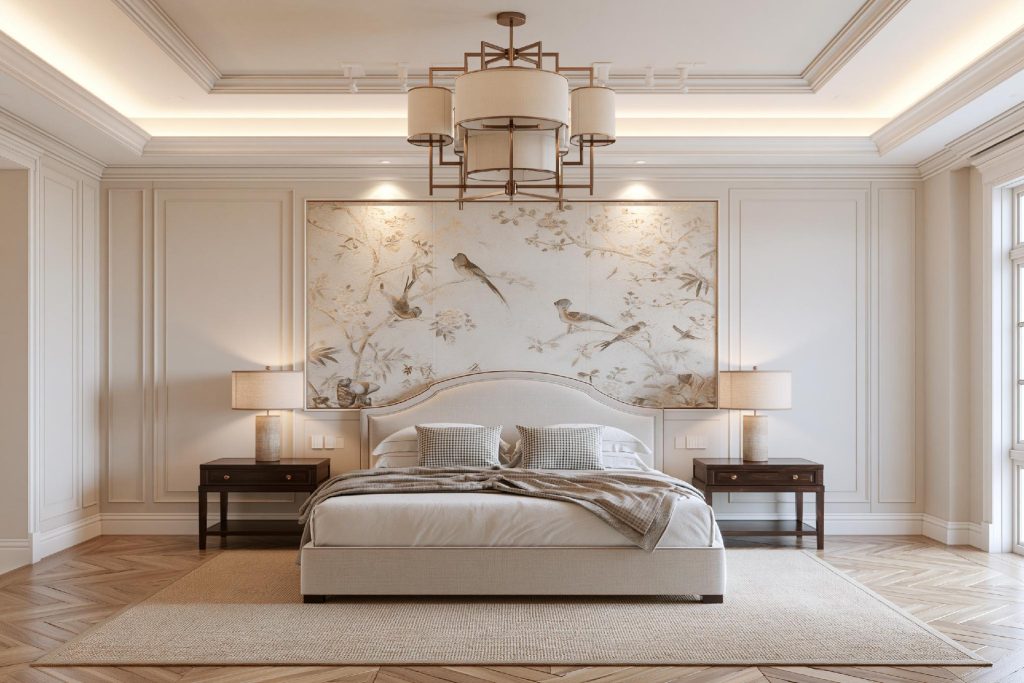
A large-scale chinoiserie bird and floral panel transforms the headboard wall into a refined bedroom.
In a 3BHK apartment in Bangalore, the master bedroom had a large bed but an empty wall behind it, making the room feel incomplete.
Instead of adding multiple frames, the design team chose a single oversized artwork that spanned the length of the bed width. The colours were kept muted to match the upholstery, and soft wall lights were added above to highlight the piece.
This approach solved two problems at once. It created a clear focal point and avoided clutter. The room immediately felt more balanced without adding unnecessary elements.
Common Bedroom Wall Art Mistakes to Avoid
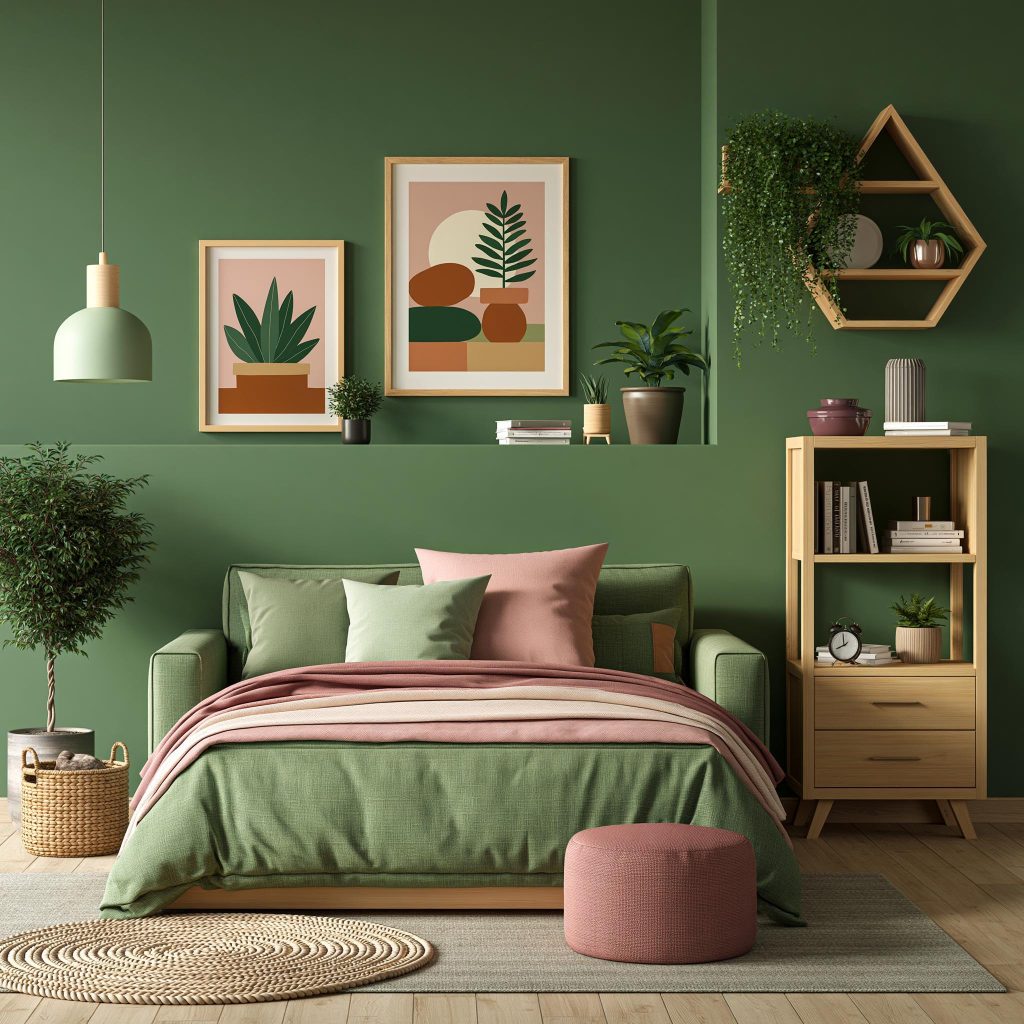
Paired botanical poster prints on a picture ledge complement the rich green wall in this vibrant boho bedroom.
Most issues come from poor sizing and placement. Choosing artwork that is too small makes the wall look unfinished. Overcrowding the wall with multiple pieces creates visual clutter, especially in smaller rooms. Hanging art too high breaks alignment with the bed and makes the design feel disconnected.
Another common mistake is ignoring lighting. Without proper lighting, even good artwork loses impact and looks flat. The better approach is to focus on proportion, placement, and restraint. A few well-placed pieces will always work better than filling every inch of the wall.
Many homeowners buy art that clashes with existing headboard textures (e.g., velvet vs. smooth canvas). Choose art that goes well with the finish of the headboard.
What to Check Before You Finalise Your Wall Art
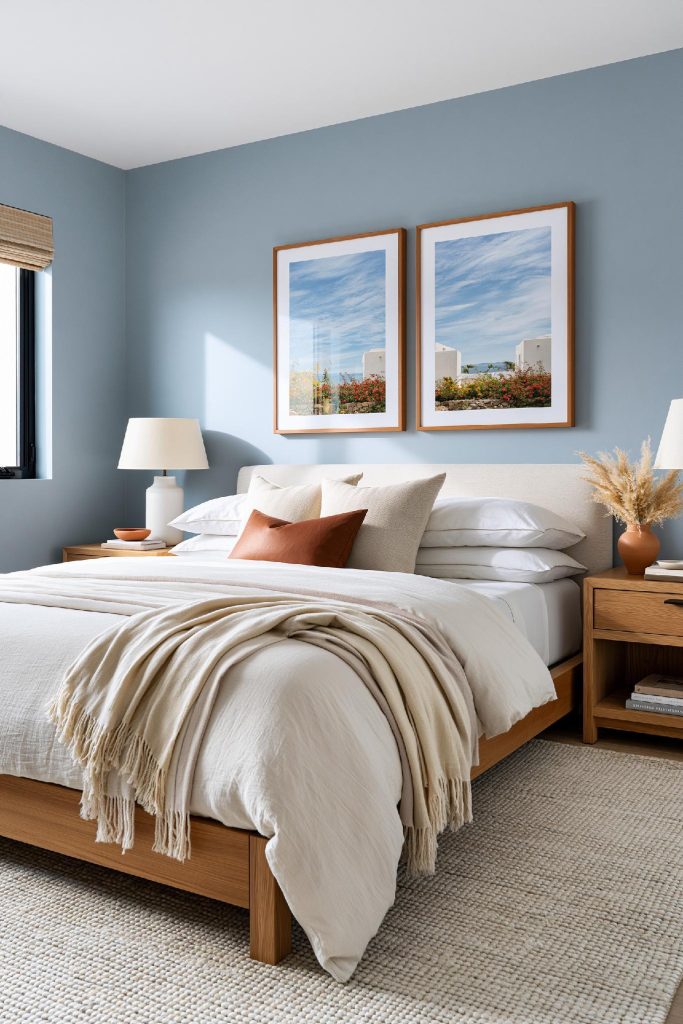
Two matching coastal photography prints in warm wood frames bring serene balance to this soft blue bedroom wall.
Before finalising your bedroom wall art ideas, focus on three things.
Check the size against your bed and wall width so it feels proportionate. Choose colours that connect with your furniture instead of standing out unnecessarily. Keep the layout simple so the wall remains easy to look at.
If these are right, the wall will feel complete without extra effort.
If you want a bedroom that feels balanced and finished, book a free consultation with HomeLane and get a design tailored to your space.
FAQs
1. What type of wall art is best for a bedroom?
Simple, well-sized artwork works best. Large pieces above the bed create a strong focal point. The style should match the room.
2. Where should wall art be placed in a bedroom?
Above the bed is the most effective placement. It anchors the space visually. Side walls can be used for smaller pieces.
3. How do I choose wall art for my bedroom?
Focus on size, placement, and colour. The artwork should align with your furniture, and be placed below the room’s primary light source. Avoid overcrowding.
4. What size wall art works best above a bed?
Around 60–70% of the bed width works best. This keeps the proportions balanced. Smaller pieces may look disconnected.
5. How can I decorate bedroom walls on a budget?
Use fewer, larger pieces instead of many small ones. Prints, mirrors, and textiles work well. Keep the design simple.










 EXPLORE MORE