Wall beds transform small homes by creating flexible, multi-functional spaces, reclaiming floor area without sacrificing comfort or style.
Key Insights:
What You'll Read Here:
Basic foldable beds cost INR25,000–INR60,000, while hydraulic options range from INR60,000 to INR1,50,000.
BWP plywood and MDF are durable core materials, while hydraulic/spring mechanisms ensure smooth, safe operation.
Plan for 3–4 feet of clearance in front of the bed when open for comfortable movement and daily usability.
HOMELANE EXPERT TIPBy our design team
Prioritise a smooth, effortless mechanism for daily use; if operating the bed feels like a chore, it's the wrong design for your home.
Soft grey shaker shutters bring timeless calm to an L-shaped kitchen.
Small rooms don’t have to feel restrictive.
With the right wall bed design, a bedroom can double up as a workspace, a guest room, or even a lounge during the day. The bed folds away neatly when not in use, opening up the floor for other activities during the day.
That’s what makes wall beds for small spaces so effective. They give you back usable space without compromising on comfort, as long as the design and mechanism are planned properly.
Why Wall Bed Designs Are Ideal for Small Homes and Multifunctional Spaces
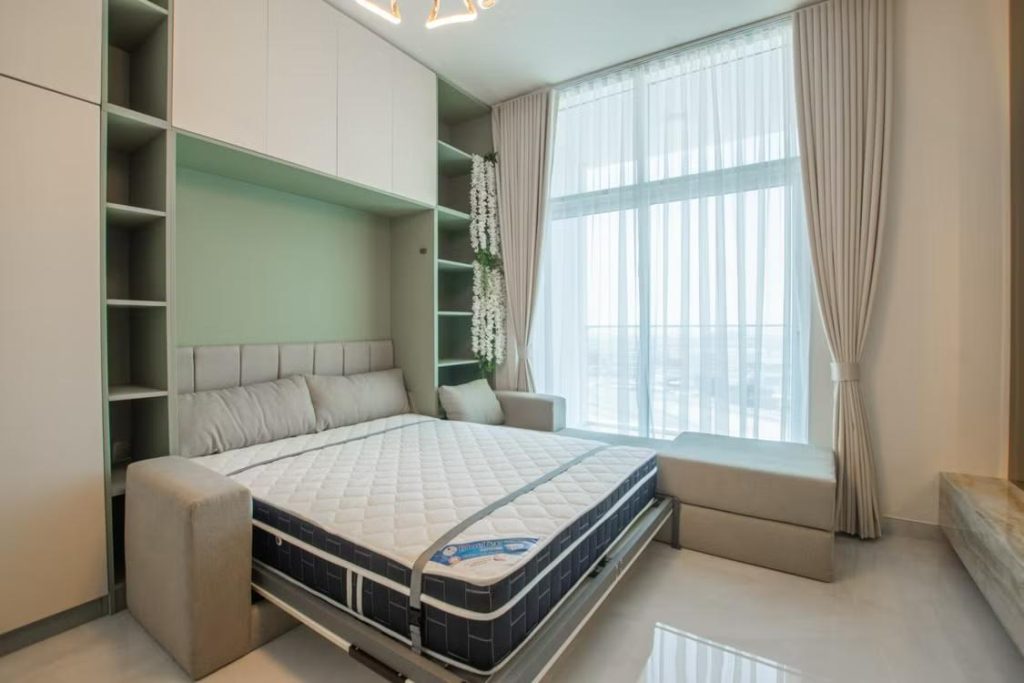
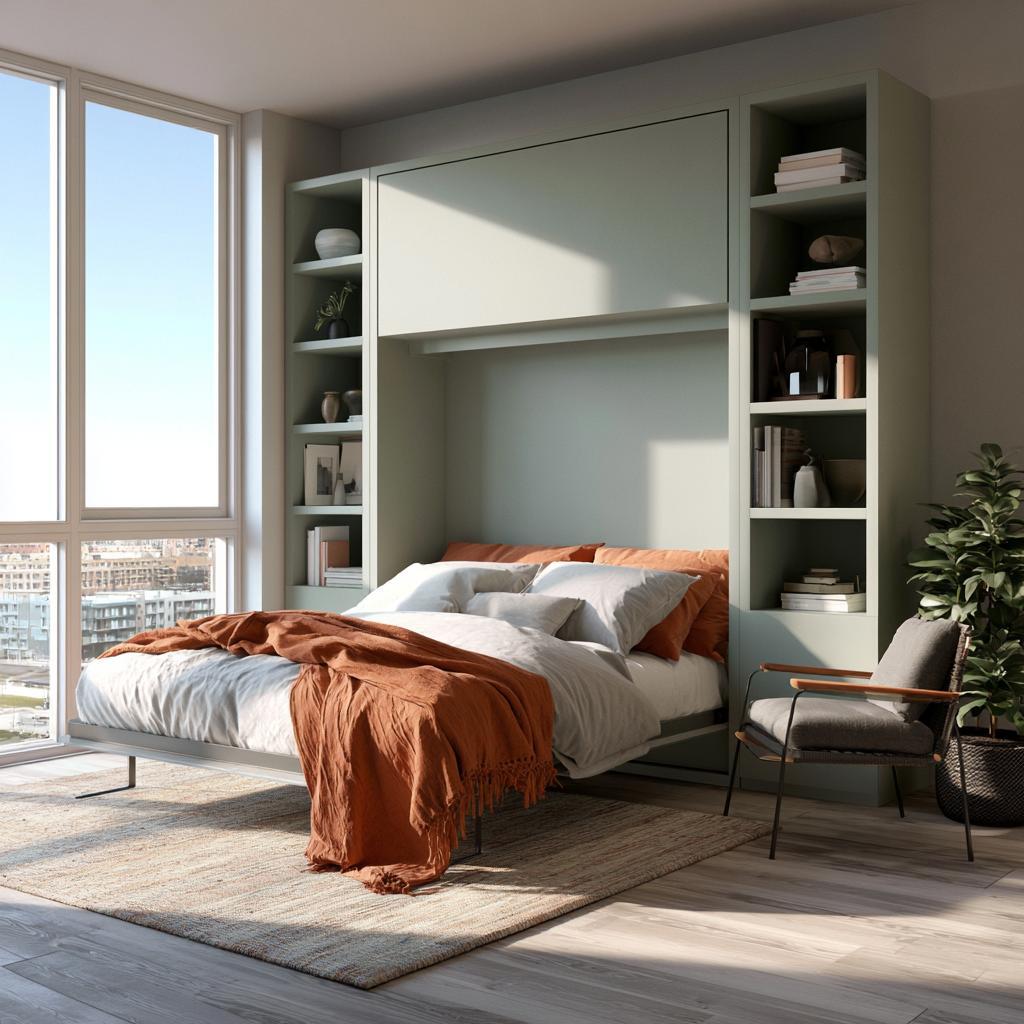
This wall folding bed design blends softly into a sage green compact bedroom.
A wall folding bed design solves one of the biggest problems in compact homes…space!
During the day, the room feels open and usable. At night, it transforms into a full sleeping area. This flexibility is especially useful in studio apartments, guest rooms, or multi-use spaces.
Unlike sofa-cum-beds, wall beds don’t require rearranging furniture every time. The transition is smoother and more structured. No pillows to store, no cushions to flip, no jerky mechanisms that may or may not work.
The biggest advantage is that the room adapts to your routine instead of forcing you to work around it.
Different Types of Wall Bed Designs
An open wall bed design sits framed by tall windows and side shelving.
Not all wall bed design ideas are the same. The right type depends on your space.
Vertical wall beds(most common, works well in standard rooms)
Horizontal wall beds(better for low ceilings or wider walls)
Wall double bed design(ideal for master bedrooms or guest rooms)
Fold-down beds with storage(adds shelves or cabinets around the bed)
Among unique wall bed designs, integrated units with study desks or wardrobes are becoming more popular in modern homes.
Best Materials, Mechanisms and Finishes
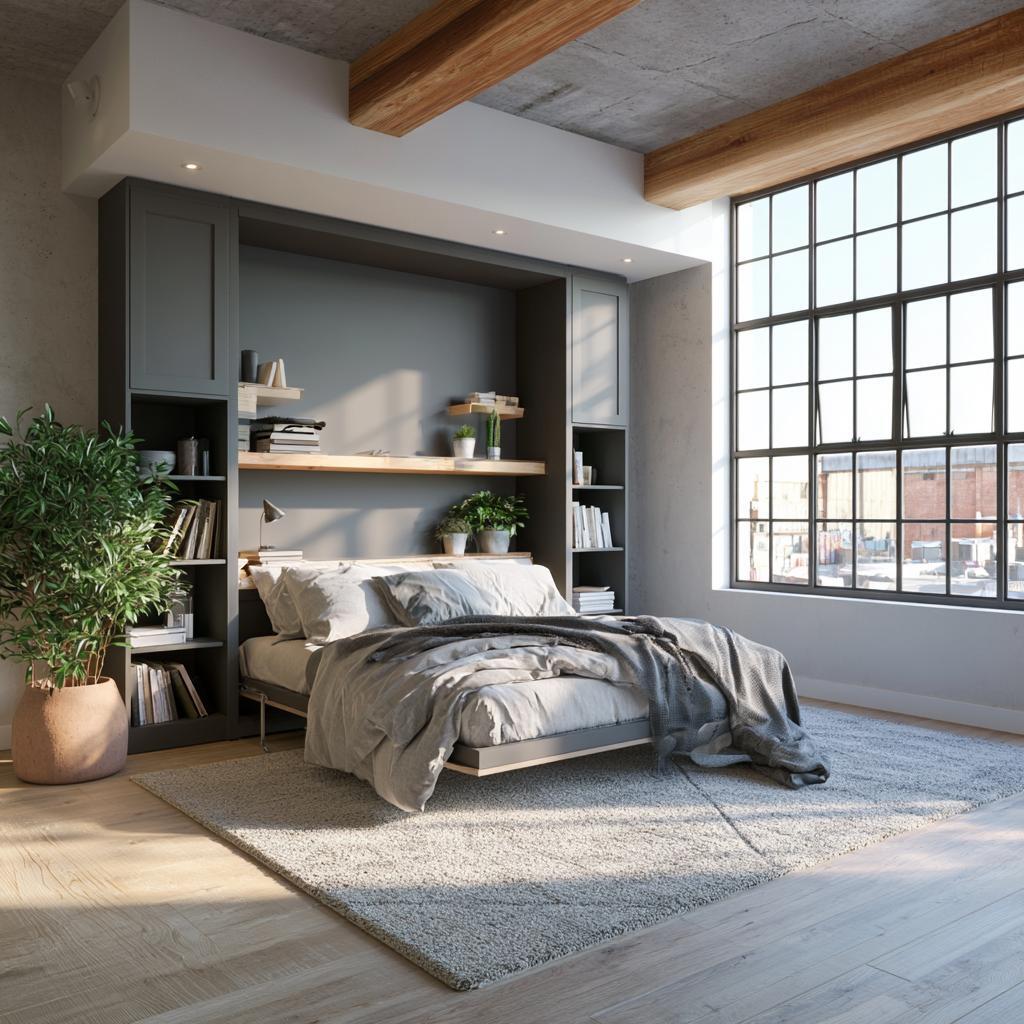
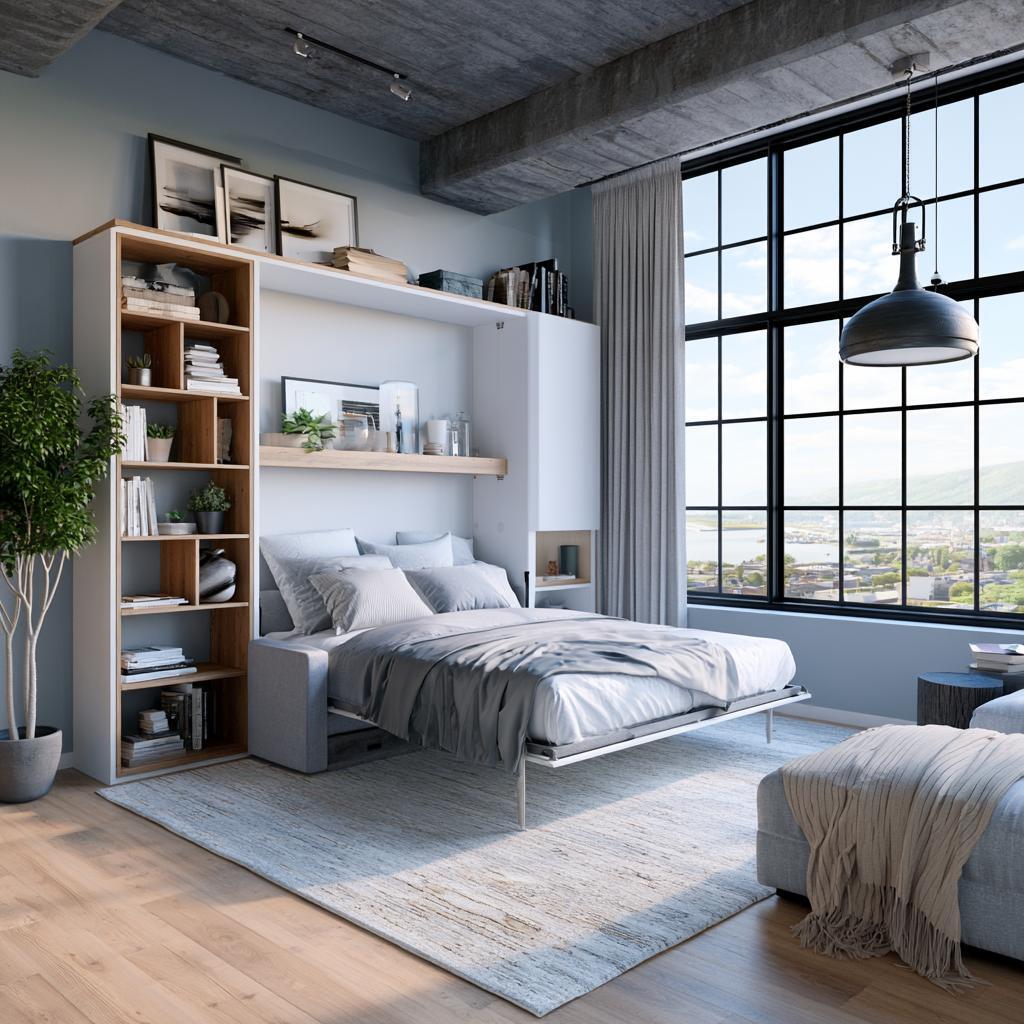
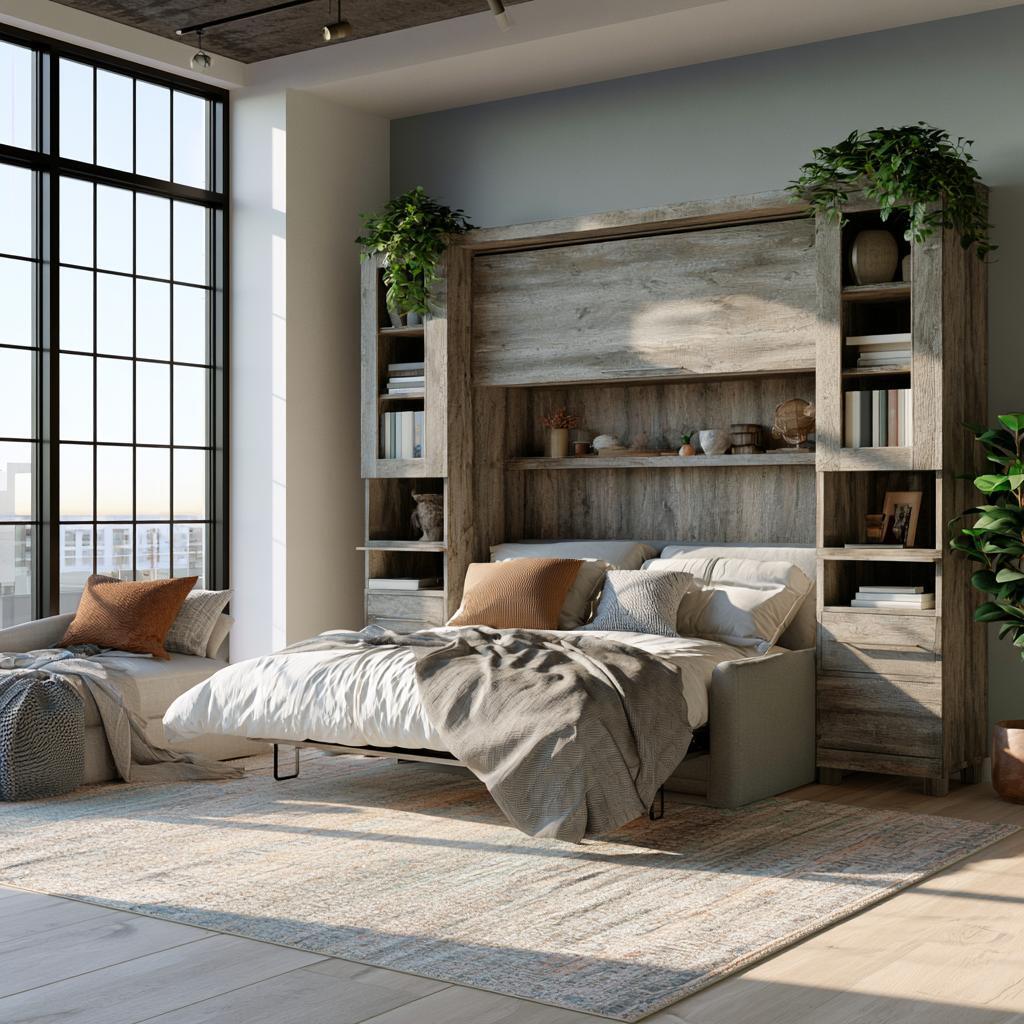
A wall bed design with side storage suits this industrial-style bedroom setup.
Element
What to Use
Why It Works
Core Material
BWP plywood / MDF
Handles weight and long-term use
Mechanism
Hydraulic / spring system
Smooth opening and closing
Finish
Laminate / veneer
Easy to maintain
Hardware
Strong hinges & fittings
Ensures safety and durability
The mechanism is the most important part of a wall folding bed design. A poor-quality system can make lifting difficult or unsafe over time.
How Do You Create a Functional Wall Bed Setup?
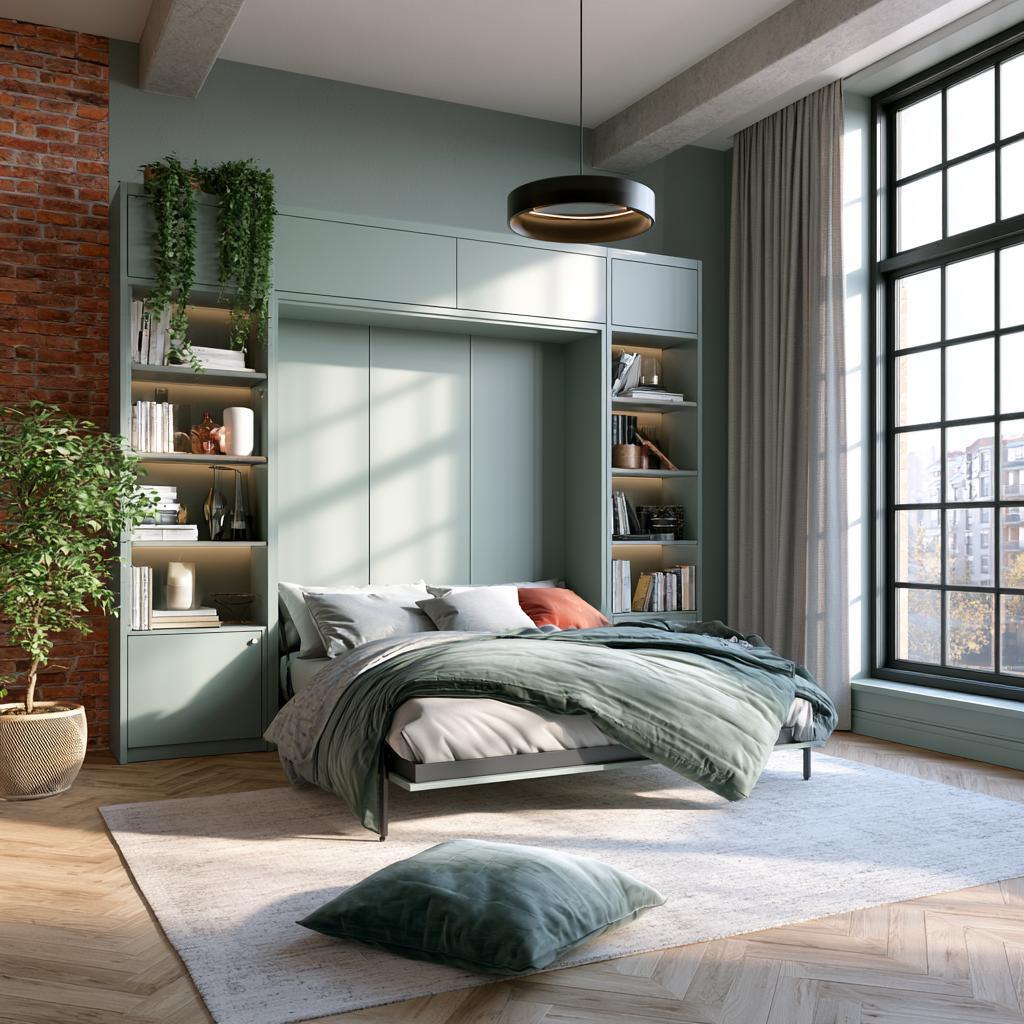
A teal wall bed design stands out against a brick accent wall.
Start with the layout. Make sure there is enough clearance in front of the bed when it opens. This is often overlooked and can affect usability.
A simple rule to follow: Leave at least 3 to 4 feet of free space in front of the bed when open. This ensures comfortable movement.
Also think about what the wall does when the bed is closed. It can double as a cabinet, bookshelf, or even a study unit.
A good wall bed design should feel like part of the room, not a temporary fix.
What It Costs and What Affects It
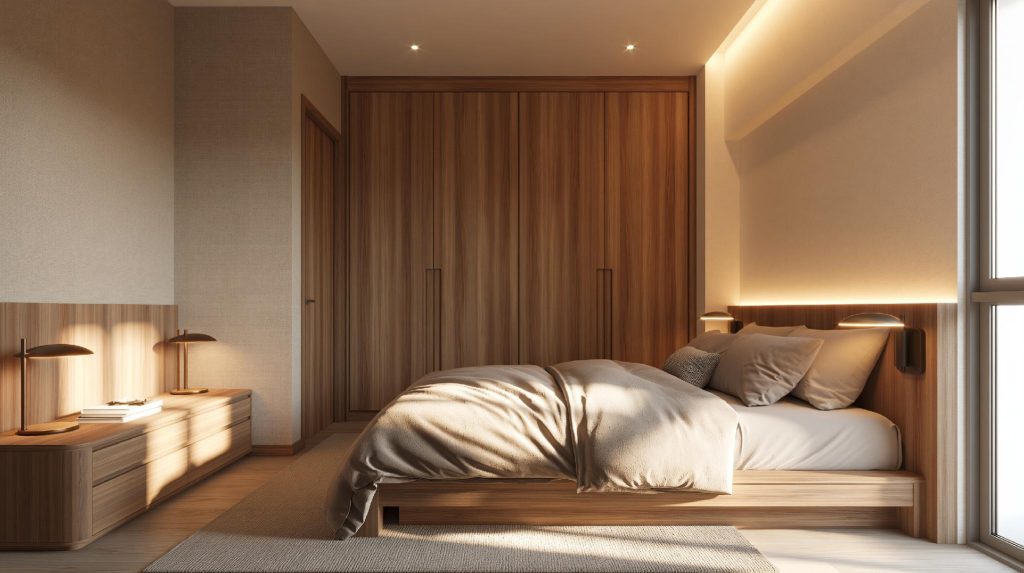
This simple wall bed design closes into a sleek wood-finish wardrobe unit.
A simple wall bed design can vary based on mechanism and build quality.
Basic foldable beds → INR25,000–INR60,000
Hydraulic wall beds → INR60,000–INR1,50,000
Custom wall bed units → INR1,50,000+
The mechanism and material quality are the biggest cost drivers.
Spending slightly more on a reliable mechanism is worth it, especially if the bed is used daily.
A Real HomeLane Project: What Worked and Why
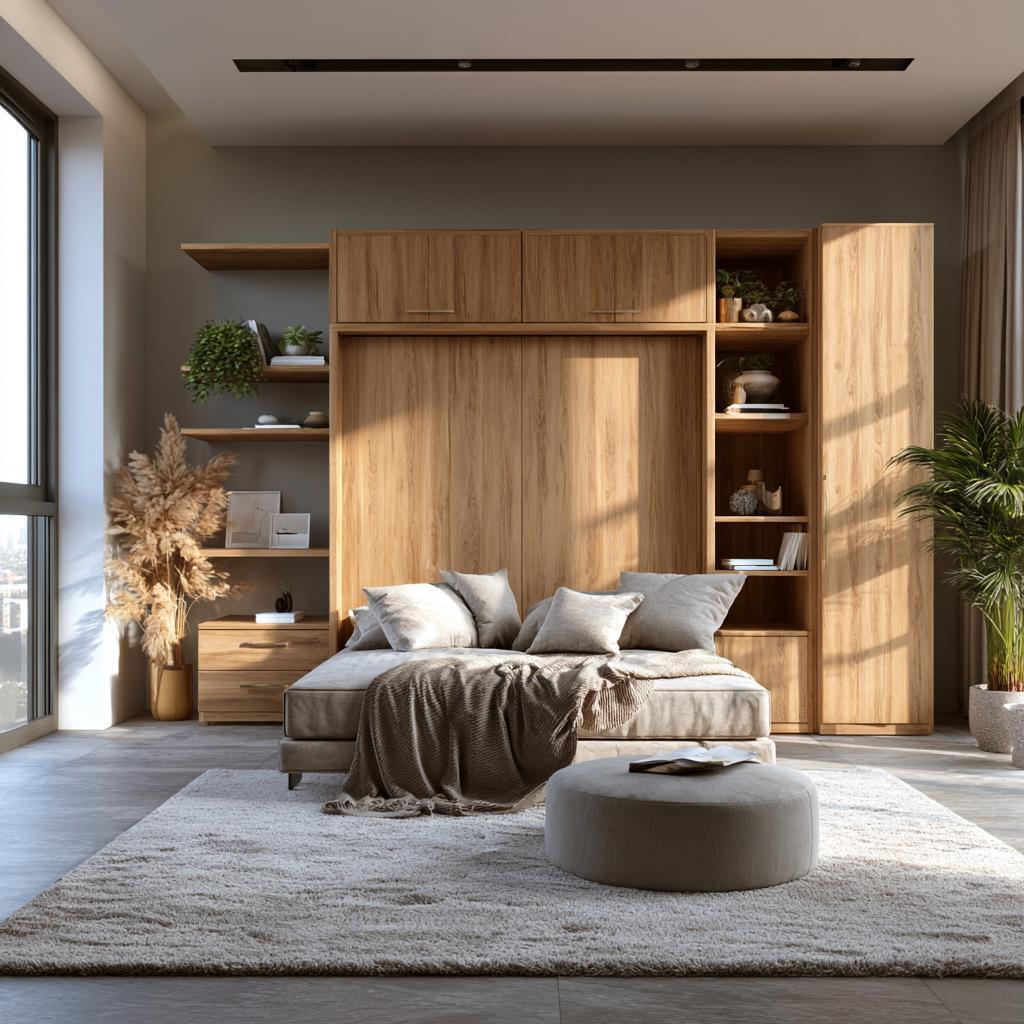
This wall folding bed design opens smoothly from a warm wood storage unit.
In a recent 1BHK in Mumbai, the homeowner needed a guest bed without losing living room space.
The design team introduced a wall folding bed design integrated into a storage unit. When closed, it looked like a simple cabinet. When opened, it became a full sleeping setup. They were worried about the bed mechanism weight, so we opted for lighter HDHMR instead of plywood.
This design allowed the living room to remain open during the day while still accommodating guests comfortably.
Common Wall Bed Mistakes to Avoid
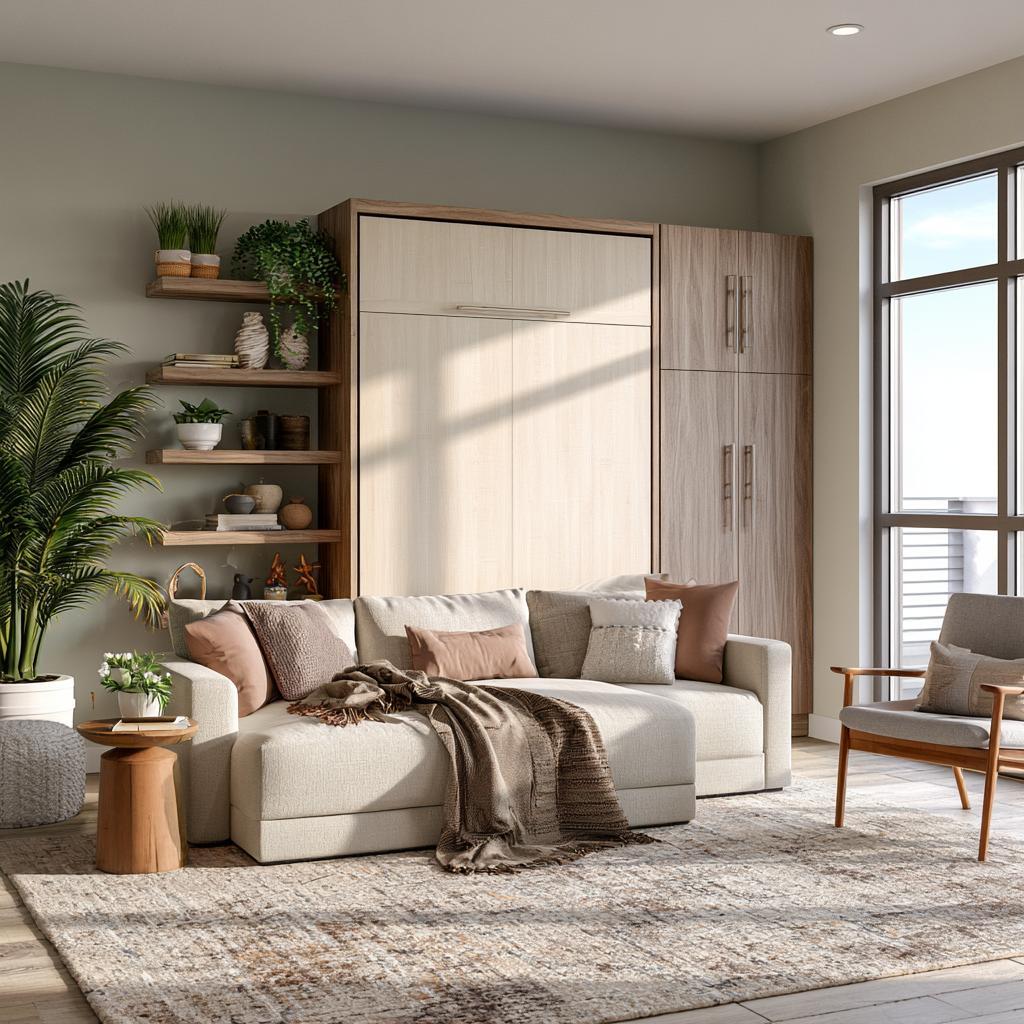
When closed, this wall bed design looks like a simple living room cabinet.
A common mistake is underestimating the mechanism.
Choosing a cheaper system may seem cost-effective initially, but it can become difficult to operate over time. Another issue is buying a bed that doesn’t work for the available space in the room.
The better approach is to prioritise mechanism quality and usability before focusing on finishes.
What to Check Before You Finalise Your Wall Bed
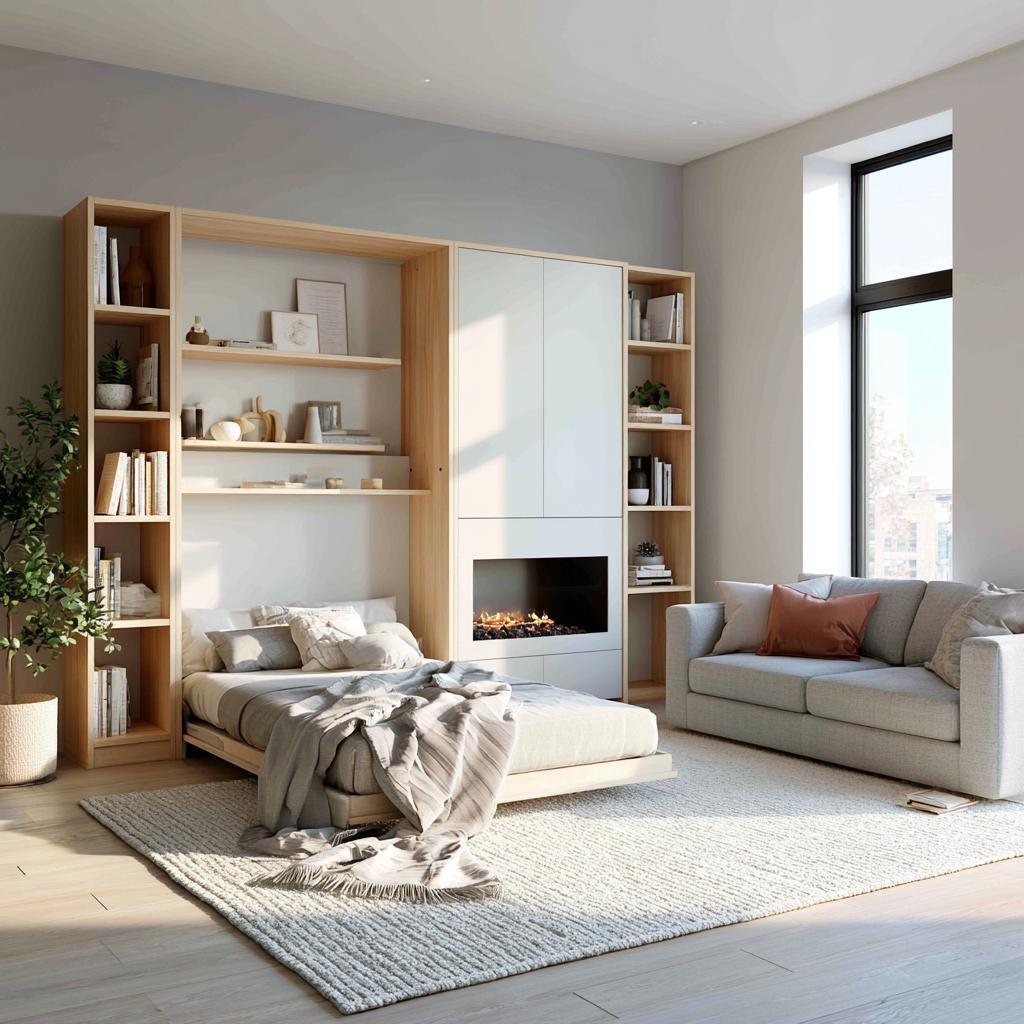
: A closed wall bed design integrates neatly with shelving and a fireplace.
Before finalising your wall bed ideas, check three things.
First, ensure the mechanism is smooth and easy to operate.
Second, confirm the wall strength and installation quality, as the bed needs secure fixing.
Third, plan how the unit looks when closed. It should blend into the room naturally.
Wall Bed Design: Do’s and Don’ts
This wall double bed design adds rustic wood texture to a bright bedroom.
Do
Choose a high-quality mechanism (Hydraulic or spring systems make daily use smooth and safe.)
Check wall strength before installation (Concrete or brick walls handle weight better than drywall.)
Plan clearance space in advance (Keep at least 3–4 feet free in front when the bed opens.)
Don’t
Don’t compromise on hardware to save cost (Low-quality mechanisms wear out quickly and become unsafe.)
Don’t ignore daily usability (If opening the bed feels like effort, it won’t be used often.)
Don’t skip proper anchoring (Weak fixing can lead to long-term safety issues.)
What Actually Makes a Wall Bed Work
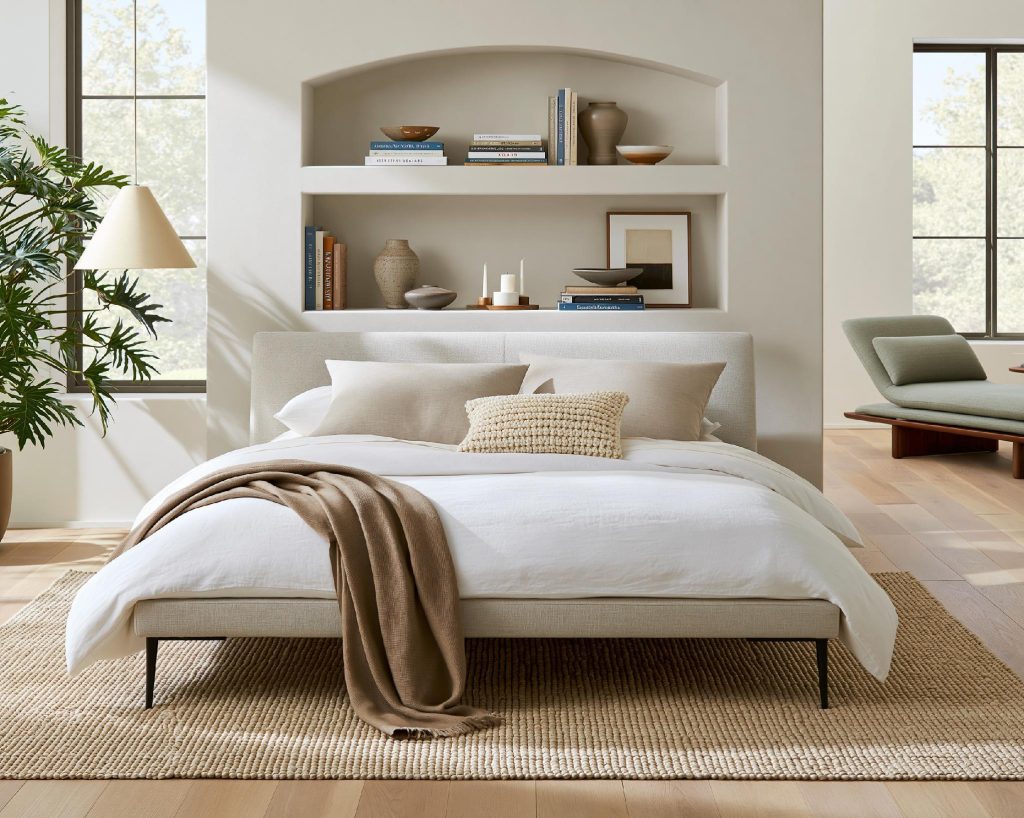
Alcove shelving frames the bed, echoing the built-in feel of wall bed designs.
A good wall bed design is about predictability and ease of use.
The right mechanism ensures smooth operation. Proper clearance makes daily use comfortable. Durable materials keep the unit stable over time.
That’s the Interiors Made Easy approach from HomeLane! Designs that work consistently, not just occasionally.
FAQs
1. What is the best wall bed design for small spaces?
Vertical wall beds or compact horizontal designs work best. They save space while remaining easy to use. The choice depends on room dimensions.
2. How does a wall folding bed work?
It uses a hinge and hydraulic or spring mechanism to fold into a wall unit. This allows the bed to be stored when not in use. The mechanism makes lifting easier.
3. What are the advantages of installing a wall bed in a small room?
It frees up floor space during the day. This makes the room more functional. It also allows multi-purpose use.
4. How do I choose the right wall bed design for my home?
Consider room size, wall strength, and usage frequency. The mechanism should be smooth and reliable. Check whether you need a wall double bed design or a single bed will do.
5. Are wall beds comfortable for everyday use?
Yes, if built with a good mechanism and proper mattress support. Comfort depends on construction quality. A well-designed unit works for daily use.
6. What materials are best for durable wall bed designs?
BWP plywood or high-quality MDF works best. These materials handle weight and usage well. Good hardware improves durability.












 EXPLORE MORE