Kitchen remodelling, especially with modular designs, significantly enhances home value and functionality, particularly after ten years of ownership.
Key Insights:
What You'll Read Here:
- Budgeting is crucial; prioritise essential upgrades over non-essential appliances if needed.
- Lighting plans, including ambient and task lighting, dramatically improve kitchen usability and appearance.
- Keeping the existing footprint reduces costs by avoiding plumbing and electrical changes.
HOMELANE EXPERT TIP By our design team
Focus on improving workflow and storage with a well-defined plan to maximise both functionality and aesthetic appeal in your kitchen renovation.
Looking to upgrade your kitchen? You’re probably wondering how much you should spend, and whether it will add value to your house. A well-planned kitchen design, especially with a modular kitchen remodel, is always a good idea—particularly if you’ve lived in your home for ten years or more! Brand new modular cabinets will amp up the aesthetics, and there are so many lovely new products and accessories available today that can eke out every inch of functionality from your kitchen.
So, what are you waiting for? Use these strategies to get the most value out of your kitchen remodel!
Step 1. Chart out a plan
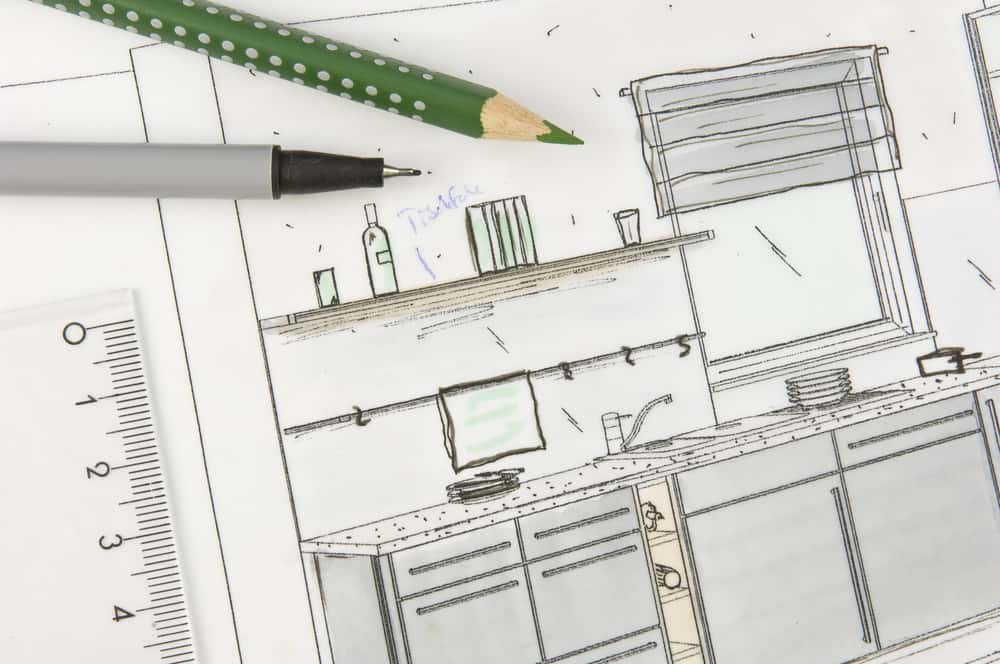
Any successful project starts with a plan!
Start by looking at your kitchen layout. Is it as functional as you would like? Is there any space that’s being underutilized, and are there any corners that you are not able to reach?
How about the light in the room? Is the room too dark, or does it have a window that’s too small? Would you like to consider making it an open kitchen?
How convenient are the appliances that you’re using? Is the storage space adequate for your needs?
What are the challenges that you hope to address through the renovation?
The answers to all these questions, and more, will help you to plan your kitchen remodel.
Pro tip:
Whenever possible, try to keep the same footprint. Changing the plumbing lines and electrical outlets will drive your costs higher, and you might not realise this till the very end. What’s more, any amount of civil work is always going to result in a house that’s full of dust and debris, which can be hard to live with.
Step 2. Set up a budget
It’s all too easy to go overboard when you’re redoing your kitchen! The dazzling array of shiny new appliances and smart space-saving accessories can make you lose your mind, and you’ll be just one step away from losing your money too! Before you begin, it’s important to understand the modular kitchen price and establish a budget at the very beginning. Keep an upper limit for your spending, so that you don’t find yourself out of pocket.
Pro tip:
Prioritize the must-haves, and then leave some room for last-minute value-adds.
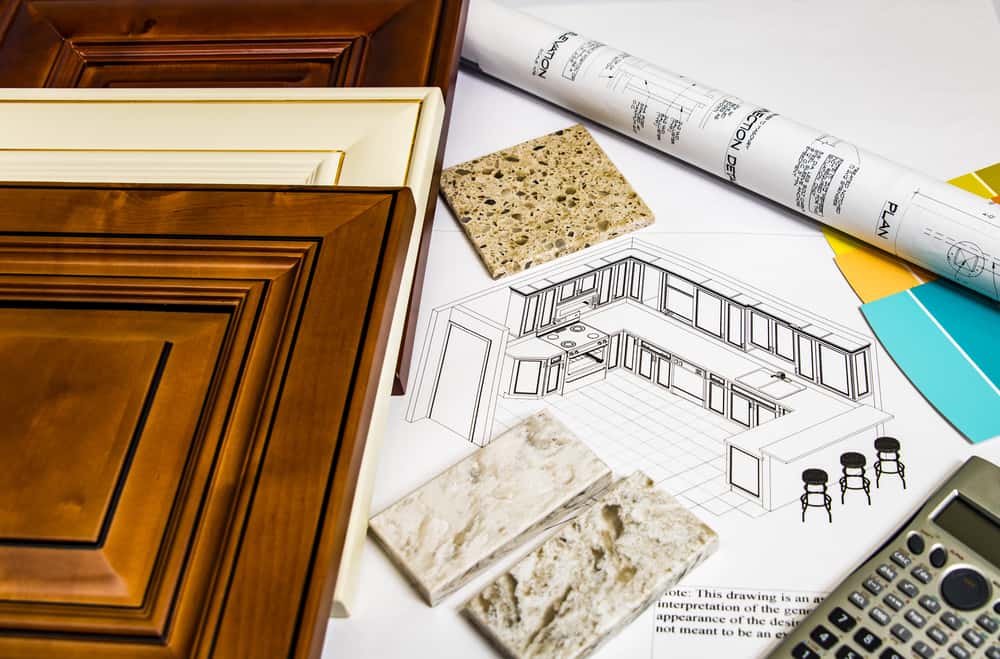
Step 3. Choose your fixtures, materials and appliances
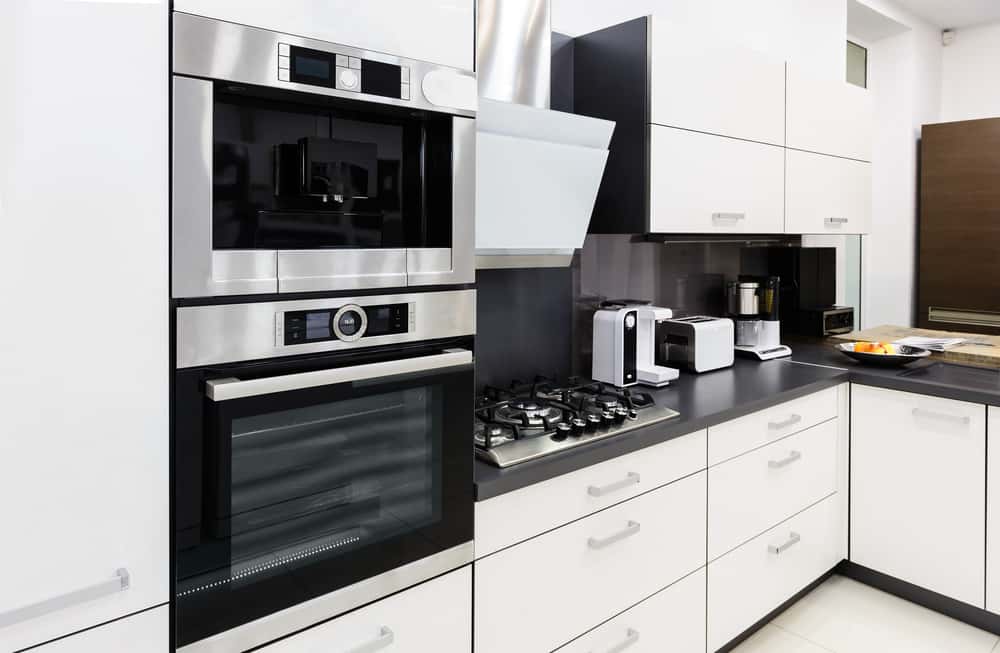
Your cooking style will determine the kind of appliances you should be using. If you do a lot of baking, then a premium OTG should be a priority. If you have guests over for meals often, you might want to consider a large, six-burner hob or a top-of-the-line cooking range. Microwave ovens are not just for reheating; they can be used to quickly whip up delicious dishes as well! And if you have a large family, then a side-by-side refrigerator with plenty of storage space is a must. Not to forget the dishwasher; which no family can ever do without these days!
Pro tip:
When you’re picking out the appliances, do keep in mind their cost and durability as well. Unless you’re someone who cooks a lot on a regular basis, you can opt for more expensive cabinets and countertops instead of appliances that you might end up not using at all.
Step 4. Rethink the lighting
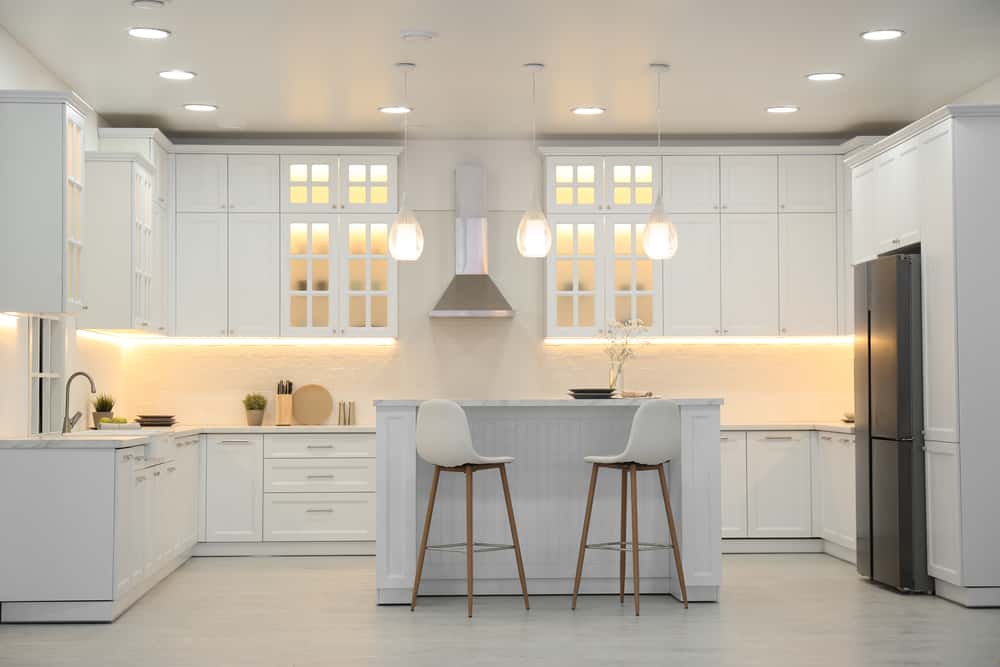
A good lighting plan adds immense value to your kitchen. It can make your space look bright and spacious, and help you work more efficiently and safely. Your kitchen should have ambient lighting in the form of ceiling fixtures that are the main source of illumination in the room, as well as task lighting under the counters or above the breakfast counter, cooktop or island that eliminate shadows when you’re working.
Pro tip:
Wherever possible, opt for power-saving LED light fixtures that will minimise your power bills.
Step 5. Plan the storage spaces
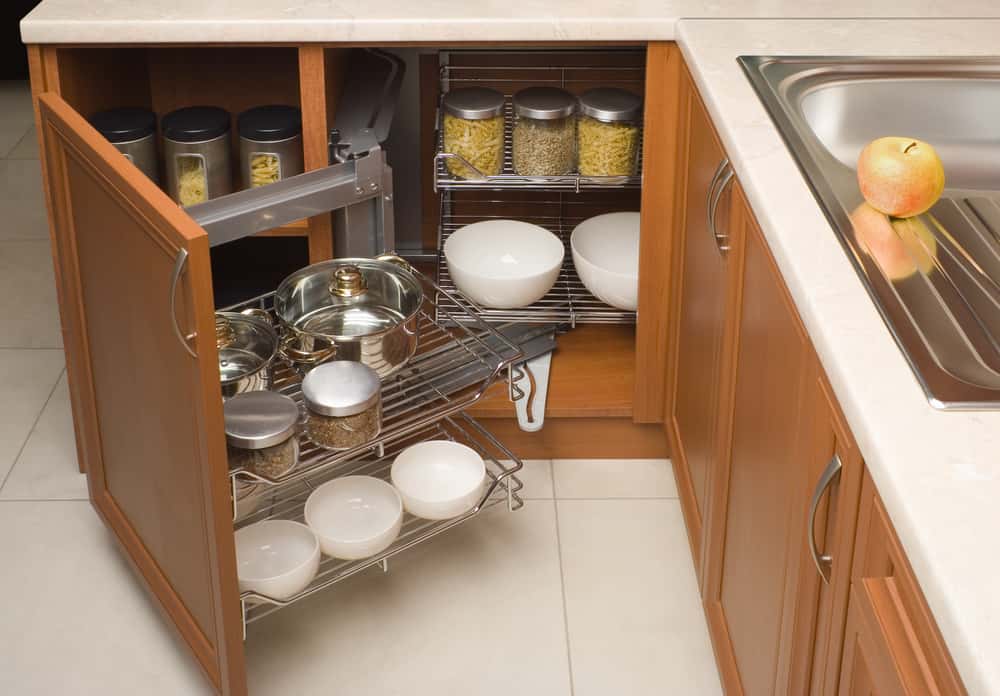
Have you run out of storage in the kitchen? While decluttering is one way to go, chances are that over the years you’ve built up a collection of lovely tableware and utensils that you just cannot do without! Doubling up on storage by adding a loft to the ceiling is a great idea, and all the extra space can be used to put away items that are not used on an everyday basis.
You can also add a corner pantry or a tall unit with pull-out storage shelves that can be used to store dry groceries and non-perishables. Deep drawers can be used to tuck away heavy appliances when not in use, and you can plan to hang up skillets, pots and pans on unused wall areas or below the cabinets. Open shelves are another lovely way to put your pretty kitchenware on display and make it a part of your décor.
Step 6. Add a breakfast table
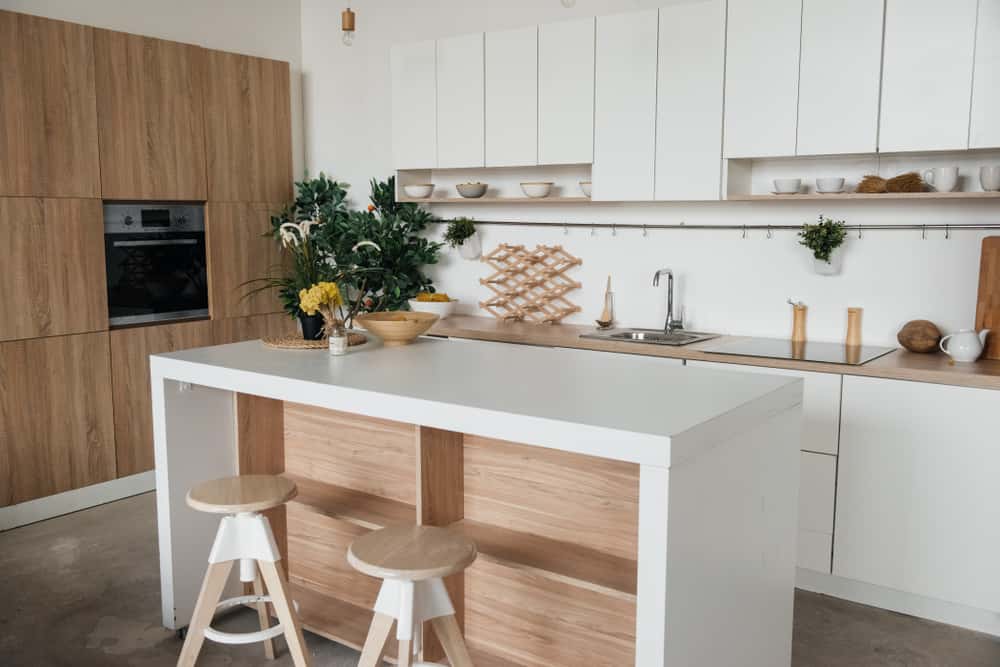
If space permits, an island counter or a breakfast table in the kitchen is a lovely value-add. It invites family togetherness, as it’s the best place to get homework done, attend work-from-home calls when you’re cooking, and hold heart to heart discussions over a quick cup of coffee!
We love this minimalistic breakfast table in white Corian with pinewood shelves below, that extends the functionality of this modern open kitchen.
Step 7. Revisit the wall tiles, countertop and flooring
If you would like to completely transform the look and feel of your kitchen, then upgrading the tiles and countertop should be the next line of order! Pick lovely quartz, marble or granite for the countertop, in a shade that complements your décor theme.
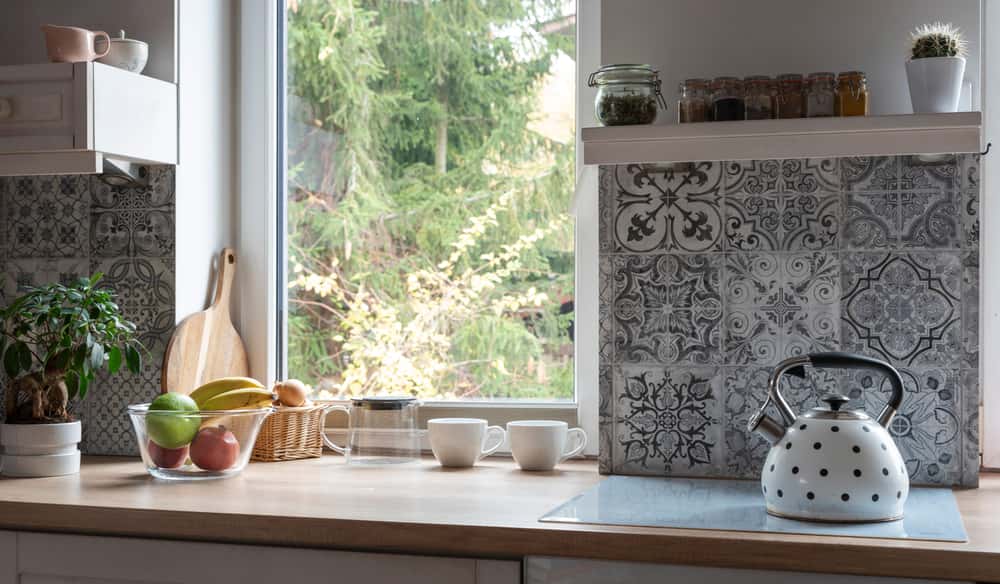
If you don’t want to go through the hassle of gutting the existing tiles, which would be too messy to contemplate, your backsplash can be upgraded by fixing a half-inch ply board on top of the existing tiles and then pasting the new tiles on top. In the same way, a new floor can be laid on top of the existing one. Vitrified tiles or wooden laminate floors can be very easily redone this way.
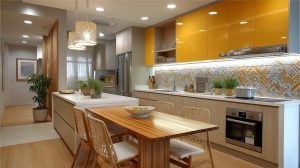
This kitchen upgrade below uses a lovely patterned Moroccan tile that adds style and definition to the décor.
There’s no doubt about it; a kitchen remodel does indeed add immense value to your home. For more pro tips and creative ideas, do subscribe to the HomeLane blog!
FAQs On Remodelling an Older Kitchen
1. What should I consider before remodelling an older kitchen?
Before remodelling an older kitchen, assess your current layout, storage limitations, lighting, and appliance efficiency. Identify pain points like poor workflow or unused spaces. Keeping the existing layout can help reduce costs, while a clear plan ensures your renovation improves both functionality and aesthetics.
2. How much should I budget for remodelling an older kitchen?
The budget for remodelling an older kitchen depends on materials, appliances, and design changes. Set a clear spending limit early and prioritise essential upgrades like cabinets and countertops. Avoid major plumbing or electrical changes unless necessary, as they can significantly increase renovation costs.
3. Does remodelling an older kitchen increase home value?
Yes, remodelling an older kitchen can significantly boost your home’s value. Updated cabinets, modern appliances, and improved lighting make the space more appealing to buyers. A well-designed kitchen enhances functionality and aesthetics, making it a key selling point in real estate.
4. What are cost-effective ways to upgrade an old kitchen?
Cost-effective ways of remodelling an older kitchen include upgrading cabinet finishes, adding new lighting, and replacing countertops or backsplash tiles. You can also install new surfaces over existing ones to save time and labour costs while still achieving a fresh, modern look.
5. How important is lighting when remodelling an older kitchen?
Lighting plays a crucial role when remodelling an older kitchen. A combination of ambient and task lighting improves visibility, safety, and overall ambience. Under-cabinet lighting and LED fixtures can brighten work areas while also making the kitchen appear more spacious and modern.
















 EXPLORE MORE