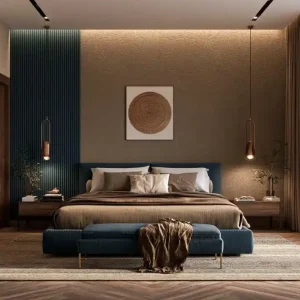
Bedroom False Ceiling: Best Designs, Materials and Planning Tips
By Usha Balasubramanyan- January 08, 2026
AI Summary
3 key insights · 1 expert tip
Master bedroom false ceiling designs enhance aesthetics and functionality, offering options from rustic wood to minimalist styles for Indian homes.
Key Insights:
What You'll Read Here:
Gypsum board ceilings are recommended for durability, affordability, and ease of installation in modern Indian homes.
White false ceilings are versatile and blend seamlessly with any room’s existing colour palette.
Suspended and layered ceilings are best for hiding beams and integrating various light fixtures.
HOMELANE EXPERT TIPBy our design team
When designing a false ceiling, consider integrating cove lighting for a luxurious, ambient glow that complements the overall bedroom décor.
The ceiling may be the last surface you think about in a bedroom, but it occupies rather a lot of real estate for something we routinely ignore!
A recessed ceiling with warm cove lighting softens the room and frames the bed wall neatly.
Done well, a bedroom false ceiling can make lighting softer, conceal electrical work and give the room a crisp architectural finish. Done badly, it can lower the room, collect dust in elaborate grooves and leave your ceiling looking busier than the rest of the bedroom combined.
So, what actually works? Here’s the lowdown.
What Is a Bedroom False Ceiling and How Does It Enhance a Bedroom?
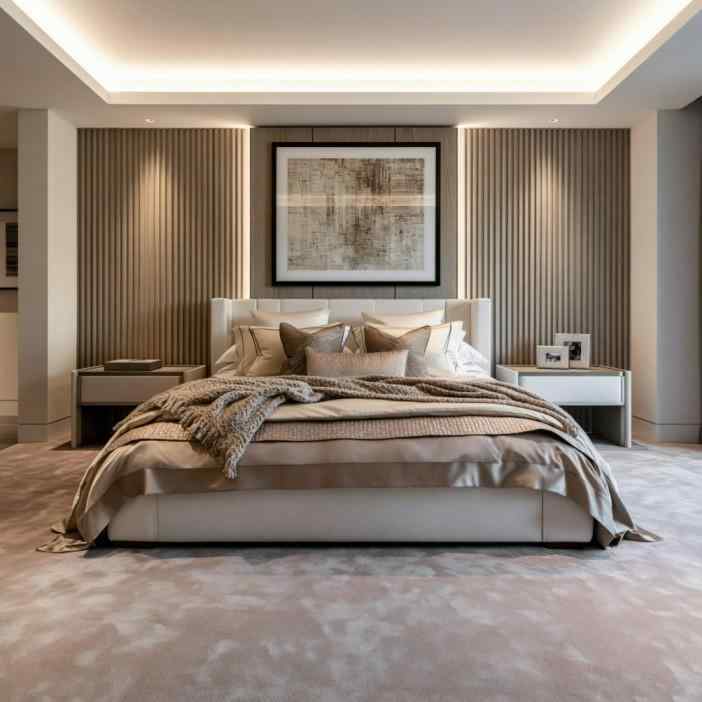
A slim perimeter border with downlights adds polish without making the ceiling feel heavy.
A false ceiling is a secondary ceiling installed below the structural ceiling. The gap between the two can accommodate electrical wiring, recessed lighting and other services while creating a more controlled finished surface.
In bedrooms, false ceilings are especially useful for lighting. Recessed downlights, concealed LED strips and bedside lighting can be integrated instead of relying on one harsh central fixture.
They can also help visually define areas. A subtle ceiling treatment above the bed, for example, can reinforce the sleeping zone without requiring an elaborate feature wall.
What are the Best Bedroom False Ceiling Designs for Different Room Sizes and Styles?
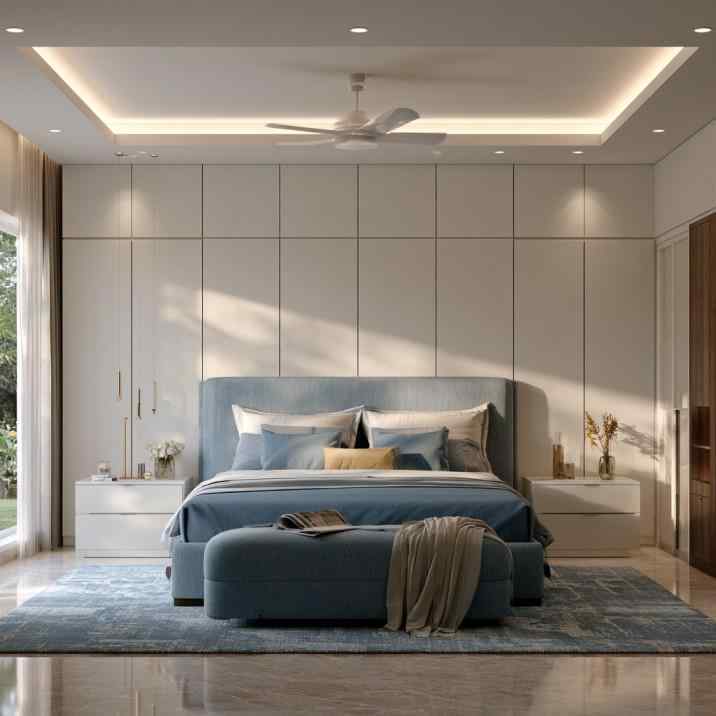
Planning the fan position early lets cove lighting and the ceiling fan sit together cleanly.
For compact bedrooms, restraint wins. A false ceiling design for a small bedroom can be as simple as a slim perimeter border with concealed lighting or a clean, flat dropped section that accommodates recessed lights.
A small bedroom false ceiling should avoid excessive layers and bulky projections, particularly when the original ceiling isn’t very high. Keeping most of the ceiling visually uninterrupted can preserve a greater sense of height.
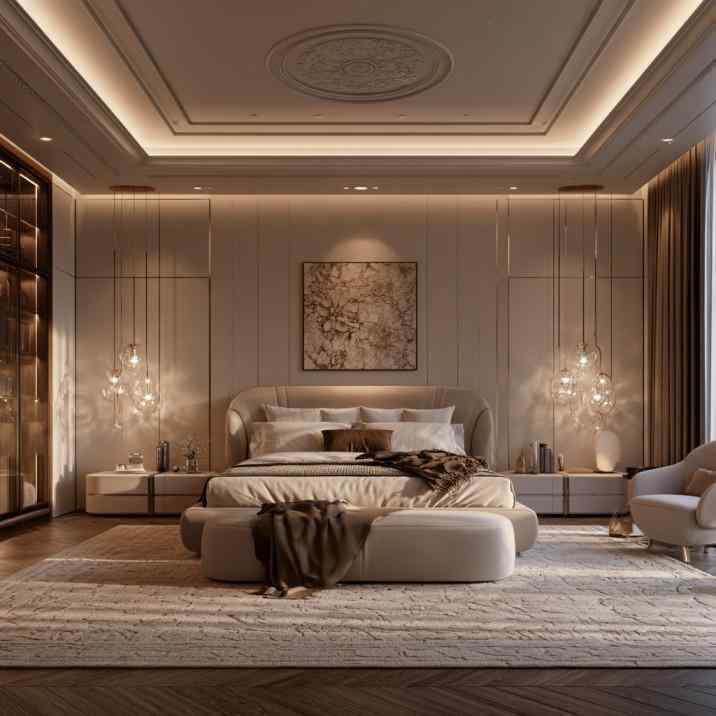
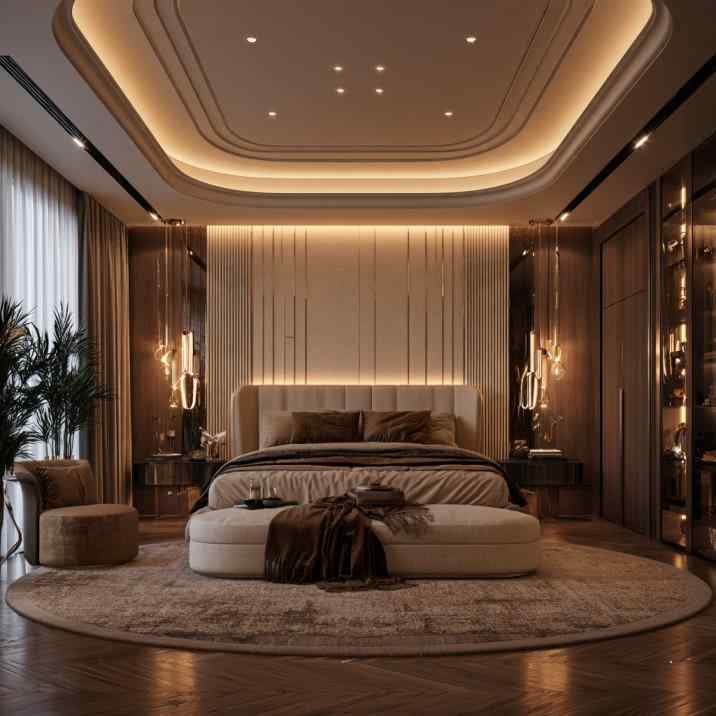
A layered tray ceiling with concealed lighting gives this master bedroom a refined finish.
For a larger master bedroom false ceiling, you have more room to play. Consider a recessed central panel, floating border, layered perimeter or a ceiling feature aligned with the bed.
A modern bedroom false ceiling usually looks strongest when its geometry relates to something already in the room, such as the bed, headboard, wardrobe or architectural layout.
Bedroom Type
Ceiling Approach
Why It Works
Compact bedroom
Slim perimeter detail
Keeps visual weight low
Low ceiling
Minimal drop
Preserves headroom
Master bedroom
Recessed or layered design
Adds definition without crowding
Minimal interior
Clean gypsum plane
Creates a seamless finish
Contemporary bedroom
Linear lighting detail
Adds architectural character
Among the latest bedroom false ceiling approaches, clean profiles and integrated lighting are preferred to ornamentation. If you’re after something uncomplicated, these simple false ceiling designs are a useful reference!
What Are the Benefits of Installing a False Ceiling in a Bedroom?
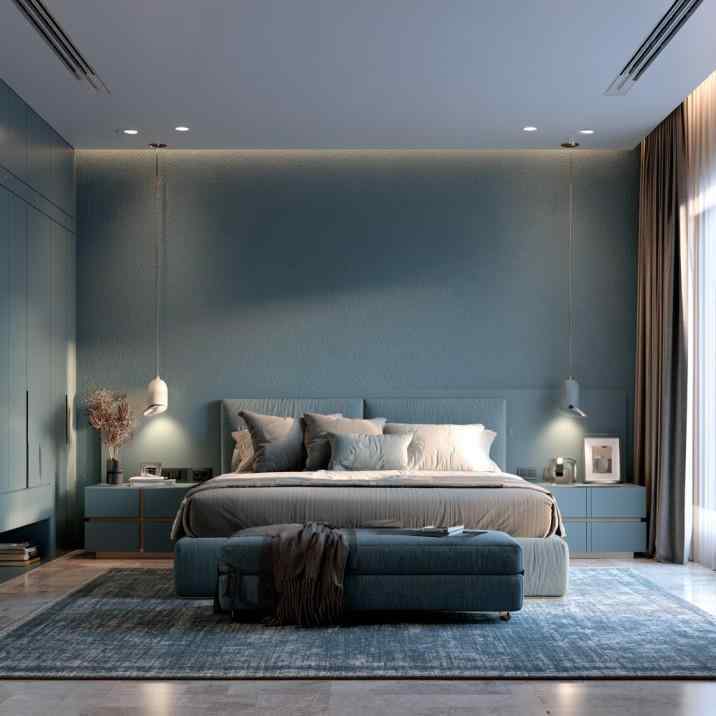
Integrated AC vents and recessed lights show how a false ceiling neatly conceals bedroom services.
Lighting flexibility is one of the biggest advantages. Instead of one central light to illuminate the entire bedroom, you can distribute light where it’s actually useful.
A false ceiling can conceal wiring and minor imperfections in the structural ceiling. It also creates space for services and can contribute to acoustic or thermal performance as needed.
Then there’s aesthetics. Good bedroom false ceiling ideas can make the ceiling feel deliberately connected to the room below. Concealed warm lighting around a simple recess, for instance, can create a softer evening atmosphere.
Which Material Is Best for a Bedroom False Ceiling?
Curved layers and warm cove lighting show the custom forms POP false ceilings make possible.
Gypsum board is one of the most popular choices for contemporary bedrooms because it provides smooth surfaces and works well for clean lines, recessed details and integrated lighting.
Plaster of Paris (POP) allows more decorative moulding and customised forms but is more dependent on workmanship.
Wood or wood-look finishes can add warmth, but they’re usually most effective as accents rather than covering an entire bedroom ceiling. They also dial up the cost, weight and maintenance.
Material choice should take into account the room, ceiling design, installation method and access to concealed services. Moisture problems in the structural ceiling should always be addressed before covering them up. A false ceiling is not a raincoat for a leaking slab!
How to Plan and Install a Bedroom False Ceiling Step by Step?
A floating ceiling edge with linear lighting adds contemporary character to this spacious bedroom.
Begin by measuring the room and, crucially, the existing ceiling height. Decide how much height you can afford to lose before choosing a design.
Next, map everything that needs to interact with the ceiling: lights, fan, AC, curtain tracks and electrical points. Decide whether any concealed equipment will require future access.
The ceiling framework and boards can then be planned according to the selected system. Electrical work and other concealed services need to be coordinated before the ceiling is fully closed. Joints are then finished, the surface prepared and the ceiling painted.
Lighting fixtures and finishing elements come towards the end, followed by checks for alignment and operation.
What Do You Need to Know Before Planning a Bedroom False Ceiling?
A recessed central panel anchors the ring chandelier and reinforces the sleeping zone below.
Start with height. False ceilings inevitably reduce the clear height to some degree, and the required drop depends on the design, framework, lighting and services being accommodated.
Then think about the fan. Its final height, blade clearance and relationship with nearby lights need to be planned carefully.
Access is another overlooked issue. If drivers, junctions or services are concealed above the ceiling, make sure components that may require maintenance remain accessible.
Budget for the whole installation rather than only the ceiling material. Framework, boards, labour, finishing, painting, electrical work and lighting all contribute to the final figure.
Give the Fifth Wall Something Useful to Do!
A circular star-pattern ceiling adds playful charm while keeping the fan neatly centred.
A bedroom false ceiling doesn’t need to perform architectural gymnastics to make an impact! Often, the smartest design is a simple one that quietly improves the lighting, conceals what needs concealing and makes the entire bedroom feel more considered.
HomeLane can help coordinate your ceiling, lighting and bedroom interiors as one design rather than three separate decisions. Book a free consultation and turn that overlooked fifth wall into a feature that actually earns its place!
FAQs
1. Is a false ceiling good for a bedroom?
Yes, provided the room has sufficient height and the design serves a purpose. It can conceal wiring, integrate lighting and create a more finished appearance.
2. Which type of ceiling is best for a bedroom?
Gypsum-board false ceilings are widely used for bedrooms because they create smooth finishes and accommodate simple contemporary designs and recessed lighting effectively.
3. What is the minimum height required for a false ceiling in a bedroom?
There isn’t one universal minimum because requirements depend on local regulations and the ceiling system. As a practical planning guide, rooms with finished ceiling heights around 2.4 metres or more generally feel more comfortable.
4. Which colour is best for a bedroom false ceiling?
White, off-white and other light neutrals are versatile because they maintain a sense of height and reflect light. Deeper colours can be used selectively in larger bedrooms or recessed ceiling sections.
5. How much does a bedroom false ceiling cost in India?
A straightforward gypsum false ceiling may broadly cost around INR 80 to INR 150 per sq ft, before or depending on inclusions such as electrical work, lighting and painting. Complex designs and premium materials cost more.
6. How long does a bedroom false ceiling last?
A properly specified and installed false ceiling can last for many years. Longevity depends on material quality, installation, structural movement, moisture exposure and maintenance.



















 EXPLORE MORE