Dark bedroom ideas create depth and cosiness rather than a cramped feel when the dark tone is balanced with lighter flooring, bedding or accents and supported by layered lighting.
Key Insights:
What You'll Read Here:
Colour pairings like charcoal with mustard, navy with beige or wood, dark green with brass, and black with soft neutrals each create a different mood, but all work best with at least one lighter element.
In a HomeLane 2BHK project in Bangalore, a charcoal accent wall behind the bed paired with light bedcovers, back upholstery and warm lighting created depth without making the room feel smaller.
Matte finishes diffuse light softly and hide imperfections, while glossy finishes reflect light unevenly and highlight dust, so layered ambient, task and accent lighting matters more in dark rooms than in light ones.
HOMELANE EXPERT TIPBy our design team
Test the chosen dark paint on a large board rather than directly on the wall, and move it around the room over a full day, because dark shades shift far more dramatically with changing light angles than pale colours do, and a patch tested in only one spot can be misleading.
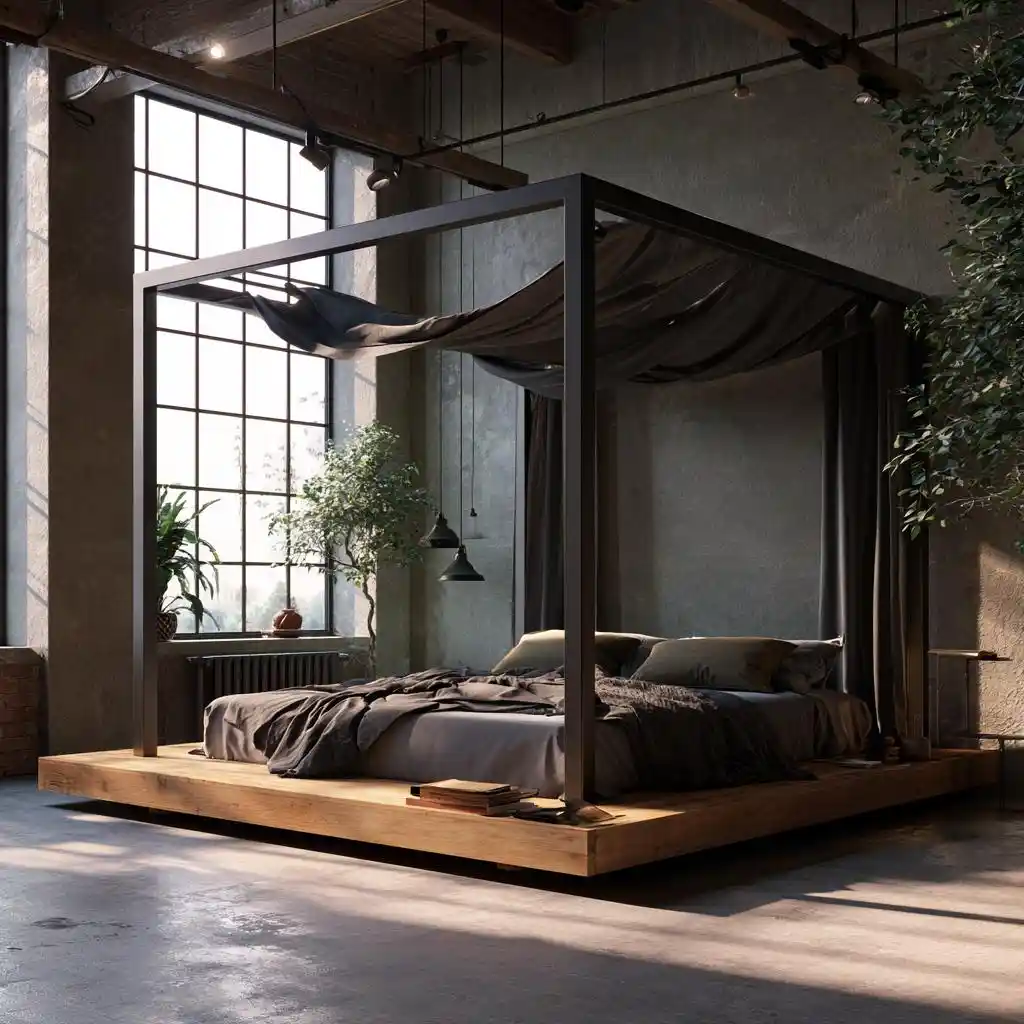
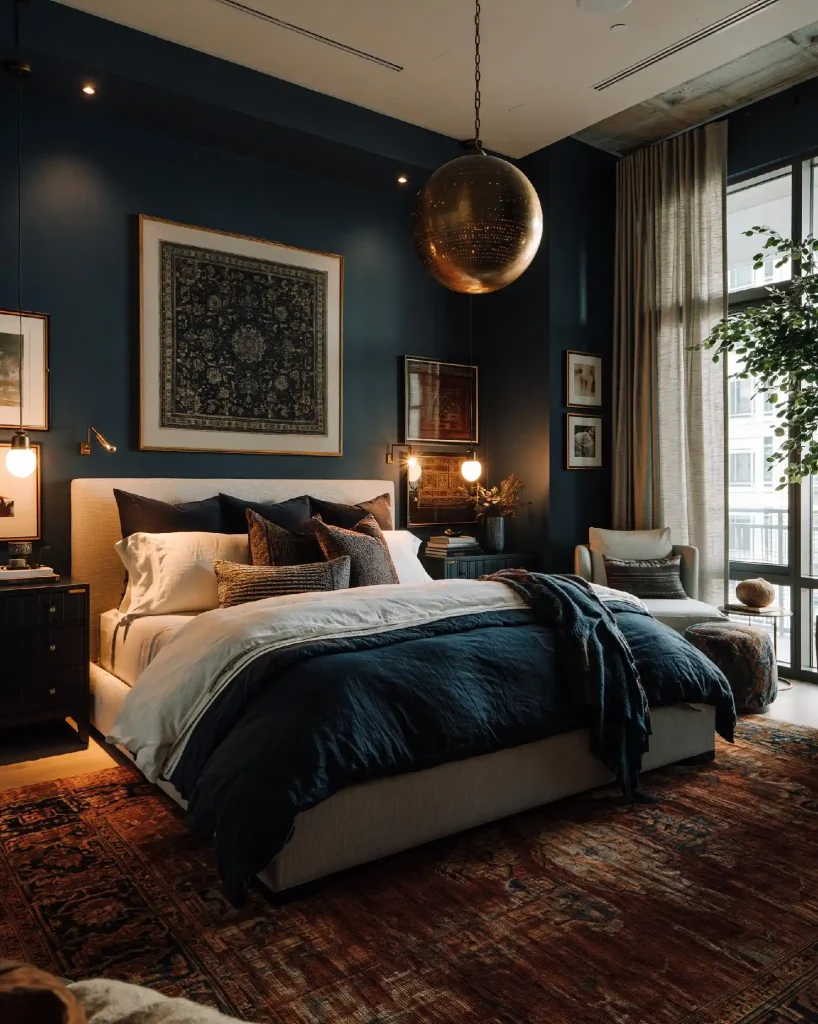
A dark bedroom idea blending concrete walls with a cosy canopy bed setup.
Dark bedrooms often get a bad reputation for feeling small or heavy; and that perception is often correct. But when done right, dark bedroom ideas can make your space feel calmer, more intimate, and visually rich. Instead of making the room look closed, darker tones can actually create depth and a sense of comfort that lighter colours sometimes lack.
The trick is not avoiding dark colours, but using them with the right balance of light, materials, and layout.
Are Dark Bedroom Ideas a Good Choice for Your Space?
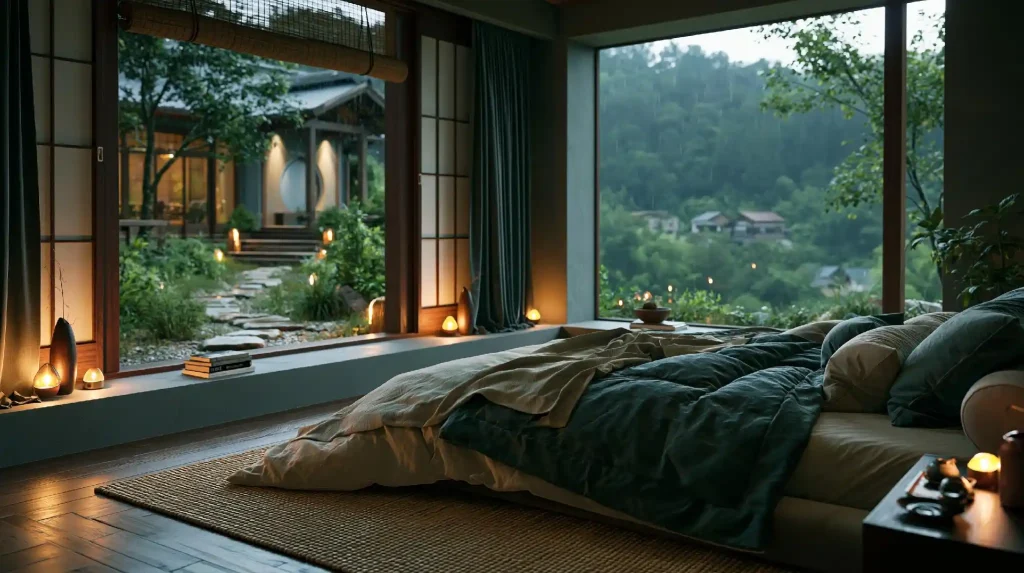
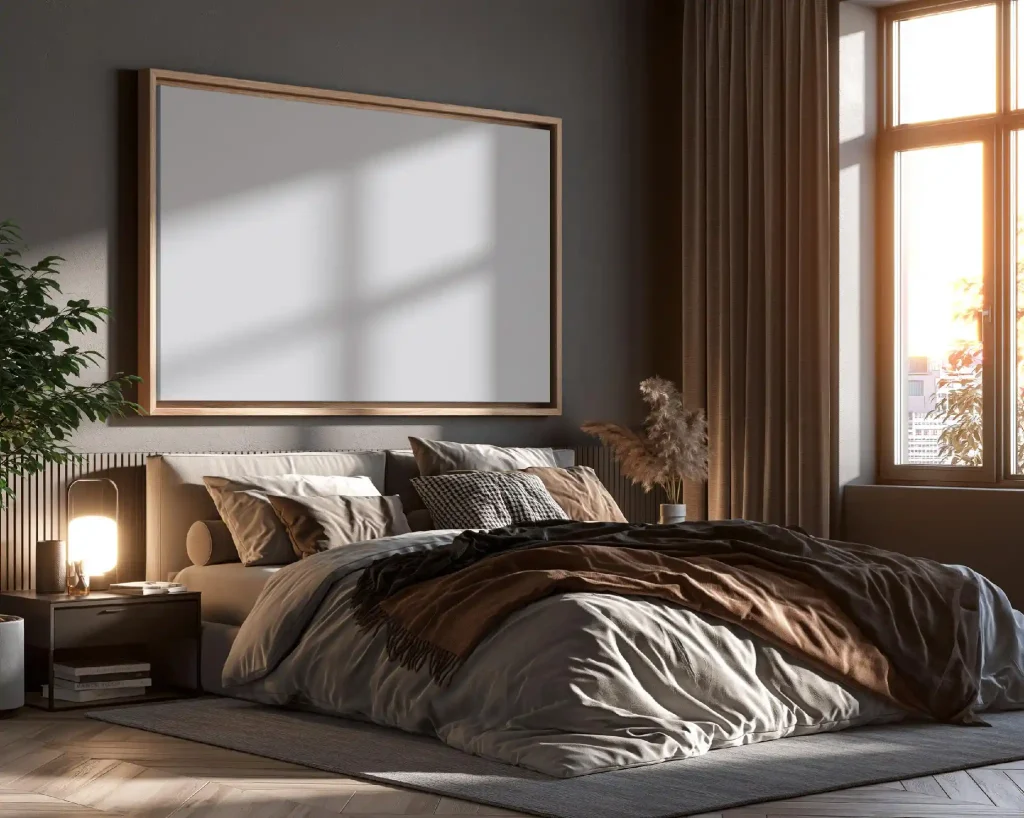
Dark bedroom design using natural light and warm lamps for a cosy feel.
A dark bedroom design works best when you understand how your room behaves.
In rooms with good natural light, darker colours can create a strong contrast that feels warm and inviting. In rooms with limited light, using dark tones on one or two surfaces instead of all walls helps maintain balance.
Dark colours also hide minor wall imperfections better than lighter shades, making them a practical choice in many homes. The decision depends less on trend and more on how your space handles light.
How to Design a Dark Bedroom Without Making It Feel Small
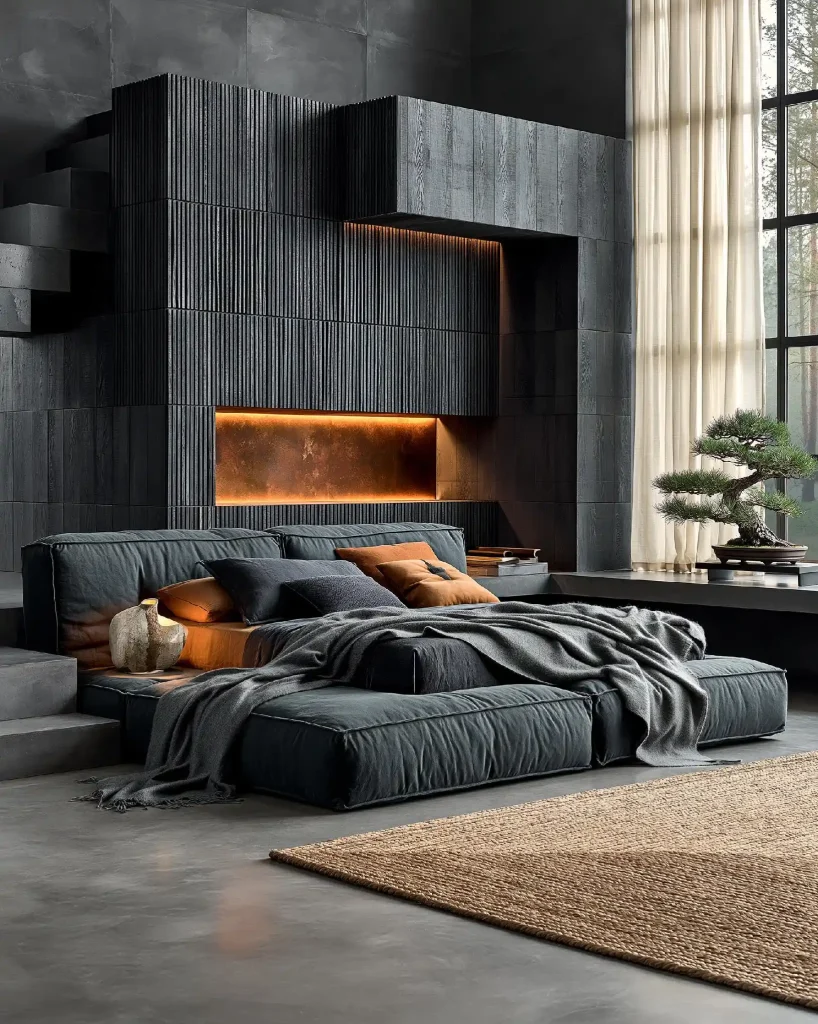
A modern dark bedroom idea using texture and warm accent lighting for depth.
The biggest concern with small dark bedroom ideas is making the room feel cramped. The solution is contrast. Pair dark walls with lighter flooring, bedding, or furniture to keep your space visually open. Mirrors can also help reflect light and reduce heaviness.
Avoid using dark colours on all surfaces in smaller rooms. An accent wall behind the bed is often enough to create impact without reducing brightness.
A well-balanced modern dark bedroom idea uses dark tones to add depth, not weight.
What Are the Best Dark Colour Combinations for Bedrooms?
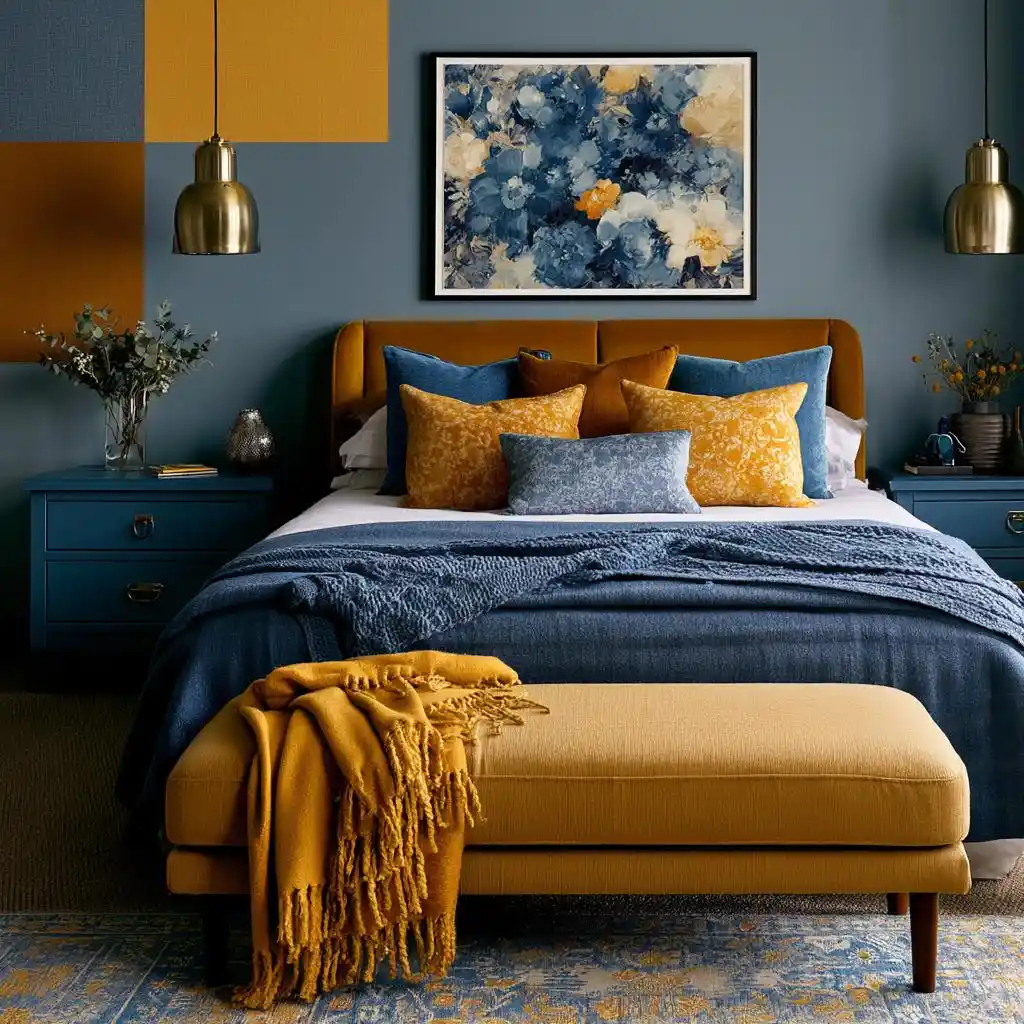
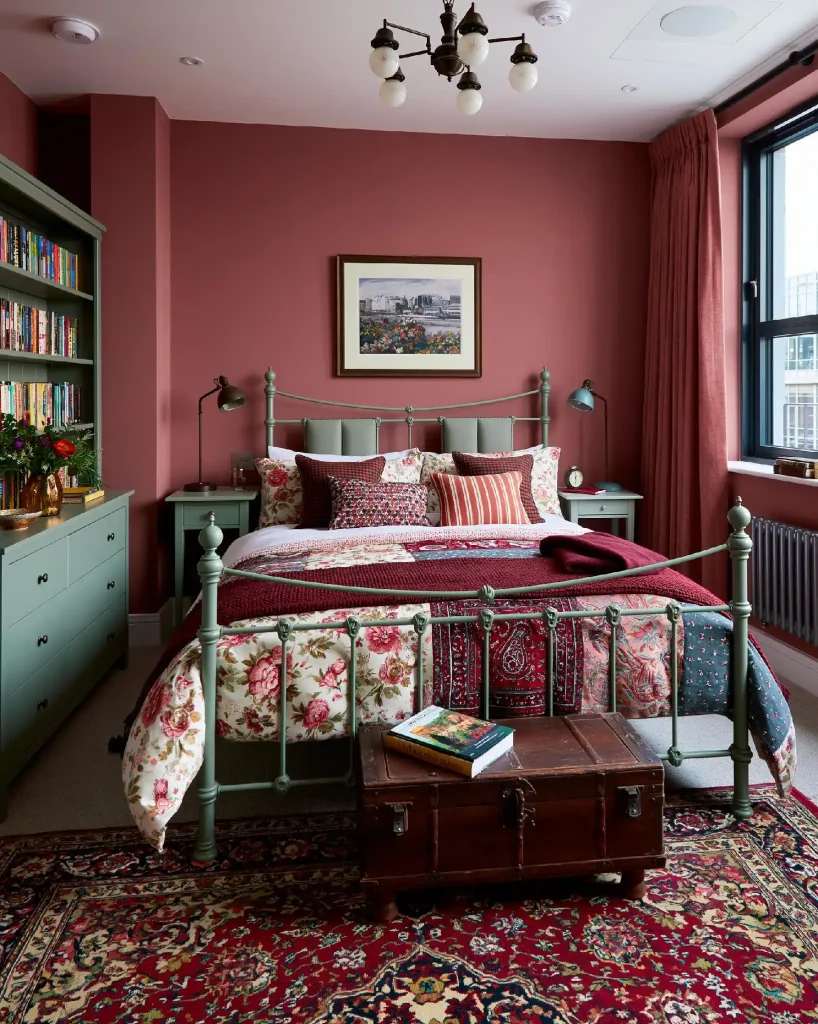
Navy blue and mustard make a warm, layered dark bedroom colour combination.
Colour pairing defines how the room feels.
Charcoal or deep grey + mustard Clean and modern Best for balanced contrast
Navy blue + beige or wood Warm and layered Ideal for cosy bedrooms
Dark green + brass accents Rich and elegant Works well for a luxury dark bedroom idea
Black + soft neutrals Bold but controlled Best used with good lighting
A cosy dark bedroom idea always includes at least one lighter element to soften the overall look.
A Real HomeLane Transformation: What Changed and Why!
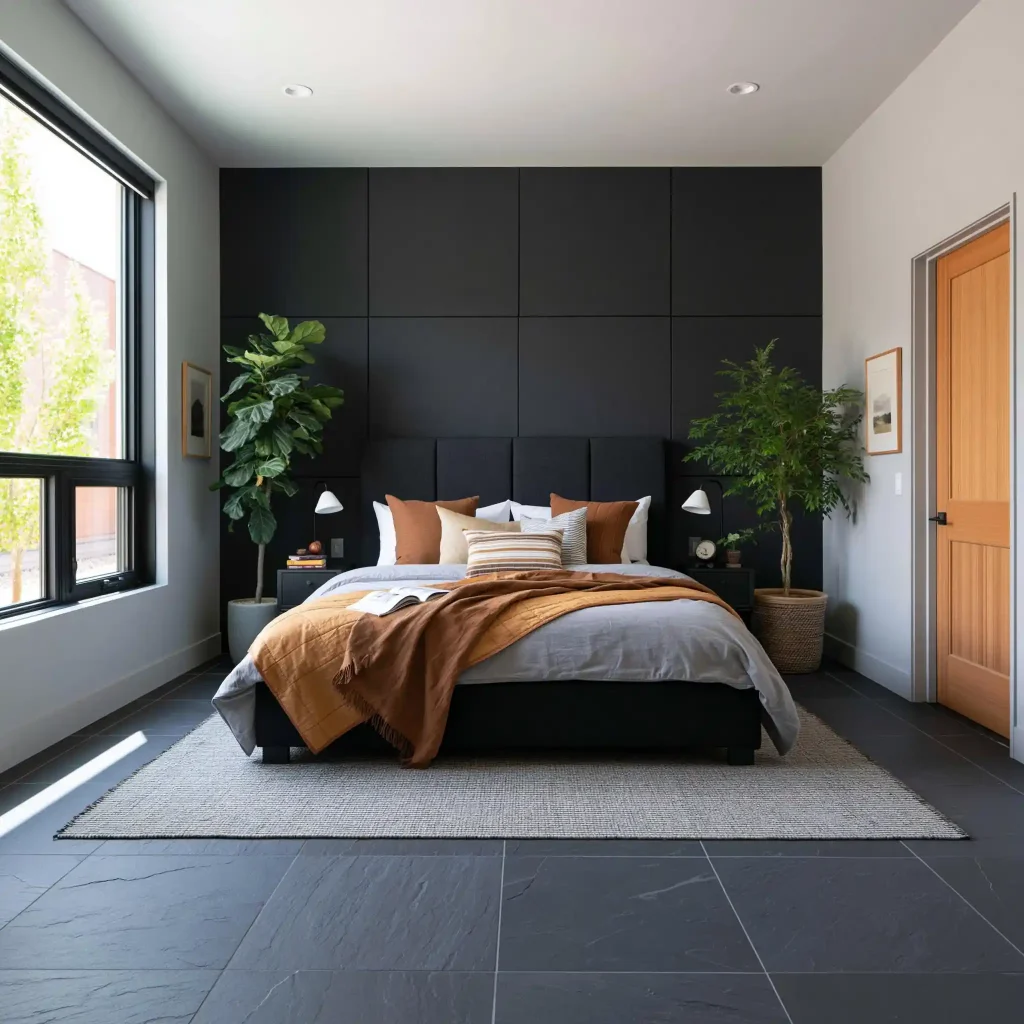
A HomeLane dark bedroom transformation using a charcoal accent wall for depth.
In a 2BHK apartment in Bangalore, the homeowners wanted a darker bedroom but were worried about it feeling too enclosed. The design team used a deep charcoal wall behind the bed, paired with back upholstery, light bedcovers and warm lighting. The rest of the walls were kept neutral.
This created depth without making the room feel smaller. The lighting and materials balanced the darker tone, making this space feel cosy rather than heavy.
Design Mistakes That Make Dark Bedrooms Feel Heavy
Overusing dark tones without contrast can make a dark bedroom feel heavy.
Most issues with dark bedroom design come from imbalance. Using dark colours on all walls, ceiling, and furniture can make the room feel closed. Lack of lighting is another common problem, which makes your space feel dull instead of cosy.
Ignoring contrast is also a mistake. Without lighter elements, the room lacks visual relief. Choosing glossy finishes can highlight dust and imperfections, while poor material choices can make the space feel flat. The better approach is to combine dark tones with light, texture, and proper lighting.
What Designers Check Before Finalising a Dark Bedroom
Layered lighting with bedside lamps keeps a dark bedroom design warm, not flat.
Dark designs need more planning than lighter ones. Lighting is the first factor. Layered lighting (ambient, task, and accent) is essential to prevent the room from feeling flat.
Material choice matters. Soft fabrics, wood, and matte finishes help absorb light and create warmth.
Spacing and layout also play a role. Clutter becomes more visible in darker rooms, so storage needs to be planned carefully.
How Lighting and Finishes Affect Dark Bedroom Design
Contrasting finishes and lighter accents help balance a dark bedroom colour palette.
In a dark bedroom design, lighting and finishes matter as much as the colour itself.
Natural light behaves differently on dark walls. Instead of reflecting light, darker shades absorb it, which means the room can feel flat if lighting is not layered properly. This is why relying on a single ceiling light rarely works.
Finish selection also plays a role. Matte paints are generally better for dark bedrooms because they diffuse light softly and hide wall imperfections. Glossy finishes, on the other hand, reflect light unevenly and can highlight patches, dust, and marks.
It’s not just about choosing a colour, but about controlling how light interacts with every surface in the room. If you’re unsure, test it before you decide.
What to Finalise Before You Lock Your Design
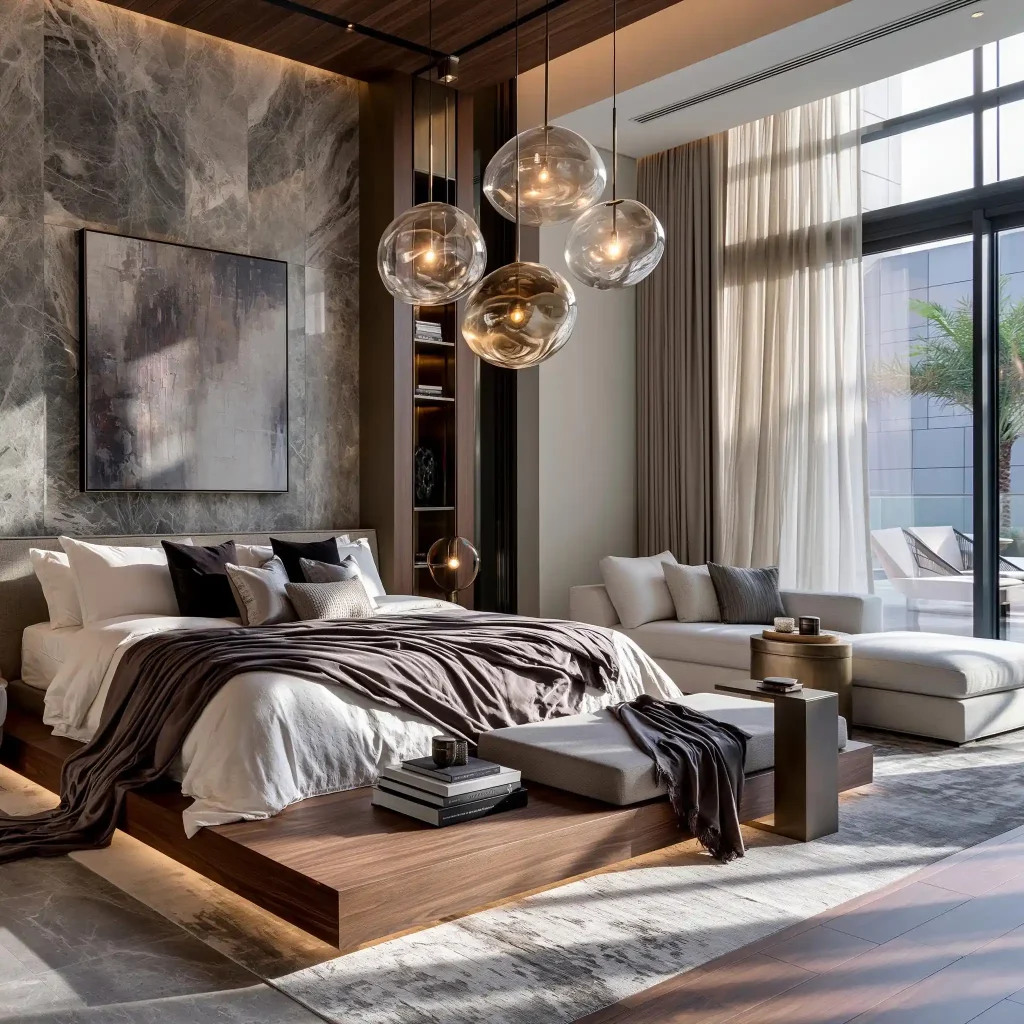
A luxury dark bedroom design pairing marble tones with layered pendant lighting.
Before finalising your dark bedroom ideas, focus on three things.
Check how the colour looks in both natural and artificial light. Colours often look very different when shadows are cast.
Balance dark tones with lighter materials and finishes. Experiment with patterns and textures as well.
Ensure that there is sufficient lighting across different zones of the room.
All these, put together, make for the perfect dark bedroom design! Unsure about how to get the balance you need? If you want a bedroom that feels cosy without being heavy, book a free consultation with HomeLane.
FAQs
1. What colours are best for a dark bedroom design?
Deep tones like navy, charcoal, and olive work well when paired with lighter colours. Using contrast ensures the room doesn’t feel too heavy and maintains visual balance.
2. How can I make a dark bedroom feel cosy instead of heavy?
Use soft lighting, warm materials, and lighter accents, and avoid overusing dark tones. Layering textures like fabric and wood helps create warmth and depth.
3. What is the best way to balance lighting in a dark bedroom?
Use multiple light sources instead of one main light. Combine ambient and task lighting. Layered lighting makes for even illumination and prevents harsh shadows.
4. Is a dark bedroom a good idea for Indian homes?
Yes, especially in well-lit rooms, it creates a calm and relaxing environment. Proper ventilation and lighting are important to maintain comfort in warmer climates.
5. How do I make a luxury dark bedroom design?
Use rich materials, minimal décor, and controlled lighting to keep the design refined. Adding accents like metal finishes or textured fabrics enhances the premium feel without clutter.











 EXPLORE MORE