Inspiring Interior Design Mood Board Examples to Love in 2026
By Usha Balasubramanyan- May 25, 2026
AI Summary
3 key insights · 1 expert tip
Interior design mood boards visually consolidate ideas, preventing project confusion and ensuring cohesive design choices before committing to materials and furniture.
Key Insights:
What You'll Read Here:
Mood boards streamline decisions, preventing mismatched elements and reducing unnecessary spending on decor.
They help visualise colour palettes, materials, furniture styles, and lighting for a cohesive final look.
Creating a mood board simplifies communication with designers, ensuring everyone shares the same vision.
HOMELANE EXPERT TIPBy our design team
Start your mood board with a simple colour palette of 3-4 shades, then gradually add textures and elements to build complexity.
Summary
If you start an interior project without a clear direction, there are high chances it can go out of control. Confusion leads to mismatched elements, and unnecessary spending down the line. Many homeowners struggle to explain their ideas to their designer. An interior design mood board corrals all your ideas into one visual plan. It helps you test colours, materials, and styles before making decisions. This reduces guesswork and keeps your project on track. With a strong mood board, you move from scattered inspiration to a clear, workable design that feels consistent and well thought through from start to finish.
Best For
Homeowners starting a renovation, anyone feeling overwhelmed with too many mood board ideas, and those who want clarity before committing to materials and furniture. It also works well for first-time home design projects.
Expert Tip
Start with fewer elements. A simple colour mood board with 3 to 4 shades is easier to build on than a crowded board. Once the base feels right, add layers gradually. Ever tried explaining a design idea and realised words just don’t cut it? You say “modern”, someone else imagines minimal, and suddenly you’re on completely different pages. You may not even be equipped with the right words, if you are a layperson!
That’s exactly where an interior design mood board steps in. It brings ideas together in a way you can actually see and feel. Colours, textures, furniture, finishes, all in one place. If you’re planning a home update, even a small one, starting with a mood board can save you from second-guessing later. It gives your ideas direction before you commit to anything.
What Is an Interior Design Mood Board?
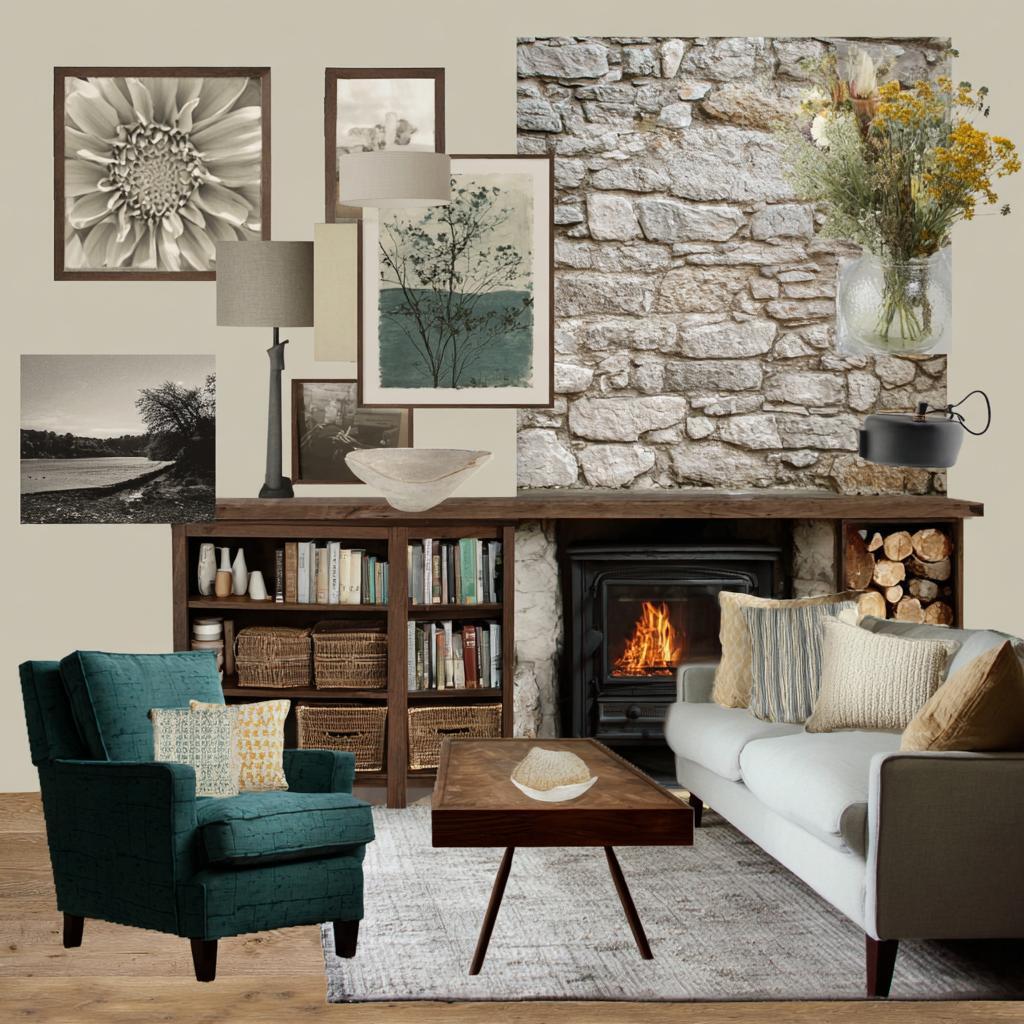
A rustic living room mood board combining a stone fireplace, gallery wall, and teal armchair.
Simply put, a mood board design is a visual collection of ideas for your space.
It can include:
Colours
Materials
Furniture styles
Lighting references
Textures and finishes
Think of it as a snapshot of your future room. An interior mood board helps you see how everything will come together before you start buying or building.
Why Mood Boards Are Essential in Interior Design
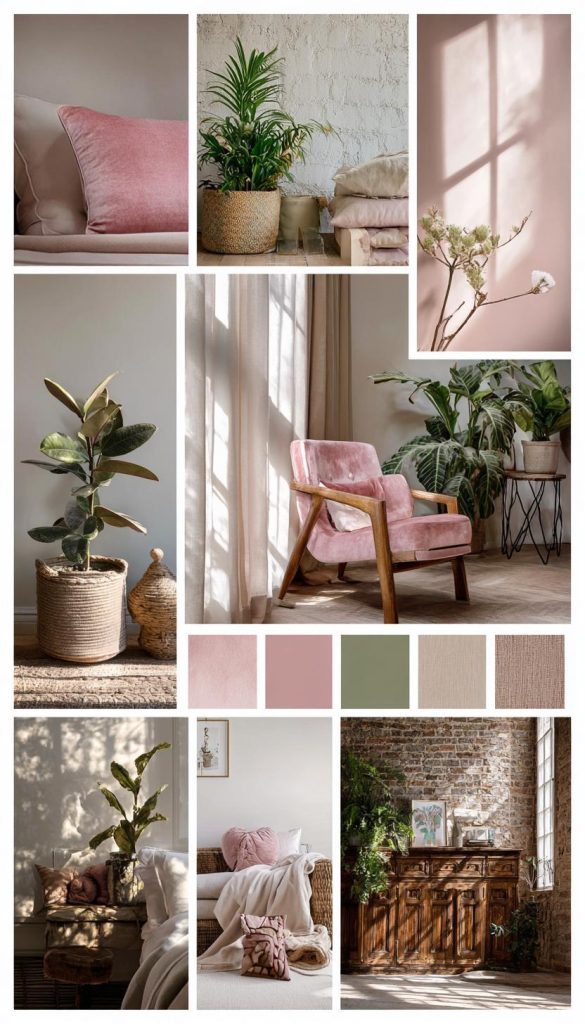
A blush pink living room mood board with velvet chair, indoor plants, and earthy colour swatches.
Most design mistakes don’t happen during execution; they happen right at the start. Your designer might not get the vibe that you’re looking for, and you may not know colours and patterns well enough to be able to judge!
A mood board helps avoid that. It brings clarity. Instead of guessing what works, you can see it upfront. It aligns everyone involved. You, your family, and your designer are all looking in the same direction. It also helps control costs. When your choices are clear, you avoid impulse decisions later. In short, a strong inspiration mood board keeps your project focused.
Types of Mood Boards
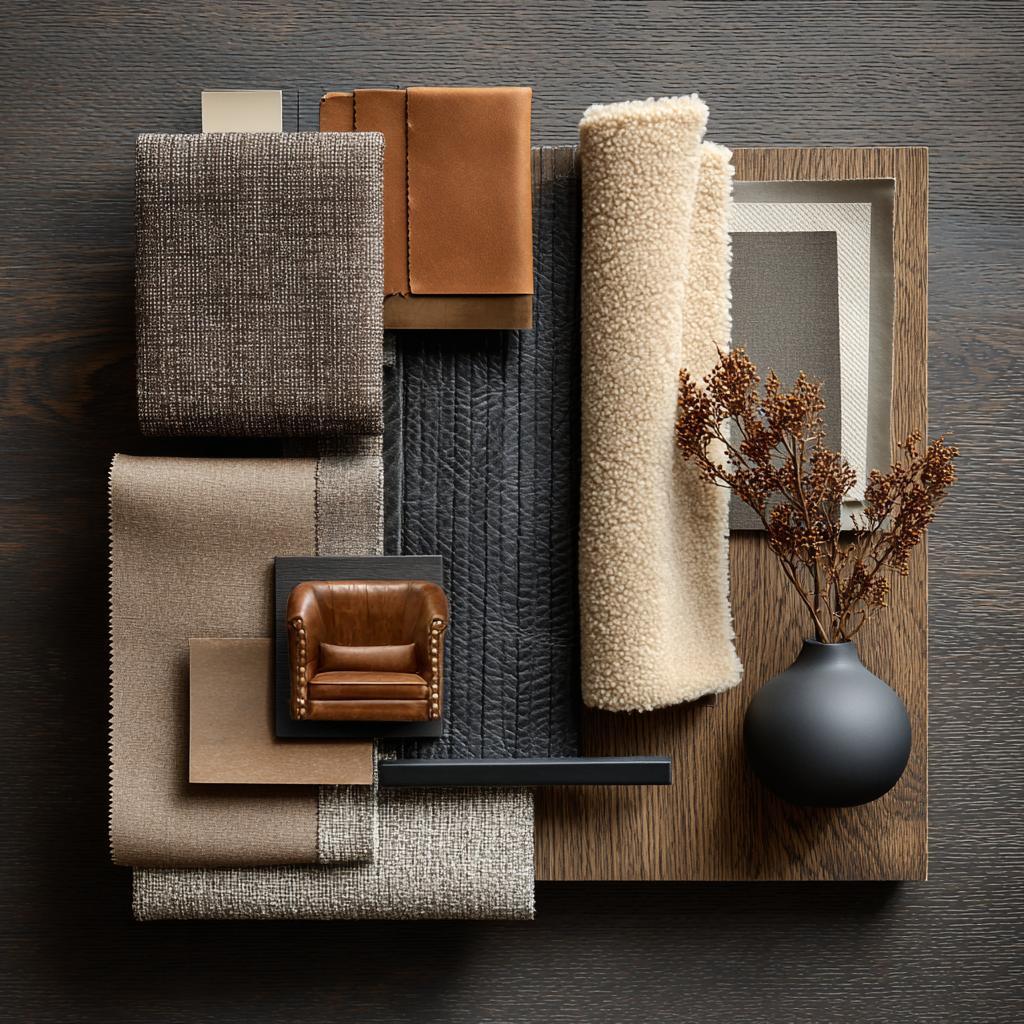
A physical interior design mood board featuring leather, boucle, and warm woven fabric swatches.
Not all mood boards look the same! Designers will use different formats depending on the stage of the project. A physical mood board might include fabric swatches, tile samples, and printed images.
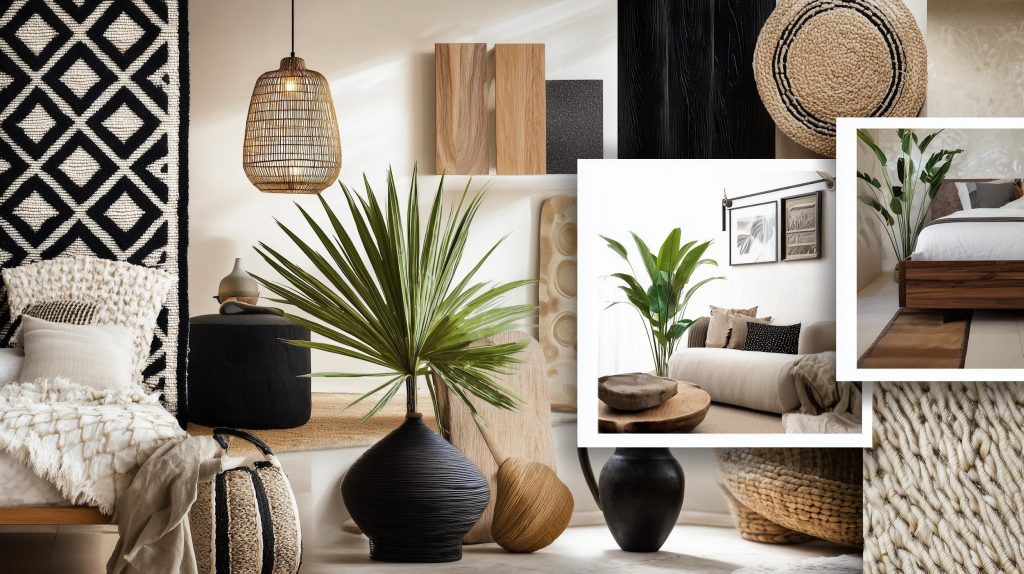
A digital interior mood board combining black accents, woven textures, and natural material references
A digital interior design mood board template is more flexible. It can be updated easily and shared instantly.
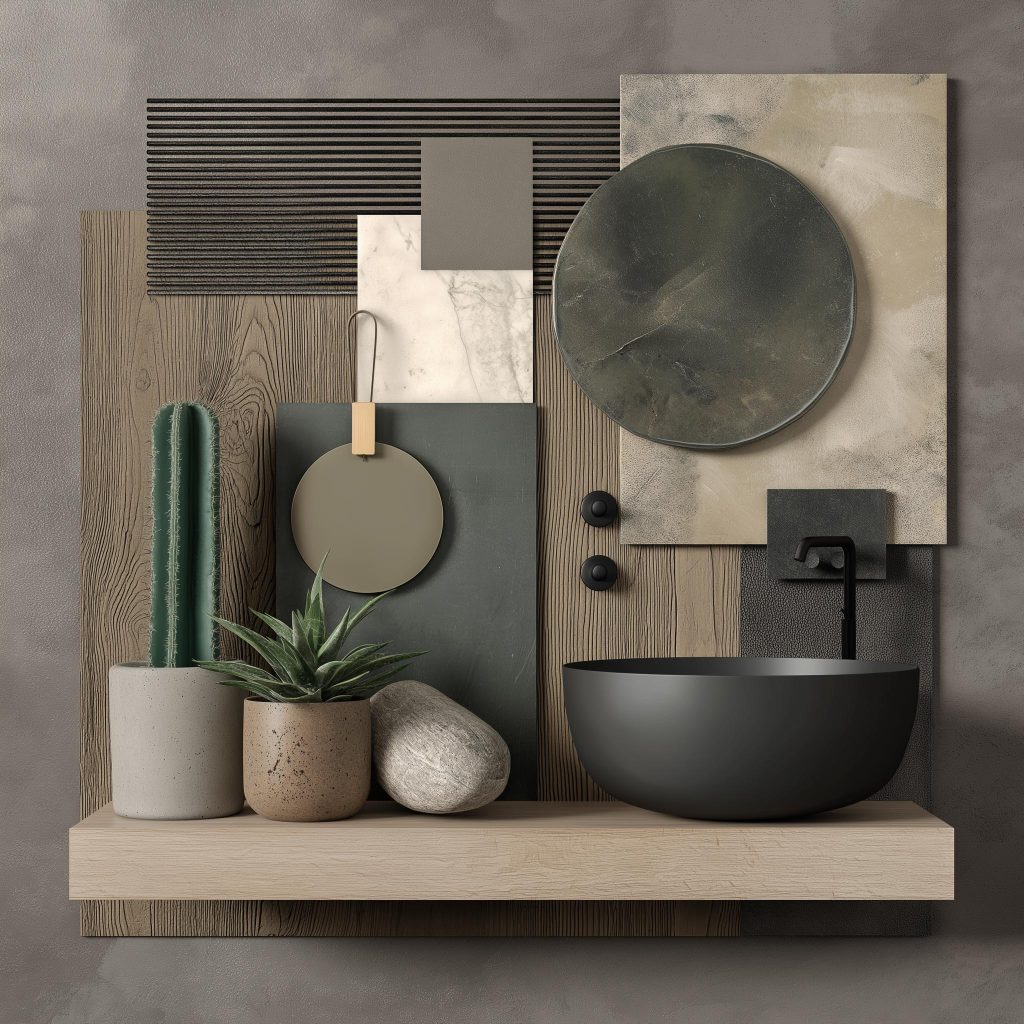
A bathroom interior mood board with stone finishes, dark metal fixtures, and earthy green tones.
There are also:
Colour mood boardsthat focus on palettes
Room-specific boards like a bedroom mood board, kitchen mood board, or living room mood board
Each type serves a slightly different purpose, but all aim to bring clarity.
Key Elements of an Interior Mood Board
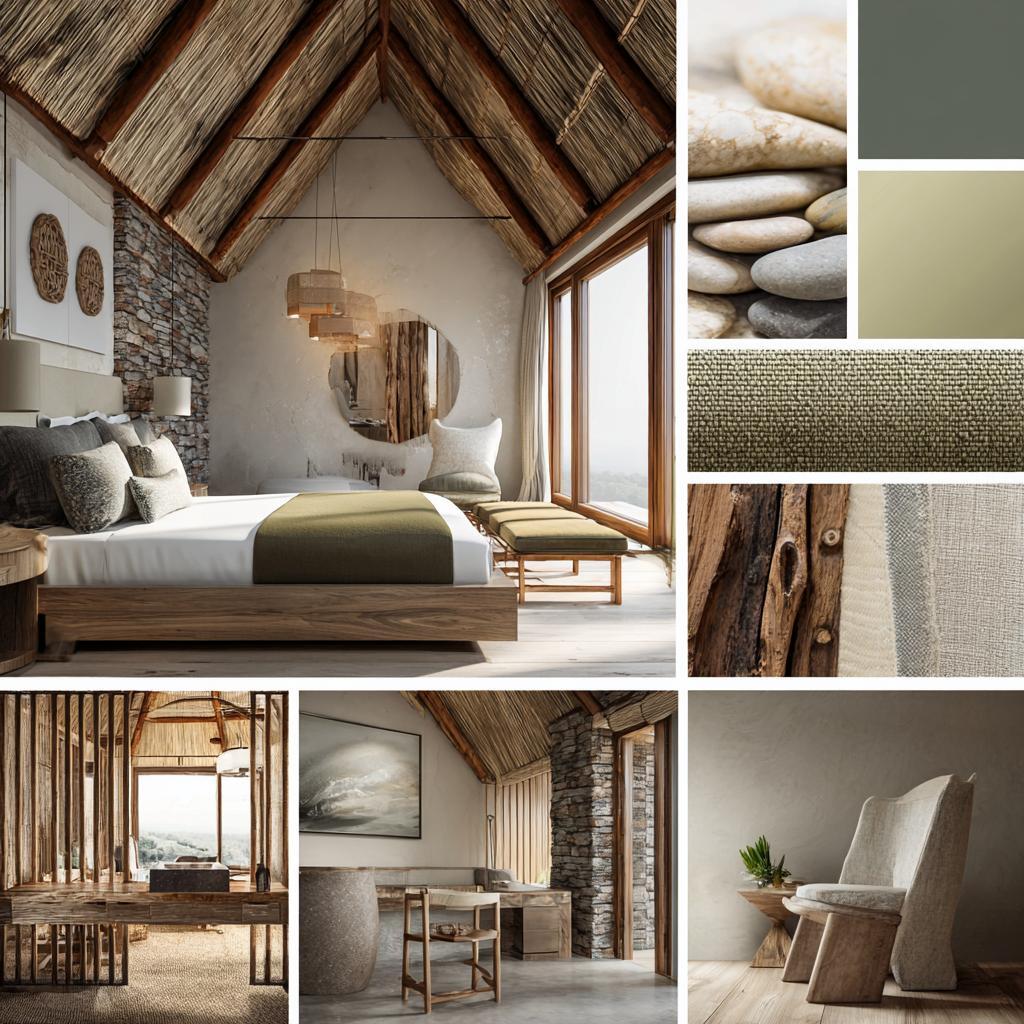
A bedroom mood board featuring a stone wall interior, natural textures, and earthy colour swatches.
A good mood board design is not just a random collection of images; it is thoughtfully put together and describes everything about the ambience you are trying to create.
The first element is colour. This sets the tone for everything else.
Next comes material. Wood, stone, metal, fabric. These define how the space feels.
Furniture and layout references give structure.
Lighting adds depth and atmosphere.
And finally, small details like décor and finishes tie everything together.
When all of these elements are perfectly balanced, your interior mood board starts to feel cohesive.
How We Use Mood Boards in Our Interior Design Process
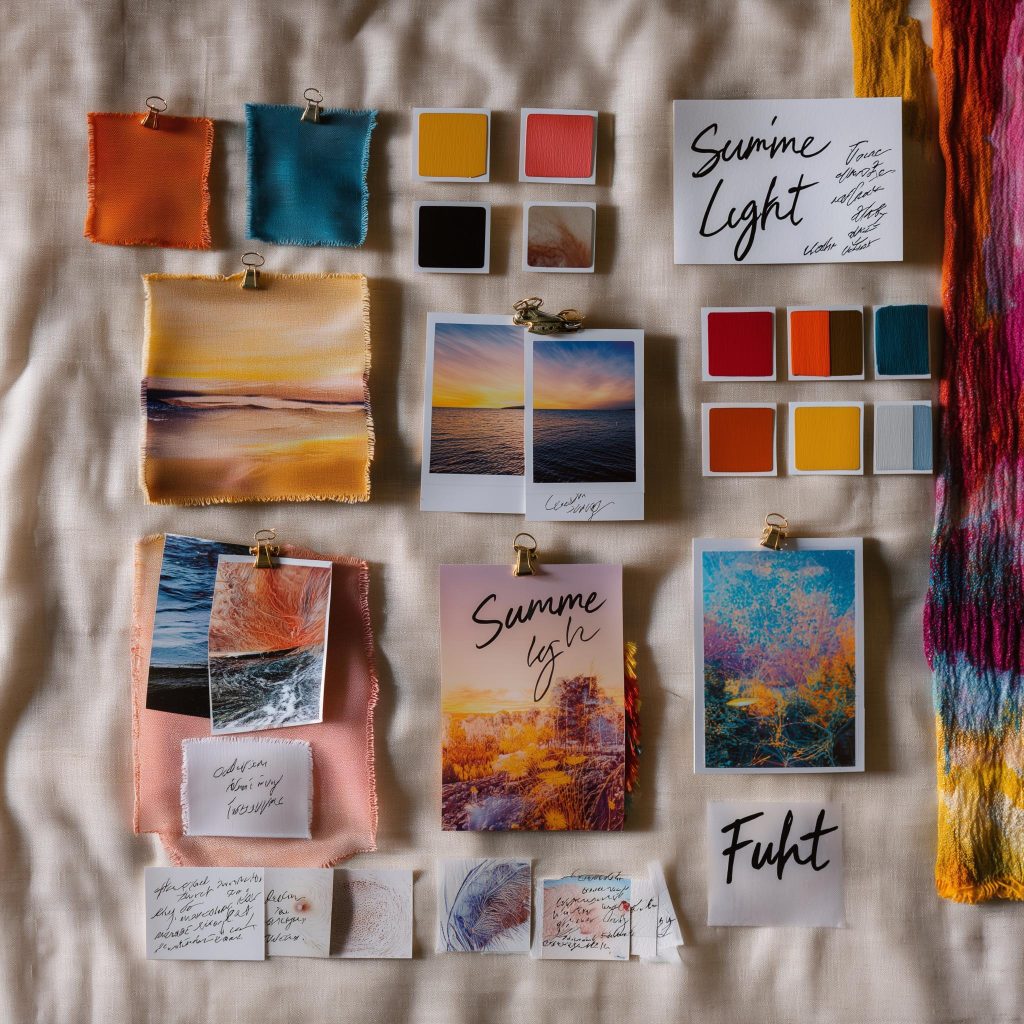
A vibrant physical colour mood board with fabric swatches, polaroids, and handwritten design notes.
Mood boards are not just for inspiration. They are a working tool. At the start, we create a base interior design mood board to understand your preferences. This includes colours, styles, and materials you naturally lean towards.
Then we refine it. We remove what does not fit and build on what does. As the design develops, your mood board template evolves. It becomes more detailed and closer to the final outcome. By the time execution begins, there is no confusion. Every choice connects back to the board.
From Mood Board to Masterpiece: Real Project Showcase
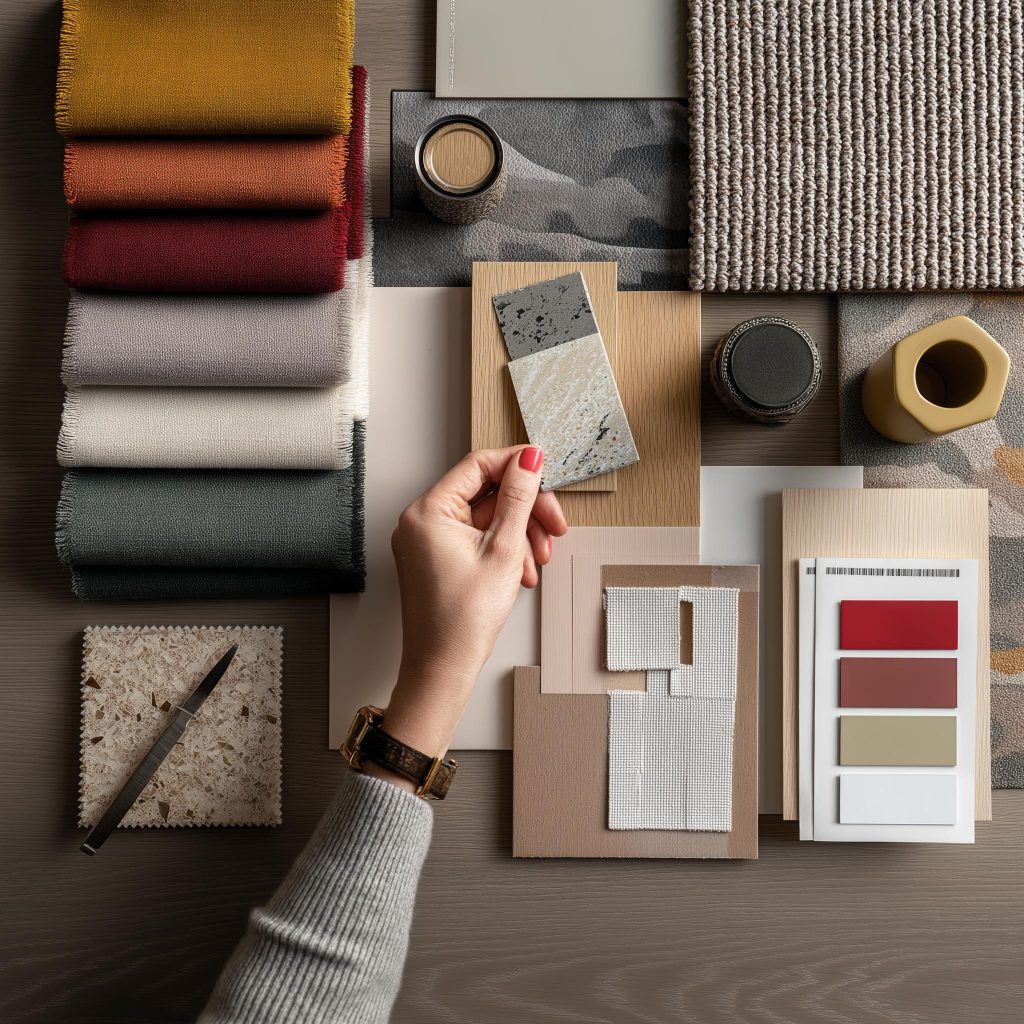
A designer carefully curating fabric and material swatches to build a cohesive interior mood board.
Let’s say a client wants a modern living room but with warmth. They are worried it will end up looking too stark, without heart. Your initial living room mood board might include neutral tones, soft textures, and simple furniture lines. Next step, we add depth! A textured hand-woven rug with all the colours of the rainbow, layered lighting, and a statement accent that anchors the space.
Whatever you do should be defined by what’s in the mood board. What started as a simple inspiration mood board turns into a clear design plan. The result feels intentional because every element was thought through early on.
Tips for Creating Your Own Mood Board (DIY Style)
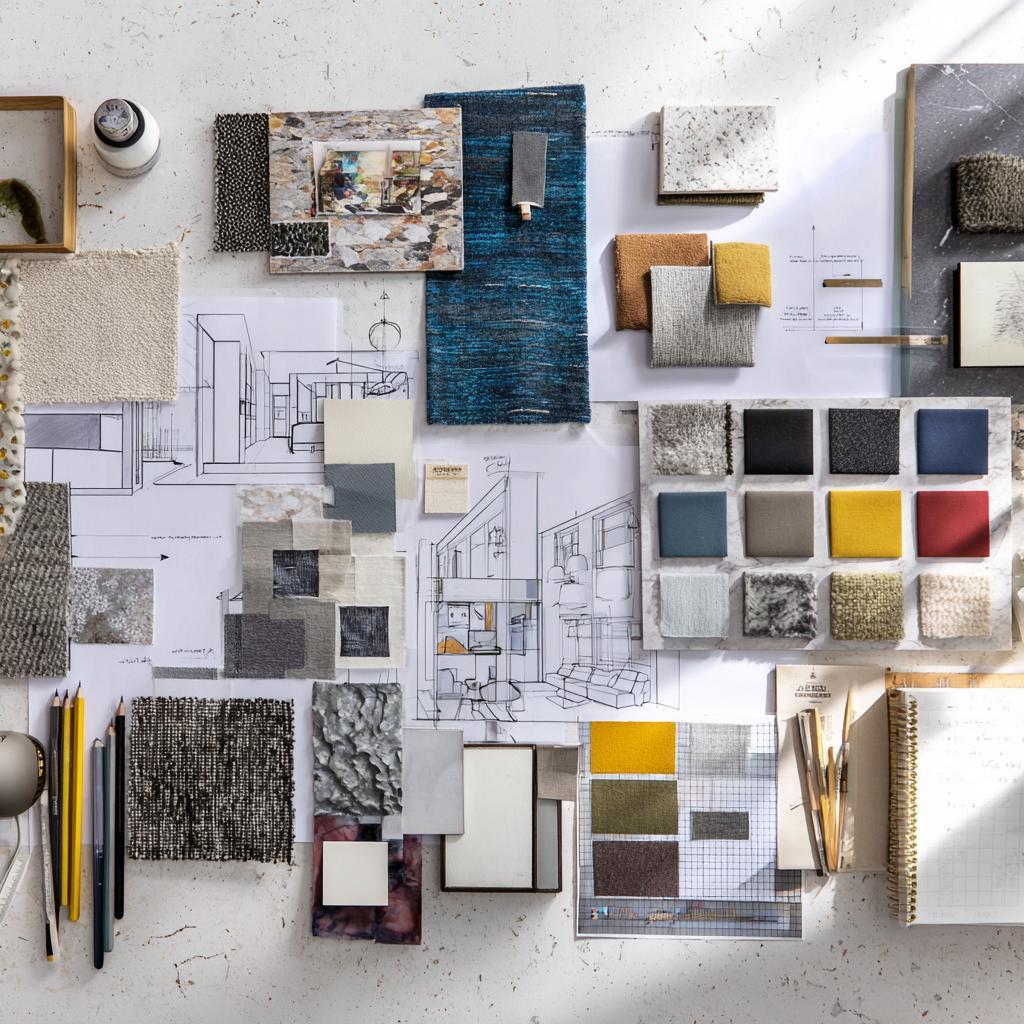
A DIY interior mood board combining floor plan sketches, tile swatches, and layered fabric samples.
You do not need to be a designer to create a good mood board. Anyone can do this! Start by collecting images you are drawn to. Do not overthink it. If a design speaks to your heart, pick it up.
Look for patterns. Are you leaning towards certain colours or materials? Keep it focused! Too many different ideas can make the board confusing. Use a simple interior design mood board template if you are unsure where to begin. There are plenty of templates available online. And most importantly, edit. Remove anything that does not fit your overall direction.
Common Mood Board Mistakes to Avoid
One common mistake is adding everything you like. People tend to go overboard, especially if they don’t know how to group elements together! A mood board is about design direction; not exactly a collection of favourites. Another is ignoring practicality. A design might look great but not work for your lifestyle.
Mixing too many styles can also create confusion. And finally, skipping the board altogether often leads to inconsistent results. Taking time here saves time later.
Ready to Visualise Your Dream Space? Let’s Mood Board Together
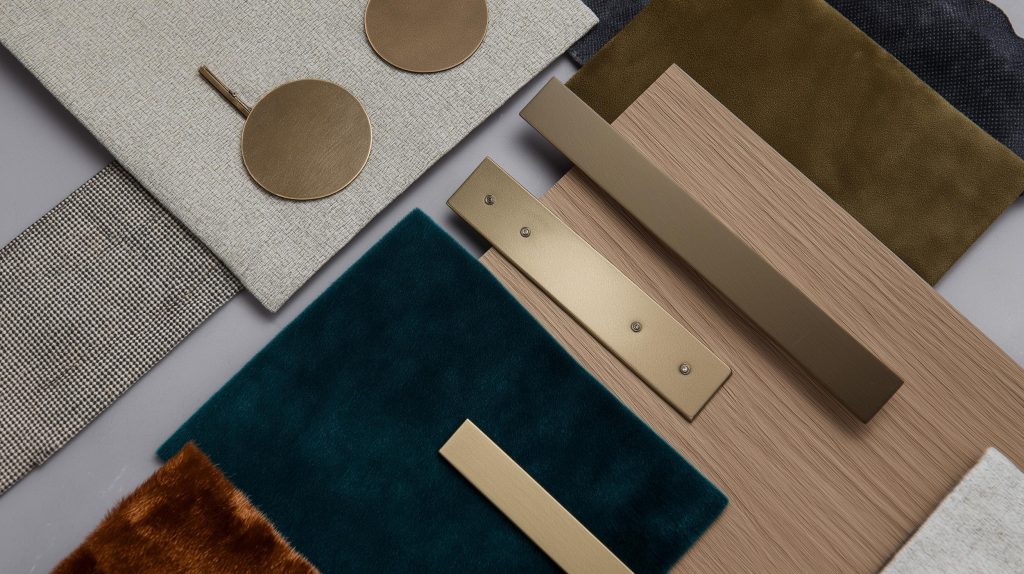
An interior mood board featuring teal velvet, warm brass hardware, and wood grain material samples.
If you feel stuck with too many ideas or no clear direction, a structured interior mood board can change that. It simplifies decisions. It connects ideas. And it gives your project a strong starting point. Whether it is a bedroom mood board, a full-home concept, or just exploring mood board ideas, this step brings clarity you can build on.
Bringing It All Together
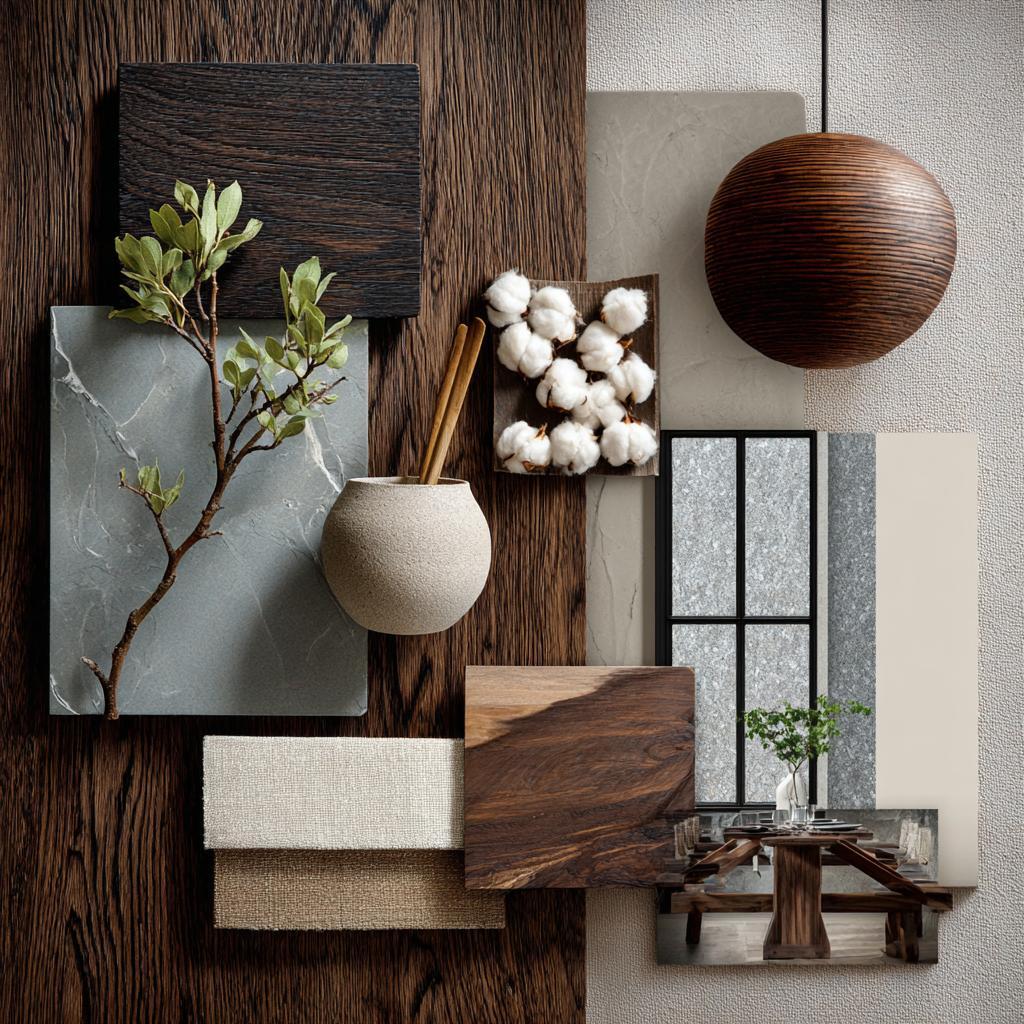
A nature-inspired interior mood board with dark wood panels, marble slabs, and cotton botanicals.
A well-made interior design mood board is not just a random creative exercise. It is the foundation of a stunning design! It helps you avoid mismatched choices, keeps your ideas aligned, and makes the entire process smoother. When you can see your space before it comes to life, every decision becomes simple. And that’s what we always try to do at Homelane: make your life easier!
FAQs
1. What is a mood board in interior design?
A mood board is a visual collection of colours, materials, and design references used to plan and guide a space.
2. Why is a mood board important before starting an interior project?
It brings clarity, aligns ideas, and helps avoid costly mistakes by visualising the design early.
3. How is a mood board different from a design board or concept board?
A mood board focuses on the overall feel and direction, while a design or concept board may include more detailed layouts and specifications.
4. How do interior designers use mood boards during a project?
Your designer might use them to define style, fine-tune ideas, and guide design decisions throughout the project.
5. What does a mood board include?
It typically includes colours, materials, textures, furniture references, and lighting ideas.










 EXPLORE MORE