How 3D House Design Helps You Plan and Visualise Your Ideal Home
By Rubaiya Karim- November 07, 2025
AI Summary
3 key insights · 1 expert tip
3D house design offers realistic visualisations and precise planning, preventing costly construction errors and ensuring your vision matches the final build.
Key Insights:
What You'll Read Here:
3D models enable accurate cost estimates by providing exact material quantities and specifications.
Accurate floor layouts, scaled furniture, and integrated storage are essential for functional 3D designs.
Experiment with finishes and layouts virtually to visualise your space before construction begins.
HOMELANE EXPERT TIPBy our design team
Before committing to furniture, use 3D renderings to test scale-accurate models and ensure they fit your space without obstructing traffic flow.
Have you ever tried explaining the vision for your dream home to someone and watched them stare at you blankly? You’re gesturing wildly, describing the length, width, and height of a kitchen island, and how it needs to flow into the living room, and they simply nod in agreement, without actually understanding what you mean. It’s an all-too-familiar experience for us all.
Fret not, because a 3D house design addresses just that. It is what makes your wildest interior dreams become reality (or virtual renderings). Designers, contractors, and vendors no longer squint at you in confusion or guesstimate the placement of each element. But what exactly is 3D house design? What are its benefits and uses? And what are the best practices when using a 3D home designing tool? Let us find out!
What is 3D Home Design?
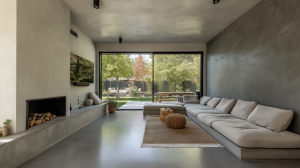
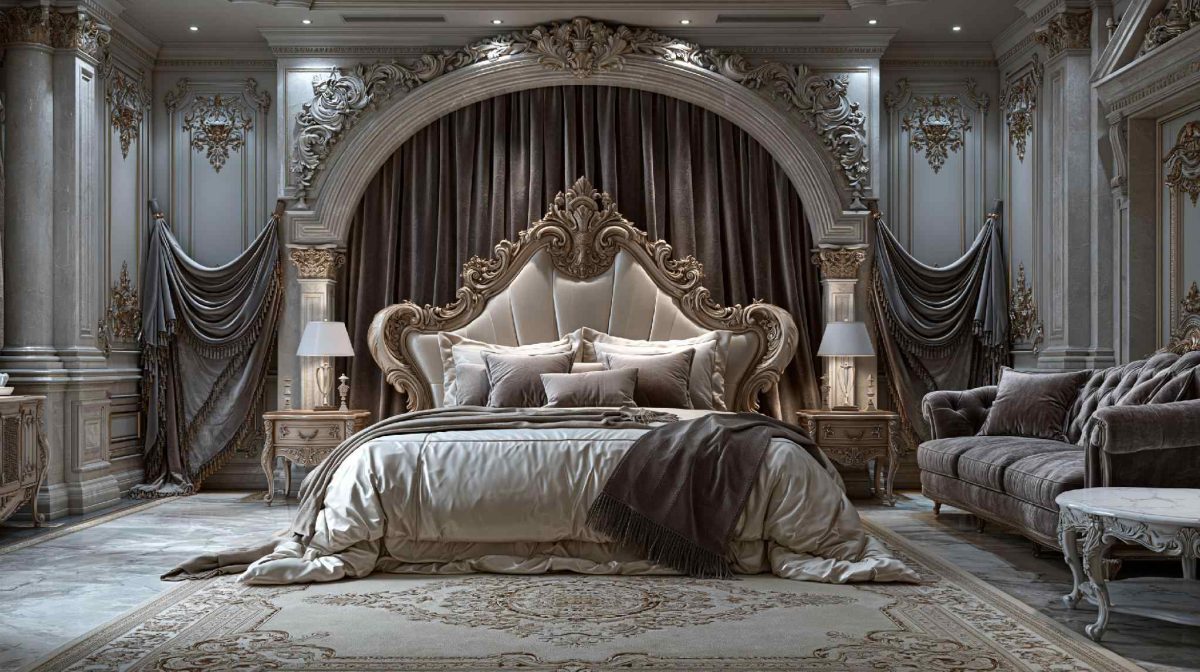
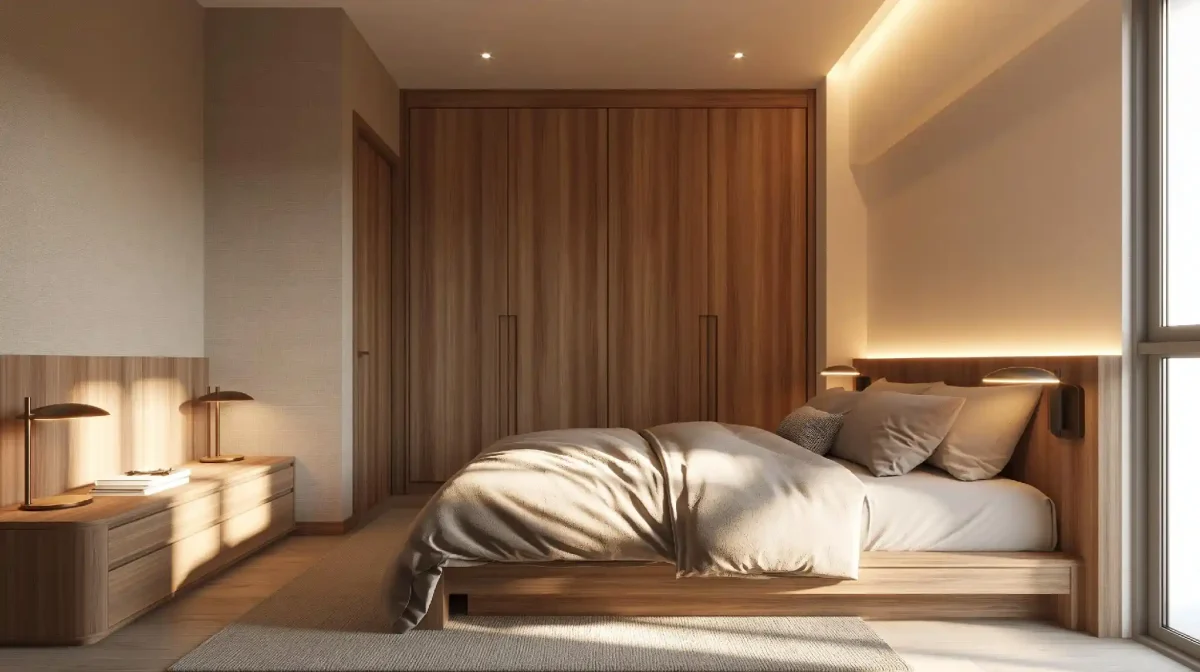
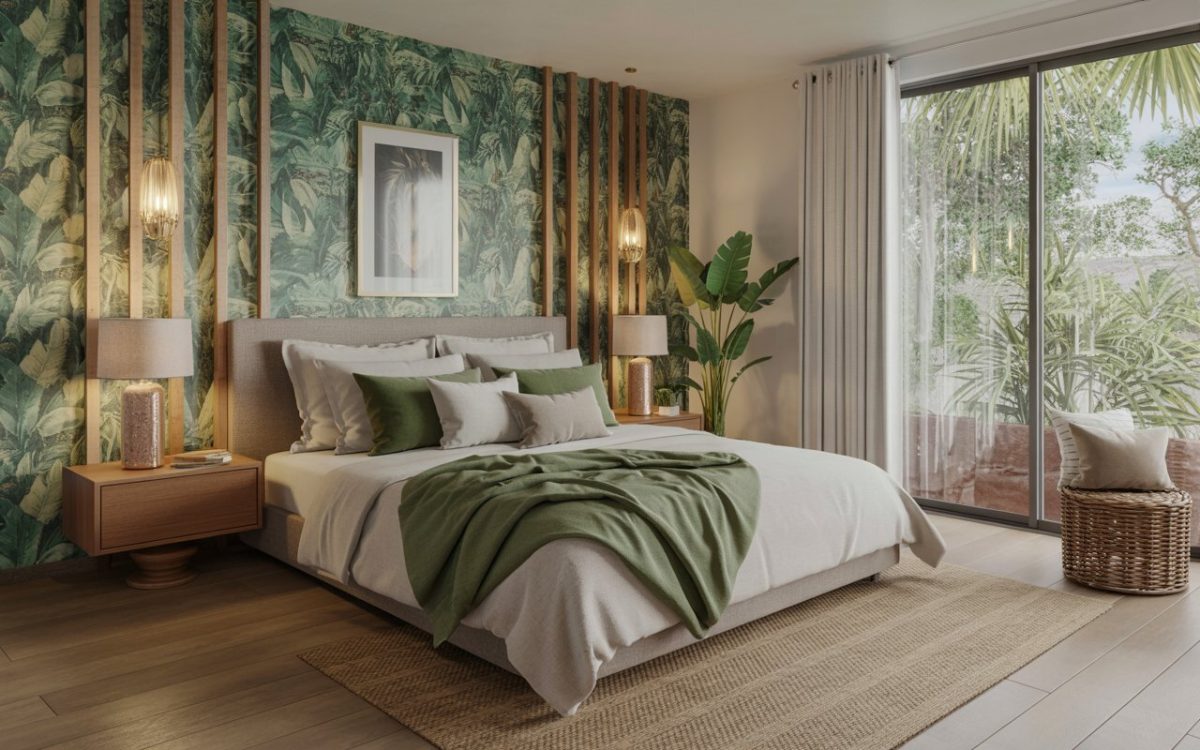
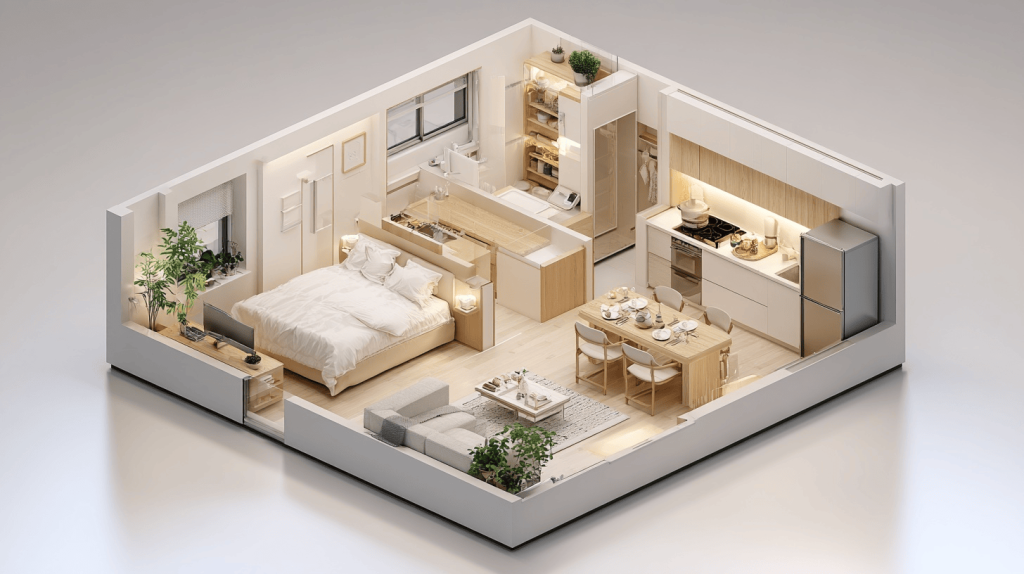
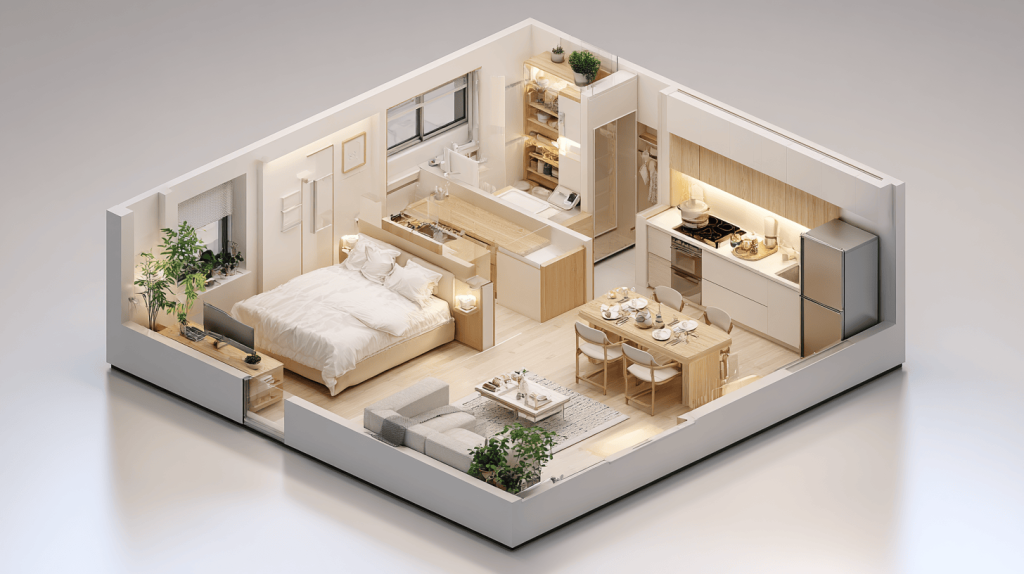
Small modern 3D house interior design with single floor layout
Think of a simple 3D house design as the Google Street View for your future home. It is technology that creates realistic digital versions of a space, literally letting you walk through your home even before a brick is laid.
With these 3D drawings, you no longer have to worry about decoding flat, technical drawings that look more suited for engineering lessons than for normal folk like you and me. Instead, you get to see a replica of how your dining nook or your children’s twin beds will look once placed in their rooms.
How 3D Home Design Actually Works
The 3D rendering process is straightforward – designers create a digital model of the space in question, including details such as wall textures and countertops. You can explore this model from all the possible angles and change what you don’t like. In fact, new 3D models are so advanced that they also allow you to look at how each space might look at different times of the day.
Must-Have Elements in a 3D Design
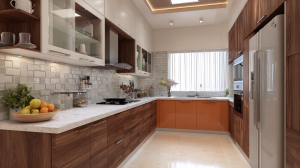
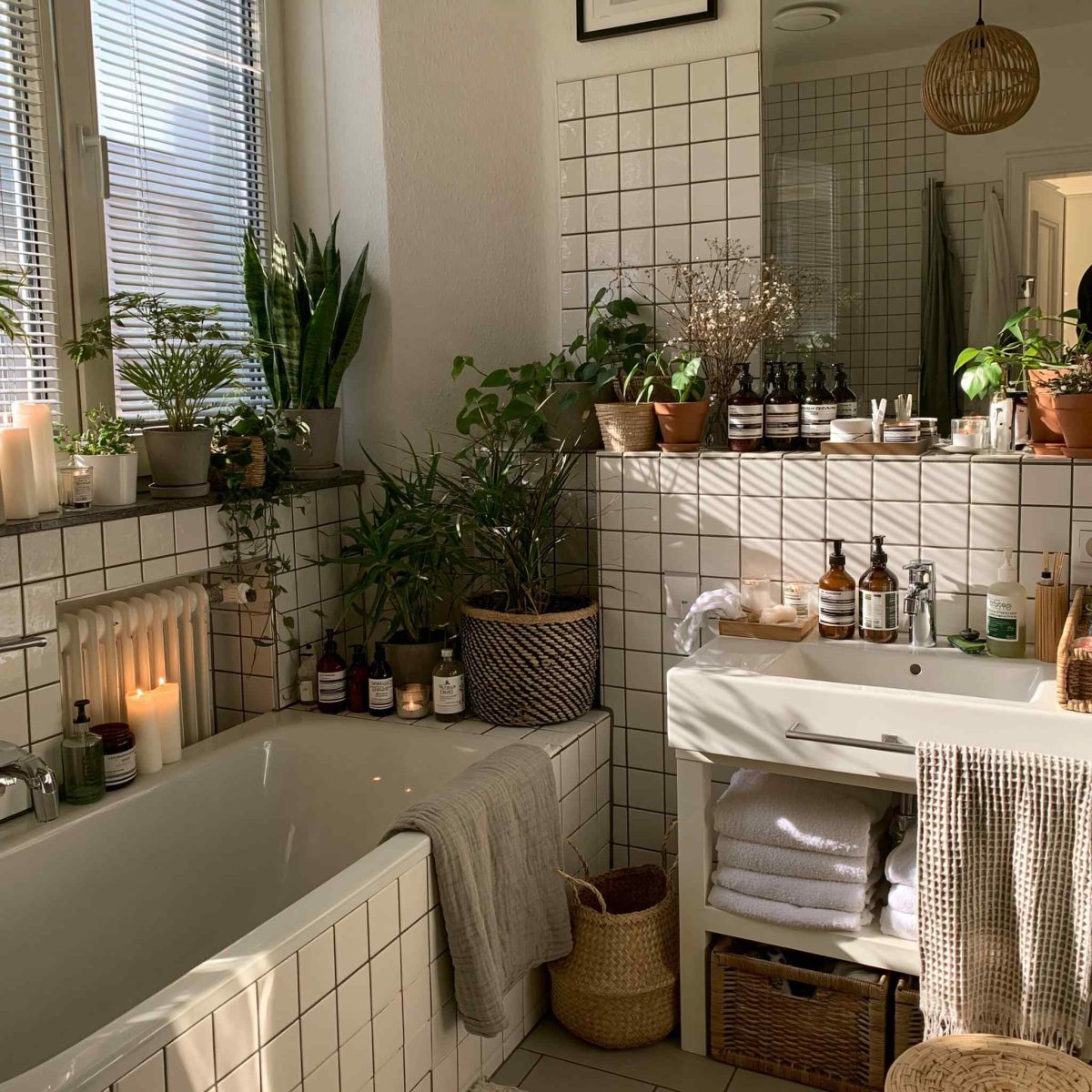
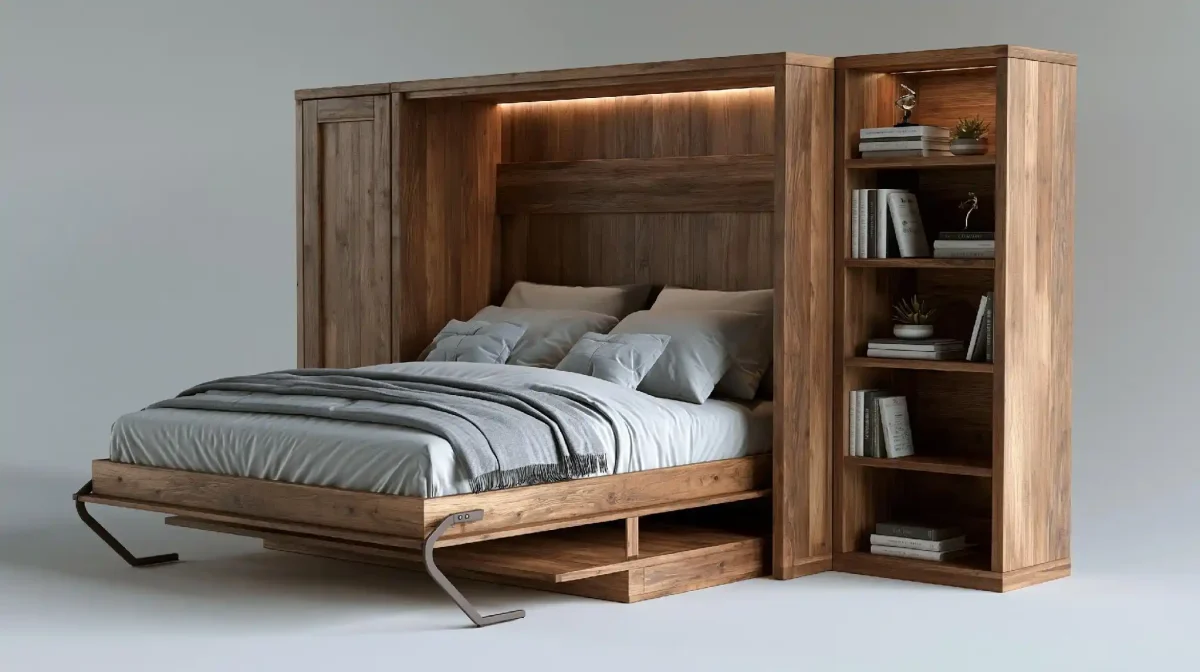
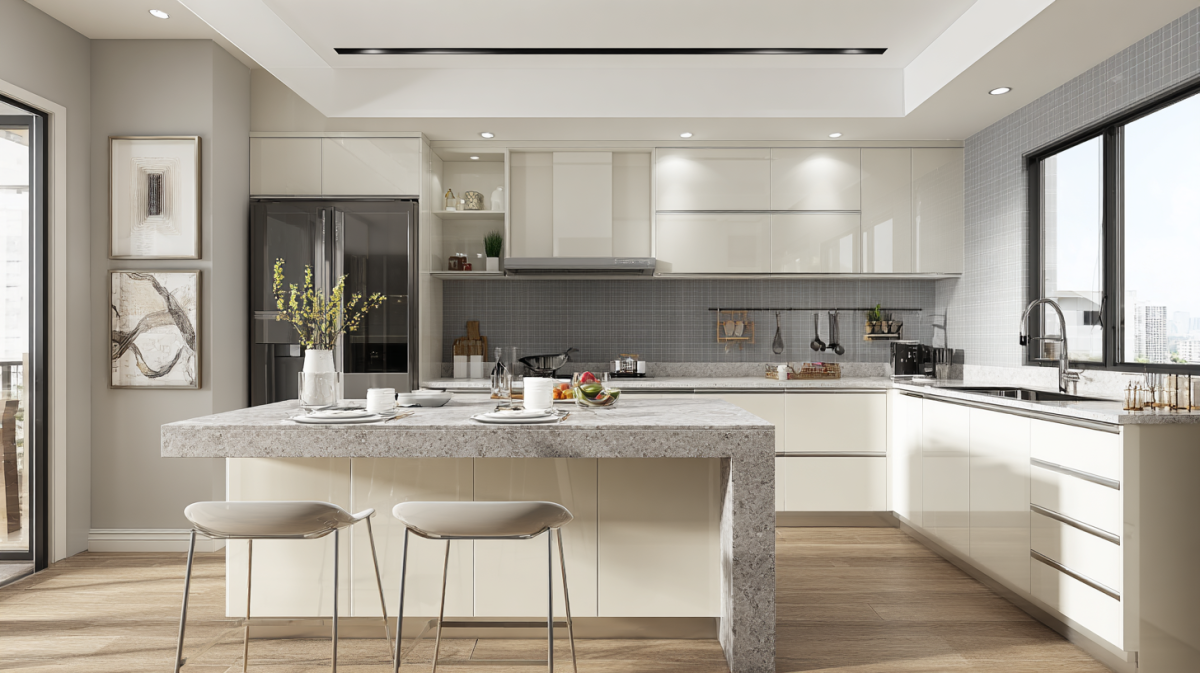
Latest modern 3D house plan design with stylish interior layout
A 3D model operates like a recipe – one missing ingredient can often ruin the entire design. So, to prevent that, here is a comprehensive list of all professional-grade visualisations that you need to avoid costly oversights.
Accurate Floor Layout: Precise room dimensions, door positioning, and window placements that match the actual space
Realistic Furniture Placement: Scale-accurate models of pieces you will buy to avoid last-moment sizing disasters
Built-in Storage Solutions: Plan storage for everything you own, outside of what looks good on renders
Ventilation and Air Flow: Include ACs, ceiling fans, and natural ventilation in your renderings to ensure comfort
Lighting at Different Hours: Test how artificial and natural lighting looks throughout the day in your home
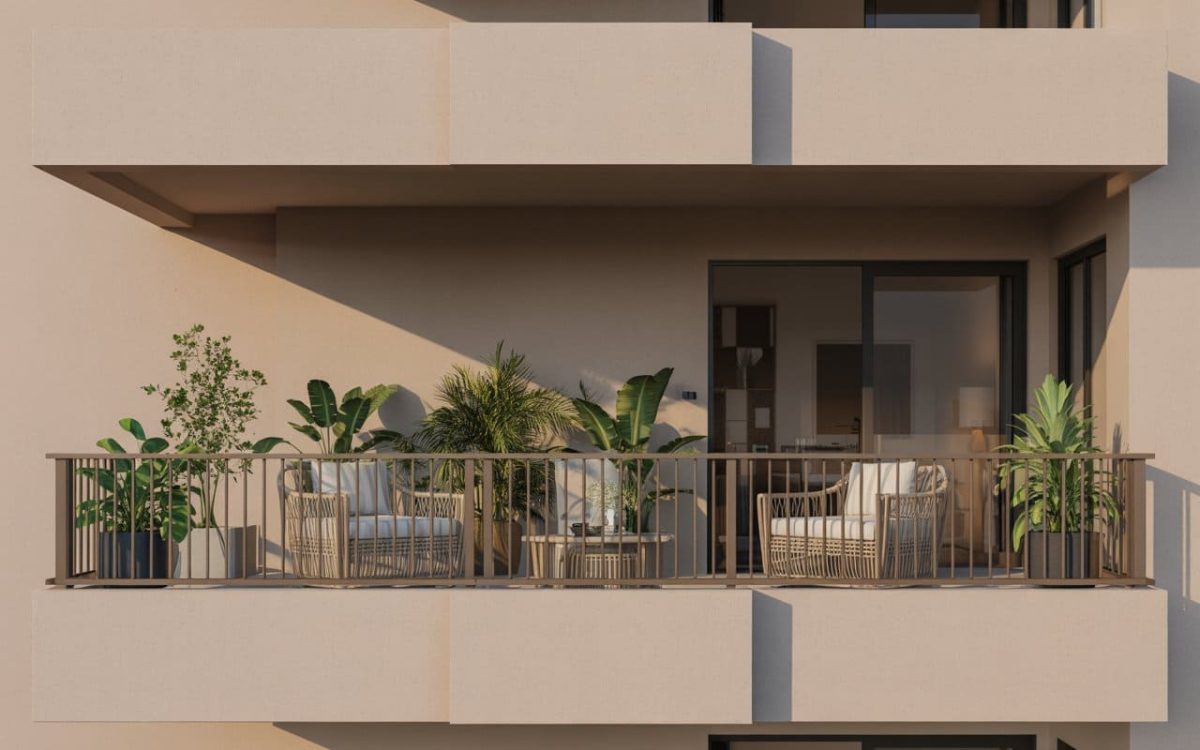
Integration of 3D Exterior House Design: Connect your interior spaces to outdoor areas and consider the appearance of the exterior within the home using window placements and balconies
Why is Everyone Obsessing Over 3D House Designs?
Cool visuals aside, architects, interior designers, and homeowners are also jumping on the 3D rendering bandwagon due to one simple reason: it solves the real problems that have plagued the construction industry for years. Let’s break down why this technology has become such a game-changer in recent times in the home design niche.
Detects Design problems Before they Become Disasters
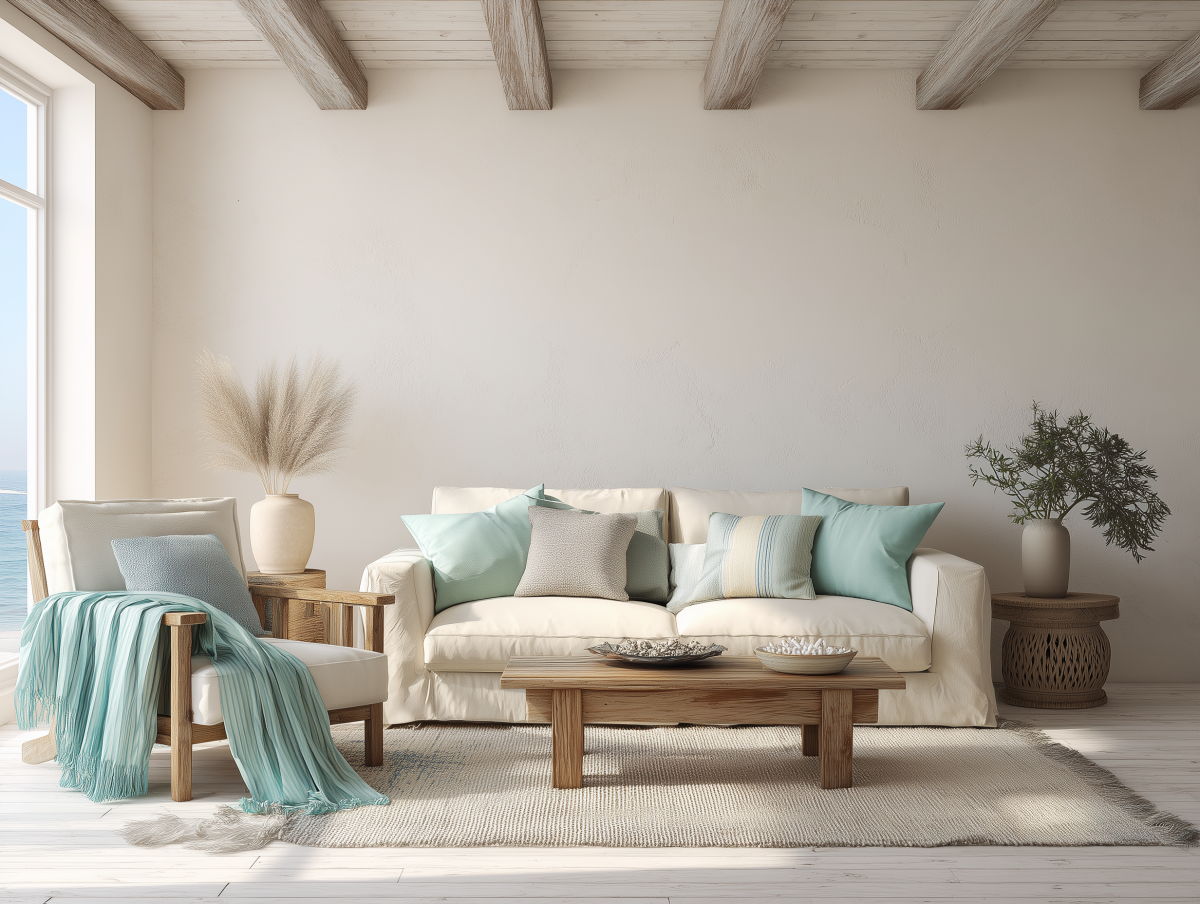
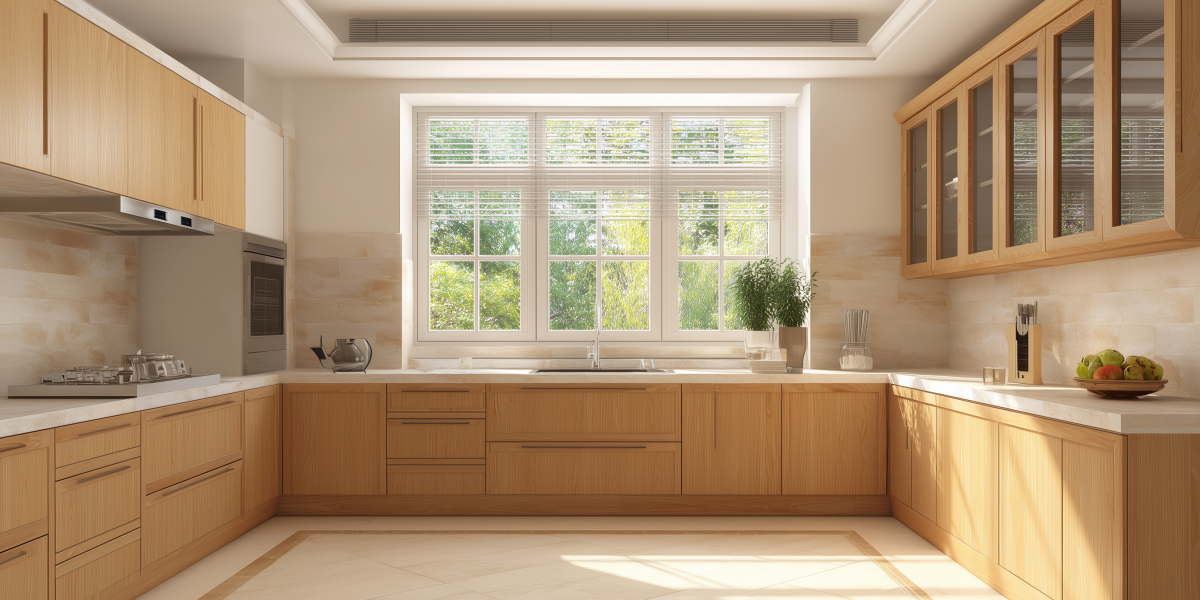
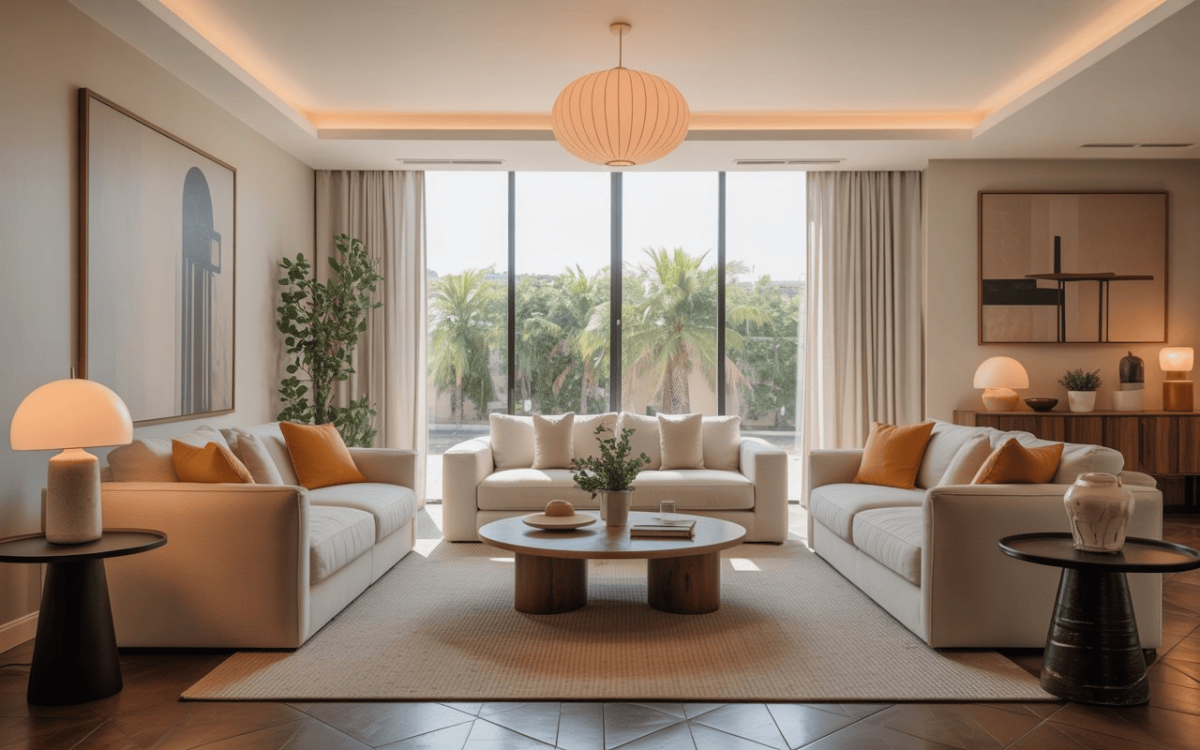
Simple small 3D house interior design with single floor layout
Have you ever looked at those New York house tours on YouTube or Instagram where the bathroom door hits the toilet every time it is opened? Guess what, that is a clear design flaw, and 3D renderings can be incredibly effective in preventing them. Here are some more issues you can spot with a 3D design tool:
A kitchen island blocking traffic flow
Windows placed with no views or sunlight
Furniture that looks great online but overwhelms the actual room
Storage solutions that look clever but do not offer ease of access
Offers a Realistic Visualisation of The Space
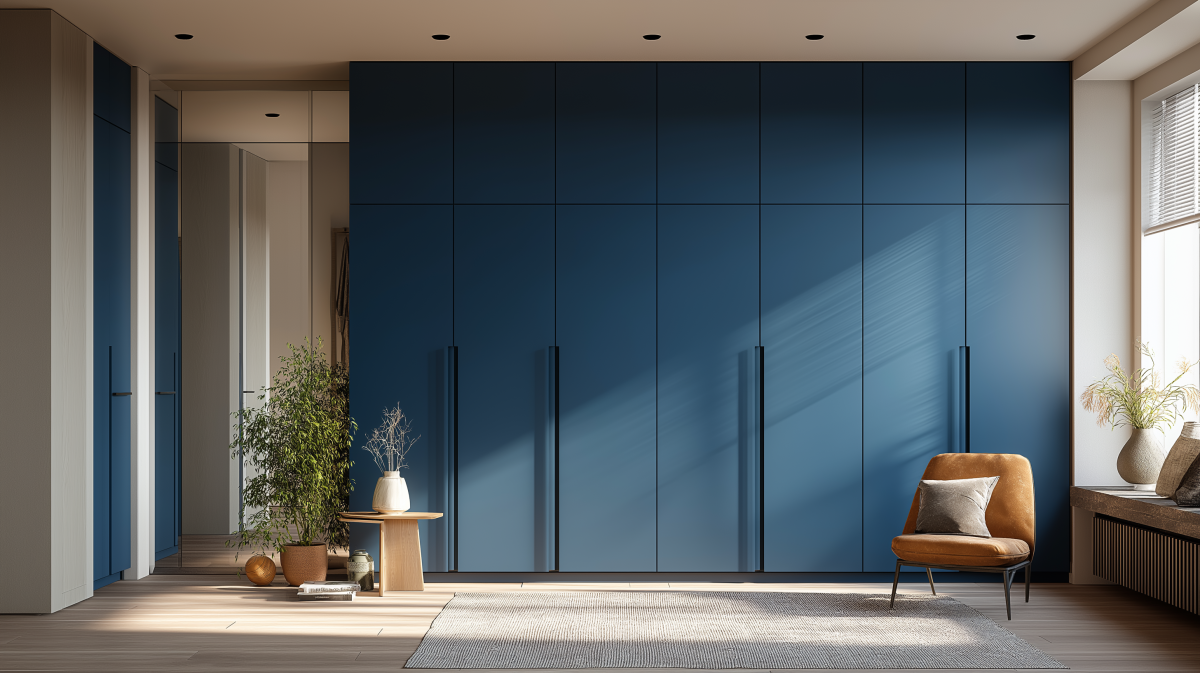
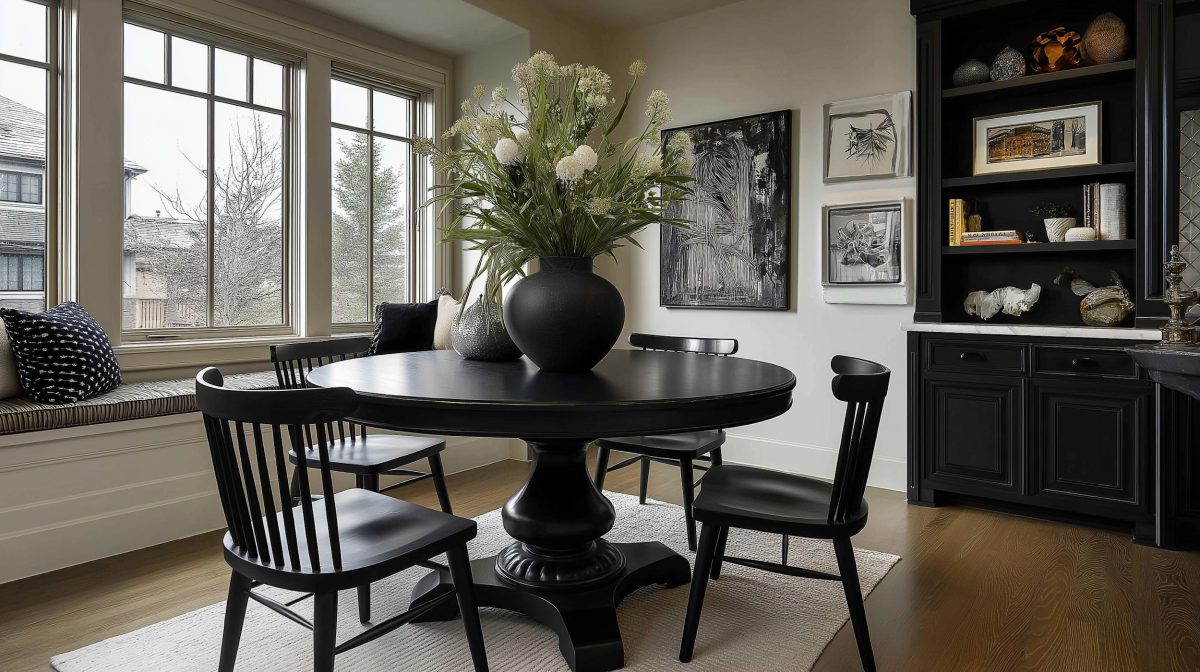
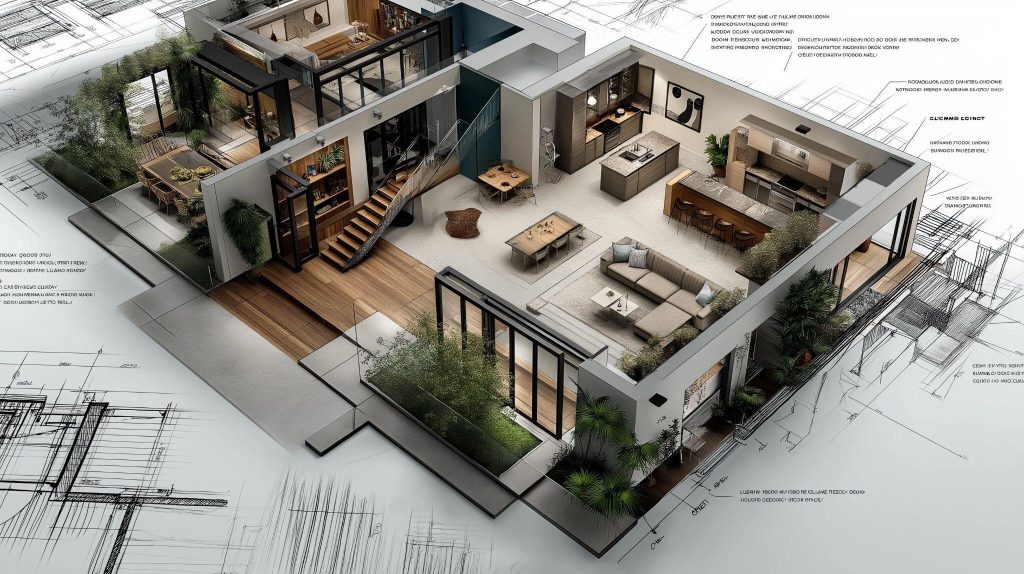
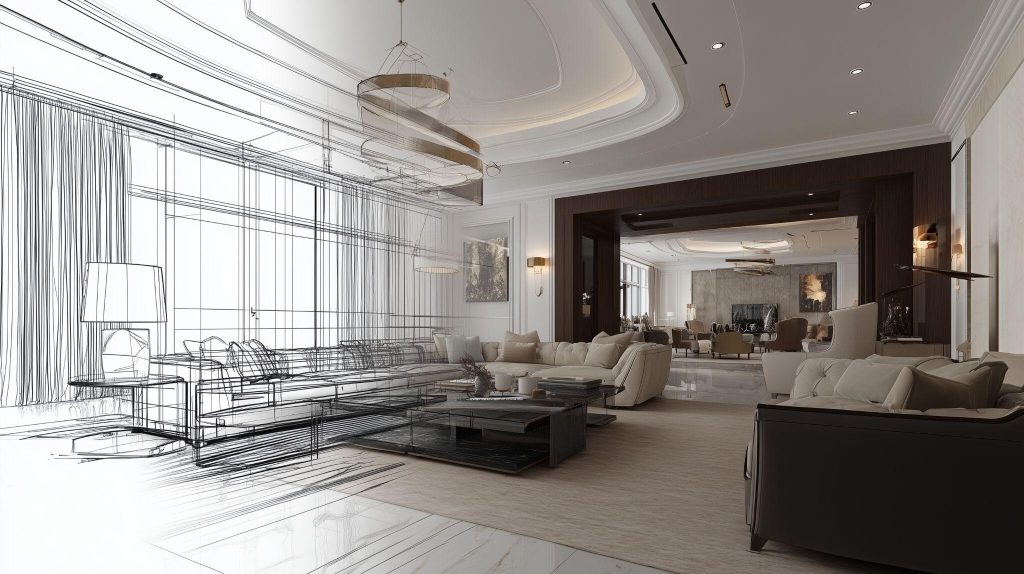
Modern 3D house interior design blending sketch and realistic visuals
Playing Tetris is fun, but you do not want to be doing that with the furniture you’ve ordered. 3D visualisations help you eliminate the guessing game about furniture placement and show you exactly how each element will look when placed together. Starting from the layout of the room, to whether your indoor plants will receive enough light on a corner shelf, these renderings can show you the exact way your decor and furniture will look.
This is especially important for homes in urban areas, where a small 3D house design can help you test layouts until you find the perfect blend of functionality and aesthetics.
Helps with efficient communication
Engineer planning new 3D house design with modern home layout
Guesswork often serves as the primary means of communication between you and various stakeholders in an interior design project. 3D models are beneficial in showing precisely what you want, so there’s no room for miscommunication. Your interior designer, contractor, and even your in-laws can look at the 3D visualisations to know precisely what your result should look like.
Helps estimate costs accurately
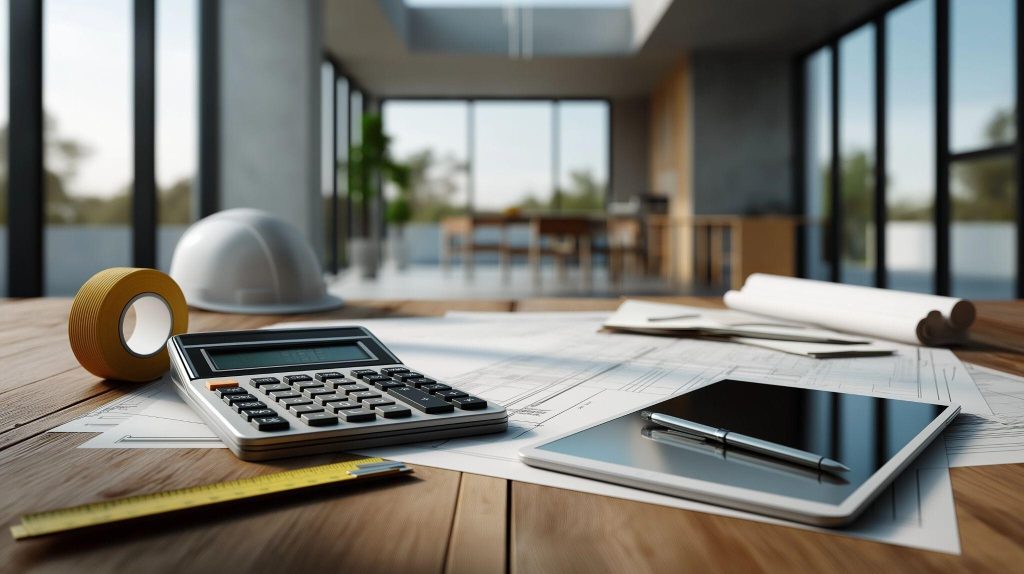
Architect calculating latest 3D house plan design cost estimate
3D models such as Spacecraft Pro by HomeLane help you generate accurate estimates of costs by offering exact specifications and material quantities. This means that contractors can provide you with reliable price estimates instead of vague “we’ll see as we go” statements. Plus, when you inevitably want a mid-project design tweak, you can see exactly how it will look and what it will cost, before committing to it!
Dos and Don’ts of 3D House Interior Design
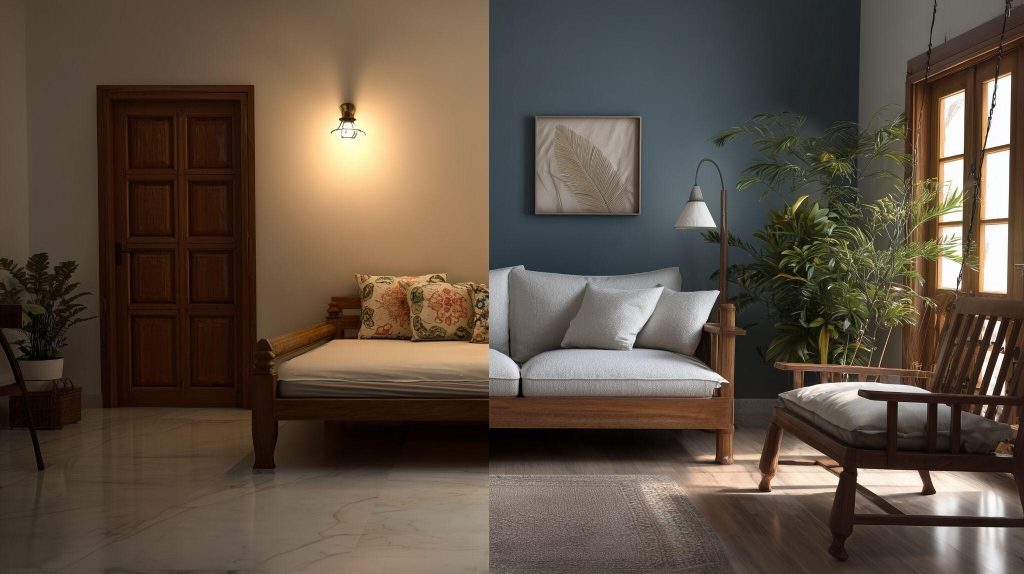
Modern 3D house interior design showing before and after renovation
We have established that 3D home designs are worth the investment, so let’s talk about how to use them to your advantage. Any powerful tool has the potential to either help you shine or take you down an expensive rabbit hole. So here are some guardrails you can use to create a successful 3D design plan that will help keep you focused on your home designing journey without breaking the bank.
Use Scaled Virtual Elements for Accurate Perspective
Eyeball measurements are a no-go in the world of 3D design. Accuracy is your best friend. So make sure that every one of your elements in the renderings matches their real-world dimensions exactly.
A sectional that caught your eye on Pinterest may look great virtually. But inaccurate scaling can result in a nasty surprise when the delivery finally arrives. And nobody wants a pretty piece of furniture to go back to its warehouse. After all, not only will it break your heart to return it, but the process itself will wreak havoc on the rest of your interior decoration plans.
Experiment With a Range of Decorative Elements
The 3D house design plan is your chance to experiment without any consequences. The virtual try-ons can help you test bold wallpapers and furniture arrangements, as well as various colour schemes. It is like having a design playground where mistakes are nonexistent, except for a few bad clicks.
Visualise Before Building
A 3D home design tool allows you to visualise your space before you build it completely. So, take advantage of that and check sight lines and the natural lighting across all parts of your home. Observe if it allows for adequate traffic flow, and consider whether the placement of your laundry basket and a couple of storage units might hinder movement. The tool is your cheat code to a thoughtfully curated home. Make sure that you use it accordingly.
Consider Functionality and Flow
3D designs often look very aesthetically pleasing, but being unable to navigate your daily routine can leave you feeling frustrated. And what use is a beautiful but non-functional space? As you create your 3D renderings, consider how you actually want to live – do you need a kids’ toys section? A workspace? A guestroom? – and incorporate these spaces in your virtual design plans.
Use Space Efficiently
In a similar vein to the previous point, it is vital to keep a check on how your space accommodates storage. A pretty space without storage is a gateway to a cluttered disaster. Use the 3D model to plan storage for seasonal clothes and kitchen appliances you only use occasionally.
Bring Your Vision to Life With Spacecraft Pro
3D house designs have transformed home planning from a stressful, guesswork-based process to a collaborative and accurate one. Whether it is a renovation or a brand new living space, this technology lends the kind of confidence that helps make the right decisions and offers the clarity to communicate your vision.
If you’re still unsure about the benefits of a 3D design, consider reaching out to the HomeLane team for a complete tour of the Spacecraft Pro rendering software, which puts all these benefits at your fingertips:
Detailed visualisations to catch design flaws early to avoid expensive construction headaches
Photorealistic previews that will eliminate all surprises about how your space will look
Precision planning to maximise the functionality of each space
Instant and accurate cost estimates based on exact specifications
So, don’t wait too long. Get your 3D consultation with HomeLane today – because your dream home should be more than just a dream.
FAQs:
1. Which software is best for 3D house design?
While there are a few software programs available today, Spacecraft Pro stands out as the top choice for homeowners and design professionals. Unlike generic software that often requires technical expertise, Spacecraft Pro can be used for residential projects, delivers photorealistic renderings, catches design flaws promptly, and is user-friendly, allowing you to make confident decisions.
2. What are the latest 3D house design trends?
The latest 3D house designs entail more than just visualisation. This includes:
Comprehensive planning models to test traffic flow, natural light, and ventilation patterns
Smart integration planning for technology placements and storage solutions
Indoor-outdoor connectivity visualisation to maximise space utilisation
Creation of multi-functional spaces that adapt to lifestyle needs
3. What are the benefits of 3D house design?
3D house designs allow you to identify any potential design conflicts before expensive construction mistakes are made. They offer realistic visualisations of how a space will look with actual furniture and lighting. In addition to this, 3D home renderings also allow for better space optimisations, budgeting, and reduce miscommunication during exchanges with separate stakeholders.
4. How do you design a small house in 3D?
A small 3D house design requires strategic planning to maximise every square foot and make the space appear larger. Some of these include:
Use exact measurements
Test realistic furniture placements
Use walls and hidden areas creatively for storage
Connect outdoor spaces to indoor spaces to extend sight lines
Optimise natural lighting using strategically placed windows
Which Is Better: 2D or 3D House Design?
3D house design is generally better than 2D for planning your home, because it shows you a realistic, walkable version of your space instead of flat technical drawings. A 2D plan only gives you measurements and layout on paper, which is hard for most people to visualise accurately. A 3D model lets you see furniture placement, lighting, and traffic flow before anything is built, so you can catch problems like a blocked kitchen island or an awkwardly placed door early. 2D drawings still have their place for technical accuracy, but 3D is far more useful for making confident design decisions.
Is 3D House Design Worth It?
Yes, 3D house design is worth it because it helps you avoid costly mistakes and gives you a clear picture of your home before construction begins. It lets you test furniture placement, lighting at different times of day, and storage solutions, so you are not left guessing how the finished space will actually feel. It also improves communication with your designer or contractor, since everyone can look at the same visual instead of relying on descriptions. Tools like Spacecraft Pro by HomeLane also help you get accurate cost estimates upfront, making the investment easier to justify.













 EXPLORE MORE