Explore modern bathroom door designs, from durable PVC and elegant French doors to space-saving sliding and folding options, to enhance your home's aesthetics.
Key Insights:
What You'll Read Here:
PVC doors offer durable, customisable, and budget-friendly solutions with minimal maintenance.
French doors with glass panels maximise natural light and offer vintage or modern material choices.
Sliding and folding doors are ideal for small spaces, maximising utility and light entry.
HOMELANE EXPERT TIPBy our design team
Consider flush doors for a budget-friendly, customisable option that is durable, water-resistant, and easy to install, fitting seamlessly into any apartment.
Bathroom doors have a tougher life than most doors in the house. Steam, splashes, damp floors and frequent cleaning can quickly expose materials that looked perfectly impressive in the showroom.
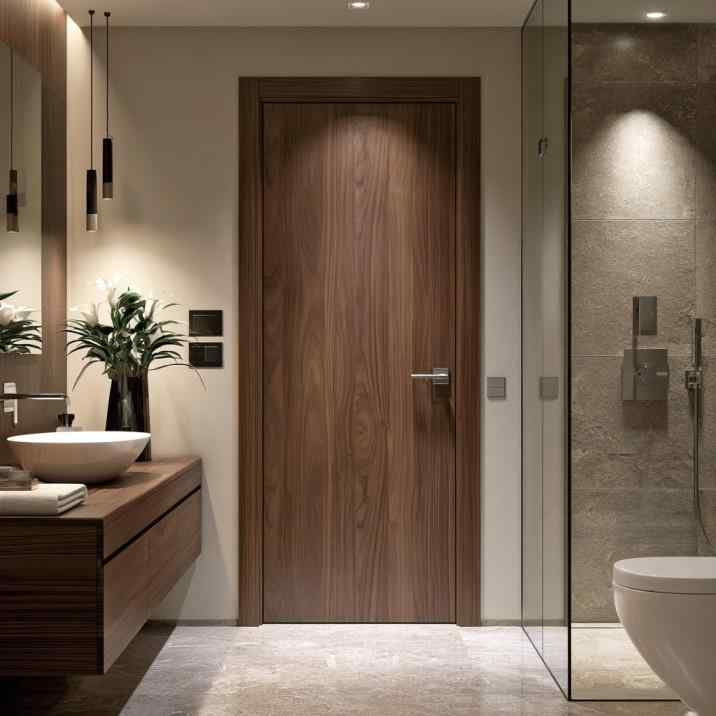
A walnut-finish hinged door adds wood-like warmth to a modern, moisture-prone bathroom.
That makes choosing between bathroom door designs less about finding the prettiest shutter and more about finding one that can survive the conditions. Fortunately, practical no longer has to mean boring. From wood-look WPC to sleek aluminium and frosted glass, today’s options can handle moisture while still looking at home in a stylish interior.
Which Bathroom Door Material Actually Works in Indian Bathrooms?
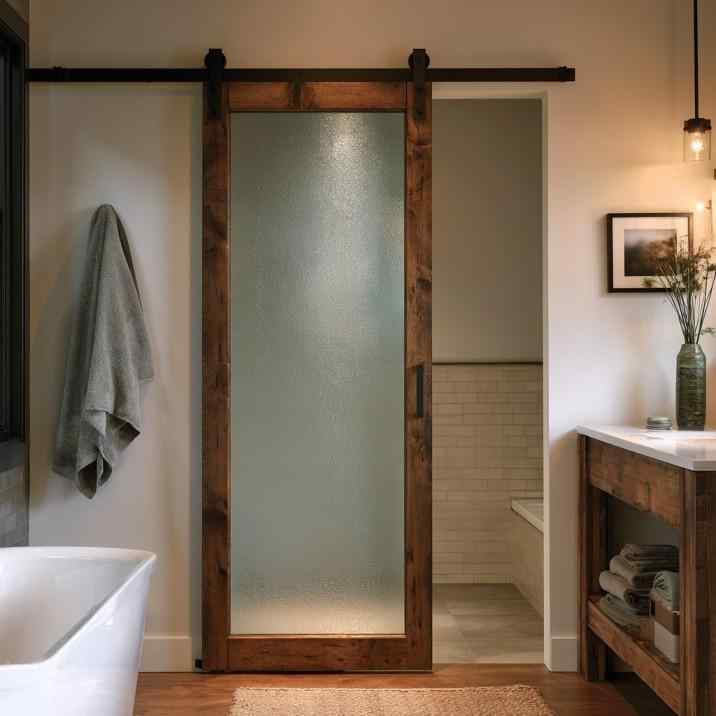
A wood-framed sliding door with frosted glass saves swing space while keeping privacy intact.
An attached bathroom with a separate shower enclosure has different conditions from a compact wet bathroom where water reaches the entrance.
Material
Moisture Performance
Maintenance
Typical Look
PVC
Very good
Low
Simple to decorative
WPC
Very good
Low
Wood-like, contemporary
Aluminium
Excellent
Low
Sleek and modern
Glass
Excellent
Moderate
Light and contemporary
Treated wood
Moderate
Higher
Warm and premium
If you’re searching for a bathroom door design that’s waterproof enough for a wet bathroom, PVC, WPC and aluminium are generally more practical than untreated timber.
WPC, or wood-plastic composite, is particularly useful when you want some of the visual warmth associated with wood but better resistance to moisture. However, quality varies, so check the product specification rather than relying on the WPC label alone.
PVC Bathroom Doors: Cost, Sizes, and Are They Actually Waterproof?
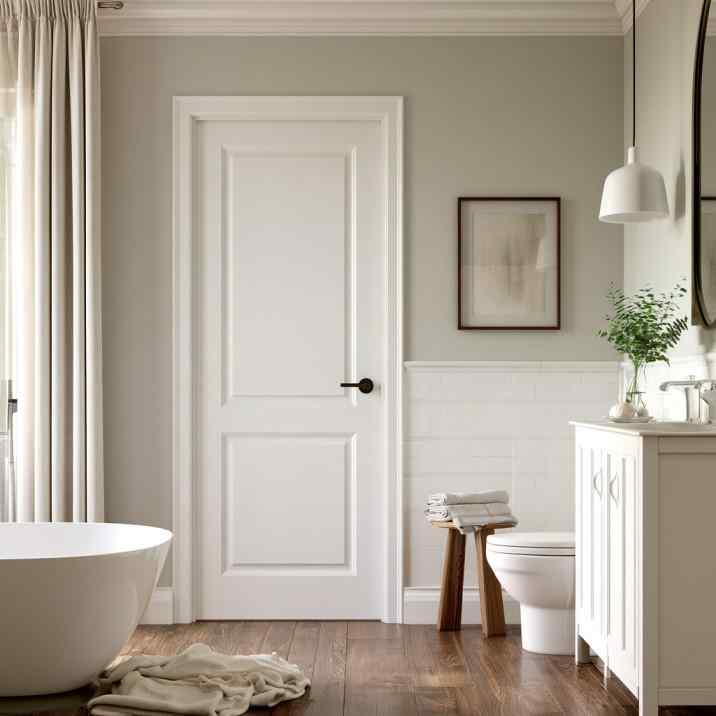
A classic white panelled hinged door gives this bathroom secure closure and easy upkeep.
PVC bathroom door designs are popular because PVC itself does not absorb water in the way natural timber does. That makes it suitable for humid bathrooms and areas exposed to regular splashes.
PVC doors are available in plain, panelled and wood-look finishes. Standard sizes match bathroom openings of – 600-750 mm in width and 2,000-2,100 mm in height, although actual dimensions vary between homes and manufacturers.
Basic PVC bathroom door sets may start at roughly INR 3,000 to INR 6,000, while better-finished, thicker or customised versions can cost INR 6,000 to INR 12,000 or more.
Is PVC completely waterproof? The material itself is highly water-resistant, but the performance of the door assembly depends on its construction, joints, frame, hardware and installation. That’s why the word “waterproof” shouldn’t be the only reason you buy one.
If you’re renovating more than the door, our expert budget-friendly bathroom renovation ideas can help you decide where your budget will make the greatest difference.
Glass and Aluminium Bathroom Doors: Where They Beat PVC
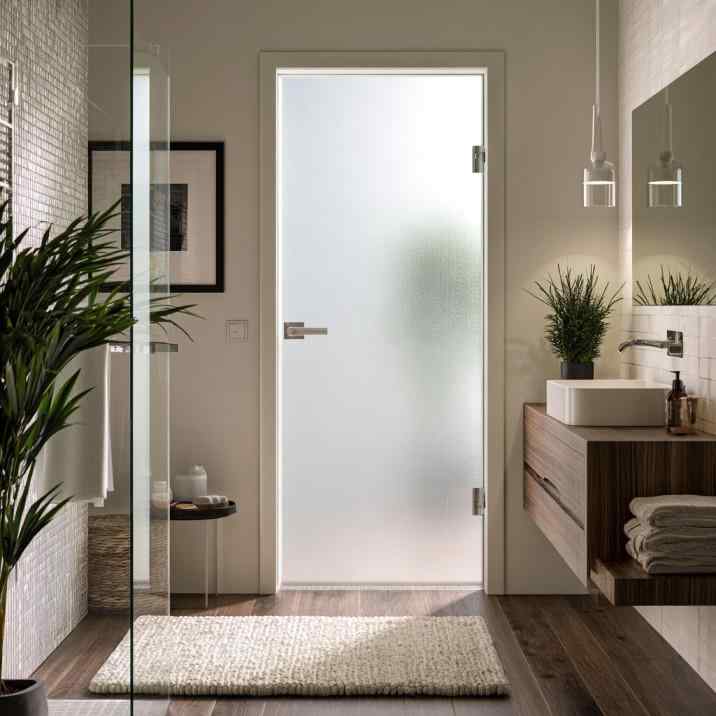
A frosted glass door lets soft light through while keeping this compact bathroom private.
If PVC wins points for affordability and practicality, aluminium and glass generally have the edge when you want a more refined contemporary finish.
Aluminium bathroom door designs are resistant to moisture, relatively lightweight and easy to maintain. Powder-coated frames can be paired with frosted, fluted or opaque glass for privacy.
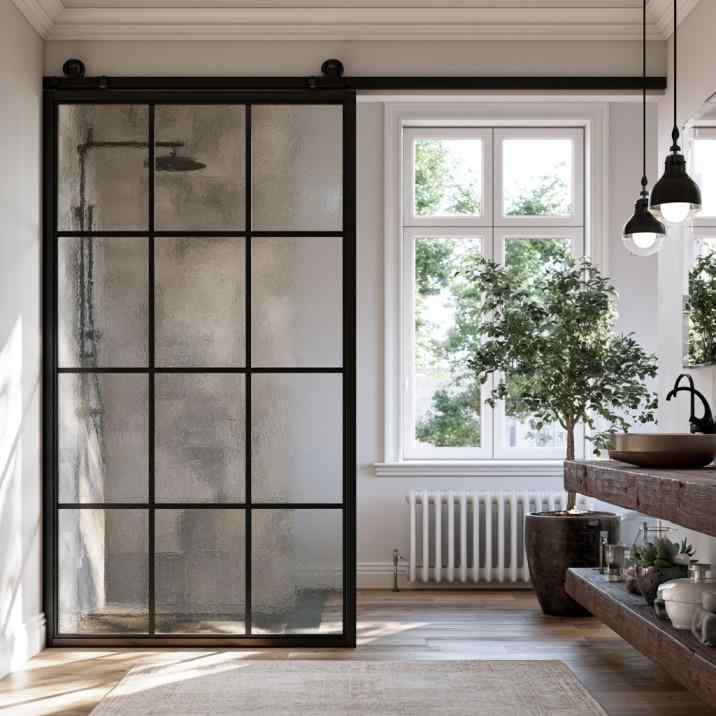
A black-framed sliding glass door with textured panels adds a sleek, modern edge.
A bathroom glass door design can be particularly useful in a compact interior because it feels visually lighter than a solid shutter. Frosted or textured glass allows light to filter through without putting the bathroom on display.
Use safety glass for doors and shower applications. HomeLane’s guide to bathroom glass door designs offers more inspiration for incorporating glazing into contemporary bathrooms.
Glass also works naturally with more fluid, open bathroom concepts, where maintaining visual openness is part of the design.
Which Bathroom Door Is Better: Sliding, Hinged or Folding?
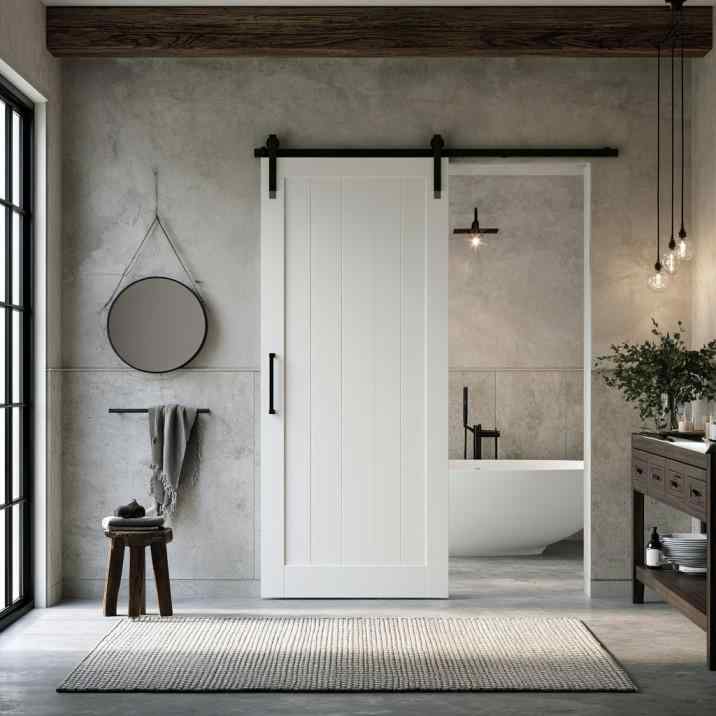
A white sliding barn-style door keeps the entrance clear in this airy, concrete-finish bathroom.
A hinged door remains the straightforward choice when there is enough clearance. It closes securely, is easy to operate and generally offers better sound and visual separation than many sliding systems.
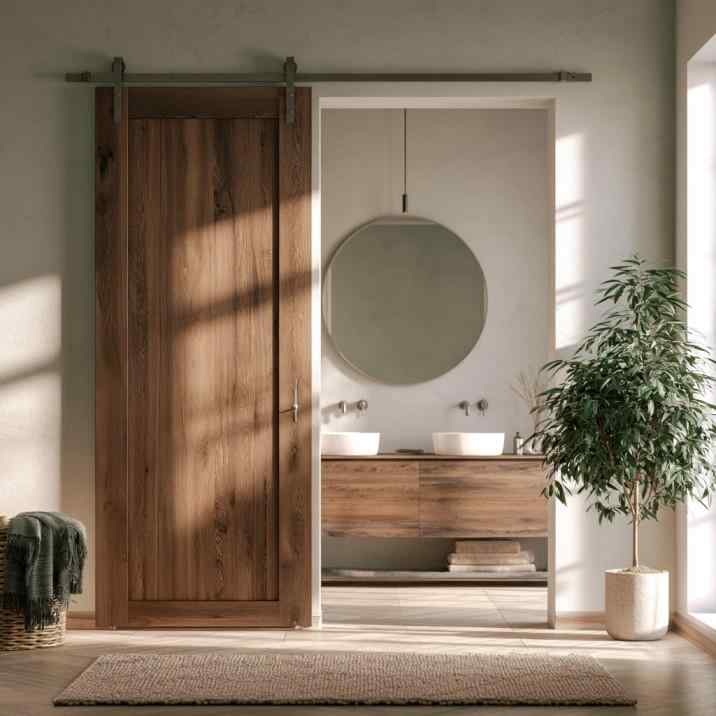
A wood-look sliding door opens onto a double vanity without swinging into the floor space.
Sliding doors earn their place in compact bathrooms. Because the shutter moves sideways rather than swinging into the room, the floor area around the entrance remains usable. A modern bathroom door design might combine a slim aluminium frame with frosted glass in a sliding configuration.
However, sliding doors need sufficient wall or pocket space, and their tracks require cleaning. They may also provide less acoustic and odour sealing than a well-fitted hinged door.
Folding doors save space too, but hardware quality matters. Multiple hinges and moving sections mean more components that can loosen or wear over time. They are best used where space genuinely makes hinged or sliding alternatives difficult.
What Bathroom Door Design Mistakes Should You Avoid?
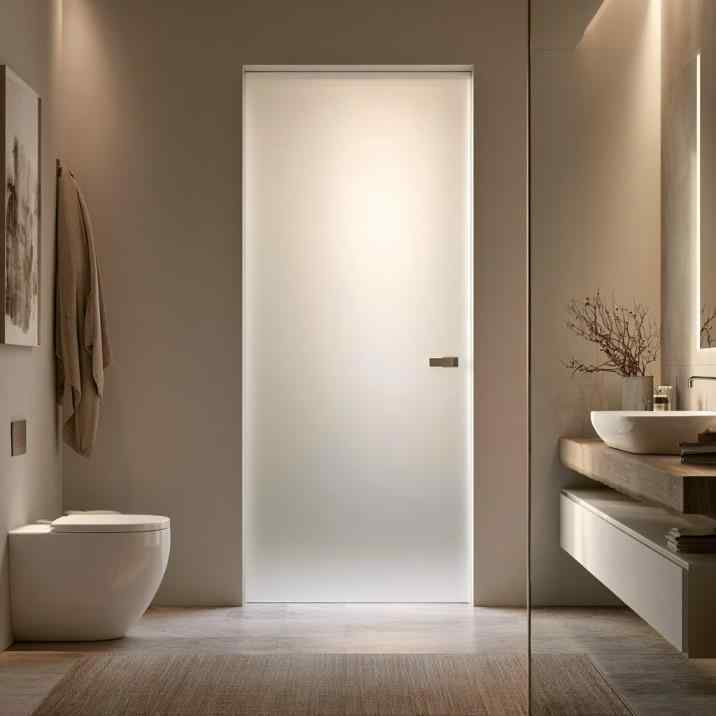
A minimal frosted glass door makes this compact bathroom feel lighter and more open.
The first is using ordinary untreated timber in a consistently wet location. Moisture can lead to swelling, warping and deterioration, particularly around the bottom edge.
Don’t ignore the frame either. Installing a moisture-resistant shutter inside a frame vulnerable to water damage defeats much of the purpose.
Another common mistake is choosing a door that swings into fixtures. Check the arc against the basin, WC, shower partition and storage before installation.
Finally, don’t choose purely by price. Very lightweight PVC shutters, weak sliding hardware or poorly fitted folding mechanisms may be cheap initially but frustrating to repair or replace.
Choose a Door That Doesn’t Fear Water!
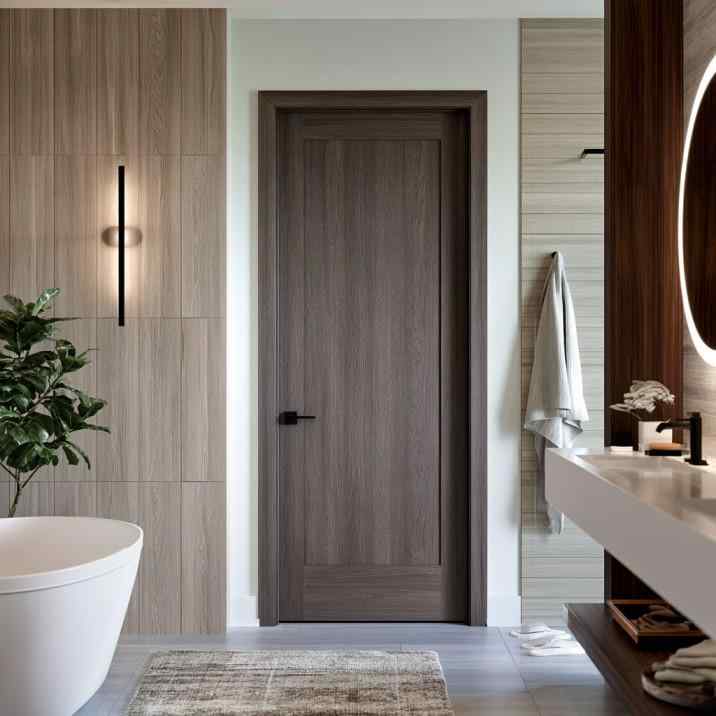
A grey wood-grain hinged door pairs moisture resistance with a warm, contemporary look.
The smartest bathroom door designs balance four things: moisture resistance, privacy, easy maintenance and appearance. Your bathroom layout should make the final decision. A dry, spacious bathroom gives you more material choices, while a compact wet bathroom demands greater moisture resistance.
HomeLane can help you coordinate doors, storage, finishes and fixtures as part of a complete bathroom interior. Book a free consultation and create a bathroom that looks good on day one and continues to work beautifully long afterwards!
FAQs
1. What type of door is best for a bathroom?
PVC, WPC and aluminium are practical choices because they resist moisture well. The best option depends on how wet the bathroom gets, your budget and the look you prefer.
2. Is a PVC door good for a bathroom?
Yes. PVC doesn’t absorb water like timber and is inexpensive and easy to maintain. Check the quality of the complete door, frame and hardware before buying.
3. What is a WPC bathroom door?
WPC stands for wood-plastic composite. It combines wood-derived material with polymers and offers a wood-like appearance with strong resistance to moisture.
4. Which bathroom door is best for a small space?
A sliding door can save valuable swing space. A compact hinged door may also work if its opening arc doesn’t interfere with the WC, basin or other fixtures.
5. What is better for bathrooms: sliding or hinged doors?
Hinged doors usually provide better closure and privacy. Sliding doors are useful when floor space is tight but require suitable wall space and good-quality tracks.
6. Which bathroom door material is most moisture resistant?
PVC, WPC, aluminium and glass all offer strong moisture resistance when used in appropriately designed door systems. The frame and hardware should be suitable for damp conditions.
7. How much does a bathroom door cost in India?
Basic PVC options may start around INR 3,000 to INR 6,000, while better PVC, WPC, aluminium, glass and customised doors can range from roughly INR 6,000 to INR 20,000+, depending on size, material, hardware, finish and installation.
8. Is a wooden door suitable for a bathroom?
Yes, but preferably in a well-ventilated bathroom where the door isn’t repeatedly exposed to water. Proper sealing and maintenance are essential to reduce swelling and warping.
9. Are glass doors good for bathrooms?
Yes. Glass resists moisture and can make small bathrooms feel lighter. Choose appropriately specified safety glass and use frosted, fluted or opaque finishes where privacy is required.












 EXPLORE MORE