Kids Room Design for Two Kids: Smart and Space-Saving Ideas
By Usha Balasubramanyan- May 14, 2026
AI Summary
3 key insights · 1 expert tip
Design a functional and organised kids’ room for two by balancing individual needs with shared space through smart layout and multi-functional furniture.
Key Insights:
What You'll Read Here:
Zoning rooms for distinct sleeping, study, and play areas enhances organisation for both children.
Bunk beds with integrated storage are ideal for maximising floor space in shared rooms.
Flexible furniture and neutral palettes allow the room to adapt as children grow.
HOMELANE EXPERT TIPBy our design team
Plan distinct zones within the room rather than simply placing furniture; this creates a sense of order and personal space for each child.
Summary
Designing a room for two kids sounds simple until you actually try to fit everything in. Two beds, storage, study areas, and still enough space to move around; a tall order unless you’re smart about it! The right kids’ room design for two kids helps you use space better while keeping things comfortable and organised for both children. It is not about squeezing things in, but about planning them well.
Best for
Siblings who are sharing the same room, especially in apartments where space is limited.
Expert tip
HomeLane designers suggest planning zones instead of just placing furniture. Once each child has a defined space, the room feels more organised and less chaotic.
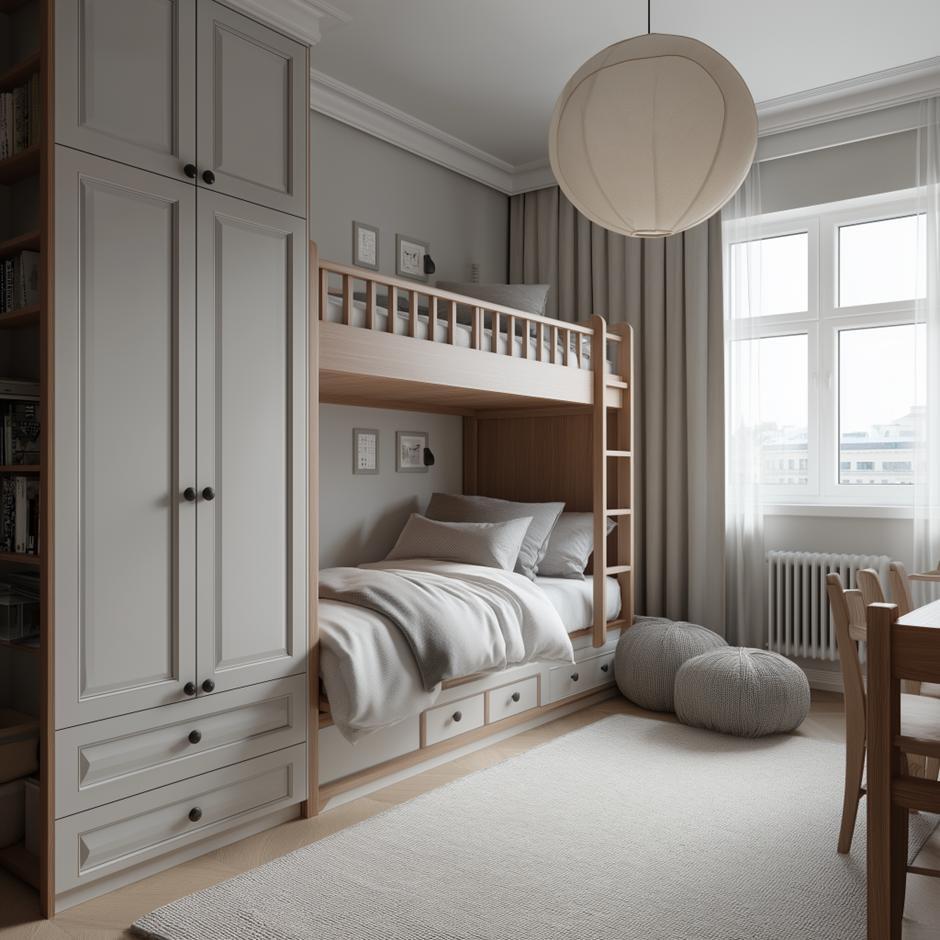
A bunk bed with built-in storage makes the most of space in a shared kids’ room.
Let’s start with what makes shared rooms tricky! Two kids. Only one room. Different habits, different routines, and sometimes very different personalities.
That is where design needs to do more than just look good! It needs to work for both of them, every day. And that’s where you must be smart, creating a space that both of them love to call their own.
Key Considerations for Designing a Shared Kids Room
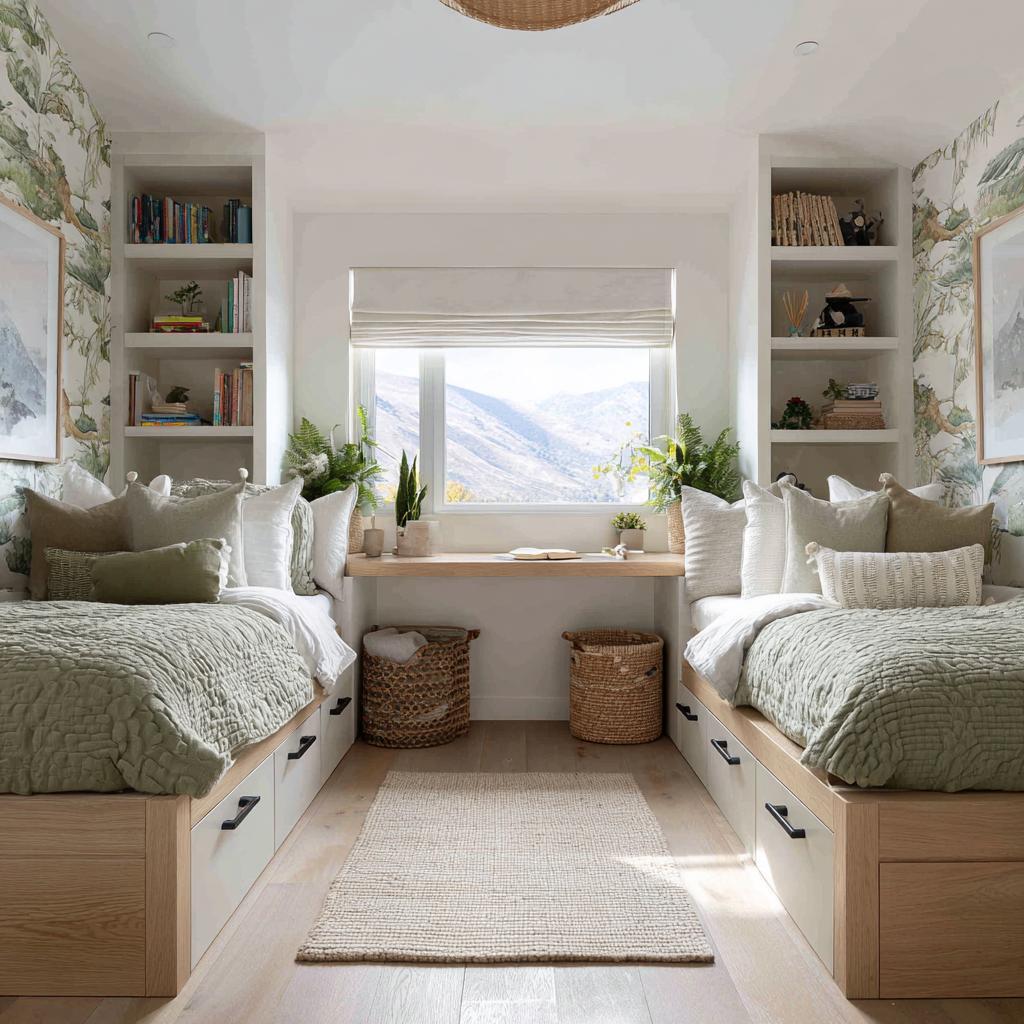
A symmetrical twin bed layout gives each child their own defined space in a shared room.
The first thing to think about is balance. Both kids should feel like the room belongs to them. This is important, especially as they grow older and start valuing personal space more. Next comes functionality. A good bedroom design for two children needs to handle sleeping, studying, and play without feeling crowded.
Lighting, ventilation, and safety are just as important. Rounded edges, secure fittings, and easy movement around the room make a big difference. It’s also extremely important to plan for flexibility. Kids grow up in the blink of an eye, and all too soon they will want changes in their room. What works today should still work a few years later, with just a few small adjustments.
Smart Layout Ideas for Two Kids
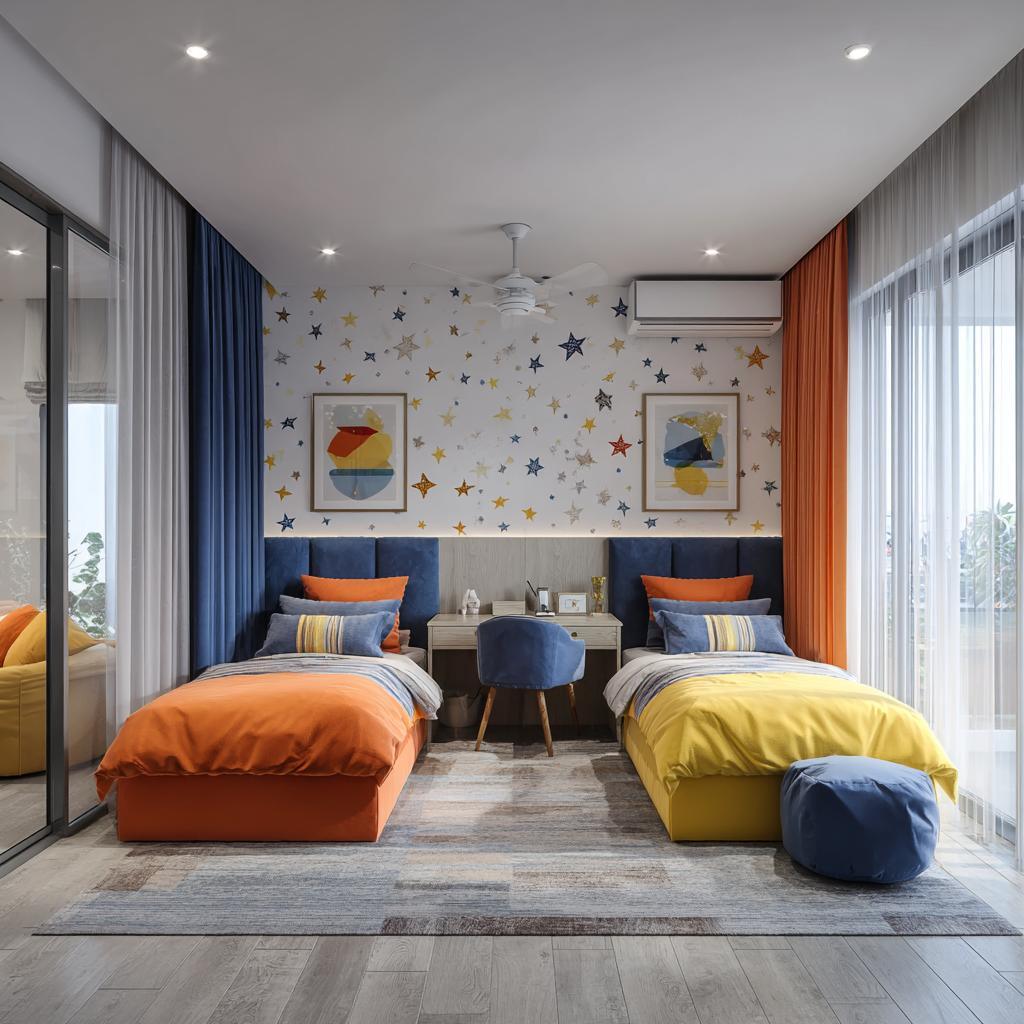
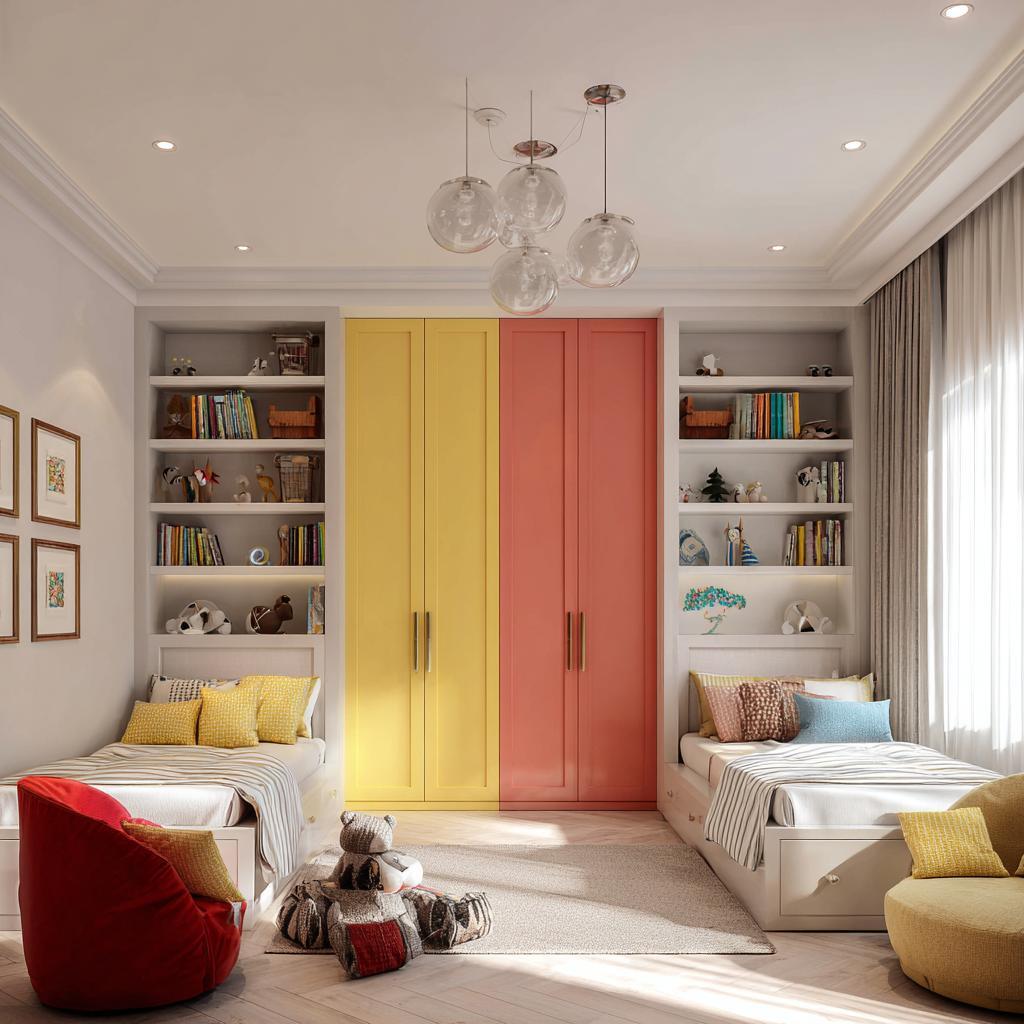
Bold colours and a parallel bed layout create a fun, balanced shared kids’ bedroom.
Layout is everything in a shared room. Start by deciding where the beds go. Placing beds parallel or in an L-shape can help define separate zones for each child.
For a kids bedroom layout for two, symmetry often works well. It creates a sense of fairness and visual balance. If space is tight, placing furniture along walls helps keep the centre open. Think of the room as divided into zones, sleeping, studying, and storage. This makes the space feel more organised and easier to use.
Space-Saving Furniture Ideas
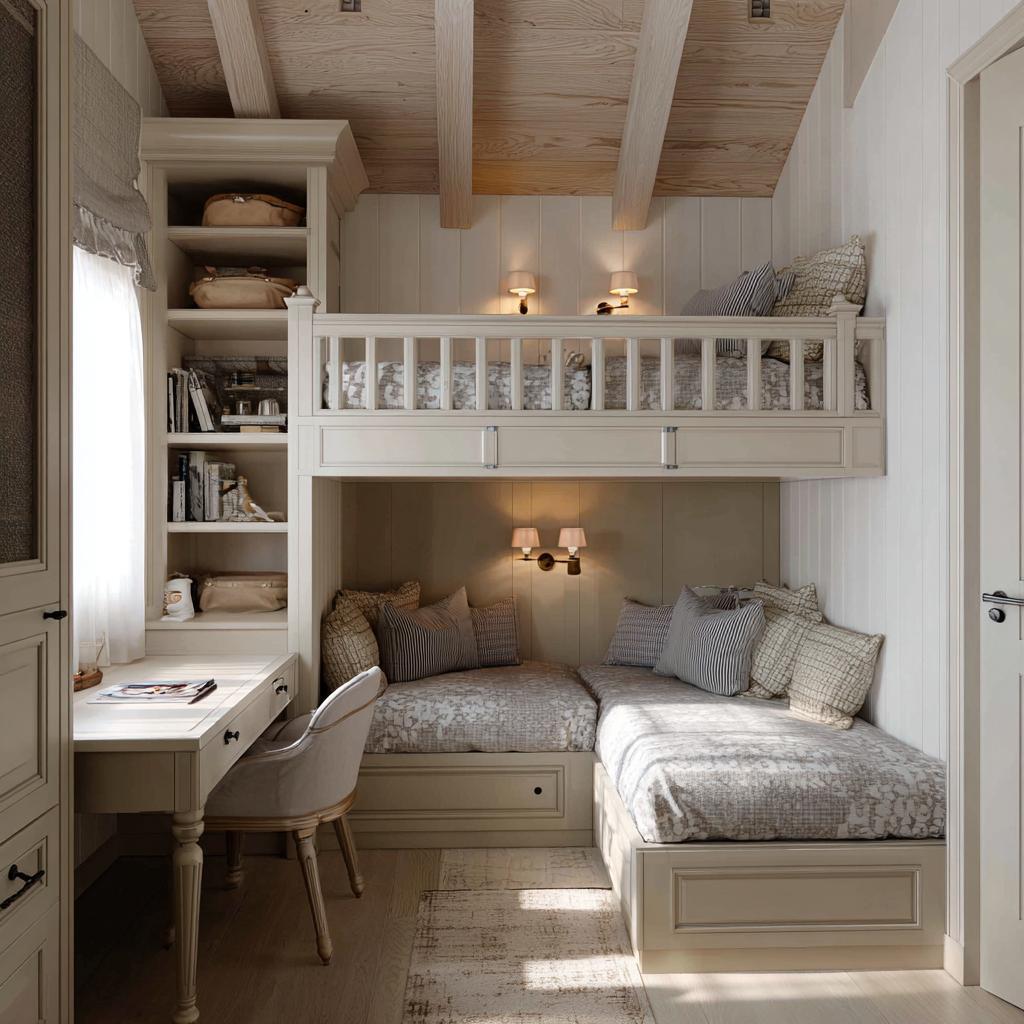
A bunk bed paired with a built-in study desk is a smart space-saving furniture idea for siblings.
Furniture needs to work harder in shared rooms. Bunk beds are one of the most popular bunk bed ideas for kids’ rooms. They free up floor space and make the room feel more open. Storage beds or pull-out beds are also great options. They give you extra storage without adding more furniture. Foldable study tables or wall-mounted desks can save space while still being functional.
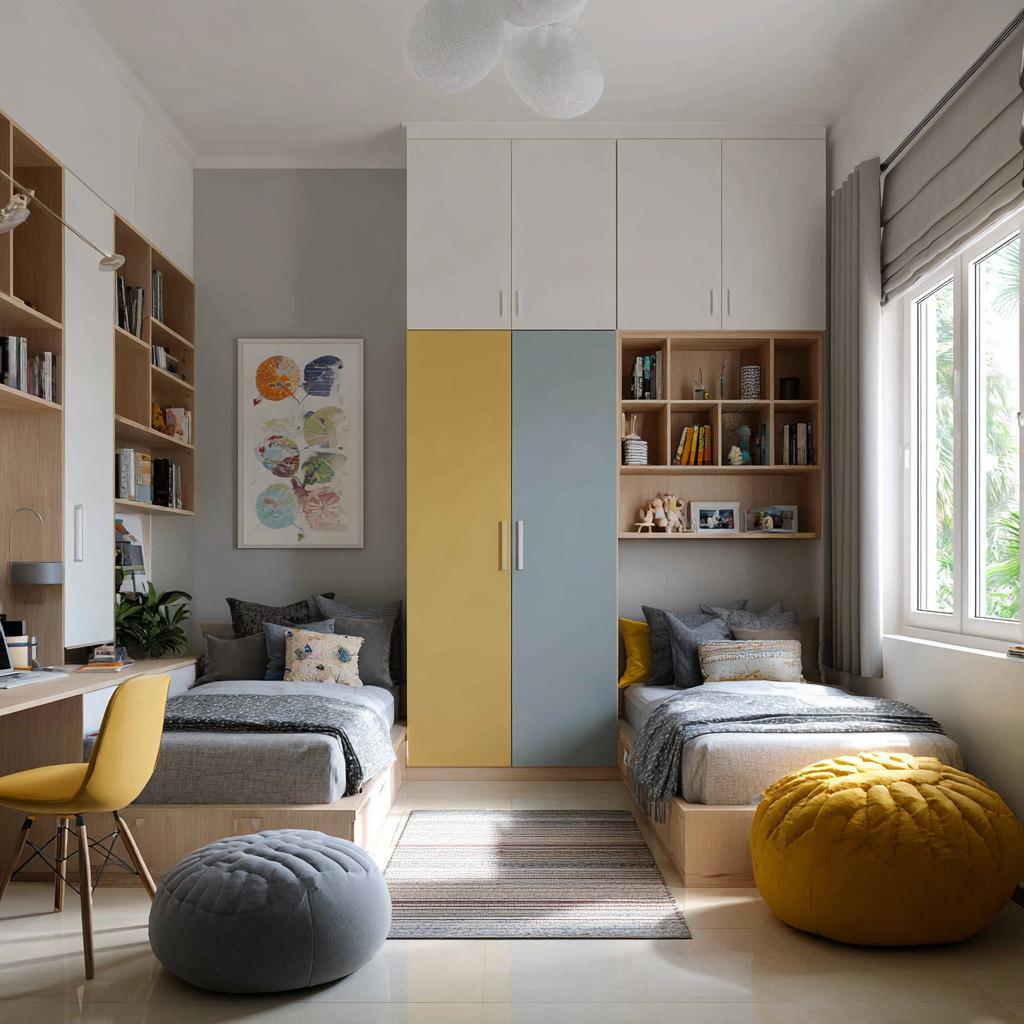
Colour-coded wardrobes and built-in shelves keep a shared kids’ room organised and personal.
Storage is where most shared rooms struggle. Each child needs their own space to keep things organised. Built-in wardrobes with separate sections work well. You can also use labelled drawers, baskets, and shelves to keep things clear.
These kids’ room storage ideas for two help reduce clutter and avoid confusion. Using vertical space is especially important. Tall shelves or overhead cabinets can free up valuable floor area.
Design Ideas to Balance Privacy and Personal Space
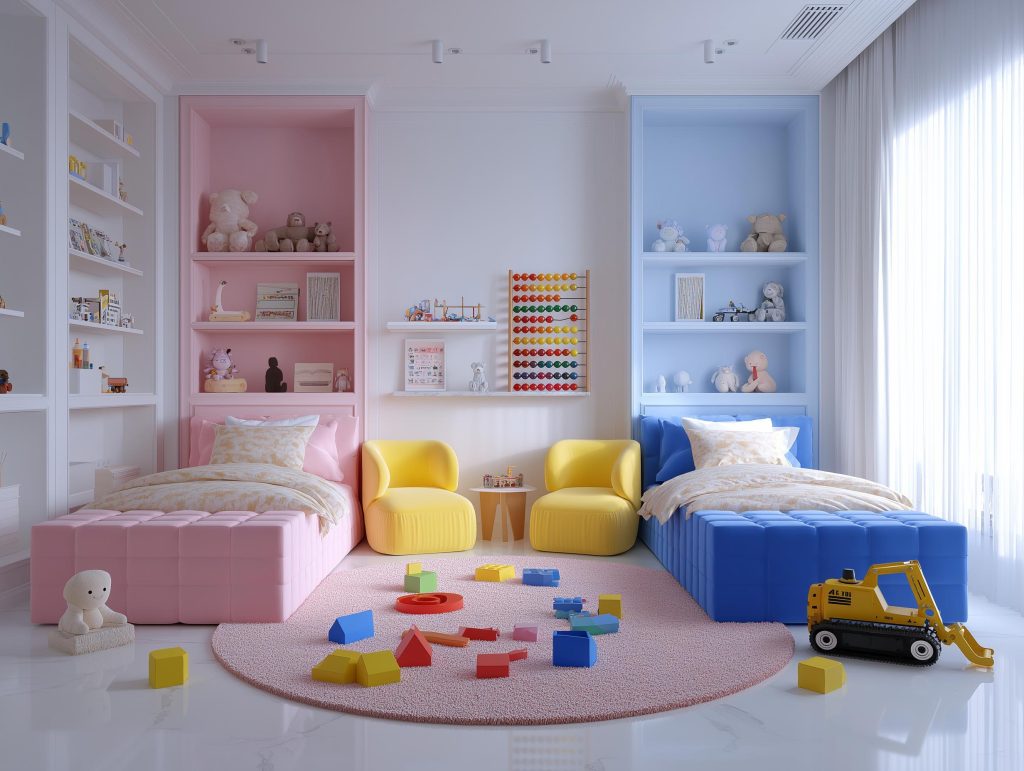
Pink and blue zones with individual shelves give each child their own space in a shared room.
Even in a shared room, personal space matters! You can create subtle separation without building walls. Different bedding colours, individual shelves, or even small partitions can help. This works well in shared kids room ideas.
Curtains, rugs, or lighting can also define personal zones. The goal is to give each child a sense of ownership while still keeping the room cohesive.
Colour and Theme Ideas That Work for Two Kids
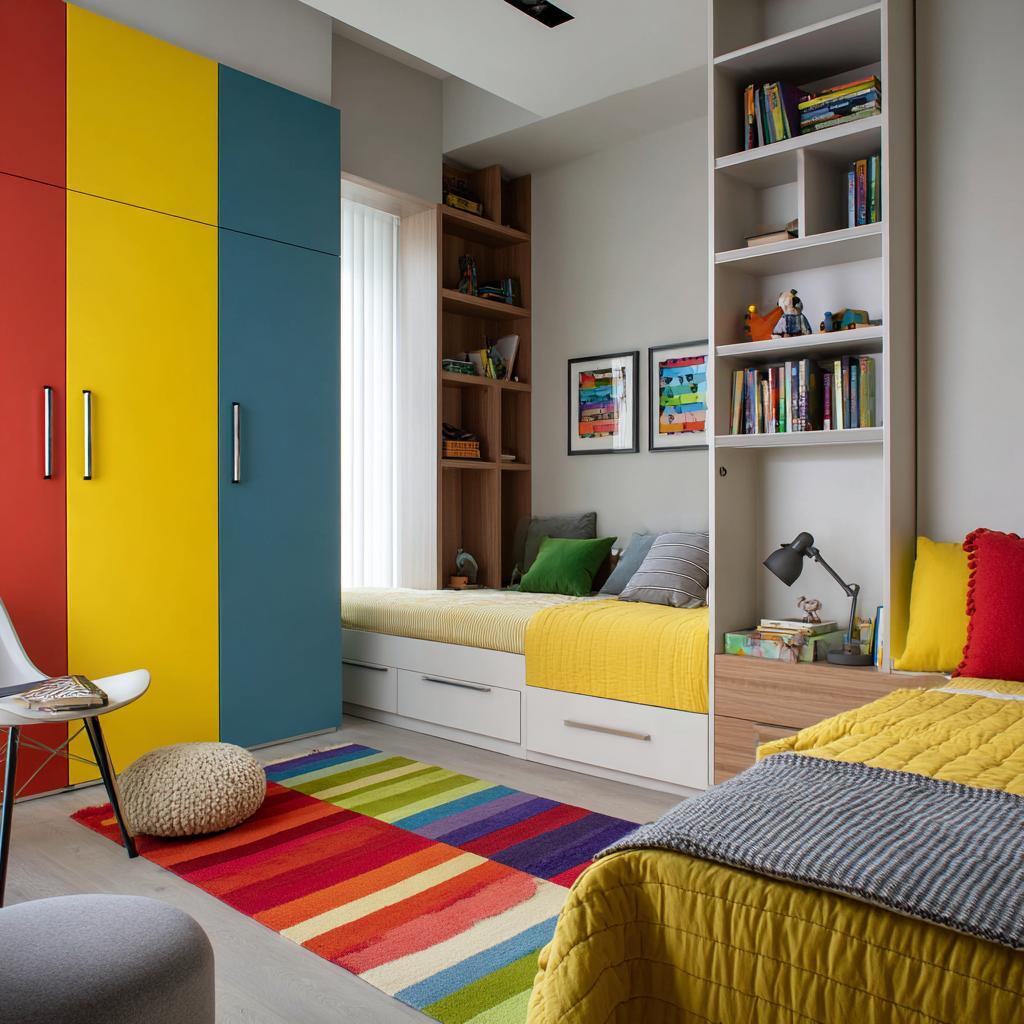
Vibrant wardrobes and a rainbow rug bring personality and fun to a shared kids’ bedroom.
Choosing colours for a shared room can feel tricky. Two kids often means two different preferences. It’s always hard to match everything perfectly, so start with a neutral base. Soft whites, light greys, or warm beige tones work well as a basic palette and keep the room feeling open. From there, you can layer in pops of personality. Use sheets, cushions, wall art, or rugs to reflect each child’s style. If both kids like different colours (and this is often likely to be the case!), try assigning each a separate theme. You can have a cohesive visual look by keeping patterns and ideas the same. This works especially well in shared kids room ideas where individuality matters.
Themes can also help, but keep them flexible. Instead of strong, age-specific themes, go for something that can evolve over time. The goal is to create a space that feels fun now, but still works a few years down the line.
A Room That Grows with Them
A neutral palette with a built-in study zone creates a flexible shared room that grows with kids.
Designing a room for two kids is not just about fitting everything in. It is about creating a space they both enjoy. Ideas for small kids’ rooms for two should always focus on flexibility, comfort, and smart planning.
As they grow, their needs will change. And if the design is done right, the room can adapt with them. If you are planning a shared kids room, HomeLane can help you create a space that feels balanced, functional, and easy to live in.
FAQs
1. How do you design a room for two kids with limited space?
Start by focusing on layout and multi-functional furniture. Bunk beds, storage beds, and wall-mounted desks help maximise space. Keeping the centre area open makes the room feel less crowded.
2. Are bunk beds a good option for shared kids’ rooms?
Yes, we always suggest bunk beds as a great space-saving solution for shared rooms! They free up more floor space for play for smaller kids, or study areas for older ones. If you’re exploring bunk bed ideas for kids’ rooms, choosing a sturdy and safe design is important.
3. How can I create separate spaces for two kids in one room?
This is easy, once you factor in each child’s tastes and interests! Think of visual cues like different colours, rugs, or shelves to define individual areas. Small partitions or curtains can also help create separation in a space saving kids room design.
4. What are the best storage ideas for a kids shared room?
Built-in wardrobes (perhaps in different colours), separate drawers, and vertical shelves work beautifully. Plan storage so that it’s easy to keep things organised and accessible. Separate storage for each child reduces clutter and confusion.
5. How do I design a room for kids of different ages?
Choose flexible furniture and neutral design elements that can adapt over time. Create separate zones based on each child’s needs. This helps the room stay functional as they grow.










 EXPLORE MORE