5 Bed Placement Mistakes as per Vastu: Fix Layout for Better Sleep Energy
By Bivin Peter- April 25, 2026
AI Summary
3 key insights · 1 expert tip
Correcting common bed placement mistakes as per Vastu enhances sleep quality by aligning energy flow and avoiding disruptive placements for restful nights.
Key Insights:
What You'll Read Here:
Avoid placing beds under exposed ceiling beams to prevent feelings of pressure and stress.
Ensure beds are not sharing walls with bathrooms or toilets to maintain a restful environment.
Sleep with your head facing South, as North alignment can cause magnetic repulsion and sleep disruption.
HOMELANE EXPERT TIPBy our design team
Positioning the headboard against a solid wall and allowing walk space on both sides promotes stability and balanced energy flow for optimal rest.
Summary:
Achieving a restful night is often less about the mattress and more about the energy flow within a room. Many homeowners unknowingly commit bed placement mistakes as per Vastu that lead to restlessness, anxiety, and even health issues. In traditional Indian architecture, the bedroom is a sanctuary where the body and mind must align with the earth’s magnetic field. This guide highlights the most frequent bed placement mistakes as per Vastu, offering practical solutions to rectify layout errors, optimise sleeping direction, and create a high-vibrational environment for deep, restorative sleep.
Best For:
Modern Indian homeowners and residents looking to improve sleep quality and home harmony by correcting common bed placement mistakes as per Vastu.
Expert Tip:
HomeLane designers recommend investing in high-quality handles and knobs for your cabinets; these “contact points” are touched every day, and a premium feel here can make a low budget kitchen 2 BHK flat interior design feel significantly more expensive than it actually was.
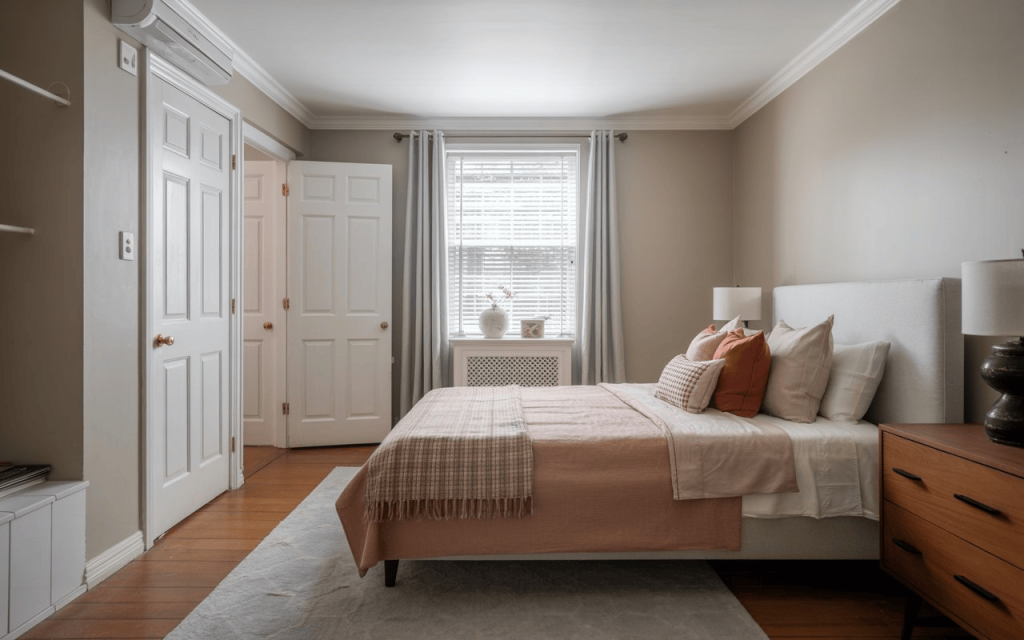
Ideal bed placement as per vastu for a calm, balanced and stylish master bedroom
The Mystery of the Restless Night
Sleeping direction ideas for a balanced, peaceful and stylish bedroom setup
Why is it that even in the most luxurious bedrooms, sleep can sometimes feel elusive? Perhaps the room is silent, the temperature is perfect, and the bedding is premium, yet the mind remains wired and the body feels heavy upon waking. The problem often lies in the invisible energy map of space, especially in bedroom design. In the realm of Indian interior design, the bed placement mistakes as per Vastu that occur during the planning stage can have a lasting impact on a resident’s wellbeing.
Vastu Shastra is not merely a set of superstitions; it is an ancient architectural science that balances the five elements and the magnetic pull of the earth. When these forces are ignored, the bedroom becomes a place of friction rather than repose. By identifying and fixing common bed placement mistakes as per Vastu, one can ensure that the bedroom serves its true purpose: a place for rejuvenation, healing, and peace.
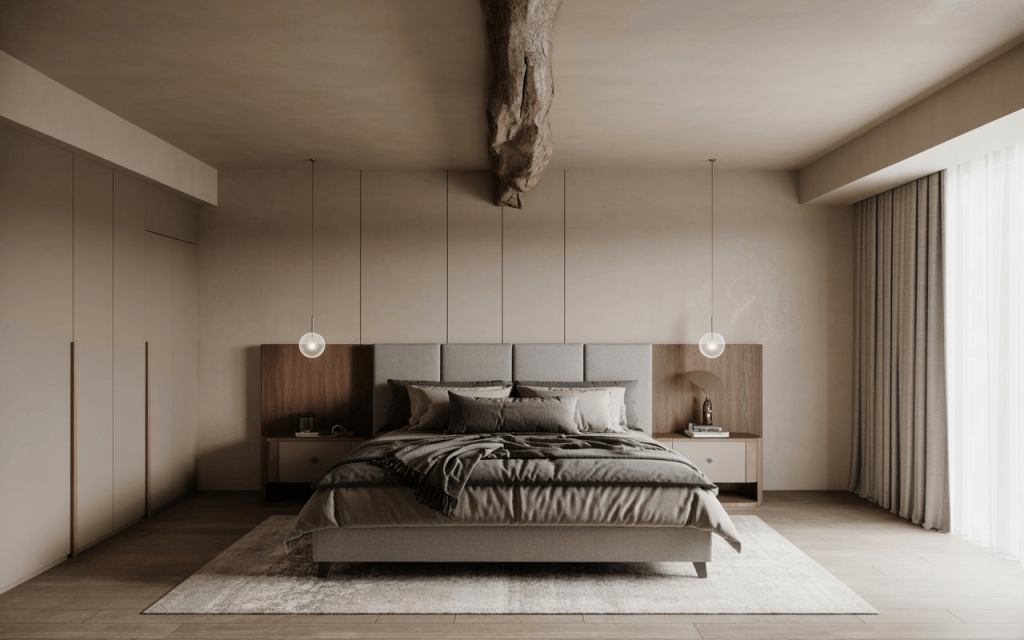
1. Avoiding Bed Placement Under Exposed Beams
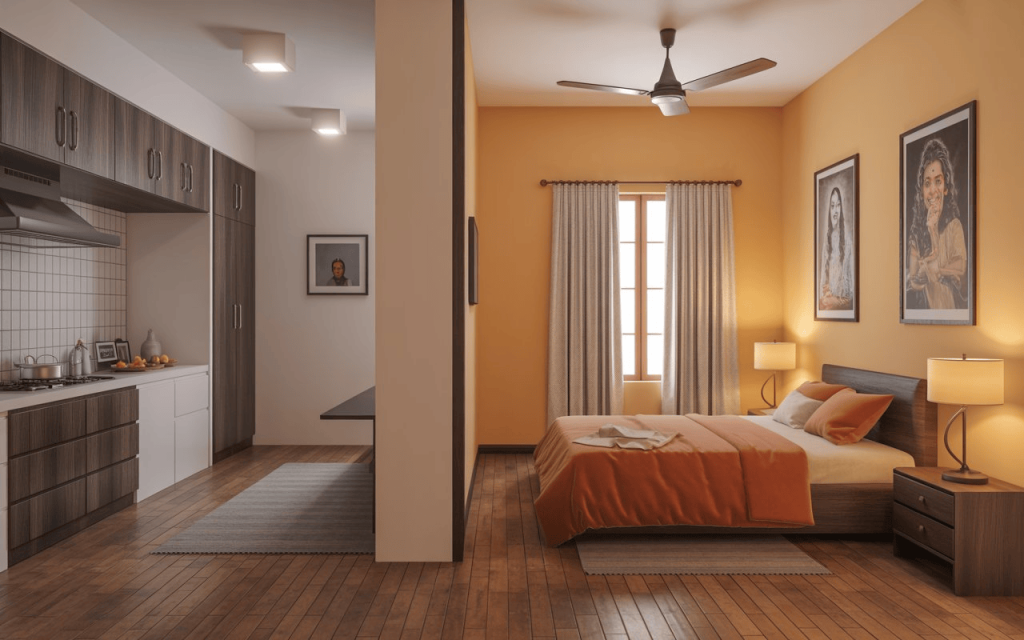
Best direction to sleep for a calm, stylish and well-balanced modern bedroom space
One of the most significant bed placement mistakes as per Vastu involves the presence of heavy, exposed ceiling beams directly over the bed. In architectural psychology, a beam creates a visual and energetic “cutting” sensation. For the person sleeping beneath it, this translates into a feeling of constant pressure.
Physically, beams can cause a sense of oppression that leads to headaches and increased stress levels. If the bed is placed such that a beam runs horizontally across the chest or head, it is believed to cause health issues related to those specific areas. If the beam cannot be structurally removed, designers often recommend installing a false ceiling to create a smooth, unobstructed surface above the sleeper.
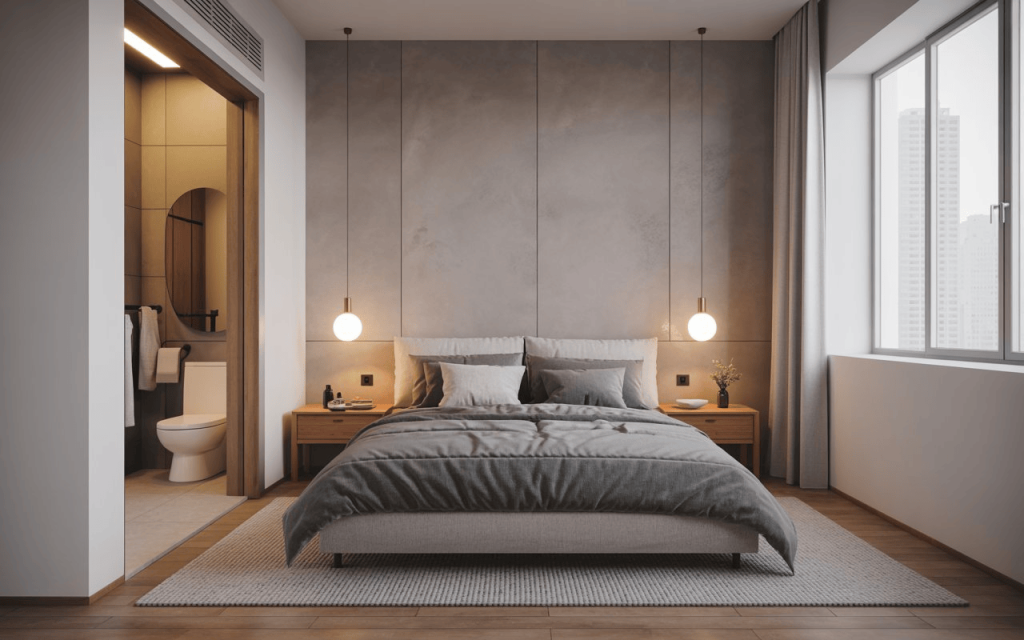
2. Ensuring Distance from Bathroom and Toilet Walls
In which direction we should sleep for a peaceful, modern and well-balanced bedroom setup
In modern urban apartments, space is a premium, often leading to layouts where the bed shares a wall with the bathroom. From a Vastu perspective, this is a major error. Bathrooms are considered areas of “shodh” or elimination, carrying a heavy and damp energy that is contrary to the restorative energy required for sleep.
Sharing a wall with a toilet can lead to disturbed sleep and a lack of mental clarity. If the room layout forces the bed against a bathroom wall, ensure the head of the bed is at least a few inches away from the wall. Additionally, keeping the bathroom door closed at all times is essential to prevent the drainage of positive energy from the sleeping area.
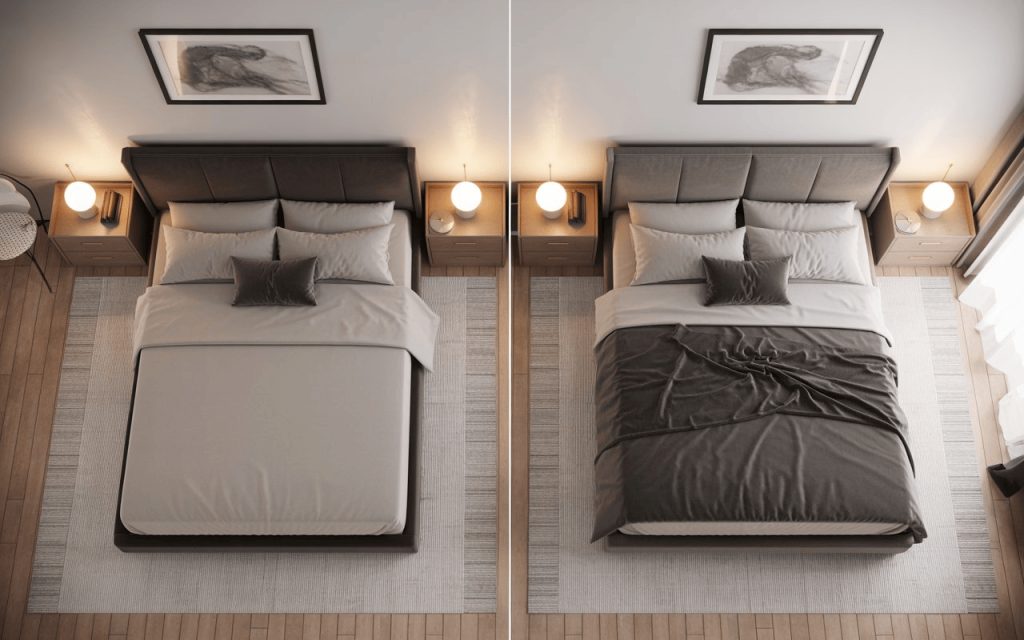
3. Correct Orientation: The Best Direction to Sleep
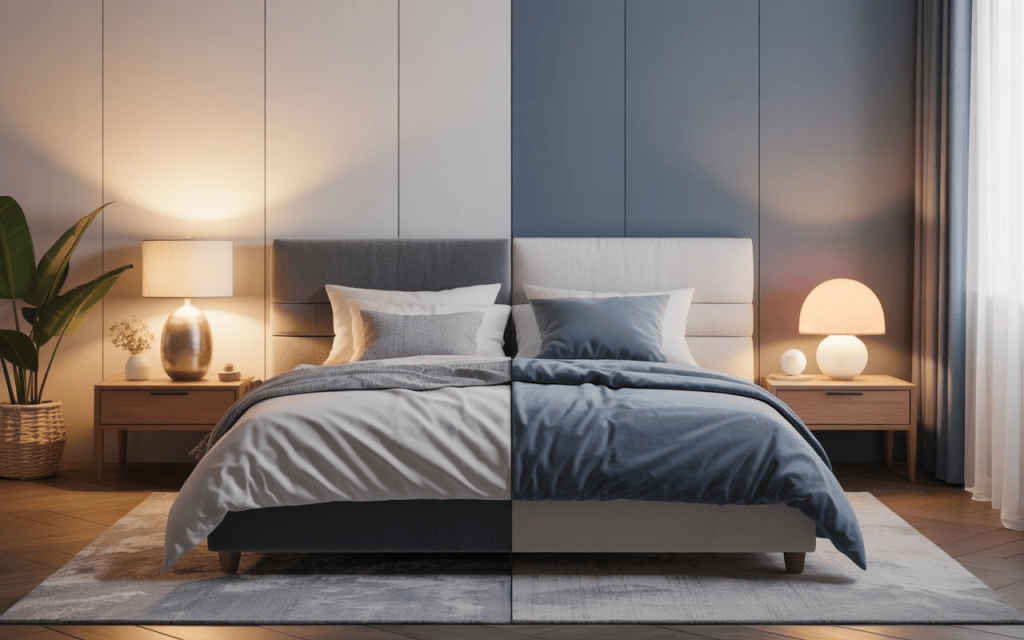
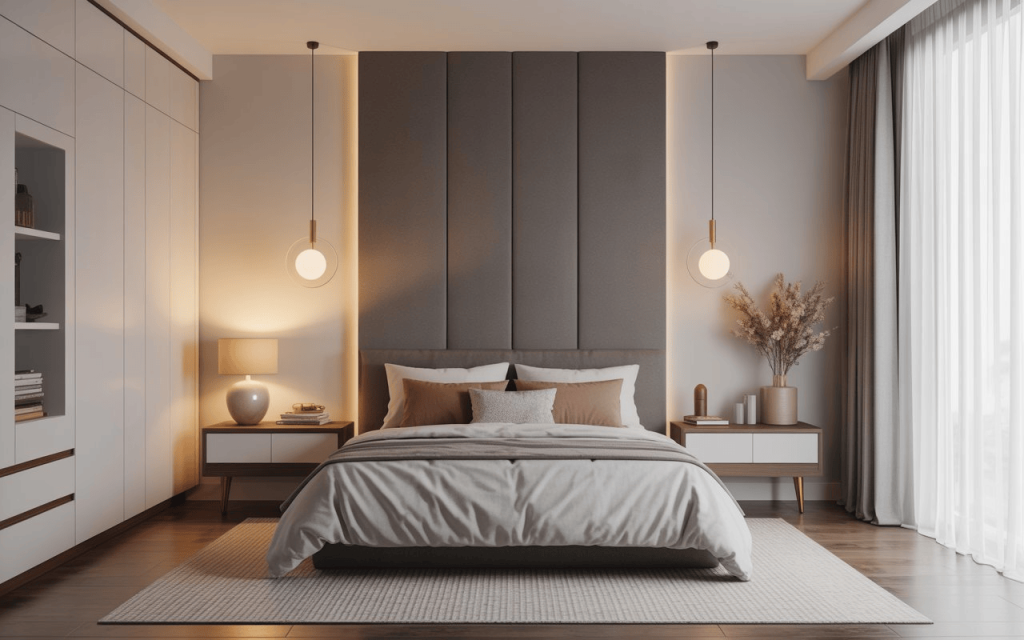
Which direction to sleep guide with bedroom layout comparison for better comfort & balance
Choosing the best direction to sleep is perhaps the most discussed aspect of Vastu. A common error is sleeping with the head pointed towards the North. Scientific research into the human body’s internal magnetic field confirms what Vastu has taught for centuries: the human body has its own magnetic poles.
When one sleeps with the head toward the North, the body’s North pole aligns with the Earth’s North pole, leading to a magnetic repulsion. This can cause blood pressure fluctuations and heart palpitations. So, which direction to sleep is ideal? Vastu recommends the South as the best direction to sleep, as it aligns perfectly with the Earth’s magnetic pull, promoting deep and undisturbed rest. East is the second-best choice, particularly for students or those seeking intellectual growth.
4. Placement Relative to Doors and Windows
Bed placement as per vastu for a calm, balanced, and restful bedroom atmosphere
The flow of “Prana” or life force enters through doors and exits through windows. Placing a bed directly in the line of the door is one of the bed placement mistakes as per Vastu known as the “coffin position.” This occurs when the feet point directly toward the bedroom door.
While bed placement as per Vastu suggests the bed should be in a position where the door is visible, it should never be in direct alignment with it. This creates an unsettled energy. Similarly, placing the headboard directly under a window can cause a feeling of insecurity and exposure to external noise and light, which disrupts the REM cycle. A solid wall behind the headboard is always the preferred choice for stability.
5. Separating Bed from Pooja Room and Kitchen Walls
Master bedroom bed placement as per vastu for harmony, comfort and better sleep direction
In Indian households, the Pooja room is the most sacred zone, while the kitchen represents the fire element. Placing a bed such that it shares a common wall with either of these spaces is considered a breach of energetic boundaries.
The high-vibrational energy of a prayer room and the active, fiery energy of a kitchen are both too intense for a space intended for rest. If a bedroom is adjacent to these areas, avoid placing the bed against the shared wall. This ensures that the distinct energies of each room do not bleed into the other, which could otherwise lead to irritability or a lack of spiritual peace.
Harmonizing the Space of Your Sleep
Choosing the best direction to sleep improves your rest quality.
The journey toward a Vastu-compliant bedroom is a commitment to your physical and spiritual well-being. It is an invitation to align your personal energy with the natural forces of the earth, ensuring your home remains a true space of rest.
At HomeLane, expert designers help transform ordinary layouts into harmonious living spaces through precise spatial planning, intelligent storage, and holistic design. By understanding the nuances of ancient sciences like Vastu Shastra, professional guidance ensures your home remains a perfect reflection of your values and a foundation for a balanced life.
FAQs
1. What is the best direction to place a bed as per Vastu?
The best direction to sleep according to Vastu is with the head pointing toward the South. This aligns the body with the Earth’s magnetic field, promoting heart health and deep rest. The East is also a highly favourable direction, particularly for those in creative or academic fields.
2. Should the bed be against a wall or in the centre?
For maximum stability, the headboard should always be placed against a solid wall. However, the bed should not be tucked into a corner where two sides are touching walls. Ideally, there should be enough space on both sides of the bed to walk, ensuring a balanced flow of energy and equal access for both partners.
3. Is it okay to have a mirror facing the bed?
No, a mirror facing the bed is considered one of the major bed placement mistakes as per Vastu. It is believed that mirrors reflect energy and can “startle” the soul during sleep, leading to restlessness and bad dreams. If a mirror is necessary, it should be placed inside a wardrobe or covered at night.
4. Can we keep things under the bed as per Vastu?
Ideally, the space under the bed should be kept empty to allow energy to circulate freely. If you must use under-bed storage, avoid keeping metal objects, electronics, or clutter. Stick to soft items like extra blankets or pillows, and ensure the area is cleaned regularly to prevent stagnant energy from building up.

















 EXPLORE MORE