Kitchen Designs for 2026: Nature-Led Style and Smart Functionality
By Usha Balasubramanyan- March 16, 2026
AI Summary
3 key insights · 1 expert tip
Biophilic kitchen designs in 2026 integrate nature with modern aesthetics, focusing on natural light, tactile finishes, and organic elements to create calming, sensory-rich spaces.
Key Insights:
What You'll Read Here:
Budget: Not specified in the provided text.
Materials: Prioritise moisture-resistant cabinet cores and matte, wood-grain or brushed laminate finishes.
Planning: Incorporate ample natural light, cross-ventilation, and minimal clutter for a functional, serene kitchen.
HOMELANE EXPERT TIPBy our design team
When selecting countertop materials for a biophilic kitchen, opt for natural stones like granite to maintain durability and an organic aesthetic.
Ever felt that your kitchen lacks life? You aren’t alone. Today’s kitchens are built for efficiency, easy-clean functionality, and maximum storage. Rarely are they built for how they make us feel! But that’s changing fast. In 2026, kitchens are leaning into biophilic design not as a trend to show off, but as a remedy for modern sensory overload.
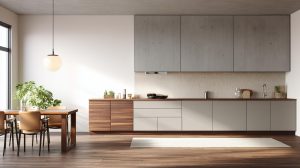
Lush biophilic kitchen design blends nature with warm modern interiors
Biophilic design essentially ushers the natural world into indoor spaces, in easy ways that calm, restore, and refresh us. And a modular kitchen design is a brilliant place to start; because we use it, live in it, and experience it daily. Let’s explore how 2026 is shaping kitchens that don’t just cook meals, but quietly lift moods.
The Essence of Biophilic Design in the Kitchen
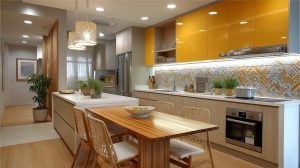
Serene biophilic kitchen embraces natural light earthy textures modern living
Biophilic design is essentially a love letter to how humans naturally interact with their environment. It borrows cues from the natural world, texture, colour, sound, scent, light, airflow, and organic balance, then translates them into interior decisions that feel intuitive.
When it comes to kitchen interior design, this is all about using materials that look and feel natural. We pay attention to ventilation and open space, and let the sunlight wash right in. We add greenery sparingly, choose finishes that are tactile not glossy, and plan storage that keeps surfaces free of clutter. We try to rebuild our innate connect to the outdoors, feeling grounded and peaceful once again!
Key Elements of Biophilic Kitchen Design in 2026
1. Sunlight Shows the Way!
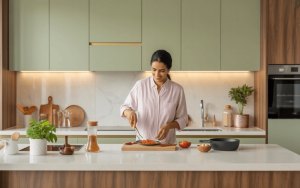
Modern biophilic kitchen design blends greenery sunlight wood textures seamlessly
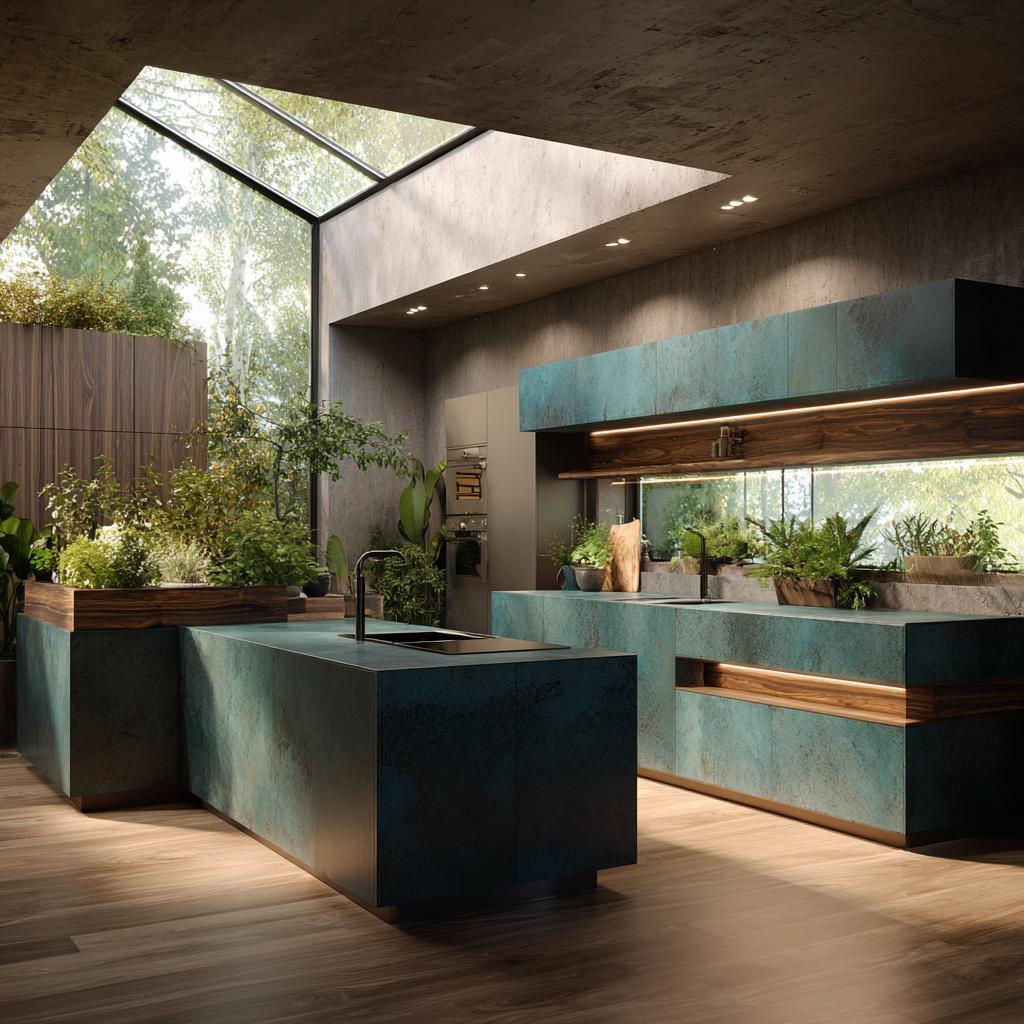
Here, daylight is treated like a basic design material. Large windows, slim glass partitions, and softer curtain choices diffuse brightness instead of blocking it. Try to get the light to spread evenly, bouncing around the room.
Under-cabinet LEDs, edge-lit mirrors, and ceiling tracks come together to create magical layers of light. Lighting isn’t just visual; it becomes an emotional component of your modern kitchen design.
2. Cabinets That Last, Finishes That Feel Natural
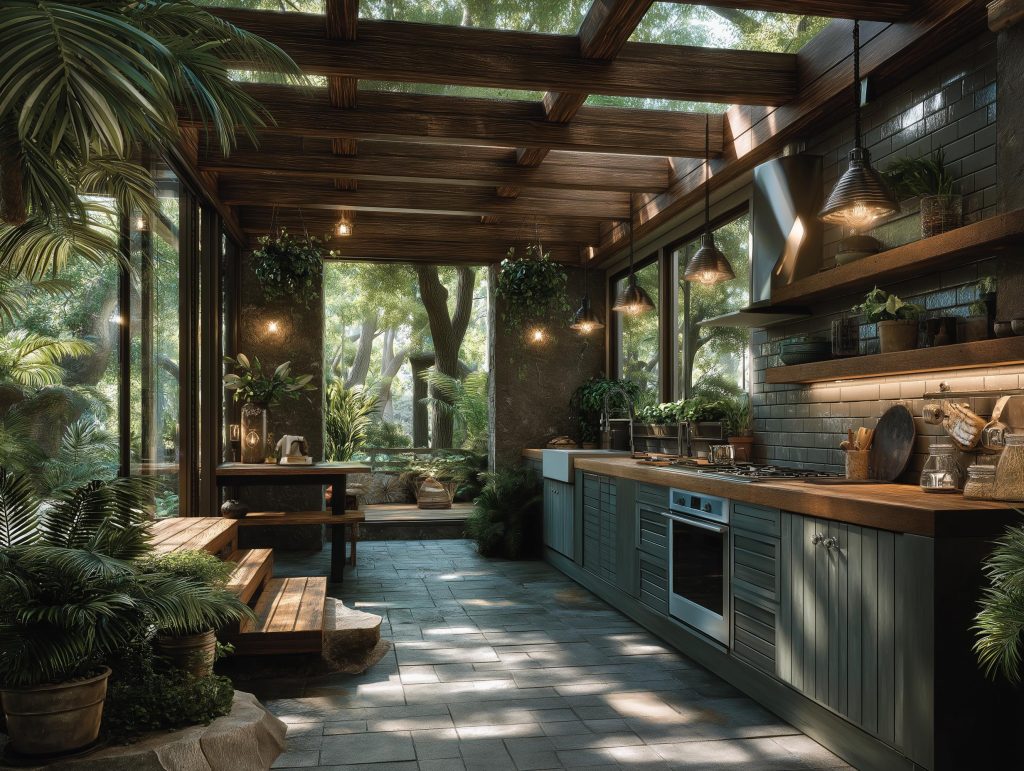
Biophilic Kitchen Design featuring skylight greenery textures in modern kitchen interiors
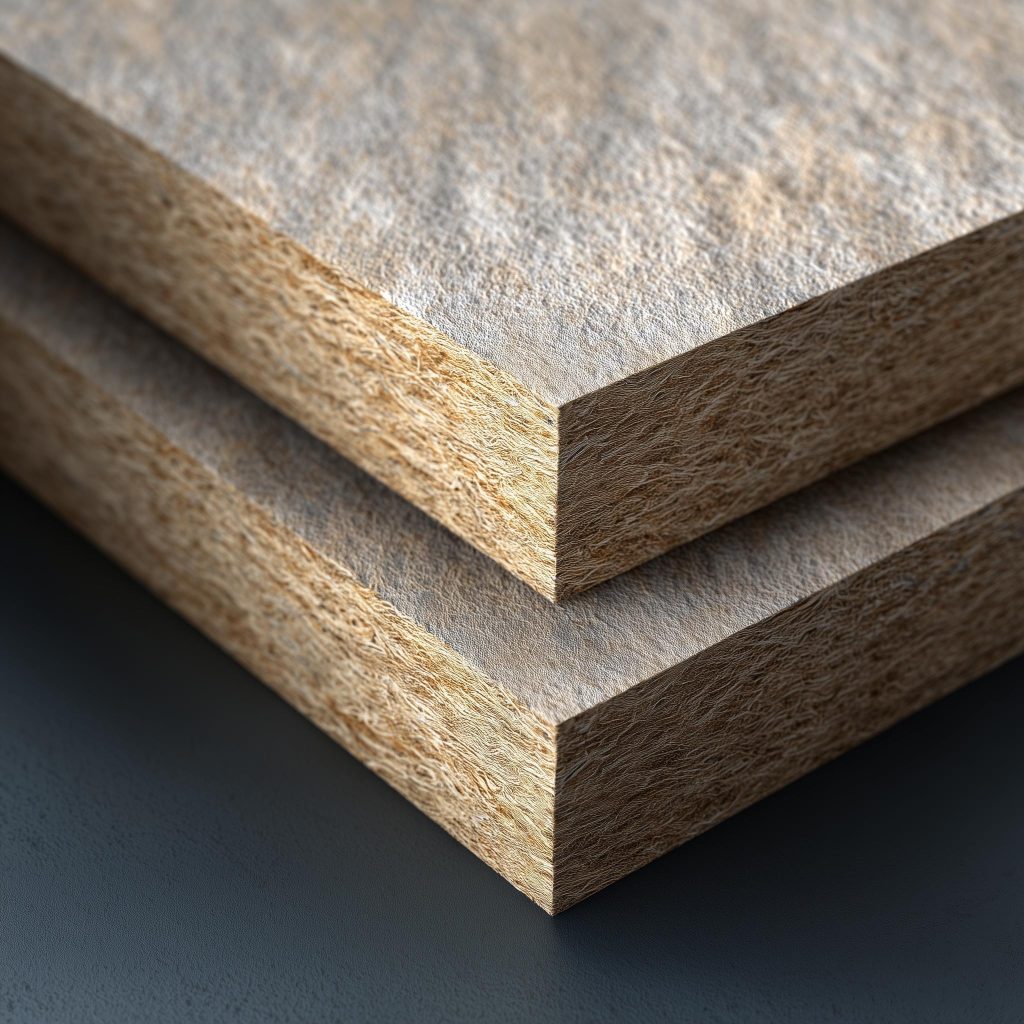
The inside of your cabinet must be strong; this is something that’s non-negotiable. The outside must be organic. For the cabinet cores, choose treated boards, marine-grade plywood, HDHMR, and other moisture-ready materials. Finishes lean matte, wood-grain, or soft brushed laminates that evoke timber without overwhelming the eye.
Fingerprints and smudges are the villains of minimal sensory kitchens, so let’s forego glossy finishes (they don’t feel natural, anyway!).
3. Stone That Feels Honest
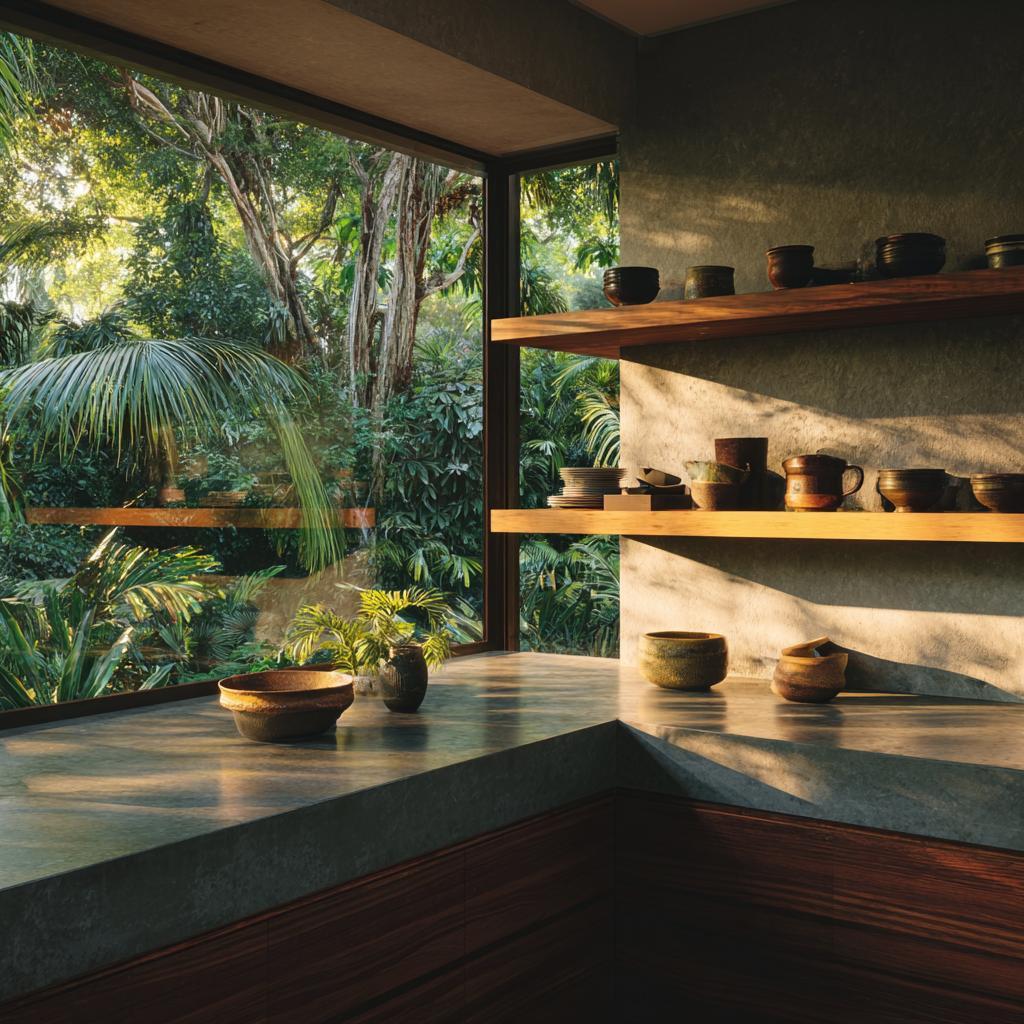
Modern kitchen design infused with biophilic kitchen elements natural light
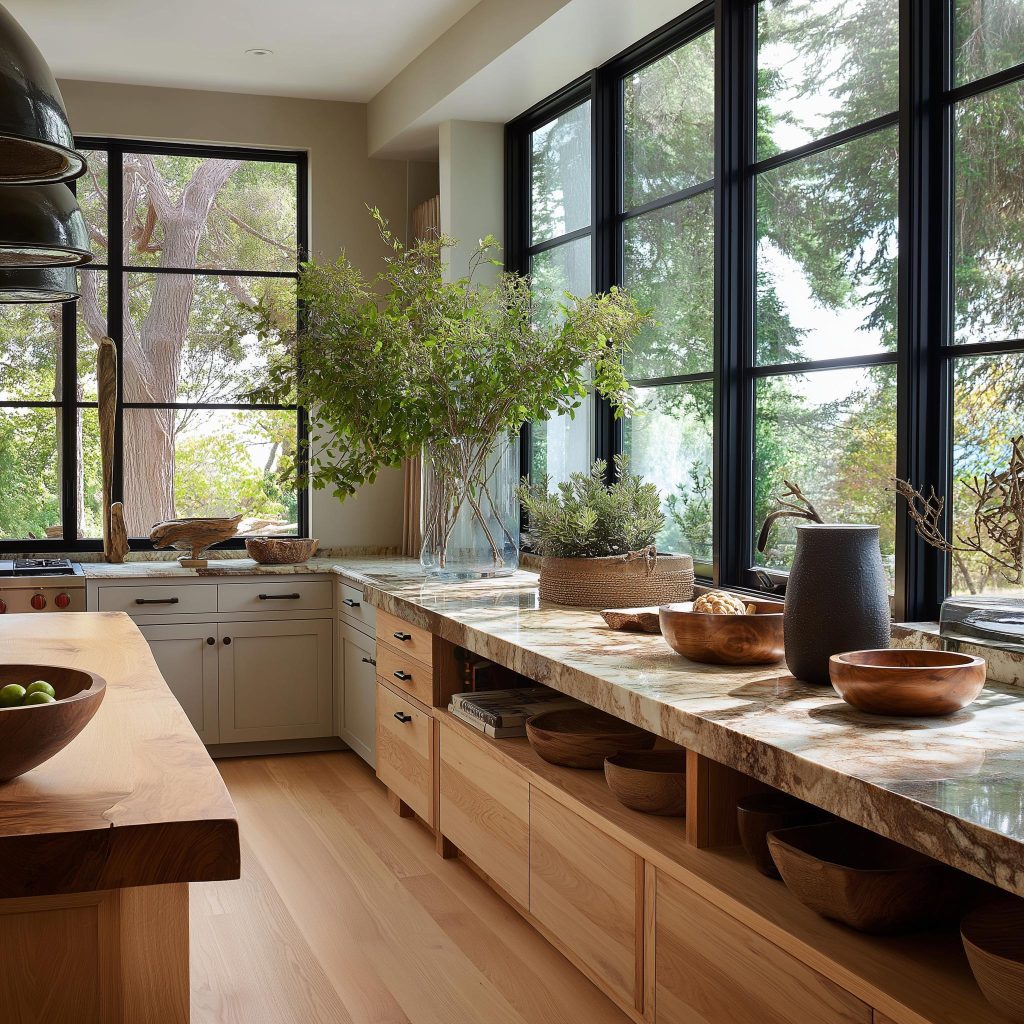
Granite and natural stone with ingrained flecks are popular countertop choices. They’re durable, forgiving, and part of nature; perfect for a biophilic kitchen design.
4. Greenery That Makes Sense
Modular kitchen design with skylight greenery wooden textures airy interiors
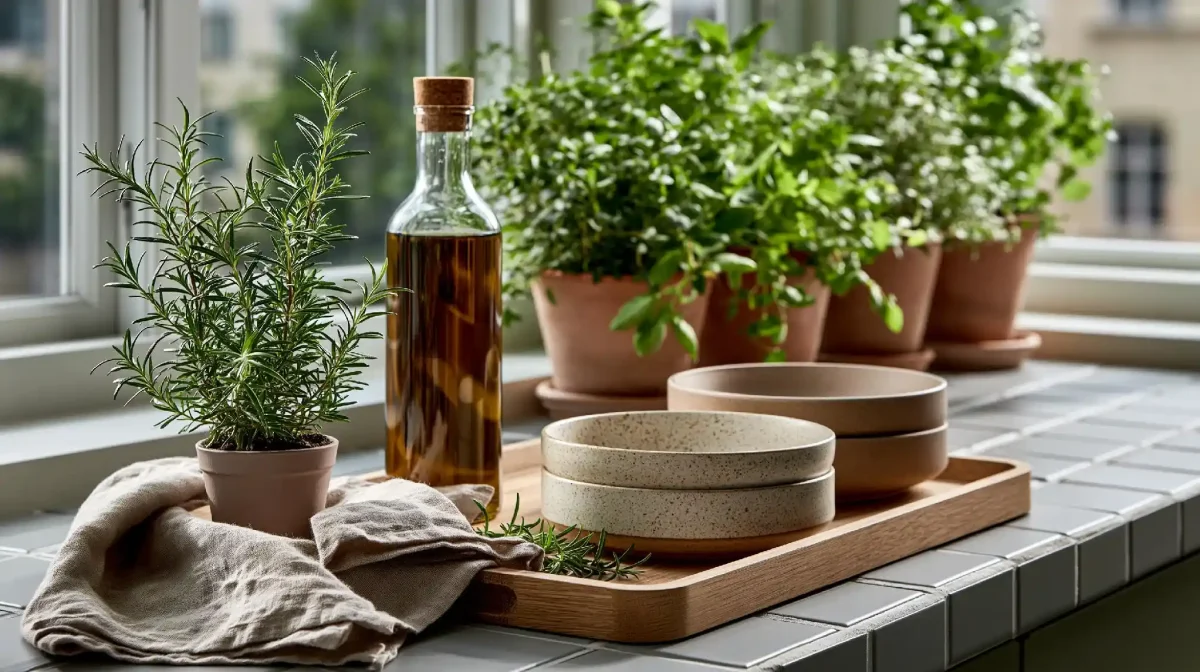
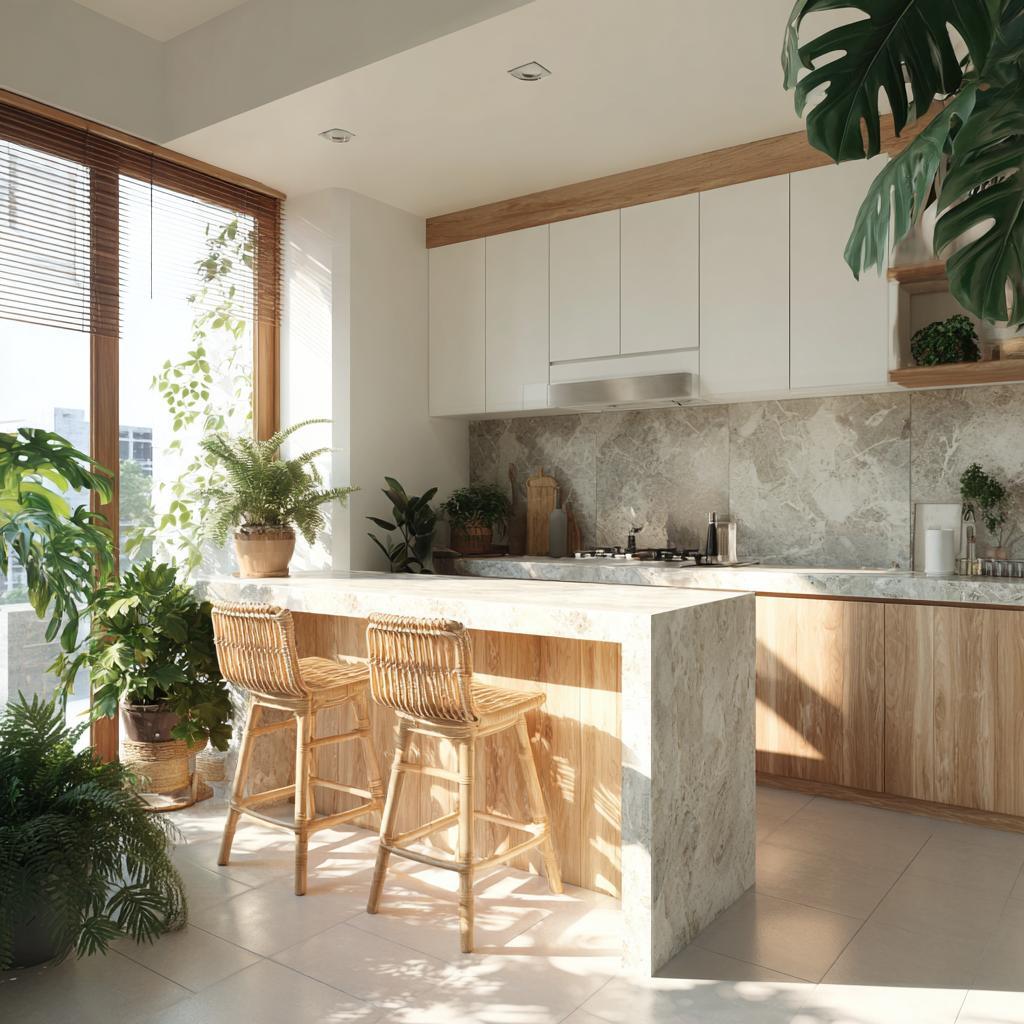
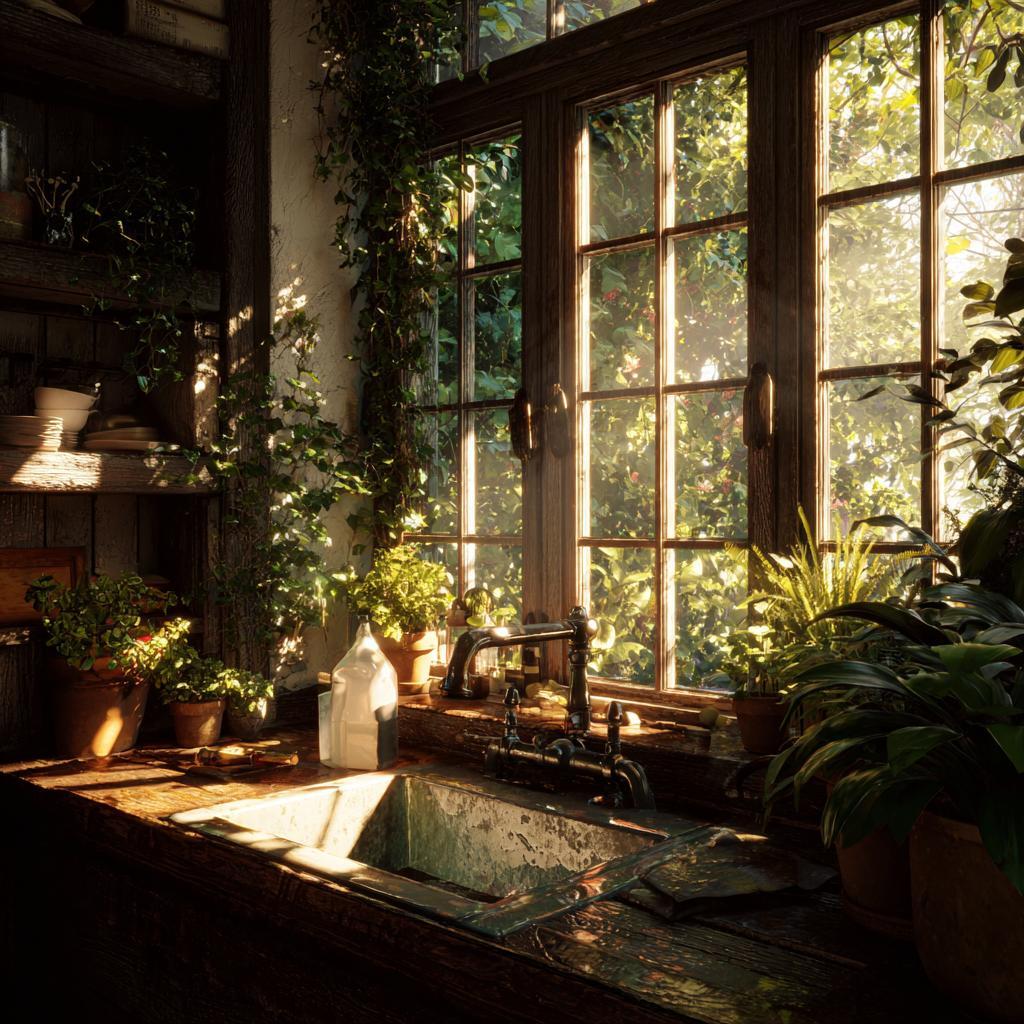
Plants are best chosen for how resilient they are. A small indoor herb garden near a window fills the room with scent and colour. Trailing greens on the top of upper cabinetry add a verdant touch without too much effort.
Do you really need ten plants? We think not, especially if you have a brown thumb! Limit the number, but keep them green.
5. Ventilation for Fresh Air
Biophilic Kitchen embraces sunlight plants rustic textures for kitchen interiors
Cross ventilation is extremely important, especially in a biophilic kitchen where humidity is a given! Plan to have windows that allow air movement, a high-suction exhaust hood, and louvred upper panels for circulation.
6. Décor Accents
Kitchen interior design inspired by biophilic kitchen styling sunlight details
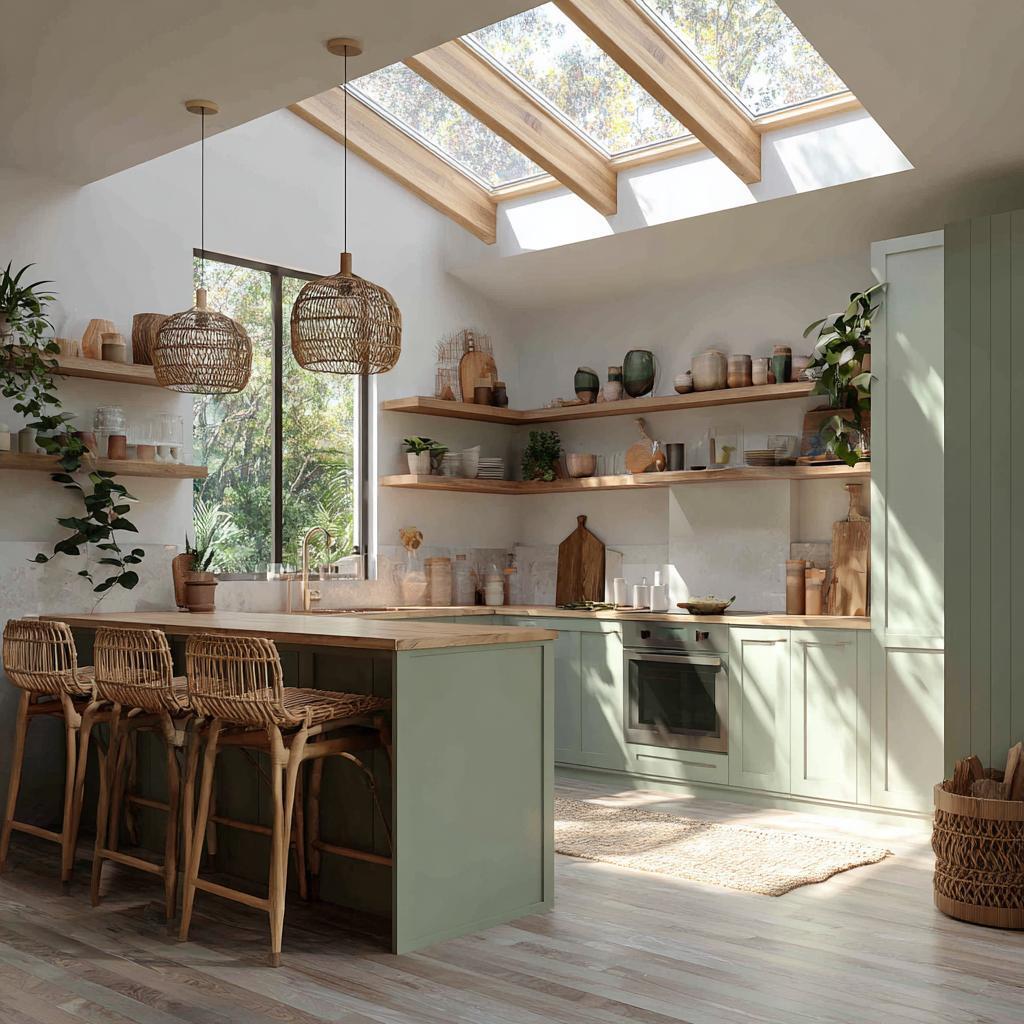
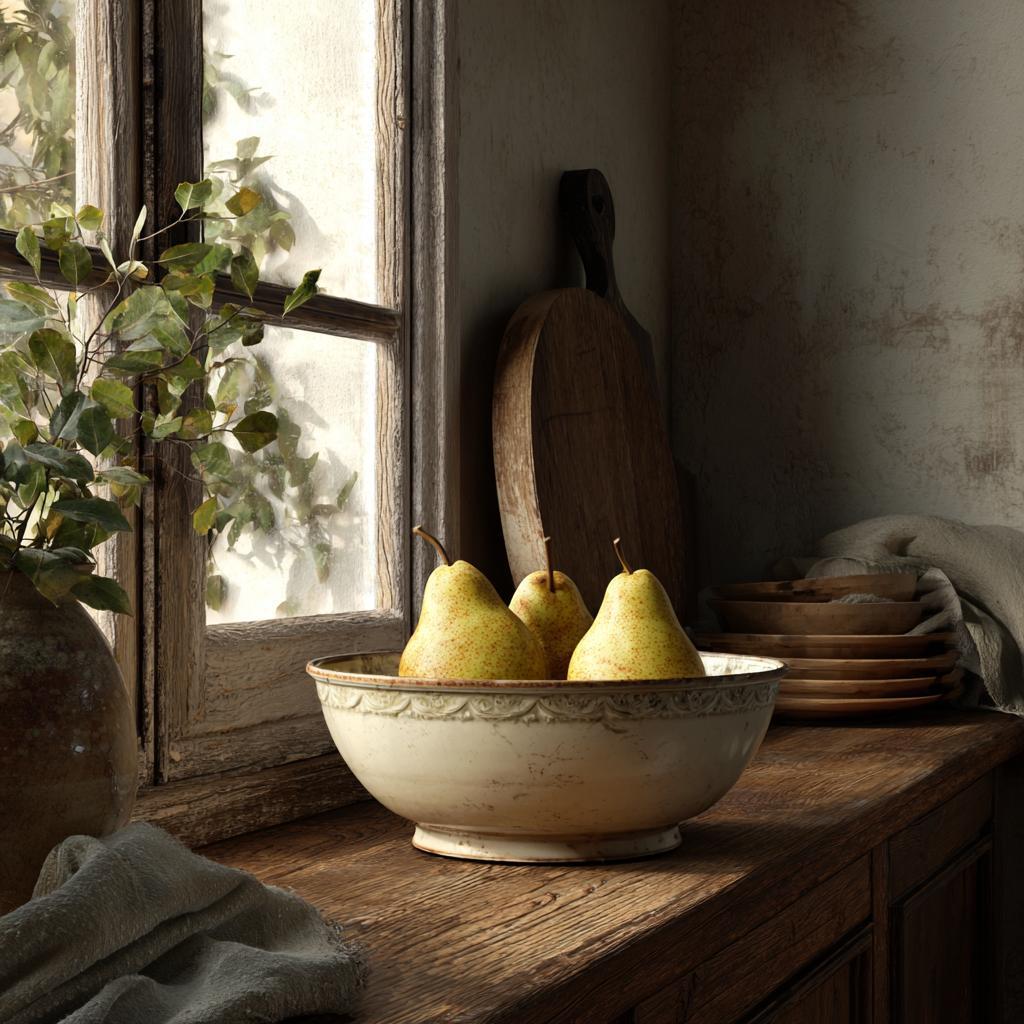
A wooden breakfast stool, jute runner, raw ceramic fruit bowl, stoneware jars, or cane-panelled section all add biophilic warmth through touch and memory. The goal is texture, not clutter.
Designing for the Senses: Beyond the Visual
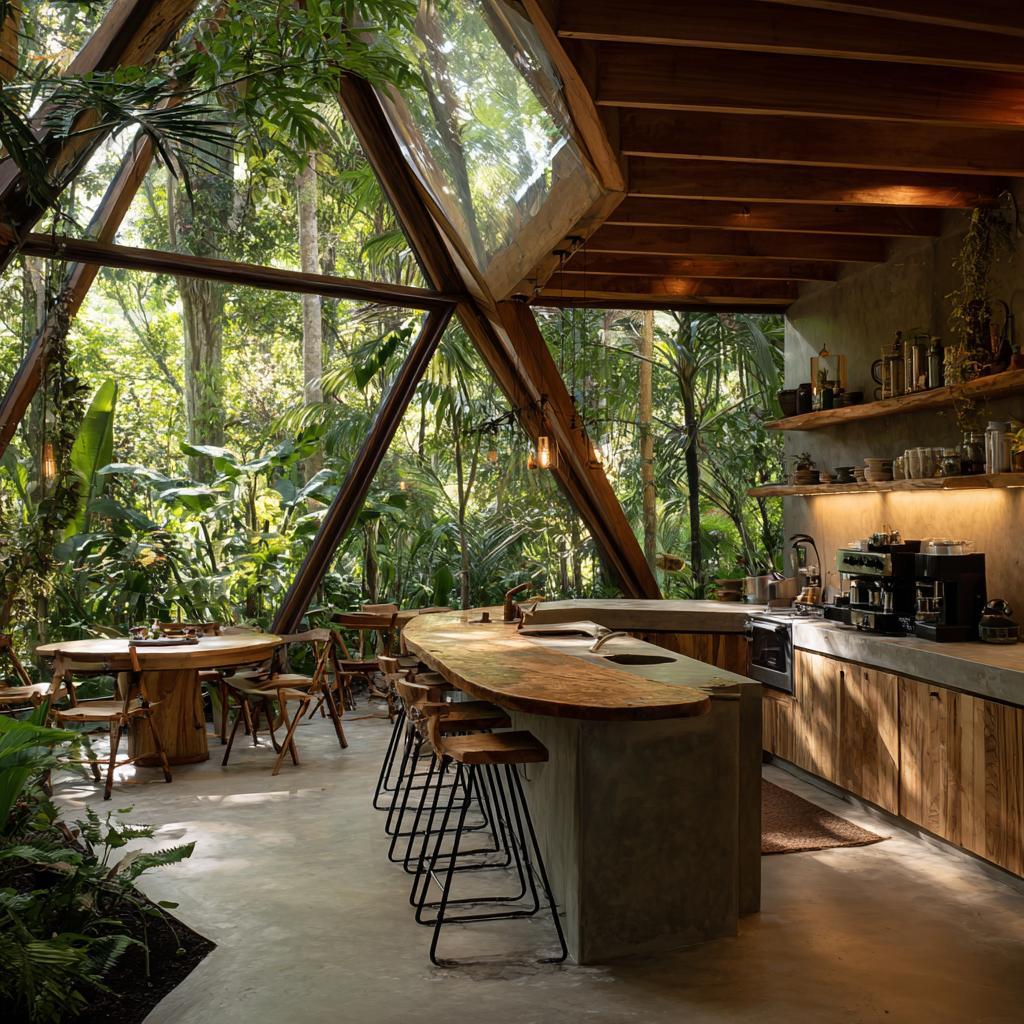
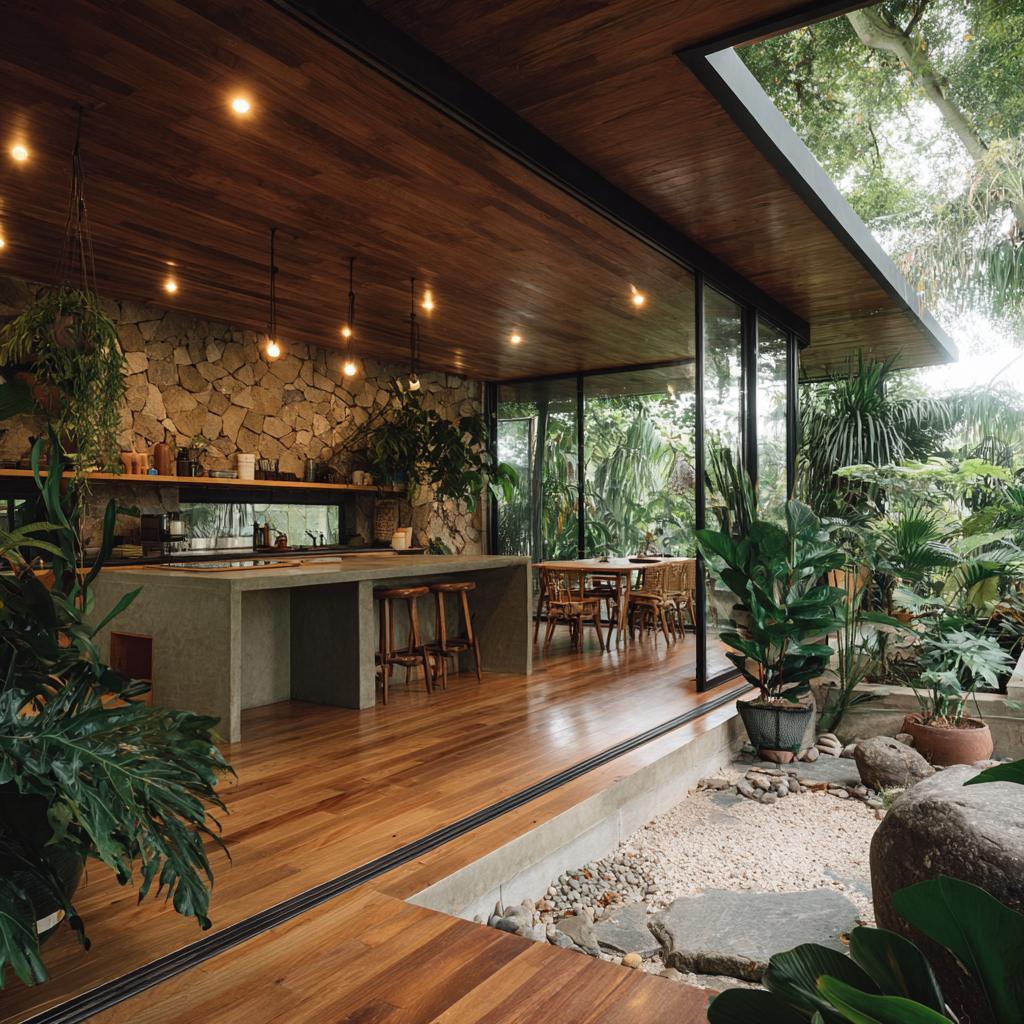
Modern biophilic kitchen design blending forest views natural materials living
Modern biophilic kitchen designs are built for more than aesthetics. They’re shaped for how you experience the space.
Sound
Appliances that aren’t noisy feel more calm and peaceful; so pick chimneys and mixer-grinders with care. A small tinkling indoor fountain somewhere close by adds gentle white noise in the background.
Touch
Natural fibres, like organic jute that is not over-processed, cotton or linen, cane panels, and textured stone turn into sensory, tactile delights.
Scent
A small herb corner with mint or basil brings delicious smells, and can go straight into the pot for cooking!
Movement
Minimalism in workflow matters, as it keeps things simple and easy. A clear floor path makes movement more efficient.
Comfort
Soft-close drawers with organisers and spacers, bare counters without any clutter, rounded edges all serve to keep you comfortable while you work.
Memory
Wood, stone, greens, ceramics, these make a kitchen feel familiar, rooted, back to the basics.
Have you ever walked into a kitchen and thought it felt like home without knowing why? That’s sensory design working quietly.
Practical Considerations for Biophilic Kitchens
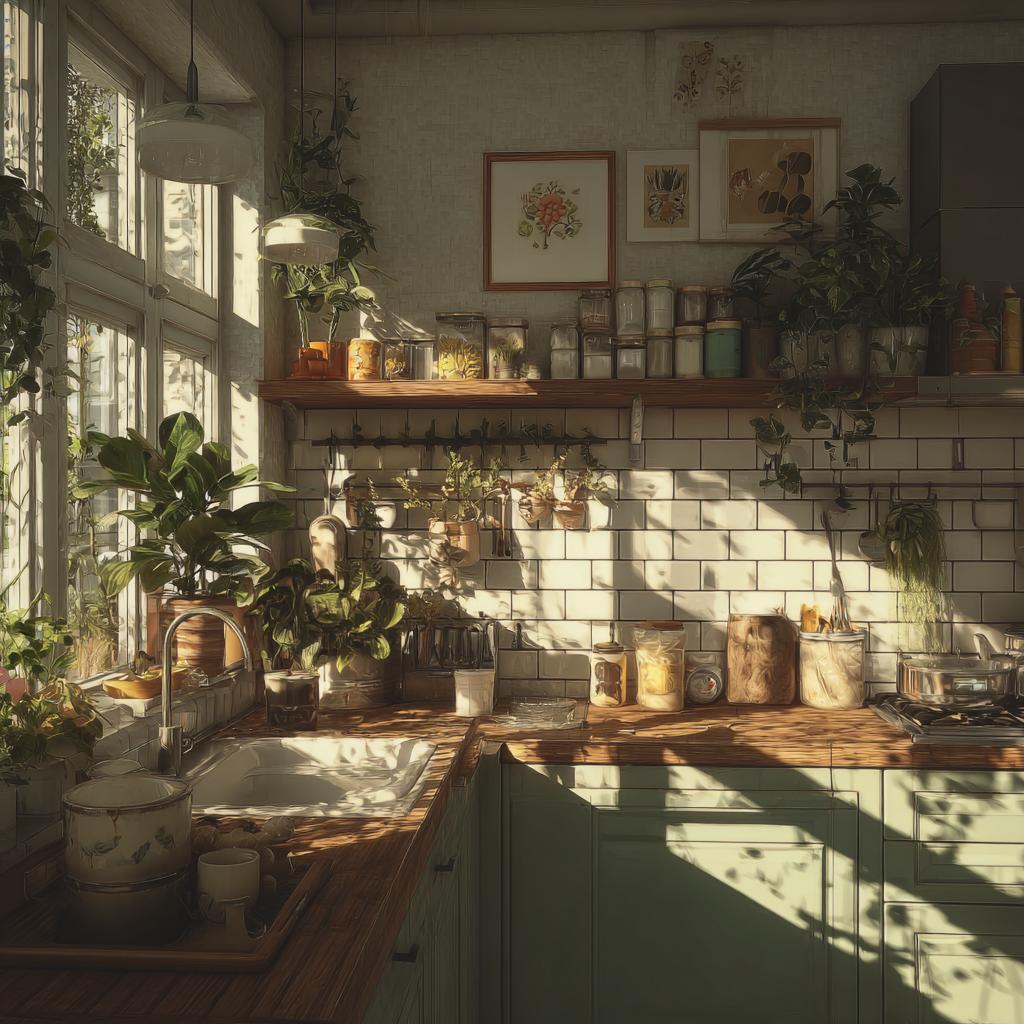
Kitchen design with sunlit greenery shelves creating warm biophilic atmosphere
Choose moisture-resistant materials (BWP, BWR ply or Hydroguard Plus boards) to combat high humidity.
Keep finishes matte to reduce glare and smudge stress.
Hide appliances in tall built-ins instead of crowding the counters.
Plan electrical and plumbing early to avoid retrofit mess later.
Keep the work triangle intact, even in nature-led kitchens.
Pick plants that can handle steam and don’t need too much sun.
If you design for nature and workflow, the space looks gentle and performs brilliantly.
Keep Your Kitchen Close to Nature in 2026
Biophilic Kitchen Design merges indoor outdoor living with inspired materials
Biophilic kitchen design ideas are not about perfection. It’s all about intention that lasts! And it’s not difficult to get it right. Start with a carefully chosen layout. Place an herb plant by the window and diffuse the lighting so it doesn’t hit the eye. Plan cabinets that hide appliances, ventilation that actually works, and stone counters that feel honest. And then finish the look with textures that ground you!
If you want a kitchen design that works smart, feels natural, and treats your senses kindly, HomeLane is built for this exact transformation.
We can’t wait to craft your 2026 kitchen with nature-leading the way!
FAQs
1. What lighting strategies support biophilic principles in kitchens?
Lighting should never be an afterthought, so plan your biophilic kitchen well ahead! Use power-saving LEDs, anti-glare diffusers, and daylight-friendly glass partitions. Position the points well, and be practical about it.
2. Can I incorporate biophilic elements in small or urban kitchen designs?
Yes, of course you can. Try storage with rattan panels, play with matte finishes, add hardy plants in cane planters, and use an abundance of natural textures like cane, jute, ceramics.
3. How do I choose textures and finishes that evoke nature?
Wood-grain matte laminates, granite with natural fleck, jute or cotton runners, cane panels, raw ceramic décor touchpoints work beautifully together in your biophilic kitchen design.
4. What colour palettes work best for a biophilic kitchen?
Anything that’s close to nature works! Think sky blue, earthy brown, forest green, or sandy beige. You get the idea.
5. How do I balance functionality with nature-inspired aesthetics in my biophilic kitchen design?
Allow nature to inspire the textures and palette, but let the kitchen workflow inspire the layout! Follow the Kitchen Triangle rule, placing the stove, fridge and sink at three points of a triangle with each leg between 4 and 9 feet.









 EXPLORE MORE