Kitchen Sliding Doors for Flexible Layouts and Everyday Comfort
By Usha Balasubramanyan- January 30, 2026
When you’re doing up your modular kitchen or simply looking for ways to make better use of the available space, kitchen sliding doors might not be the first thing that comes to mind. But once you start exploring the possibilities, you’ll wonder why you didn’t consider them sooner!
Modern kitchen sliding door design that enhances space, light and style
Sliding doors have quickly become one of the smartest solutions for modern Indian homes, especially in cities where every square foot matters. They’re practical, stylish, and surprisingly versatile. Let’s walk through everything you need to know about bringing sliding doors into your kitchen design.
What Is a Kitchen Sliding Door and Why Choose It?
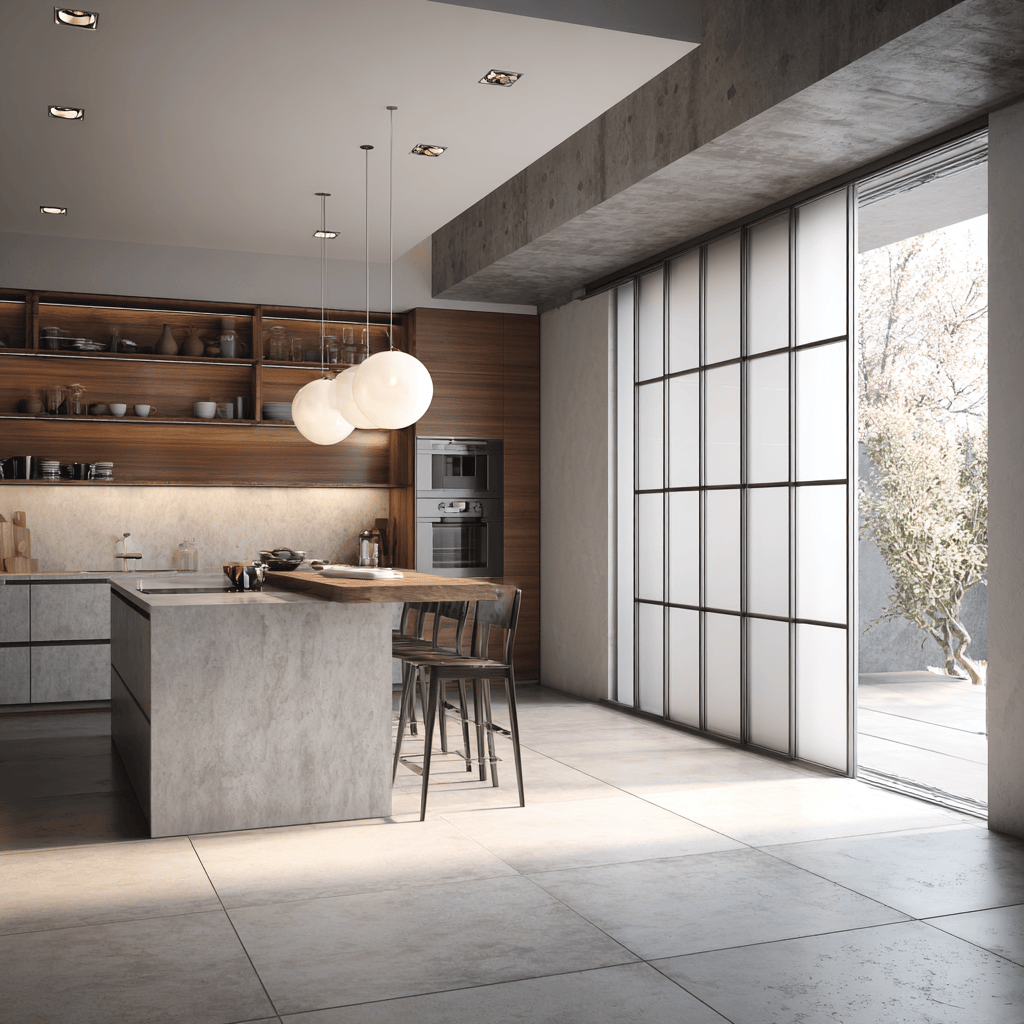
Modern kitchen sliding glass door design for stylish kitchen entrance
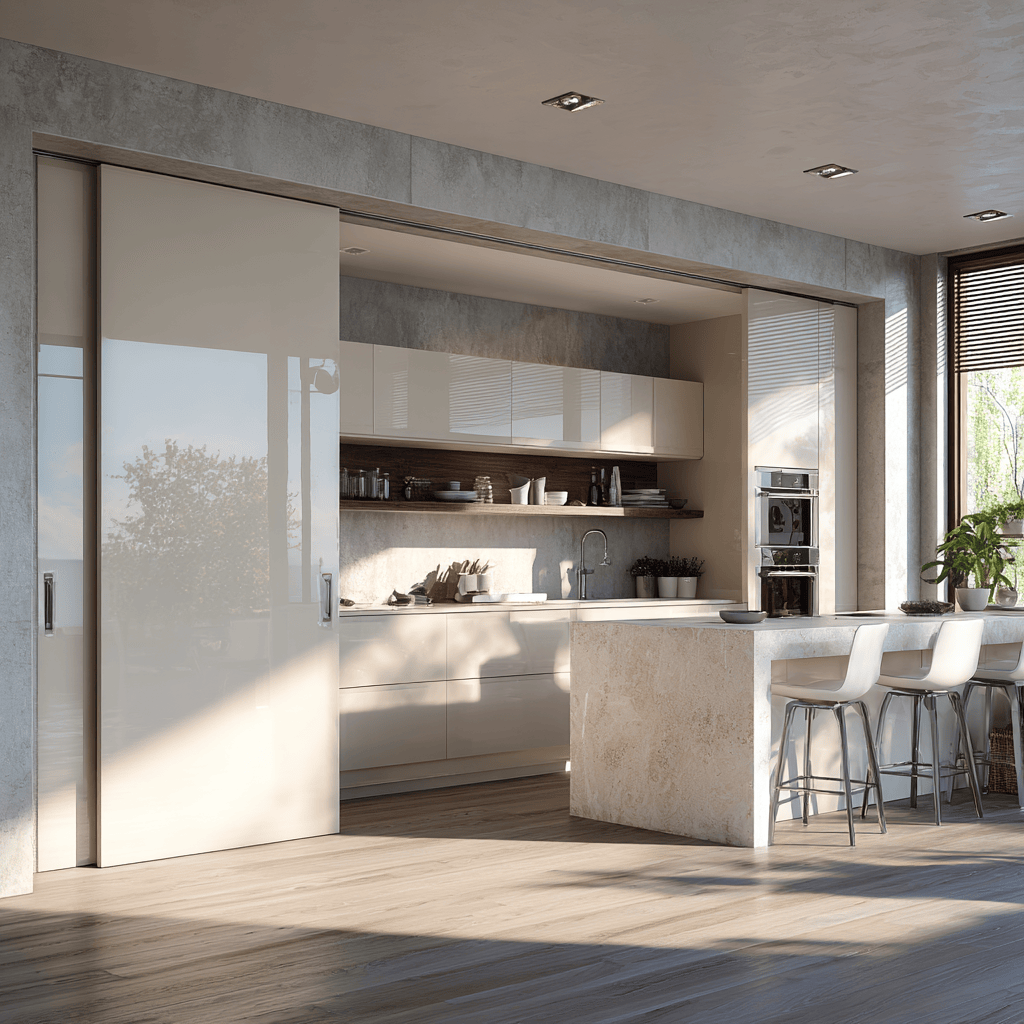
A kitchen sliding door design operates on a track system, gliding horizontally rather than swinging open. Instead of needing clearance space for a door to open into or out of a room, it simply slides along the wall or into a pocket.
The benefits are quite straightforward. In homes where space is at a premium, you can’t always afford to lose an entire door’s worth of clearance. Kitchen sliding doors solve this elegantly. They also give you the flexibility to keep your kitchen semi-open or fully closed depending on what you’re cooking or who’s visiting.
Beyond the practical side, there’s something undeniably contemporary about a well-chosen sliding door. It signals that you’ve thought about your space carefully, and you’re not just following the standard playbook.
Types of Sliding Doors for Kitchen Entrances
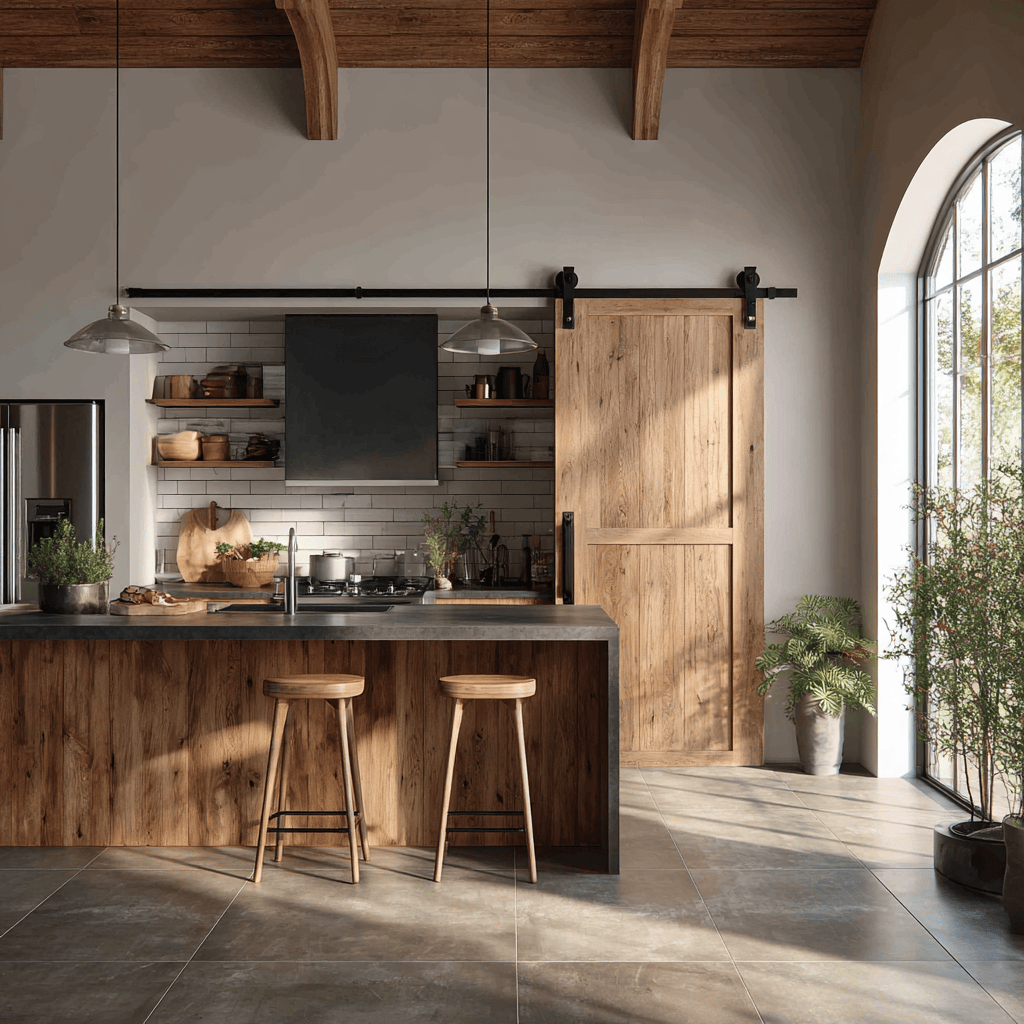
Wooden sliding door for kitchen entrance with modern rustic design
You’ve got options here, and each type works differently depending on your layout and lifestyle.
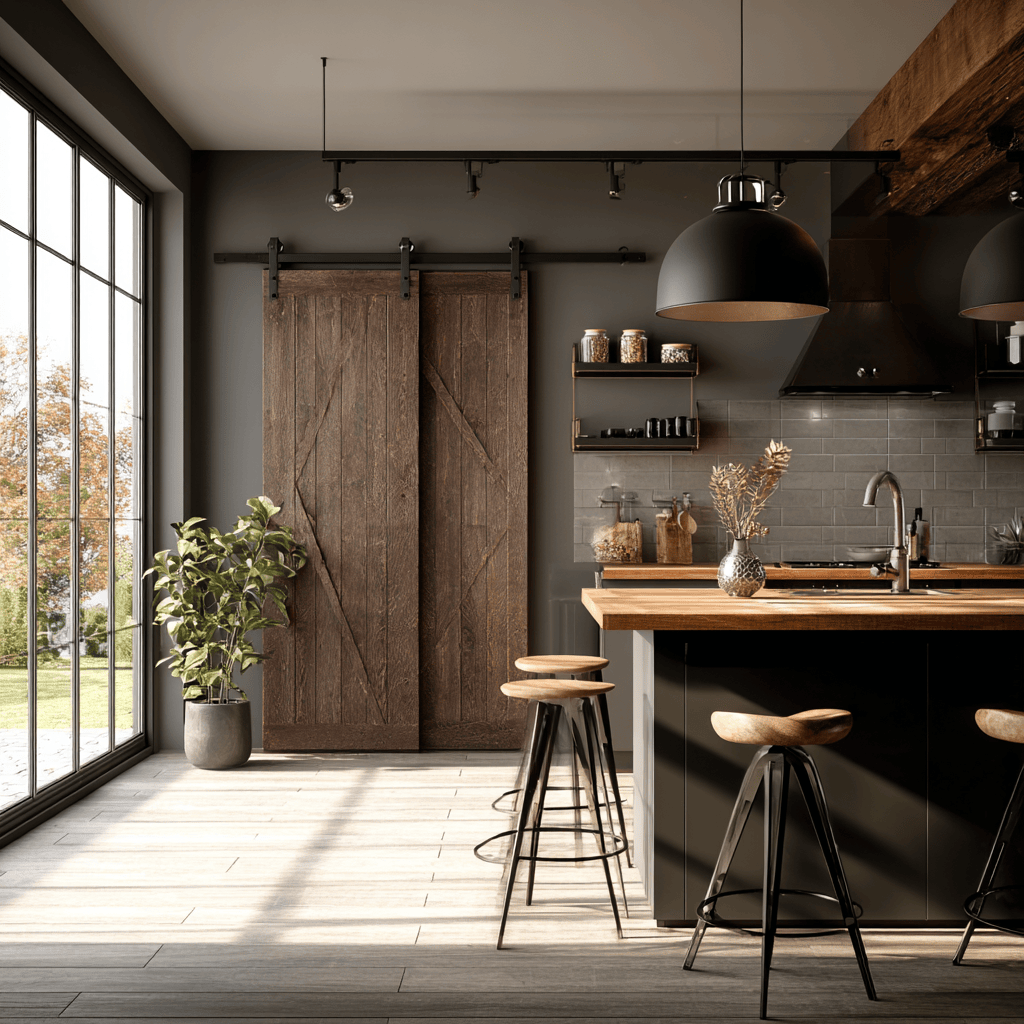
Barn-style sliding doors run along an exposed track mounted on the wall. They’ve got a slightly rustic charm but work beautifully in modern settings too. These are ideal when you want the door to be a design feature in itself.
Pocket sliding doors disappear into the wall when opened, giving you a completely unobstructed doorway. They’re perfect if you want a seamless look, though they do require a bit more planning during construction or renovation.
Bypass sliding doors involve two or more panels that slide past each other. Great for wider openings, like between a kitchen and dining area, where you want the option to open up the entire space!
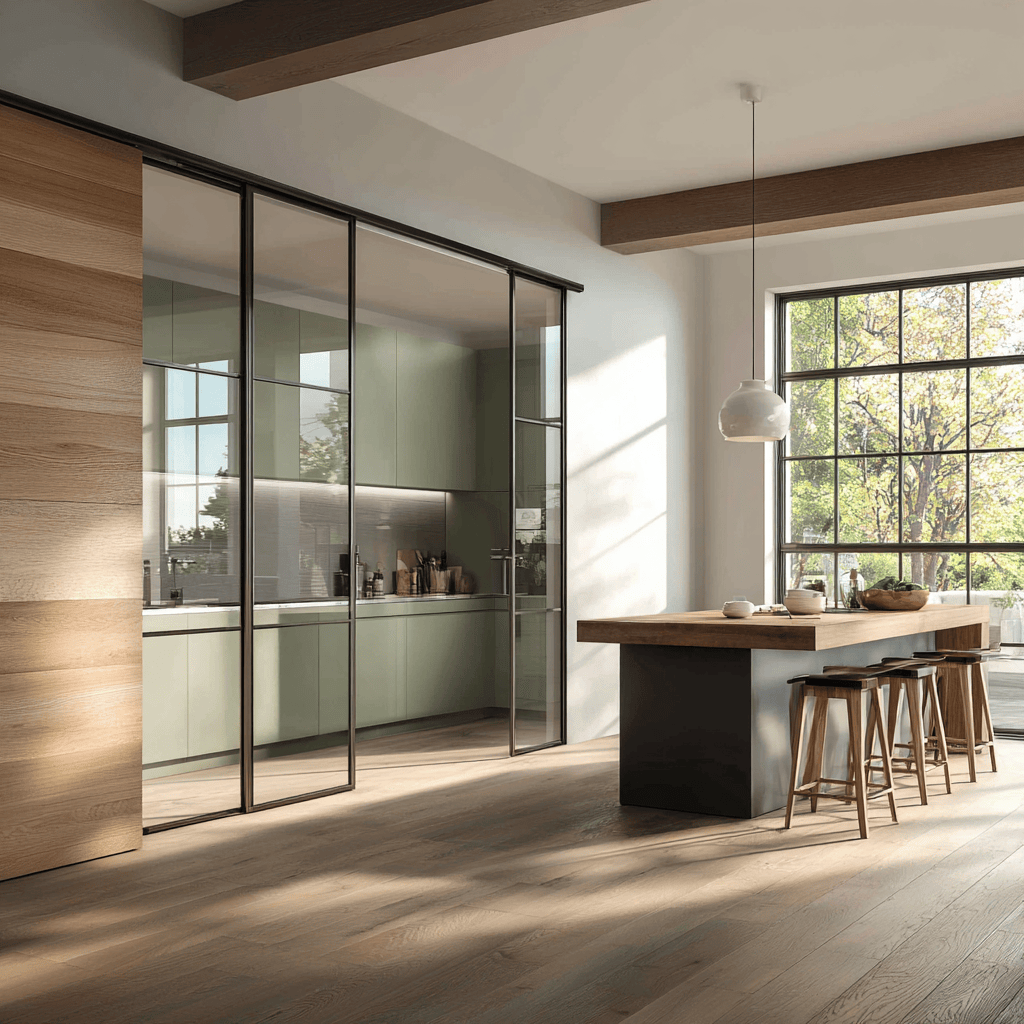
Kitchen sliding glass doors are increasingly popular in open-plan homes. They let light flow through while still giving you the option to close off cooking smells or noise when needed.
How to Select the Right Modern Kitchen Sliding Door Design
Modern kitchen sliding glass door design that adds light and elegance
Start by measuring your doorway and the wall space on either side. For a standard sliding door, you’ll need at least as much wall space as the door’s width. For pocket doors, you’ll need hollow wall space where the door can slide into, as structural adjustments like these can influence the overall modular kitchen cost.
Think about how you use your kitchen. If you’re constantly moving between the kitchen and dining area with plates and dishes, a smooth, wide opening makes life easier. If you’re more concerned about keeping cooking smells contained, a well-sealed glass door might be your priority.
Also consider your home’s overall aesthetic. A sleek kitchen sliding glass door might look out of place in a traditionally designed home, while a wooden barn-style door could feel too heavy in a minimalist flat.
Space-Saving Benefits of Sliding Doors in the Kitchen
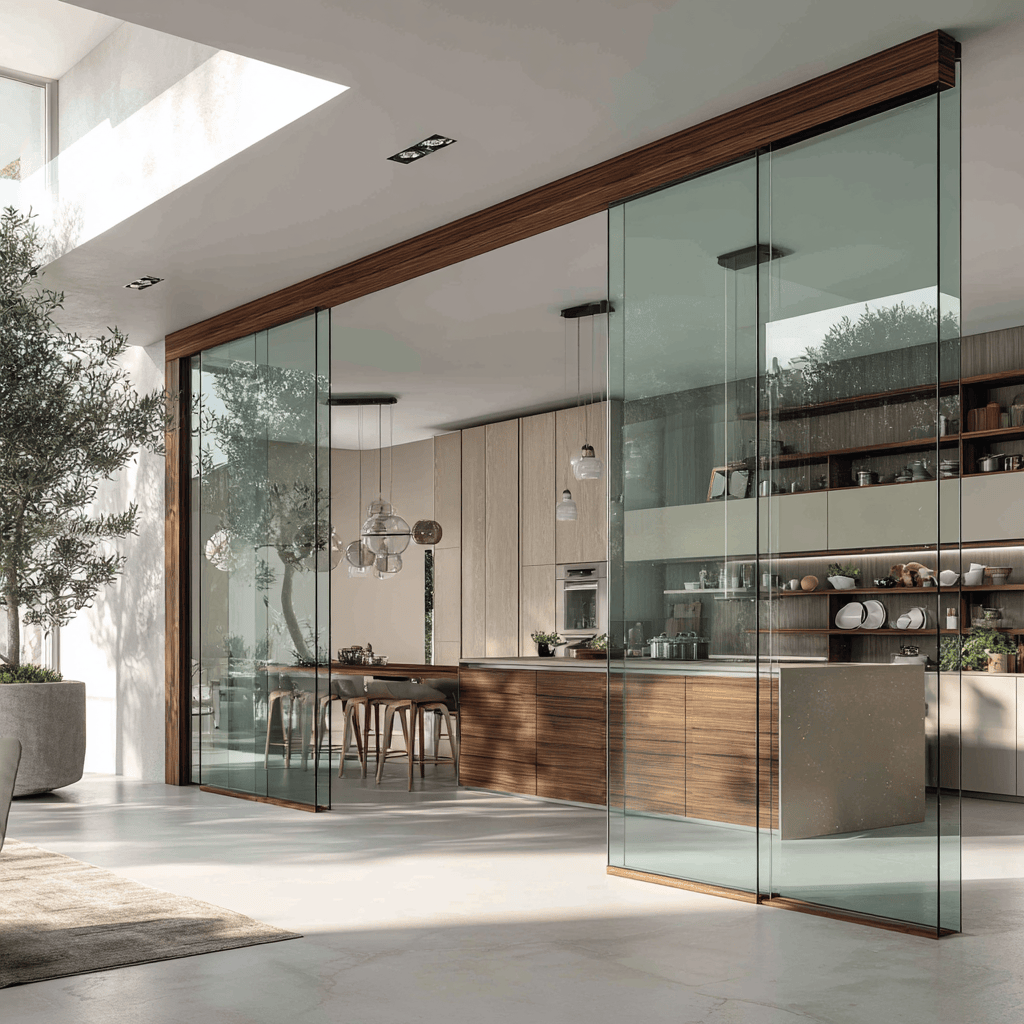
Modern kitchen sliding glass door design with wooden frame entrance
This is where sliding doors truly shine. Traditional hinged doors need clearance—typically around 90 degrees of swing space. That’s square footage you can’t use for furniture, storage, or movement.
Kitchen sliding doors eliminate this completely. You can place a dining table right up against the doorway, or position a storage unit beside it without any conflict. In compact urban apartments, this can be the difference between a cramped layout and one that actually breathes.
There’s also the psychological benefit of not having a door constantly in your way. When you’re carrying hot dishes or groceries, not having to navigate around a swinging door is genuinely convenient.
Glass vs Wooden Sliding Doors for Kitchens: Pros and Cons
Wooden sliding door for kitchen entrance in modern industrial kitchen
Glass kitchen sliding doors are brilliant for keeping spaces feeling open and connected. They let natural light travel through an open plan home, which is particularly valuable if your kitchen doesn’t have great direct lighting. Frosted or tinted glass gives you privacy while maintaining a spacious and airy feel. The downside? Fingerprints do show up easily, which calls for regular cleaning. They also don’t provide much sound insulation if you’re trying to contain kitchen noise.
Wooden doors bring in a tonne of delicious warmth and texture. They’re better at blocking sound and smells, which matters when you’re frying fish or grinding spices. Solid wood feels substantial and can tie into traditional design elements beautifully.
However, they do block light completely, and they can feel heavy in smaller spaces. They also need occasional maintenance to prevent warping in humid kitchen environments.
Your choice often comes down to whether you value connection and light or privacy and insulation more.
Modern Sliding Door Designs for Open Kitchens
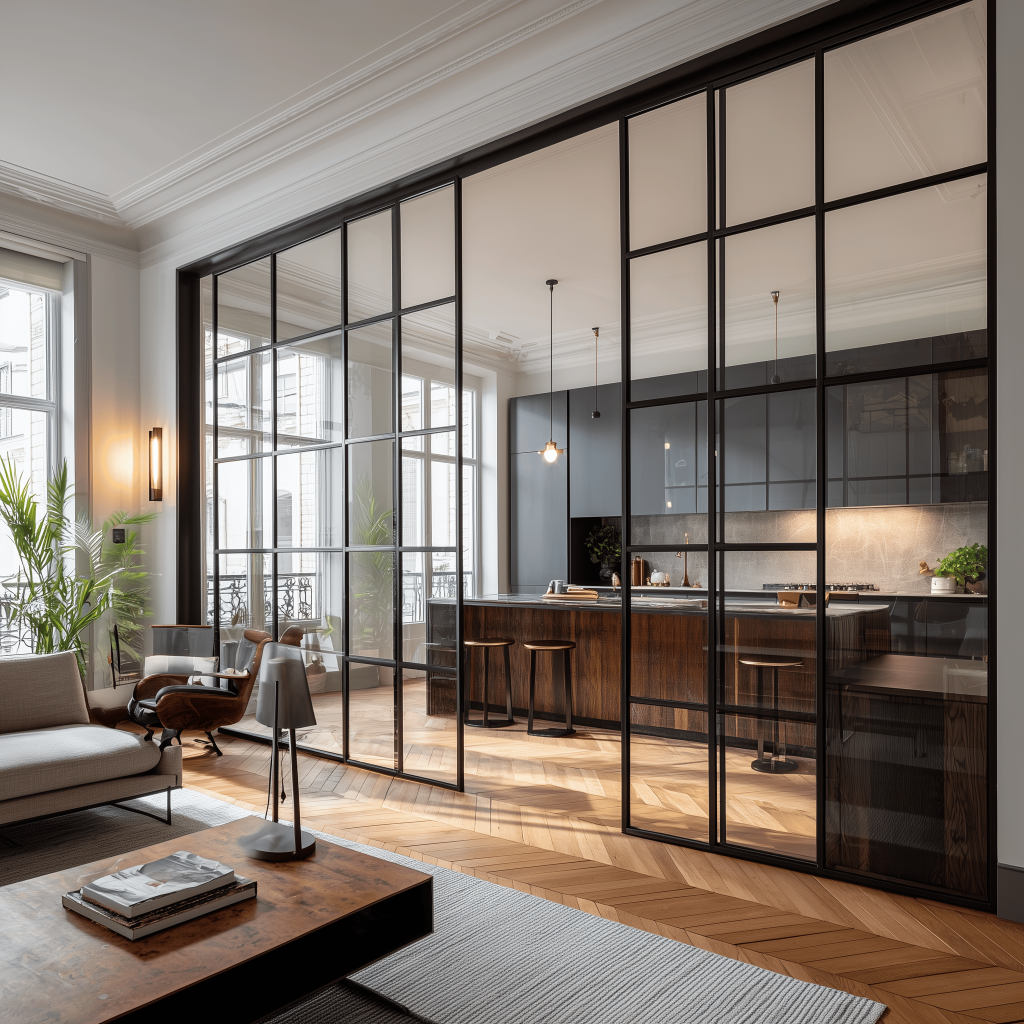
Modern kitchen sliding glass door design for stylish kitchen entrance
Open kitchens are brilliant until you need to close them off, and that’s exactly where modern kitchen sliding doors earn their place.
Frameless glass sliding doors are trending heavily right now. They’re minimal, almost invisible when closed, and they maintain the open feel while giving you the practical option to separate spaces.
Black-framed glass doors create a stunning architectural moment. They’ve got that industrial edge that works beautifully with contemporary interiors and white kitchens especially.
Looking for something different? Try kitchen sliding doors with grid patterns. They add visual interest without being over-the-top, and they work well in homes that blend traditional and modern elements.
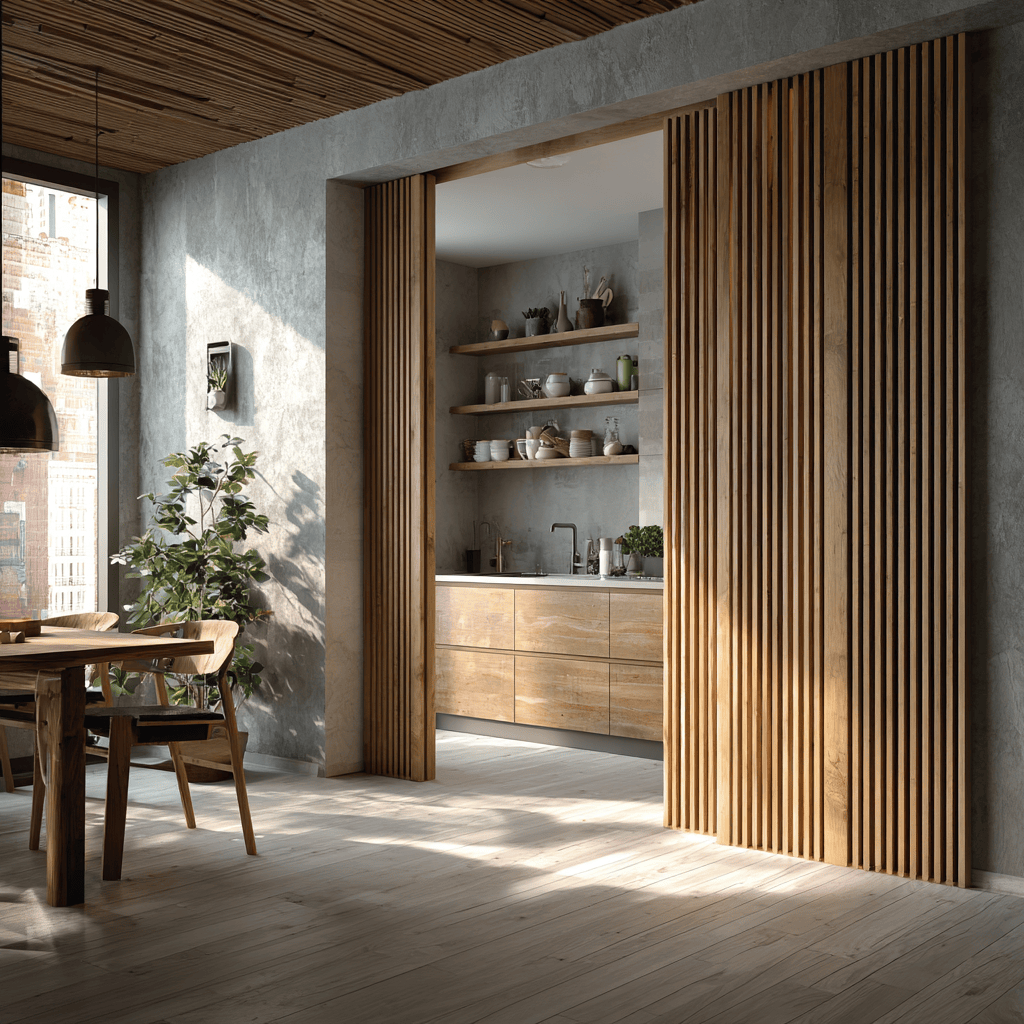
Wooden slat doors, where thin wooden strips are arranged with small gaps between them, offer a compromise. They allow some airflow and create interesting light patterns while still providing separation.
Wrapping Up
Wooden sliding door for kitchen adds warmth and seamless space division
A kitchen sliding door is a small, thoughtful decision that changes how your space works every day. It saves floor room, keeps movement smooth, lets light flow when needed, and creates visual zoning. When chosen with care, it becomes one of those design choices you never feel the need to update often!
FAQs On Kitchen Sliding Doors
1. Are sliding doors a good option for small kitchens?
Absolutely. They’re actually ideal for small kitchens because they don’t require any swing clearance. You can position furniture and appliances much closer to the doorway without any functional issues.
2. What materials are best for kitchen sliding doors?
Toughened glass and engineered wood are your best bets. Both handle moisture well and are easy to clean. Avoid untreated solid wood as it can warp in humid conditions.
3. Can sliding doors help with ventilation in the kitchen?
Standard sliding doors don’t improve ventilation when closed, but you can opt for louvred or slatted designs that allow airflow. When open, they obviously don’t restrict air movement at all.
4. How much space is needed to install a sliding glass door design for kitchen?
For surface-mounted sliding doors, you need wall space equal to the door’s width beside the opening. Pocket doors need cavity space within the wall, typically 100-150mm deep.
5. Are sliding kitchen doors easy to maintain and clean?
Yes, they are! Kitchen sliding glass doors need regular wiping but are simple to clean. Wooden doors need occasional dusting and very occasional treatment depending on the finish. The tracks need cleaning every few months to prevent dirt build-up.









 EXPLORE MORE