Corner Wardrobe Design Mistakes to Avoid in Small Bedrooms
By Usha Balasubramanyan- March 28, 2026
Top Summary
A corner wardrobe can feel like an easy fix for a small bedroom. But at times, it blocks movement, wastes deep storage, or looks too bulky for your space. Most problems come from sizing errors, awkward door choices, or poorly planned interiors. The good news is that these issues are easy to avoid with thoughtful design. When proportions, layout, lighting, and finishes are planned carefully, a corner wardrobe turns an unused spot into efficient, seamless storage. The result is a bedroom that feels more open, organised, and comfortable to live in every day.
Best for:
Small bedrooms where smart storage is needed without crowding the room or disrupting movement.
Expert tip:
HomeLane designers suggest planning the internal layout and door mechanism before finalising finishes. Getting the structure right first ensures the wardrobe feels easy to use daily, not just good to look at.
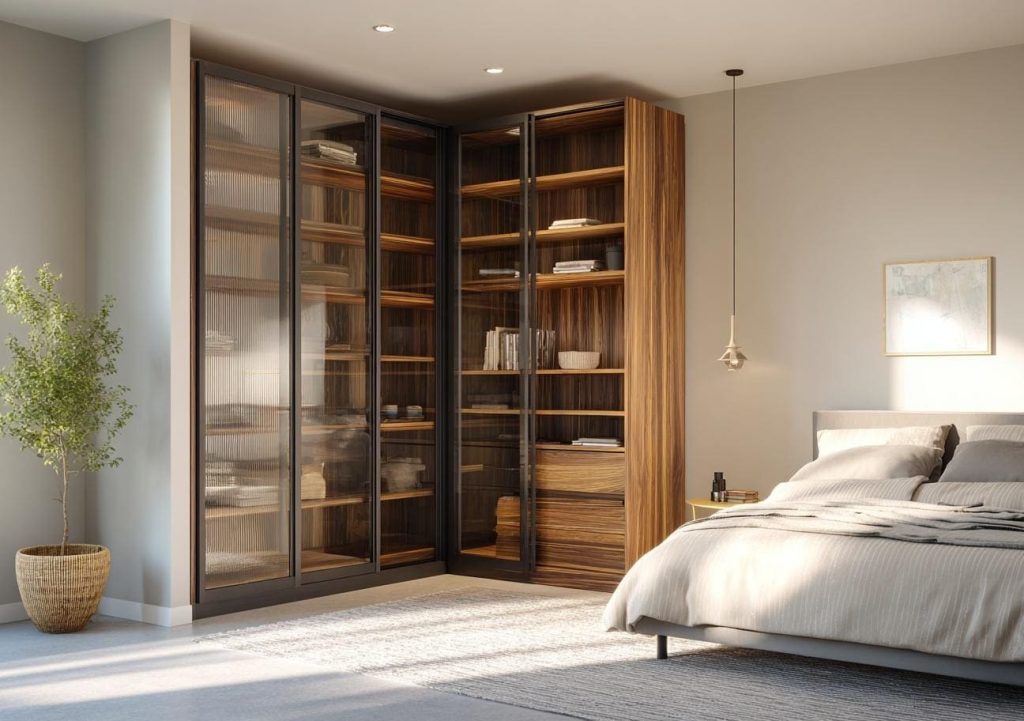
Elegant modern corner wardrobe design with smart glass shutters.
Small bedrooms stretch your design capabilities, needing smart solutions to space challenges. One too-large wardrobe, a shutter that’s too dark, and suddenly the room feels a lot tighter than it really is. And that forgotten corner suddenly seems to be the perfect solution! Tuck in a wardrobe there and free up the rest of the space, what can be smarter than that? In theory, yes. But in reality, corner wardrobes can either feel brilliantly efficient or frustratingly impractical.
The secret lies in avoiding a few common planning errors. With the right proportions, layout, and materials, a corner wardrobe design can transform unused space into smart, functional storage.
Let’s walk through the mistakes worth sidestepping so your bedroom feels perfect!
1. Choosing the Wrong Size and Scale
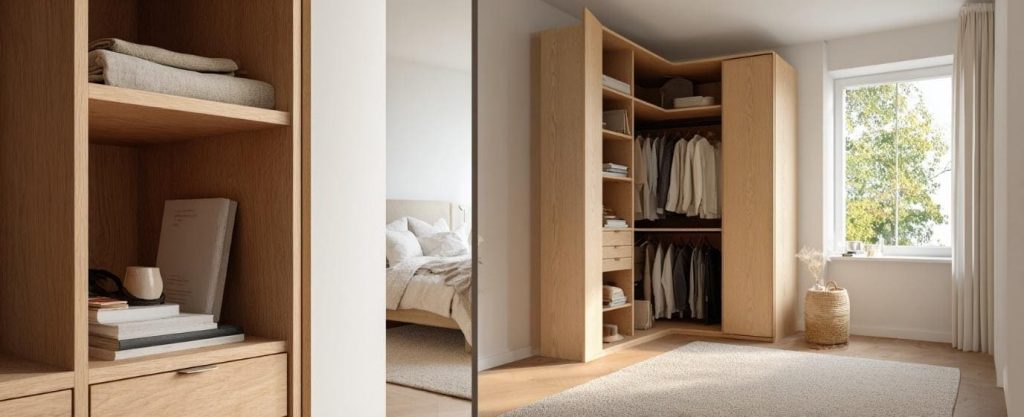
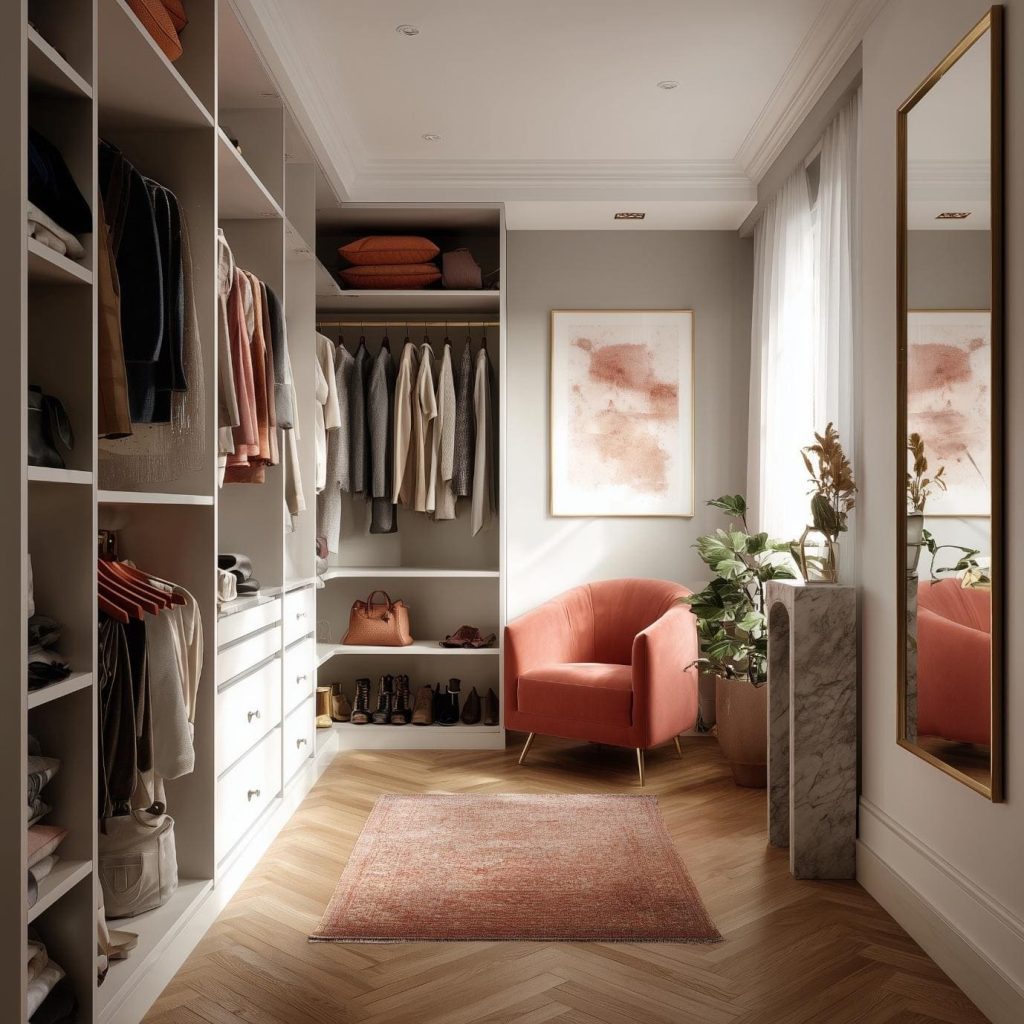
Versatile corner l shaped wardrobe design for an airy, open feel.
A corner wardrobe should end up saving space, not making your room even more cluttered. One of the biggest missteps is planning a unit that stretches too far into the room or rises too high.
A small corner wardrobe design works best when it hugs the walls neatly, without pushing into walking areas. Before finalising the dimensions, check all these:
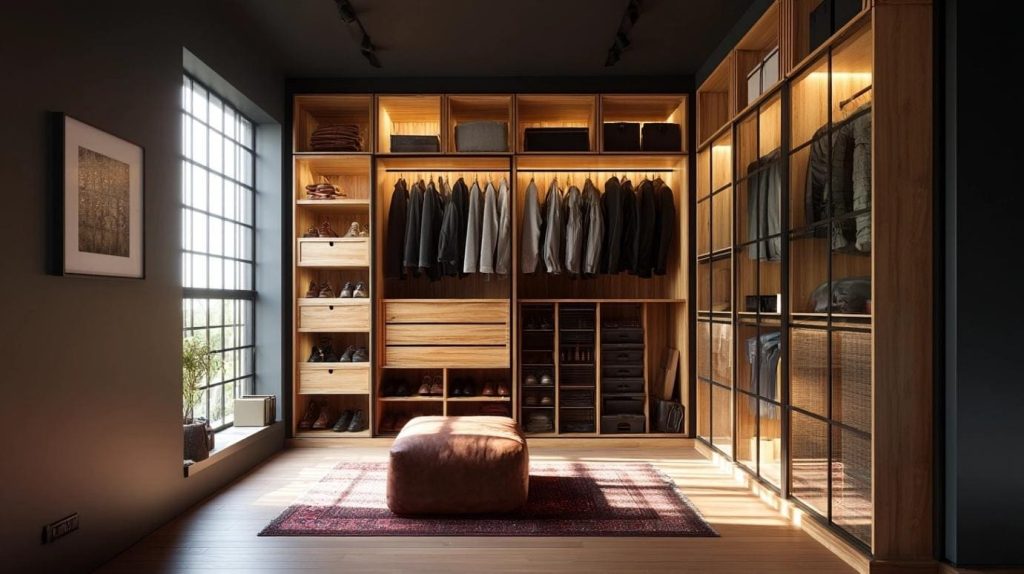
Illuminate your l shaped corner wardrobe for better accessibility.
Door choice matters far more than most people realise! Hinged doors need swing space, which can clash with beds, side tables, or study desks. Sliding shutters save space but require expert installation and good track quality; moreover they cost way more than hinged doors.
If your room is tight, sliding shutters often suit a modern corner wardrobe design better. Hinged shutters can still work if there is adequate clearance and you want easier access to the full interior.
For layouts that include a corner wardrobe with study table, sliding doors usually leave your workspace unobstructed and practical.
3. Poor Internal Organisation and Layout
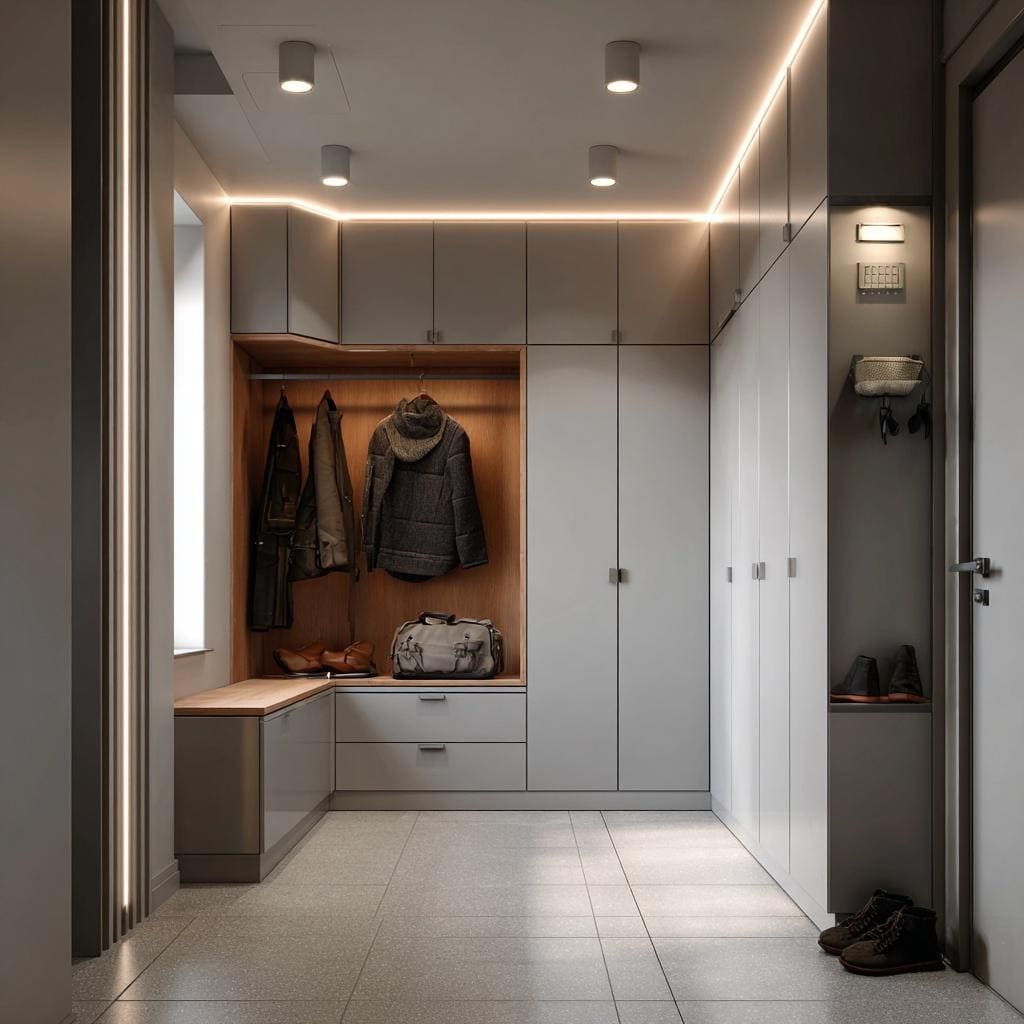
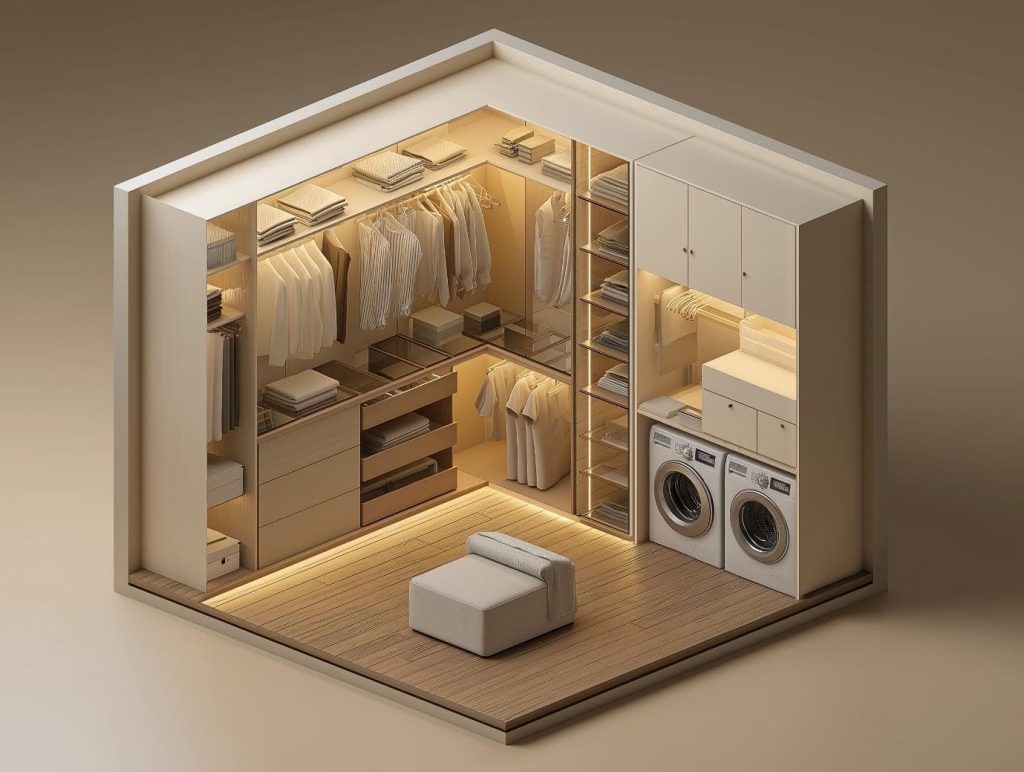
Space-saving small corner wardrobe design for compact apartments.
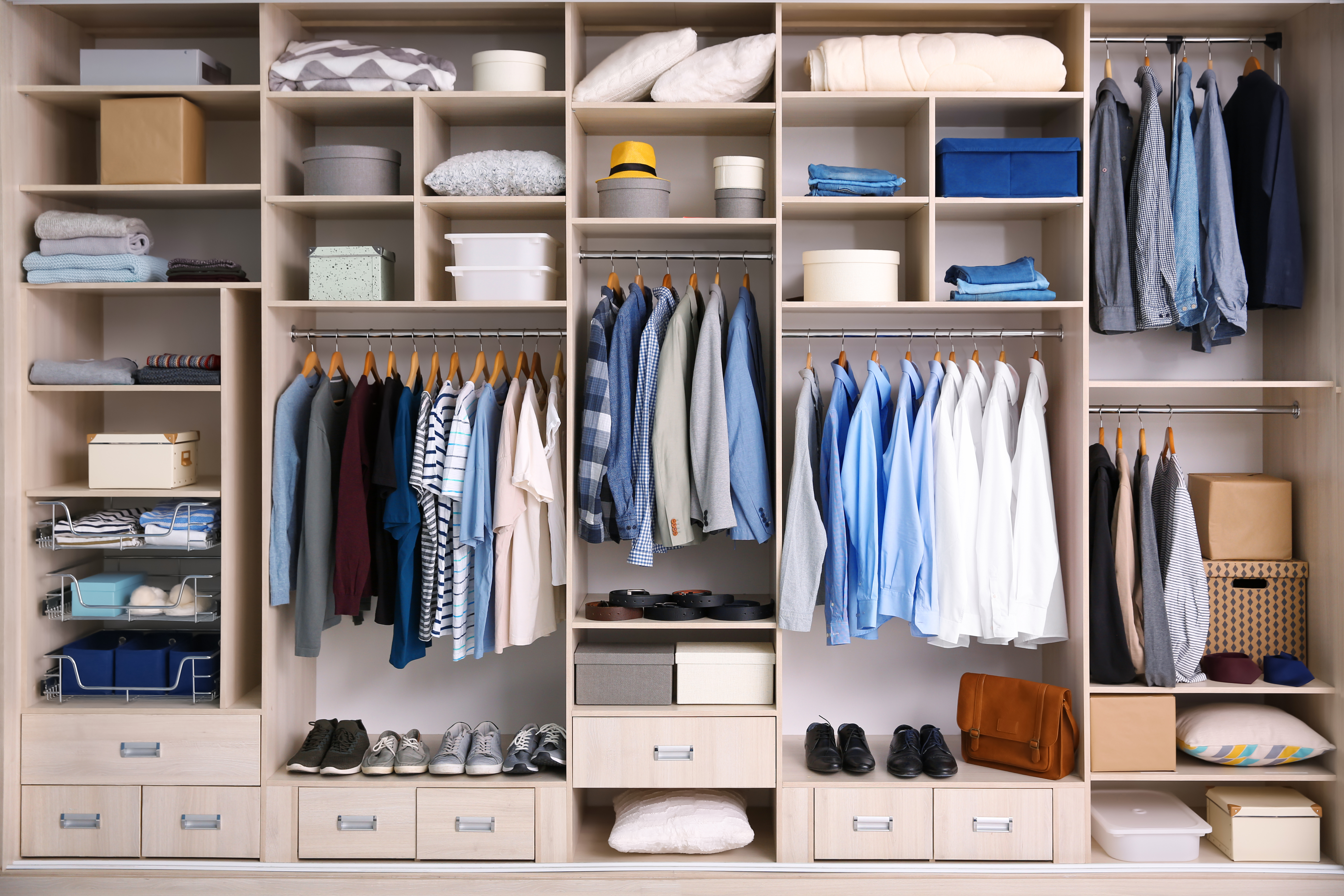
We agree; a wardrobe that looks good outside but feels like a mess inside is oh-so-frustrating. Corners naturally create deep sections that are harder to access, so planning internal storage becomes all the more important.
Smart corner wardrobe ideas for small bedroom spaces might include these solutions, as appropriate:
A thoughtfully designed L-shaped corner wardrobe design uses both arms efficiently, balancing hanging space, shelves, and drawers so nothing gets lost in the back.
4. Overlooking Lighting Within the Wardrobe
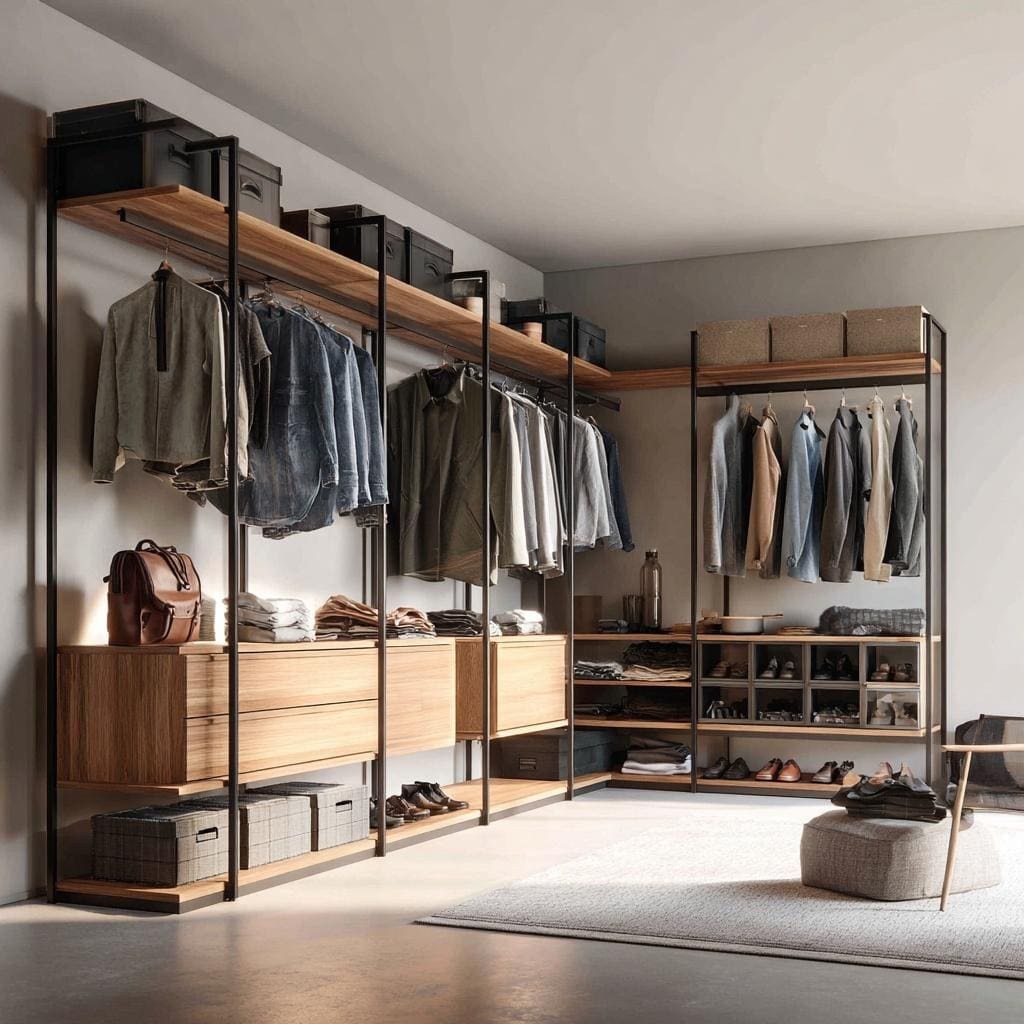
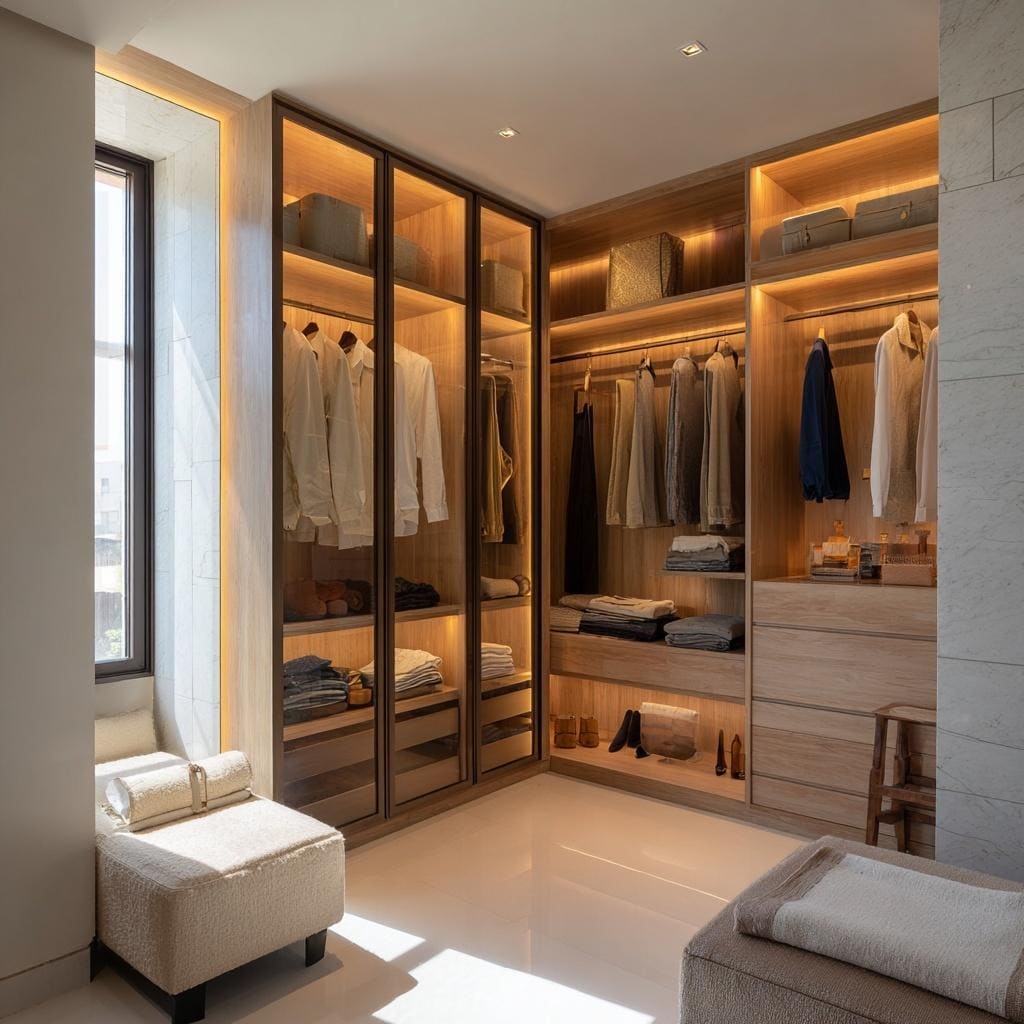
Creative corner wardrobe ideas for small bedroom walk-in spaces.
Have you ever struggled to find a dark-coloured shirt inside a dim wardrobe? Corners can easily become shadowy zones, especially in bedrooms with not enough daylight.
Adding simple LED strip lights or motion-sensor lighting inside the wardrobe makes a huge difference. It improves visibility, reduces morning stress, and gives your wardrobe a super-luxe feel.
Good lighting is especially helpful in a corner wardrobe with a dressing table, where you definitely need clear illumination.
5. Using Bulky and Visually Heavy Materials
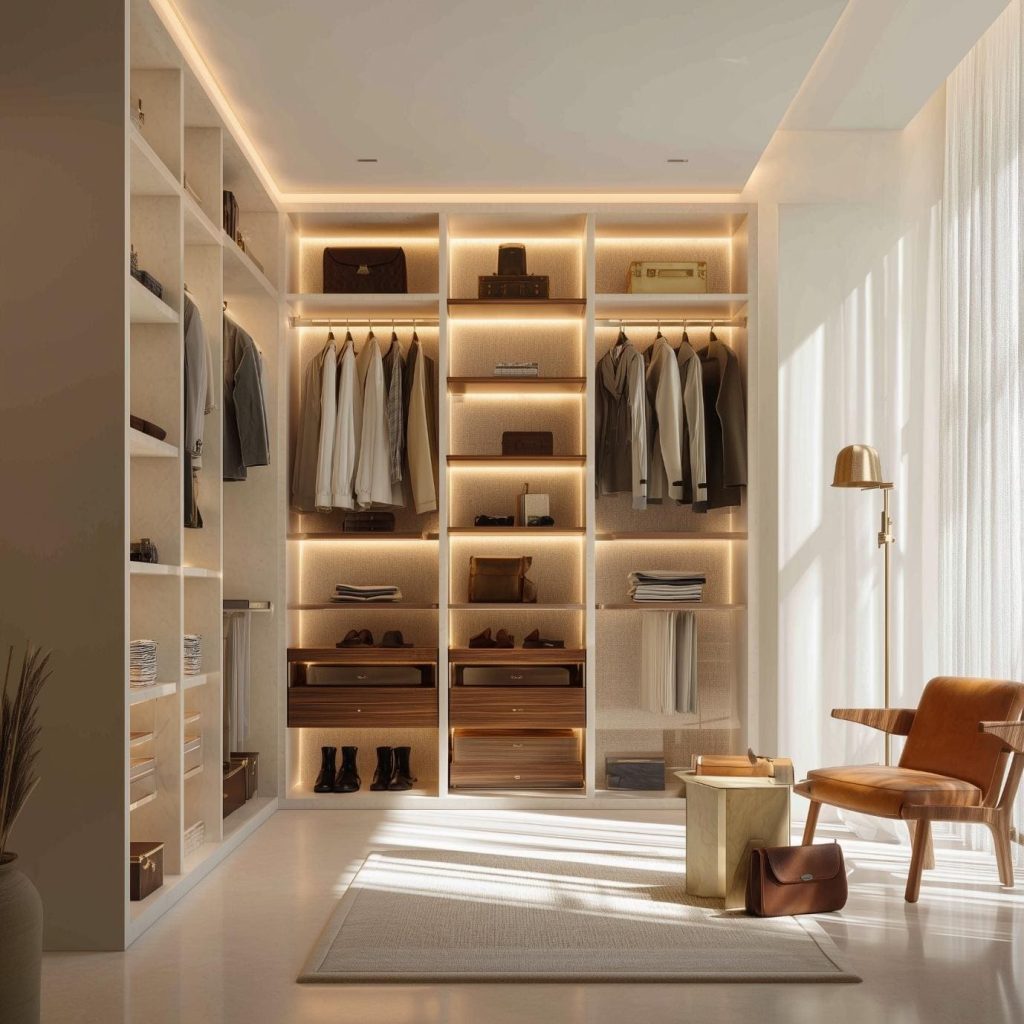
Explore luxury corner wardrobe designs for bedroom and dressing.
In a small bedroom, dark and heavy finishes can make the entire space feel claustrophobic. Too-wide frames, dark laminates, or overly ornate panels often overwhelm the room.
Instead, lighter finishes help the wardrobe blend in:
Soft neutral hues, or pale wood tones
Matte laminates or light textures
Minimal handles or push-to-open shutters without handles
Mirrored panels that can reflect the light in the room
These choices allow even larger corner wardrobe designs for bedroom layouts to feel airy, not cramped.
6. Neglecting Ceiling Height and Cornice Details
Smart corner wardrobe designs for small bedroom utility integration.
Poorly planned wardrobes stop just short of the ceiling, leaving a little gap that will collect dust and breaks visual continuity. Others clash with existing cornices or false ceiling design edges.
A better approach is to:
Extend the wardrobe to full height, wherever possible
Align the top perfectly with ceiling lines
Plan loft shutters that match the main wardrobe’s finish
Full-height units make a corner wardrobe look custom-built and maximise storage without increasing the footprint on the floor.
7. Forgetting Accessibility and Ease of Use
Optimize your space with a custom corner wardrobe design concept.
Deep corner sections end up becoming storage black holes, as it’s next to impossible to reach in easily. If accessing clothes feels inconvenient, the corner space will slowly go unused.
Try to make sure that:
Daily-use items are where you need them
Shelves are not too deep to access
Drawer heights are good for everyday use
Door openings don’t block any movement
A well-planned L-shaped corner wardrobe should feel easy to use daily.
8. Mismatching Style with Bedroom Decor
Maximize storage with a stylish and functional corner wardrobe.
A wardrobe should feel like part of your room’s story, not something that’s forced into the space. For example, an ultra-glossy contemporary unit in a warm, traditional bedroom can feel visually jarring.
Match the wardrobe finish with the bed and flooring
Repeat textures already there elsewhere in your room
Balance new elements with what’s there already in the room
Whether you choose a sleek modern corner wardrobe design or a more classic style, consistency makes the room feel calmer and more thoughtfully designed.
Conclusion
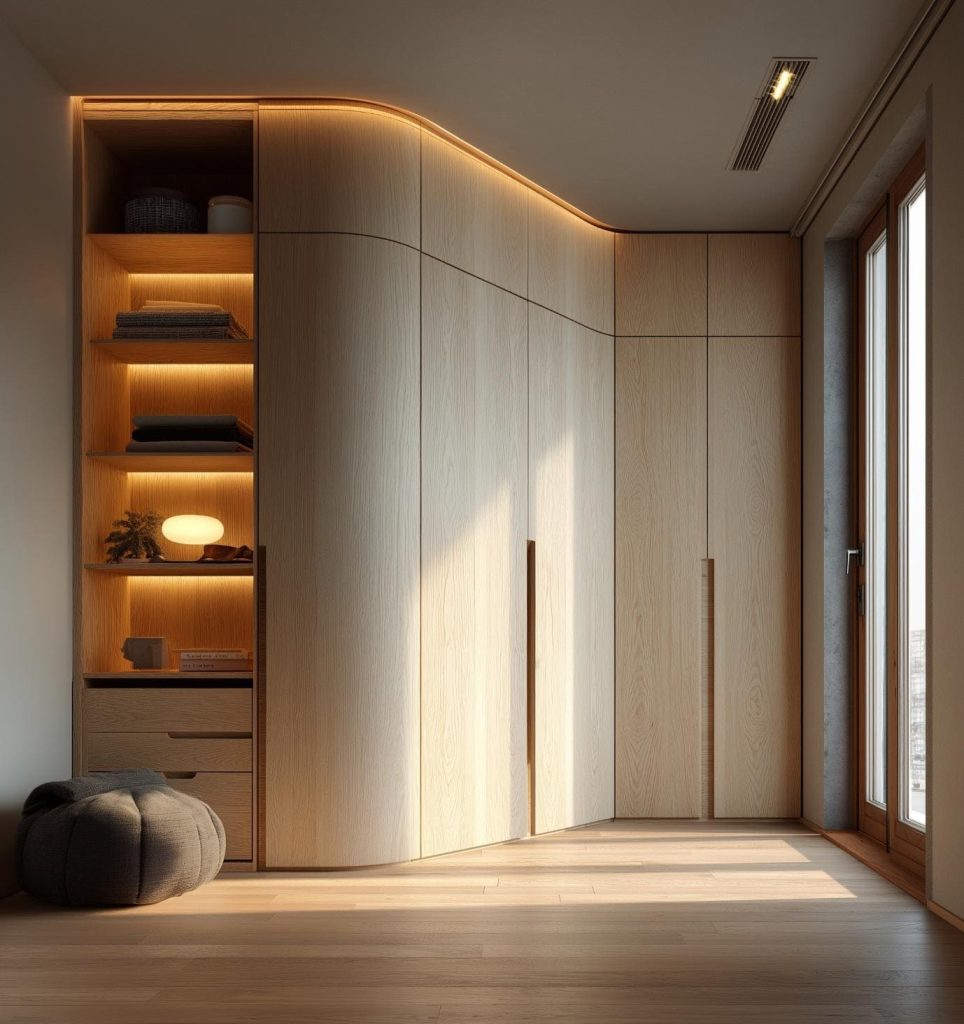
Curved corner wardrobe with dressing table for a seamless finish.
A corner wardrobe can be one of the smartest additions to your small bedroom, but only when it is planned the right way. The right size, practical doors, efficient interiors, and balanced materials turn that often-overlooked corner into valuable storage that actually makes life easier.
If you want a solution tailored to your room’s dimensions and lifestyle, HomeLane designers can help you avoid costly mistakes and create a corner wardrobe that works beautifully from day one.
FAQs
1. What is the best door type for a corner wardrobe?
Sliding doors usually work best in small bedrooms because they do not require extra swing space. Hinged doors can still be suitable if there is enough clearance and you want full access to the wardrobe interior.
2. How deep should a corner wardrobe be?
Most wardrobes work well at about 600 mm depth for hanging clothes. Corner sections may go slightly deeper, but internal organisers such as pull-out rods or shelves help ensure the space remains usable.
3. Can a corner wardrobe provide enough storage?
Yes, when planned properly. Using both walls, adding loft storage, and dividing the interior into hanging, shelving, and drawer sections can create surprisingly generous storage even in compact rooms.
4. How do I light the inside of a corner wardrobe?
LED strip lights or motion-sensor lights are simple and effective. They use very little power, are easy to install, and improve visibility significantly, especially in deeper corner sections.
5. What are common installation mistakes with corner wardrobes?
Typical issues are wrong measurements, ignoring door clearance, poor alignment with ceiling lines, and weak internal fittings. Professional measurement and installation help prevent these problems.
























 EXPLORE MORE