5 Bedroom Design Ideas for Irregular Rooms Layout and Smart Space Solutions
By Bivin Peter- March 30, 2026
Have you ever walked into a room and felt like the walls were closing in at strange angles, or wondered why a specific corner seemed utterly unusable? In the rapidly evolving landscape of Indian real estate, especially in dense urban hubs like Mumbai or Bangalore, the perfectly rectangular room is becoming a rare luxury, making thoughtful bedroom interior design more important than ever. Many modern apartments feature triangular nooks, curved walls, or L-shaped layouts that leave homeowners baffled. However, what if these “architectural flaws” were actually hidden opportunities to create the most unique bedroom design in the entire house?
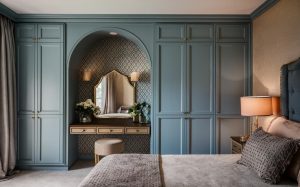
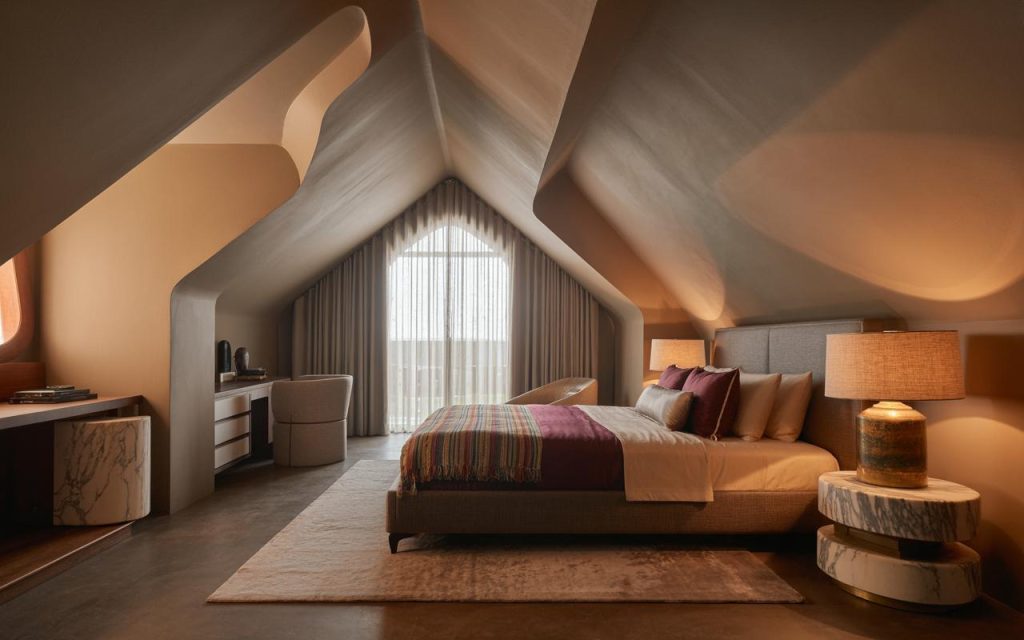
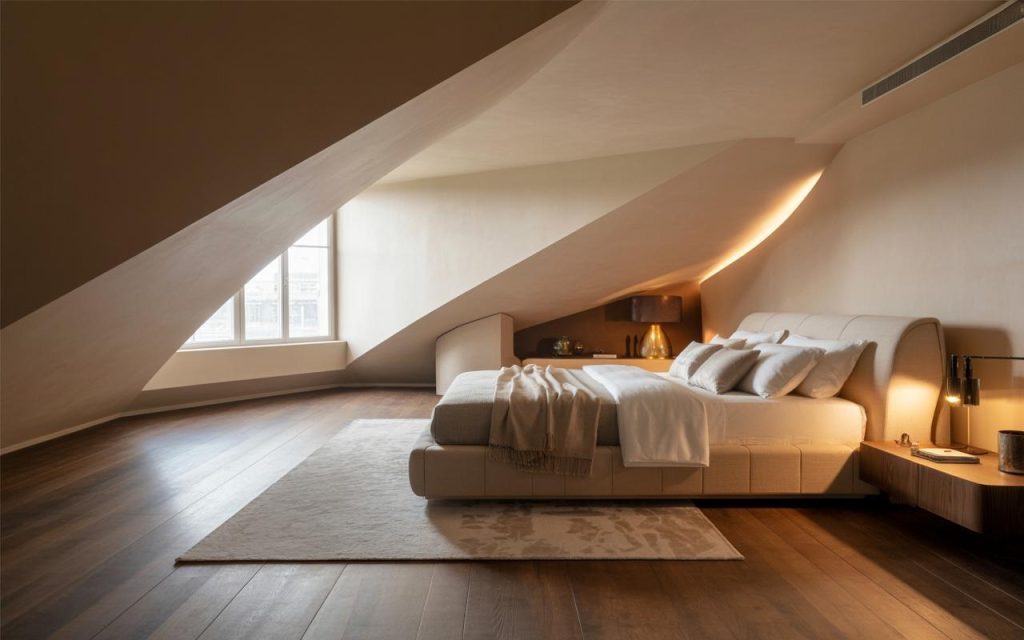
Irregular shaped bedroom with luxury bedroom interior design
An oddly shaped room is not a design dead end; it is a creative invitation. While a standard boxy room often results in a predictable layout, an irregular canvas forces one to think outside the traditional furniture catalogue. By embracing the quirks of the floor plan, it is possible to craft a bedroom interior design that feels bespoke, intimate, and intentionally curated. The secret lies in moving away from one-size-fits-all solutions and moving toward a strategy that treats every niche as a functional asset.
To begin this transformation, one must first learn to look at the floor plan through a lens of potential rather than frustration.
Understanding Your Irregular Canvas
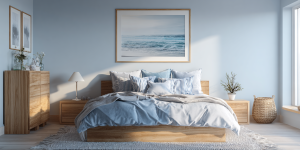
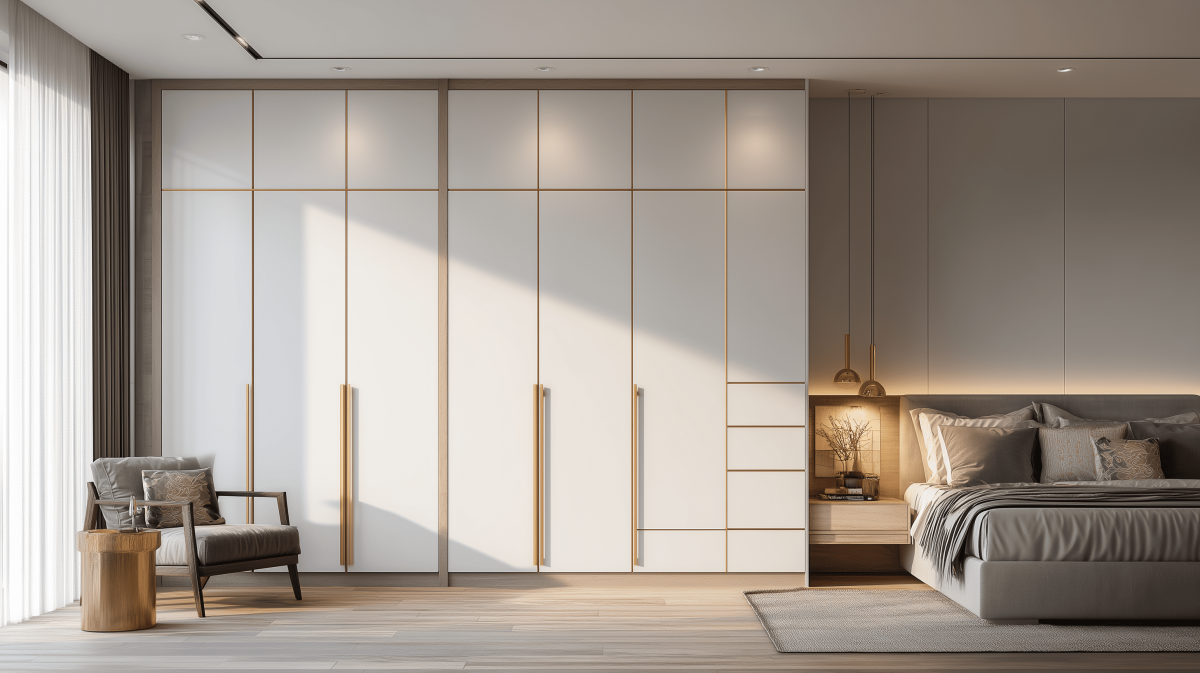
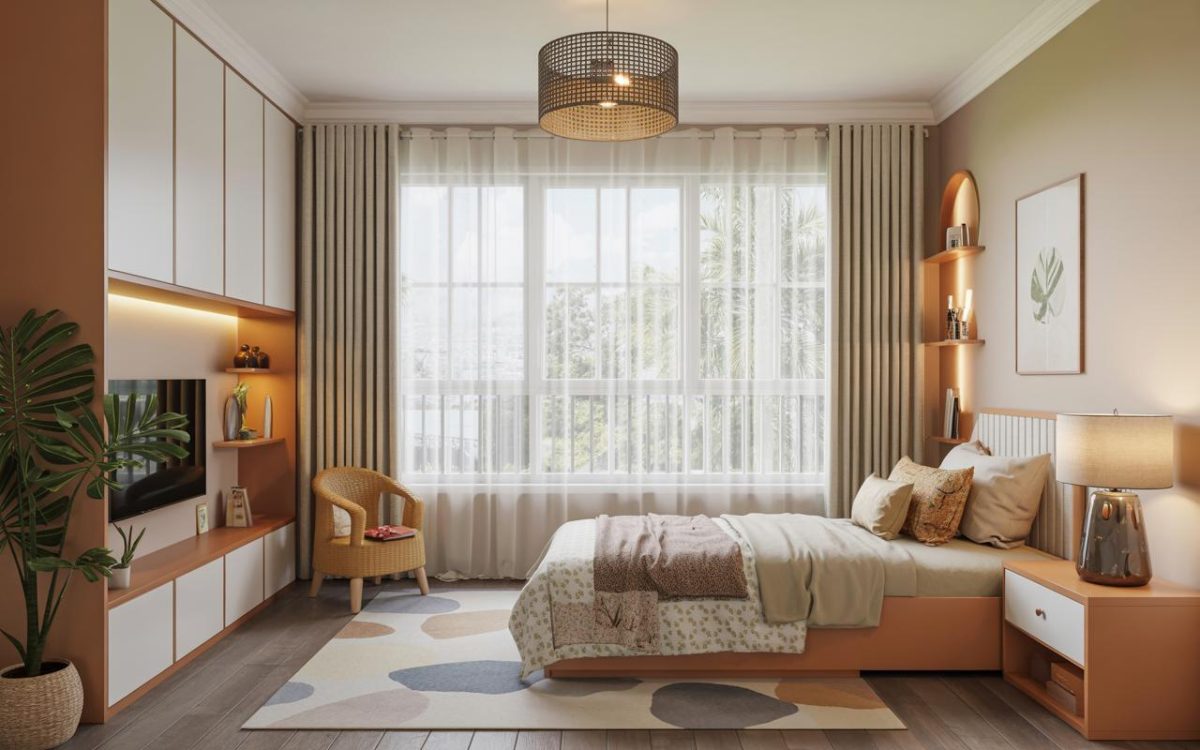
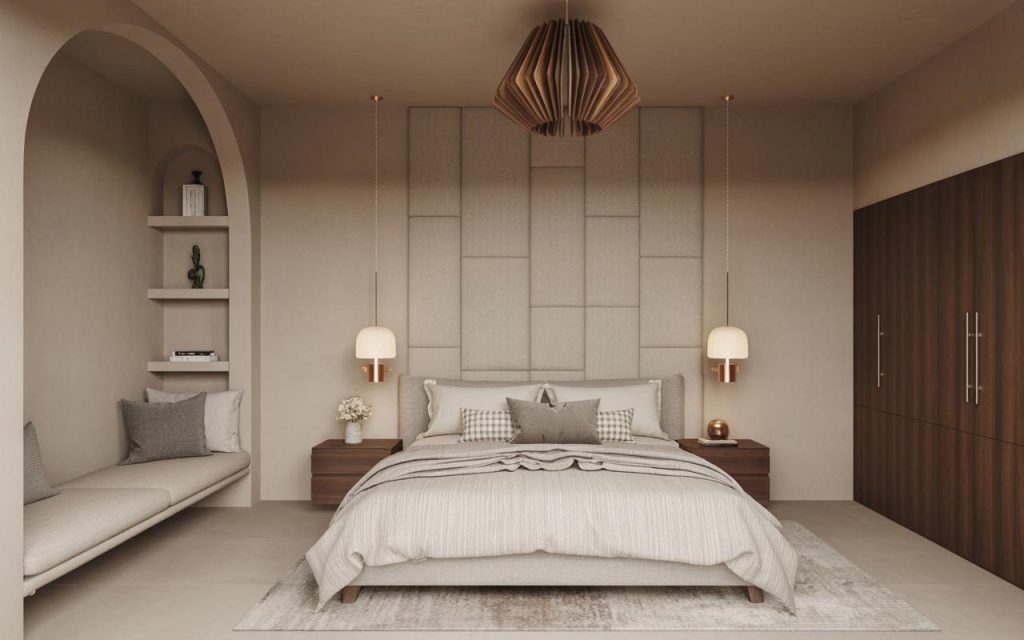
Simple bedroom design with elegant bedroom storage design
The first step in mastering bedroom design for unconventional spaces is to conduct a thorough spatial audit. Instead of fighting against an acute angle or a protruding pillar, one should measure these elements with precision. Irregularity often provides natural “zones” that a rectangular room lacks. For instance, a deep alcove is not just a gap in the wall; it is a pre-defined spot for a reading chair or a built-in vanity.
When dealing with a simple bedroom design, the goal is to reduce visual noise. Sharp, jagged corners can be softened with specific textures, while long, narrow corridors can be widened through the clever use of mirrors and lighting. By identifying the primary “sleep zone” first, the rest of the layout typically falls into place, allowing the secondary nooks to serve as supporting characters in the overall narrative.
Once the canvas is understood, the next challenge is placing the most important piece of furniture: the bed.
Strategic Furniture Placement by Working With the Angles
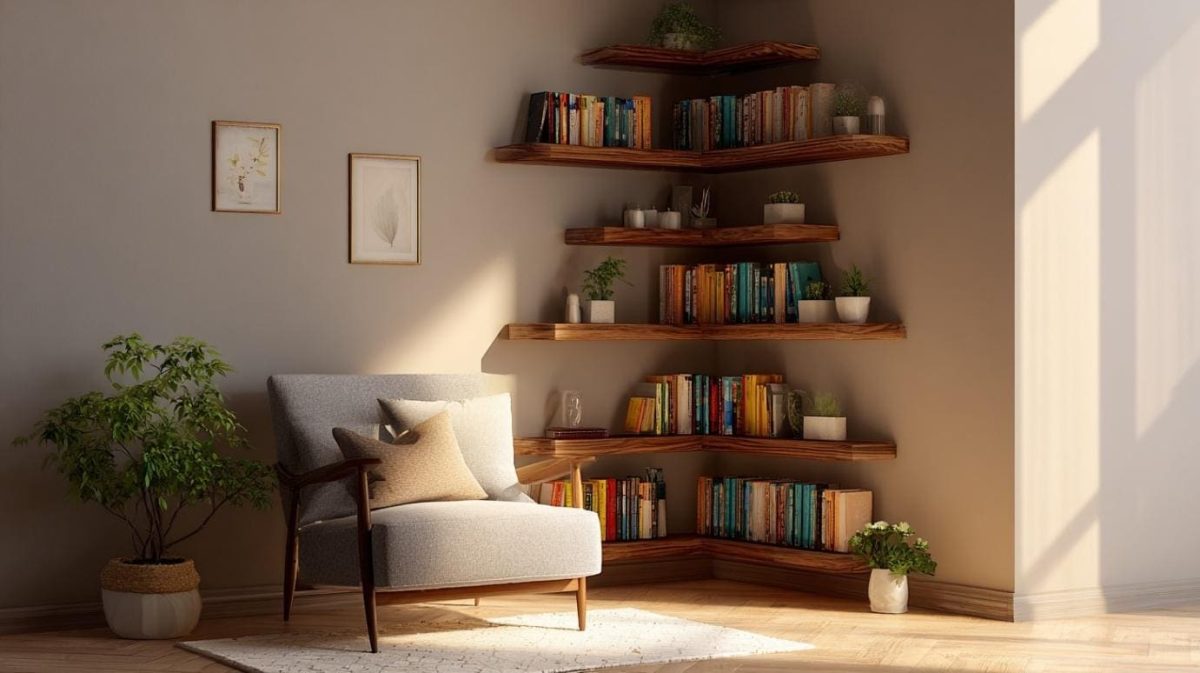
Simple bedroom design with elegant bedroom storage design
In any bedroom design, the bed is the undisputed anchor. In an irregularly shaped room, however, the standard “headboard against the longest wall” rule might not apply. If the room is circular or has multiple slanted walls, placing the bed diagonally can sometimes create a more harmonious flow and open up walking paths that were previously blocked.
For a luxury bedroom interior design, consider a bespoke floating bed or a circular bed frame that complements the architecture of the room. If there is a large window in an unconventional spot, positioning the bed to take advantage of the view can distract the eye from the room’s odd proportions. The key is to ensure that there is at least two feet of clearance on either side of the bed to maintain a sense of ease and movement.
With the bed positioned, the focus must shift to one of the biggest headaches of awkward layouts: where to put the clutter.
Design Elements to Enhance the Visual Space
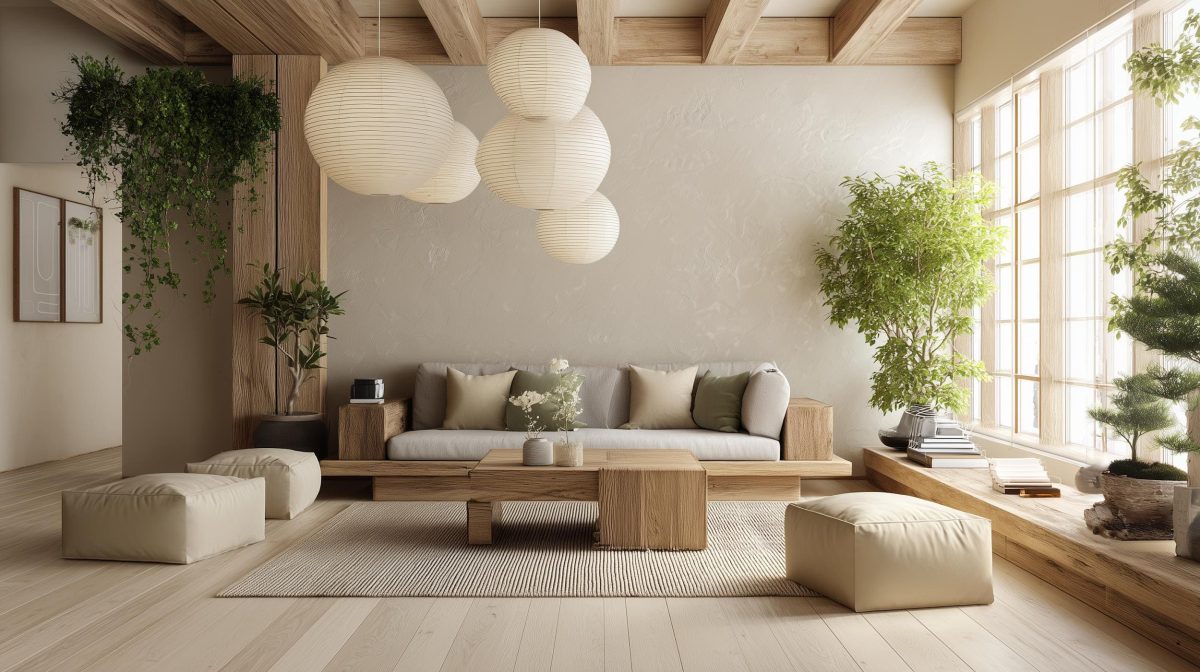
Simple bedroom design with elegant bedroom storage design
Visual balance is the holy grail of bedroom interior design when the physical dimensions are asymmetrical. One of the most effective ways to achieve this is through the strategic use of colour and light. In a room with many angles, painting the walls and the ceiling in the same light shade can blur the boundaries of the room, making it feel more expansive.
Conversely, for a luxury bedroom interior design, one might choose to highlight an irregular wall with a bold wallpaper or a dark accent colour, turning an “awkward” feature into a deliberate focal point. Lighting also plays a vital role; instead of a single central light that casts long, strange shadows in the corners, use a layer of wall sconces, floor lamps, and LED strips within the bedroom storage design to illuminate every nook evenly.
Transitions between different sections of an irregular room can be further defined by the specific type of irregularity encountered.
Solving Challenges for Specific Irregular Room Types
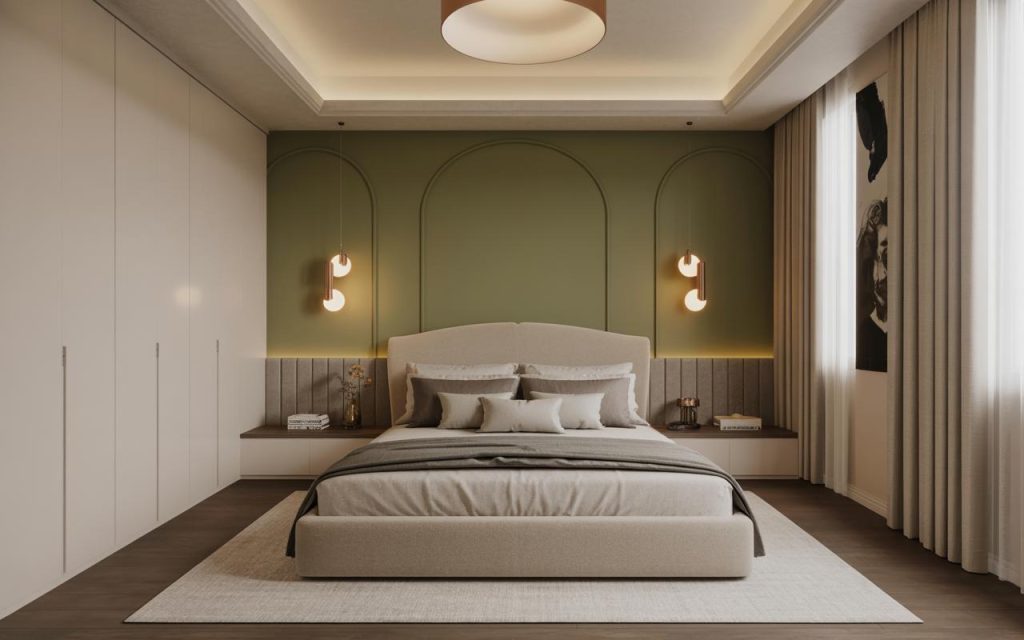
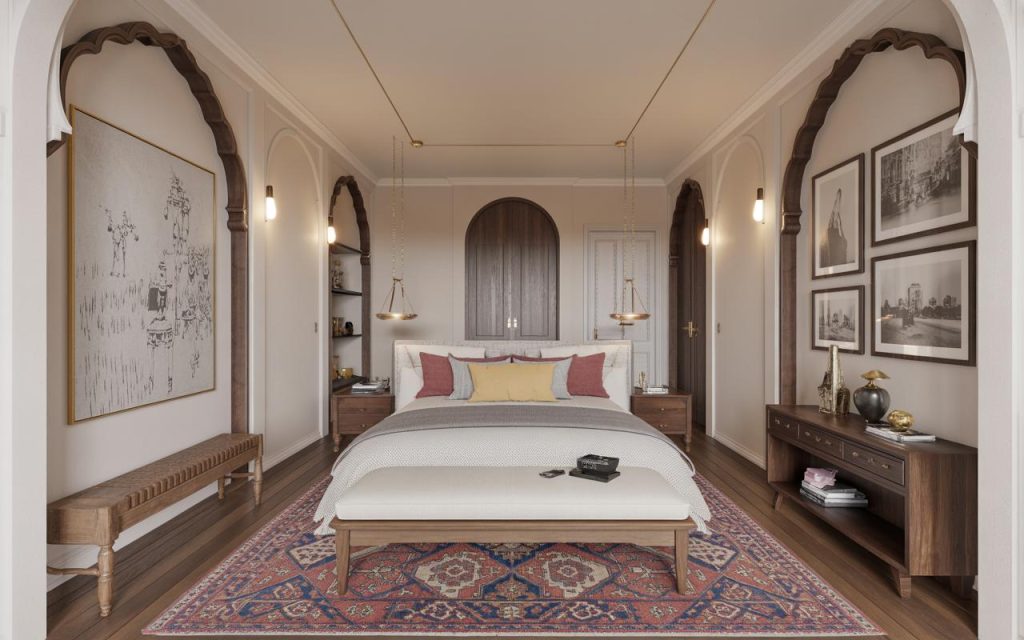
Luxury bedroom interior design with smart bedroom storage design
Different shapes require different tactical approaches. Here are the most common irregular layouts seen in modern Indian homes and how to handle them:
The L-Shaped Room: This is ideal for a simple bedroom design that separates the sleeping area from a home office or a dressing nook. Treat the two sections as distinct zones connected by a unified colour palette.
The Long and Narrow Room: Avoid placing all furniture along one wall. Break the length by placing a rug or a low-standing bench at the foot of the bed to create “visual stops.”
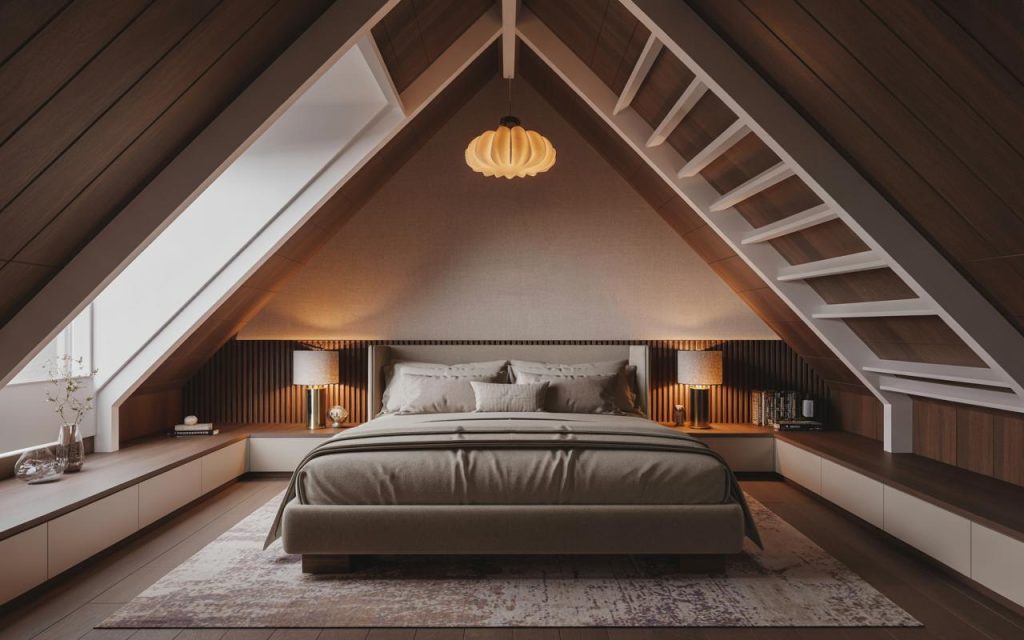
The Attic or Sloped Ceiling: Embrace the “cosy” factor. Use the lowest parts of the room for the bed or low-level storage, leaving the highest points for standing and movement.
While these tips can help many DIY enthusiasts, some spaces are so complex they require a professional eye to unlock their true value.
When to Call in the Interior Design Experts
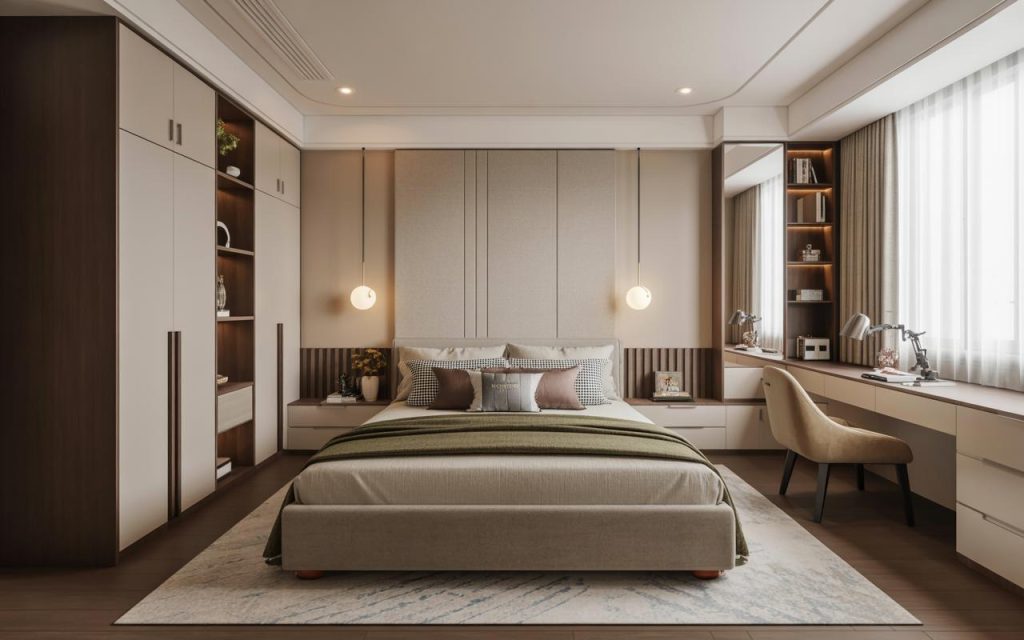
Luxury bedroom interior design with smart bedroom storage design
Designing a standard room is a task many can handle, but customising a bedroom design for a highly irregular space often involves complex carpentry and structural knowledge. If you find yourself struggling to find a wardrobe that fits or if the room feels consistently “clumpy,” it may be time to consult a professional. Designers can provide 3D visualisations that allow you to see how different layouts will feel before you spend a single rupee on furniture.
An expert can also help with the technicalities of a luxury bedroom interior design, such as hidden wiring for wall-mounted tech or custom-angled cabinetry that a local carpenter might find challenging to execute.
Dreaming of a Perfect Bedroom Without the Layout Stress?
Luxury bedroom interior design with elegant simple bedroom design
A stunning home does not need to be a perfect rectangle; it just needs clarity, care, and clever design. Even in the most irregularly shaped spaces, beauty and functionality are possible. All it takes is a plan that respects your daily routine and a design that reflects your unique personality.
At HomeLane, we help you build elegance from the essentials. Our experts craft bespoke interiors that are built to your hearts content and loyal to your unique identity and style.
FAQs On Bedroom Design
1. How do I design a bedroom that has an awkward or irregular shape?
The best way to approach an irregular bedroom design is to zone the space based on the existing angles. Use alcoves for specific functions like a workspace or vanity, and use a neutral colour palette to visually “smooth out” the asymmetrical walls.
2. Can custom furniture help optimise space in oddly shaped rooms?
Absolutely. Custom furniture is essential for irregular layouts because it can be built to the exact dimensions of sloped ceilings or triangular corners. This ensures that every square inch of the room is utilised, unlike ready-made furniture which often leaves unusable gaps.
3. What colour schemes work best to visually balance asymmetrical spaces?
Monochromatic and light colour schemes are highly effective. Using the same colour for walls, skirting, and ceilings helps to hide awkward transitions and angles. For a more dramatic bedroom interior design, you can use a single dark accent wall to create a focal point and draw attention away from the room’s irregularities.
4. Are there smart storage solutions for bedrooms with unconventional layouts?
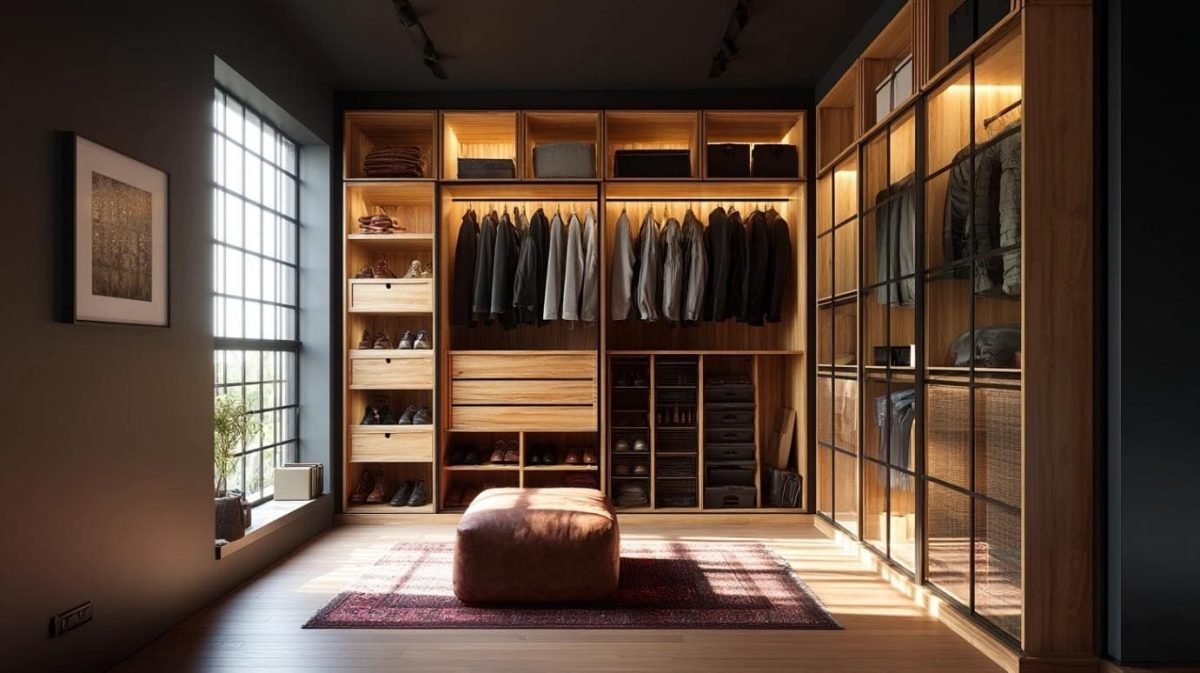
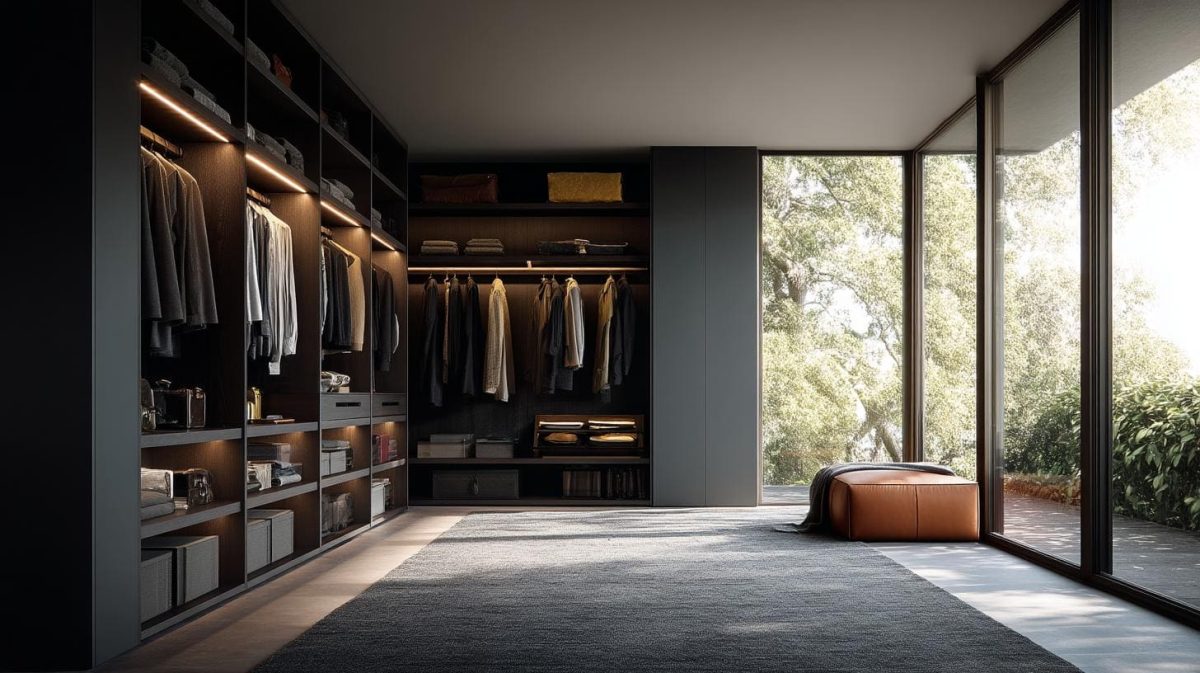
Yes, integrated bedroom storage design like built-in wardrobes, over-the-bed shelving, and bespoke corner units are ideal. Utilising the vertical space with floating shelves or building storage into wall niches can keep the floor area clear and the room looking organised.

















 EXPLORE MORE