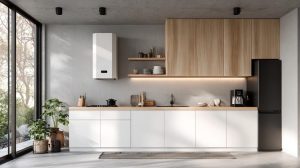
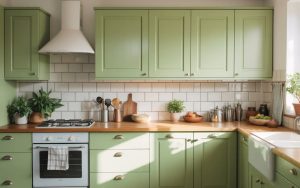
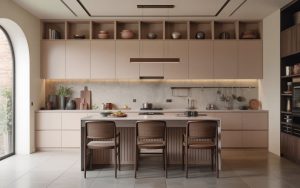
Layouts, cabinets, pull-outs, countertops – if this is the first time you are getting a modular kitchen designed for your home, be ready to be bombarded with jargons that may go over your mind. Wondering what all pointers should be kept in mind when you meet an interior designer or venture out in the kitchen market? Here is a go-to rulebook for first-timers on how to get started with your modular kitchen design and plan.

1. Identify Your Kitchen Work Triangle
For the uninitiated, a kitchen work triangle constitutes your refrigerator, sink and hob. A large part of choosing a kitchen layout is deciding how these three essential items interact with each other, i.e. the location and space between each. Draw up a rough sketch of your kitchen space before thinking of the layout.

2. Ideal Counter Top Height
The standard counter height for a kitchen is usually decided by the average height of people in a country. In India, the counter height is generally between 820 mm to 860 mm. It’s comfortable for most people to work at. Ensure that the space between your kitchen cabinets and the countertop is not too much. If it’s too high, it may be difficult for shorter people to reach the upper shelves.


3. Choose Kitchen Colours Wisely
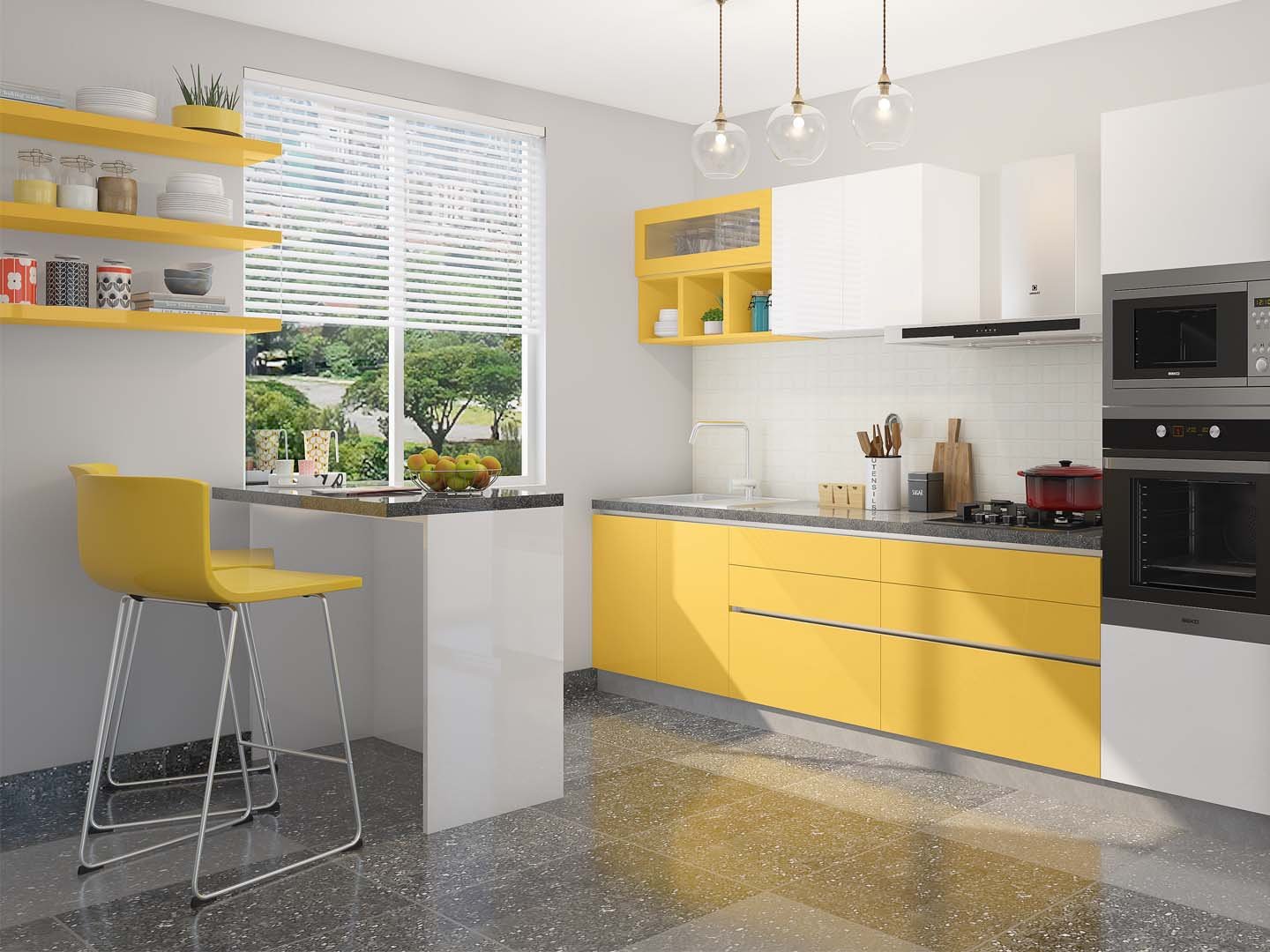
Remember that you will need to maintain the kitchen in the longer run, and this should be factored into your modular kitchen design price planning as well. It might be best to avoid an all-white kitchen simply because Indian cooking tends to result in a lot of tough stains. All-white kitchens demand consistent cleaning and are high on maintenance. But that does not mean you blindly opt for bright hues. After all, darker shades attract more heat, especially in summers. You can always choose a combination of the two to maintain the overall harmony.
Pro tip: Make sure your kitchen colour goes well with your overall home décor.

4. Ventilation is Key
Cooking is one activity that generates a lot of heat. Make sure that your kitchen has sufficient ventilation. Most kitchens have a chimney or an exhaust fan (or both) to vent out the frying fumes. Ideally, there should be a door in the kitchen which opens out to a balcony or the washing area. This would allow fresh air to come in and make sure that the smoke from the cooking doesn’t collect inside your house.
5. Kitchen Lighting
Nothing can beat natural light flooding in through the window to lighten up your kitchen. However, with natural light, ensure that there is great lighting in the kitchen for the evenings and night time. Overhead lighting will light up the countertop where most of the action happens. Under-cabinet lights are becoming popular as they provide direct light on the countertop.

6. Safety First
When it comes to the kitchen, one of the most important things to consider is safety! From safe gas piping to curved countertops edges, you should think about all different ways to make your kitchen safe. Make sure that even the flooring you choose is slip-resistant. Your appliances should be close to the switchboard, and there should be some space between the basin and the stove.

7. Don’t Ignore Corner Spaces
Often, while creating storage shelves and cabinets, we ignore the corners. However, nowadays there are plenty of options available to make the best use of corner spaces. Professionals can help you personalize your layout and get the most out of the space available. After all, there is no such thing as too much storage available in the kitchen.

8. Trash it Right
Some people prefer to keep the trash can in plain view so that it is easily accessible. These are easy to clean as well. However, if the thought of seeing the garbage can in the open is not for you, you can get built-in bins. These are constructed behind a cabinet door (usually under the sink).
Pro tip: Don’t forget to ask for separate ones for your dry and wet waste.

We hope you got some ideas for your own kitchen. Don’t forget, these are just the basics. You should put in a lot of thought and research while doing your kitchen interiors because it is an expensive investment. Reach out to our experts at HomeLane to make your cooking space customizable, eco-friendly and functional.
FAQs On Modular kitchen design tips
1. What are the most important modular kitchen design tips for beginners?
Start with planning your layout and understanding the work triangle between the sink, stove, and refrigerator. Focus on functionality, proper storage, and ease of movement. Good lighting, ventilation, and safety features are essential modular kitchen design tips for a smooth cooking experience.
2. What is the work triangle in modular kitchen design?
The work triangle connects the refrigerator, sink, and hob to ensure efficient movement while cooking. One of the key modular kitchen design tips is to maintain optimal distance between these three points to reduce effort and improve workflow.
3. How do I choose the right colours for my modular kitchen?
Choose colours that balance aesthetics and maintenance. Avoid overly light shades if you want low maintenance, and mix light and dark tones for a balanced look. One of the practical modular kitchen design tips is to match kitchen colours with your overall home décor.
4. Why is ventilation important in modular kitchen design?
Proper ventilation helps remove heat, smoke, and odors from cooking. Installing chimneys, exhaust fans, or ensuring natural airflow is a crucial modular kitchen design tip that keeps your kitchen comfortable, clean, and safe.
5. What are smart waste management tips for modular kitchens?
Incorporate built-in bins or under-sink trash units to keep waste hidden and organized. A useful modular kitchen design tip is to separate wet and dry waste for better hygiene and easier disposal.



























 EXPLORE MORE